1. 🚦 The Short Answer
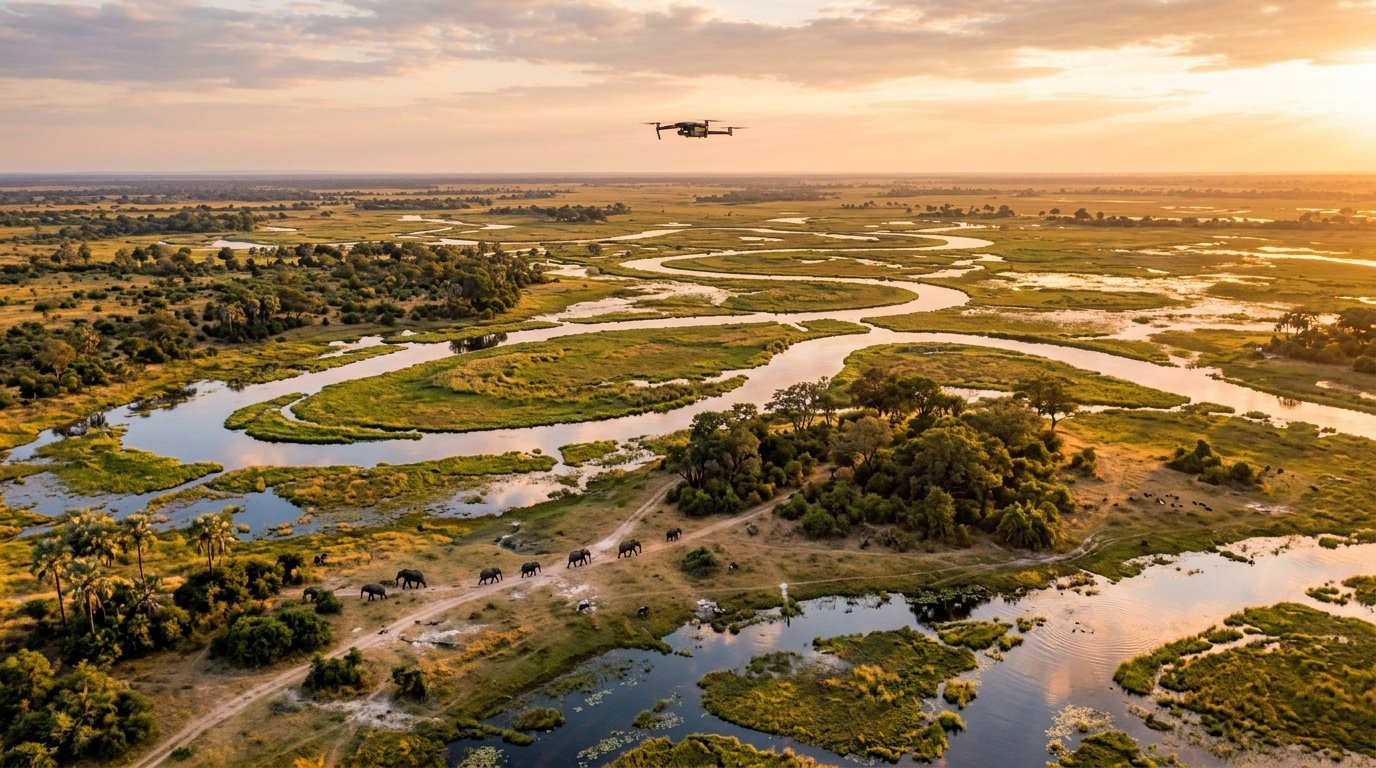
Recreational drones are legally permitted in Botswana, but they are subject to a very strict and time-consuming registration process. All drones, regardless of their size or weight, must be formally registered and cleared by both the local aviation authority and intelligence services before taking flight.
2. 🛃 Customs & Importation Rules
- Can a tourist bring a drone? Yes, but foreign visitors who intend to fly their drone must notify the Civil Aviation Authority of Botswana (CAAB) in writing at least seven days prior to their arrival.
- Declarations: You must declare your drone at customs upon arrival. If you are bringing the drone into the country but do not plan to fly it, registration is not strictly required, but you should make this clear to customs officials.
- Confiscation Risks: If you fail to declare the drone or attempt to import it for use without the proper advance notification, customs officials may hold your equipment at the border until you depart or until the correct permits are approved.
3. 📝 Registration & Permit Process for Tourists
- Pre-Arrival Requirements: While you must notify the CAAB 7 days before your trip, the actual registration process requires several steps that must be completed locally, making it highly impractical for short-term, casual tourists.
- Step-by-Step Process:
1. Obtain a police “Clearance Report” and get fingerprinted at a local Botswana police station.
2. Submit the Remotely Piloted Aircraft (RPA) Application and a Security Vetting Form (SV1) to a CAAB office (located in Gaborone or Maun).
3. Provide a certified passport copy, the drone’s user manual, and present the physical drone for an in-person inspection,.
4. Undergo a required background check and security interview by the Department of Intelligence Service (DIS). - Fees & Processing Time: Security vetting can take up to 30 days to complete. Processing fees vary based on your exact classification, ranging from 250 BWP to 4,025 BWP (roughly $19 to $300 USD), payable at the local CAAB office.
4. 🚫 Key Flight Rules & Restrictions
- Standard Rules: You must maintain unaided Visual Line of Sight (VLOS) at all times, with a maximum flight radius of 500 meters,. The maximum allowed altitude is 120 meters (400 feet) Above Ground Level. Flights are restricted to daylight hours only.
- Weight Classes: There are no exemptions for sub-250g drones like the DJI Mini. Every drone is subject to the exact same rigorous registration, security vetting, and inspection rules.
- Common No-Fly Zones: Drones are strictly banned from flying over National Game Parks, wildlife sanctuaries, and tourism facilities like lodges and campsites. You must also never fly within 3 kilometers of an airport, over moving vehicles, or anywhere that might disturb local wildlife,.
5. 🔗 Official Sources & Links
For the most current applications, fees, and contact details, you should verify information directly with the local authorities:
Disclaimer: Aviation and drone laws change frequently. Always double-check with the official civil aviation authorities or your local embassy immediately before your trip to ensure full legal compliance.
Adrenaline junkie with a passion for exploring off-the-beaten-path destinations and finding unique ways to stay active. Expect stunning scenery, challenging workouts, awesome travel tips and a whole lot of fun. Let’s get sweaty and explore the world together!