1. 🚦 The Short Answer
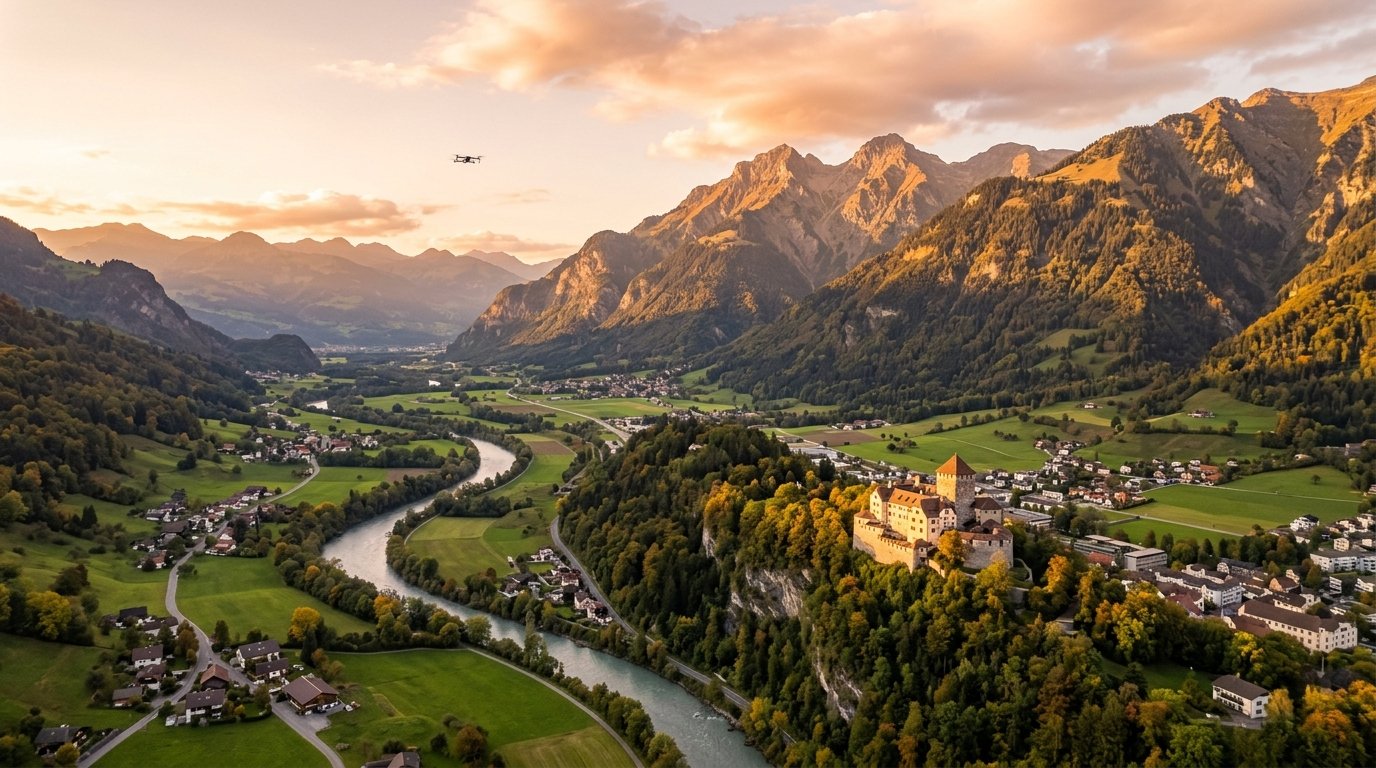
Recreational drones are allowed in Liechtenstein with basic rules. Because Liechtenstein’s airspace is governed by Swiss aviation law, tourists can fly freely without a special tourist permit, provided they adhere to standard EASA (European Union Aviation Safety Agency) Open Category regulations and respect the country’s strict local privacy laws.
2. 🛃 Customs & Importation Rules
- Bringing a Drone: Tourists can legally bring recreational drones into Liechtenstein. Because Liechtenstein does not have its own international airport, travelers typically arrive via land borders from Switzerland or Austria, where standard European customs rules apply.
- Declarations: No specific drone customs declarations are required at the border for standard, personal recreational UAVs.
- Confiscation: Your drone will not be confiscated at the border for lacking flight paperwork. However, to avoid issues with airlines during your inbound flight, always carry spare LiPo batteries safely in your carry-on luggage.
3. 📝 Registration & Permit Process for Tourists
- Registration Requirements: Because Liechtenstein utilizes Swiss airspace laws, you must be registered as a drone operator if your drone has a camera or weighs over 250g. If you are already registered in an EU/EASA member state, your registration is valid.
- Step-by-Step Process: If you are not registered in an EASA country, you must register online via the Swiss Federal Office of Civil Aviation (FOCA) UAS.gate portal before flying. Once registered, you must affix your Operator ID to your drone.
- Fees & Time: Registration is typically fast and processed online. No separate, Liechtenstein-specific recreational flight permit is required for standard flights in the Open category.
- Mandatory Insurance: If your drone weighs over 250g, Liechtenstein law requires you to carry physical proof of liability insurance covering at least 1 million CHF (approx. $1.1M USD).
4. 🚫 Key Flight Rules & Restrictions
- Standard Rules: You must keep your drone within Visual Line of Sight (VLOS) at all times. The maximum permitted flight altitude is 120 meters (400 feet). Flying FPV (First Person View) requires an observer standing directly next to you who can maintain visual contact with the drone.
- Weight Classes: Sub-250g drones (like the DJI Mini) have fewer operational restrictions but still require operator registration because they possess a camera. Drones over 250g require the mandatory liability insurance and cannot be flown directly over uninvolved people.
- No-Fly Zones:
- The entire Government building – Parliament – Vaduz Castle area is a permanent, strict no-fly zone.
- Parts of the Balzers municipality are restricted due to nearby Swiss airfields and heliports.
- You must stay at least 5 kilometers away from any airports or operational aircraft areas.
- You must stay at least 100 meters away from large gatherings of people (defined as 24 or more persons).
- Privacy Laws: Liechtenstein has incredibly strict privacy laws. Do not record private properties or identifiable people without explicit consent.
5. 🔗 Official Sources & Links
To verify the latest map data and regulations, please check the following official sources:
- Swiss Federal Office of Civil Aviation (FOCA) – Drones (Governing airspace authority)
- Liechtenstein National Police (Landespolizei) (Local enforcement and privacy guidelines)
Disclaimer: Aviation laws and no-fly zones change frequently. Travelers should always double-check with official civil aviation authorities before flying.
Adrenaline junkie with a passion for exploring off-the-beaten-path destinations and finding unique ways to stay active. Expect stunning scenery, challenging workouts, awesome travel tips and a whole lot of fun. Let’s get sweaty and explore the world together!