
1. 🏕️ The Short Answer
Wild and dispersed camping is not permitted on public lands in Dominica and is effectively illegal for tourists. To protect the island’s pristine rainforests and fragile ecosystems, camping is strictly prohibited across all national parks, beaches, and forest reserves. Tourists wishing to camp must use designated, privately owned eco-lodges or secure explicit permission from private landowners.
2. 🌲 Wild & Dispersed Camping Rules
- Public Land Ban: It is illegal to camp outside of official campsites or on state-owned land, including beaches and forest reserves. The local culture does not support wild camping, and setting up a tent on public property will draw unwanted attention from authorities.
- Private Property: The only legal way to “wild camp” is by obtaining direct permission from a private landowner. This is somewhat common for thru-hikers traversing the Waitukubuli National Trail, who occasionally pay a small fee to pitch a tent in a local’s yard.
- Enforcement: Dominica’s Forestry, Wildlife, and Parks Division actively patrols natural attractions. Violators caught camping or squatting on public land face immediate eviction and potential fines.
3. 🏞️ National Park & Protected Area Rules
- No Camping Allowed: Camping is universally banned inside all of Dominica’s protected areas, including Morne Trois Pitons National Park, Cabrits National Park, and Morne Diablotin National Park.
- Mandatory Park Passes: All foreign tourists must purchase an Eco-Tourist Site Pass (User Fee Ticket) to enter national park attractions like the Boiling Lake, Emerald Pool, or Trafalgar Falls. These are available as single-site day passes or week-long multi-site passes.
- Waitukubuli National Trail (WNT): Thru-hikers tackling the Caribbean’s longest trail must purchase a separate WNT Trail Pass. Even on the trail, you cannot camp in the forest; you must hike from village to village to stay in guesthouses or designated private yards.
- Seasonal Closures: Trails and parks are subject to sudden closures during the Atlantic hurricane season (June to November) due to severe risks of landslides, flash flooding, and falling trees.
4. 🚐 Van Life & Overnight Vehicle Sleeping
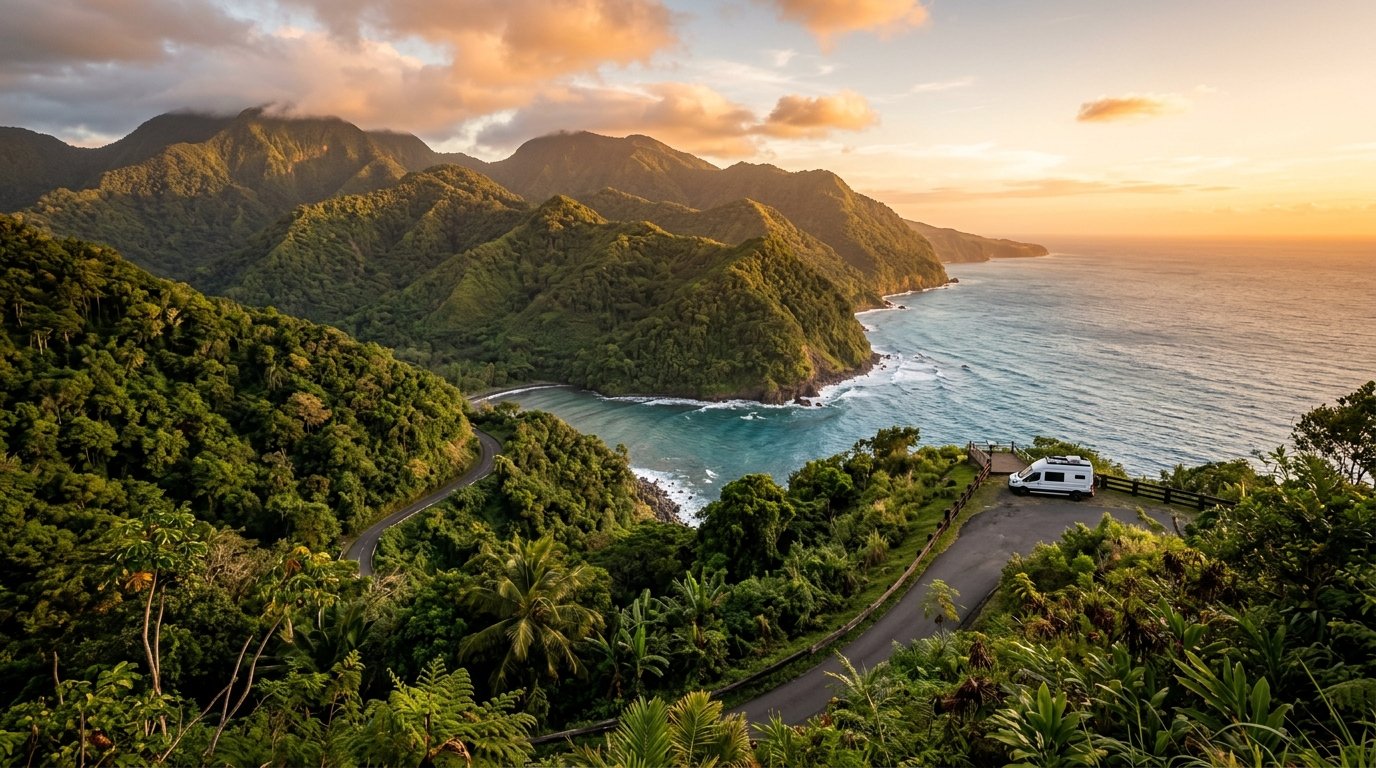
- Not Feasible: “Van life” is virtually non-existent in Dominica. The island’s geography consists of incredibly steep, narrow, and winding mountain roads with deep drainage gutters, frequent potholes, and sheer cliff drops. It is not an environment suited for campervans or RVs.
- Vehicle Sleeping: While there isn’t a widely cited law explicitly banning sleeping inside a legally parked rental car, pulling over to sleep on the roadside is highly discouraged for safety reasons and will likely prompt a police check.
- No Designated Areas: There are no “aires,” rest stops, or public overnight parking zones for tourists to sleep in their vehicles. Parking near trailheads is strictly informal and for daytime use only.
5. 🔥 Campfires & Practical Restrictions
- Strict Fire Bans: Open campfires are strictly prohibited in all national parks, forest reserves, and beaches. The Forestry Act heavily regulates fire to protect the island’s dense rainforests from bushfires. Any cooking must be done on portable gas stoves at privately approved campsites.
- No-Camp Zones: Tourists should avoid attempting to camp near military/police installations, the Kalinago Territory (unless part of a certified cultural homestay), coastal cliffs, and riverbanks (which are highly susceptible to sudden and deadly flash floods).
6. 🔗 Official Sources & Links
For the most current information, pass purchases, and trail conditions, visitors should consult the following official resources:
- Discover Dominica Authority (Official Tourism Board)
- Dominica Forestry, Wildlife & Parks Division (Park Passes & Eco-site Rules)
Disclaimer: Land-use laws, park pass fees, and camping regulations in Dominica can change frequently due to environmental preservation efforts and extreme weather events. Always verify current rules with local authorities and official sources before your trip.

Adrenaline junkie with a passion for exploring off-the-beaten-path destinations and finding unique ways to stay active. Expect stunning scenery, challenging workouts, awesome travel tips and a whole lot of fun. Let’s get sweaty and explore the world together!