
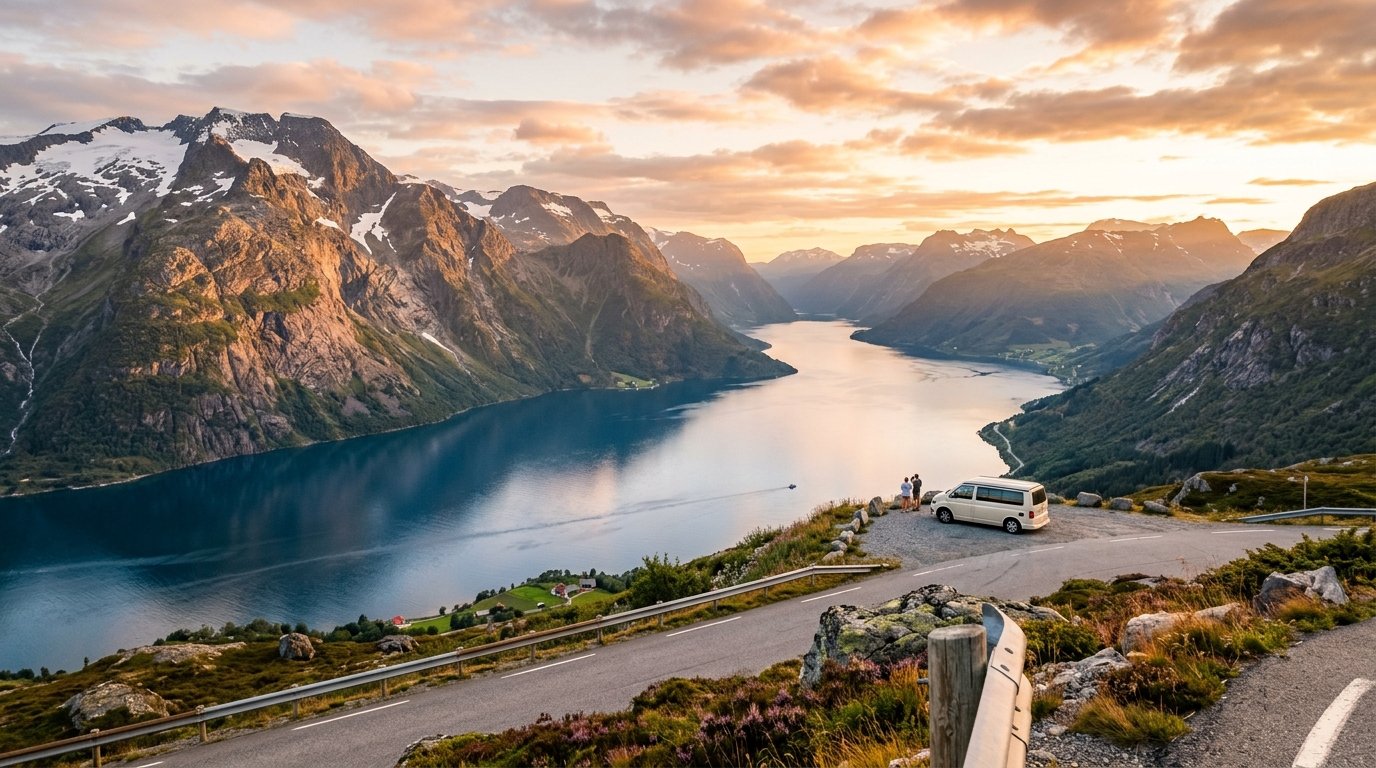
1. 🏕️ The Short Answer
Wild camping in Norway is broadly legal, welcomed, and protected by law for both locals and tourists under the traditional right to roam, known as Allemannsretten. As long as you pitch your tent on uncultivated land and act responsibly, you can enjoy some of the most spectacular dispersed camping in the world.
2. 🌲 Wild & Dispersed Camping Rules
- Public and Private Land: You can camp on any “unfenced” or “uncultivated” land (known as utmark in Norwegian), regardless of who owns it. You cannot camp on fenced land, farm pastures, gardens, or construction sites (innmark).
- Distance Rules: You must pitch your tent at least 150 meters away from the nearest inhabited house or cabin.
- Duration Limits: You may stay a maximum of 2 nights in the same spot without asking the landowner for permission. In remote mountain areas or far away from civilization, you can stay longer, provided your stay does not cause damage to the environment.
- Enforcement: Because wild camping is a legal right, you will not be bothered by police or rangers if you follow the rules. However, “Leave No Trace” is strictly expected. Leaving trash or damaging nature will result in fines and hostility from locals.
3. 🏞️ National Park & Protected Area Rules
- No Separate Permits: Norway’s national parks are free to enter, and the right to roam applies here just as it does on regular public land. You do not need a permit or advance booking to wild camp in most national parks.
- Designated Sites: While wild camping is widely permitted, high-traffic national parks (like Jotunheimen or Hardangervidda) may encourage the use of established mountain cabins and adjacent campsites operated by the Norwegian Trekking Association (DNT).
- Seasonal and Local Closures: Certain protected areas, specifically bird sanctuaries or nature reserves, may have local camping and hiking bans during the spring/summer breeding seasons. Always check the specific trailheads for local signage.
4. 🚐 Van Life & Overnight Vehicle Sleeping
- Off-roading is Illegal: The right to roam (Allemannsretten) does not apply to motorized vehicles. You cannot drive cars, campervans, or RVs off-road, onto beaches, or onto protected land.
- Roadside and Car Parks: You may sleep in your vehicle in public parking lots, rest stops, and along the roadside, provided you do not obstruct traffic and there are no “No Overnight Parking” signs.
- Parking vs. Camping: Sleeping inside your parked van is generally permitted at rest stops. However, setting out awnings, camping chairs, and tables turns “parking” into “camping,” which is strictly prohibited at most roadside rest areas.
- Tourist Hotspot Restrictions: Due to heavy overtourism, popular regions like the Lofoten Islands, Senja, and parts of Western Norway have introduced strict local bans on overnight parking outside of official campsites. Always obey local municipality signage.
5. 🔥 Campfires & Practical Restrictions
- Seasonal Campfire Ban: There is a strict, nationwide ban on open fires in or near forests and uncultivated land from April 15 to September 15. During this time, campfires are illegal unless they are in approved designated fire pits or in areas where a fire obviously cannot spread (e.g., on a snow-covered area or a beach completely isolated from vegetation).
- Camping Stoves: Gas and liquid fuel camping stoves are generally permitted year-round, but you must still use caution during dry spells.
- No-Camp Zones: Avoid pitching a tent on agricultural land, near military installations (marked with yellow and black signs or fences), and in drinking water reservoirs.
6. 🔗 Official Sources & Links
For the most up-to-date information, maps, and specific regional regulations, consult the following official resources:
- Visit Norway: The Right to Roam – The official tourism board’s guide to camping and outdoor recreation.
- Norwegian Environment Agency (Miljødirektoratet) – Official legal definitions and environmental guidelines for tourists.
Disclaimer: Land-use laws, local municipality ordinances, and seasonal fire bans change frequently. The information provided in this guide is for educational purposes. Travelers should always verify current regulations with local authorities, tourist information centers, or official government websites prior to their trip.

Adrenaline junkie with a passion for exploring off-the-beaten-path destinations and finding unique ways to stay active. Expect stunning scenery, challenging workouts, awesome travel tips and a whole lot of fun. Let’s get sweaty and explore the world together!