
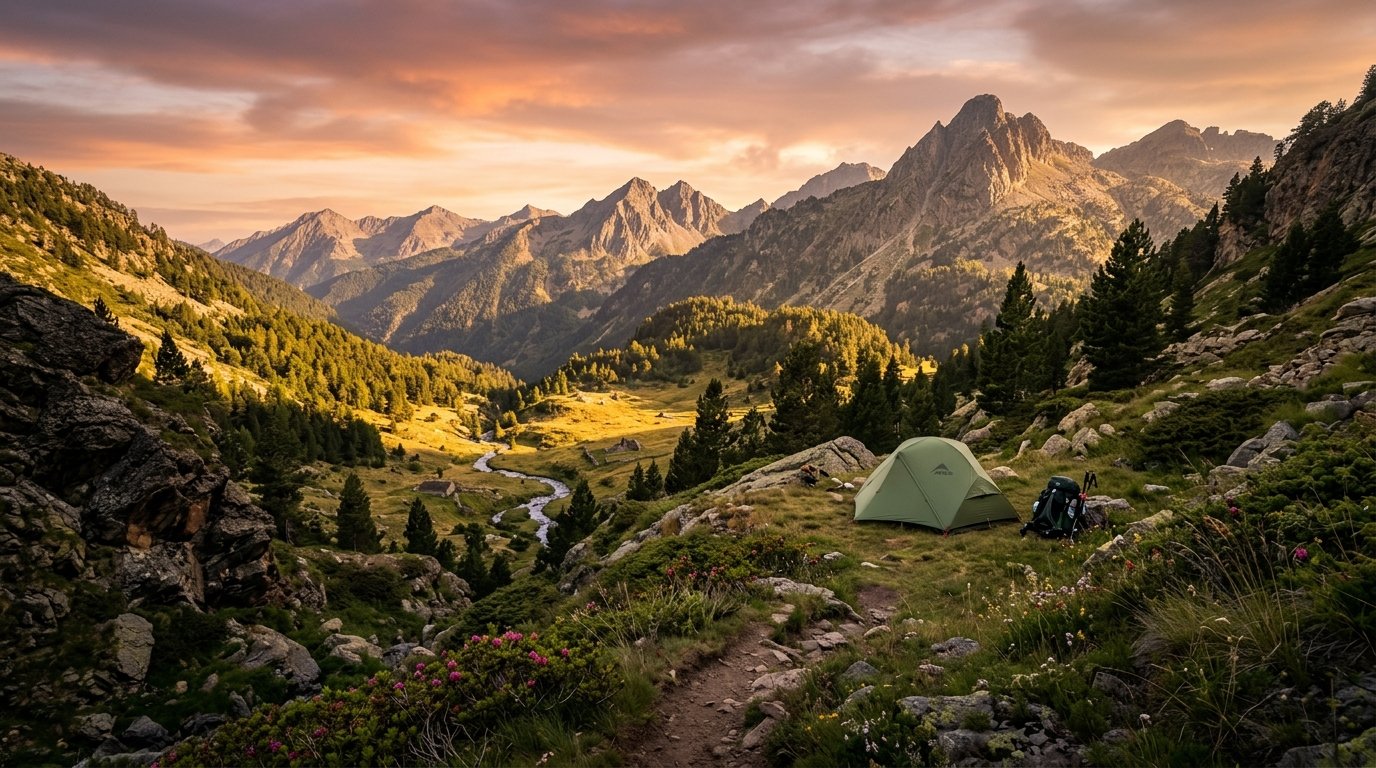
1. 🏕️ The Short Answer
Wild and dispersed camping is illegal in Andorra for tourists. If you are visiting in a campervan, motorhome, or with a tent, you are strictly required by national law to use official campsites or specifically designated overnight areas. There is only one rare exception for backcountry hikers, but for the vast majority of travelers, free camping and roadside overnight parking are entirely prohibited and subject to heavy fines.
2. 🌲 Wild & Dispersed Camping Rules
- Is camping outside official campsites legal? No. General wild camping is explicitly prohibited across the principality. There is a single, strictly defined loophole for high-altitude hikers: you may pitch a small bivouac tent next to a mountain refuge (hut) only if the refuge is already completely full of people and has no available beds.
- Are there duration limits or distance rules? Because wild camping is banned, distance rules do not apply to general public land. If you meet the rare mountain refuge exception, you must pack up your tent first thing in the morning.
- Is this actively enforced? Yes, very actively. Following the implementation of Law 5/2025 on Sustainable Growth, the police now systematically patrol and issue fines. Fines for illegal camping can reach up to €600 for non-compliance.
3. 🏞️ National Park & Protected Area Rules
- Separate permit systems: Andorra’s protected areas, such as the Madriu-Perafita-Claror Valley (a UNESCO World Heritage site) and Comapedrosa Natural Park, are managed by local parishes (Comús). If you intend to do any specialized group camping, you must obtain advance authorization directly from the local Comú.
- Designated sites: In certain regions like the parish of Sant Julià de Lòria, camping is banned under any circumstances. Tourists should stick strictly to official mountain refuges or authorized valley campsites.
- Seasonal closures: Weather is the primary natural barrier, as winter conditions and heavy snow persist from November to May. Furthermore, local parishes may close certain zones seasonally to protect grazing livestock or sensitive flora. Always verify trail conditions during the spring thaw and autumn hunting seasons.
4. 🚐 Van Life & Overnight Vehicle Sleeping
- Is it legal to sleep overnight in a vehicle? No. As of March 2025, sleeping in any vehicle (motorhome, campervan, or car) is strictly banned in ordinary public car parks, rest stops, roadsides, and natural spaces.
- Parking vs. Camping: While many European countries allow you to sleep in a legally “parked” vehicle, Andorra’s laws are much stricter. Even if your vehicle is perfectly parked with no external elements (like awnings or chairs) deployed, it is classified as an illegal overnight stay if there are people inside the vehicle at night outside of an authorized zone.
- Designated overnight areas: You must use official campsites (such as Càmping Valira or Càmping Xixerella) or government-designated motorhome stopovers (such as the Font de Ferrosins area in Canillo). Ski resorts like Grandvalira and Ordino Arcalís also operate specially designated, paid overnight motorhome zones during the winter season.
5. 🔥 Campfires & Practical Restrictions
- Are open campfires allowed? Open fires are generally banned in Andorra’s natural spaces, including Comapedrosa Natural Park, to prevent devastating forest fires. While there are very specific designated barbecue zones where fires may be permitted under strict regulations, tourists should assume a zero-tolerance policy for campfires in the backcountry.
- Key no-camp zones: Avoid setting up camp anywhere near roadsides, urban centers, ski resort parking lots (unless specifically marked for overnight stays), and the entire parish of Sant Julià de Lòria, which strictly forbids any form of camping.
6. 🔗 Official Sources & Links
To verify the most current regulations, road closures, and authorized camping zones before your trip, please consult these official resources:
Disclaimer: Camping and land-use laws in Andorra change frequently, especially regarding campervan regulations and environmental protection. Always verify current rules, seasonal restrictions, and designated parking areas with official local authorities or the local Comú (parish council) immediately prior to your trip.

Adrenaline junkie with a passion for exploring off-the-beaten-path destinations and finding unique ways to stay active. Expect stunning scenery, challenging workouts, awesome travel tips and a whole lot of fun. Let’s get sweaty and explore the world together!