
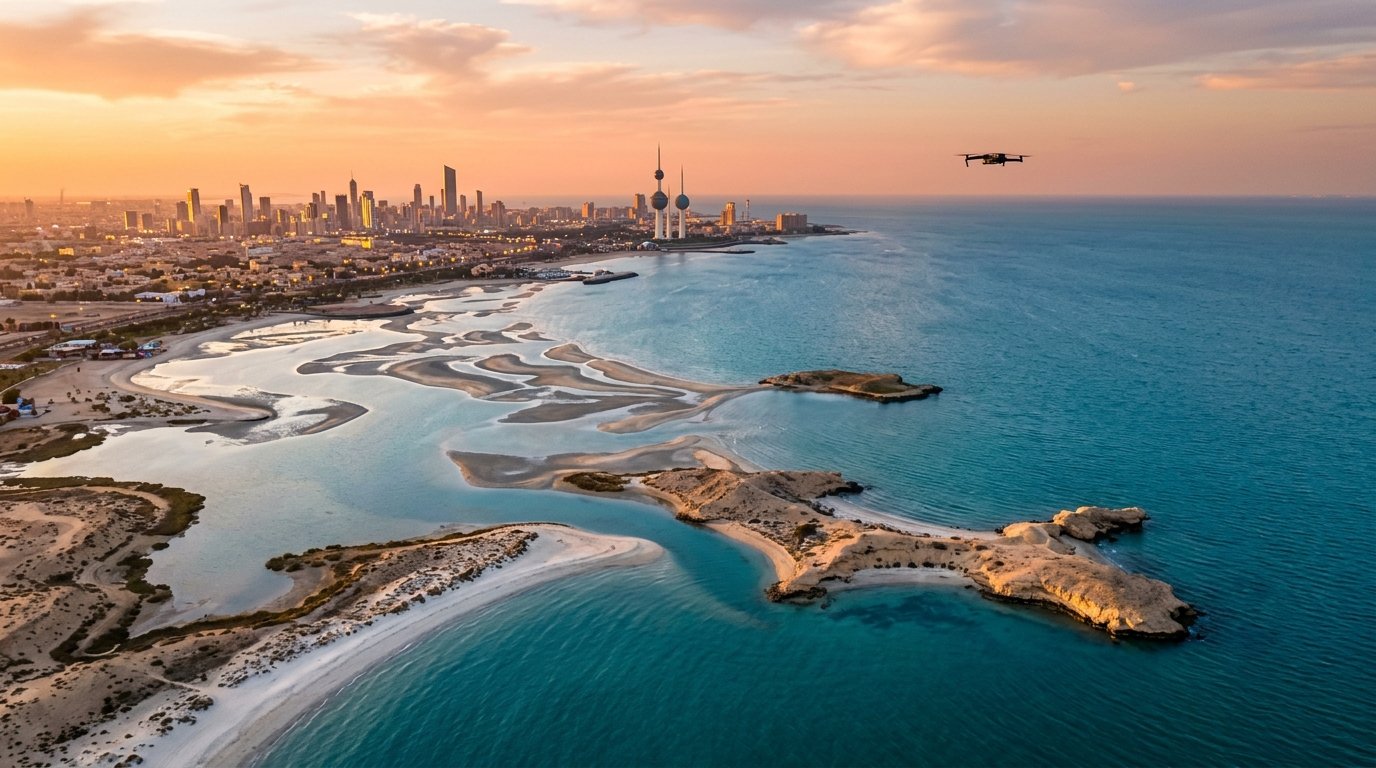
1. 🚦 The Short Answer
Recreational drone flights for tourists in Kuwait are technically allowed but highly restricted, requiring strict prior registration, security clearances, and permits from both the civil aviation and interior authorities before entering the country.
2. 🛃 Customs & Importation Rules
- Pre-Approval is Mandatory: A tourist cannot legally bring a drone into Kuwait through airport customs without having prior approval from the Directorate General of Civil Aviation (DGCA).
- Declarations: You must declare your drone upon arrival. Do not attempt to sneak it through baggage screening.
- Confiscation Risk: If you arrive at Kuwait International Airport without the required, pre-approved paperwork, your drone will be confiscated by customs officials.
3. 📝 Registration & Permit Process for Tourists
- Before You Arrive: Foreign tourists must register their drone and secure a permit before traveling to Kuwait. There are no temporary tourist exceptions.
- The Process: You must submit an application to the DGCA and the Ministry of Interior for security clearance. This involves providing a copy of your passport, proof of drone ownership, drone specifications (make, model, serial number), and detailed flight plans including GPS coordinates and dates.
- Fees & Timeline: Processing can take anywhere from a few days to several weeks due to the required security checks. It is highly recommended to start this process well in advance, though tourists should be aware that casual flight approvals can be difficult to obtain.
4. 🚫 Key Flight Rules & Restrictions
- Standard Rules: Once approved, flights are limited strictly to daylight hours and clear weather. You must maintain constant Visual Line of Sight (VLOS) with your drone at all times.
- Weight Classes & Altitude: There are no registration exemptions for sub-250g drones (like the DJI Mini); every drone is subject to the same strict permit requirements. The maximum permitted flying altitude is 120 meters (400 feet) above ground level.
- No-Fly Zones: It is strictly prohibited to fly within 5 kilometers of airports or heliports. Other strict no-fly zones include military installations, government buildings, oil facilities, royal palaces, private property, and over populated residential areas or crowds.
5. 🔗 Official Sources & Links
For the most accurate regulations, forms, and updates, you should verify information directly through the Kuwait Directorate General of Civil Aviation (DGCA).
Disclaimer: Aviation laws and customs policies change frequently. Always double-check the latest requirements directly with official government sources or your local Kuwaiti embassy before traveling with a drone.
Adrenaline junkie with a passion for exploring off-the-beaten-path destinations and finding unique ways to stay active. Expect stunning scenery, challenging workouts, awesome travel tips and a whole lot of fun. Let’s get sweaty and explore the world together!