
1. 🏕️ The Short Answer
Wild and dispersed camping is generally tolerated in Uzbekistan’s rural and wilderness areas, existing in a legal grey area. However, there is a massive administrative catch: all foreign tourists camping independently must self-register their location and pay a daily tourist tax via the government’s online E-mehmon system within three working days, or face severe financial penalties when exiting the country.
2. 🌲 Wild & Dispersed Camping Rules
- Legality on Public Land: Wild camping outside official campsites is not explicitly banned, but it is not culturally common. In remote areas (deserts, steppes, and mountains), discreet camping is widely tolerated for tourists.
- Duration and Distance Rules: There are no strict national laws dictating exactly how close you can camp to a road or water source, nor explicit limits on the number of nights in one spot. However, the overriding law is your E-mehmon registration clock—you must be able to account for every single night of your stay.
- Enforcement: Police or locals may occasionally approach you out of curiosity or to check your passport and registration. While asking you to move is rare in remote areas, border guards are highly strict about checking your electronic registration history when you leave the country.
3. 🏞️ National Park & Protected Area Rules
- Permit Systems: National parks (such as Zaamin and Ugam-Chatkal) and nature reserves require an entry permit and payment of an ecological fee, which usually covers a visit of up to 7 days.
- Camping Restrictions: In highly protected zones like Ugam-Chatkal, multi-day trekking and wild camping require separate, advance authorization from park headquarters. You will generally need to provide your intended route and camping locations to the rangers. Note that State Nature Reserves (Zapovedniks) strictly prohibit all unauthorized entry and camping.
- Seasonal Closures: Some mountain and forest areas may restrict access during peak summer due to high fire danger, or in winter due to extreme cold. Always check local conditions before entering alpine areas.
4. 🚐 Van Life & Overnight Vehicle Sleeping
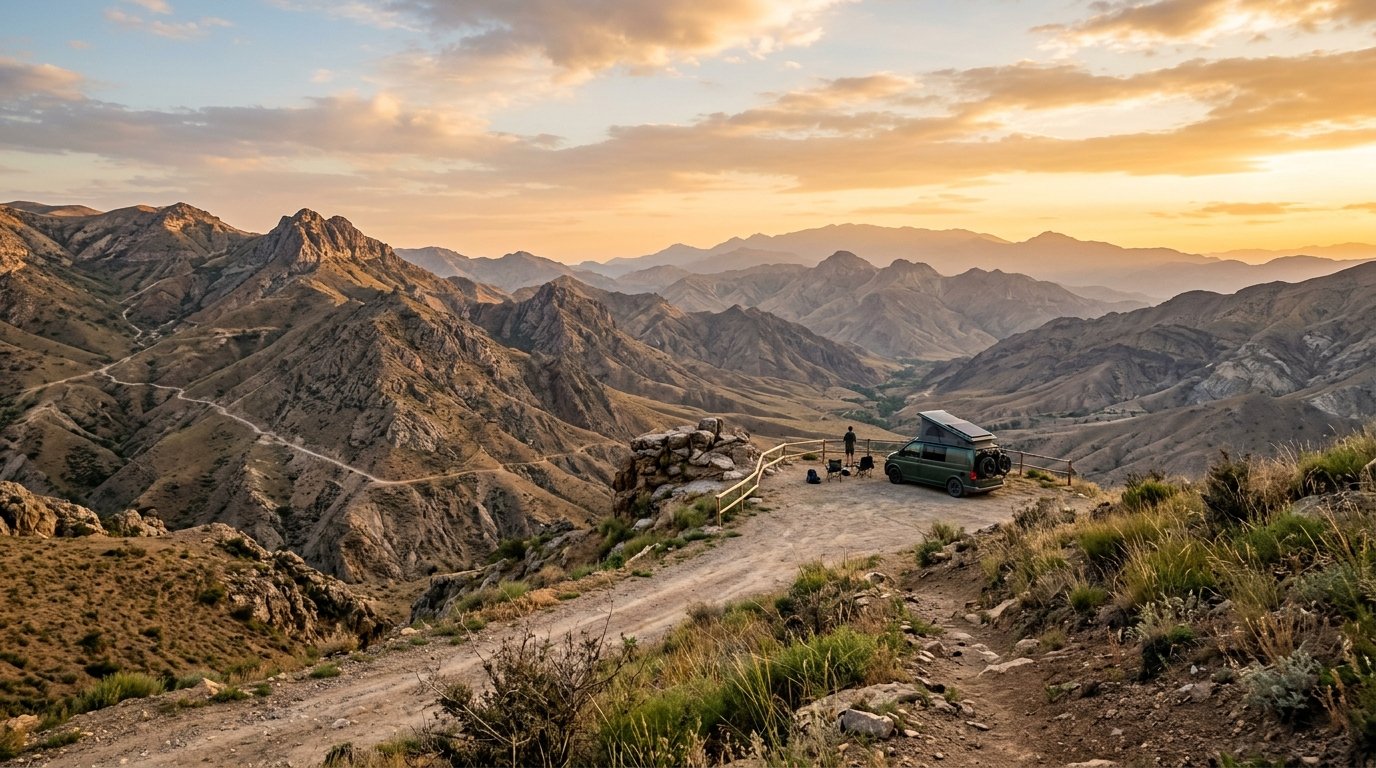
- Legality of Vehicle Sleeping: Sleeping in your van, 4×4, or car is legal and a highly popular way for overlanders to explore the Silk Road.
- Parking vs. Camping: Uzbekistan law does not strictly differentiate between parking and camping in rural areas. However, stealth camping or sleeping in your vehicle in cities or suburbs is highly frowned upon and considered a “no-go”.
- Designated Areas: There is no network of European-style “aires” or RV parks. Overlanders typically wild camp in the desert (e.g., near the ancient Khorezm fortresses), at rural trailheads, or pay a small fee to park outside rural guesthouses to use their facilities and have the host handle their legal registration.
5. 🔥 Campfires & Practical Restrictions
- Campfire Rules: Open fires are generally permitted in the desert and open steppes, provided you practice Leave No Trace principles. However, campfires are strictly banned in many national parks and forested areas due to high wildfire risks.
- Strict No-Camp Zones: Do NOT camp near international borders (especially the borders with Afghanistan and Kazakhstan), as these are highly sensitive, heavily militarized, and actively patrolled. Avoid camping near critical infrastructure such as military zones, dams, and major bridges.
6. 🔗 Official Sources & Links
To verify the latest regulations, register your stay, and plan your trip, consult the following official resources:
- E-Mehmon Official Registration Portal – The mandatory system for self-registering your wild camping stays and paying the tourist tax.
- Uzbekistan Official Tourism Board – For general travel advisories, park information, and entry requirements.
Disclaimer: Camping regulations, land-use laws, and the E-Mehmon registration system in Uzbekistan can change frequently. Always verify the most up-to-date rules, registration requirements, and border zone restrictions with official local sources or the nearest embassy before your trip.

Adrenaline junkie with a passion for exploring off-the-beaten-path destinations and finding unique ways to stay active. Expect stunning scenery, challenging workouts, awesome travel tips and a whole lot of fun. Let’s get sweaty and explore the world together!