
1. 🏕️ The Short Answer
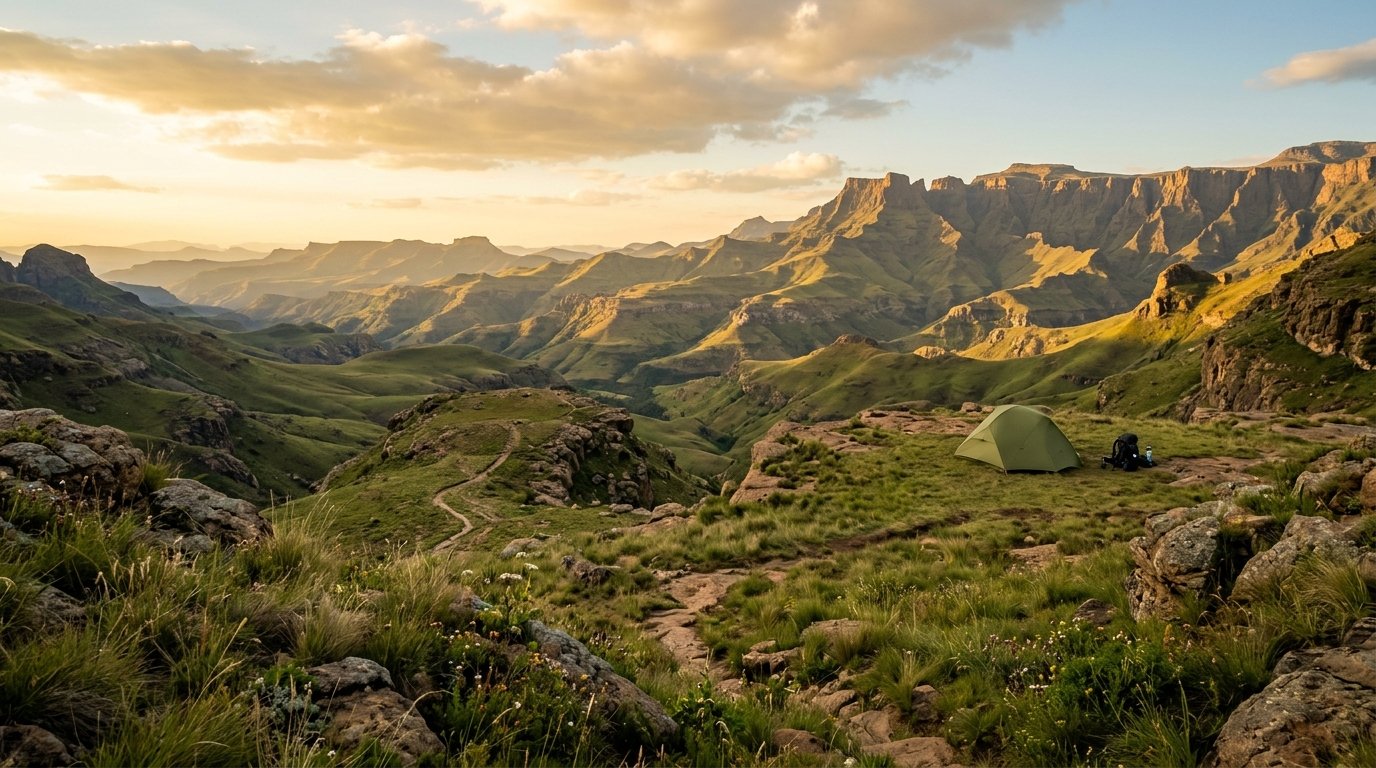
Wild and dispersed camping is generally permitted and widely tolerated for tourists in Lesotho, provided you follow the customary rule of asking the local village chief for permission. While remote backcountry camping is an incredible way to experience the “Kingdom in the Sky,” travelers must respect the traditional land management system, high-altitude weather risks, and designated national park boundaries.
2. 🌲 Wild & Dispersed Camping Rules
- Is it legal? Yes, but with a unique cultural caveat. Most land in Lesotho is communally owned and managed by traditional leaders. If you plan to wild camp near a village, grazing land, or agricultural area, you must introduce yourself to the local village chief (or headman) to ask for permission. It is highly unusual for them to say no; they will usually point out a safe spot for you to pitch your tent and may even assign a local guard for your peace of mind.
- Distance and duration rules: There are no strict statutory limits on duration or distance from roads, but common sense applies. Keep a respectful distance from private dwellings, water sources, and livestock enclosures. You are generally expected to stay only 1 or 2 nights in a single spot unless you have negotiated a longer stay with the chief.
- Enforcement: Formal police enforcement of camping locations is virtually nonexistent in the remote highlands. However, you will almost never go unnoticed by local shepherds. Adhering to the local chief system is a matter of cultural respect and personal safety rather than dodging legal fines.
3. 🏞️ National Park & Protected Area Rules
- Permits and restrictions: Inside protected areas like Sehlabathebe National Park and Ts’ehlanyane National Park, dispersed wild camping is not freely allowed. You must camp at designated campsites (such as the park lodges or specific hiker camps) and pay the relevant park entry and camping fees.
- Advance booking: While you can sometimes secure a spot upon arrival, advance booking is highly recommended, especially during the warmer summer months (November to February) or local holiday weekends. Private lodges often manage the campsites inside these parks.
- Seasonal closures: Lesotho experiences severe winter weather. High-altitude campsites and mountain passes (often exceeding 3,000 meters) can be completely snowed in and rendered impassable between June and August. Parks do not typically “close,” but access may be physically impossible without specialized 4×4 equipment and extreme cold-weather gear.
4. 🚐 Van Life & Overnight Vehicle Sleeping
- Overnight vehicle sleeping: Sleeping in a campervan or a 4×4 with a rooftop tent is incredibly popular among foreign overlanders in Lesotho. It is legal to sleep in your vehicle, but pulling over randomly on the side of a mountain pass is discouraged due to narrow roads, steep drops, and blind corners.
- Parking vs. Camping: Lesotho law does not strictly distinguish between parking and camping for tourists. If you pull off the road to sleep in your vehicle, it is treated as wild camping, and the same rule applies: find the nearest village and ask the chief for permission to park overnight.
- Designated areas: There is no network of free European-style “aires” or public rest stops. Overlanders generally rely on asking local chiefs for a patch of land, staying at formal lodge campsites, or utilizing specific 4×4 camps found along popular routes like the Sani Pass or near Katse Dam.
5. 🔥 Campfires & Practical Restrictions
- Campfire regulations: Open campfires are generally permitted, but they are strongly discouraged in the alpine highlands. Firewood is extremely scarce in Lesotho, and locals rely heavily on available shrubs for fuel. Furthermore, the dry and windy conditions make wildfires a severe hazard. Tourists should use contained gas or liquid fuel camping stoves for cooking. Inside national parks, fires are strictly limited to designated fire pits.
- No-camp zones: Avoid camping near the immediate border lines (particularly unpatrolled mountain borders with South Africa), as these can occasionally be routes for illegal smuggling. Additionally, never camp near or approach traditional initiation schools (lebollo)—these are sacred, private cultural sites located in secluded mountain areas.
6. 🔗 Official Sources & Links
To verify the most current regulations, entry requirements, and park fees, please consult the following official resources:
- Lesotho Tourism Development Corporation (LTDC) – The official tourism board of Lesotho, offering travel tips, maps, and guides.
- Tracks4Africa – While not a government site, this is the universally recognized, definitive mapping and community resource for overlanders and campers navigating Lesotho and Southern Africa.
Disclaimer: Land-use laws, national park regulations, and cultural protocols can change. The information in this guide is meant for recreational tourists and should be verified with official local sources, park authorities, or your tour operator immediately prior to your trip. Always prioritize respect for local communities and the environment.

Adrenaline junkie with a passion for exploring off-the-beaten-path destinations and finding unique ways to stay active. Expect stunning scenery, challenging workouts, awesome travel tips and a whole lot of fun. Let’s get sweaty and explore the world together!