
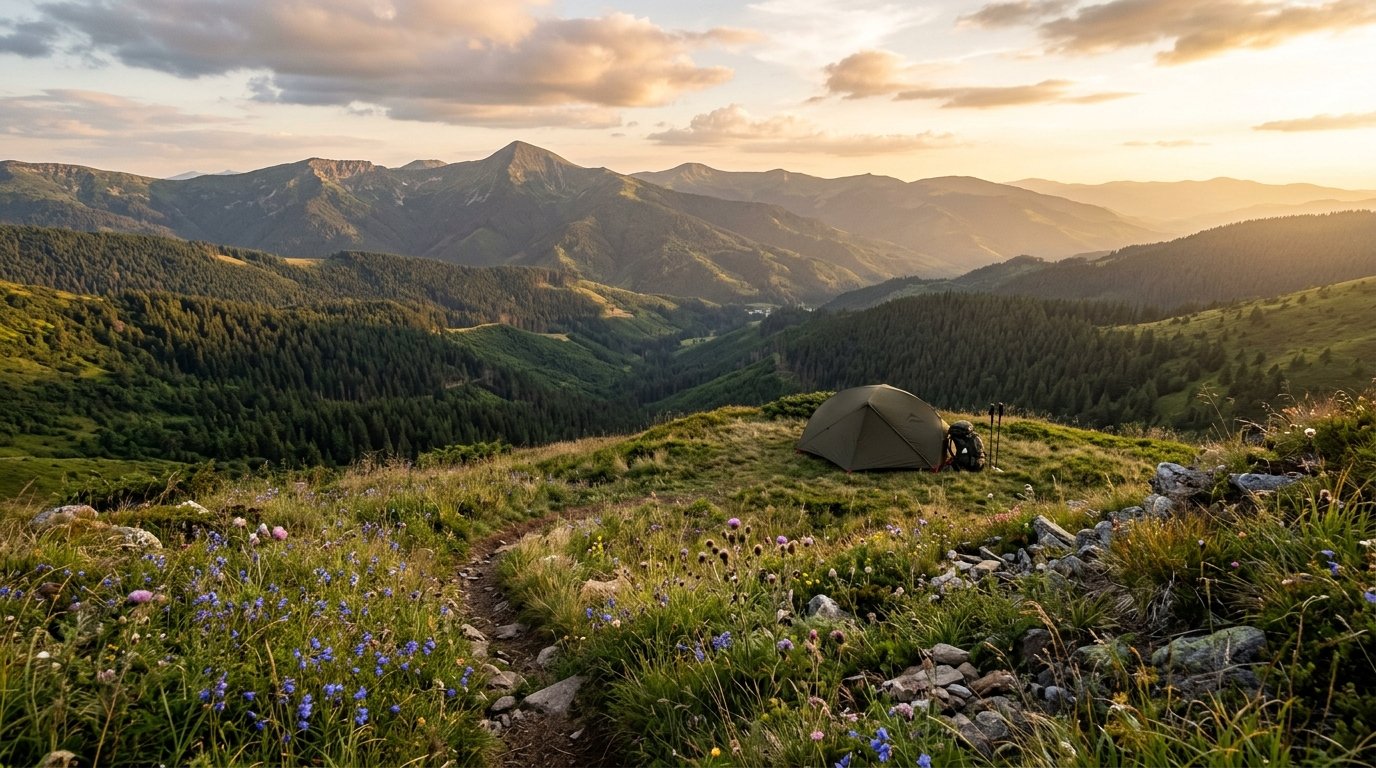
1. 🏕️ The Short Answer
While wild camping is traditionally legal and deeply ingrained in Ukrainian outdoor culture, it is currently highly dangerous and effectively prohibited for tourists in most areas due to ongoing martial law. Severe risks from unexploded ordnance (landmines), nationwide nighttime curfews, and strict military enforcement mean foreign visitors should absolutely avoid dispersed camping and stick to secured accommodations or official, guarded campsites in the safest western regions.
2. 🌲 Wild & Dispersed Camping Rules
- Traditional Legality vs. Current Reality: Before the war, wild camping was widely permitted on public land as long as you stayed away from private property, military bases, and main roads. However, martial law supersedes these normal civilian rules.
- Forest Bans and Landmines: Regional military administrations have outright banned civilian access to forests in over 14 regions (including Kyiv, Chernihiv, Sumy, and the east/south) due to the extreme, lethal danger of landmines, tripwires, and unexploded shells.
- Curfew Enforcement: Nationwide curfews are strictly enforced by police and territorial defense forces. Being found in the wild during curfew hours is illegal and will lead to detention, interrogation on suspicion of espionage, and severe penalties.
3. 🏞️ National Park & Protected Area Rules
- Designated Sites Only: In national parks—such as those in the relatively safer Carpathian Mountains—wild camping is strictly forbidden. You must use officially designated camping zones and pay a small environmental fee.
- Border Restrictions: Many nature reserves border neighboring countries (like Uzhansky National Park). Hiking or camping near any international border currently requires special military permits. Unauthorized presence is heavily penalized and often treated as illegal border crossing or smuggling.
- Strict Fines: Even in designated zones, straying from marked ecological trails, washing with detergents in rivers, picking local flora, and making excessive noise are closely monitored and strictly penalized to protect the nature reserve fund.
4. 🚐 Van Life & Overnight Vehicle Sleeping
- Parking vs. Camping: Under normal traffic laws, sleeping inside a legally parked vehicle without setting up external camping gear (like chairs or awnings) is tolerated. However, the current security situation drastically changes how this is treated in practice.
- Curfew and Checkpoints: You cannot drive during curfew hours. Sleeping in a van on the side of the road or in an unlit public car park makes you highly suspicious to military patrols, subjects you to police checks, and exposes you to air raid dangers.
- Where to Park: Van lifers and road-trippers are strongly advised to use secured, paid parking lots (often found at hotels, commercial centers, or official rest areas) rather than attempting to stealth-camp on public streets.
5. 🔥 Campfires & Practical Restrictions
- Strict Fire Bans: Open campfires in nature are generally prohibited nationwide from April 15 to September 15 due to high wildfire risks. In protected zones, fires are completely illegal outside of specially equipped, official fire pits.
- Absolute No-Camp Zones: Tourists must entirely avoid the East and South of Ukraine (active combat zones), any areas near military installations, critical infrastructure (power plants, bridges), and all international border zones.
- Drone Bans and Photography: Do not fly drones under any circumstances to film your campsite or vehicle, and do not photograph military checkpoints or infrastructure. You will be treated as a military threat.
6. 🔗 Official Sources & Links
For the most up-to-date information on entry requirements, curfew hours, and regional safety, foreign tourists must consult official sources before planning any trip:
- Visit Ukraine (Official Tourism & Travel Updates)
- U.S. Department of State – Travel Advisories (or your home country’s equivalent foreign office for critical security warnings).
Disclaimer: Travel, camping, and land-use laws in Ukraine are currently dictated by martial law and change frequently based on the ongoing security situation. The danger of landmines in natural areas is a long-term, lethal threat. Always verify current conditions with official local authorities, regional military administrations, and your embassy before attempting any travel or outdoor recreation.

Adrenaline junkie with a passion for exploring off-the-beaten-path destinations and finding unique ways to stay active. Expect stunning scenery, challenging workouts, awesome travel tips and a whole lot of fun. Let’s get sweaty and explore the world together!