
1. 🏕️ The Short Answer
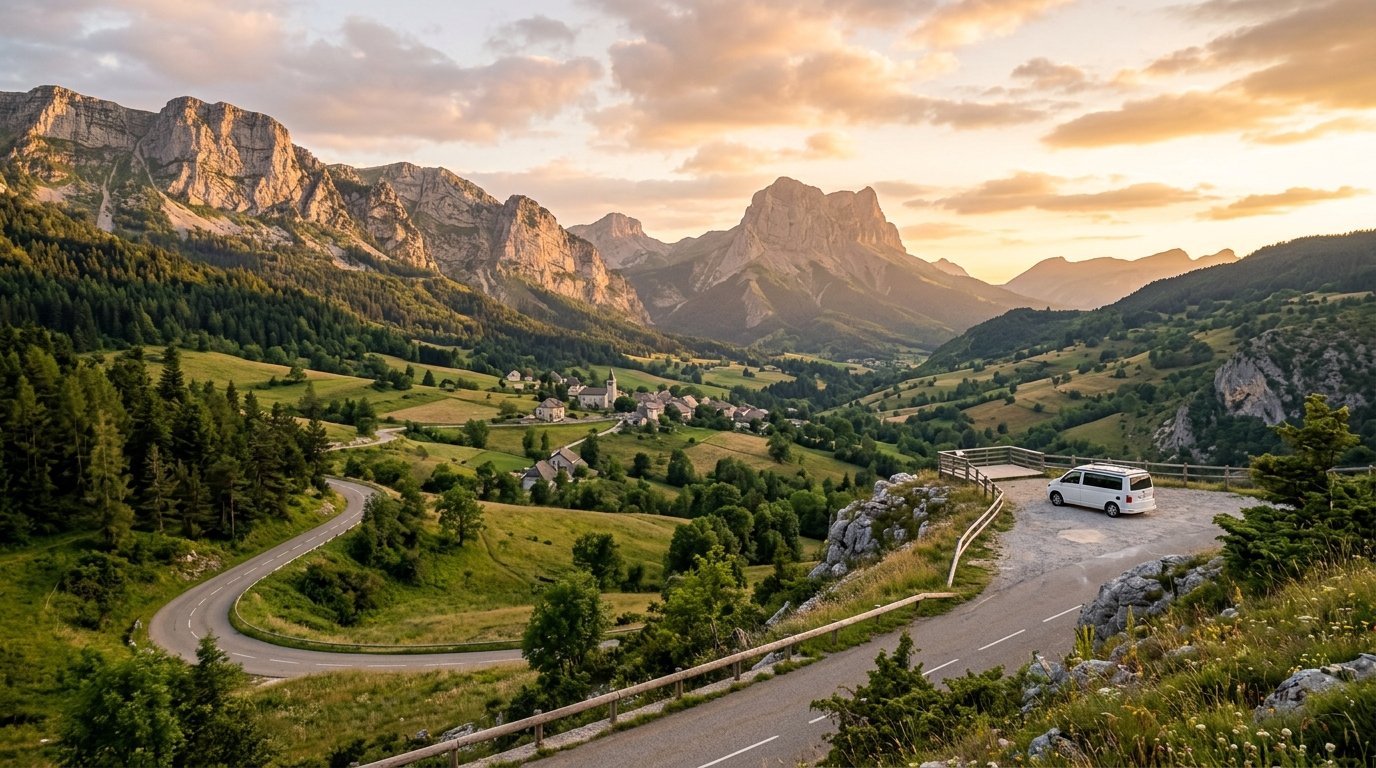
In France, traditional “wild camping” (staying multiple days with a large tent or vehicle) is strictly regulated and generally illegal for tourists on public land without explicit permission. However, lightweight overnight “bivouacking” (arriving at dusk, leaving at dawn) is widely tolerated and legally permitted in many mountainous and rural areas. Additionally, van lifers can legally sleep in their parked vehicles overnight, provided they do not set up an external camp.
2. 🌲 Wild & Dispersed Camping Rules
- Bivouac vs. Camping Sauvage: French law strictly distinguishes between bivouac (pitching a small tent from sunset to sunrise) and camping sauvage (setting up a multi-day camp with larger gear). Bivouacking is permitted on public land where not explicitly prohibited, while camping sauvage is largely banned across the national territory.
- Distance Rules: It is illegal to camp within 500 meters of classified historical monuments, within 200 meters of drinking water sources, or directly on sea shores and beaches.
- Private Property: You must always obtain the landowner’s permission before camping on private rural or farmland.
- Enforcement: In tourist hotspots, popular beach towns, and protected coastal areas, bans are actively enforced by local police with fines reaching up to €1,500. In remote mountainous areas, polite and discreet bivouacking is highly tolerated.
3. 🏞️ National Park & Protected Area Rules
- Strict Time Limits: Most national parks (like Écrins, Mercantour, and the Pyrenees) allow backcountry bivouacking, but strictly between 7:00 PM and 9:00 AM only.
- Distance from Roads: To legally bivouac in a national park, you typically must be at least a 60-minute walk away from the park boundary or any road access.
- Exceptions and Bans: Some parks strictly forbid all camping and bivouacking, notably the Calanques and Port-Cros. Others, like Vanoise, restrict bivouacking exclusively to the immediate vicinity of designated mountain huts during the summer, which requires advance booking.
- Leave No Trace: Permits are rarely required for general remote bivouacking, but park rangers patrol to ensure hikers pack up on time and leave absolutely no trace.
4. 🚐 Van Life & Overnight Vehicle Sleeping
- Parking vs. Camping: French law clearly separates “stationnement” (parking) from camping. You can legally sleep inside your campervan anywhere regular street parking is permitted, for up to 48 hours or sometimes up to 7 days, unless local signs explicitly prohibit motorhomes.
- No Exterior Setup: To remain legally “parked,” you must keep all your activities inside the vehicle. Rolling out an awning, setting up camping chairs, cooking outside, or using leveling blocks instantly turns your legal parking into illegal “camping”.
- Aires de Camping-Car: France is extremely welcoming to van life thanks to a vast network of thousands of designated motorhome rest areas called Aires. These are found in almost every municipality. Many are free or cost just €5 to €15 per night and provide fresh water, electricity, and waste disposal.
5. 🔥 Campfires & Practical Restrictions
- Campfire Bans: Open fires are strictly prohibited in almost all national parks, forests, and wild areas across France. During the summer fire season, southern regions enforce absolute zero-tolerance fire bans with massive fines for violators. Always use a small enclosed camping stove for cooking instead.
- No-Camp Zones: Never camp on the coast or beaches, in designated nature reserves (Réserves Naturelles), within the sightline of historical monuments, or in specific municipalities that have passed a local decree (arrêté municipal) banning all overnight stays.
6. 🔗 Official Sources & Links
Always verify local regulations before your trip, as municipalities can issue temporary decrees restricting camping or parking. For official up-to-date rules on national parks, visit the French National Parks Portal or consult the official French tourism website at France.fr.
Disclaimer: Land-use laws, fire bans, and local municipal parking regulations change frequently. Travelers are highly advised to verify current local rules at regional tourist offices (Offices de Tourisme) upon arrival.

Adrenaline junkie with a passion for exploring off-the-beaten-path destinations and finding unique ways to stay active. Expect stunning scenery, challenging workouts, awesome travel tips and a whole lot of fun. Let’s get sweaty and explore the world together!