
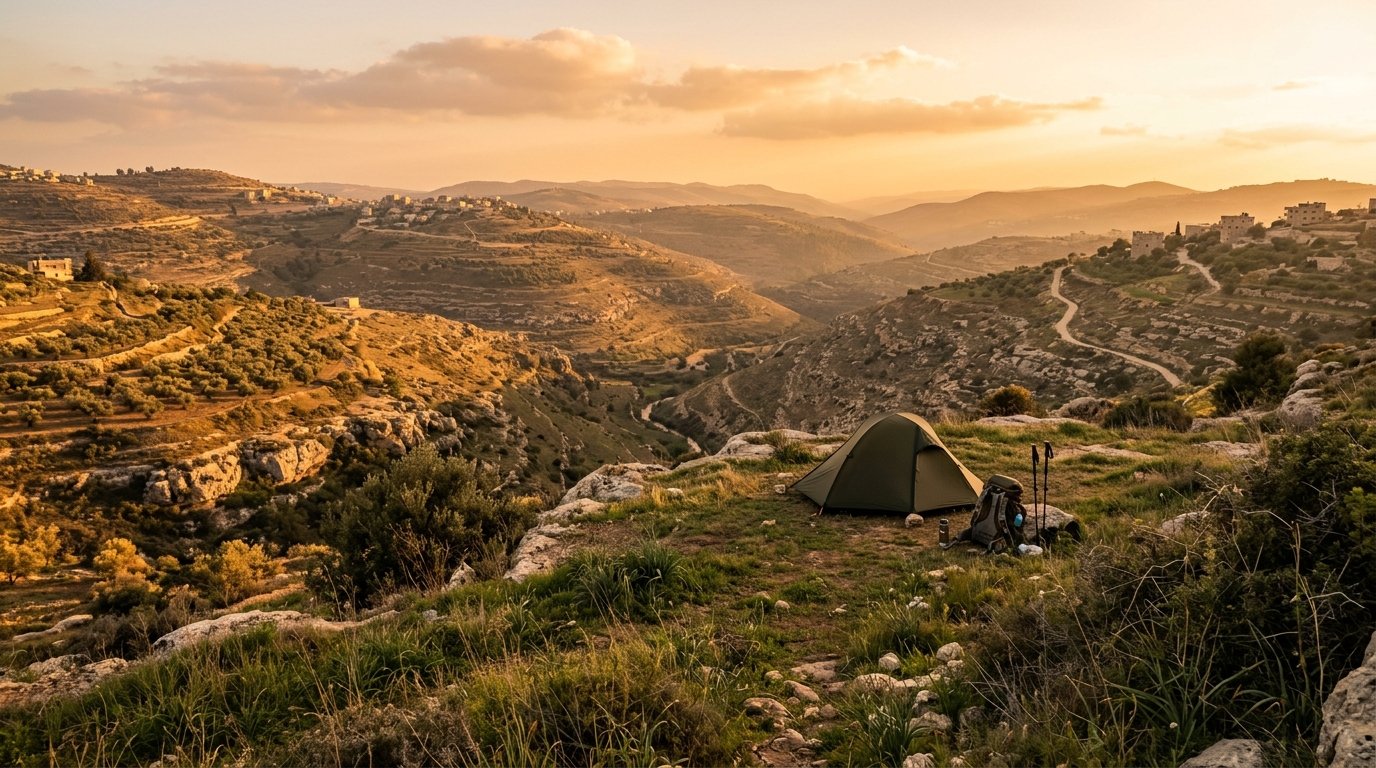
1. 🏕️ The Short Answer
For foreign tourists in the State of Palestine (specifically the West Bank), independent wild camping, dispersed camping, and van life are effectively illegal, highly restricted, and strongly discouraged. Due to complex military jurisdictions, ongoing security volatility, and a lack of public camping infrastructure, tourists should not pitch a tent or sleep in a vehicle in the wild. However, recreational “camping” is possible and popular if done through organized local networks, primarily by staying in traditional Bedouin tents or private homestay grounds along the Palestinian Heritage Trail.
2. 🌲 Wild & Dispersed Camping Rules
- Is it legal on public land? Practically speaking, no. The West Bank is divided into Areas A, B, and C. Area C contains the vast majority of open, undeveloped land but is under full Israeli military and civil control. Spontaneous wild camping here by tourists is treated with extreme suspicion and can be viewed as trespassing or a security threat.
- Are there duration limits or distance rules? Because independent wild camping is not permitted or safe, standard duration limits or distance rules do not apply. If you are hiking, you must arrange overnight stays on private, designated land (such as a local family’s property or a guesthouse).
- Is this actively enforced? Yes. Enforcement by Israeli military patrols in Area C, as well as Palestinian Authority police in Areas A and B, is exceptionally strict. Beyond legal enforcement, wild camping is actively dangerous due to the risk of wandering into military firing zones, areas with unexploded ordnance, or encountering settler violence.
3. 🏞️ National Park & Protected Area Rules
- Do protected areas have a permit system? Palestine does not operate a traditional Western-style national park system with public camping permits. Natural sites and historical areas are overseen by the Palestinian Ministry of Tourism and Antiquities, but independent wilderness camping is not part of the infrastructure.
- Is camping restricted to designated sites? Yes. If you wish to sleep under the stars in rural areas (for example, in the desert near the Mar Saba Monastery or Wadi Qelt), you must do so at a designated Bedouin camp or on private agricultural land with the owner’s explicit permission and hosting. Advance booking through local guides or tour networks is mandatory.
- Are there seasonal closures? While not strict legal “closures,” the summer heat (June to September) makes desert hiking and camping physically dangerous. The prime trekking seasons are spring (March to May) and autumn (September to November).
4. 🚐 Van Life & Overnight Vehicle Sleeping
- Is overnight vehicle sleeping legal? “Van life” as a tourist concept does not exist in the Palestinian territories. Sleeping in a vehicle in public car parks, rest stops, or on the roadside is highly suspicious and will likely result in a military or police check.
- Parking vs. Camping: There is no legal distinction that benefits tourists. Any vehicle left idling or occupied overnight in a public space will be treated as a severe security anomaly.
- Rental Car Restrictions: Most foreign tourists rent vehicles in Israel. The vast majority of Israeli rental contracts strictly prohibit taking the vehicle into Areas A and B of the West Bank, completely voiding your insurance if you do.
- Designated overnight areas: There are zero designated RV parks, aires, or van life rest areas in the West Bank or Gaza.
5. 🔥 Campfires & Practical Restrictions
- Are open campfires allowed? Campfires are allowed only on private property with the permission of the landowner (e.g., your Bedouin hosts). Lighting an open fire in the wild is extremely dangerous as it can draw unwanted military attention and poses a severe wildfire risk in the arid climate.
- Key no-camp zones: Tourists must entirely avoid the Gaza Strip, the Jordan Valley border region, all Israeli military firing zones, areas immediately surrounding Israeli settlements and outposts, and any closed military zones. Checkpoints can appear with no notice, severely restricting movement.
6. 🔗 Official Sources & Links
For the safest and most authentic way to experience nature and rural life in Palestine, you should coordinate your trek and overnight stays through official tourism and heritage networks:
- The Palestinian Heritage Trail – The official network for booking hiking guides, homestays, and authorized Bedouin camp experiences across the West Bank.
- Travel Palestine – The official portal for the Palestinian Ministry of Tourism and Antiquities.
Disclaimer: Land-use laws, military jurisdictions, and security conditions in the State of Palestine change frequently and without warning. It is critical that travelers consult their home country’s official travel advisories and coordinate with local, certified Palestinian guides before planning any outdoor recreation or travel in the region.

Adrenaline junkie with a passion for exploring off-the-beaten-path destinations and finding unique ways to stay active. Expect stunning scenery, challenging workouts, awesome travel tips and a whole lot of fun. Let’s get sweaty and explore the world together!