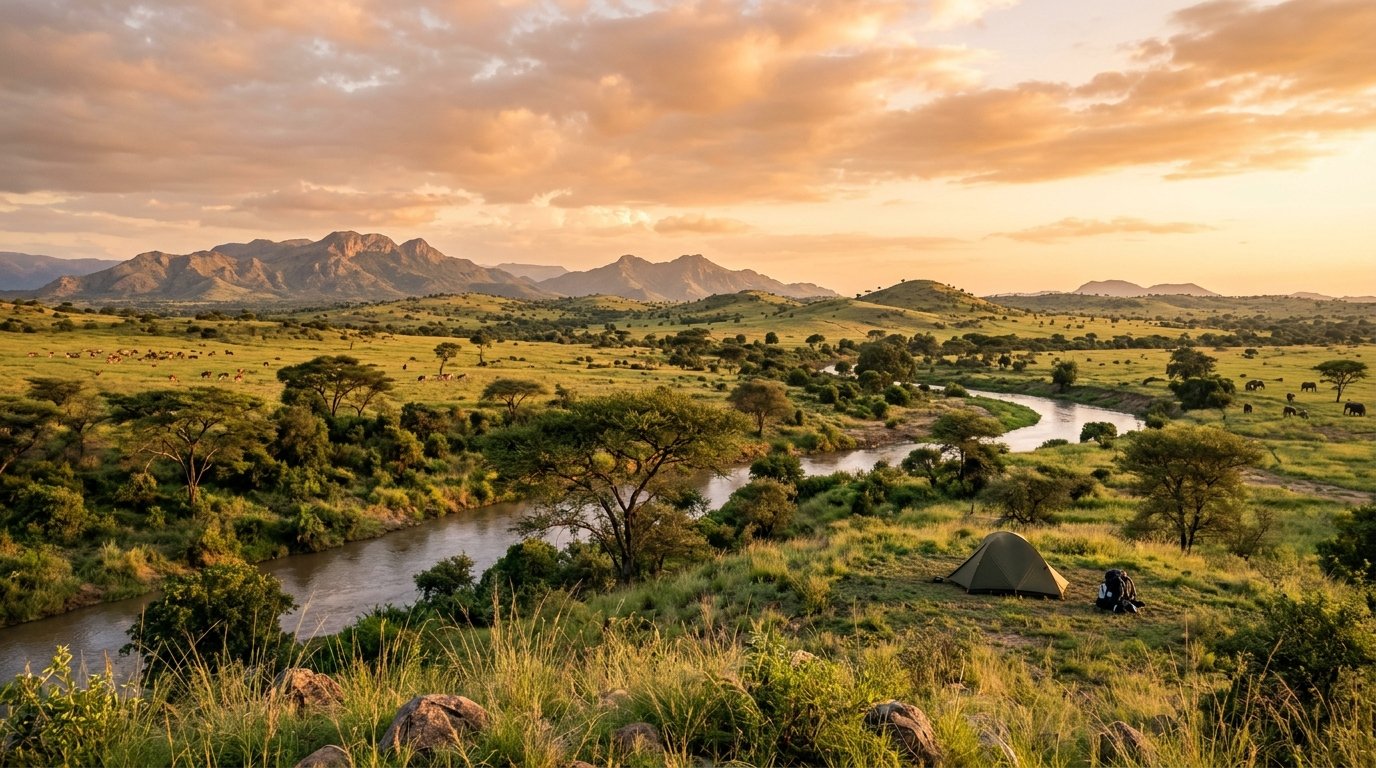
1. 🏕️ The Short Answer
For foreign tourists, independent wild or dispersed camping in South Sudan is exceptionally dangerous and effectively impossible. While there is no specific recreational law outlawing camping on public land, strict military travel restrictions, severe security risks, and a complete lack of tourism infrastructure mean that camping is only legally and practically viable as part of a fully guided, permitted expedition with armed security escorts.
2. 🌲 Wild & Dispersed Camping Rules
- Legality for tourists: Independent wild camping outside of official, guided tours is strongly advised against and virtually illegal in practice. Travel outside the capital of Juba requires strict documentation, including a National Security permit and local tribal permissions.
- Duration and distance rules: South Sudan does not have a conventional recreational camping code dictating distances from roads or water. Overnight stays are entirely dictated by your tour operator, tribal leaders (such as in the Mundari cattle camps), and security personnel.
- Enforcement: Extremely strict. Roaming independently into the bush or setting up a tent unannounced will likely result in arrest by military or police for suspected espionage, detention, or severe danger from armed groups and unexploded ordnance (UXOs).
3. 🏞️ National Park & Protected Area Rules
- Permit systems: Yes, a separate permit from the Ministry of Wildlife Conservation and Tourism is mandatory, in addition to your National Security permit. African Parks co-manages key reserves like Boma and Bandingilo National Parks with the government.
- Designated sites and booking: There is almost no public camping infrastructure. You must book a mobile camping safari through a registered operator in advance, or stay at newly established, specialized conservation sites (such as the Maruwa Hills Tourist Camp or Nyat Research Camp). You cannot simply show up at a park gate.
- Seasonal closures: While not formal “closures,” the rainy season (generally May to November) turns the unpaved terrain and black cotton soil into impassable mud, effectively closing overland access to national parks for half the year.
4. 🚐 Van Life & Overnight Vehicle Sleeping
- Roadside sleeping: Sleeping in a vehicle overnight on roadsides, rest stops, or public car parks is highly dangerous and strongly discouraged. It will instantly attract military, police, or bandit attention.
- Parking vs. Camping: The law does not make a recreational distinction between the two. However, parking an overland vehicle overnight in an unauthorized public space is generally treated as a severe security threat by local authorities.
- Designated areas: There are no “aires,” RV parks, or tourist rest areas in South Sudan. Overland travelers must coordinate with local authorities to park inside secure, walled hotel compounds, guarded missionary grounds, or designated police checkpoints.
5. 🔥 Campfires & Practical Restrictions
- Campfire rules: Open campfires are generally allowed and are a staple of mobile safari camps and local cultural experiences (such as the ash fires used in Mundari camps to repel insects). There are no strict tourist fire bans, but fires are managed closely by your local guides.
- Key no-camp zones: Never camp near or photograph military installations, government buildings, bridges, or sensitive infrastructure. Border regions (particularly those shared with Sudan, the Democratic Republic of the Congo, and the Central African Republic) are active conflict zones and strictly off-limits. Keep in mind that a separate Photography Permit is legally required to use a camera anywhere in the country.
6. 🔗 Official Sources & Links
Because tourism in South Sudan is heavily restricted, you should always consult your home country’s travel advisories and coordinate with the organizations managing the protected lands:
- African Parks: Badingilo & Boma National Parks – Official management and conservation partner for South Sudan’s primary wildlife reserves.
- U.S. Department of State: South Sudan Travel Advisory – Critical up-to-date security information and legal warnings for foreign travelers.
Disclaimer: Land-use laws, national security restrictions, and protected area regulations in South Sudan change frequently and vary by region. Always verify current rules, secure all necessary permits, and hire a registered, heavily vetted local tour operator before planning any trip.

Adrenaline junkie with a passion for exploring off-the-beaten-path destinations and finding unique ways to stay active. Expect stunning scenery, challenging workouts, awesome travel tips and a whole lot of fun. Let’s get sweaty and explore the world together!