
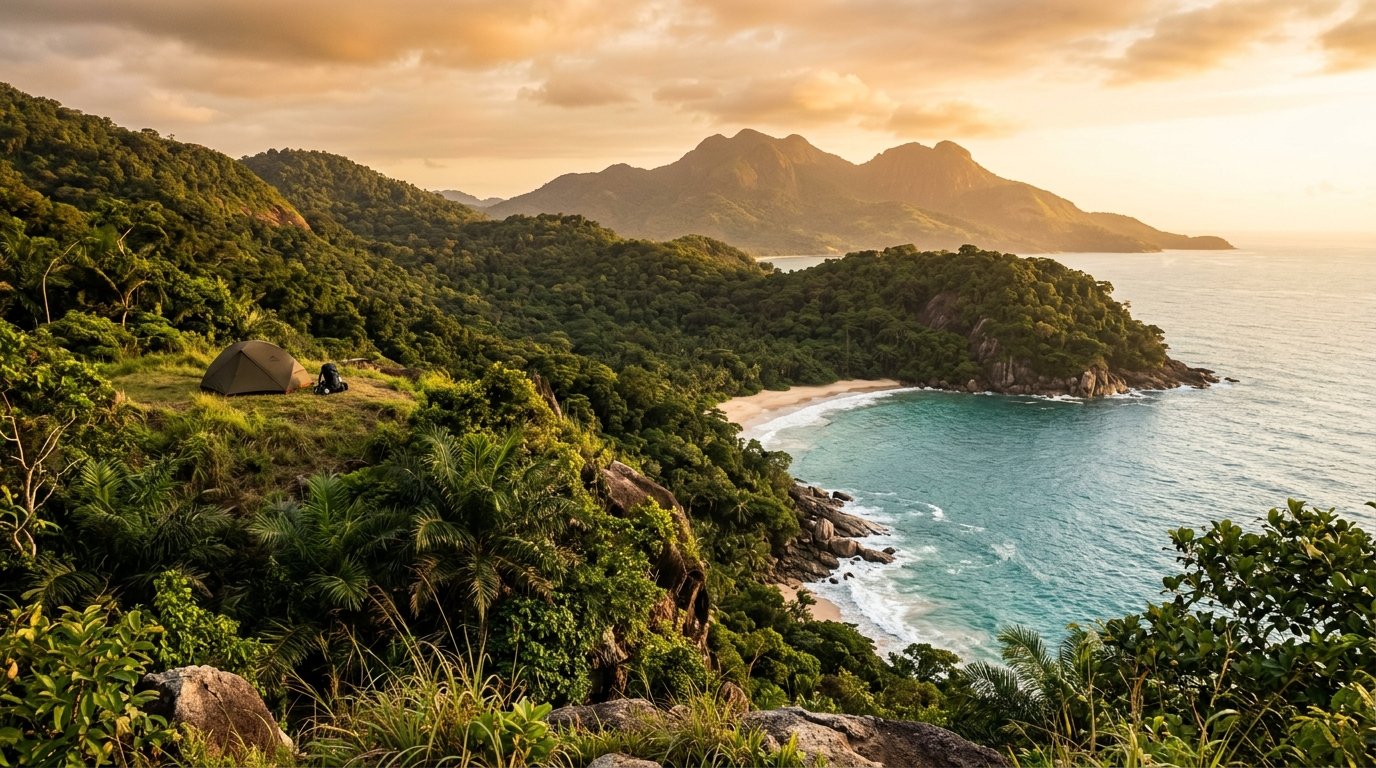
1. 🏕️ The Short Answer
For foreign tourists, wild and dispersed camping in Sierra Leone is effectively restricted and operates in a legal grey area. There is no official framework for free camping on public land; instead, you must either obtain explicit permission from local community leaders (Chiefs) to camp on village land or book a designated campsite within a National Park where you will be required to hire a mandatory local guide.
2. 🌲 Wild & Dispersed Camping Rules
- Is camping outside official campsites legal for tourists on public land? There is no concept of “public land” for open recreation in Sierra Leone like there is in North America or parts of Europe. Land outside of cities is largely owned by local communities or designated as protected government forest. Pitching a tent without permission is not advised. However, informal wild camping is tolerated if you present yourself to the local Paramount Chief or village headman and ask for explicit permission to camp on their community land.
- Are there duration limits or distance rules? There are no codified national laws dictating distance from roads or water sources for wild camping. The duration and location of your stay will be entirely at the discretion of the community leader granting you permission.
- Is this actively enforced? Rather than park rangers or traditional police, rural land rules are enforced by the local communities. Unpermitted camping will likely be viewed with high suspicion and could lead to intervention by local authorities or community members.
3. 🏞️ National Park & Protected Area Rules
- Do national parks have a separate camping permit system? Yes. The National Protected Area Authority (NPAA) strictly regulates areas like the Gola Rainforest National Park and Outamba-Kilimi National Park. You must hold a valid entrance permit and arrange your trip in advance.
- Is camping restricted to designated sites only? Absolutely. Camping in National Parks is restricted to designated clearings (such as Gola Central and Gola South). Advance booking is mandatory, and all tourists must be accompanied by a park staff member and a local community guide at all times. You cannot explore the backcountry alone.
- Are there seasonal closures? While parks rarely close entirely, the intense rainy season (May through November) washes out dirt access roads and causes rivers to swell, making many protected areas and campsites virtually inaccessible to tourists.
4. 🚐 Van Life & Overnight Vehicle Sleeping
- Is it legal to sleep overnight in a vehicle in public car parks or roadsides? In urban areas like Freetown, overnight parking and vehicle sleeping are heavily restricted. The Sierra Leone Road Safety Authority (SLRSA) and local city councils actively enforce strict “No Parking and No Waiting” zones, especially in the Central Business District and popular tourist zones like Lumley and Aberdeen beaches. Violators are subject to immediate towing and fines.
- Does local law distinguish between “parking” and “camping”? Yes, but mainly because long-term parking itself is illegal on most city streets to prevent severe traffic congestion. Delivery vehicles are often limited to 40-minute parking windows. Using a vehicle for accommodation on public streets is not part of the local culture and will draw swift law enforcement attention.
- Are there designated overnight areas? There is no network of “aires,” RV parks, or public rest areas for van life. Travelers in overland vehicles must negotiate with guesthouses, private eco-lodges, or rural village chiefs to park overnight on private property.
5. 🔥 Campfires & Practical Restrictions
- Are open campfires generally allowed? Outside of protected areas, campfires are permitted but should only be built with local consent using “Leave No Trace” principles. In National Parks, campfires and cooking are strictly managed by your assigned park guides to prevent bushfires.
- Key no-camp zones: Tourists should strictly avoid camping near border regions (Guinea and Liberia crossings), diamond and mineral mining districts (such as the Kono District), and any unauthorized, unguided areas of protected forest reserves to avoid being mistaken for illegal loggers or poachers.
6. 🔗 Official Sources & Links
For the most current information, permits, and booking procedures, travelers should consult:
- Ministry of Tourism and Cultural Affairs of Sierra Leone
- Gola Rainforest National Park Official Site
Disclaimer: Land-use laws, national park regulations, and road safety enforcement in Sierra Leone can change frequently. Always verify current camping, permit, and travel safety rules with official local sources, your embassy, and park headquarters before your trip.

Adrenaline junkie with a passion for exploring off-the-beaten-path destinations and finding unique ways to stay active. Expect stunning scenery, challenging workouts, awesome travel tips and a whole lot of fun. Let’s get sweaty and explore the world together!