
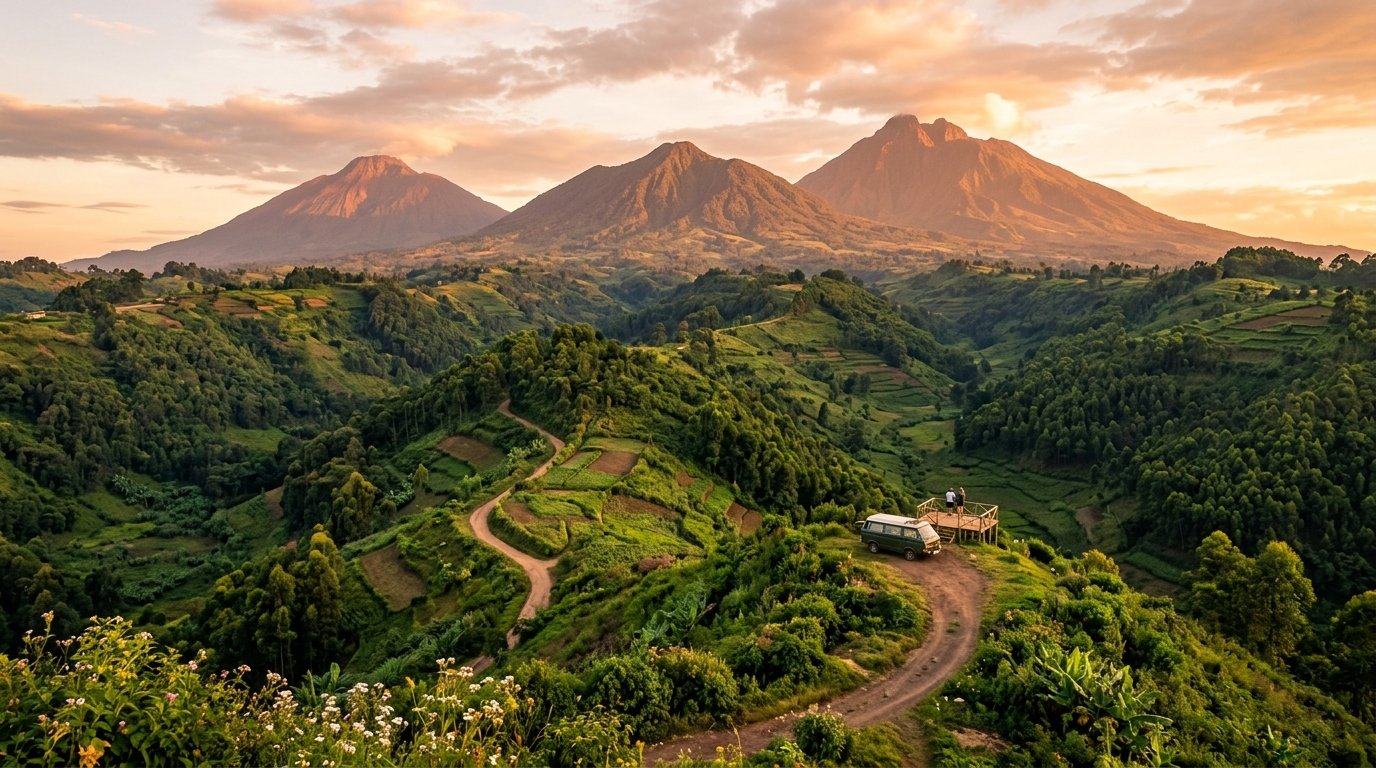
1. 🏕️ The Short Answer
In Rwanda, spontaneous wild or dispersed camping is effectively illegal and highly discouraged for foreign tourists. Because of strict conservation policies, high population density, and rigorous national security measures, travelers are required to sleep at designated national park campsites, private eco-lodges, or officially permitted community grounds.
2. 🌲 Wild & Dispersed Camping Rules
- Legality on Public Land: Free “wild” camping outside of official campsites is not tolerated on public land. Rwanda does not have a legal framework that allows for a “right to roam” or open-land camping for tourists.
- Duration and Distance Rules: Because wild camping is prohibited, standard dispersed camping distance rules do not apply. You must set up camp only in recognized, fee-paying campsites or on private land where you have explicit prior permission from the landowner and local authorities.
- Enforcement: Enforcement is strict and active. Rwanda has a robust police and local security presence. Pitching a tent in an unauthorized area will almost certainly attract swift attention from local patrols, resulting in being forced to move and potentially facing questioning or fines.
3. 🏞️ National Park & Protected Area Rules
- Permits and Designated Sites: You cannot camp freely inside any of Rwanda’s national parks. All park access and camping require permits and entrance fees managed by the Rwanda Development Board (RDB) and park authorities.
- Where You Can Camp: Akagera National Park is the primary destination for self-drive and tent camping in Rwanda, offering specific, electric-fenced campsites (such as Muyumbu, Shakani, Mutumba, and Mihindi). Advance booking is highly recommended. In contrast, Volcanoes and Nyungwe National Parks possess highly sensitive gorilla and chimpanzee habitats; consequently, independent camping is virtually non-existent inside the park borders. Campers must instead use designated private campsites located outside the park boundaries.
- Seasonal & Park Rules: Park gate hours must be strictly observed (usually 6:00 AM to 6:00 PM). Furthermore, pets, firearms, and off-road driving are strictly banned to protect the wildlife.
4. 🚐 Van Life & Overnight Vehicle Sleeping
- Roadside Sleeping: Sleeping overnight inside a vehicle on public roads, city car parks, or highway rest stops is not legally permitted. Doing so is viewed as a security and safety concern by local authorities.
- Parking vs. Camping: Local enforcement views overnight vehicle occupation as camping. While daytime parking is fine, you cannot simply park a campervan or 4×4 on the side of a road to sleep.
- Designated Areas: Rwanda does not have European-style public rest areas or “aires” for free motorhome sleeping. 4×4 vehicles equipped with rooftop tents are incredibly popular for tourists, but these vehicles must be driven into official, paid campsites or lodge grounds for overnight stays.
5. 🔥 Campfires & Practical Restrictions
- Campfire Rules: Open fires in the wild are strictly prohibited to prevent bushfires. Campfires are only legally allowed within the established fire rings, barbecue pits, or designated zones provided at official campsites (such as those inside Akagera). You should use the firewood provided or sold by the campsite rather than foraging, which damages the local ecosystem.
- No-Camp Zones: Travelers must entirely avoid camping near border regions (especially the borders with the Democratic Republic of the Congo and Burundi), military installations, and strictly protected wildlife breeding zones.
- Umuganda Rule: Travelers must be aware of “Umuganda,” a mandatory nationwide community service period held on the last Saturday of every month from roughly 8:00 AM to 11:00 AM. During this time, private vehicle movement is heavily restricted, and shops are closed. You cannot break camp and drive on public roads during these hours.
6. 🔗 Official Sources & Links
To verify the most current regulations, pay park entrance fees, and secure official campsite bookings, please consult the following trusted authorities:
Disclaimer: Camping regulations, national park rules, and land-use laws change frequently. The information provided in this guide is for educational and trip-planning purposes. Always verify current laws with the Rwanda Development Board, local park rangers, or a trusted tour operator before embarking on your journey.

Adrenaline junkie with a passion for exploring off-the-beaten-path destinations and finding unique ways to stay active. Expect stunning scenery, challenging workouts, awesome travel tips and a whole lot of fun. Let’s get sweaty and explore the world together!