
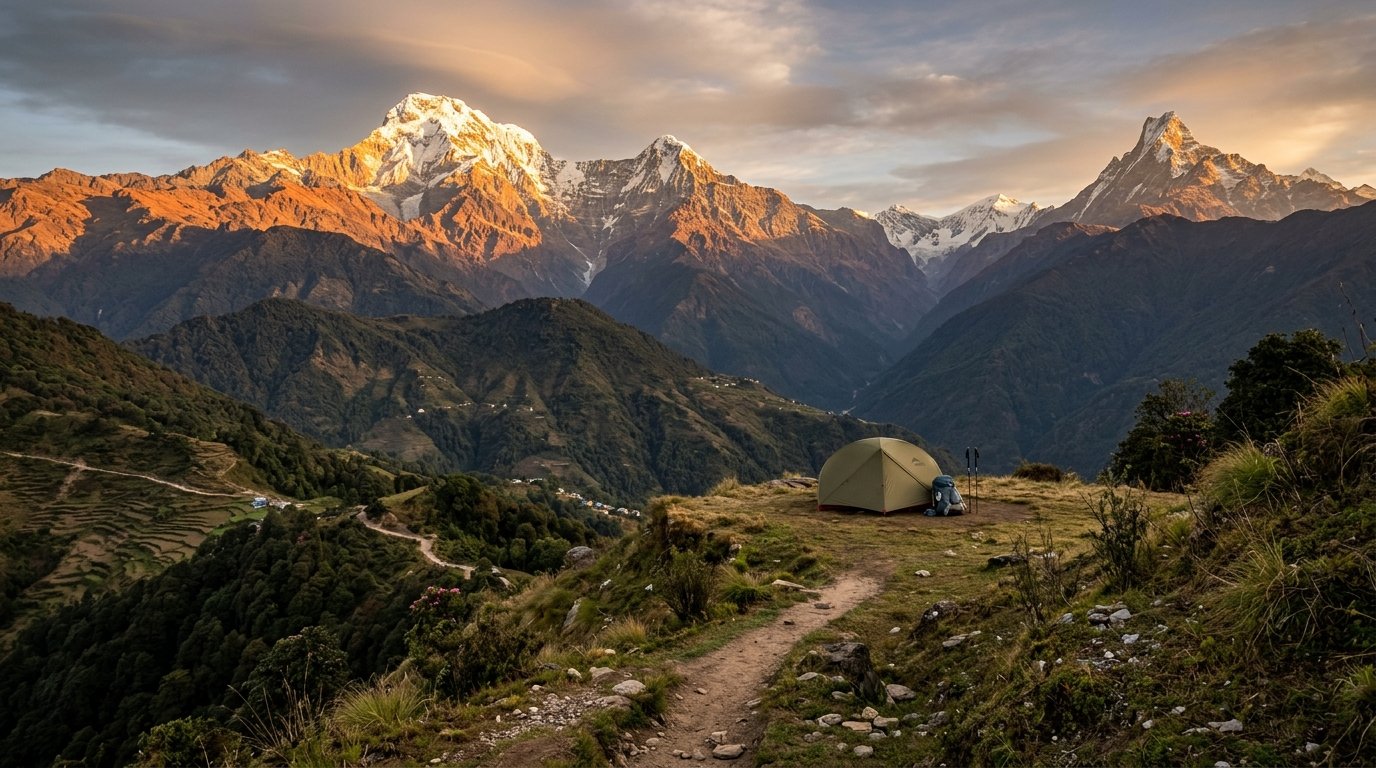
1. 🏕️ The Short Answer
For independent foreign tourists, wild and dispersed camping is effectively illegal and impossible in Nepal due to strict national trekking regulations. Under the country’s Mandatory Guide Policy, foreigners are legally prohibited from trekking or camping solo in almost all national parks and conservation areas, meaning any outdoor camping must be done as part of a registered, agency-led expedition at officially designated sites.
2. 🌲 Wild & Dispersed Camping Rules
- Is camping outside official campsites legal for tourists on public land? No. True independent wild camping on public land is banned for foreign tourists. You cannot legally wander into the mountains, forests, or valleys and pitch a tent on your own.
- Are there duration limits or distance rules? Because independent wild camping is prohibited, standard distance and duration rules do not apply to solo travelers. For guided “camping treks” (organized by a licensed agency), guides must adhere to strict Leave No Trace principles. They are required to set up tents only on durable surfaces, established campsites, or the private grounds of local tea houses.
- Is this actively enforced? Yes, enforcement is incredibly strict. You cannot obtain the mandatory Trekking Information Management System (TIMS) card or conservation permits without booking a government-registered guide. Police, military, and ranger checkpoints are stationed along all major trails; tourists found trekking or camping without a guide and proper permits will be turned back and face heavy fines. Note: While the Everest (Khumbu) region sometimes uses a localized permit system rather than TIMS, independent wild camping remains strictly prohibited there as well.
3. 🏞️ National Park & Protected Area Rules
- Do national parks have a separate camping permit system? Yes. To enter any protected area, you need a National Park or Conservation Area Permit (such as the ACAP for Annapurna), plus a TIMS card. Certain remote zones require even more expensive Restricted Area Permits (RAPs).
- Is camping restricted to designated sites only? Yes. Your mandatory guide will organize your accommodation, which is strictly limited to designated agency campsites or local lodge properties. You do not need to book these yourself; your registered trekking agency handles all logistics and advance bookings.
- Are there seasonal closures? While the parks rarely close completely, specific high-altitude trails, passes, and base camps become inaccessible and are effectively closed during the heavy summer monsoon season (June to August) due to severe landslide risks, and in deep winter due to avalanches.
4. 🚐 Van Life & Overnight Vehicle Sleeping
- Is it legal to sleep overnight in a vehicle? There are no specific national laws banning sleeping in a vehicle, but the concept of “van life” is virtually non-existent for tourists due to the extreme mountain terrain, narrow winding roads, and strict foreign vehicle import regulations.
- Parking vs. Camping: Nepalese law does not formally distinguish between parking and camping because recreational RV travel by foreigners is so rare. If you are an overlander who legally brought a vehicle into Nepal, authorities generally will not bother you as long as you are not blocking traffic or parked on military land.
- Are there designated overnight areas? There are no public “aires,” RV parks, or designated rest stops. Overlanders traveling in vans or expedition vehicles typically pay a small fee to park and sleep in the secure parking lots of guesthouses, hotels, or on private land with the owner’s direct permission.
5. 🔥 Campfires & Practical Restrictions
- Are open campfires generally allowed? No. Open campfires are heavily restricted and practically banned across protected areas and alpine zones. The Himalayan ecosystem is extremely fragile, and timber is a scarce resource essential for local survival. Guides and tourists are required by law to use kerosene or gas stoves for cooking to prevent deforestation and wildfires.
- Key no-camp zones tourists should avoid: You must strictly avoid wandering off-trail or attempting to camp near Nepal’s northern borders with the Tibet Autonomous Region of China. Areas like Upper Dolpo, Upper Mustang, and the Manaslu region are highly sensitive, militarized zones. Being caught off your guided itinerary in these restricted border regions is a serious national security offense.
6. 🔗 Official Sources & Links
Because trekking and permit rules in Nepal are subject to frequent updates, you should always verify current regulations before planning a trip:
- Nepal Tourism Board (NTB) – The official authority on TIMS cards, the Mandatory Guide Policy, and national trekking regulations.
- Department of Immigration Nepal – The official government source for Restricted Area Permits (RAPs) and tourist visa requirements.
Disclaimer: Camping, trekking, and land-use laws in Nepal change frequently, and enforcement can vary significantly by region. This guide is for informational purposes only. Always verify current regulations, permit requirements, and guide mandates with official Nepalese government sources or a registered local trekking agency before your trip.

Adrenaline junkie with a passion for exploring off-the-beaten-path destinations and finding unique ways to stay active. Expect stunning scenery, challenging workouts, awesome travel tips and a whole lot of fun. Let’s get sweaty and explore the world together!