
1. 🏕️ The Short Answer
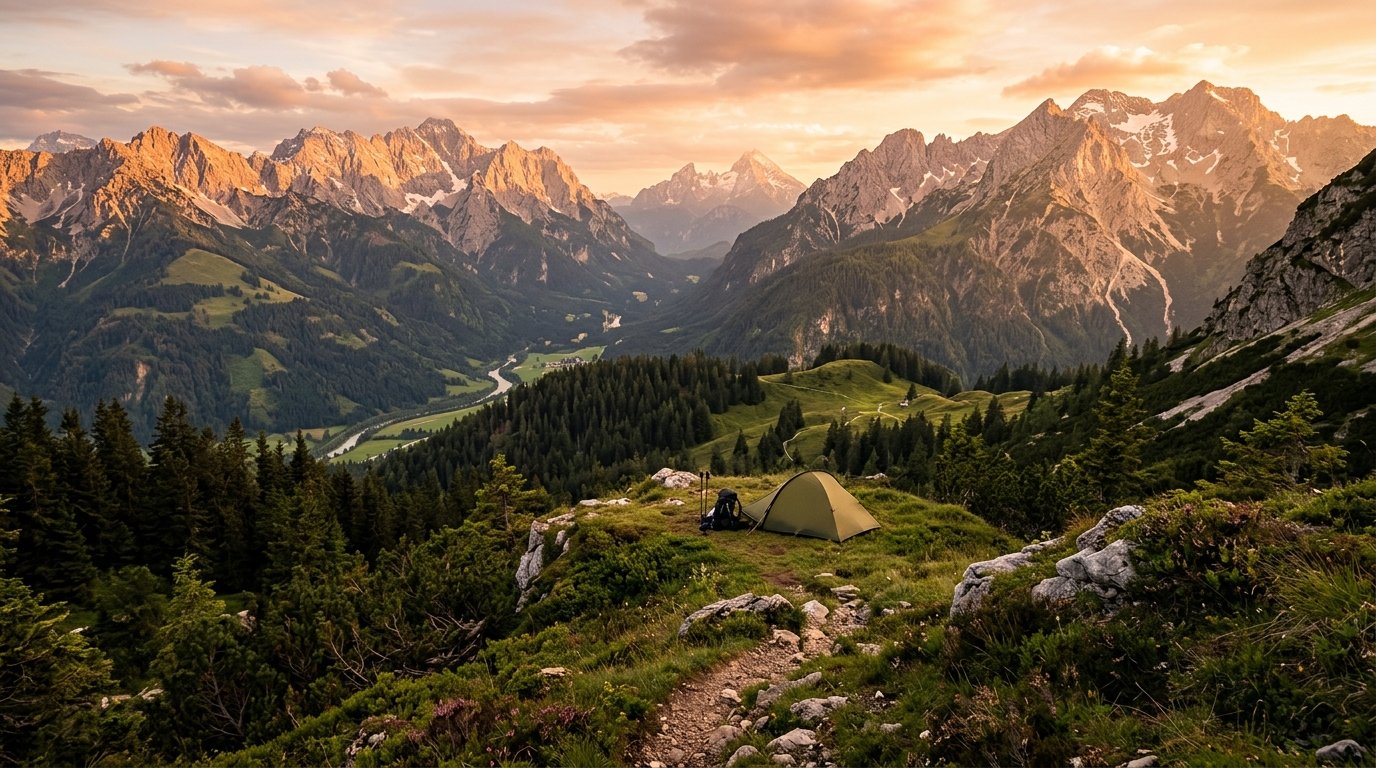
Wild and dispersed camping in a tent or setting up a motorhome camp on public land is generally illegal in Germany. Unlike Scandinavia, there is no “everyman’s right” to camp wherever you please. For foreign tourists, this means you must rely on official campsites, designated motorhome stops (Stellplätze), or specifically approved wilderness trekking camps. However, sleeping in your vehicle for one night simply to rest before driving further is legally tolerated under strict conditions.
2. 🌲 Wild & Dispersed Camping Rules
- Legality on Public Land: Pitching a tent in forests, meadows, or public natural spaces is prohibited nationwide. While the laws are governed by state-level forestry and nature conservation acts, they are uniformly strict across the country.
- Bivouacking Loophole: Sleeping outdoors without a tent (just a sleeping bag, sleeping mat, or bivy sack) falls into a legal grey area. It is sometimes tolerated for a single night if a hiker is caught out, but this is an emergency exception rather than a recreational right.
- Private Property: You may legally camp on private land (such as a farm) provided you have the explicit, prior permission of the landowner.
- Enforcement: Germany takes environmental protection and land use seriously. Laws are actively enforced by forest rangers, local police, and local hunters. Fines vary by state (Bavaria is notably strict) but can range from €25 to over €2,500 depending on the severity of the offense.
3. 🏞️ National Park & Protected Area Rules
- Strict Prohibitions: Wild camping or even tentless bivouacking is strictly forbidden in all National Parks, nature reserves (Naturschutzgebiete), and landscape protection areas. Enforcement is high and carries heavy penalties.
- Trekking Camps (Trekkingplätze): To provide a legal wilderness experience, regions like the Black Forest, the Palatinate Forest, and the Spessart have introduced official “trekking camps”. These are highly regulated, primitive sites hidden in the woods where you can legally pitch a tent for one night. They require advance booking online, charge a small fee, and usually only allow 1 to 3 tents per site.
- Seasonal Restrictions: Access to certain trails and official trekking camps may be closed during the winter months, wildlife breeding seasons, or times of high forest fire risk.
4. 🚐 Van Life & Overnight Vehicle Sleeping
- Restoring Driving Ability: Under German traffic law, you are legally permitted to sleep in your vehicle for one night (typically accepted as up to 10 hours) in public parking lots, highway rest stops, or on the street, but strictly “zur Wiederherstellung der Fahrtüchtigkeit” (to restore your fitness to drive).
- Parking vs. Camping: There is a massive legal distinction between resting and camping. If you are resting to restore your driving ability, you cannot show any “camping behavior”. This means no extending awnings, no setting up tables or chairs outside, and no cooking outside your vehicle.
- Designated Aires (Stellplätze): Germany is incredibly van-friendly thanks to its vast network of Wohnmobilstellplätze. These are designated, low-cost (and occasionally free) overnight parking areas specifically for motorhomes and campervans. They often provide electricity and waste disposal stations.
5. 🔥 Campfires & Practical Restrictions
- Strict Forest Ban: Open fires are strictly prohibited inside forests and within 100 meters of the forest edge. This rule applies to open campfires as well as gas stoves, camping cookers, and torches.
- Designated Fire Pits: You may only light a fire at official, established fire pits or barbecue areas (Grillplätze). Fires must be constantly monitored and you must have enough extinguishing material (water or sand) on hand.
- Seasonal Bans: During dry summer months, authorities monitor the Forest Fire Danger Index (Waldbrandgefahrenindex). At levels 3 to 5, even official public barbecue areas are shut down, and entering some forests may be restricted entirely. Fines for illegal fires or negligence can reach up to €5,000 (and occasionally higher).
- Restricted Zones: Tourists should avoid attempting to rest or camp in active hunting zones, coastal dykes on the North Sea (due to flood protections), or near military training areas.
6. 🔗 Official Sources & Links
To verify up-to-date rules, book designated trekking spots, or find official campsites, travelers should consult the following resources:
- German National Tourist Board (Germany.travel) – Official Camping Information
- Federal Association of the Camping Industry in Germany (BVCD)
Disclaimer: Land-use laws, forestry regulations, and regional restrictions in Germany are subject to change. Travelers should always verify current regulations, especially regarding fire bans and protected nature zones, with local tourism offices or municipal authorities before their trip.

Adrenaline junkie with a passion for exploring off-the-beaten-path destinations and finding unique ways to stay active. Expect stunning scenery, challenging workouts, awesome travel tips and a whole lot of fun. Let’s get sweaty and explore the world together!