
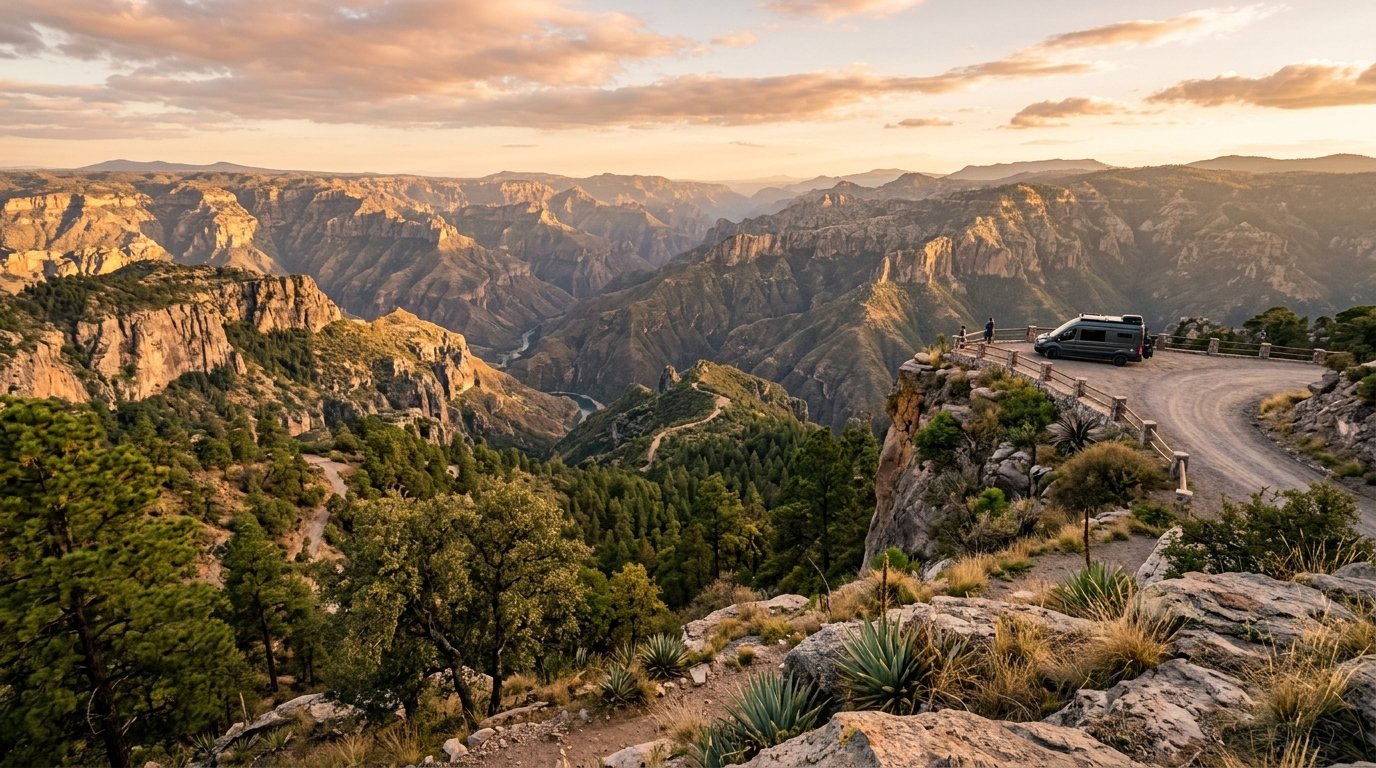
1. 🏕️ The Short Answer
Wild and dispersed camping in Mexico is broadly legal, heavily tolerated, and exists in a highly permissive grey area for foreign tourists and vanlifers. While there are very few federal laws explicitly banning “free camping” on beaches or rural public land, the primary constraint for tourists is personal safety. Due to regional security concerns, travelers are advised to stick to established tourist corridors, community-run sites, or verified dispersed spots rather than pulling over blindly into the wilderness.
2. 🌲 Wild & Dispersed Camping Rules
- Legality on Public Land: Free camping on beaches and rural public land is generally legal and widely practiced. In many rural areas, land is governed by local indigenous or farming communities (ejidos); camping here is completely acceptable if you politely ask for permission and pay a small, unofficial fee to the local representative.
- Duration and Distance Limits: Mexico does not have strict, federally enforced stay limits (like the 14-day rule on US public lands) or mandatory distances from roads. It is common for travelers to camp on Baja California beaches for months at a time without issue.
- Enforcement: Formal enforcement by rangers or police regarding where you pitch a tent or park a van is rare. If police do approach you, it is typically a welfare check or to politely advise you that the area is unsafe. As long as you respect private property and the locals, you will rarely face legal citations for wild camping.
3. 🏞️ National Park & Protected Area Rules
- Permit Systems: Mexico’s protected natural areas (Áreas Naturales Protegidas) are managed by CONANP. Unlike the US or Canada, there is rarely a need for advance reservations or complex online permit systems. Instead, you typically pay a modest conservation fee (usually under 200 MXN) in cash at the park entrance or visitor center.
- Designated Sites: Within National Parks and Biosphere Reserves, camping is generally restricted to designated eco-tourism zones and basic campsites. Strict conservation zones within these parks prohibit dispersed camping to protect sensitive ecosystems and wildlife.
- Seasonal Closures: Parks frequently implement seasonal closures or restrictions. This occurs particularly during the dry season to prevent wildfires, or during critical wildlife events such as sea turtle nesting season on protected beaches, where nighttime access, camping, and vehicle traffic are strictly banned.
4. 🚐 Van Life & Overnight Vehicle Sleeping
- Vehicle Sleeping: Sleeping in your vehicle is legal in Mexico. There are no federal laws prohibiting tourists from sleeping in campervans or RVs in public parking lots, town squares, or on the street.
- Parking vs. Camping: The strict European legal distinction between “parking” (sleeping inside with nothing outside) and “camping” (putting chairs or awnings out) is not formally codified in Mexican traffic law. However, common sense applies: keep a stealthy, low profile on city streets to avoid attention, but feel free to set up camp fully on a remote beach.
- Designated Overnight Areas: Mexico does not have a formal network of public rest areas. Vanlifers safely overnight at 24-hour Pemex gas stations, secure toll booth parking lots (casetas), or restaurant parking lots (with permission and after buying a meal). Using crowd-sourced apps to find safe, verified overnight spots is highly recommended.
5. 🔥 Campfires & Practical Restrictions
- Campfire Laws: Open campfires are generally permitted on beaches and unregulated rural land, where travelers frequently burn driftwood. However, within National Parks and forested protected areas, fires are heavily restricted, confined to designated fire pits, or entirely banned—especially during the dry season to prevent devastating wildfires.
- No-Camp Zones: Tourists should strictly avoid wild camping in active cartel conflict zones (e.g., Michoacán, Tamaulipas, Zacatecas, and parts of Sinaloa, Guanajuato, and Jalisco). Additionally, avoid camping near military checkpoints, sensitive border infrastructure, and unmarked dirt roads branching off highways, as these can lead to private agricultural land or illicit operations.
6. 🔗 Official Sources & Links
For official information on protected areas, park entrance fees, and environmental guidelines, consult the National Commission of Protected Natural Areas (CONANP): CONANP Official Website.
For up-to-date regional safety advisories, always check your home country’s travel resources, such as the U.S. Department of State – Mexico Travel Advisory.
Disclaimer: Land-use laws, park regulations, and regional safety dynamics in Mexico can change frequently. Always verify current restrictions with local authorities, community leaders (ejidatarios), and official travel advisories before embarking on your trip.
Adrenaline junkie with a passion for exploring off-the-beaten-path destinations and finding unique ways to stay active. Expect stunning scenery, challenging workouts, awesome travel tips and a whole lot of fun. Let’s get sweaty and explore the world together!