
1. 🏕️ The Short Answer
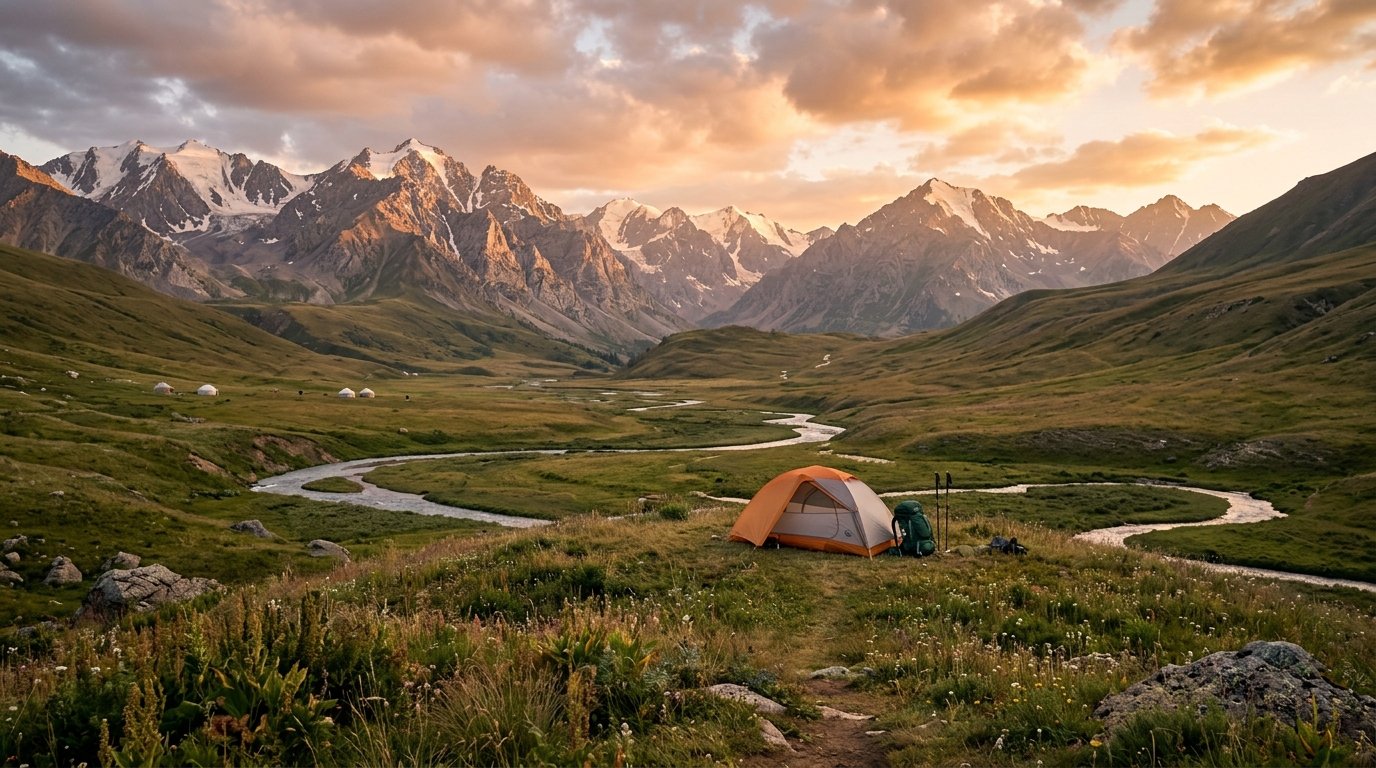
Wild and dispersed camping in Kyrgyzstan is entirely legal, openly tolerated, and considered one of the best ways for tourists to experience the country. Thanks to a deep-rooted nomadic culture, foreign travelers can pitch a tent or park a campervan almost anywhere in the mountains and valleys without asking permission or paying a fee, making it an absolute paradise for backcountry explorers,.
2. 🌲 Wild & Dispersed Camping Rules
- Legal Status: Camping outside official campsites is fully legal for tourists on almost all public and state land. The landscape—especially the high summer pastures known as jailoos—operates on an open-access tradition for both locals and foreigners,.
- Limits and Distances: There are no formal legal duration limits for how long you can stay in one spot,. However, cultural etiquette dictates that you should pitch your tent at least 200 meters away from active herder yurt camps and livestock pens, unless invited closer. Always camp a respectful distance from water sources so grazing animals can access them without disruption.
- Enforcement: Because wild camping is legal and customary, there is virtually no police or ranger enforcement against it on public lands,. If approached by locals or shepherds, it is almost always out of curiosity and hospitality, not to issue fines or move-on orders,.
3. 🏞️ National Park & Protected Area Rules
- Permits and Fees: Most national parks (such as Ala-Archa, Kara-Shoro, and Besh-Tash) do not require advance camping permits, but you must pay a small environmental fee in cash at the entrance gate, usually ranging from $2 to $5 USD,.
- Designated Sites: While you can roam freely in most of the country, inside heavily protected National Parks like Sary-Chelek or Chon-Kemin, rangers may require you to camp in designated zones or seek their direct approval to pitch your tent. Advance booking is virtually unheard of; you simply negotiate your spot and pay the ranger upon arrival.
- Seasonal Closures: There are very few official, legally enforced seasonal closures, but nature enforces its own limits. High-altitude trails and alpine lakes are completely snowbound, freezing, and generally inaccessible for safe camping from October through May.
4. 🚐 Van Life & Overnight Vehicle Sleeping
- Sleeping in Vehicles: Overnight sleeping in a 4×4, campervan, or car is entirely legal in public spaces, rural valleys, and mountain pull-offs,. Overlanding is extremely popular in Kyrgyzstan, and travelers report total freedom when choosing overnight parking,.
- Parking vs. Camping: Kyrgyzstan law does not make a western-style legal distinction between “parking” and “camping”. If you can safely drive your vehicle to a scenic spot without damaging private fences, disturbing crops, or blocking a road, you are perfectly free to sleep there,.
- Designated Areas: There is no official public infrastructure of RV parks, dump stations, or European-style rest areas. Van lifers rely heavily on apps like iOverlander to find community-vetted wild spots, or they pay a small fee to park on the grounds of rural guesthouses and yurt camps to utilize their toilets and showers.
5. 🔥 Campfires & Practical Restrictions
- Campfires: Open campfires are generally permitted, provided you practice standard fire safety and Leave No Trace principles,. However, much of Kyrgyzstan’s best camping is above the tree line (over 3,000 meters) where firewood is completely absent. Tourists should always arrive prepared with a reliable camping stove (gas or multi-fuel) for cooking.
- No-Camp Zones (CRITICAL): You must absolutely avoid camping in or entering Border Zones without a special military border permit (propusk),. Areas near the Chinese and Tajik borders (including highly popular tourist spots like Kel-Suu Lake, the Inylchek Glacier, and Peak Lenin Base Camp) are heavily guarded and tightly restricted,. If caught camping here without a pre-approved permit, you risk detention and deportation. Furthermore, always avoid camping near military bases and active mining sites.
6. 🔗 Official Sources & Links
For more details on tourism infrastructure, national park locations, and border permit guidelines, you can check the official tourism resource Visit Kyrgyzstan. For highly reliable, up-to-date overland, border permit, and trekking advice in Central Asia, Caravanistan is widely regarded as the most trusted resource for foreign travelers,.
Disclaimer: Land-use laws, national park fees, and border zone regulations can change without notice. Always verify current camping rules and border permit requirements with official local sources, registered guides, or tourism offices before departing on your trip.

Adrenaline junkie with a passion for exploring off-the-beaten-path destinations and finding unique ways to stay active. Expect stunning scenery, challenging workouts, awesome travel tips and a whole lot of fun. Let’s get sweaty and explore the world together!