
1. 🏕️ The Short Answer
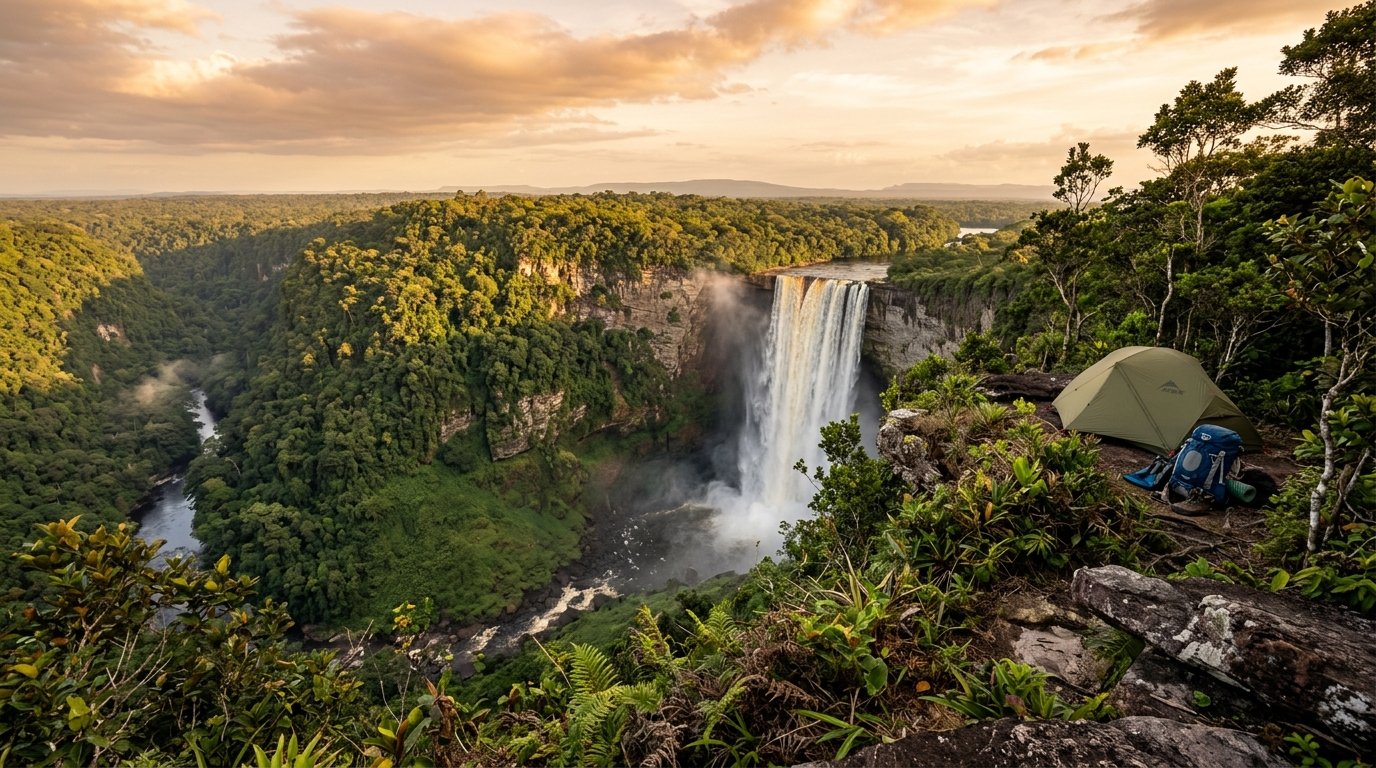
In Guyana, spontaneous wild camping is not a legal right and operates in a highly restricted grey area due to the fact that most interior land is either protected rainforest, private cattle ranch, or legally titled Indigenous community land. While hardcore 4×4 overlanders do camp in the remote Rupununi Savannah, tourists are largely expected to use guided expeditions, community eco-lodges, or designated hammock camps rather than pitching a tent wherever they please.
2. 🌲 Wild & Dispersed Camping Rules
- Legality on Public Land: There is no universal “right to roam” or legally protected wild camping in Guyana. The vast majority of the interior is strictly managed by Indigenous communities or the state.
- Permissions and Consent: If you are traveling through the Rupununi Savannah or deep interior, you must always seek permission from the local Toshao (village leader) before setting up camp on community land. On private ranches, you must seek the landowner’s consent.
- Enforcement: Enforcement is generally not carried out by patrolling police, but rather by local Indigenous communities, eco-lodge managers, and local rangers who actively monitor their territories. Unpermitted campers will likely be asked to move or pay a community fee.
- Duration Limits: There are no strict national laws on duration, but camping is generally treated as a transient activity (1 to 2 nights) while traversing the rugged interior dirt roads.
3. 🏞️ National Park & Protected Area Rules
- Permit Systems: Protected areas like Kaieteur National Park, the Kanuku Mountains, and the Iwokrama Forest are managed by the Protected Areas Commission (PAC) and have strict access rules.
- Designated Sites Only: Independent, unguided backcountry camping is strictly prohibited in national parks. For example, in the Iwokrama Forest, tent camping is only allowed with prior approval, requires a fee, and is restricted to a few designated clearings near the main lodge or during official guided river excursions.
- Advance Booking: Advance booking and local guides are practically mandatory for any overnight stay in a protected zone. You cannot simply hike into Kaieteur National Park and pitch a tent.
- Seasonal Constraints: During the wet seasons (May to August and November to January), interior dirt roads become impassable mud pits, effectively closing off access to many remote camping areas and making jungle camping incredibly hazardous.
4. 🚐 Van Life & Overnight Vehicle Sleeping
- Overlanding vs. Van Life: Traditional “van life” is non-existent due to the extreme terrain; however, rugged 4×4 overlanding along the unpaved Linden-Lethem highway (the main artery connecting Brazil to the Guyanese coast) is popular among adventure travelers.
- Roadside Sleeping: Sleeping in your vehicle along the Linden-Lethem road is tolerated out of necessity, as the 400km jungle track takes significant time to traverse. It is customary to pull over at safe junctions (like the Surama junction or near Annai) or pay a small fee to park at a local hammock camp.
- City Parking: Sleeping in a vehicle in the capital, Georgetown, or anywhere on the populated coast is highly discouraged due to a high risk of violent crime. Tourists should never sleep in public car parks or roadsides here. Secure overnight parking can sometimes be negotiated at major hotels with 24-hour guarded security.
- No Designated RV Areas: There are no official aires, rest stops, or RV hookup parks in the country. Travelers must be entirely self-sufficient.
5. 🔥 Campfires & Practical Restrictions
- Campfire Rules: Open fires are generally permitted in the savannah and jungle when camping, provided you use existing fire rings if available. However, extreme caution must be taken during the dry season to prevent rapid brush fires in the savannah.
- No-Camp Zones (Border Regions): Avoid the western border region with Venezuela (the Essequibo region). There are ongoing geopolitical border disputes and instances of gang-related violence, making it highly unsafe for wandering tourists.
- Mining Areas: Never camp near or wander into informal gold and diamond mining camps (known locally as “porknocker” camps) in the deep interior, as these areas can be heavily armed and dangerous.
- Wildlife Risks: Sleeping outside without a protective shelter is dangerous due to venomous snakes, scorpions, and jaguars. Hammock camping is the local standard, but you must use a jungle hammock with an integrated mosquito net and a rain fly to protect against malaria-carrying mosquitoes and the elements.
6. 🔗 Official Sources & Links
To verify current regulations, road conditions, and to apply for protected area access, consult the following official resources:
Disclaimer: Camping regulations, land-use laws, and national security situations change frequently. The information provided in this guide is for educational purposes and should be verified with official local authorities, the Guyanese government, or trusted local guides prior to your trip.

Adrenaline junkie with a passion for exploring off-the-beaten-path destinations and finding unique ways to stay active. Expect stunning scenery, challenging workouts, awesome travel tips and a whole lot of fun. Let’s get sweaty and explore the world together!