
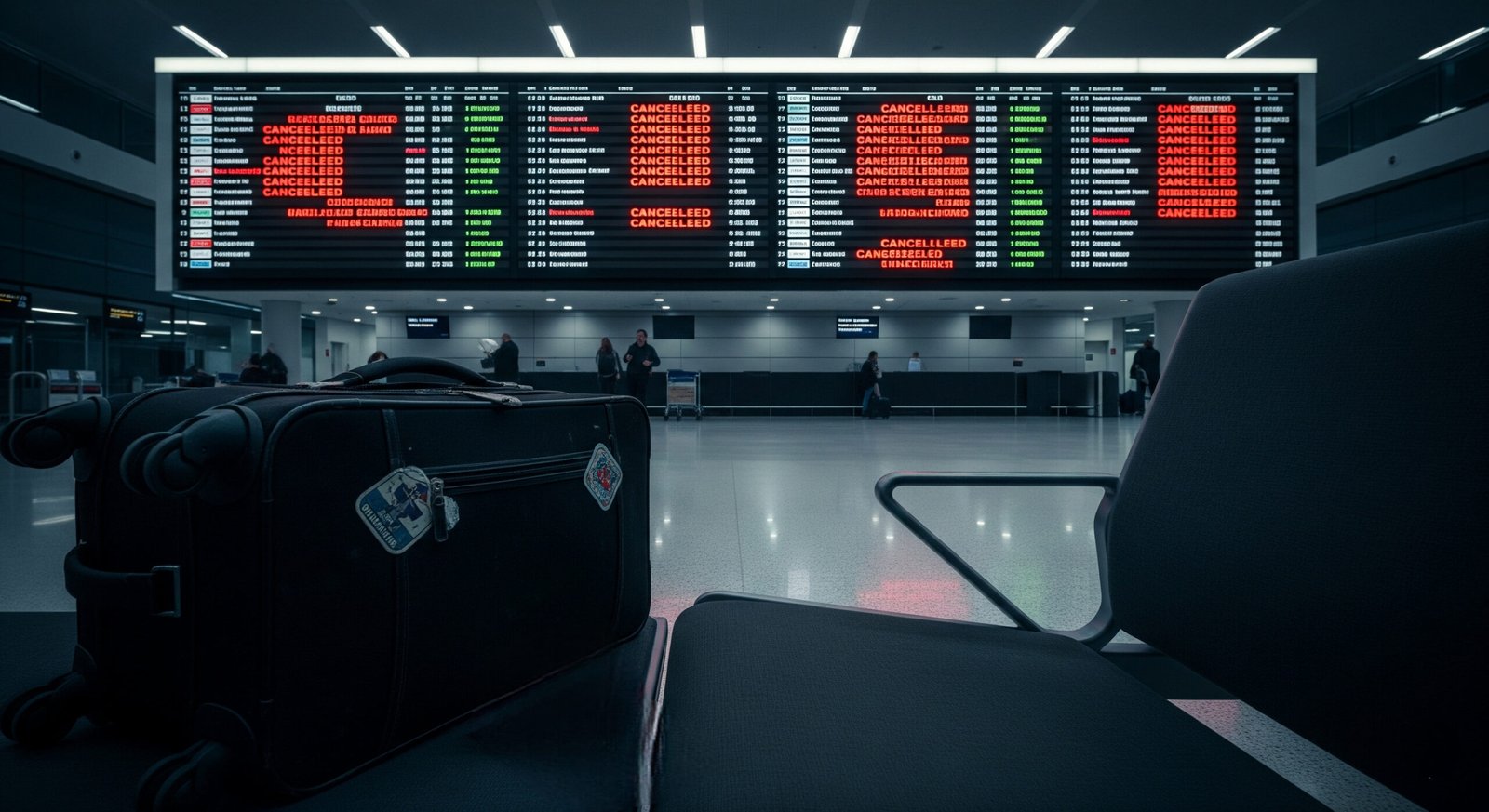
The sudden airspace closures across the Middle East in early 2026 have left tens of thousands of travelers stranded across the globe. Major international transit hubs like Dubai, Doha, and Abu Dhabi have faced massive disruptions. If you are stuck at an airport or watching your upcoming travel plans fall apart, you are probably dealing with stressed customer service agents and confusing automated emails.
Many airlines based outside of Europe are trying to avoid their legal duty to help you. They might tell you that because they are a Middle Eastern carrier, European laws do not apply. They might refuse to book you on a different airline. They might even push you to just take a refund and fend for yourself.
Do not let them. You have strong legal rights. This guide will explain exactly what the airlines must do for you and give you the steps to take control of your travel plans.
The Geography Rule: Where Did Your Flight Start?
The most important thing to know is that your rights depend on where you started your journey, not the airline you are flying.
European law (EU261) and UK law (UK261) are incredibly strong consumer protection rules. They apply to your flight if:
You are departing from any airport inside the UK or the European Union.
It does not matter if you are flying with Emirates, Qatar Airways, Etihad, or any other non-European airline. If your trip starts in London, Paris, or Frankfurt, the airline must follow strict UK and EU rules.
If your flight starts outside of Europe and the UK, and you are flying on a non-European airline, these rules do not protect you. In that case, you have to rely on the airline’s own policies. But if you started in Europe, you hold the cards.
The “Extraordinary Circumstances” Excuse
When airspace closes due to conflict, airlines will immediately tell you this is an “extraordinary circumstance.” They are right. A war is outside of their control.
Because it is out of their control, the airline does not have to pay you the standard cash compensation for the delay itself (which is usually a lump sum up to £520).
However, many airlines try to trick you here. They imply that because there is an extraordinary circumstance, they owe you nothing at all. This is completely false. An extraordinary circumstance only cancels the delay payout. It does not cancel their legal duty to rebook your flight or their duty to pay for your food and hotel while you wait.
Your Right to Fly on a Competitor Airline
This is where the biggest fights are happening right now.
If your flight is canceled, the airline must offer to reroute you to your final destination at the “earliest opportunity.” Most airlines will try to make you wait days or even weeks until a seat opens up on one of their own planes.
The law says something very different. If the airline cannot get you on their own flight the same day, they must look for seats on completely different airlines. For example, if Emirates cannot fly you to Sydney because Dubai airspace is closed, but Singapore Airlines has a flight leaving today, Emirates must buy you that ticket on Singapore Airlines.
Airlines hate doing this because buying a last-minute ticket from a rival costs them thousands of dollars. They will resist. You must insist. Keep reminding them that the law requires a reroute at the earliest opportunity, even if it is on another carrier. Also, you have the right to stay in the same cabin class. If you paid for Business Class, they must rebook you in Business Class.
Beware the Refund Trap
During a crisis, airlines will text and email you constantly, offering a fast, full cash refund. It looks like great customer service.
It is actually a trap.
Under the law, the exact second you click “accept refund,” the airline’s responsibility to you ends. They no longer have to pay for your expensive hotel. They no longer have to buy you a new flight. You will get your original money back, but you will be left entirely alone to buy a new, heavily overpriced, last-minute ticket out of your own pocket.
If you still need to reach your destination, ignore the automated refund offers. Keep your booking active and demand a new flight.
Were You on a Package Holiday?
Before you start fighting the airline directly, check how you bought your ticket. If you booked your flight and hotel together through a travel agent or tour operator, you have extra protection.
Under the Package Travel Regulations, the company that sold you the trip is fully responsible for fixing this mess. You do not have to fight the airline at all. Call your travel agent. They must find you a new flight home and pay for your extra hotel nights. If they refuse, you can complain to the travel association they belong to, like ABTA in the UK.
Step-by-Step: How to Book Your Own Flight and Get Paid Back
If you are at the airport, the lines are miles long, you did not book a package deal, and the airline flat out refuses to book you on a rival carrier, you can take matters into your own hands. You can buy a new ticket yourself and force the original airline to pay you back later. But you must follow these rules exactly to win your money back:
Get proof of refusal: You must prove the airline refused to help. Take screenshots of online chats where they say no. Save emails showing they only offered a flight a week away.
Do not cancel the original ticket: Leave your original booking alone. Do not click refund.
Buy a sensible replacement: Book a direct or logical route. Keep the same cabin class. If you had an Economy ticket, do not buy a First Class ticket and expect to be repaid.
Save every single receipt: You can claim back the cost of your hotel, transport to the hotel, and meals while you waited. You need itemized receipts showing exactly what you bought. Credit card statements are not enough. (Note: You cannot claim for alcohol or luxury five-star suites).
How to Escalate and Get Your Money Back
Once you are safely home, the fight for your money begins. First, you must complain directly to the airline using their online forms. Include your proof that they refused to rebook you, your receipts, and state that they broke UK261 or EU261 rules.
Airlines will usually reject this first attempt. If they say no, or ignore you for eight weeks, you move up the escalation ladder.
Escalation Tier 1: Use Your Credit Card Protection If you bought your original flight directly from the airline with a credit card (not a debit card), and it cost more than £100, you are protected by Section 75 of the UK Consumer Credit Act. This law means your credit card company is equally responsible if the airline breaks their contract. Call your bank, show them the airline refused to rebook you, and ask the bank to cover the cost of your replacement flight.
Escalation Tier 2: Use an ADR Scheme Many airlines belong to Alternative Dispute Resolution (ADR) schemes like AviationADR or CEDR. These are free, independent judges approved by aviation authorities. You upload your chat screenshots and receipts to their website. If the ADR decides in your favor, the airline is legally forced to pay you.
Escalation Tier 3: Small Claims Court If the airline ignores you, the ADR scheme says no, and your credit card company cannot help, you have one last option. You can take the airline to a small claims court.
This sounds scary, but it is built for regular people. You do not need a lawyer. You just fill out an online form and pay a small fee, which you get back if you win. You will present your receipts, your chat screenshots, and point out that the airline broke the law by refusing to rebook you. Judges in these courts usually favor the passenger if the airline clearly ignored the rules.
Need Backup? Using AirHelp and Compensair
Fighting airlines takes time, energy, and a high tolerance for frustrating emails. If you do not want to deal with the stress, or if the thought of going to a small claims court is too much, you can use a flight compensation company. The two biggest names in this space are AirHelp and Compensair.
These companies act like your legal representatives. You go to their website, plug in your flight details, and upload your documents and receipts. Their teams of legal experts then take over the entire process. They will argue with the airline, quote the exact laws, and even take the airline to court for you.
How they work: Both AirHelp and Compensair operate on a “no-win, no-fee” basis. You pay nothing upfront to use their service. If they fail to get your money from the airline, you owe them nothing. If they win your case, they take a percentage of the payout as their fee (usually around 35%, plus a small administrative cost).
When to use them:
You tried claiming yourself and the airline ignored you.
Your case is complicated, like a multi-city trip with mixed airlines.
You simply do not have the time to spend months arguing with customer service.
While giving up a third of your payout might sting, getting 65% of a large hotel and flight bill back is much better than giving up and getting zero.
Airlines rely on passengers giving up. They know the rules are confusing, and they use that to protect their profits. By knowing where your flight started, refusing the quick refund trap, and demanding a seat on a competitor airline, you can take control of your travel. Keep your receipts, take screenshots of everything, and remember that you have the law on your side.

Adrenaline junkie with a passion for exploring off-the-beaten-path destinations and finding unique ways to stay active. Expect stunning scenery, challenging workouts, awesome travel tips and a whole lot of fun. Let’s get sweaty and explore the world together!