
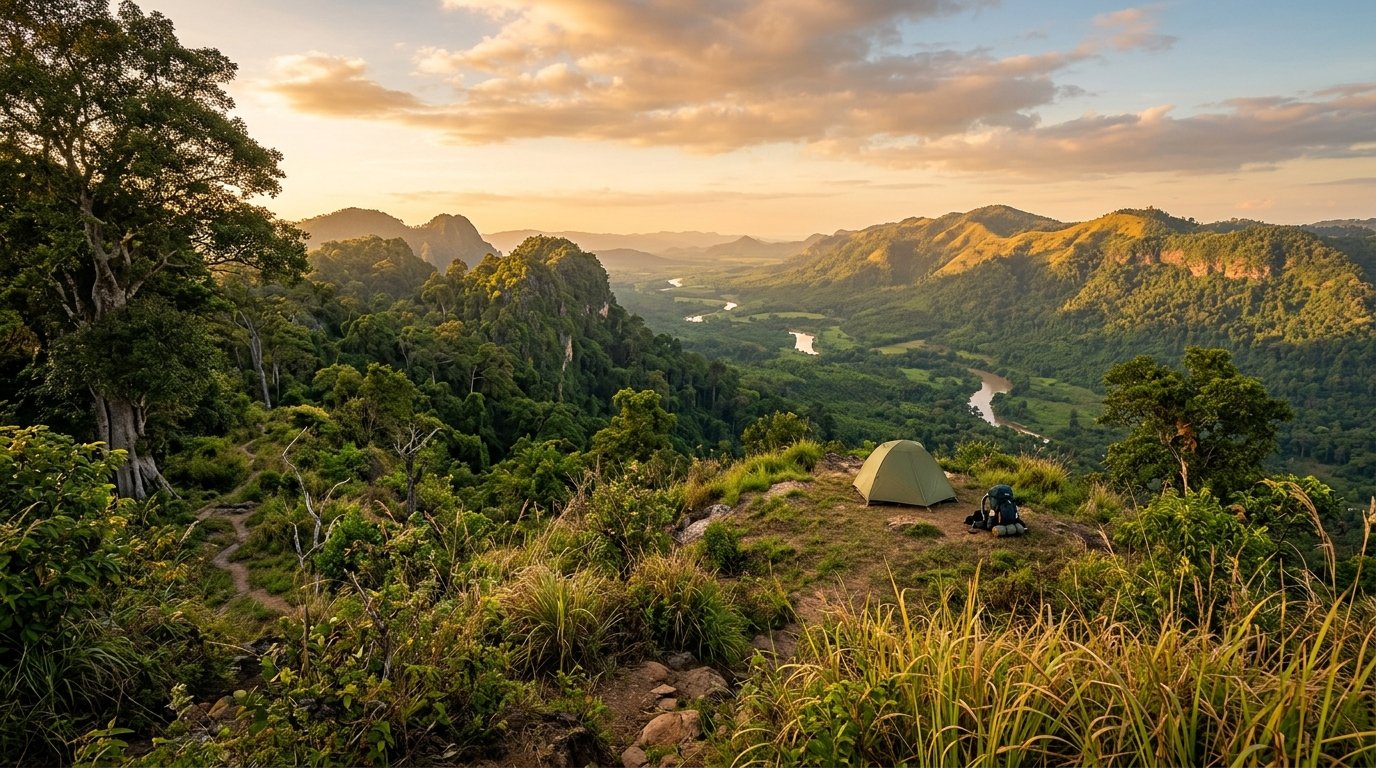
1. 🏕️ The Short Answer
Wild and dispersed camping is heavily restricted in Cambodia and operates on a strict permission-only basis, making spontaneous wild camping effectively illegal for foreign tourists. Due to strict national park zoning laws and the severe, lingering danger of unexploded landmines in rural areas, travelers must restrict their camping to designated eco-tourism sites or travel with a licensed local guide.
2. 🌲 Wild & Dispersed Camping Rules
- Legality on Public Land: There is no blanket right to camp on public or state land in Cambodia. Spontaneous wild camping is strictly prohibited in heritage zones and heavily restricted in forest corridors.
- Private and Community Land: Pitching a tent on private or community-owned land is only tolerated if you have obtained explicit, prior authorization from the landowner or local village authorities.
- The Landmine Danger: This is the most critical safety rule for tourists in Cambodia: never walk or camp off-trail. Many remote and forested areas are still heavily contaminated with lethal unexploded ordnance (UXO) and landmines.
- Enforcement: Enforcement by local police and park rangers is active. Without coordination and clear permissions, authorities will move you along, and you may face fines for trespassing in restricted areas.
3. 🏞️ National Park & Protected Area Rules
- Strict Zoning Laws: National parks are governed by the 2023 Code on Environment and Natural Resources. Protected areas are divided into specific zones. In a park’s “Core Zone,” ordinary visitor access is entirely prohibited, which automatically makes camping illegal.
- Permits and Guides: In “Conservation Zones,” prior authorization from park managers is legally required. In practice, tourists must hire a local guide or book a managed eco-tour to camp in major parks like Virachey, Kirirom, or the Cardamom Mountains.
- Designated Sites Only: You cannot pitch a tent wherever you choose. Camping is restricted to designated community-based eco-camps, safari-style tents, or official hammock shelters in “Sustainable Use” or “Community” zones.
- Seasonal Closures: Access to certain trails and campsites is highly dependent on the weather. The wet monsoon season (May to October) brings heavy rain, flooding, and leeches, which can temporarily close trekking and camping routes.
4. 🚐 Van Life & Overnight Vehicle Sleeping
- Legal Ambiguity: Van life is virtually non-existent in Cambodia and is not addressed by specific van-life laws. However, under the 2023 environmental code, ordinary visitors are explicitly banned from entering or remaining in a protected core zone to sleep in a vehicle.
- Parking vs. Camping: As in many countries, sleeping inside a legally parked vehicle on an ordinary street is a grey area that is generally ignored if you are discreet. However, if you set up chairs, awnings, or cooking gear outside your van, authorities will classify this as illegal camping.
- Lack of Infrastructure: There are no designated “aires,” RV parks, or overnight rest areas for tourists. Overlanders typically must ask guesthouse owners, restaurants, or local communities for permission to park and sleep on their property for a small fee.
5. 🔥 Campfires & Practical Restrictions
- Campfire Rules: Open fires are generally banned outside of officially designated fire pits at managed campsites. During the dry season (November to April), the risk of forest fires is incredibly high, and authorities strictly prohibit unauthorized fires.
- No-Camp Zones: Tourists must absolutely avoid camping near military bases, national borders (especially the Thai and Vietnamese borders), and major archaeological sites (such as the Angkor Wat complex, which is tightly managed and patrolled).
- UXO Red Zones: Avoid any uncleared rural terrain or dense jungle that has not been mapped for tourists. Only camp in areas explicitly cleared and managed by local eco-tourism boards.
6. 🔗 Official Sources & Links
For the most current information on protected areas, permits, and community-based eco-tourism, please consult the official authorities:
Disclaimer: Land-use laws, national park zoning, and environmental regulations change frequently. The information in this guide is for educational purposes. Always verify current camping regulations, required permits, and safety advisories with official local authorities or a licensed local tour operator before your trip.

Adrenaline junkie with a passion for exploring off-the-beaten-path destinations and finding unique ways to stay active. Expect stunning scenery, challenging workouts, awesome travel tips and a whole lot of fun. Let’s get sweaty and explore the world together!