FitcationHQ
  • Home
  • Travel Planning
  • Destinations
    • Africa
      • Egypt
      • Kenya
      • Morocco
      • Mozambique
      • Namibia
      • Rwanda
      • South Africa
      • Tanzania
    • Asia
      • Bhutan
      • Cambodia
      • China
      • Indonesia
      • Laos
      • Malaysia
      • Maldives
      • Nepal
      • Thailand
      • Turkmenistan
    • Europe
      • Bulgaria
      • Croatia
      • Georgia
      • Greece
      • Iceland
      • Ireland
      • Italy
      • Montenegro
      • Norway
      • Portugal
      • Scotland
      • Turkey
    • Middle East
      • Jordan
      • UAE
    • North America
      • Canada
      • USA
    • Oceania
      • New Zealand
    • South America
      • Argentina
      • Bolivia
      • Chile
      • Costa Rica
      • Ecuador
      • Peru
  • Travel Tips
    • Budget Travel
    • Family Travel
    • Food and Dining
    • Health and Wellness
    • Luxury Travel
    • Packing
    • Safety
    • Solo Travel
    • Transportation
    • Travel Insurance
    • Sustainable Travel
    • Visa and Immigration
  • Travel Gear
    • Luggage
    • Clothing
    • Photography Gear
    • Security Gear
    • Travel Accessories
    • Travel Electronics
FitcationHQ
Thailand Airport Transport Guide: Taxis, Grab, or Private Transfers?
AsiaDestinationsThailandTransportationTravel Tips

Thailand Airport Transport Guide: Taxis, Grab, or Private Transfers?

by Travel Geek February 19, 2026
written by Travel Geek

Landing in Thailand is exciting, but figuring out how to get to your hotel can be a headache. You’ve just flown for hours, you’re tired, and suddenly you have to deal with currency exchange, new apps, and drivers asking for fixed prices.

Things are changing in 2025 and 2026. Airport taxes are going up, and apps like Grab and Bolt are fighting for space against traditional taxis.

Here is a simple breakdown of your options at Thailand’s main airports—Suvarnabhumi (BKK), Don Mueang (DMK), Phuket (HKT), and Chiang Mai (CNX)—so you can start your trip without getting ripped off.

Option 1: Public Airport Taxis (The Classic Choice)

This is what most people use, but it comes with a few warnings.

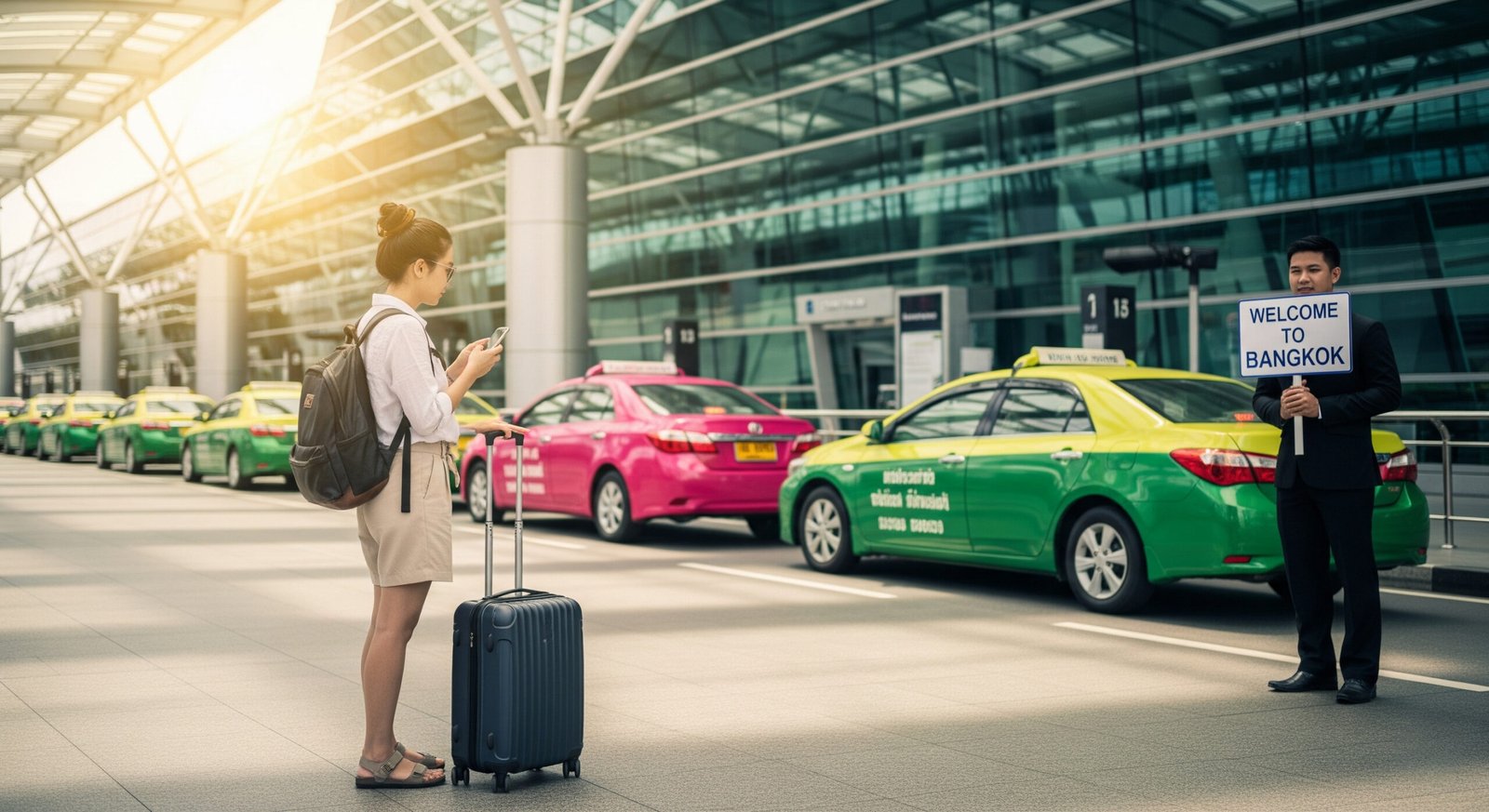
How it works: At Bangkok airports (BKK and DMK), you don’t hail a taxi outside. You go to a machine (kiosk), push a button, and get a printed ticket. This ticket tells you which lane your car is in and has the driver’s info on it.

The Good:

  • Availability: There are always cars waiting.

  • Price: If they use the meter, it’s a fair price.

The Bad:

  • The “Broken Meter” Trick: Many drivers will try to negotiate a flat price (like 1,000 THB) instead of using the meter. This is usually double or triple the real cost. Always ask for “meter on.”

  • The 50 Baht Surcharge: You have to pay an extra 50 THB on top of what the meter says. This is an official airport rule, not a scam.

  • Luggage Space: Most Thai taxis run on gas tanks (LPG) stored in the trunk. This means there is very little room for bags. If you have two big suitcases, they might not fit in one sedan.

Safety Tip: Never give your printed ticket to the driver. Keep it. It’s your only proof if you need to complain later.

Regional Differences:

  • Chiang Mai: This is the best airport for taxis. They have a fixed price of 150 THB to the city. It’s easy and honest.

  • Phuket: Taxis here are expensive. Expect high prices and strict control by local groups.

Option 2: Ride-Hailing Apps (Grab & Bolt)

Using an app is often easier because you don’t need to speak Thai to explain where you are going.

Grab

Think of Grab as the “official” app. It is legal and safe.

  • Pros: The price is fixed on the screen, so no haggling. The app translates your messages to the driver automatically. You can also book a “GrabSUV” if you have lots of luggage.

  • Cons: It costs more than a regular taxi.

  • Pickup Point: At Suvarnabhumi (BKK), Grab has a specific pickup zone at Level 1, Gate 4. You can’t just jump in anywhere.

Bolt

Bolt is the budget option.

  • Pros: It is much cheaper than Grab (sometimes 30% less).

  • Cons: It can be hard to find a driver, especially at night.

  • The Scam Warning: Be very careful at night. A common scam involves a driver accepting your ride, but a different car with a different license plate shows up. Do not get in. The driver might cancel the ride on the app and then demand a high cash price once you are inside.

Option 3: Welcome Pickups (The Stress-Free Option)

If you are nervous about arriving late at night or it’s your first time in Asia, Welcome Pickups is a solid choice.

How it works: You book and pay online before you fly. A driver waits for you in the arrival hall holding a sign with your name.

Why choose it:

  • Fixed Cost: You pay in your home currency. No need to run to an ATM immediately.

  • Reliability: They track your flight, so if you are delayed, they wait.

  • Comfort: The drivers speak English and help with bags.

It costs more than a taxi or Bolt, but less than a hotel limo. You are paying for peace of mind.

Option 4: Private Vans & Hotel Transfers

Traveling with a big family or a group of friends?

Don’t try to squeeze into two or three separate taxis. It’s a logistical nightmare. Book a private van (like a Toyota Commuter) beforehand. Companies like AOT Limousine or private fleets can take 8-9 people and all their luggage in one go. It costs more upfront but splits well per person.

Quick Comparison

Feature

Public Taxi

Grab

Bolt

Welcome Pickups

Cost

Low (if metered)

Medium

Lowest

Medium-High

Haggling?

Yes (often)

No

No

No

Luggage Space

Very Poor

Good (if SUV)

Poor

Good

Ease of Use

Medium

Easy

Medium

Very Easy

Best For

Adventurers

Digital Users

Budget Travelers

First-Timers

The Verdict: Which One Should You Pick?

  • For the Budget Backpacker: Download Bolt. If you can’t find a driver, take a public taxi but insist on the meter.

  • For Couples: Use Grab. It’s safe, easy, and the translation feature helps avoid confusion.

  • For Late Night Arrivals: Book Welcome Pickups. When you are exhausted at 2 AM, seeing your name on a sign is worth the extra money.

  • For Families: Book a Private Van. Don’t split up your group.

Safe travels!
February 19, 2026 0 comments
0 FacebookTwitterPinterestEmail
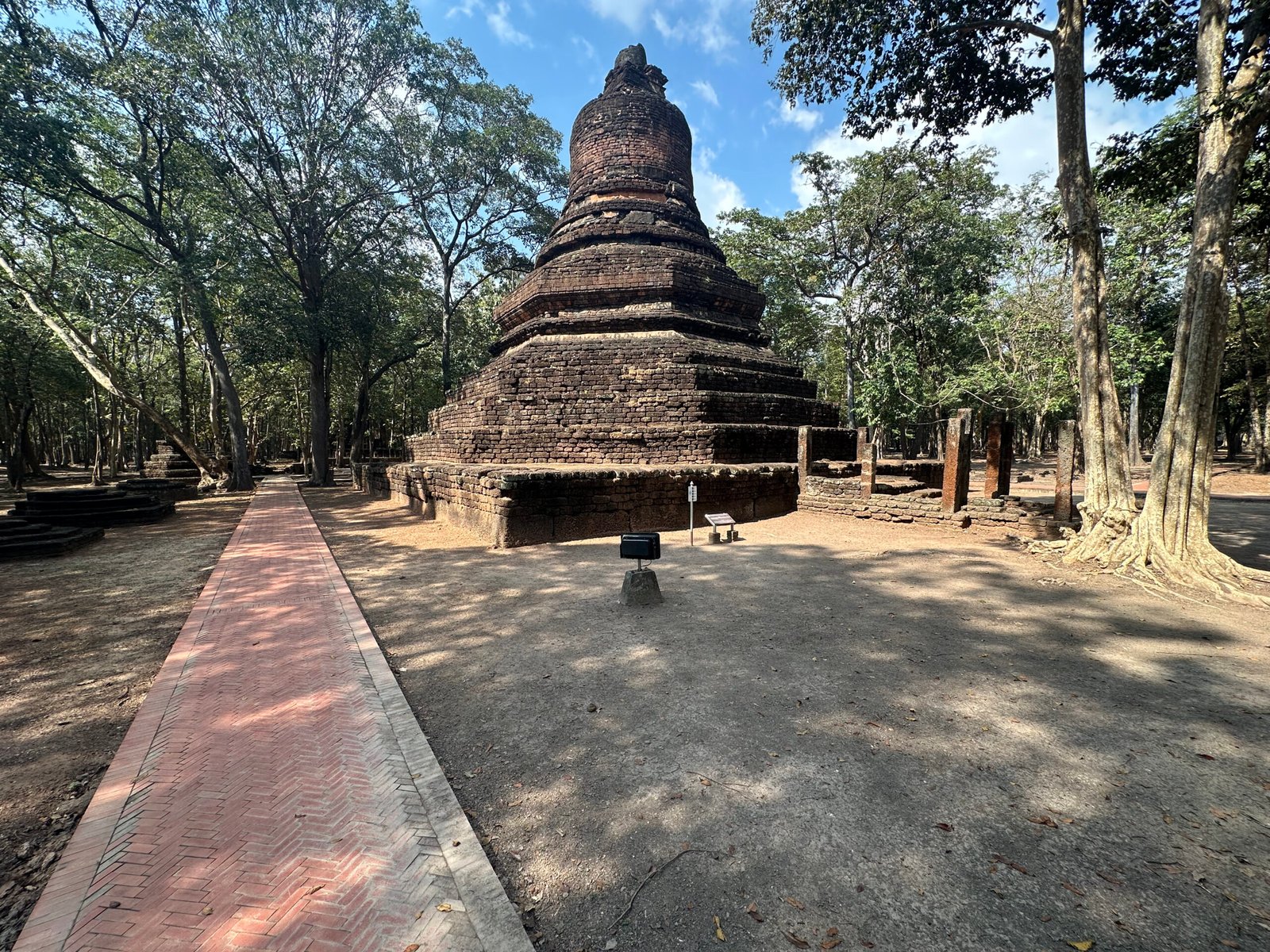
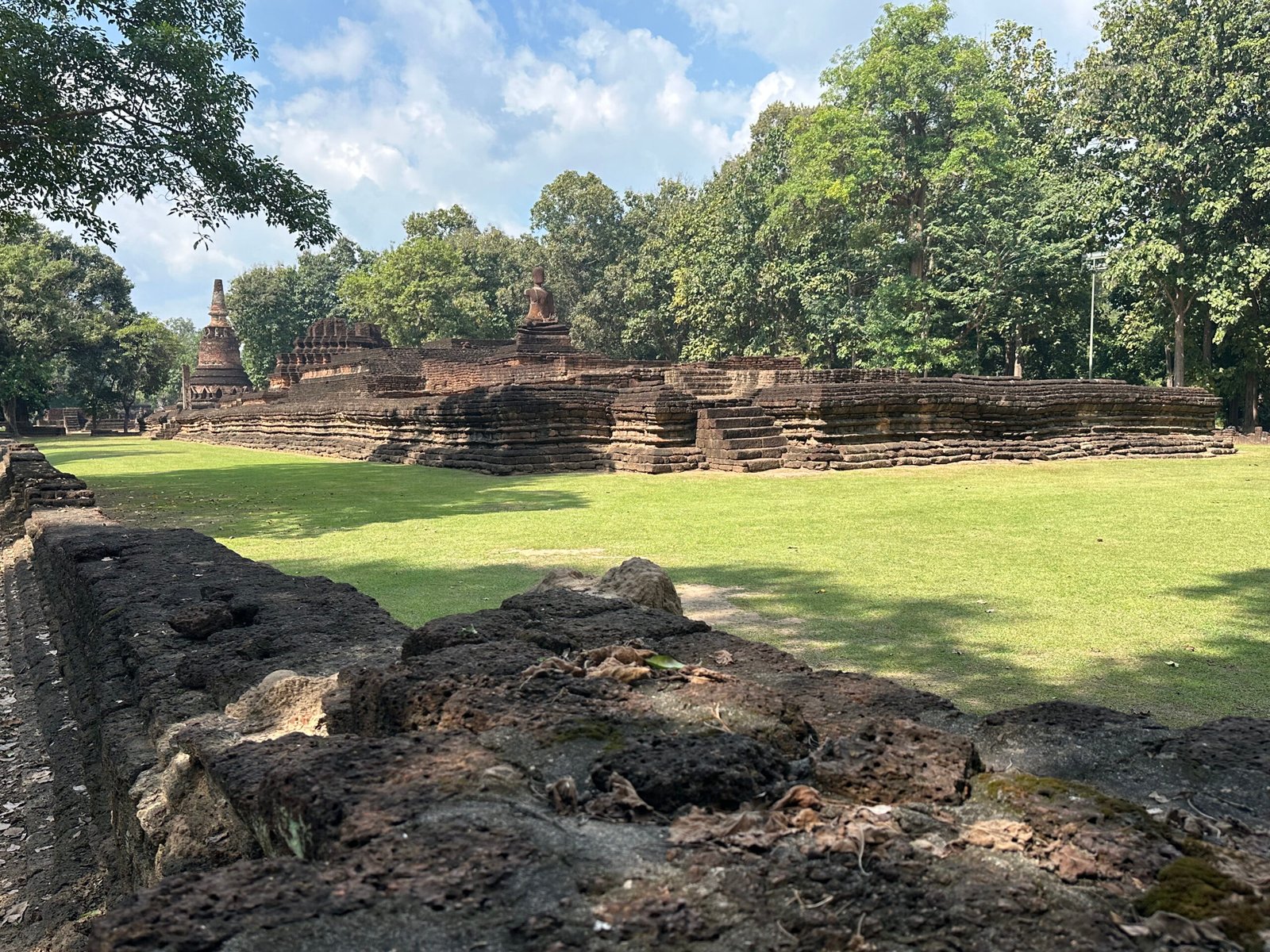
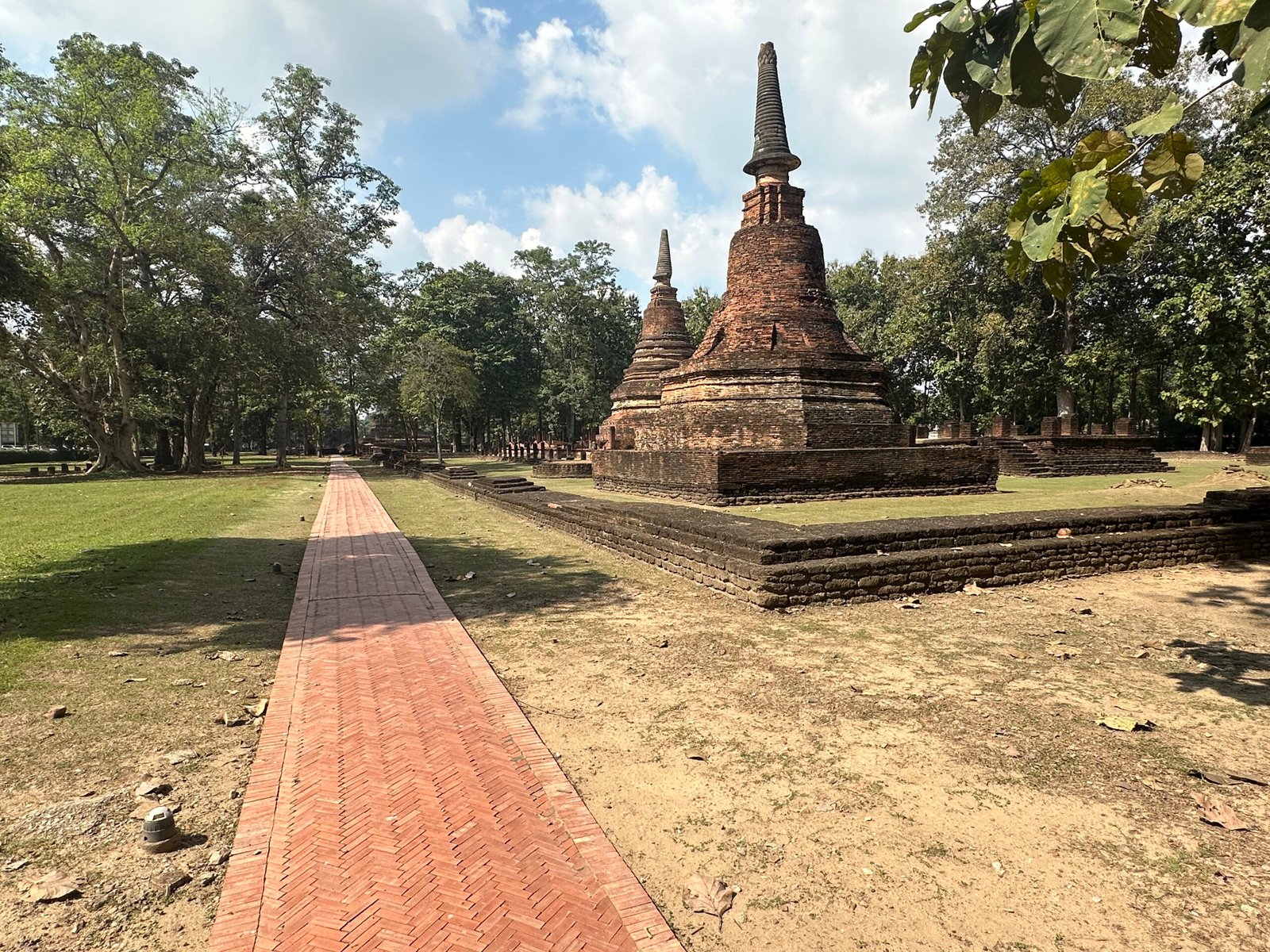
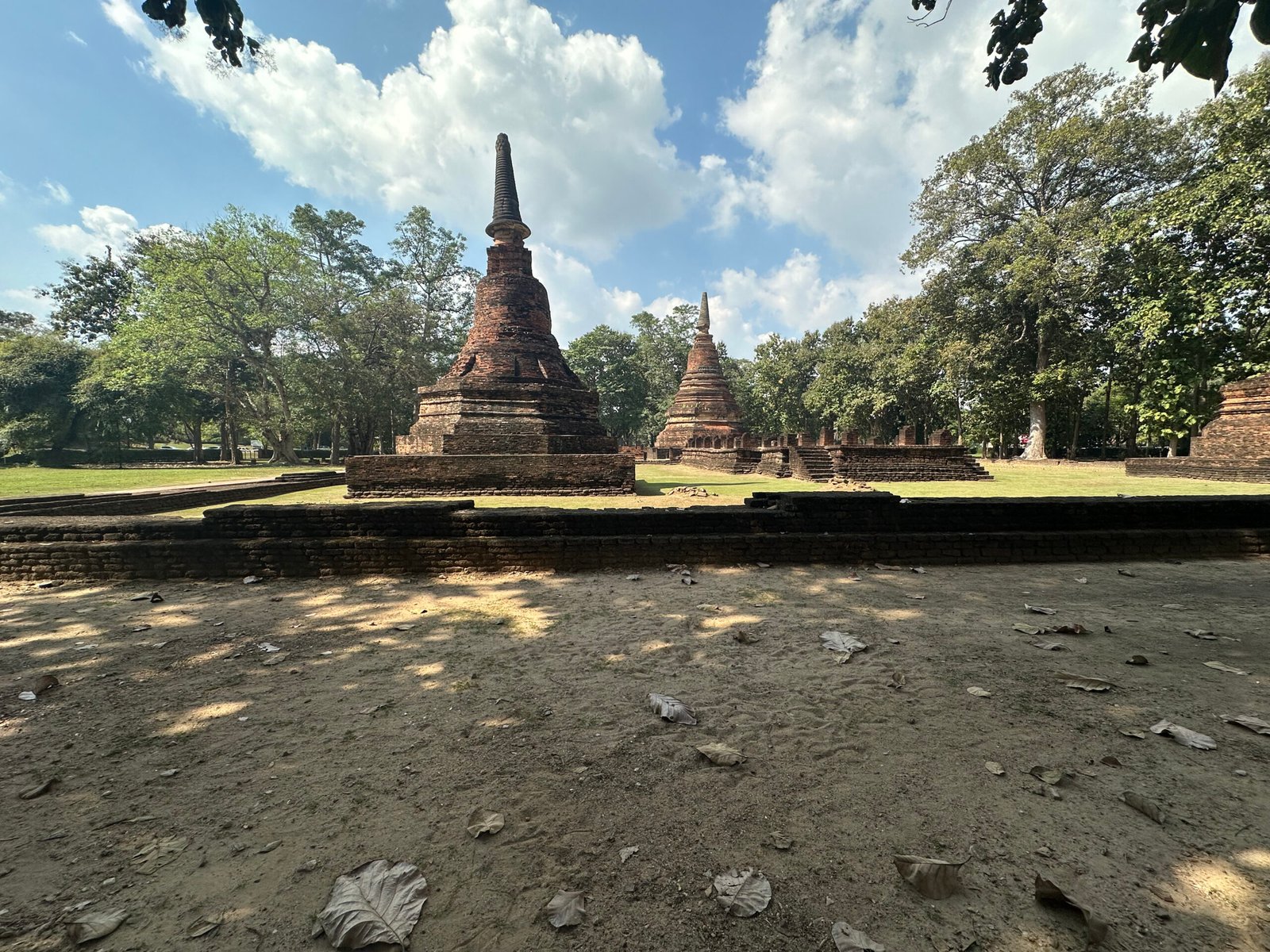
Kamphaeng Phet Historical Park
AsiaDestinationsThailand

Beyond Sukhothai: A Day Trip to the “Diamond Wall” of Kamphaeng Phet

by Travel Geek February 15, 2026
written by Travel Geek

If you are exploring the ancient capital of Sukhothai, it is easy to think you have seen it all. But just an hour south lies a “hidden” UNESCO site that feels wilder, older, and infinitely more mysterious.

I’m talking about Kamphaeng Phet Historical Park.

While Sukhothai is manicured and famous, Kamphaeng Phet feels like a lost city discovered in the jungle. The name literally translates to “Wall of Diamond”, a nod to its history as a fortress city built to protect the capital.

I recently took a day trip there, and if you have a free day in your itinerary, this is the side quest you need to take. Here is how to do it.

 How to Get There (And Why You Should Drive)

Kamphaeng Phet is roughly 80km south of Sukhothai.

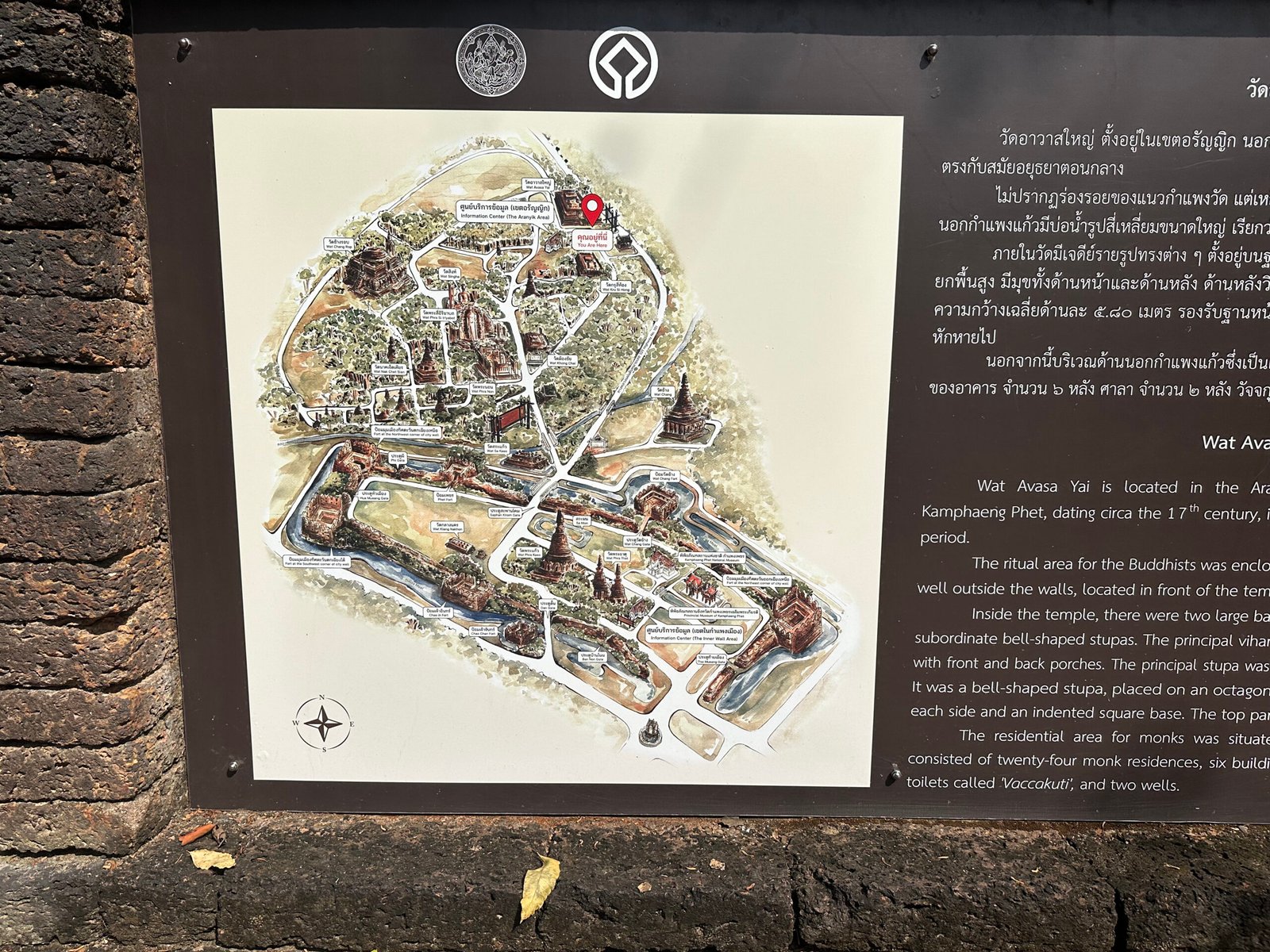
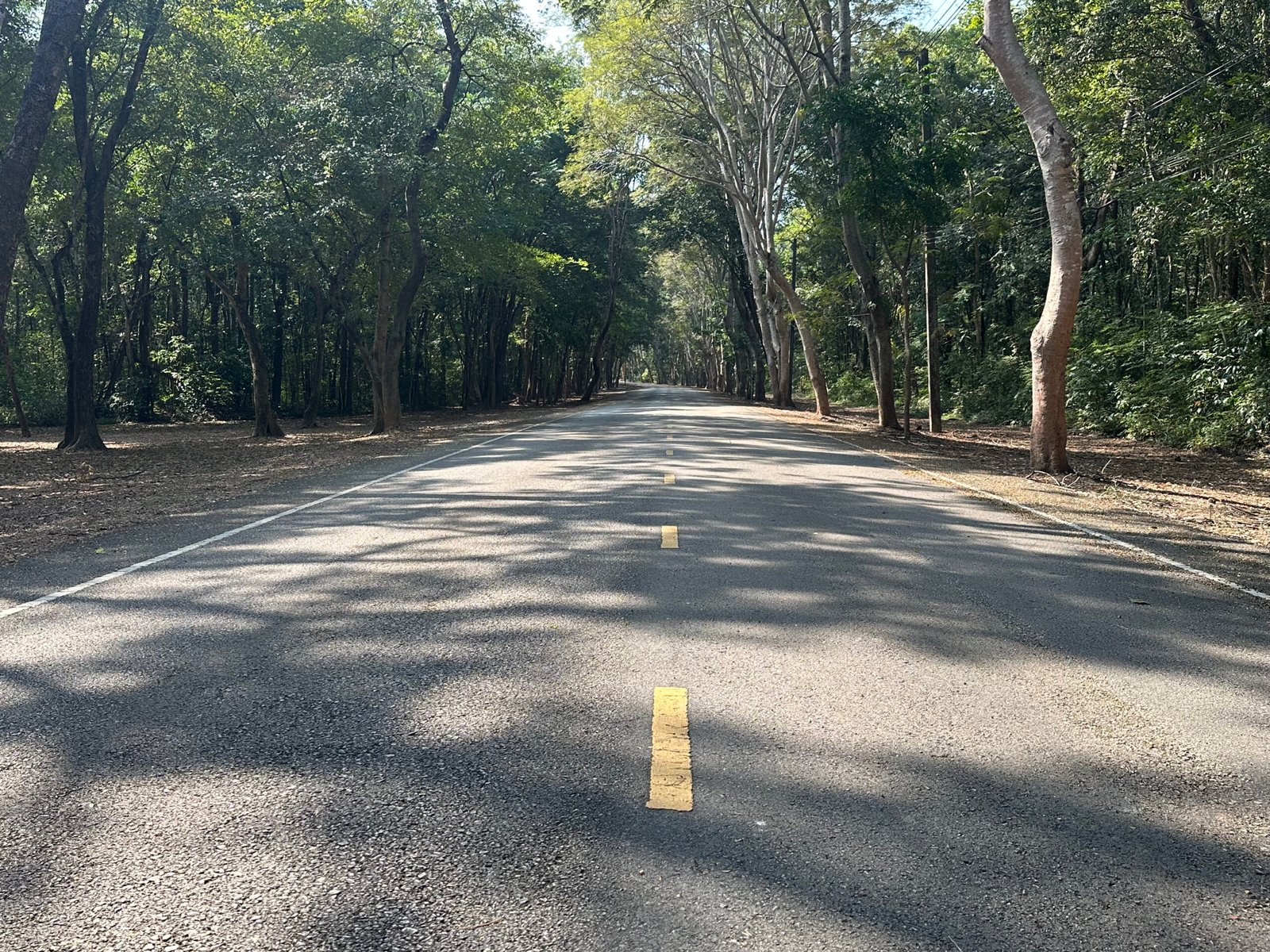
  • My Recommendation: Rental Car I rented a car for this trip, and I cannot recommend it enough. The drive is a straightforward shoot down Highway 101 and takes about 1 hour to 1 hour and 15 minutes. The park is split into two zones—the Central Zone (walled city) and the Aranyik Zone (forest area)—which are a few kilometers apart. Having your own car means you can zip between them easily and escape the midday heat.

  • Alternative: The Bus If you don’t drive, you can take a bus from the Sukhothai Bus Terminal, but it’s trickier. Most buses require a transfer in the town of Tak, pushing the travel time to over 3 hours. It’s doable, but it eats up a lot of your exploring time. Once you arrive at the bus station, you will need to hire a tuk-tuk or songthaew to get around the ruins.

The History: The “Diamond Wall”

Kamphaeng Phet literally translates to “Wall of Diamonds” (or “Wall as Hard as Diamond”). It served as a military frontier town protecting the southern border of the Sukhothai Kingdom.

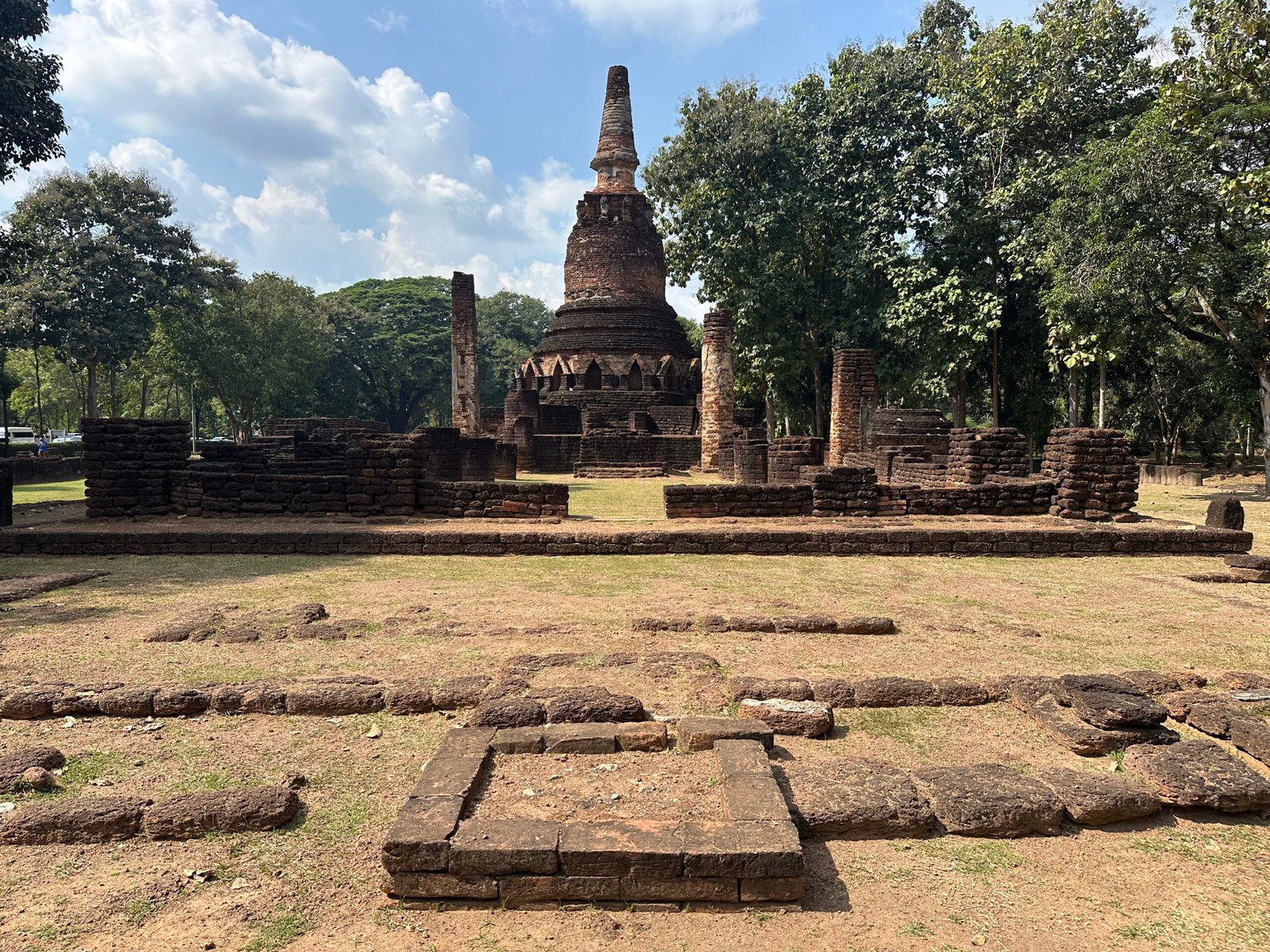
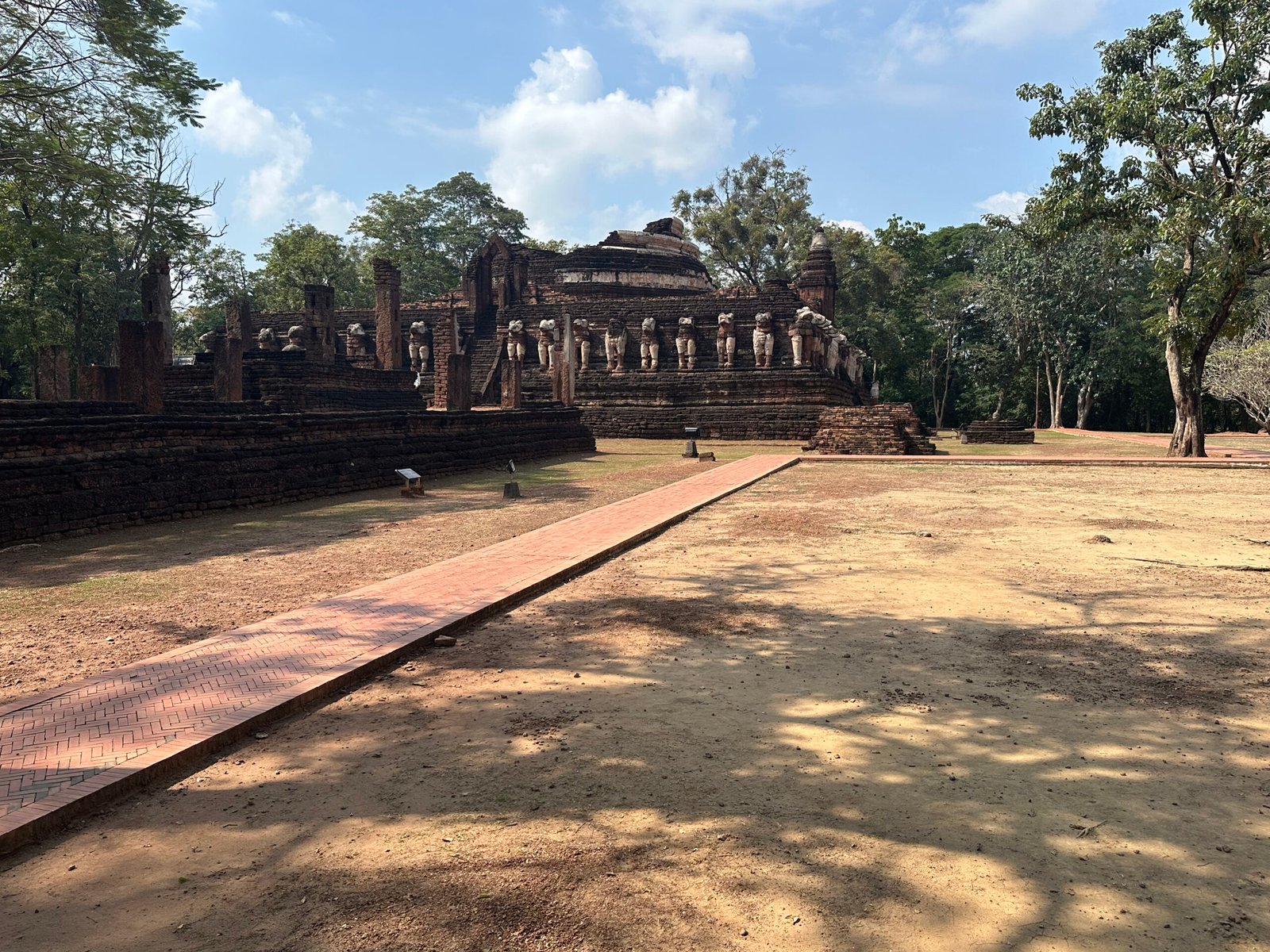
Because of its strategic military importance, the ruins here are built tough. You will notice the heavy use of laterite (a reddish, porous clay-stone) rather than brick, giving the temples a rugged, imposing look.

In 1991, it was declared a UNESCO World Heritage Site alongside Sukhothai and Si Satchanalai. Despite this prestigious status, it remains delightfully quiet.

Exploring the Ruins

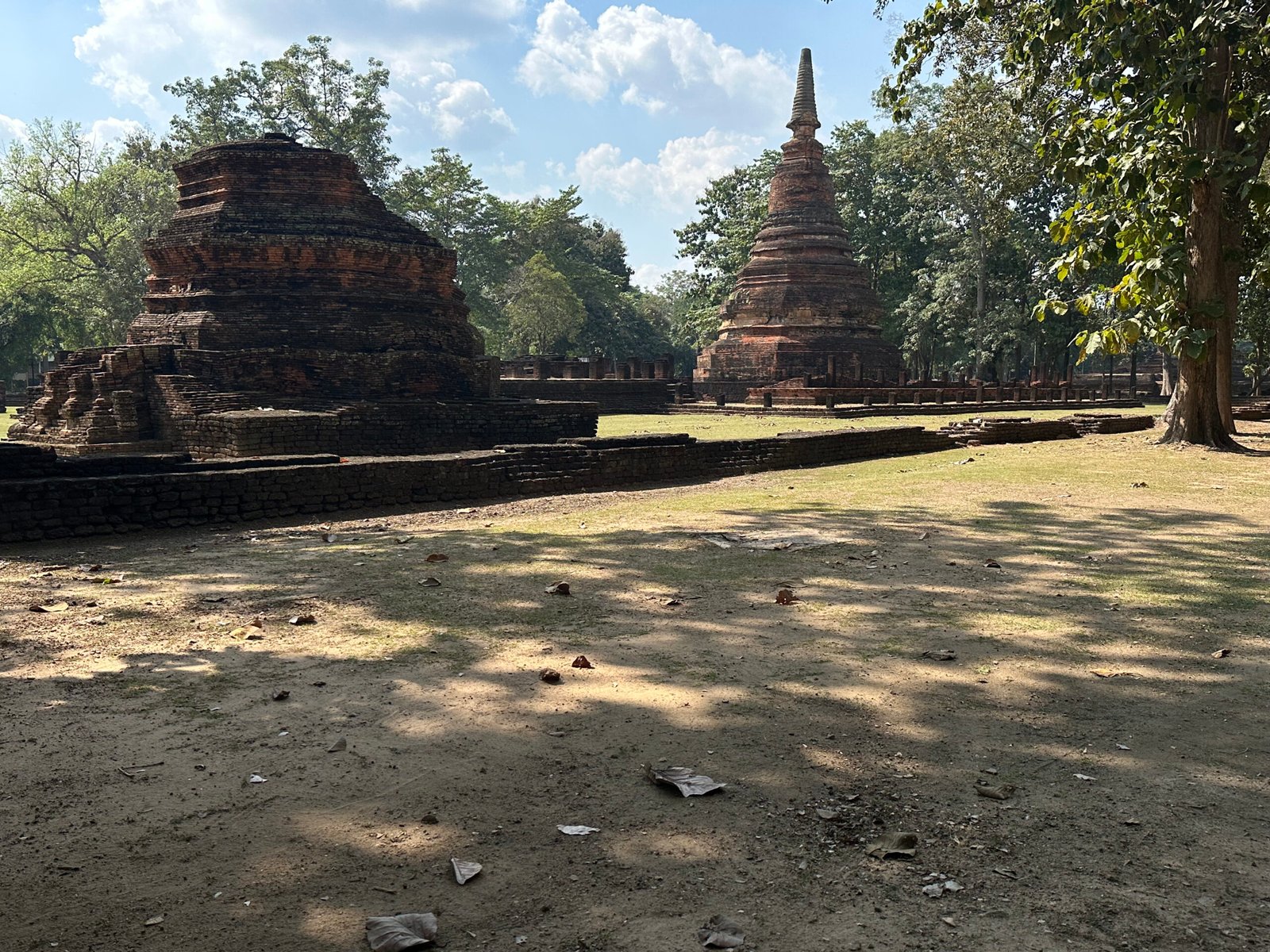
Walking through the park, I was struck by how the forest has embraced the ruins. It feels ancient and untouched.
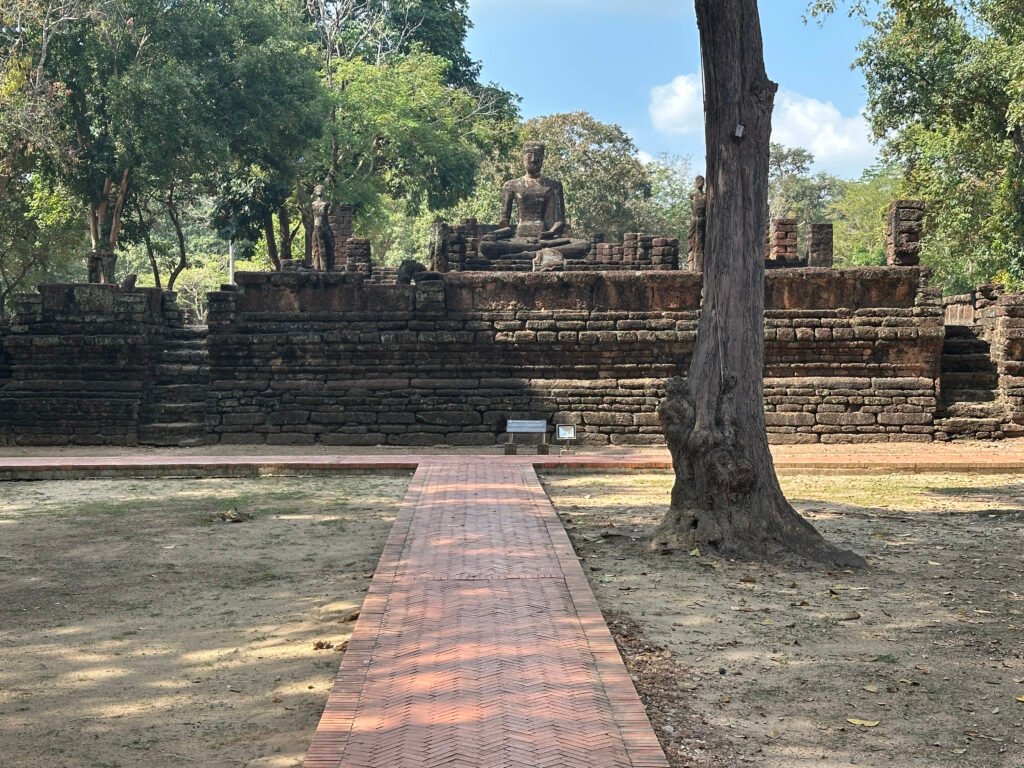
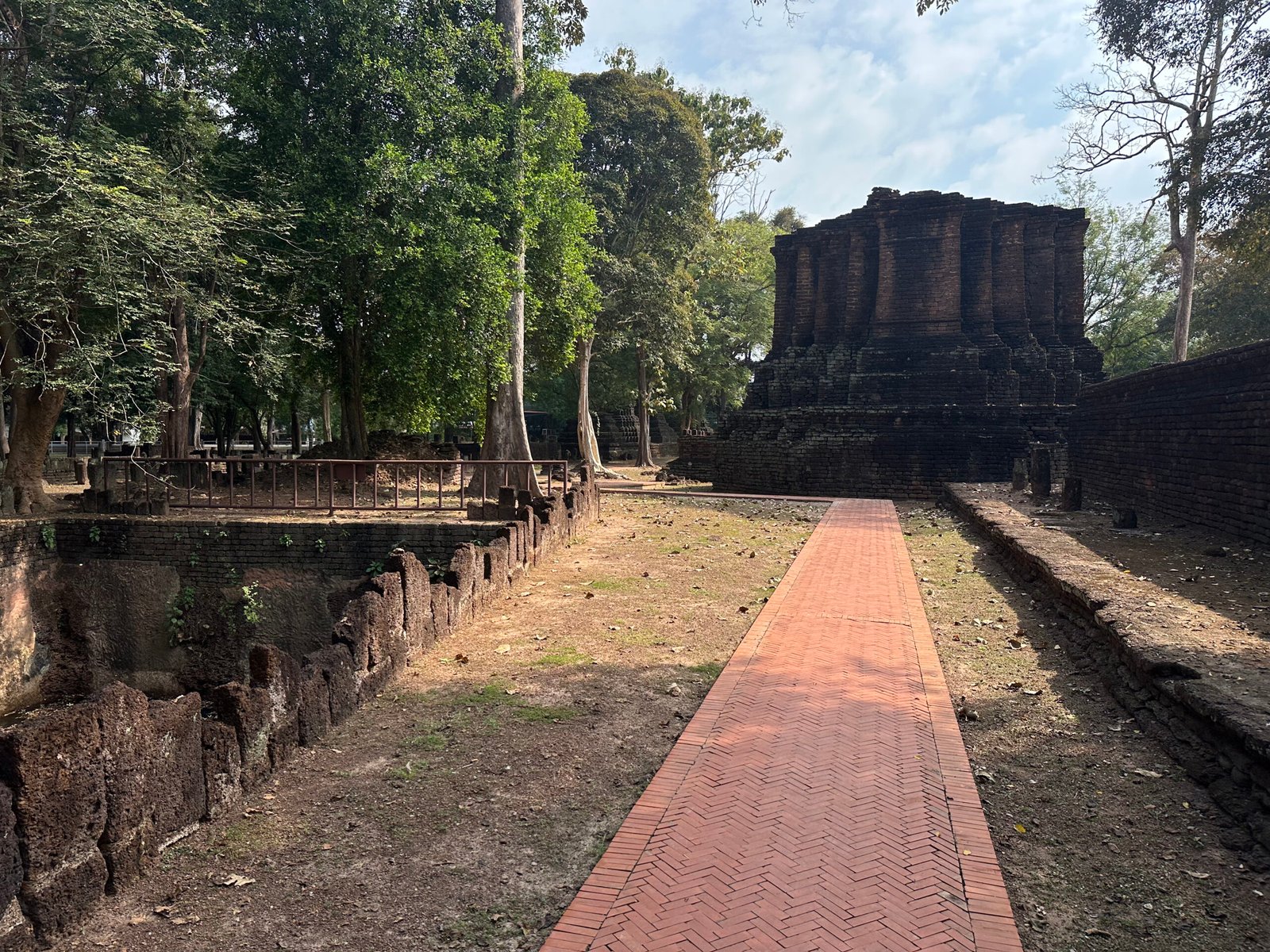
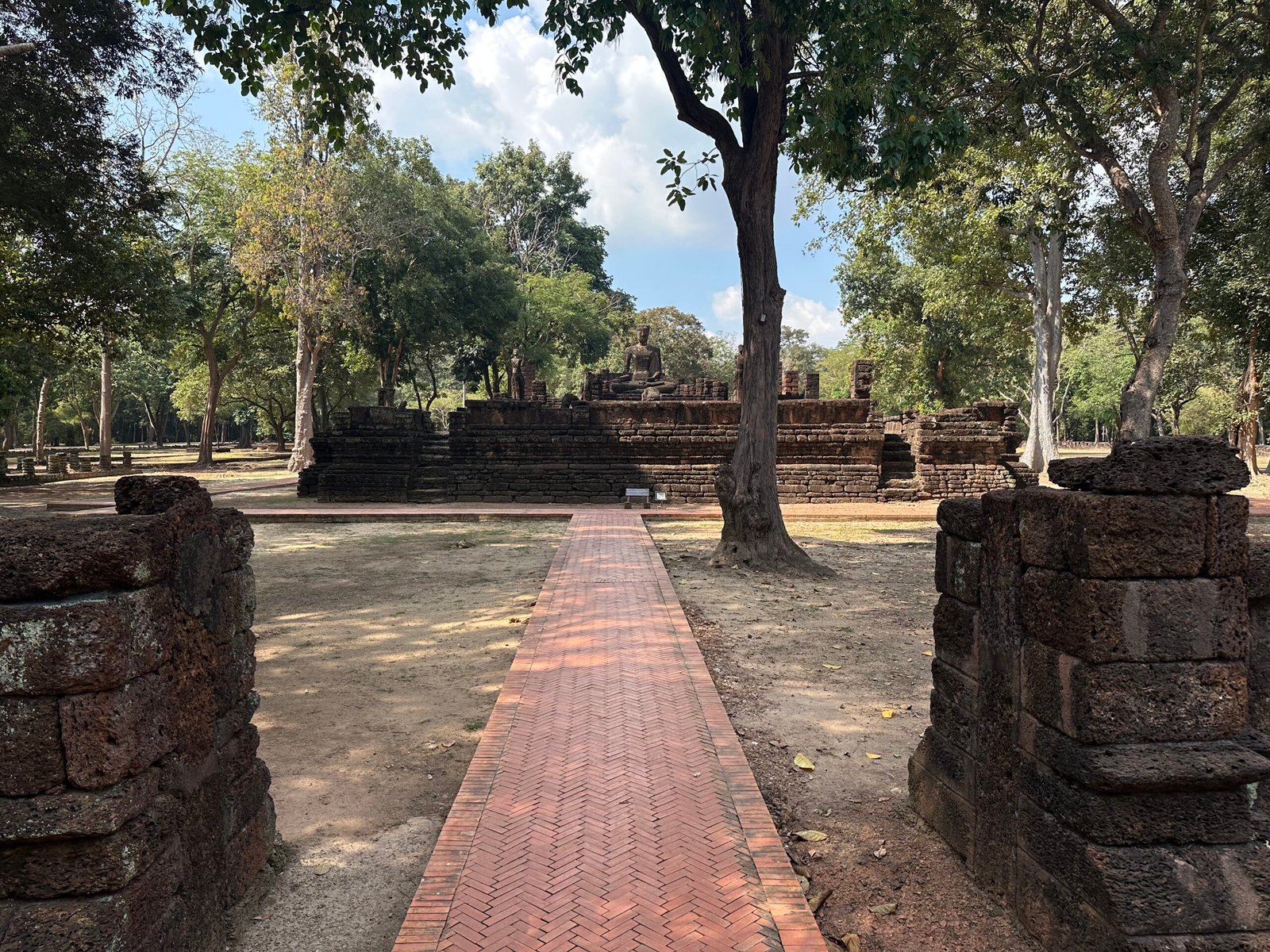
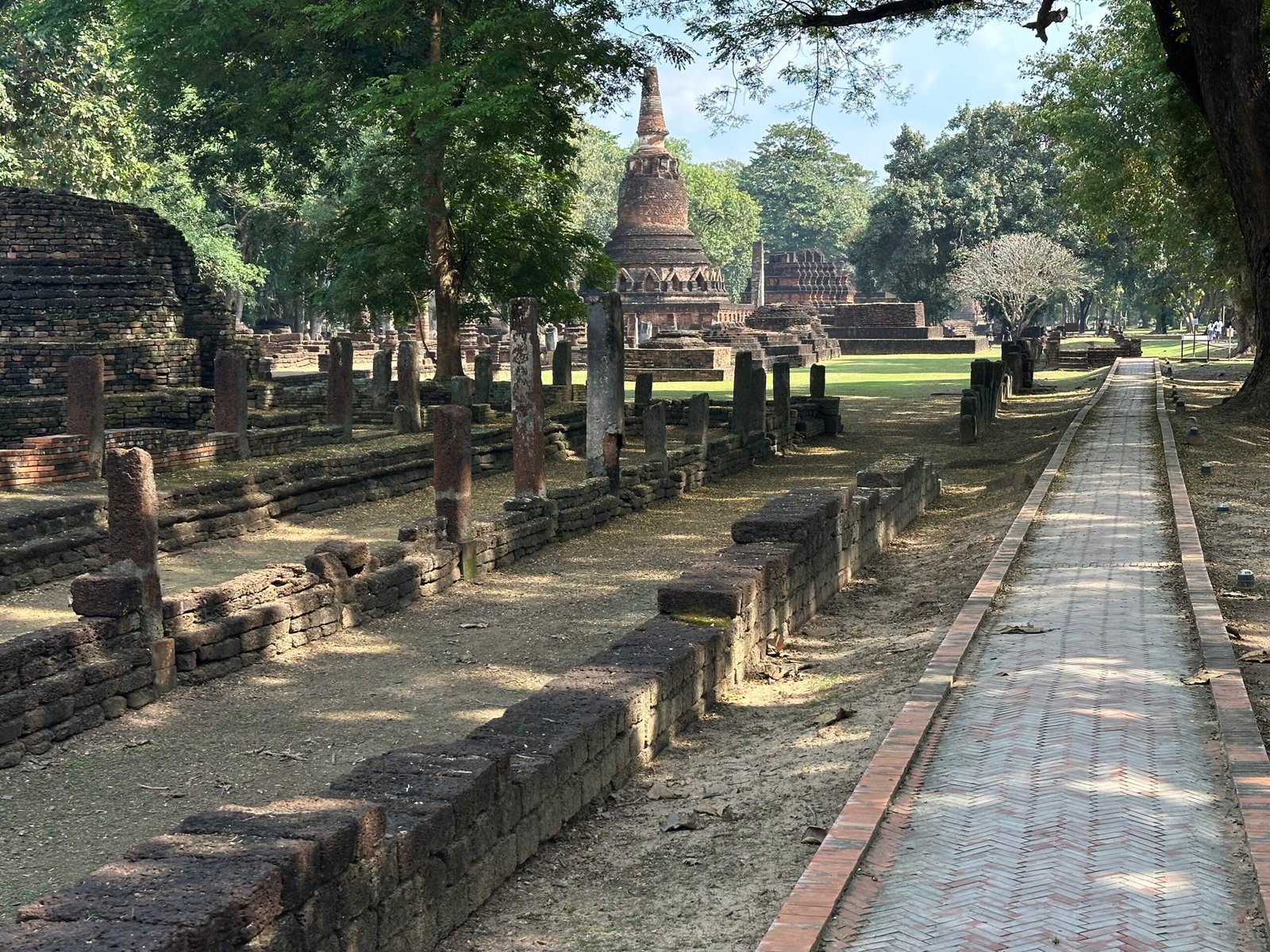
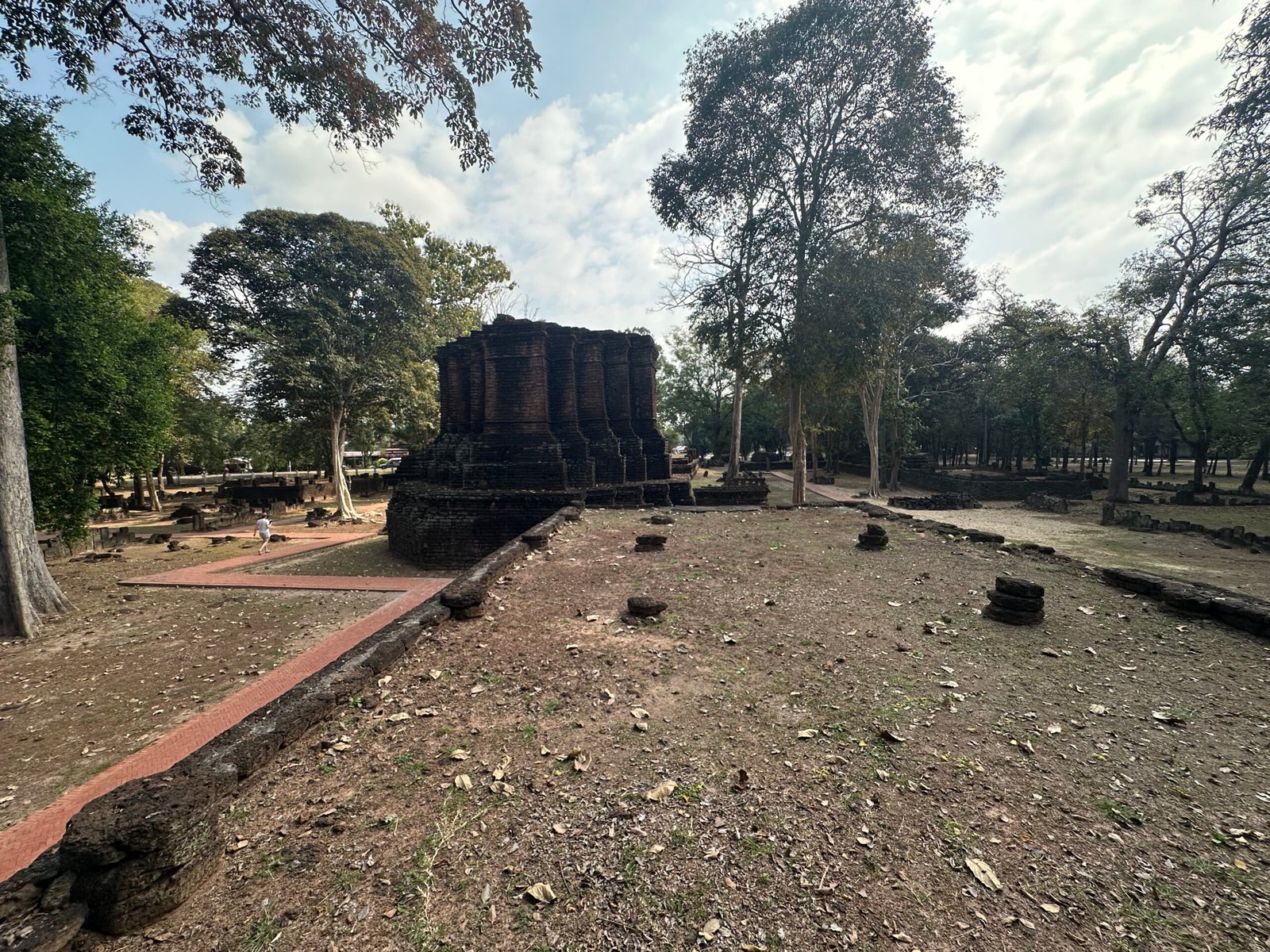
What amazed me most about Kamphaeng Phet was the atmosphere. In Sukhothai, you are often surrounded by other tourists. Here, in the Aranyik (Forest) Zone, I was often the only person standing among the ruins. The forest has grown around the temples, creating a beautiful contrast between the green canopy and the red laterite stone.

Here were the highlights that you defiantly should visit:

Wat Phra Si Iriyabot (The Temple of Four Postures)

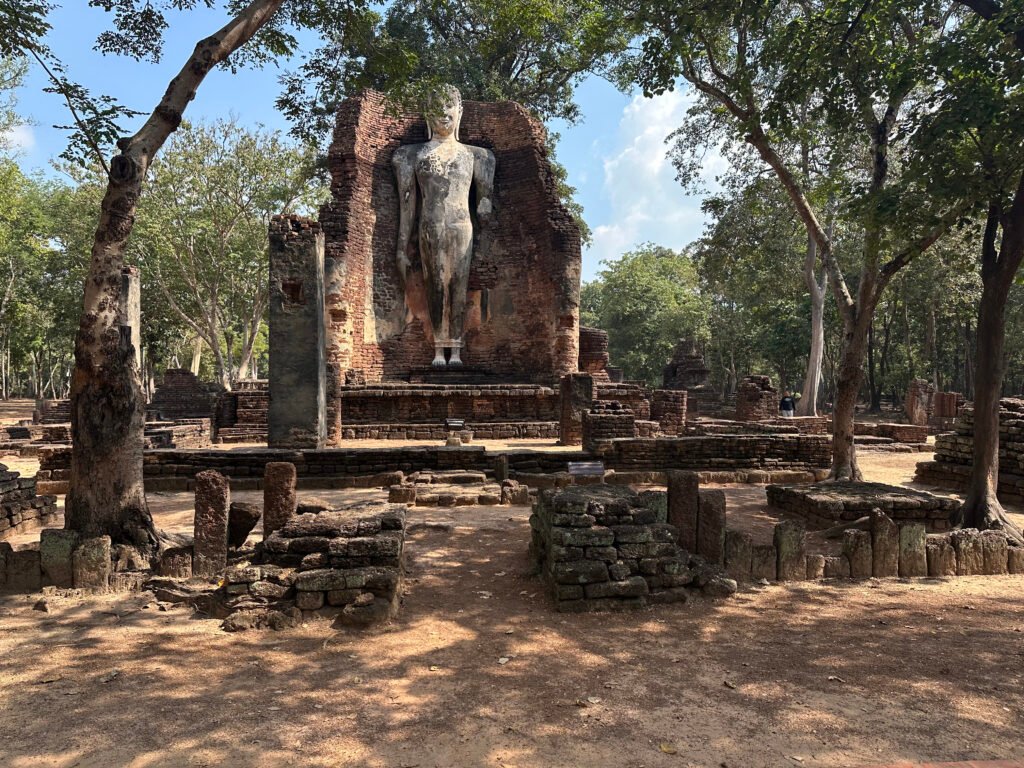
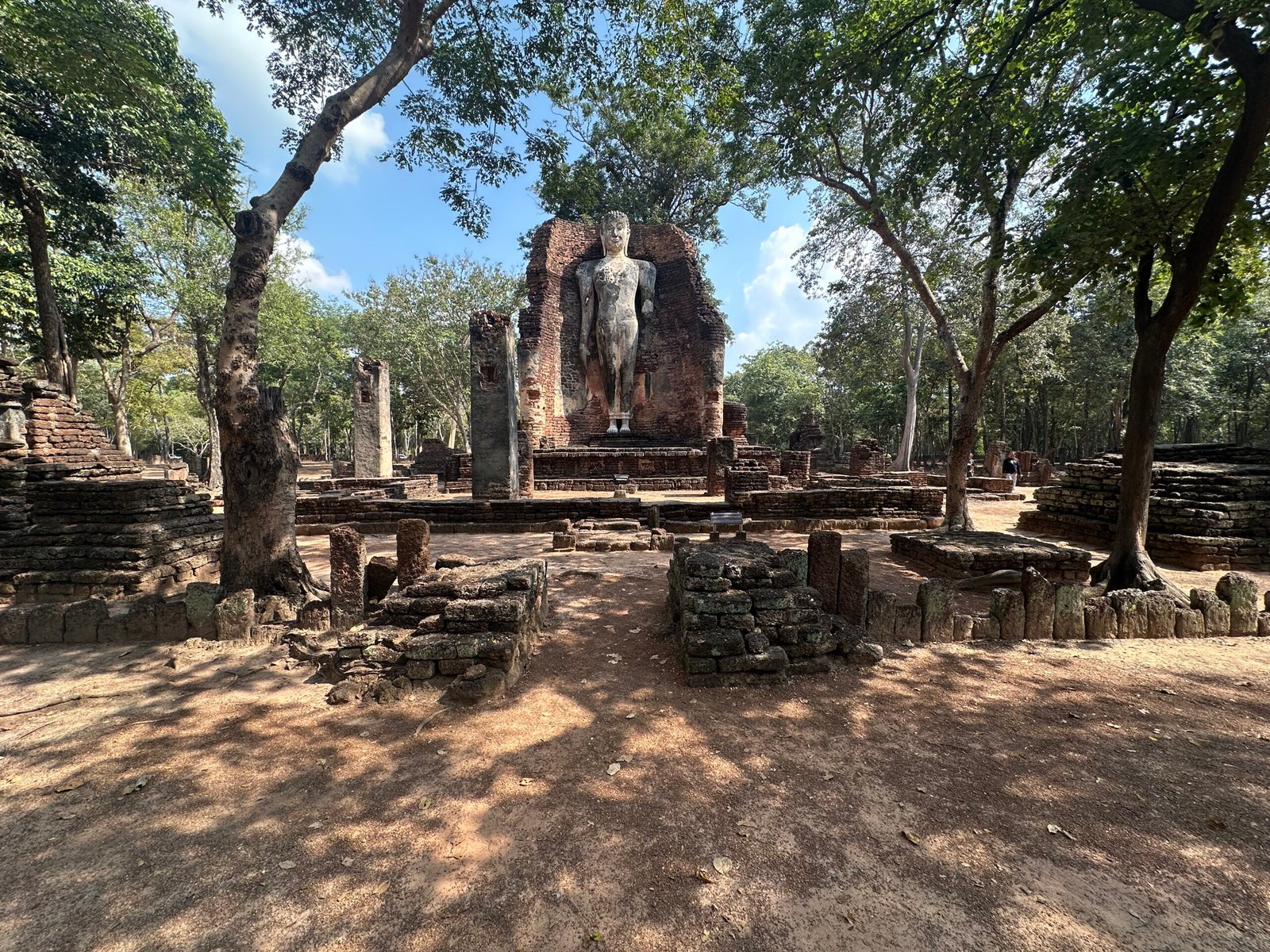
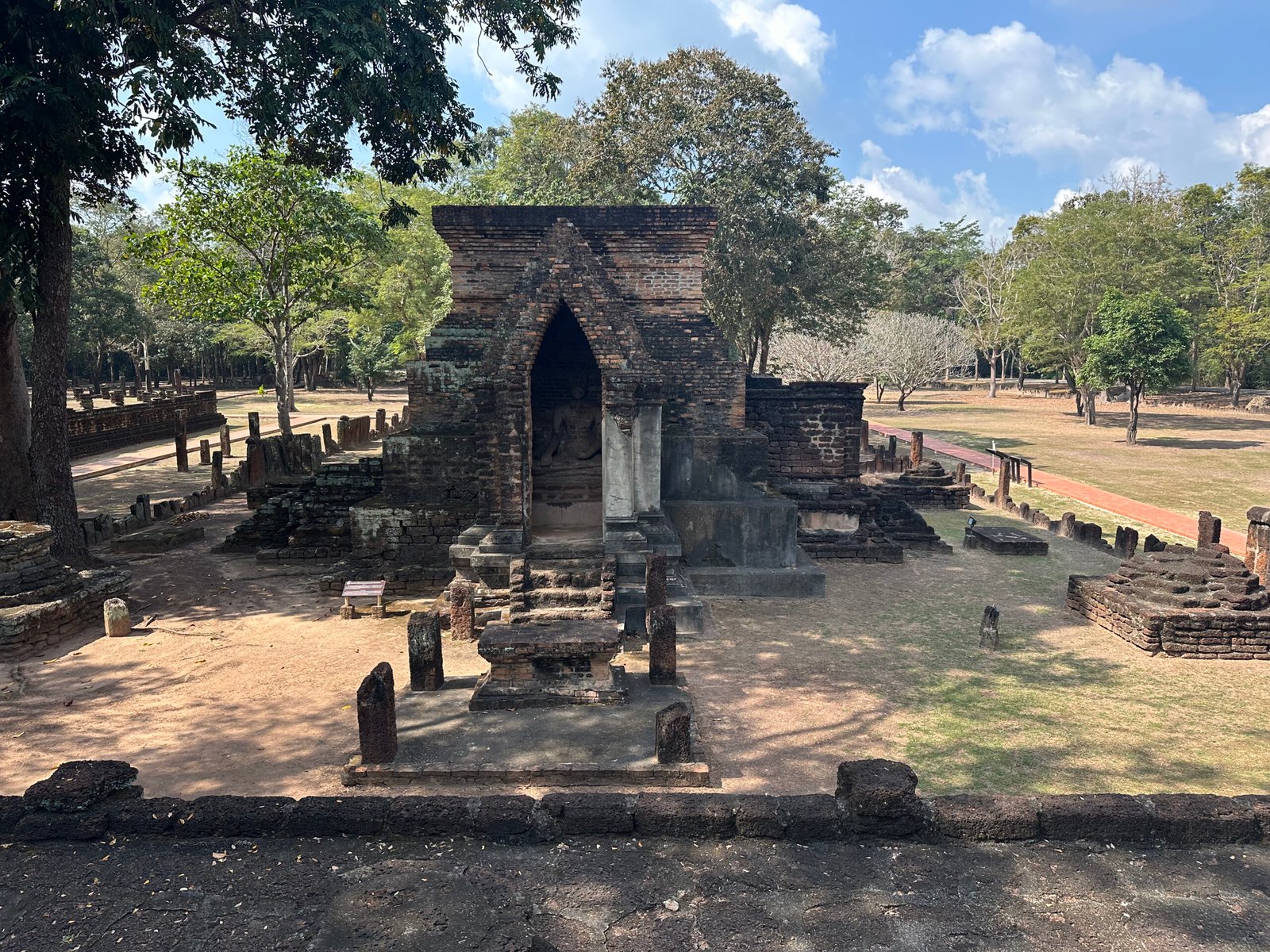
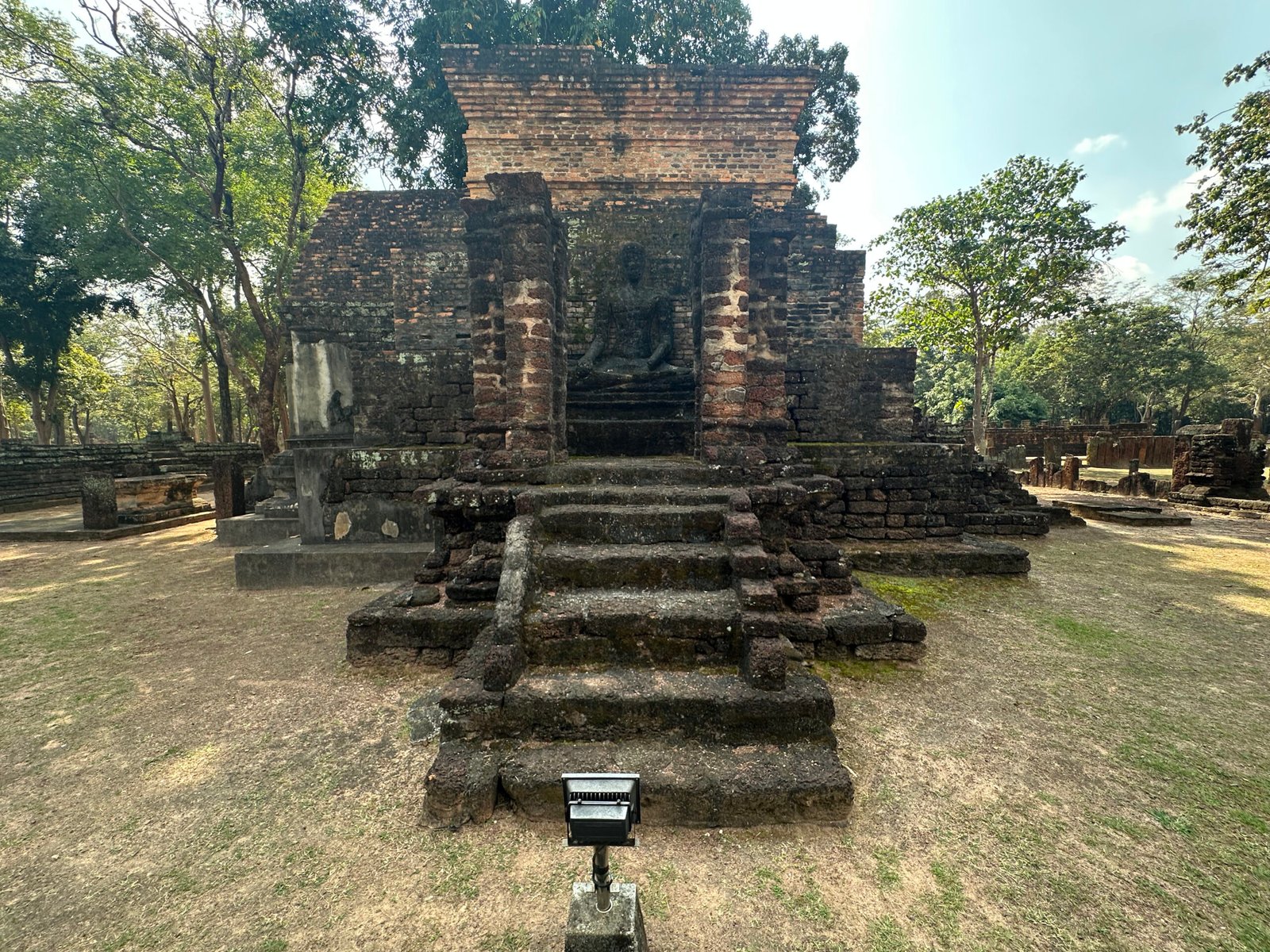
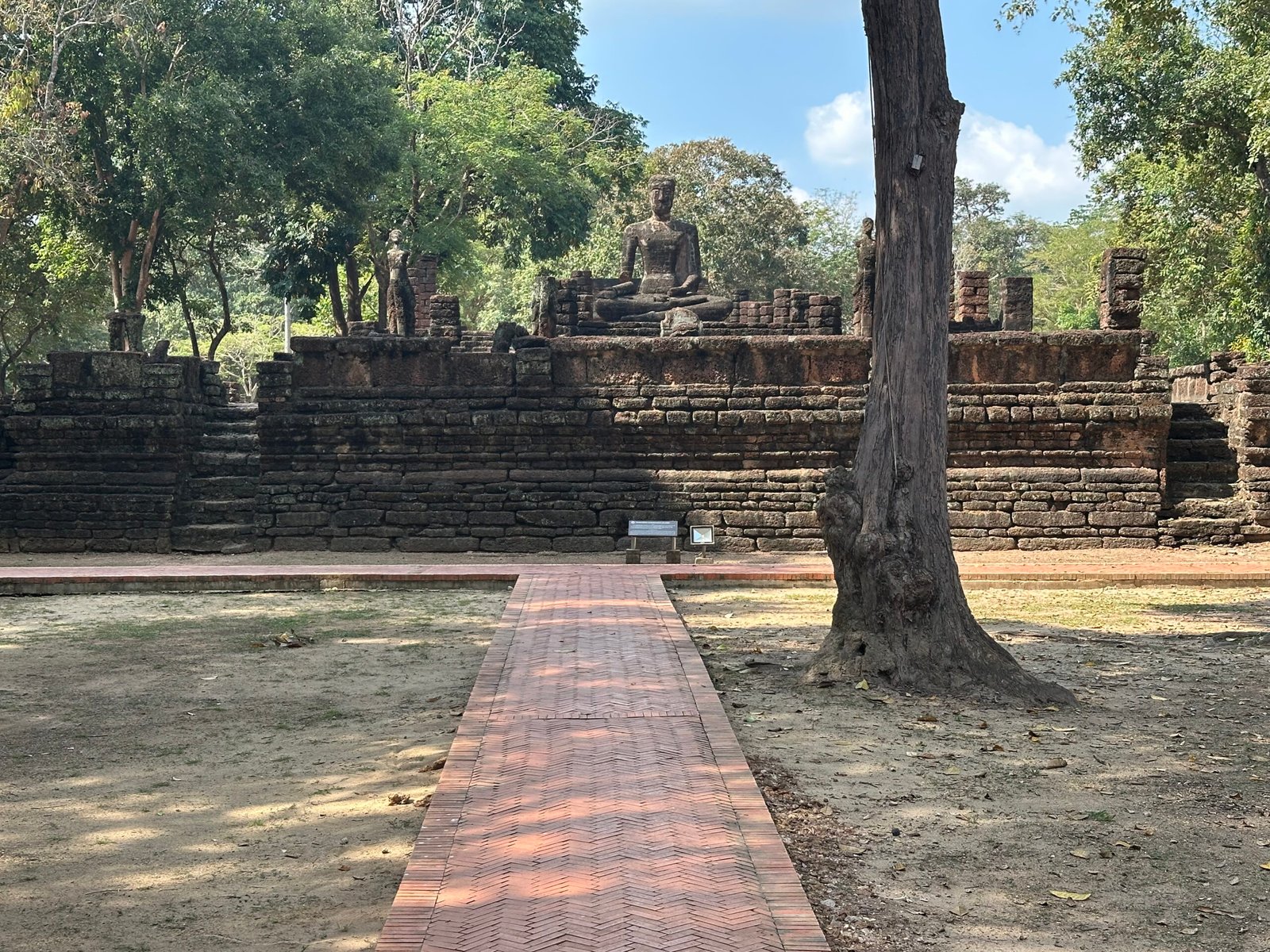
This was one of the most impressive stops. The name refers to the four positions of the Buddha: walking, sitting, standing, and reclining. While the other statues have crumbled over the centuries, the standing Buddha remains majestically intact. Seeing this towering figure tucked away in a narrow laterite shelter (which you can see in my photos) was a humbling moment. The scale is massive, yet the expression is incredibly peaceful.

Wat Chang Rop (The Temple Surrounded by Elephants)

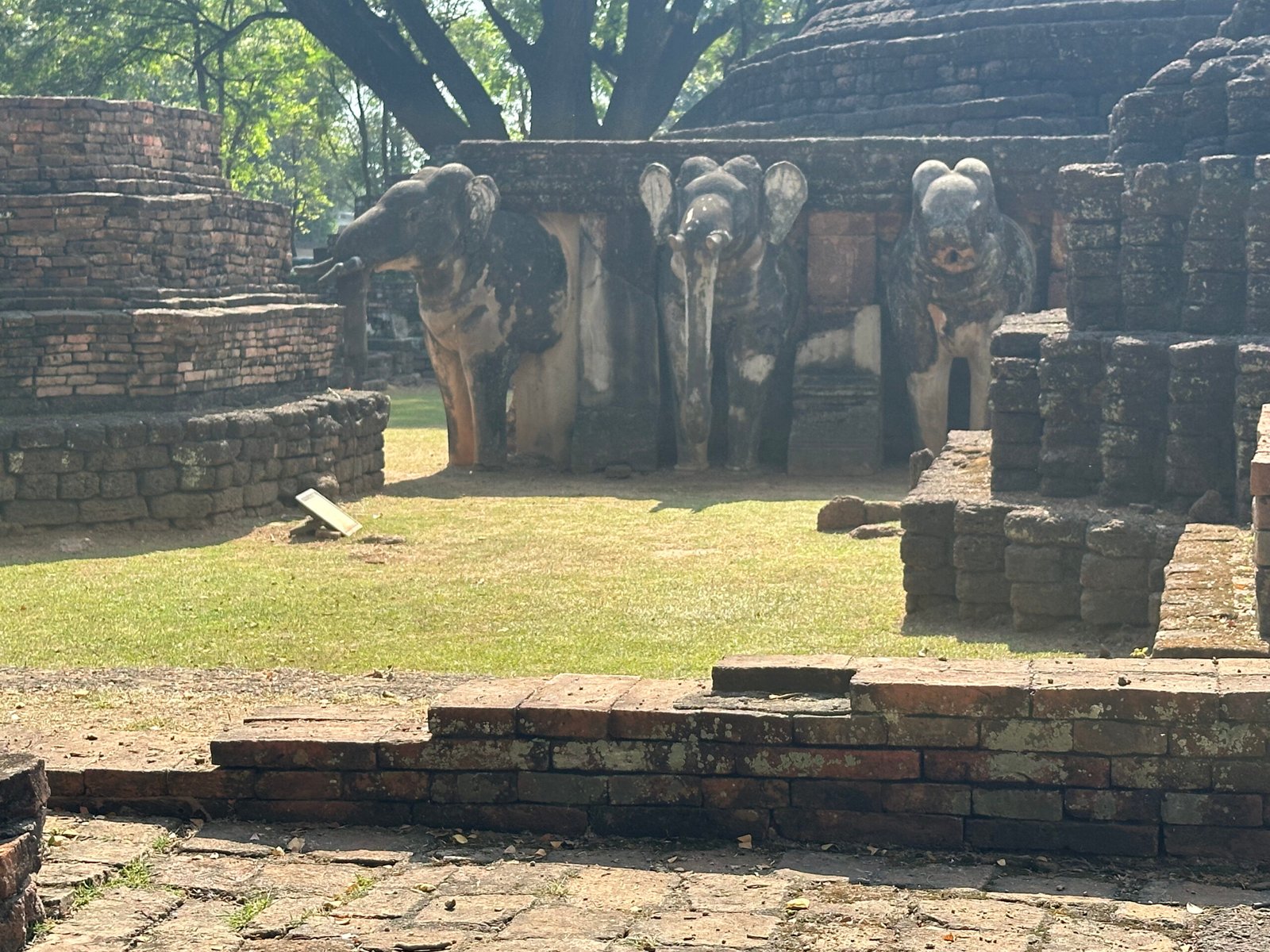
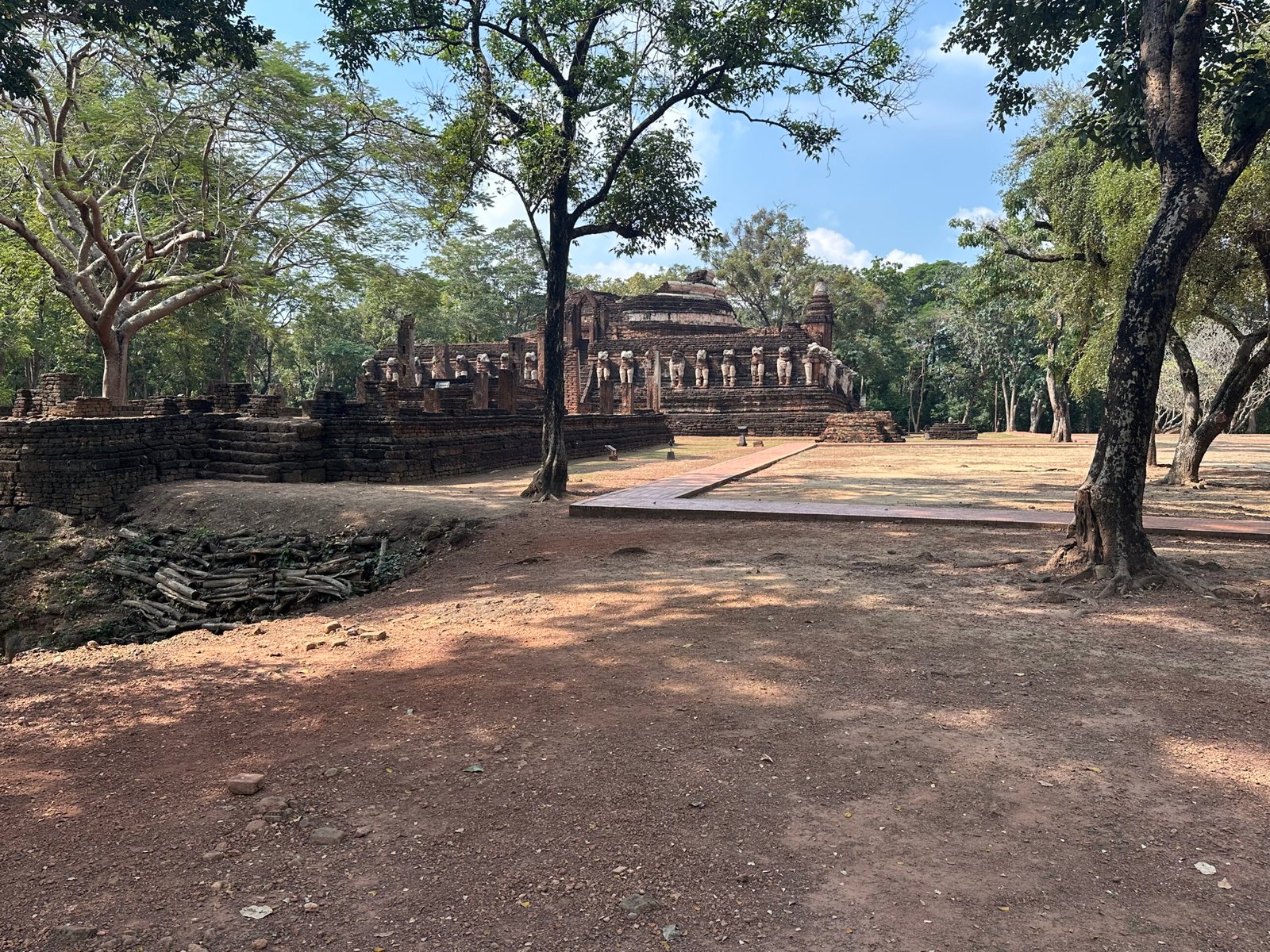
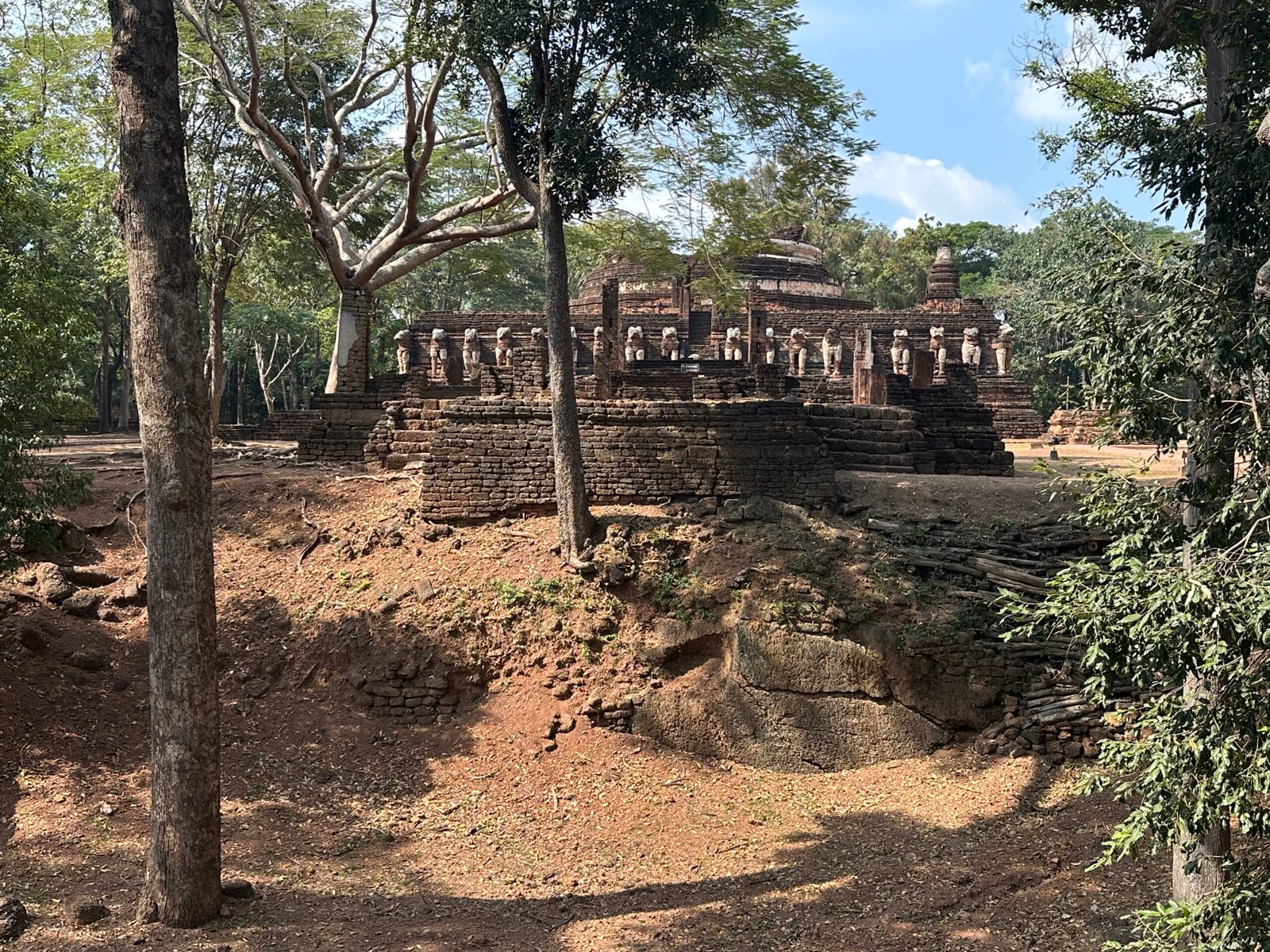
Located on a hill in the forest zone, this is perhaps the iconic image of Kamphaeng Phet. The main stupa is supported by a base adorned with 68 elephant statues emerging from the stone. Although time has weathered them, you can still see the intricate details on many of the elephants. It reminded me of similar temples in Sukhothai, but the isolation here made it feel like a personal discovery.

The Laterite Forest

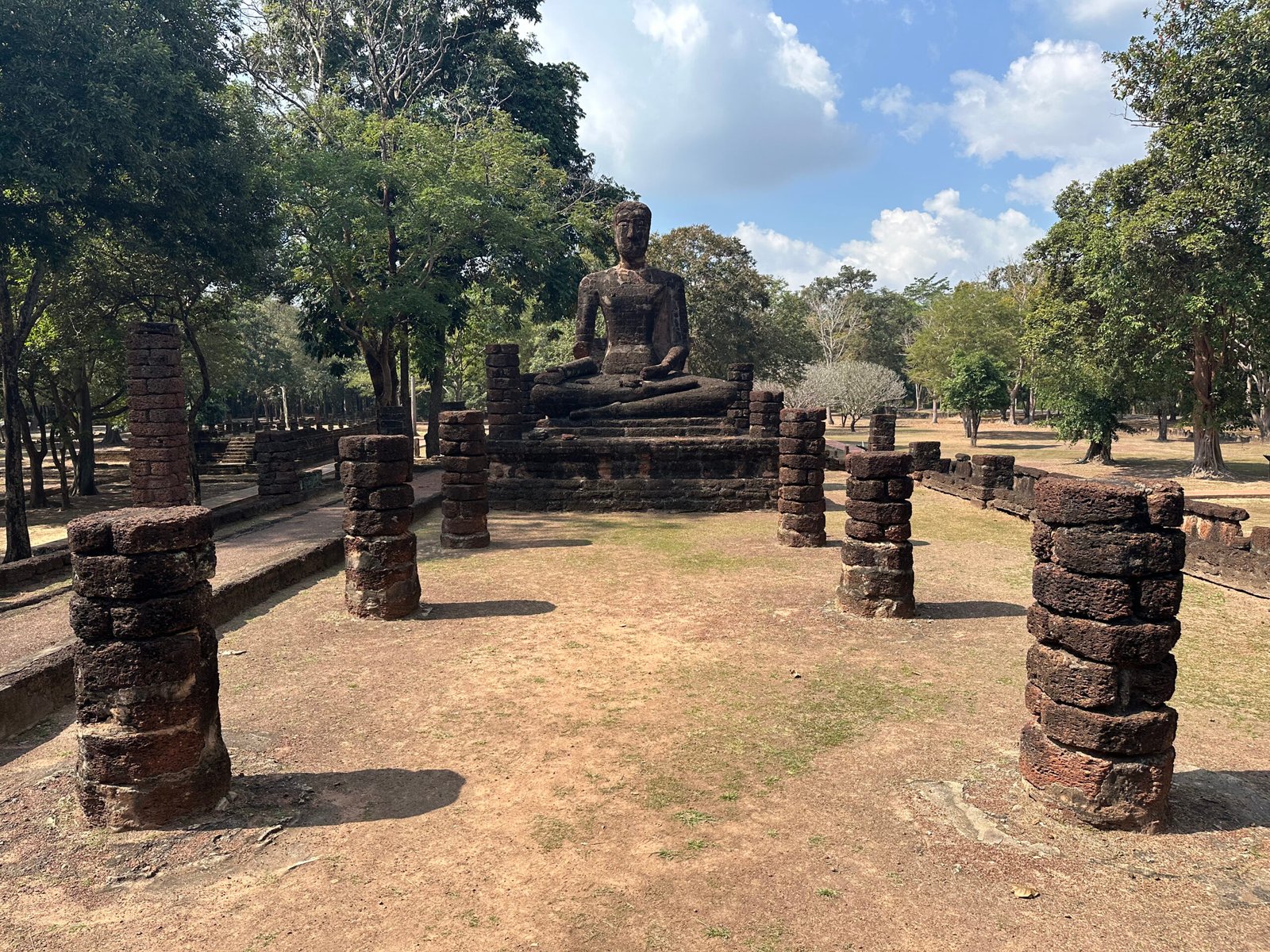
Beyond the main temples, I loved just wandering among the smaller stupas and rows of columns that seem to go on forever. The way the light filters through the trees and hits the red laterite stone creates a golden glow that is a photographer’s dream.

The Trio of Buddhas (Wat Phra Kaeo)

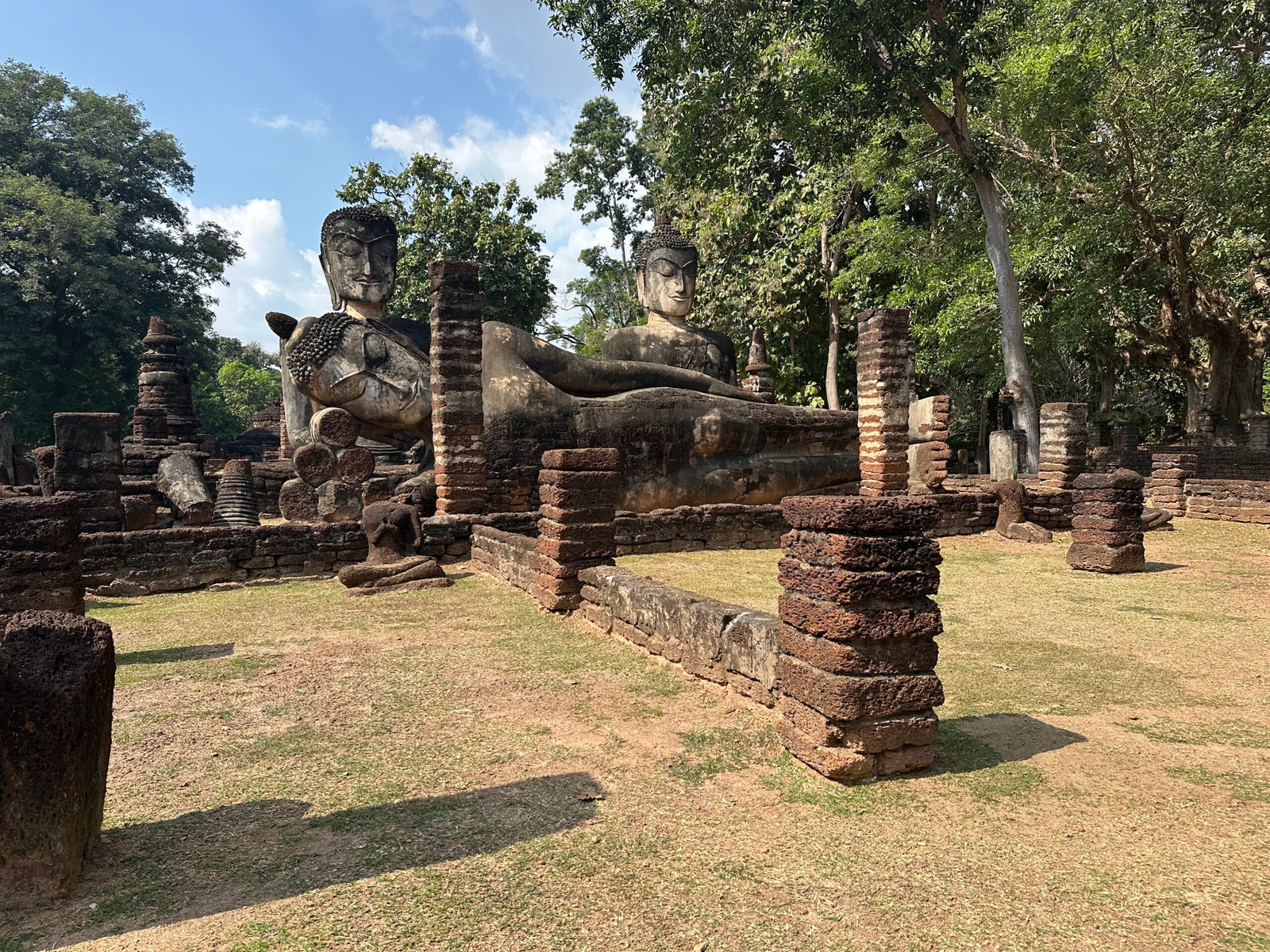
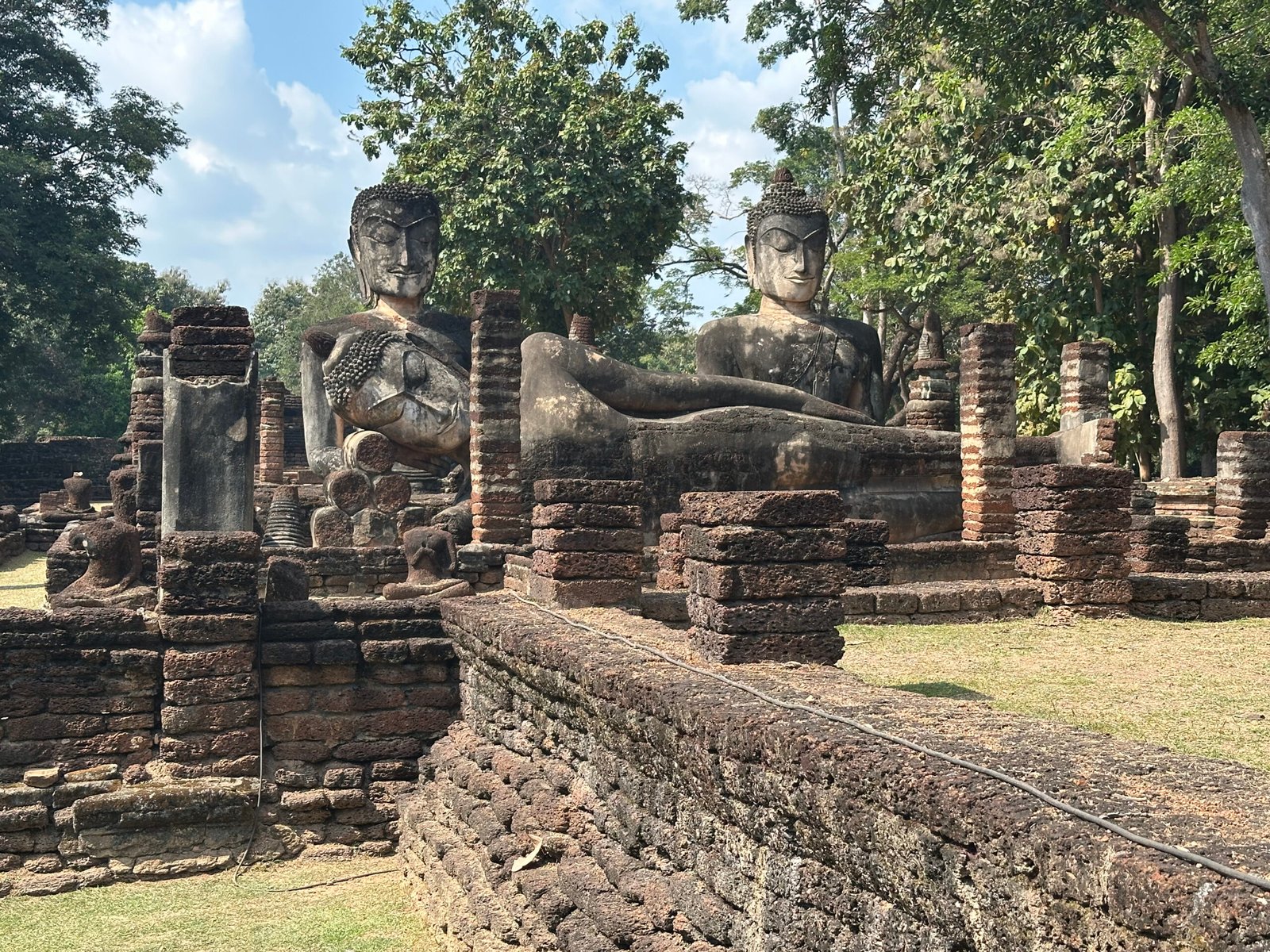
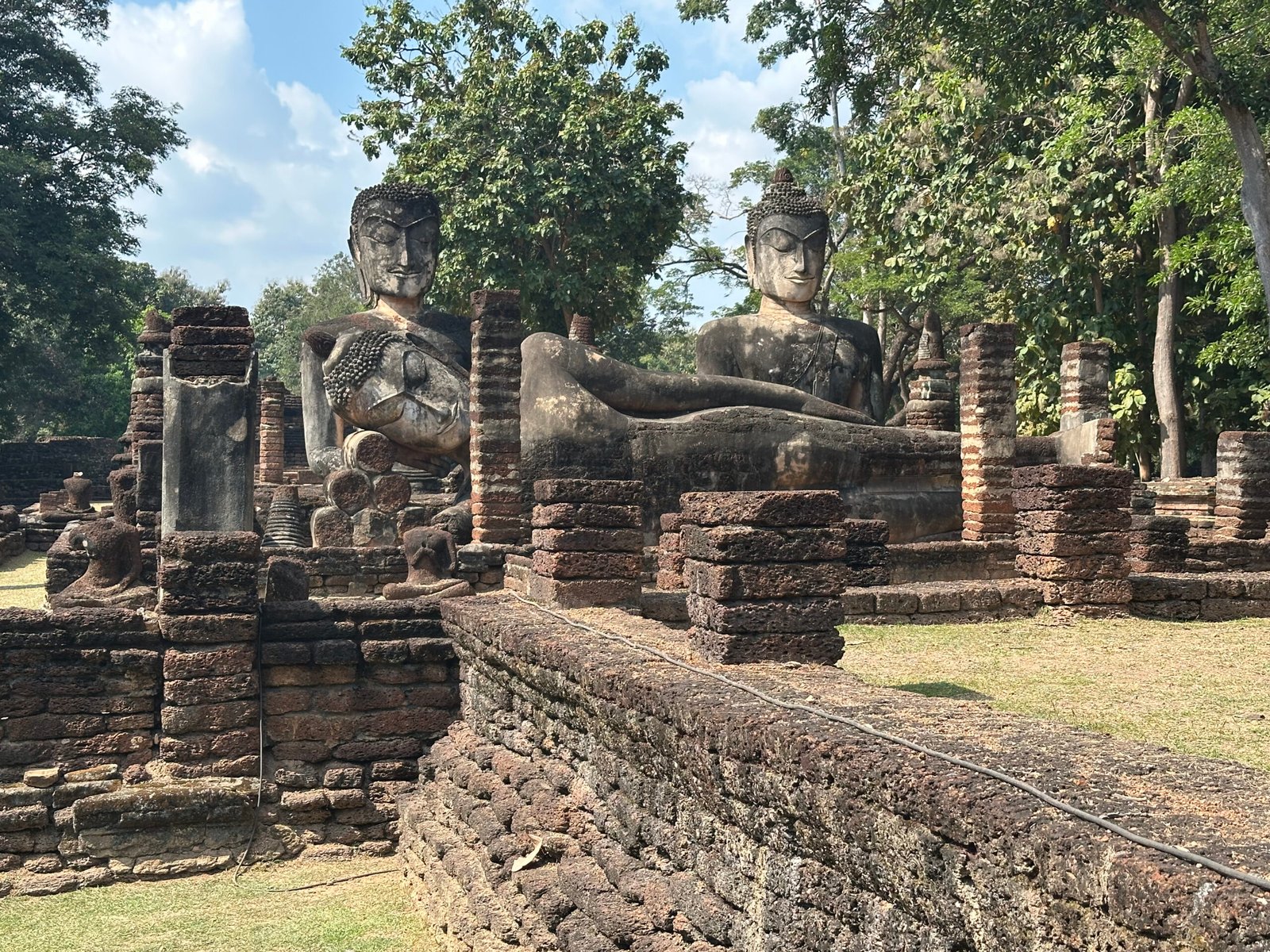
In the central zone, do not miss Wat Phra Kaeo. As you can see in my photos (IMG_3500), there is a stunning composition of three Buddha statues: two seated in the front and a massive reclining Buddha resting peacefully behind them. Seeing these weathered faces watching over the ruins is a powerful image that stays with you.

You cannot end this trip without rewarding yourself. Back in Sukhothai, there is a street food legend that locals swear by.

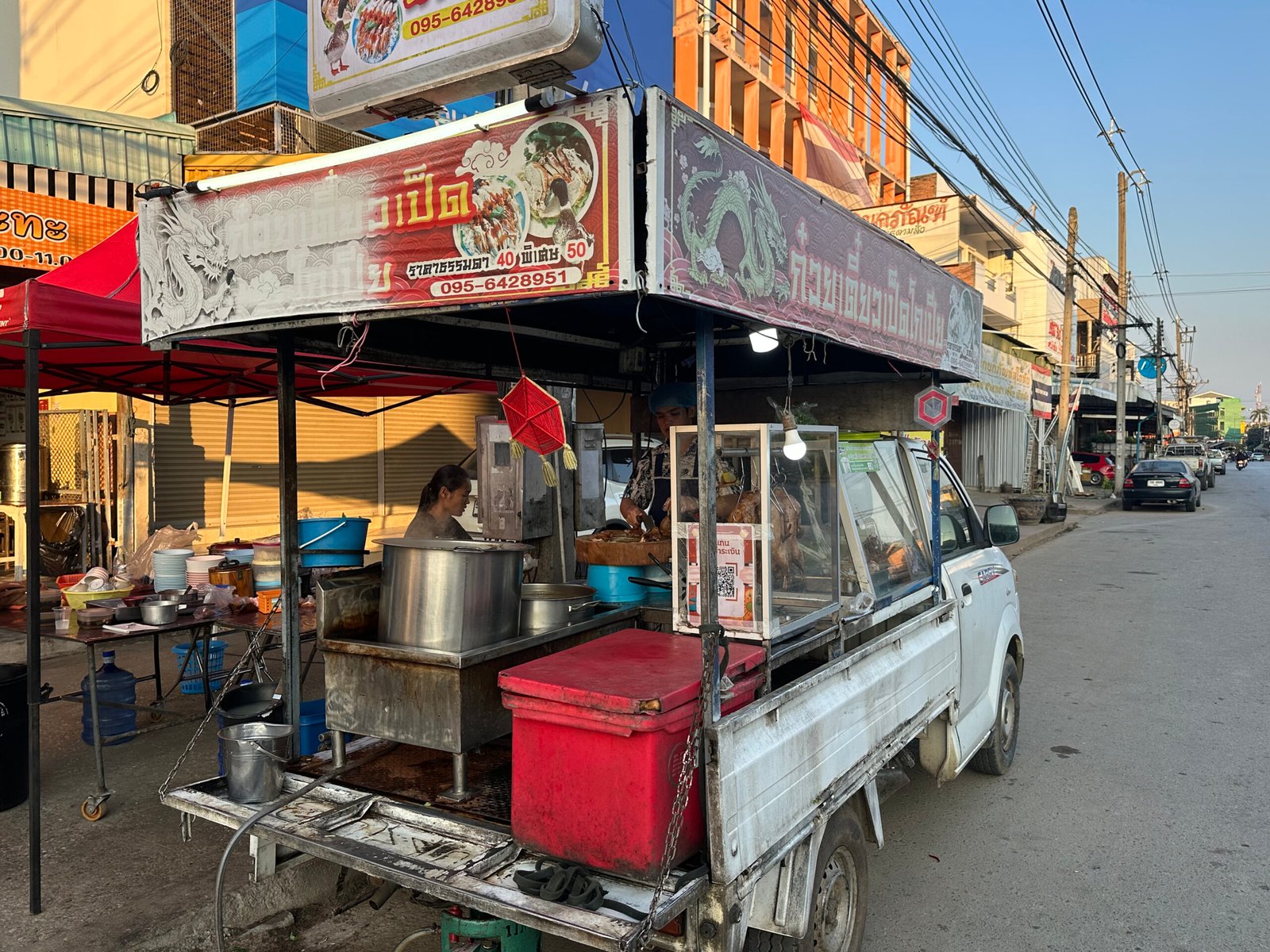
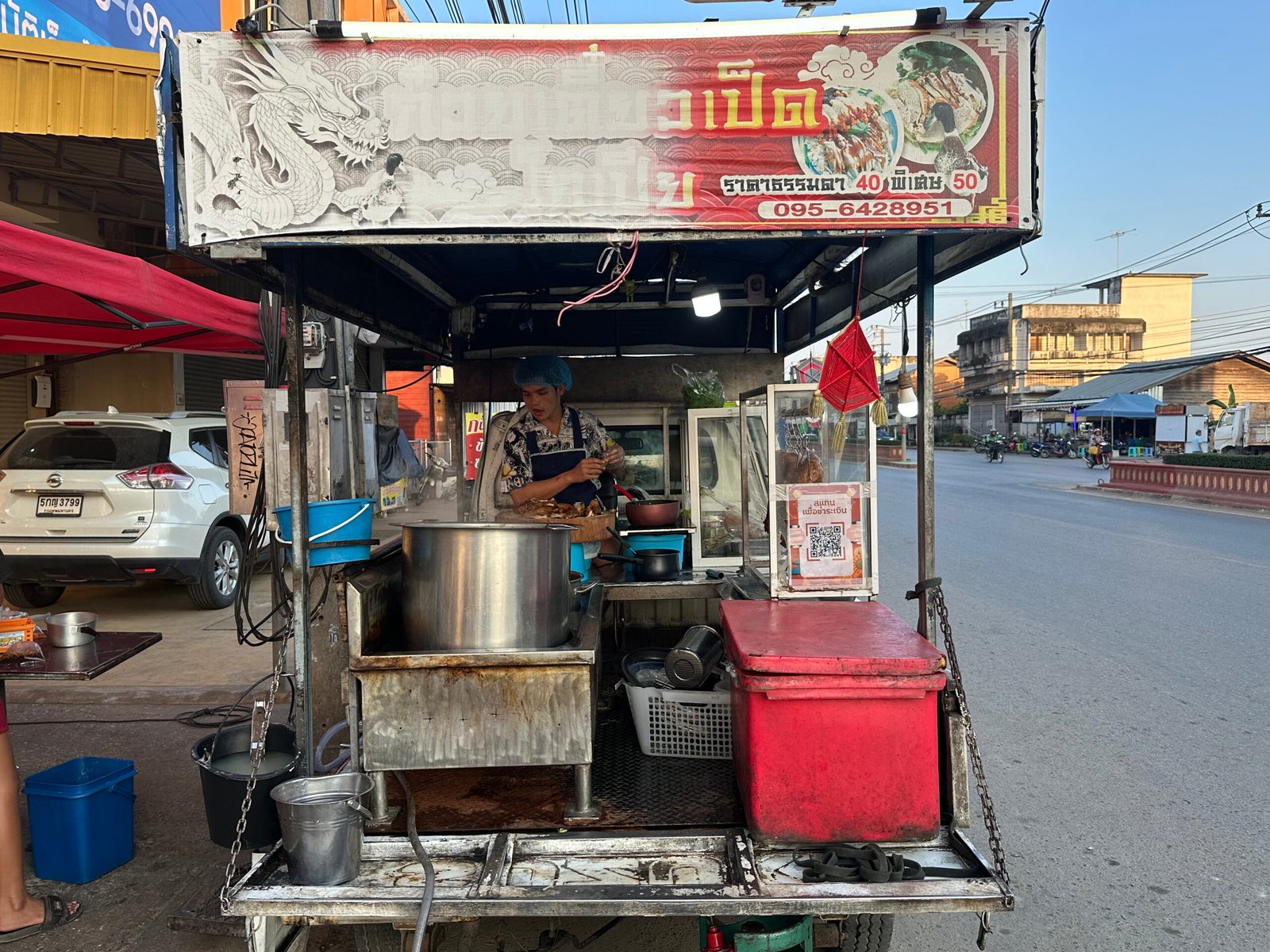
If you want the best Duck Noodle Soup (Kuay Tiew Ped) in the region, you have to find the specific truck.

  • The Look: It’s a silver pickup truck converted into a mobile kitchen. Look for the Red Banner with a dragon and a duck on it.

  • The Taste: The broth is deep, dark, and aromatic—the kind that has been simmering for hours. The duck meat falls off the bone. It is simple, unpretentious, and absolutely delicious.

  • How to Find It: Keep your eyes peeled on the main street for the truck in the picture. If you are desperate, the number on the banner is 095-6428951.

Kamphaeng Phet isn’t just a “smaller Sukhothai.” It’s a moodier, quieter, and more rugged experience. If you want to feel like an explorer discovering a lost civilization (and finish the day with world-class noodles), this is the day trip for you.

February 15, 2026 0 comments
0 FacebookTwitterPinterestEmail
How to Travel in 2026: Why It Costs More and How to Save
Budget TravelFamily TravelSolo TravelTravel Tips

How to Travel in 2026: Why It Costs More and How to Save

by Travel Geek February 15, 2026
written by Travel Geek

If you feel like flight prices and hotel rates have jumped recently, you aren’t imagining things. Travel in 2026 is more expensive than it was a few years ago. The days of ultra-cheap, last-minute weekend trips are mostly behind us.

But that doesn’t mean you have to stay home. You can still see the world without draining your bank account. You just need to change how you plan.

Here is a look at why prices are up and exactly what you can do to save money while still having a great trip.

Why Is Travel So Expensive Right Now?

Before we get to the money-saving tips, it helps to know what you are paying for. Prices aren’t high just because companies are greedy. There are real costs driving the numbers up.

1. Green Fuel Rules

Airlines are now required to use more “Sustainable Aviation Fuel” (SAF). This fuel is better for the planet, but it costs two to five times more than regular jet fuel. Since airlines have to buy it to meet government rules, they pass that extra cost on to you in your ticket price.

2. City Entry Fees

Popular cities are tired of overcrowding. Places like Venice, Barcelona, and Amsterdam use taxes to control the number of visitors. In 2026, you might see extra fees added to your hotel bill or a “tourist tax” just to enter a city center. These fees go toward fixing local infrastructure, but they add up quickly for a family.

3. Staffing Costs

Hotels and restaurants are paying higher wages to attract staff. The shortage of workers in the hospitality industry means businesses have to pay more for housekeepers, waiters, and front desk agents. Those higher wages lead to higher room rates and menu prices.

How to Save Money Without Missing Out

Now that we know the “why,” let’s look at the “how.” You don’t need to stay in a bad hotel or take three connecting flights to save money. You just need to be smart about where and when you go.

1. Swap Famous Spots for “Dupes”

This is the single best way to save money in 2026. Instead of going to the most famous (and expensive) places, go to a nearby country that offers a similar vibe for half the price. We call this a “Destination Dupe.”

  • Skip Greece, Try Albania: You still get the beautiful coast, clear water, and ancient ruins, but you will pay about 50% less for food and hotels.

  • Skip Switzerland, Try the Italian Dolomites: You get the same jagged mountain peaks and hiking trails, but with better food prices and cheaper lift tickets.

  • Skip Prague, Try Krakow: Poland offers incredible medieval history, great squares, and nightlife for a fraction of the cost of Austria or the Czech Republic.

  • Skip Tokyo, Try Taipei: If you want neon lights, amazing street food, and safe city streets, Taiwan is a fantastic, budget-friendly alternative to Japan’s capital.

2. Change When You Book

The old advice of “book as early as possible” doesn’t always work anymore.

  • International Flights: Aim to book 3 to 5 months before your trip. If you book too early (like 10 months out), you often pay a higher “just in case” price.

  • Domestic Flights: The sweet spot is 1 to 2 months before you fly.

  • The Weekend Rule: Try to buy your tickets on a Sunday. Airlines often update their systems over the weekend, and you can sometimes find better deals then.

3. Travel in the “New” Shoulder Season

Weather patterns are shifting, and so are the best times to travel.

  • Europe in October/November: Summer stays hot longer now. You can visit Italy or Greece in late October and still get decent weather, but the crowds are gone and prices drop by 20-30%.

  • Asia’s “Green Season”: Don’t be scared of the rainy season in Southeast Asia (June to September). It usually only rains for an hour a day. In exchange for a little rain, you can stay in luxury resorts for half the usual price.

4. Use Stopovers to Your Advantage

Direct flights are convenient, but they are often the most expensive option. Airlines in the Middle East, like Etihad, want you to stop in their hub cities.

To encourage this, they often offer free hotel stays if you turn your layover into a two-day stopover. You get to see a new city (like Abu Dhabi) for free, and your flight ticket might be cheaper than a direct route.

5. Be Smart with Points

If you have credit card points, don’t just sit on them. Points are a great way to fight inflation.

  • Transfer Your Points: Instead of using points directly through a bank portal, look into transferring them to airline partners. You can often get better value this way.

  • Status Match: If you have elite status with one hotel chain, ask another chain to match it. This can get you free breakfast and room upgrades without spending extra nights.

Travel in 2026 costs more, but it can still be amazing. By picking “dupe” destinations, booking at the right time, and using stopover programs, you can keep your costs down. The goal isn’t just to find the cheapest option—it’s to get the best experience for your money.

February 15, 2026 0 comments
0 FacebookTwitterPinterestEmail
The Ultimate Guide to Retreats: Finding the Perfect Reset for Your Mind and Body
Health and WellnessTravel Tips

The Ultimate Guide to Retreats: Finding the Perfect Reset

by Travel Geek February 13, 2026
written by Travel Geek

It used to be that if you were tired, you took a vacation. You’d fly somewhere warm, eat too much, sleep late, and maybe have a drink or two by the pool. But lately, many of us come back from those trips feeling just as drained as when we left.

That is why retreats are taking over travel right now.

Unlike a standard holiday, a retreat isn’t just about escaping your daily life. It is about fixing what feels broken. Whether you are dealing with burnout, grief, or just a lack of creativity, there is a program designed to help. But with so many options out there, how do you pick the right one?

Here is a breakdown of the different types of retreats available in 2026 and how to figure out which one you actually need.

Why a Vacation Isn’t Enough

Science shows a big difference between a vacation and a retreat. On a typical holiday, we often disrupt our sleep schedules and eat rich foods. It’s fun, but it can be hard on the body.

A retreat does the opposite. It is a structured break designed to calm your nervous system. Studies suggest that the benefits of a retreat—like lower blood pressure and better focus—can last for weeks after you get home. It’s not just a pause button; it’s a system reset.

The 5 Main Types of Retreats

To find the right fit, you need to know what’s out there. Most retreats fall into one of these five categories.

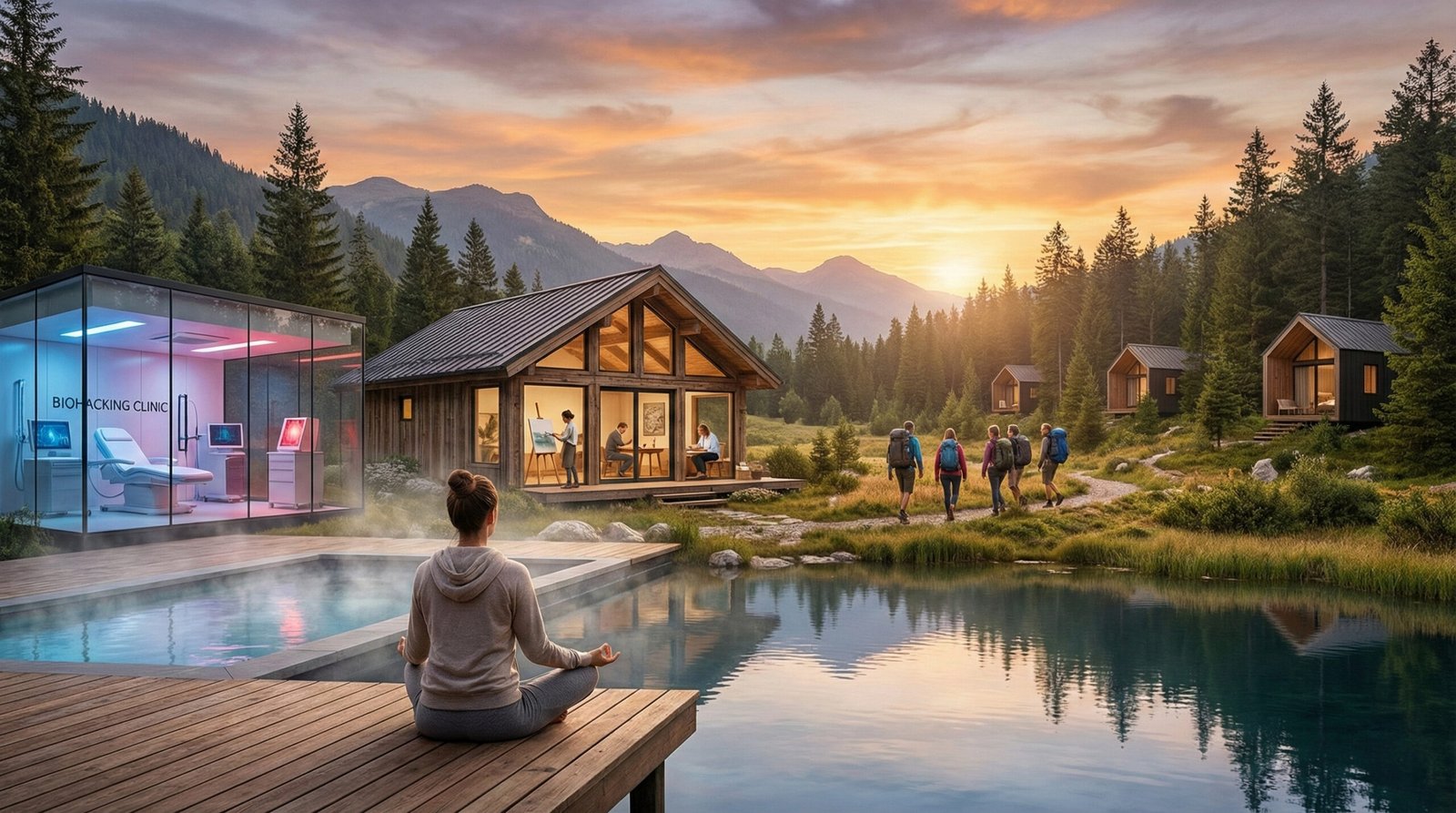
1. Biohacking and Longevity: The Science Route

This is for the person who loves data. If you treat your health like a project, this is your spot. These centers use high-tech tools to measure exactly what is going on inside your body.

  • What happens: You might try cryotherapy (freezing cold tanks), red light therapy, or oxygen training.

  • Best for: People who want to optimize their physical health and live longer.

  • Vibe: It feels more like a futuristic clinic than a spa.

2. Mental Health and Burnout: The Healing Route

Burnout is real, and it’s different from just being tired. If you feel numb, cynical, or like you can’t get anything done, you might need deep rest.

  • What happens: These programs focus on sleep, gentle movement, and therapy. The goal is to lower your stress hormones.

  • Best for: Anyone running on empty.

  • Important: There are also specific retreats for grief. These provide a safe space to process loss with others who understand what you are going through.

3. Spiritual and Silent: The Quiet Route

We live in a noisy place. Our phones buzz, screens flash, and people talk constantly. A silent retreat, like Vipassana, removes all of that.

  • What happens: You stop talking. No phone, no emails, no small talk. You spend days meditating and sitting with your thoughts.

  • Best for: People who feel overwhelmed by digital noise and want clarity.

  • Heads up: This can be intense. If you aren’t used to silence, your brain might get loud before it gets quiet.

4. Creative and Focus: The “Deep Work” Route

Sometimes you aren’t tired; you’re just distracted. Writers, artists, and business leaders use these retreats to finally finish that big project.

  • What happens: Days are split between strict “deep work” sessions and rest. You get uninterrupted time to think.

  • Best for: Finishing a book, planning a business strategy, or reconnecting with your art.

5. Adventure and Nature: The “Awe” Route

This is the opposite of sitting still. These retreats use nature to get you out of your head and into your body.

  • What happens: Think surfing in Costa Rica, hiking in Hawaii, or white-water rafting.

  • Why it works: Facing a challenge in nature releases feel-good chemicals in your brain. It reminds you that you are small and the planet is big, which puts problems in perspective.

How to Choose the Right One for You

Picking a retreat is a big investment of time and money. Use this simple two-step check to decide.

Step 1: Burnout vs. Boredom

Ask yourself how you really feel.

  • If you are irritable, exhausted, and numb: You have burnout. Do not book an intense hiking trip. You need a restorative retreat with lots of sleep and gentle food.

  • If you are restless and unmotivated: You are stagnant. You need stimulation. Book an adventure or creative retreat to wake up your brain.

Step 2: Introvert vs. Extrovert

  • Introverts: You recharge alone. A retreat with forced “team building” games will drain you. Look for silent retreats or solo cabins.

  • Extroverts: You get energy from others. A week of silence might make you lonely. Look for group adventures or communal wellness festivals.

A Note on Safety

The wellness industry is not fully regulated. Anyone can rent a villa and call themselves a “healer.” Here is how to stay safe:

  • Check Qualifications: If a retreat claims to treat trauma or PTSD, the leaders must be licensed therapists, not life coaches.

  • Read the Bad Reviews: Ignore the 5-star ratings. Look at the 1-star reviews. If people mention feeling pressured, unsafe, or ignored, stay away.

  • Avoid “Gurus”: Be wary of any leader who says they have all the answers or tries to isolate you from your family.

Going on a retreat is a powerful way to take care of yourself. It sends a message that your health matters. Whether you choose to freeze in an ice bath or sit silently in a meditation hall, the goal is the same: to come home feeling more like yourself.

Just remember to take it slow when you get back. Give yourself a day or two before jumping back into work. Your brain will thank you.

February 13, 2026 0 comments
0 FacebookTwitterPinterestEmail
7 Best Fitness Vacations to Book in 2026
AsiaChileCosta RicaDestinationsEuropeIndonesiaItalyMiddle EastPortugalSouth AmericaThailandUAE

7 Best Fitness Vacations to Book in 2026

by Travel Geek January 26, 2026
written by Travel Geek

Remember when a holiday just meant sitting by a pool with a cocktail? Those days are changing. In 2026, more of us want to come back from a trip feeling stronger, rested, and healthier than when we left. We aren’t just looking for a break; we want a reset.

Travel trends show a huge shift toward “performance tourism.” This means planning your trip around your health. Whether you want to train for a marathon, fix your sleep, or just hike in beautiful places, there is a perfect spot for you.

Here are the top 7 fitness destinations you need to know about for 2026.

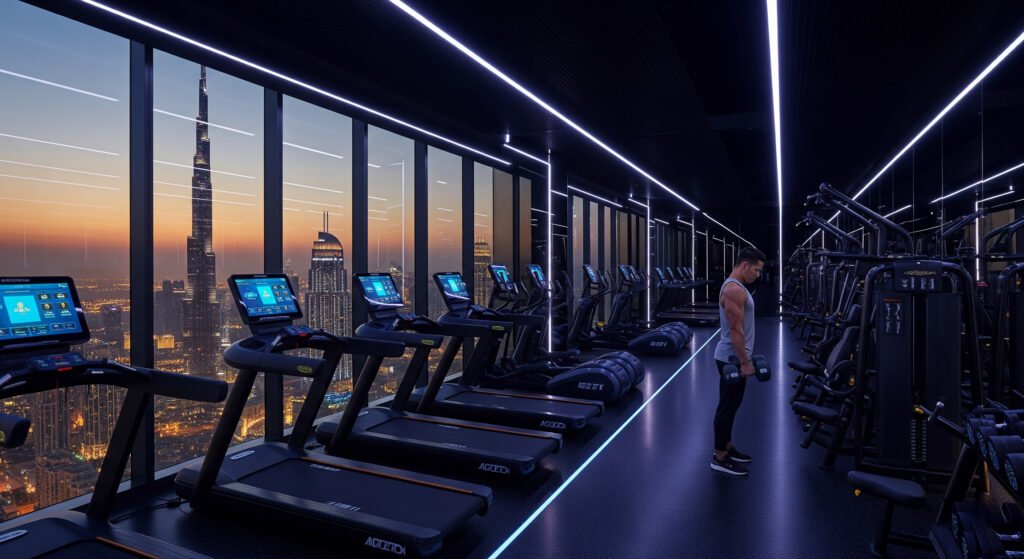
1. Dubai, UAE: The High-Tech Gym

Dubai UAE The High-Tech Gym

Best for: Tech lovers and serious training.

Dubai used to be all about shopping and fancy dinners. Now, it is the place to go if you want to train like an Olympic athlete. The heat outside doesn’t matter because the indoor facilities are incredible.

Where to stay: SIRO One Za’abeel. This isn’t just a hotel with a gym in the basement. The whole building is built for fitness. They have “Recovery Rooms” designed to help you sleep better, with special lights and temperature control. Their “Fitness Lab” is huge and uses smart machines that adjust to your strength.

Why go: If you love data and gadgets, this is for you. You can freeze your muscles in a cryotherapy chamber, check your body stats, and train in a “black box” studio with amazing sound systems.

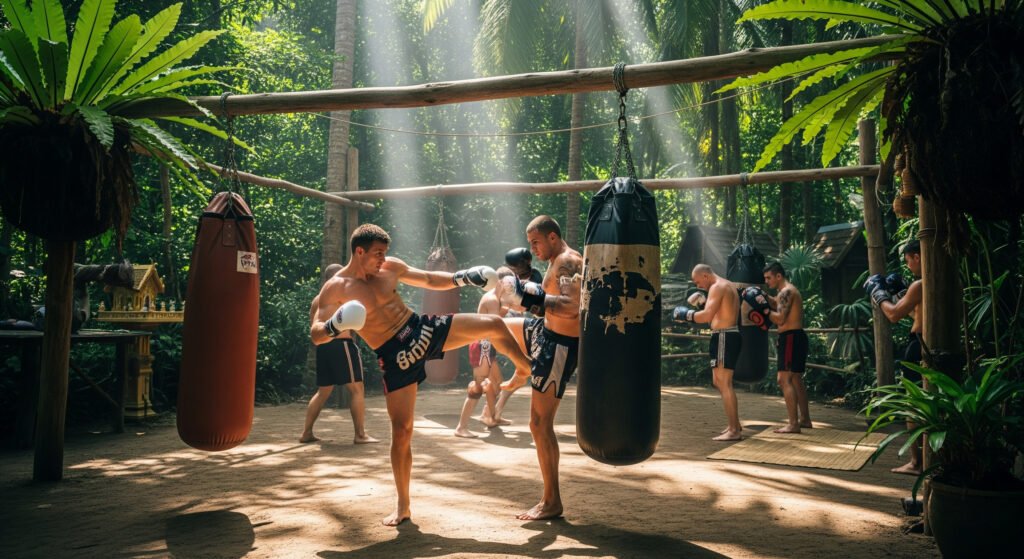
2. Phuket, Thailand: Fight and Flow

Phuket Thailand Fight and Flow

Best for: Learning Muay Thai and beach workouts.

Phuket is famous for its beaches, but it is also the best place to learn Muay Thai. You will see all kinds of people here, from pro fighters to beginners who just want a good workout.

Where to go: AKA Thailand. This place is famous. It has a massive open-air gym right in the jungle. You can climb their “Alpha Tower” or join a class to learn kickboxing. Don’t worry if you are new; they have programs for everyone.

Why go: It is the perfect mix. You can train hard in the morning and get a cheap, relaxing massage in the afternoon. The best time to visit is from November to April when it is dry and sunny.

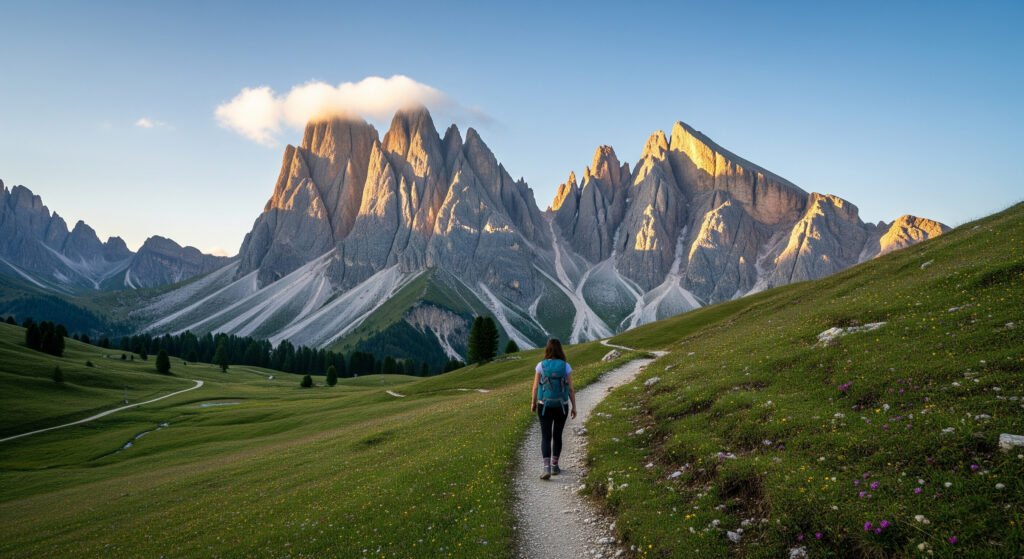
3. The Dolomites, Italy: Quiet Hiking

The Dolomites Italy Quiet Hiking

Best for: Getting away from noise and breathing fresh air.

If city life has you stressed, head to the mountains in Italy. This trip is about “quiet fitness.” You won’t find loud music or crowded classes here. It is just you, the mountains, and the clean air.

Where to stay: Forestis Dolomites. This hotel sits way up on the mountain. The air is thin, which makes your heart work a bit harder even on easy walks. They teach “Wyda,” which is like yoga but comes from ancient Celtic traditions.

Why go: It is peaceful. You hike, breathe, and rest. The hotel design is simple and calm, so you can stop thinking about work and just look at the views.

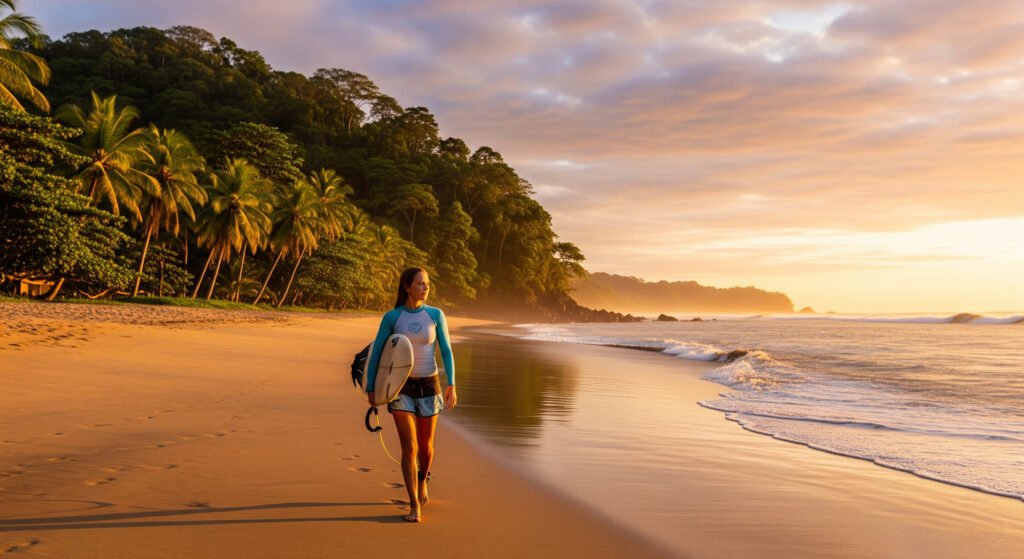
4. Costa Rica: Live Longer, Surf Better

Costa Rica Live Longer Surf Better

Best for: Surfing and deep health checks.

Costa Rica is a “Blue Zone,” a place where people live very long lives. In 2026, travelers are going there to learn their secrets. It is a great mix of laid-back surf culture and serious health science.

Where to stay: Hacienda AltaGracia. They have teamed up with health experts to offer medical-grade checkups. You can get your skin analyzed or try “river bathing” to boost your immune system.

Why go: You get the best of both worlds. Spend a few days checking your health stats, then head to the coast in Nosara to surf warm waves and relax.

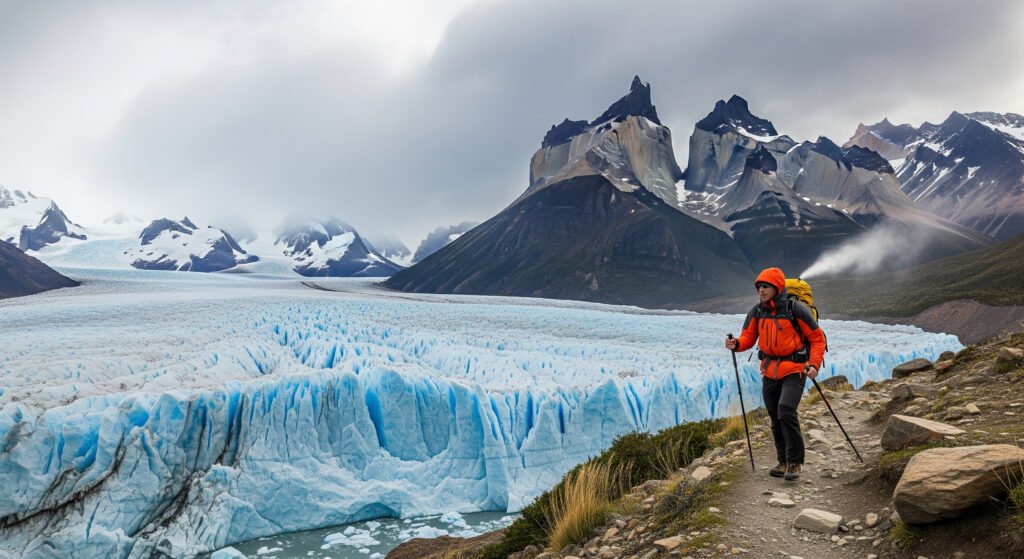
5. Patagonia, Chile: The Ultimate Adventure

Best for: Tough hiking and mental strength.

This is for the traveler who wants a challenge. Patagonia is wild, windy, and huge. It is not about a quick gym session; it is about long days walking in nature.

Where to stay: Tierra Patagonia. After a long day of hiking near glaciers, you come back to this warm, cozy hotel. They have a spa with a pool that looks right out at the mountains.

Why go: The “awe” factor. Standing next to a giant glacier or mountain makes you forget your small worries. It is a great way to clear your head and build endurance.

6. The Algarve, Portugal: Sun and Sweat

The Algarve Portugal Sun and Sweat

Best for: Bootcamps and meeting people.

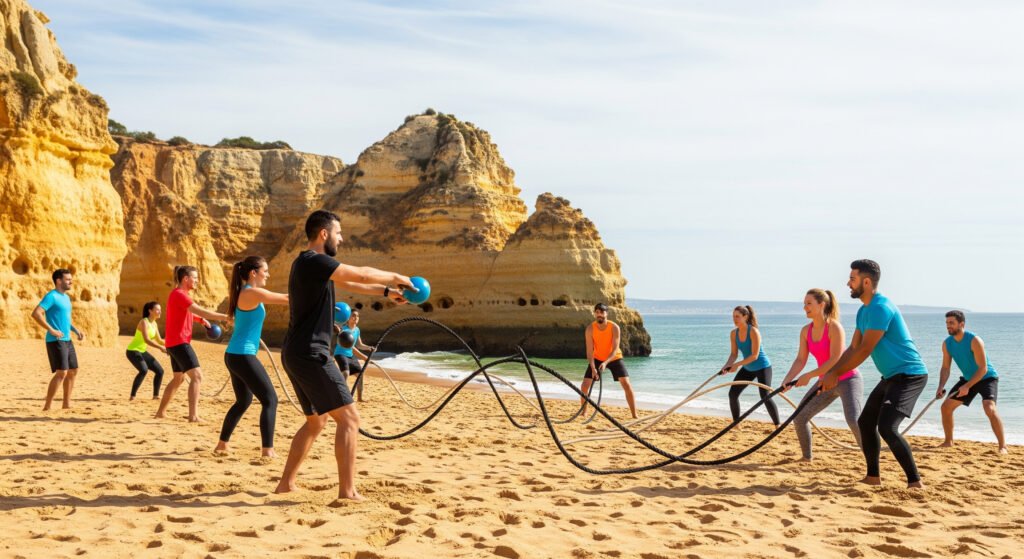
The Algarve is sunny, affordable, and full of energy. It has become the main spot in Europe for outdoor fitness camps. If you like CrossFit or Hyrox races, this is your spot.

Where to go: Titan Fitness Camp. This camp has a fun, group vibe. You train outside in the sun with other people. It is social and friendly, so it is great if you are traveling alone.

Why go: It offers great value. You can get a full week of training and a place to stay for a good price. Plus, training on the beach beats a treadmill any day.

7. Bali, Indonesia: Deep Healing

Bali Indonesia Deep Healing

Best for: Medical wellness and sleep.

Bali is still great for yoga, but in 2026, it is also a hub for medical wellness. People go here to fix deep burnout and exhaustion.

Where to stay: Revivo Wellness Resort. They take relaxation seriously. They do DNA testing to tell you exactly what to eat. They also have special IV drip therapies and programs just to help you sleep better.

Why go: If you feel totally drained, this is the place to recharge. It is less about jumping around and more about fixing your body from the inside out.

Ready to pack?

Whether you want the high-tech labs of Dubai or the quiet mountains of Italy, 2026 is the year to prioritize your health. Pick the spot that fits your goals, and you will come home feeling brand new.

January 26, 2026 0 comments
0 FacebookTwitterPinterestEmail
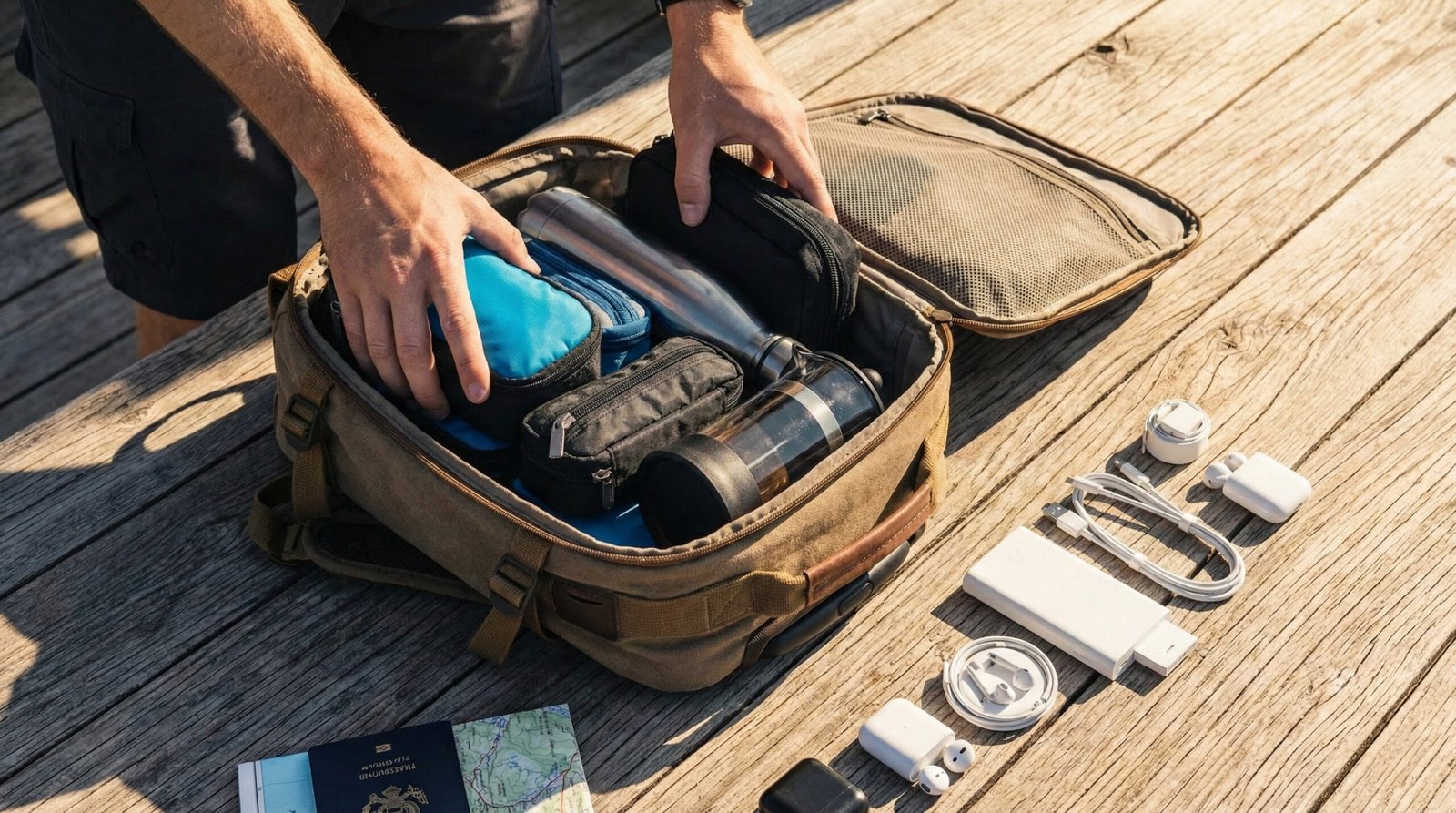
10 Travel Accessories That Pay for Themselves
Travel AccessoriesTravel Gear

10 Travel Accessories That Pay for Themselves (And Save You Hundreds)

by Travel Geek January 18, 2026
written by Travel Geek

Travel gets expensive fast. It’s not just the big ticket items like flights or hotels that drain your bank account. It’s the little things. A bottle of water here, a baggage fee there, a roaming charge you didn’t expect. These small costs add up to hundreds of dollars before you know it.

After years of living out of a suitcase, I realized that spending a little money upfront on the right gear actually keeps money in my pocket later. It sounds backward, but buying specific accessories protects you from the “tourist tax”—those high prices companies charge because they know you have no other choice.

Here are 10 travel items that will actually save you cash on your next trip.


1. Filtered Water Bottle (LifeStraw or Brita)

Buying water is one of the biggest wastes of money when you travel. In tourist hotspots like Rome or New York, a single bottle can cost $2.50 or more. If you drink three or four a day, that’s $10 gone. Over a two-week trip, you could easily spend $175 just on water.

A filtered bottle like a LifeStraw or Brita lets you fill up from almost any tap. The filter removes the bad taste and, more importantly, the bacteria. You get safe, clean water for free.

The Math:

  • Cost of Bottle: ~$50

  • Savings: ~$175 on bottled water

  • Net Gain: $125


2. eSIM App (Airalo or Holafly)

Using your home phone plan abroad is a financial trap. Carriers like AT&T or Verizon often charge $10 a day for an “international pass.” For a 14-day trip, that is $140 just to check maps and send texts.

The fix is an eSIM. If your phone is relatively new, it likely supports this digital SIM card. You download an app, buy a data plan for the country you are visiting (usually around $20 for plenty of data), and activate it instantly. You keep your regular number for texts but use the cheap local data for everything else.

The Math:

  • Cost of eSIM Plan: ~$25

  • Savings: ~$140 in roaming fees

  • Net Gain: $115


3. Digital Luggage Scale

We have all seen someone frantically repacking their suitcase on the dirty airport floor because their bag was two pounds over the limit. Airlines love these fees. An overweight bag can cost you $100 or more at the check-in desk.

A tiny digital scale costs about the same as a sandwich. Weigh your bag at the hotel before you leave. If it’s too heavy, move stuff to your carry-on or throw away that heavy shampoo bottle. It’s a simple check that saves you from a massive fine.

The Math:

  • Cost of Scale: ~$12

  • Savings: Avoids a $100+ fee

  • Net Gain: $88


4. Universal GaN Adapter

Airport electronics stores are a rip-off. They know you are desperate if you forgot your charger, so they charge $40 or $50 for a basic plug adapter.

Buy a good Universal GaN Adapter before you leave. “GaN” just means it’s smaller and handles power better. A good one has regular outlets and multiple fast-charging USB ports. You can charge your laptop, phone, and watch all at once from a single plug. This is huge in older hotels that only have one outlet in the room.

The Math:

  • Cost of Adapter: ~$35

  • Savings: Avoids buying overpriced gear at the airport ($45+)

  • Net Gain: $10 (Plus you can charge everything at once)


5. Compression Packing Cubes

Checked bag fees are soaring. It can cost $75 just to check a bag one way. For a round trip, that is $150. If you can fit everything into a carry-on, you save that money immediately.

Compression packing cubes are the secret. They have a second zipper that squishes your clothes down tight, removing all the extra air. You can fit about 30% more clothes into your bag. This often makes the difference between needing a big checked suitcase and sticking with a free carry-on.

The Math:

  • Cost of Cubes: ~$35

  • Savings: ~$150 in checked bag fees

  • Net Gain: $115


6. Scrubba Wash Bag

Packing less means you have to do laundry. But hotel laundry services are astronomically expensive (think $5 for one pair of socks), and spending hours in a laundromat isn’t a vacation.

The Scrubba Wash Bag is basically a flexible, portable washing machine. It weighs almost nothing. You put your dirty clothes, water, and soap inside, seal it, and rub it for three minutes. The little nubs inside clean your clothes just like a machine. You can wash a day’s worth of clothes in your hotel sink for free.

The Math:

  • Cost of Bag: ~$55

  • Savings: ~$100 in laundry fees

  • Net Gain: $45


7. Laundry Detergent Sheets

You can’t use the Scrubba bag without soap. But carrying liquid detergent is messy and not allowed through airport security if the bottle is too big. Buying full bottles at your destination is wasteful.

Detergent sheets are the answer. They look like dryer sheets but dissolve in water to become soap. They are dry, light, and pack flat. At about 25 cents a load, they are much cheaper than the single-serve packets laundromats sell for $2.

The Math:

  • Cost of Sheets: ~$15

  • Savings: ~$20 vs. buying laundromat packets

  • Net Gain: $5


8. AeroPress Go

Coffee prices are a good way to see how expensive a city is. In places like Copenhagen or Zurich, a simple latte can cost $7. If you drink two cups a day, you are spending over $150 on coffee in two weeks.

The AeroPress Go is a travel coffee maker that packs into its own mug. It makes fantastic coffee. Buy a bag of local beans for $10, and your morning coffee costs pennies instead of dollars.

The Math:

  • Cost of AeroPress: ~$50

  • Savings: ~$121 vs. coffee shops

  • Net Gain: $71


9. Quick-Dry Microfiber Towel

If you stay in hostels or budget accommodations, you know the drill: they often charge you to rent a towel. It might be $5 or more. It feels like a hidden fee.

Bring your own microfiber towel. It folds up smaller than a t-shirt and dries incredibly fast. It prevents that mildew smell in your bag and saves you from renting a towel every time you move to a new place.

The Math:

  • Cost of Towel: ~$10

  • Savings: ~$20 in rental fees

  • Net Gain: $10


10. Reusable Cutlery & Shopping Bag

Eating every meal at a restaurant destroys your budget. In Europe, grabbing bread, cheese, and fruit from a supermarket is much cheaper—often $8 vs. $30 for a sit-down meal.

The problem is usually how to eat it. A simple set of reusable cutlery and a fold-up shopping bag solves this. You can shop at a local market without paying for plastic bags, and you can enjoy a picnic in a park without needing to find a restaurant.

The Math:

  • Cost of Set: ~$15

  • Savings: ~$140 by swapping some dinners for picnics

  • Net Gain: $125


The Breakdown: How Much Do You Actually Save?

Here is the total summary for a standard 14-day trip. The “Net Savings” column shows how much you save after paying for the gear.

Item

Cost to Buy

What You Save

Net Money in Pocket

Filtered Water Bottle

$50

$175 (Buying water)

+$125

eSIM App

$25

$140 (Roaming fees)

+$115

Luggage Scale

$12

$100 (Overweight fees)

+$88

Universal Adapter

$35

$45 (Airport markup)

+$10

Compression Cubes

$35

$150 (Bag fees)

+$115

Scrubba Wash Bag

$55

$100 (Laundry)

+$45

Detergent Sheets

$15

$20 (Soap packets)

+$5

AeroPress Coffee

$50

$121 (Cafe prices)

+$71

Microfiber Towel

$10

$20 ( rentals)

+$10

Cutlery/Eco-Bag

$15

$140 (Picnic vs. Dining)

+$125

TOTAL

~$297

~$1,011

~$714

The Bottom Line: By spending about $300 on this gear, you keep over $700 in your pocket on just one trip. If you travel with a family, the savings on water, baggage, and data can easily jump to over $2,500.

January 18, 2026 0 comments
0 FacebookTwitterPinterestEmail
The Cheapest Places to Travel Every Month in 2026
Budget TravelTravel Tips

The Cheapest Places to Travel Every Month in 2026

by Travel Geek January 17, 2026
written by Travel Geek

2026 TRAVEL THRIFT

The Cheapest Country to Visit Every Month of the Year

Estimated Savings: $1,200+ per trip

The 2026 Budget Landscape

2026 travel value is driven by currency arbitrage, shoulder-season timing, and avoiding event-driven price spikes (notably the Winter Olympics and World Cup effects).

Value Target (Daily)
$42.00
Typical “sweet spot” daily spend in these destinations (excluding flights).
Core Strategy
Shoulder Seasons
Travel just before/after peak demand to reduce accommodation costs.
2026 Risk Zones
Major Events
Olympics + World Cup create localized price spikes in key regions.

Cost vs. Comfort

This chart maps the best “value windows” in 2026: lower daily cost + comfortable weather in the recommended month.

  • Europe
  • Asia
  • Americas
  • Africa
Data: 2026 Low-Cost Destination Index (Primary picks)

The 2026 Value Calendar

Primary recommendations from the research, month by month.

JANUARY🇦🇷

Argentina

🌡️ 28°C / 82°F💰 ~$45/day

Summer season + powerful currency advantage. Food, wine, and stays can be dramatically cheaper with favorable exchange mechanics.

FEBRUARY🇧🇬

Bulgaria

🌡️ 5°C / 41°F💰 ~$40/day

Olympics push Alpine prices up. Bansko delivers Europe’s best-value skiing with low lift passes and cheap slope-side food.

MARCH🇬🇹

Guatemala

🌡️ 26°C / 79°F💰 ~$38/day

Dry-season trekking and deep culture at a fraction of Costa Rica’s cost. Volcano hikes and colonial towns shine now.

APRIL🇯🇵

Japan

🌡️ 18°C / 64°F💰 ~$55/day

Post-sakura and pre–Golden Week “magic window.” A weak Yen makes hotels, dining, and transport unusually affordable.

MAY🇵🇹

Portugal

🌡️ 22°C / 72°F💰 ~$50/day

One of Europe’s last shoulder-season bargains: warm weather before summer prices spike, especially outside Lisbon/Porto.

JUNE🇦🇱

Albania

🌡️ 27°C / 81°F💰 ~$48/day

World Cup pricing distorts North America. Albania’s Riviera offers Greece-like beaches with much lower accommodation costs.

JULY🇮🇩

Indonesia

🌡️ 27°C / 80°F💰 ~$40/day

Skip the Bali price premium. Lombok and Flores deliver dry-season beaches, adventures, and lower daily costs.

AUGUST🇵🇱

Poland

🌡️ 24°C / 75°F💰 ~$50/day

Festival season without Western Europe prices. “Milk bars” and cheap trains make culture-heavy travel very budget friendly.

SEPTEMBER🇬🇪

Georgia

🌡️ 20°C / 68°F💰 ~$38/day

Rtveli wine harvest season. Guesthouses are cheap and often include huge meals—ideal value for food, culture, and hiking.

OCTOBER🇹🇳

Tunisia

🌡️ 25°C / 77°F💰 ~$42/day

Mediterranean beaches + Roman history + Sahara access. October brings lower resort pricing and comfortable weather.

NOVEMBER🇹🇭

Thailand

🌡️ 30°C / 86°F💰 ~$42/day

Rain ends and peak prices haven’t hit. Lantern festivals, great weather, and legendary street food define November value.

DECEMBER🇨🇴

Colombia

🌡️ 26°C / 79°F💰 ~$45/day

Dry season + famous Christmas light displays (especially Medellín). Strong exchange value for boutique stays and dining.

Comparison of Daily Average Spend (USD) — Primary picks

Budget Breakdown

In 2026, accommodation is still the biggest swing factor. Shoulder seasons and “second-city” choices can cut lodging costs dramatically, while street food and local transport keep daily totals low in many of these destinations.

The “Backpacker Index” 2026

Accommodation45%
Food & Drink30%
Activities/Transport25%

The 2026 Booking Strategy

1

6 Months Out

Track flight prices with alerts. Focus on “hub” airports.

2

3 Months Out

Book main accommodation. Lock in the base of your trip.

3

1 Month Out

Book internal transport (trains/buses) before prices spike.

4

Arrival

Withdraw local cash early. Eat where locals eat.

Based on the 2026 Low-Cost Destination Index research (currency arbitrage, shoulder seasons, and event-driven pricing).

Traveling on a budget in 2026 is all about timing and knowing where your money goes further. While prices are high in many popular spots, savvy travelers know that looking in the right places reveals incredible deals.

This year brings some specific challenges. The Winter Olympics in Italy and the huge soccer tournament in North America will drive up costs in those regions. But this creates opportunities elsewhere. Currencies in places like Japan and Argentina are helping visitors save money, and choosing “shoulder seasons”—the time right before or after the busy rush—can cut your bills in half.

Here is your guide to the best value destinations for every month of 2026.

January: Argentina & Vietnam

Top Pick: Argentina January is peak summer in Argentina, but it remains incredibly affordable for visitors bringing foreign currency. The economy here has a unique quirk known as the “Blue Dollar” rate. If you bring cash or use specific money transfer services, your money can be worth nearly double the official bank rate. You can enjoy steak dinners and excellent wine for a fraction of what you would pay back home.

Runner Up: Vietnam Vietnam is always a bargain, but January is special. The weather is dry and pleasant. If you visit early in the month, you beat the crowds that arrive for the Lunar New Year. A bowl of pho on the street still costs a dollar or two, and you can find nice private rooms for under $25 a night.

February: Bulgaria & Romania

Top Pick: Bulgaria Skiing in France or Switzerland will be extra pricey this year because of the Winter Olympics in Italy. Smart skiers are heading to Bansko, Bulgaria. Lift passes and gear rentals cost about half of what you pay in the Alps. Plus, food and drinks on the slopes are very cheap.

Runner Up: Romania For a mix of winter sports and culture, try Brasov in Romania. You can visit Dracula’s Castle and hit the ski slopes in the same trip. It offers a classic European winter feel without the high price tag.

March: Guatemala & Nicaragua

Top Pick: Guatemala March brings great weather to Guatemala. It is the dry season, making it perfect for hiking volcanoes. It is much cheaper than nearby Costa Rica. You can trek up Volcán Acatenango or explore the ancient ruins of Tikal. Hostels are high quality and cost very little, often around $10 to $15 a night.

Runner Up: Nicaragua If you want surf and sand, Nicaragua is the place. It has similar geography to its more expensive neighbors but costs much less. Ometepe Island is a highlight, offering nature and hiking for travelers on a tight budget.

April: Japan & Turkey

Top Pick: Japan Japan has become surprisingly affordable recently because the Yen is weak. The best time to go is mid-April. The famous cherry blossom crowds have just left, and the “Golden Week” holiday hasn’t started yet. You can find business hotels for $50 a night and eat amazing food like ramen or sushi for cheap.

Runner Up: Turkey April is a “shoulder month” in Turkey. The weather is nice—not too hot, not too cold. Inflation is high there, but for tourists with dollars or euros, the exchange rate balances it out. You can see the sights in Istanbul or Cappadocia before the summer rush begins.

May: Portugal & Nepal

Top Pick: Portugal Portugal is popular, but May is the sweet spot. You get warm beach weather before the summer prices spike in June. Stick to the coast south of Lisbon or head inland for the best value. You can still find a great seafood dinner with wine for under $15.

Runner Up: Nepal May is the end of the spring trekking season. The trails are busy, but the prices for tea houses—the lodges where hikers stay—remain very low. You can trek for weeks spending only $30 to $40 a day for food and a bed.

June: Albania & Bolivia

Top Pick: Albania With the big soccer games happening in North America this summer, flight prices there will be high. Head to the Balkans instead. Albania has beaches that look just like Greece but cost way less. The town of Ksamil has clear blue water, and you can rent an apartment by the sea for a great price.

Runner Up: Bolivia June is winter in Bolivia, which means clear skies for visiting the Salt Flats. It is one of the cheapest countries in South America. You can take a three-day jeep tour across the flats for around $200, including everything.

July: Indonesia & The Caribbean

Top Pick: Indonesia (Lombok) Bali gets very crowded and expensive in July. Just next door is the island of Lombok. It has beaches, surfing, and hiking, but fewer people and lower prices. You can also fly to the island of Flores to see Komodo dragons without spending a fortune.

Runner Up: The ABC Islands If you want the Caribbean in July, look at Aruba, Bonaire, or Curaçao. They sit outside the main hurricane belt, so your trip is safer from storms. Curaçao has many apartment rentals that help keep costs down compared to big resorts.

August: Poland & South Africa

Top Pick: Poland While everyone else is sweating in crowded Rome or Paris, you can enjoy pleasant weather in Poland. Cities like Krakow and Warsaw are full of history and culture. Food is hearty and cheap, especially at “Milk Bars,” which serve traditional meals for just a few dollars.

Runner Up: South Africa It is winter in Cape Town, which keeps crowds away and prices low. But up north in Kruger National Park, it is dry season—the best time to see animals on safari. You can combine a cheap city stay with incredible wildlife viewing.

September: Georgia & Morocco

Top Pick: Georgia September is harvest time in Georgia. This country is famous for its wine, and visitors can join in the picking and making process. The food is incredible—think cheese bread and dumplings—and very cheap. Guesthouses are family-run and often include dinner and wine in the room price.

Runner Up: Morocco The summer heat breaks in September, making it much more comfortable to explore the desert or the cities. Accommodation prices drop as the European summer holidays end. It is a great time to book a desert tour from Marrakech.

October: Tunisia & Sri Lanka

Top Pick: Tunisia Tunisia offers Mediterranean beaches and Roman ruins for less than you would pay in Europe. You can visit the desert where Star Wars was filmed and stay in beach resorts that lower their rates significantly in October.

Runner Up: Sri Lanka The east coast of Sri Lanka has good weather in October. It is an extremely affordable island. You can stay in beach cabanas and eat delicious curry for very little money.

November: Thailand & India

Top Pick: Thailand November is perfect. The rain has stopped, but the peak Christmas prices haven’t started yet. Head to Northern Thailand for the lantern festivals. Street food is everywhere, delicious, and costs almost nothing.

Runner Up: India The weather in Rajasthan cools down in November, making it pleasant to visit the forts and palaces. The train system in India is a very cheap way to get around. You can stay in beautiful heritage hotels without spending a lot.

December: Colombia & The Philippines

Top Pick: Colombia December is dry season in Colombia, and the cities light up for Christmas. The displays in Medellín are famous. Your money goes a long way here, allowing you to stay in nice boutique hotels and eat at top restaurants for a fair price.

Runner Up: The Philippines The holiday spirit is huge in the Philippines. It is a great time for island hopping. Ferries are cheap, and you can find beach bungalows on islands like Palawan that fit a tight budget.

Flexibility is your best friend in 2026. If a big event is making one city expensive, look for a neighbor that is quiet. By following the calendar and going where the crowds aren’t, you can see amazing places and keep your savings safe.

January 17, 2026 0 comments
0 FacebookTwitterPinterestEmail
The 20 Most Googled Travel Questions of 2025 (And What They Say About Us)
Budget TravelFamily TravelLuxury TravelSolo TravelTravel Tips

The 20 Most Googled Travel Questions of 2025 (And What They Say About Us)

by Travel Geek January 15, 2026
written by Travel Geek

If 2025 taught us anything, it’s that we are all very confused.

Gone are the days when we just booked a ticket and hoped for the best. This year, we spent more time asking Google for permission to travel than we did actually planning our outfits. We worried about liquids. We panicked about visas. We tried to find places that looked like the Maldives but cost as much as a sandwich.

I dug into the data to find the top 20 questions everyone asked this year. The results paint a funny, slightly anxious picture of modern travel. Here is what we all wanted to know, and the answers that (mostly) solved our problems.

The “Can I Bring This?” Panic


1. “How much liquid can you take on a plane?”

This was the big one. We were promised fancy new scanners that would let us keep our full-sized shampoo. Then, almost immediately, airports said, “Just kidding.” The rules flipped back and forth so much that nobody knew what was going on. The Verdict: Stick to 100ml. Even if the airport says they have new scanners, don’t risk your expensive moisturizer.

2. “When does ETIAS start?”

For travelers heading to Europe, this was the monster under the bed. The ETIAS is a new travel authorization fee, and the start date kept moving. The Verdict: It got delayed again. You likely won’t need it until late 2026 or 2027. You can breathe for now.

3. “Do I need a visa for Europe?”

Closely related to the ETIAS panic. The Verdict: If you are from the US, UK, or Canada, you usually don’t need a full visa for short trips yet. But always check before you head to the airport.

4. “Do I need a REAL ID to fly?”

For my US friends, this deadline has been looming forever. The Verdict: Yes, the deadline is real (pun intended). You need a compliant ID to fly domestically soon, so stop putting off that DMV visit.

5. “What is the required passport validity period?”

Nothing ruins a trip faster than being turned away at the gate because your passport expires in four months. The Verdict: Most places need three to six months of validity after you plan to leave. Check your dates.

The “I’m Broke But Need a Vacation” Search


6. “What are the best destination dupes for 2025?”

We stopped trying to keep up with the Kardashians and started looking for “Travel Twins.” Why pay for Santorini when Paros has the same white walls for half the price? Top Picks: Paros instead of Santorini; Ksamil, Albania instead of the Maldives; Liverpool instead of London (okay, maybe that last one is just me).

7. “When is the best time to book flights?”

We all think there is a secret magic hour to press “buy.” The Verdict: For international trips, book as early as you can. For domestic, aiming for about 38 days out seems to be the sweet spot. Also, the “book on a Tuesday” thing is mostly a myth.

8. “Will airfare prices drop in 2026?”

We are all hoping for a miracle. The Verdict: Don’t hold your breath. Fuel and taxes are still high. Focus on cheaper hotels instead.

The “It’s Too Hot Outside” Shift


9. “What is coolcationing?”

This is a new word for a simple idea: going places where you won’t melt. The Trend: Instead of baking on a beach in July, people are heading to Norway, Scotland, or Alaska. Sweating is out; sweaters are in.

10. “How can I travel more sustainably?”

We are trying to be better guests on this planet. The Shift: More trains, fewer short flights. Night trains in Europe are having a huge comeback.

The “Big Events” Obsession


11. “Oasis reunion tour dates and tickets”

This wasn’t just a concert; it was a movement. The fight for tickets was brutal. If you got one, you are basically travel royalty.

12. “World Cup 2026 tickets release date”

Planning for this started way early. The Verdict: FIFA opened the window in late 2025. If you haven’t looked yet, good luck.

13. “Women’s Rugby World Cup 2025 packages”

Sports tourism isn’t just for the guys. The interest in hospitality packages for this event was massive.

The “Leave Me Alone” Vibe


14. “What is sleep tourism?”

Yes, we are now paying to go to hotels just to sleep. The Trend: High-end hotels are offering “sleep retreats” with soundproofing and fancy pillow menus. It costs a lot of money to do absolutely nothing.

15. “Best places for solo travel?”

More people are traveling alone, and they want to know where they won’t feel awkward eating dinner by themselves. Top Picks: Japan, Portugal, and New Zealand top the safety lists.

The “Is It Safe?” Checks


16. “Is it safe to travel to [Venezuela/Jamaica]?”

Safety is always the baseline. The Verdict: It depends on the area. Always read the official government warnings, not just Instagram captions.

17. “Can you fly while pregnant?”

A classic worry. The Verdict: Usually yes, up to 36 weeks (or 32 for twins), but you need a doctor’s note.

18. “Do I need travel insurance?”

After all the flight cancellations and lost bags this year? The Verdict: Yes. Absolutely yes. Don’t skip it.

The “Tech and Hacks” Corner


19. “Best AI travel planner”

We let the robots take the wheel. The Tools: Apps like Layla and Wonderplan are huge right now. They build your itinerary in seconds so you don’t have to open forty tabs.

20. “Travel packing hacks”

Because nobody wants to pay baggage fees. The Hack: Rolling clothes saves space. Vacuum bags are a lifesaver. And stuffing clothes into a pillowcase? Airlines are catching onto that one, so be careful.

If these searches tell us anything, it’s that we are becoming smarter, pickier travelers. We want value, we want safety, and we really, really don’t want to throw away our liquids at security. Here is to a smoother 2026!
January 15, 2026 0 comments
0 FacebookTwitterPinterestEmail
10 Adventure Trips for 2026: Where to Go and Why
Solo TravelTravel Tips

10 Adventure Trips for 2026: Where to Go and Why

by Travel Geek January 12, 2026
written by Travel Geek

Planning a trip for 2026? It looks like a huge year for travel. We are moving past the “revenge travel” craze and into something a bit more thoughtful. The experts are calling it “intentional adventure.” Basically, it means picking a destination because something special is happening right now, or because it offers a break from the crazy summer heat.

If you are looking for your next big trip, here are ten spots that should be on your radar for 2026.

1. Route 66, USA: The 100th Birthday Party

This is the big one. The famous “Mother Road” turns 100 in 2026. It’s going to be a year-long party from Chicago to Santa Monica.

Why go now? You don’t want to miss the celebrations. Tulsa, Oklahoma is hosting a massive classic car parade on May 30, 2026. They are trying to break a world record, so expect thousands of vintage cars. Towns along the route are fixing up old neon signs and diners just for this anniversary.

Trip Tip: Summer in the desert sections (like Texas and Arizona) gets incredibly hot. If you can, aim for the spring kick-off events in April or May. Book your motels early—everyone wants a piece of history this year.

2. Canadian Rockies: Luxury on the Rails

The mountains in Alberta and British Columbia are always stunning, but there is a new way to see them in 2026.

The News: The Rocky Mountaineer train is launching a special route called “Passage to the Peaks.” It runs only in June and July. Unlike other routes that start at the coast, this one stays high in the mountains between Banff and Jasper. You get endless views of peaks and glaciers without leaving the train.

Be Aware: Wildfires are a real issue here in late summer. Traveling by train is a safer bet than driving, but keep an eye on the smoke forecast.

3. Réunion Island: For the Toughest Hikers

Located in the Indian Ocean, this French island is not for sitting on the beach. It is for people who want to sweat.

The Challenge: The island is famous for the “Grand Raid” in October, a race so hard they call it the “Madmen’s Diagonal.” Even if you aren’t racing, the trails here are incredible. You can hike right into a massive volcanic crater or trek to villages that have no road access.

When to go: Go between May and November. The other months bring cyclones and heavy rain, which makes the steep trails dangerous.

4. Upper Carniola, Slovenia: A Once-in-a-Decade Event

Slovenia is a beautiful place for cycling and hiking, but 2026 offers something rare.

The Draw: The Škofja Loka Passion Play only happens once every six years. Hundreds of locals act out dramatic scenes in the medieval streets. It runs from March to April. It is a powerful cultural experience you can combine with a spring cycling trip.

Why we like it: It is less crowded than the Alps in France or Switzerland, and the focus here is on being green and sustainable.

5. Ikara-Flinders Ranges, Australia: The Real Outback

If you want to feel small, head to South Australia. This ancient landscape is rugged, red, and quiet.

What to do: Explore “Wilpena Pound,” a giant natural amphitheater. The local indigenous guides offer tours that explain the history and meaning of the land, which gives you a connection you can’t get just by looking at the rocks.

Safety First: This is remote country. Phone reception is spotty, and summer is dangerously hot. Plan your visit for April to October when the weather is cooler and the wildlife is active.

6. Chiriquí Province, Panama: The Cool Highlands

Everyone seems to go to Costa Rica, but Panama’s Chiriquí province is the smart alternative for 2026.

The Vibe: It has a perfect mix of mountains and ocean. You can start your day drinking incredible coffee in the cool, misty highlands of Boquete. Then, hike up Volcán Barú to see both the Pacific and Caribbean oceans at once.

Bonus: Head down to the Gulf of Chiriquí for island hopping. It is wild and empty compared to other tropical spots. Plus, it is safe and easy to get around.

7. The Stockholm Archipelago, Sweden: Beat the Heat

Southern Europe gets scorching hot in the summer now. Travelers are heading north to “cool-cation,” and Sweden is ready.

The New Trail: The Stockholm Archipelago Trail is fully open. It connects 21 islands with 170 miles of hiking paths. You use ferries to hop between trailheads. It is a unique way to explore—hike a bit, catch a boat, hike some more.

Good to know: Make sure you are vaccinated for ticks if you plan on walking through the tall grass, and respect the fire bans during dry spells.

8. Tian Shan Mountains, Kyrgyzstan: The Silk Road Frontier

For a raw adventure, look at Kyrgyzstan. It is becoming the go-to spot for trekkers who find Nepal too busy.

The Experience: You will hike past high alpine lakes and stay in yurts with shepherd families. It is a chance to see a nomadic way of life that hasn’t changed much in centuries.

Planning: The window for hiking is short—basically July to mid-September. Before that, the snow is too deep. Also, check the travel advice for border areas, but the main trekking routes are generally fine.

9. Quy Nhon, Vietnam: Surf and History

Vietnam is popular, but places like Ha Long Bay can get packed. Quy Nhon is the laid-back coastal town you are looking for.

Why go: It has dramatic cliffs that drop right into the ocean and ancient towers from the Cham civilization. It is also a great spot for surfing without fighting for waves.

Timing: Go between January and August for the best beach weather. The typhoon season starts in September, which can ruin a beach trip pretty fast.

10. Saba, Dutch Caribbean: The Unspoiled Queen

Saba isn’t your typical Caribbean island. It is basically a volcano sticking out of the water.

What makes it special: There are no big sandy beaches, which keeps the cruise ships away. Instead, you get amazing hiking on Mount Scenery and some of the best diving in the region.

October Event: Try to visit in October for “Sea & Learn.” Scientists come to the island and let you join in on their research. It is a cool way to add some brainpower to your vacation.

The trends this year are clear. We are chasing cooler weather, unique events, and places that offer a mix of comfort and wild nature. Whether you are driving a vintage car on Route 66 or hiking in Sweden, 2026 is the year to make it count.

January 12, 2026 0 comments
0 FacebookTwitterPinterestEmail
5 Travel Scams to Watch Out For This Holiday Season (And How to Spot Them)
SafetyTravel Tips

5 Travel Scams to Watch Out For This Holiday Season

by Travel Geek December 12, 2025
written by Travel Geek

The holiday rush is here. Airports are packed, hotels are fully booked, and everyone is in a hurry. Sadly, this is exactly when scammers like to strike. They know you are stressed, distracted, and likely skimming your emails rather than reading them carefully.

I’ve been on the road for years, and even I almost got tricked recently. Scams are getting smarter, but they usually follow a pattern. If you know what to look for, you can spot them a mile away.

Here are the most common travel scams happening right now in late 2025, and how you can keep your money safe.


1. The “Re-verify Your Booking” Message

The Scam: You get a message on WhatsApp or via the Booking.com app. It looks official. It has your name, your hotel’s name, your dates, and your correct confirmation number.

The message says there was an issue with your card or that you need to “verify your stay” within 12 to 24 hours, or your room will be cancelled. It provides a link to a payment page.

Why it works: It’s scary. Nobody wants to lose their hotel room right before a trip. Plus, because the scammers have your real booking details, it feels legitimate.

The Truth: The hotel’s admin account was hacked. The scammers can see the guest list, so they message everyone hoping someone pays.

How to avoid it:

  • Never click links in messages. Even if it’s in the official app.

  • Check the URL. If the link takes you to stay-approve-hotel.com instead of booking.com, it’s fake.

  • Call the hotel. Find their number on Google Maps (not in the message) and ask the front desk directly.

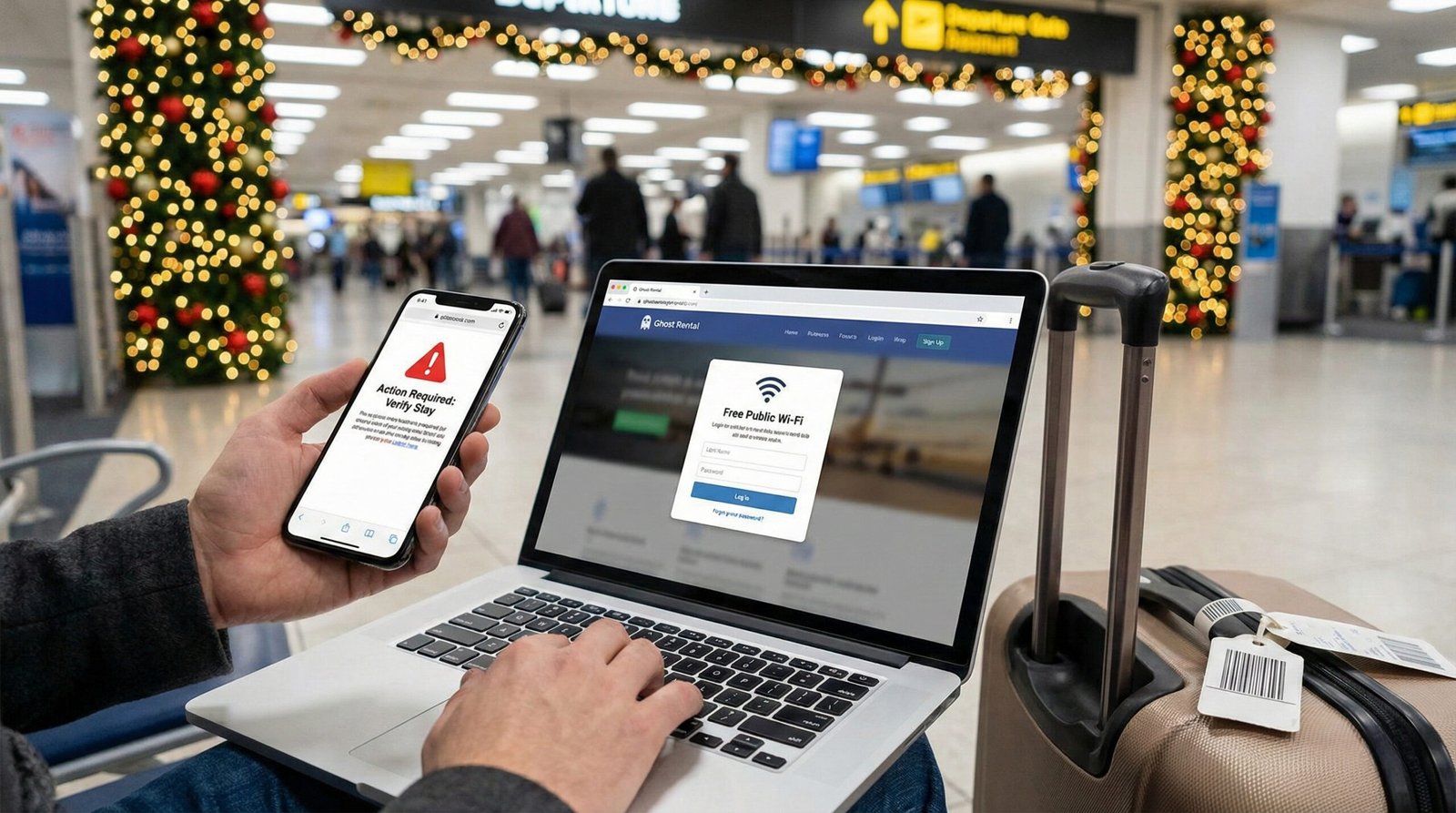
2. The “Evil Twin” Wi-Fi

The Scam: You are at the airport or a coffee shop. You see a Wi-Fi network called “Airport_Free_WiFi” or “Starbucks_Guest_Free.” It connects instantly without a password.

Why it works: We all want to save data, and we expect free Wi-Fi in public places.

The Truth: A hacker is sitting nearby with a small device broadcasting that signal. Once you connect, they can see everything you do—passwords you type, emails you send, and credit card numbers you enter.

How to avoid it:

  • Ask staff for the official network name. Don’t guess.

  • Use a VPN. This scrambles your data so hackers can’t read it.

  • Stick to mobile data. If you are doing online banking, turn off Wi-Fi and use your phone’s 4G/5G signal. It is much safer.

3. The Fake Airline Help Line

The Scam: Your flight is cancelled or delayed. You panic and Google the airline’s customer service number to get help fast. You click the first number that pops up, call it, and an “agent” asks for your credit card to pay a “rebooking fee.”

Why it works: Scammers buy ads on Google so their fake numbers show up at the top of the search results. They pretend to be Delta, British Airways, or Emirates.

The Truth: Airlines rarely charge a fee to rebook you if they cancelled the flight. You are talking to a call center run by scammers.

How to avoid it:

  • Use the app. precise customer service chats are usually built into the airline’s official app.

  • Check your ticket. The real support number is usually printed on your boarding pass or booking email.

4. The “Closed” Tourist Attraction

The Scam: You are walking toward a famous temple, museum, or palace. A friendly local or taxi driver stops you and says, “Oh, it’s closed today for a religious ceremony/lunch/cleaning.”

They then offer to take you to a “better” attraction nearby that is open.

Why it works: They seem helpful and nice. You don’t want to walk all the way there if it’s closed.

The Truth: The attraction is open. They just want to take you to a shop where they get paid a commission if you buy a suit, jewelry, or souvenir.

How to avoid it:

  • Walk to the gate. Ignore what people on the street say. Go to the ticket counter and see for yourself.

  • Check online. Most major sites have hours listed on Google Maps.

5. The “Ghost” Rental

The Scam: You find a stunning villa or apartment on Facebook Marketplace or a slick-looking website. The price is amazing. The owner asks you to pay via bank transfer or “Family and Friends” because their card machine is down.

Why it works: Accommodation is expensive. We all want a deal.

The Truth: The property doesn’t exist, or the photos were stolen from a real listing. Once you send the money, the “owner” blocks you.

How to avoid it:

  • Reverse image search. Save the photo and upload it to Google Images. You might see the same house listed in a different country.

  • Stay on the platform. Only pay through major sites like Airbnb or VRBO. Never wire cash or pay off-site.


Quick Safety Checklist

Before you head out for your holiday, do these three things:

  1. Download the official apps for your airline and hotel.

  2. Save the bank’s fraud number in your phone so you can freeze cards fast if needed.

  3. Trust your gut. If someone is pressuring you to act now or pay fast, slow down. It’s probably a trap.

Stay safe out there, and enjoy your holiday!

December 12, 2025 0 comments
0 FacebookTwitterPinterestEmail
Newer Posts
Older Posts

Follow Us

Facebook Twitter Instagram Pinterest Youtube Tiktok

Recent Posts

  • Asia Fuel Crisis 2026: Should You Cancel Your Travel Plans?

    March 31, 2026
  • Guide to Crossing the Thailand-Laos Border via Friendship Bridge IV

    March 28, 2026
  • How to See the Best of Nizwa, Oman in One Day

    March 27, 2026
  • Is Cancel For Any Reason (CFAR) Travel Insurance Worth It?

    March 26, 2026
  • What to Pack: 7 Travel Items That Actually Matter in 2026

    March 25, 2026

Categories

  • Destinations (77)
    • Africa (7)
      • Egypt (2)
      • Kenya (2)
      • Morocco (3)
      • Namibia (1)
      • Rwanda (1)
      • South Africa (2)
      • Tanzania (1)
      • Zambia (1)
    • Asia (66)
      • Bhutan (1)
      • Cambodia (1)
      • China (2)
      • Indonesia (7)
      • Laos (1)
      • Malaysia (2)
      • Maldives (1)
      • Nepal (2)
      • Thailand (58)
      • Turkmenistan (1)
      • Vietnam (3)
    • Europe (12)
      • Bulgaria (1)
      • Croatia (1)
      • Georgia (3)
      • Greece (2)
      • Iceland (1)
      • Ireland (1)
      • Italy (1)
      • Montenegro (1)
      • Norway (1)
      • Portugal (2)
      • Scotland (1)
      • Spain (1)
      • Switzerland (1)
      • Turkey (5)
    • Middle East (5)
      • Jordan (1)
      • Oman (1)
      • UAE (2)
    • North America (5)
      • Canada (1)
      • Mexico (1)
      • USA (4)
    • Oceania (3)
      • Australia (1)
      • New Zealand (2)
    • South America (7)
      • Argentina (1)
      • Bolivia (2)
      • Chile (4)
      • Costa Rica (3)
      • Dominica (1)
      • Ecuador (1)
      • Peru (2)
  • Travel Gear (64)
    • Clothing (15)
    • Luggage (10)
    • Photography Gear (7)
    • Security Gear (8)
    • Travel Accessories (21)
    • Travel Electronics (10)
  • Travel Tips (217)
    • Budget Travel (42)
    • Family Travel (35)
    • Food and Dining (16)
    • Health and Wellness (48)
    • Luxury Travel (24)
    • Packing (12)
    • Safety (19)
    • Solo Travel (33)
    • Sustainable Travel (12)
    • Transportation (45)
    • Travel Insurance (14)
    • Visa and Immigration (13)

Subscribe to our newsletter and be the first to know about our latest and greatest news, exclusive offers, and funny cat videos (yes, we promise to include those too)..

We don’t spam! Read our privacy policy for more info.

You’ve been successfully subscribed to our newsletter!

  • About Us
  • Destinations
  • Travel Tips
  • Travel Gear
  • Contact Us
  • Terms and Conditions
  • Privacy policy
  • Refund and Cancelation Policy

© Copyright 2026 FitcationHQ

FitcationHQ
FitcationHQ
  • Home
  • Travel Planning
  • Destinations
    • Africa
      • Egypt
      • Kenya
      • Morocco
      • Mozambique
      • Namibia
      • Rwanda
      • South Africa
      • Tanzania
    • Asia
      • Bhutan
      • Cambodia
      • China
      • Indonesia
      • Laos
      • Malaysia
      • Maldives
      • Nepal
      • Thailand
      • Turkmenistan
    • Europe
      • Bulgaria
      • Croatia
      • Georgia
      • Greece
      • Iceland
      • Ireland
      • Italy
      • Montenegro
      • Norway
      • Portugal
      • Scotland
      • Turkey
    • Middle East
      • Jordan
      • UAE
    • North America
      • Canada
      • USA
    • Oceania
      • New Zealand
    • South America
      • Argentina
      • Bolivia
      • Chile
      • Costa Rica
      • Ecuador
      • Peru
  • Travel Tips
    • Budget Travel
    • Family Travel
    • Food and Dining
    • Health and Wellness
    • Luxury Travel
    • Packing
    • Safety
    • Solo Travel
    • Transportation
    • Travel Insurance
    • Sustainable Travel
    • Visa and Immigration
  • Travel Gear
    • Luggage
    • Clothing
    • Photography Gear
    • Security Gear
    • Travel Accessories
    • Travel Electronics

Shopping Cart

Close

No products in the cart.

Close