
1. 🏕️ The Short Answer
For foreign tourists, wild and dispersed camping is effectively illegal and rarely practiced in Antigua and Barbuda. The dual-island nation lacks a traditional camping or recreational vehicle (RV) culture, and visitors are legally expected to stay in established accommodations or book with designated glamping operators. Pitching a tent on a public beach or in a national park without explicit government permission is prohibited and actively discouraged to protect sensitive ecosystems.
2. 🌲 Wild & Dispersed Camping Rules
- Legality on Public Land: Wild camping outside of official, privately-run sites is not permitted for tourists. While all beaches in Antigua and Barbuda are public up to the high-water mark, this public access right does not grant you the authority to camp overnight.
- Duration and Distance Rules: Because dispersed camping is broadly unauthorized, there are no specific distance or duration rules for free camping. If you secure private permission from a local landowner to camp on their property, you must abide by their specific limits.
- Enforcement: Enforcement is actively managed by local police and the National Parks Authority (NPA). Unauthorized campers on beaches or in forested areas will be asked to leave and may face fines, particularly if they are disturbing protected wildlife habitats.
3. 🏞️ National Park & Protected Area Rules
- Permit Systems: There is no general public camping permit system for independent travelers in national parks. Areas like Nelson’s Dockyard National Park (Antigua) and Codrington Lagoon National Park (Barbuda) are strictly protected heritage and ecological sites.
- Designated Sites: Camping is restricted to explicitly designated commercial glamping sites (such as Wild Lotus Camp on Valley Church Beach). Community-managed areas, such as Wallings Nature Reserve, have strict operating hours; while they may host special eco-events or develop overnight camping in the future, it currently requires special arrangement and advance booking.
- Seasonal Closures: Access to certain beaches and nature reserves is strictly monitored or restricted during sea turtle nesting season (March to November) and hurricane season (June to November).
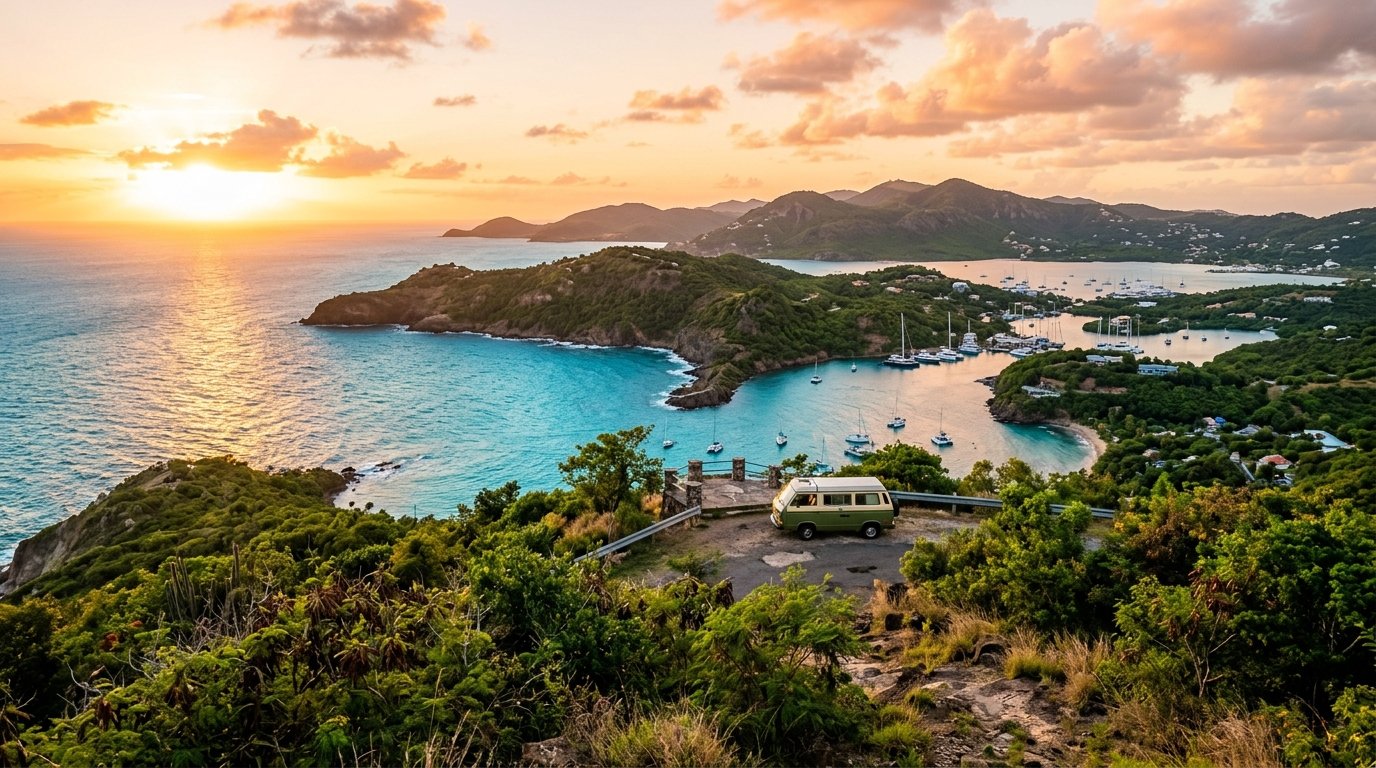
4. 🚐 Van Life & Overnight Vehicle Sleeping
- Legality: Sleeping overnight in a vehicle in public car parks, at rest stops, or on the roadside is not legal and is highly unusual in Antigua and Barbuda.
- Parking vs. Camping: The law strictly limits overnight public parking. Any attempt to sleep in a rental car is considered unauthorized camping and will quickly attract the attention of local police or private security.
- Designated Areas: There are no campervan rental companies, RV parks, or designated overnight rest areas (aires) on the islands. “Van life” is practically non-existent for tourists visiting the country.
5. 🔥 Campfires & Practical Restrictions
- Campfire Rules: Open fires are strictly prohibited on beaches and in national parks. This is heavily enforced to protect sea turtle nesting habitats (such as those of the endangered Hawksbill turtle) and to prevent wildfires in dry forested areas. If staying at an official glamping site, fires must be contained in provided grills or fire pits.
- No-Camp Zones: Tourists must strictly avoid setting up any equipment near coastal turtle nesting sites, military installations, or the heavily protected Frigate Bird Sanctuary in Barbuda. Additionally, many beachfront areas border private luxury developments or resorts where trespassing laws are strictly enforced.
6. 🔗 Official Sources & Links
Because local tourism infrastructure is geared almost entirely towards hotels, resorts, and sailing, travelers should verify any outdoor recreation plans directly with official authorities:
Disclaimer: Camping, land-use, and environmental protection laws change frequently. The information provided in this guide is for educational purposes. Travelers should always verify current regulations with official local sources before planning a backcountry or camping trip.

Adrenaline junkie with a passion for exploring off-the-beaten-path destinations and finding unique ways to stay active. Expect stunning scenery, challenging workouts, awesome travel tips and a whole lot of fun. Let’s get sweaty and explore the world together!