
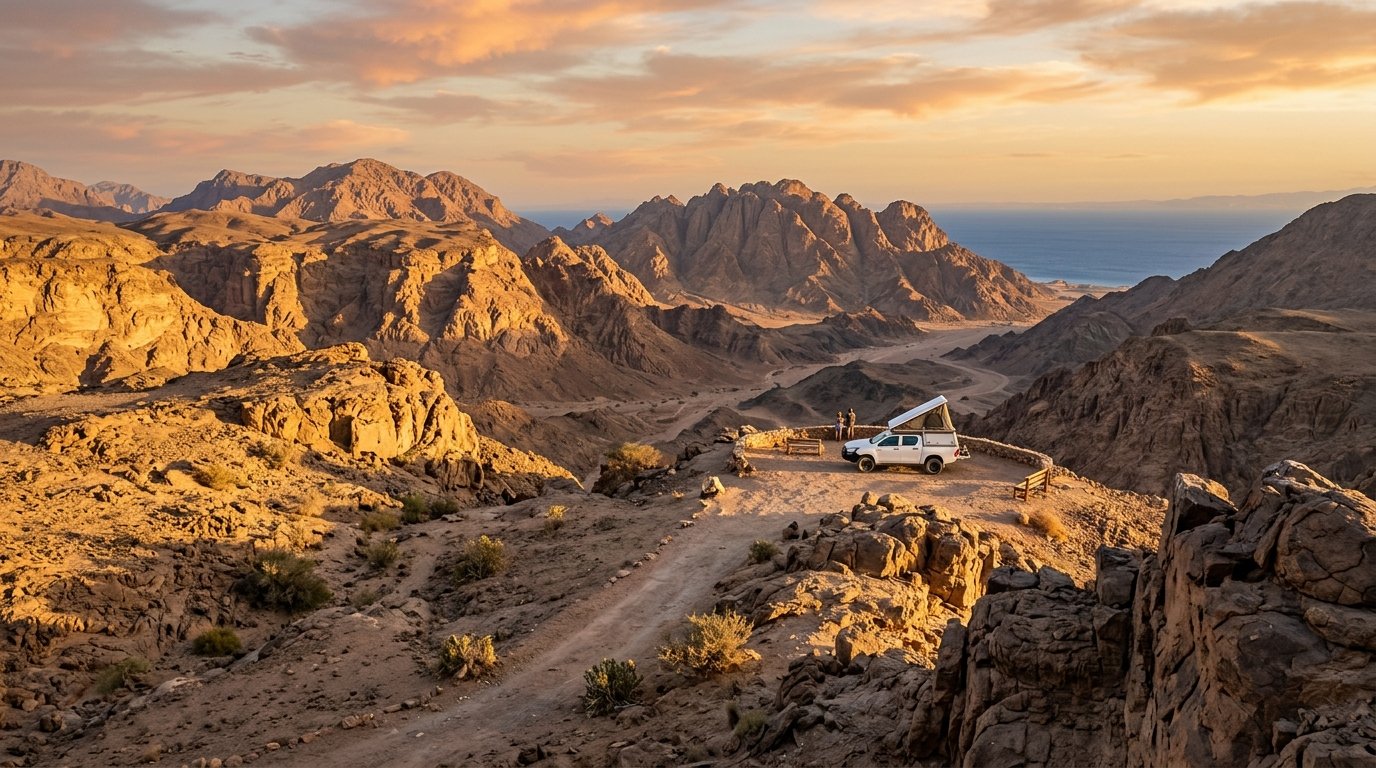
1. 🏕️ The Short Answer
For foreign tourists, independent wild or dispersed camping in Egypt is effectively illegal and highly restricted due to strict national security and military laws. However, guided “wild” desert camping is a massive and legal tourism industry, provided you book through a licensed local tour operator who secures the mandatory military clearances and environmental permits on your behalf.
2. 🌲 Wild & Dispersed Camping Rules
- Legality for tourists: Pitching a tent or sleeping rough independently on public land, beaches, or in the desert is illegal. Attempting to do so will result in serious encounters with the military, police, or local authorities.
- Enforcement: This is heavily and actively enforced. Beaches are patrolled by coast guards, and the deserts are strictly monitored by military checkpoints. Tourists attempting to wild camp on the coast have reported being woken up at gunpoint by security forces.
- The Guided Exception: The only legal way to experience wild camping is to hire a licensed Egyptian 4×4 guide. They will take you into the desert (such as Bahariya or the White Desert), set up a traditional bivouac camp, and handle the strict itinerary and duration limits dictated by your security permits.
3. 🏞️ National Park & Protected Area Rules
- Permit System: National parks like the White Desert National Park and Ras Mohammed have a strict camping permit system. Tourists cannot obtain these permits independently; they must be processed in advance by authorized travel agencies or licensed guides.
- Designated Sites vs. Bivouac: In places like the White Desert, guides will set up temporary bivouac camps in permitted zones rather than established campgrounds with facilities. In coastal protected areas like Sinai’s Ras Shitan or Abu Galum, camping is restricted to designated, privately run Bedouin camps.
- Closures: Access to protected areas can be closed abruptly by the military for security reasons. While there isn’t a strict “fire season,” extreme summer heat (June to August) makes desert camping functionally impossible and highly discouraged for tourists due to severe health and safety risks.
4. 🚐 Van Life & Overnight Vehicle Sleeping
- Legality and Safety: Sleeping overnight in a car or campervan in public car parks, city streets, or roadsides is highly suspicious to local authorities and generally not permitted for foreigners. Police or military personnel will likely knock on your window and force you to move to a hotel or escort you out of the area for your own security.
- Parking vs. Camping: Egyptian law enforcement does not entertain the western distinction between “parking” and “camping.” If a foreigner is sleeping in a vehicle outside of a secured, private property, it is viewed as a security liability and will be shut down.
- Infrastructure: Egypt has virtually zero “van life” infrastructure. There are no designated European-style aires, public dump stations, or overnight rest stops. Travelers importing campervans (which requires complex customs paperwork like a Carnet de Passages) must stay at private, secure campsites or negotiate overnight parking with hotel owners.
5. 🔥 Campfires & Practical Restrictions
- Campfire Rules: Open campfires are the centerpiece of guided desert camping and are generally permitted in the desert if managed by a licensed Bedouin guide. Guides bring their own firewood, as harvesting rare desert flora for fuel is strictly prohibited and heavily fined.
- No-Camp Zones: Avoid independent travel or camping in the entire North Sinai region (active military operations/high terrorism risk), the deep Western Desert near the Libyan border (military zone with strict anti-smuggling policies), and all non-commercialized public beaches.
6. 🔗 Official Sources & Links
To verify current security zones, permit requirements, and approved tour operators, consult the following resources:
- Egyptian Ministry of Tourism and Antiquities
- U.S. Department of State: Egypt Travel Advisory (Crucial for checking current restricted off-limits desert zones)
Disclaimer: Camping regulations, national security zones, and land-use laws in Egypt change frequently and without public notice. Travelers should always verify current rules and restricted areas with official local authorities or a licensed Egyptian travel operator immediately before their trip.

Adrenaline junkie with a passion for exploring off-the-beaten-path destinations and finding unique ways to stay active. Expect stunning scenery, challenging workouts, awesome travel tips and a whole lot of fun. Let’s get sweaty and explore the world together!