
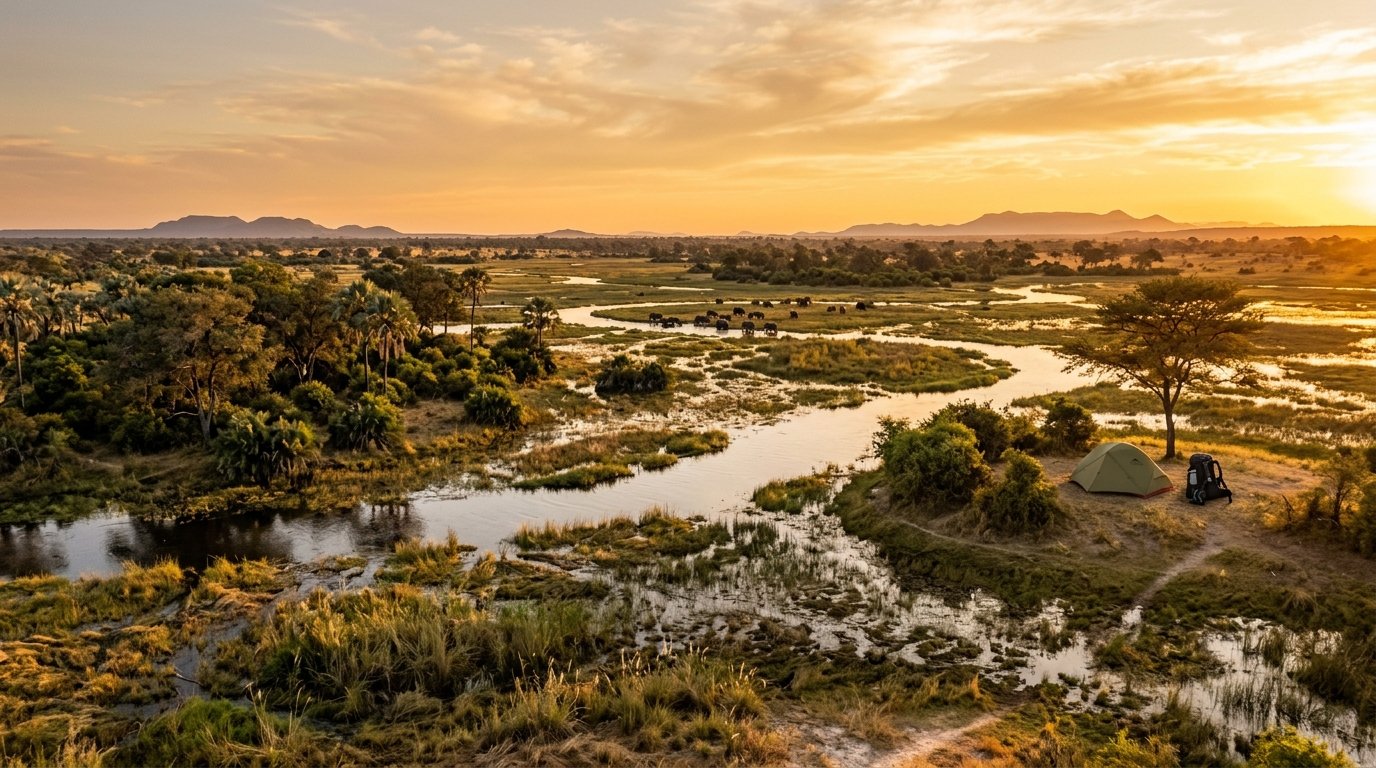
1. 🏕️ The Short Answer
For foreign tourists, wild and dispersed camping is effectively illegal and highly restricted in Botswana. Because the country prioritizes high-value, low-impact tourism and is home to dense populations of dangerous, free-roaming wildlife, travelers must stay in designated, officially licensed campsites or lodges.
2. 🌲 Wild & Dispersed Camping Rules
- Legality for Tourists: You cannot simply pull over and pitch a tent on public land. Land in Botswana is strictly divided into national parks, private wildlife concessions, and communal trust lands. Wild camping inside parks is strictly prohibited. On communal lands, you technically need explicit permission from the local village chief (Kgotla) and must pay a fee, but this is highly discouraged for independent tourists due to safety.
- Duration & Distance Rules: Because wild camping is not allowed, there are no standard dispersal distance rules. At designated campsites, your duration is strictly bound to the dates on your pre-booked reservation.
- Enforcement & Safety: Rules are heavily enforced by the Department of Wildlife and National Parks (DWNP) and local police. Being caught wild camping in a protected area carries severe penalties, including immediate expulsion from the park and heavy fines. More importantly, wildlife (lions, leopards, elephants, hippos, and hyenas) roams completely unfenced in Botswana; wild camping puts you at extreme physical risk.
3. 🏞️ National Park & Protected Area Rules
- Permits and Fees: Botswana uses a strict dual-fee system. You must pay a daily Park Entry Fee (per person) plus a daily Vehicle Fee to the DWNP. In addition to this, you must pay for your actual campsite.
- Mandatory Advance Booking: You are strictly limited to designated campsites, many of which are managed by private operators (like SKL, Kwalate, or Xomae) on behalf of the parks. You must book months in advance. You will not even be allowed through the national park gates without printed proof of a valid campsite reservation.
- Curfews and Closures: Driving at night is strictly illegal in all national parks; you must be inside your designated campsite by sunset. While parks don’t typically close for seasons, the summer rainy season (November to March) frequently floods the dirt and deep-sand tracks in regions like the Okavango Delta, Moremi, and Savuti, making access virtually impossible without heavy-duty 4×4 convoy experience.
4. 🚐 Van Life & Overnight Vehicle Sleeping
- Roadside Sleeping: Sleeping overnight in your vehicle in public car parks, rest stops, or by the roadside is illegal, highly suspicious to local authorities, and incredibly unsafe.
- Parking vs. Camping: Botswana law does not tolerate “stealth camping.” If you are pulled over on the side of a highway overnight, police or military patrols will intervene.
- Designated Overnight Areas: There is no network of free overnight parking areas or European-style “aires.” You must navigate from one official paid campsite or lodge to the next. Roof-top tent camping via 4×4 rentals is the most popular way to experience the country, but it must be done at official campsites.
5. 🔥 Campfires & Practical Restrictions
- Campfires & Firewood: Open campfires are only allowed in the provided fire rings at official campsites. It is strictly illegal to collect firewood inside national parks or reserves. You must purchase all your firewood from vendors outside the park boundaries and transport it in. Always ensure fires are completely smothered with sand before sleeping or leaving.
- Veterinary Fences: Botswana is divided by veterinary cordon fences designed to stop the spread of foot-and-mouth disease. You will face roadblocks where you are legally required to surrender fresh red meat (beef, pork, venison) and sometimes dairy, depending on the direction of travel. Plan your camp meals accordingly.
- No-Camp Zones & Hazards: Never attempt to camp on or near animal game trails, dry riverbeds (which can flash-flood or serve as wildlife highways), or the edges of still water/lagoons. Water sources are prime territories for hippos and crocodiles, which are highly territorial and dangerous.
6. 🔗 Official Sources & Links
For the most accurate maps, park fee schedules, and official guidelines, consult the following resources:
- Botswana Tourism Organisation – Official tourist board providing guidelines on self-driving and camping.
- Department of Wildlife and National Parks (DWNP) – The government body handling all park entry permits and fees.
Disclaimer: Land-use laws, park fees, and camping regulations in Botswana are subject to change. Road conditions and veterinary fence rules also fluctuate frequently. Always verify current laws, obtain official permits, and confirm campsite bookings with the Botswana DWNP and private concession operators before your trip.

Adrenaline junkie with a passion for exploring off-the-beaten-path destinations and finding unique ways to stay active. Expect stunning scenery, challenging workouts, awesome travel tips and a whole lot of fun. Let’s get sweaty and explore the world together!