
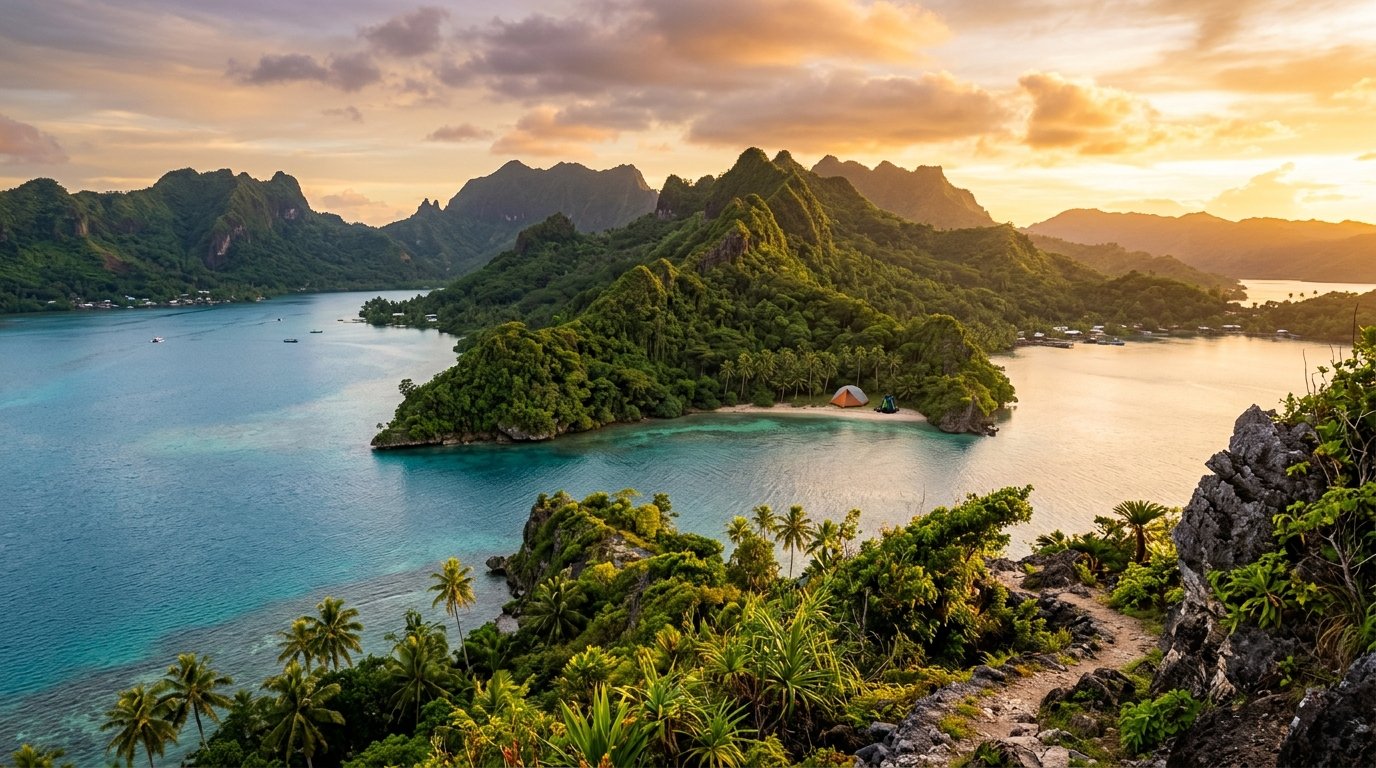
1. 🏕️ The Short Answer
Wild and dispersed camping, as understood in North America or Europe, is effectively illegal and highly impractical for tourists in the Federated States of Micronesia. Because virtually all land—including beaches, forests, and roadsides—is privately or customarily owned by local families or villages, you cannot simply pitch a tent anywhere. To camp legally, you must obtain explicit permission from the landowner or local village chief, which almost always involves paying a small customary fee.
2. 🌲 Wild & Dispersed Camping Rules
- No Public Land: There is almost no “public land” in Micronesia (Yap, Chuuk, Pohnpei, and Kosrae). All beaches, jungles, and mountain tops belong to families, clans, or villages. Camping without permission is considered trespassing and is deeply disrespectful to local customs.
- Securing Permission is Mandatory: If you want to camp (for example, on a remote beach or near a waterfall), you must find the landowner or village chief to ask for permission. If granted, expect to pay a small access fee (usually $3 to $10 USD per person).
- Duration & Distance Rules: There are no national government laws dictating how many days you can stay, how far you must be from water, or where you can pitch your tent. All rules and duration limits are dictated entirely by the local landowner granting you access.
- Enforcement: Enforcement is handled locally by the landowners themselves rather than government park rangers or police. If you camp without permission, locals will confront you and demand that you pay a fee or leave immediately.
3. 🏞️ National Park & Protected Area Rules
- No Standardized Park System: Micronesia does not have a centralized national park system with designated public campgrounds. Most protected areas are culturally significant archaeological sites or marine sanctuaries.
- Archaeological & Historic Sites: Camping is strictly prohibited within significant historical sites, such as the ancient stone city of Nan Madol in Pohnpei or the Lelu Ruins in Kosrae. These are sacred sites and access is heavily restricted after dark.
- Eco-Tourism & Trail Camping: Some landowners who manage access to hiking trails and waterfalls will allow overnight camping at trailheads or viewpoints (such as Pahntakai in Pohnpei) for a small fee. You must bring absolutely all of your own gear (including shelter, food, and a stove), as facilities like toilets or running water are non-existent.
- Weather & Seasonal Restrictions: While there are no formal seasonal camping bans, heavy tropical rains (especially in Pohnpei, one of the wettest places on earth) can make jungle camping extremely dangerous and muddy. Always ask locals about trail conditions before heading out.
4. 🚐 Van Life & Overnight Vehicle Sleeping
- No RV Infrastructure: Van life is virtually non-existent in Micronesia. There are no motorhome or campervan rental companies on the islands, and facilities like dump stations, hookups, or designated “aires” do not exist.
- Overnight Parking Restrictions: It is not legal or socially acceptable to sleep in a rental car in public car parks, rest stops, or on the side of the road. Because the islands are small and land is privately owned right up to the road edge, pulling over to sleep means you are trespassing.
- Local Scrutiny: Sleeping in a vehicle will draw immediate suspicion from locals and local police. In places like Yap, wandering, loitering, or being out at night without a clear purpose is considered highly suspicious and can cause trouble with the local community.
5. 🔥 Campfires & Practical Restrictions
- Campfire Rules: Open fires are not heavily regulated by national law, but rather by the landowner. Never light a fire on a beach or in the jungle without explicit permission. If permission is granted, use existing fire rings where possible and ensure the fire is completely extinguished to protect the lush ecosystem.
- Cultural Modesty: When camping near villages or walking to your site, you must adhere strictly to local modesty rules. In Yap and other states, women must cover their thighs (no short shorts or bikinis in public), and it is considered disrespectful to walk through a village empty-handed or uninvited.
- No-Camp Zones: Do not camp anywhere near sacred ruins, local burial sites, or aviation infrastructure. When in doubt, assume an area is entirely off-limits until a local landowner or authority explicitly tells you otherwise.
6. 🔗 Official Sources & Links
Because tourism infrastructure is minimal, the best way to plan a camping excursion is to coordinate directly with state visitors bureaus upon arrival:
- Federated States of Micronesia Official Tourism Board
- Yap Visitors Bureau
- U.S. Department of State: Micronesia Travel Advisory
Disclaimer: Land-use laws, customary rules, and access fees in Micronesia change frequently and rely heavily on local village governance. Always verify current conditions and secure explicit permission from landowners and local authorities before your trip.

Adrenaline junkie with a passion for exploring off-the-beaten-path destinations and finding unique ways to stay active. Expect stunning scenery, challenging workouts, awesome travel tips and a whole lot of fun. Let’s get sweaty and explore the world together!