
1. 🏕️ The Short Answer
Wild camping and van life are effectively non-existent and highly restricted for foreign tourists in Tuvalu. Because the country consists of tiny, densely populated atolls where all land is either privately or community-owned, independent wild camping is not allowed, and there are absolutely no official campgrounds or campervan facilities on the islands.
2. 🌲 Wild & Dispersed Camping Rules
- Is camping outside official campsites legal? There are no official campsites in Tuvalu. Pitching a tent on a beach or in the bush without explicit permission is strictly prohibited, as all land belongs to local families or the community.
- Are there duration limits or distance rules? While there are no codified dispersed camping laws like in Western countries, you can only camp if you obtain direct permission from the local island council (the Kaupule) or a local landowner. The duration, exact location, and setup will be dictated entirely by their rules.
- Is this actively enforced? Yes. Tuvaluan communities are very small, tight-knit, and land space is at a premium. An unauthorized tourist pitching a tent will be immediately noticed and asked to leave by locals or the local police.
3. 🏞️ National Park & Protected Area Rules
- Do national parks have a separate permit system? Tuvalu’s primary protected zone is the Funafuti Conservation Area (FCA), which covers 33 square kilometers of reef, lagoon, and six uninhabited islets (motu). Access requires permission and a permit fee paid to the Funafuti Kaupule (Town Council).
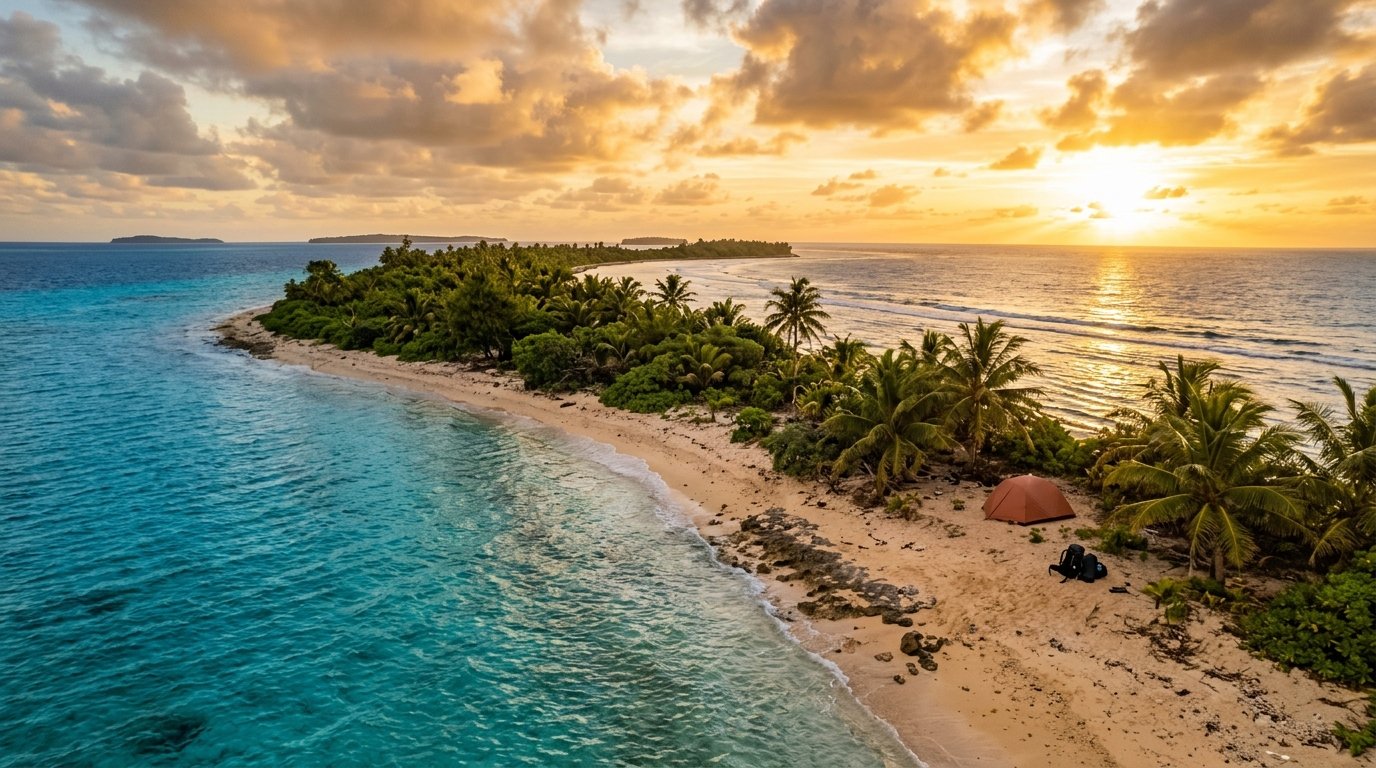
- Is camping restricted to designated sites? You cannot independently travel to or camp in the FCA. Tourists wishing to stay overnight on one of the outer islets must arrange a guided excursion or boat transfer through a local hotel, and the Kaupule must approve the overnight stay in advance. You must bring all your own gear and water, as there are zero facilities.
- Are there seasonal closures? The conservation islets are critical nesting sites for endangered green sea turtles and seabirds (such as the black noddy). The Kaupule may restrict overnight access during peak breeding seasons to prevent ecological disturbance.
4. 🚐 Van Life & Overnight Vehicle Sleeping
- Is it legal to sleep overnight in a vehicle? “Van life” is entirely impossible in Tuvalu. The country is extremely small (just 26 square kilometers total across nine atolls), and the importation and ownership of vehicles are strictly managed to conserve space.
- Does local law distinguish between parking and camping? This distinction does not exist in Tuvaluan law. Tourists get around by walking, bicycling, or renting motor-scooters. Campervans and RVs simply do not exist on the islands.
- Are there designated overnight areas? There are zero aires, rest stops, or vehicle camping zones in the country.
5. 🔥 Campfires & Practical Restrictions
- Are open campfires generally allowed? Open campfires are heavily discouraged and generally restricted to protect the highly fragile atoll ecosystem. If a local hotel or guide arranges a traditional beach BBQ on an outer islet, it will be done under local supervision to ensure the fire is safely contained and uses approved fuel sources.
- Key no-camp zones to avoid: Avoid attempting to camp anywhere on the main islet of Fongafale (Funafuti). Space is incredibly scarce. Furthermore, the famous unfenced airport runway—while used as a public gathering space when planes aren’t landing—is strictly off-limits for overnight sleeping. All local agricultural spaces and residential properties are strictly private.
6. 🔗 Official Sources & Links
For the most accurate and up-to-date information, or to request permission to visit the conservation areas, travelers should consult:
- Tuvalu Islands Official Travel Information (for general tourism inquiries and connecting with local guides)
- Funafuti Kaupule (Local Town Council) – Visitors must visit their physical office upon arrival in Funafuti to pay the Funafuti Conservation Area fees and request permission for islet access.
Disclaimer: Land-use laws, conservation rules, and access requirements change frequently, especially in climate-vulnerable nations like Tuvalu. Travelers should always verify current regulations with official local authorities, the Kaupule, or their hotel management immediately upon arrival before attempting any wilderness activities.

Adrenaline junkie with a passion for exploring off-the-beaten-path destinations and finding unique ways to stay active. Expect stunning scenery, challenging workouts, awesome travel tips and a whole lot of fun. Let’s get sweaty and explore the world together!