
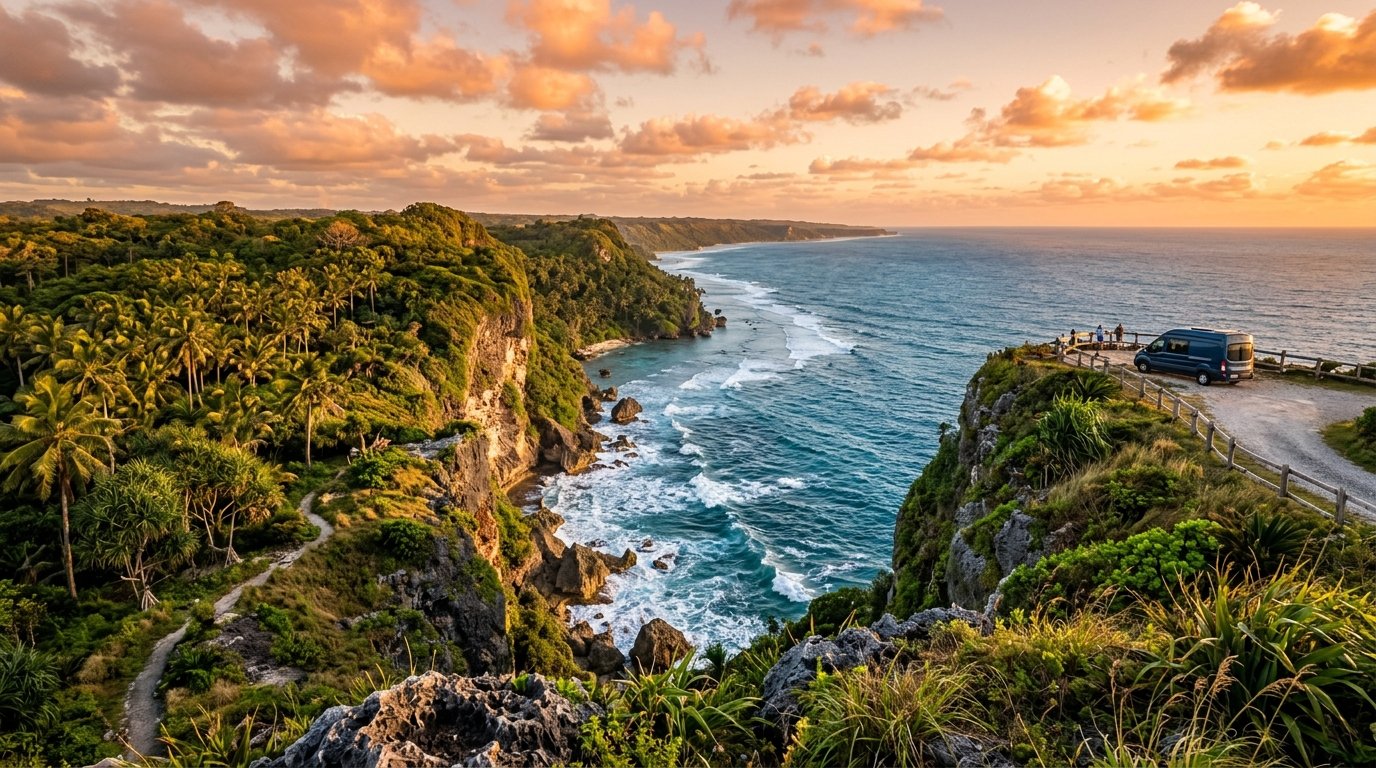
1. 🏕️ The Short Answer
For foreign tourists, wild and dispersed camping is effectively illegal and highly impractical in the Kingdom of Tonga. Because all land is owned by the Crown and allocated to nobles, villages, or citizens, there is no concept of “public land” where travelers can freely pitch a tent. Unless you are staying at a designated commercial campsite, an eco-resort, or have explicitly secured permission from a local landowner or village chief, you cannot legally camp in Tonga.
2. 🌲 Wild & Dispersed Camping Rules
- Is camping outside official campsites legal for tourists on public land? No. Under Tonga’s Land Act, there is no public land available for recreational use. Every beach, forest, and coastline belongs to a village, a family, or the King. Pitching a tent without prior permission is considered trespassing and is culturally highly offensive. Furthermore, recent laws introduced in 2025 have strictly criminalized unauthorized access to uninhabited Crown islands (such as ‘Ata Island); visiting these areas requires a pre-approved government permit.
- Are there duration limits or distance rules? Because wild camping is not legally recognized, there are no official distance or duration rules for public land. If you do secure permission from a local landowner to camp on their property, you must strictly abide by whatever timeframe and rules they set.
- Is this actively enforced? Enforcement is swift but usually community-based. Villagers or local landowners will quickly notice a foreign tourist setting up camp and will ask you to leave. Police will intervene if tourists trespass on protected Crown lands, cause a disturbance, or violate the strict Sabbath laws.
3. 🏞️ National Park & Protected Area Rules
- Do national parks have a separate camping permit system? Tonga has very few national parks, with ‘Eua National Park being the most famous for land-based trekking. You cannot freely wild camp inside the national park without local authorization.
- Is camping restricted to designated sites? Yes. Camping is restricted to specific commercial sites just outside park boundaries (such as organized grounds in ‘Ohonua village) or requires booking a local guide who holds the proper permissions to facilitate a backcountry stay. Attempting to navigate and camp in ‘Eua National Park independently without prior village or guide approval is not permitted.
- Are there seasonal closures? While fire seasons are not a major issue, the wet and cyclone season runs from November to April. During this time, heavy rains and high winds make camping highly dangerous, and park access may be restricted due to washed-out roads and safety concerns.
4. 🚐 Van Life & Overnight Vehicle Sleeping
- Is it legal to sleep overnight in a vehicle? “Van life” simply does not exist in Tonga. There are no campervan rental companies, and sleeping overnight in a standard rental car by the side of the road or at an airport is highly discouraged, unsafe, and culturally unacceptable.
- Does local law distinguish between parking and camping? Tongan law does not distinctly separate parking from camping because the issue of foreign tourists living in vehicles has never been a problem. However, parking on the side of a road or beach overnight means you are occupying private or village land without permission.
- Are there designated overnight areas? There are zero designated rest stops, aires, or overnight vehicle parks in the country. Tourists must book a guesthouse, hotel, or official commercial campsite.
5. 🔥 Campfires & Practical Restrictions
- Are open campfires allowed? Open fires are generally tolerated on beaches (provided you have the landowner’s permission), as traditional underground cooking (the ‘umu) is a staple of Tongan culture. However, fires are strictly banned in protected rainforests and national park zones to protect the delicate ecosystems.
- Key no-camp zones: Uninhabited Crown islands are strictly off-limits without a permit. Crucially, tourists must be aware of the Sunday Sabbath Law. Tonga has strict Sabbath laws enshrined in its constitution. It is legally prohibited to engage in trade, work, or secular recreational activities on Sundays outside of designated tourist resorts. Arriving at a village or beach and attempting to set up a camp on a Sunday will draw severe backlash and potential police involvement.
6. 🔗 Official Sources & Links
To verify the latest information on permits, travel restrictions, and land use, please consult:
Disclaimer: Land-use laws, cultural expectations, and camping regulations in Tonga can change frequently. The information provided in this guide is for educational purposes only. Travelers should always verify current rules directly with official local authorities or a licensed Tongan guide before planning their trip.

Adrenaline junkie with a passion for exploring off-the-beaten-path destinations and finding unique ways to stay active. Expect stunning scenery, challenging workouts, awesome travel tips and a whole lot of fun. Let’s get sweaty and explore the world together!