
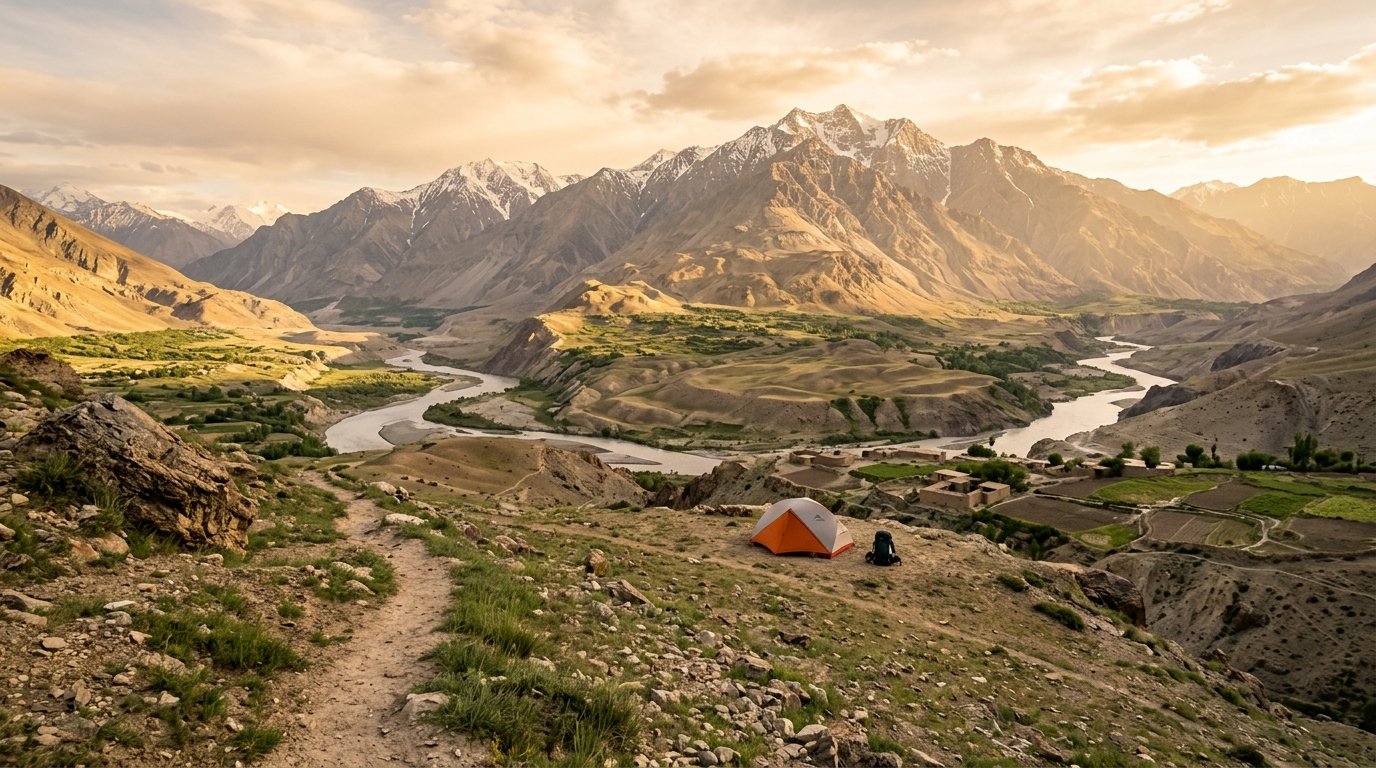
1. 🏕️ The Short Answer
Wild and dispersed camping is effectively illegal and practically impossible for independent foreign tourists in Afghanistan. Under the current Taliban administration, all travel requires strict provincial permits, and wandering off the grid or sleeping outdoors without an authorized local guide and explicit government permission poses severe security risks and can lead to immediate detention.
2. 🌲 Wild & Dispersed Camping Rules
- Legality on Public Land: Foreigners cannot legally wild camp on public land independently. Every tourist must hold a valid visa and obtain a specific internal travel permit from the Ministry of Information and Culture for every single province they intend to visit.
- Rules and Logistics: Wandering away from designated routes, roads, or settlements to pitch a tent is strictly prohibited. In the rare instances where camping is authorized (such as organized trekking expeditions), it is done under the strict supervision of a licensed local guide and often near local settlements or security checkpoints.
- Enforcement: Enforcement is absolute and severe. The country is heavily monitored by regional checkpoints and the morality police. Being found sleeping outside without authorization will result in severe interrogation, arrest, or deportation. Furthermore, venturing off established paths poses a lethal risk due to active unexploded ordnance (UXOs) and landmines.
3. 🏞️ National Park & Protected Area Rules
- Permits for National Parks: Afghanistan’s premier protected areas, such as Band-e-Amir National Park in Bamiyan and the Wakhan Corridor in Badakhshan, require specific regional permits to enter. The Wakhan requires extensive paperwork processed locally in Ishkashim involving border police and local government.
- Band-e-Amir Camping: Historically, tourists could camp near the lakes of Band-e-Amir or sleep in local teahouses. However, current regulations change abruptly; for instance, the Taliban has recently enacted decrees barring women from entering Band-e-Amir altogether. Female tourists should consult their tour operator regarding current access.
- Wakhan Corridor Restrictions: For guided trekking in the Wakhan, camping is allowed but carefully managed. Trekkers must use designated campsites or camp near Wakhi and Kyrgyz nomadic settlements only after obtaining prior permission from village elders.
4. 🚐 Van Life & Overnight Vehicle Sleeping
- Sleeping in Vehicles: “Van life” and sleeping in a vehicle are practically non-existent and highly unsafe for tourists in Afghanistan. Doing so will draw immediate, suspicious attention from military patrols and local authorities.
- Parking vs. Camping: There is no legal distinction that protects tourists sleeping in cars. If you are stopped or found sleeping in a vehicle by the roadside, you will likely be detained for questioning regarding espionage or illegal movement.
- Designated Areas: There are no overnight vehicle parks, tourist aires, or safe rest stops. Travelers must sleep in approved hotels, registered guesthouses, or with an officially sanctioned tour group.
5. 🔥 Campfires & Practical Restrictions
- Campfire Rules: While there is no explicit national ban on campfires for the few who are on authorized high-altitude treks, lighting a fire independently is incredibly dangerous. It signals your location to authorities, armed groups, or locals who may report you to the police.
- No-Camp Zones: The entire country should be treated as a no-camp zone for independent travelers. Specifically, tourists must stay far away from all military installations, government buildings, and border zones. The borders with Pakistan (the Durand Line) and Iran are particularly volatile, with frequent cross-border airstrikes and active military clashes.
6. 🔗 Official Sources & Links
Because the tourism infrastructure is heavily controlled by the current regime, there are few reliable local digital resources. Travelers should strongly consider the advice of their home country’s foreign travel advisories, which currently advise against all travel to Afghanistan.
Disclaimer: The political and security situation in Afghanistan is extremely volatile, and laws regarding tourism, internal movement, and gender restrictions change frequently and without warning. This guide is for informational purposes only. Travelers must always consult with official government advisories, embassies, and licensed local tour operators before considering any travel to Afghanistan.

Adrenaline junkie with a passion for exploring off-the-beaten-path destinations and finding unique ways to stay active. Expect stunning scenery, challenging workouts, awesome travel tips and a whole lot of fun. Let’s get sweaty and explore the world together!