
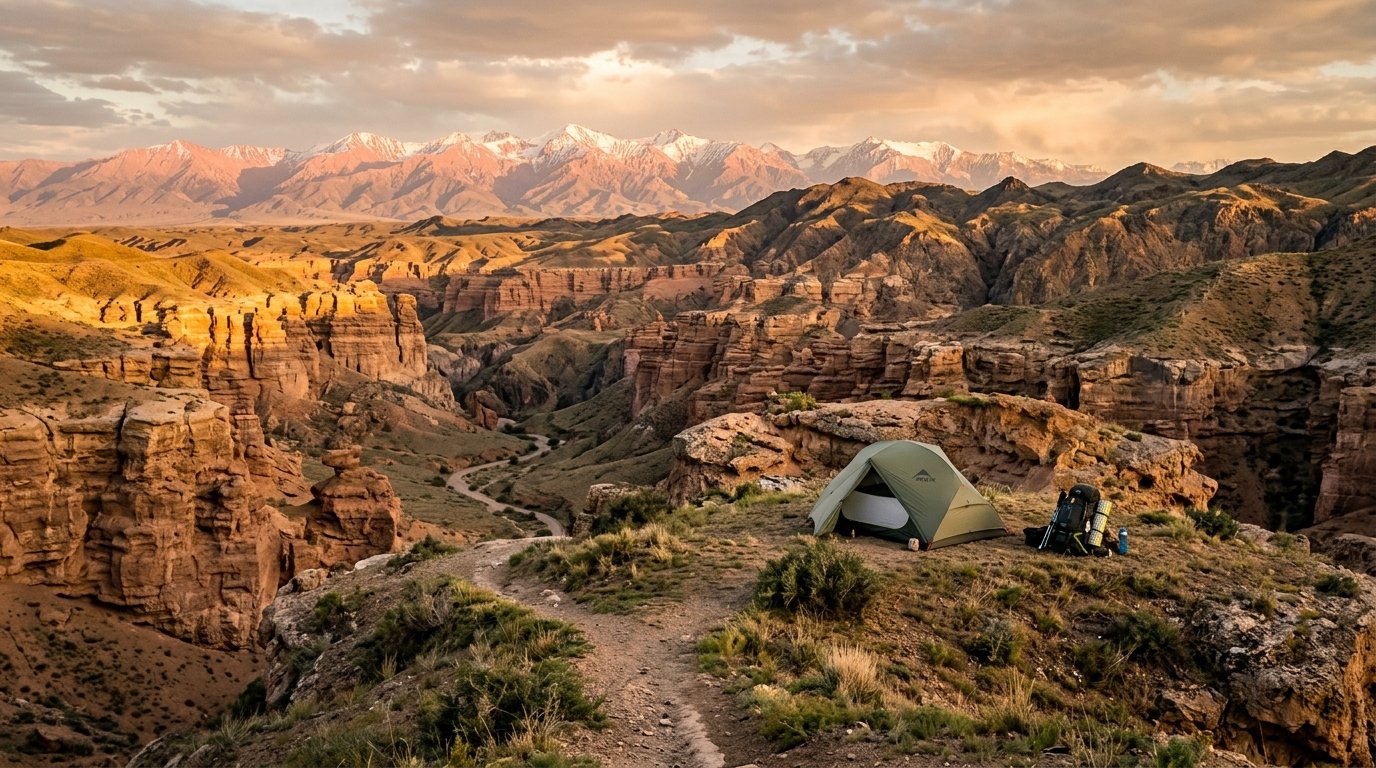
1. 🏕️ The Short Answer
Wild and dispersed camping is completely legal, deeply ingrained in the local nomadic culture, and highly tolerated for foreign tourists across Kazakhstan. Unless you are on fenced private property, inside a highly protected nature reserve, or wandering into sensitive international border zones, you are free to pitch a tent or sleep in your vehicle across the country’s vast steppes and mountain ranges.
2. 🌲 Wild & Dispersed Camping Rules
- Public Land Legality: Wild camping outside of official campsites is legal and strongly encouraged for tourists exploring public lands. Kazakhstan has very few commercial campsites outside major cities, making wild camping the default way to experience nature.
- Duration and Limits: There are no codified national limits restricting you to a certain number of nights in one dispersed spot. Campers should use common sense: avoid active farmland, stay away from fenced-off livestock enclosures, and keep a respectful distance from local dwellings or nomadic yurts.
- Enforcement: Because wild camping is a celebrated aspect of the country’s heritage, you will rarely face interference from police or rangers. Enforcement generally only occurs if you trespass on private property, litter, or illegally camp in restricted border regions without a permit.
3. 🏞️ National Park & Protected Area Rules
- Permits and Fees: Most National Parks (such as Ile-Alatau, Charyn Canyon, or Altyn-Emel) do not require a specific “camping permit,” but they do require an environmental entry fee (eco-fee). This is usually paid in cash at the park gate or visitor center upon arrival.
- Designated Sites: Unlike the open steppe, camping inside National Parks is often legally restricted to designated tourist routes, bivouac zones, or specific campsites to protect fragile ecosystems.
- Strict Reserves (Zapovedniks): Kazakhstan distinguishes between National Parks and Strict Nature Reserves (Zapovedniks, like Aksu-Zhabagly or West Altai). Access to Zapovedniks is strictly controlled; unguided access and wild camping are explicitly prohibited without prior authorization and a certified guide.
- Seasonal Closures: Parks may close specific trails or restrict camping access during the spring tick season (which carries a risk of tick-borne encephalitis) or during extreme summer fire-risk periods.
4. 🚐 Van Life & Overnight Vehicle Sleeping
- Sleeping in Vehicles: It is legal to sleep overnight in a campervan or standard vehicle in public car parks, highway rest stops, and on public lands.
- Parking vs. Camping: Kazakh law does not strictly distinguish between “parking” and “camping” in a way that penalizes vanlifers. If your vehicle is legally parked, you are generally permitted to sleep in it.
- Designated Areas: European-style “aires” or RV hookups are practically non-existent. However, vanlifers can use local map apps (like 2GIS) to find affordable, 24-hour guarded parking lots in major cities (like Almaty or Astana) for safe overnight sleeping. On highways, truck stops and roadside chaikhanas (teahouses) are popular and safe places to pull over for the night.
5. 🔥 Campfires & Practical Restrictions
- Open Campfires: Fires are allowed on open public land but are governed by safety distances; for instance, they must be situated well away from buildings and structures (generally 50 meters). Inside National Parks, campfires are strictly forbidden outside of explicitly designated fire pits.
- Seasonal Fire Bans: During the hot, dry summer months (particularly June to August), extreme fire danger often prompts local governments to issue total open-fire bans. This is heavily enforced in forested regions like East Kazakhstan and the Altai Mountains to prevent wildfires.
- Border Zones: Do not wild camp near international borders (especially the borders with China, Kyrgyzstan, and Russia) unless you have applied for and received a specific border zone permit. Military patrols are active in these areas, and unauthorized camping can lead to immediate detention or deportation.
- Other No-Camp Zones: Avoid pitching a tent near military bases, mining operations, or critical infrastructure like dams, power stations, and major water reservoirs.
6. 🔗 Official Sources & Links
To verify the latest regulations, park closures, and entry fees, consult these official resources:
- Kazakhstan.Travel (Official National Tourism Board)
- Altyn-Emel National Park – Travel Advisory (A great English-language baseline for standard Kazakh national park rules)
Disclaimer: Land-use laws, border zone regulations, and park rules in Kazakhstan can change based on regional governance and seasonal factors. Always verify current restrictions, seasonal fire bans, and border permit requirements with local authorities or official park offices before starting your trip.
Adrenaline junkie with a passion for exploring off-the-beaten-path destinations and finding unique ways to stay active. Expect stunning scenery, challenging workouts, awesome travel tips and a whole lot of fun. Let’s get sweaty and explore the world together!