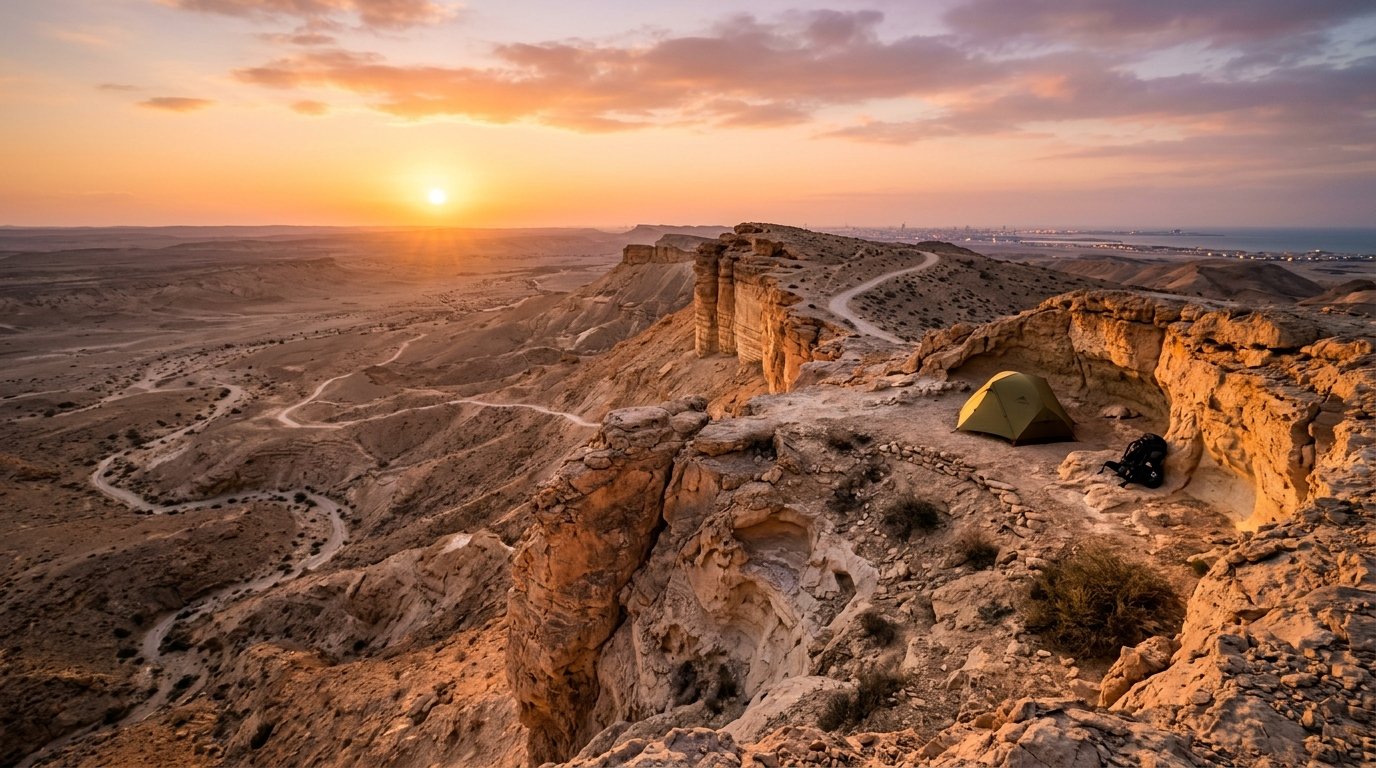
1. 🏕️ The Short Answer
For foreign tourists, spontaneous wild or dispersed camping is effectively illegal in Kuwait. The country operates under highly regulated, strictly enforced municipal laws, and unauthorized desert camping carries massive fines. Unless you are booking a spot at an organized private desert camp or navigating the local government’s permit system for designated winter zones, you cannot simply pitch a tent or park a campervan anywhere in the desert or along the coast.
2. 🌲 Wild & Dispersed Camping Rules
- Is camping outside official campsites legal? No. Spontaneous wild camping on public land, beaches, or the open desert is strictly prohibited. You must hold a paid municipal permit to establish a camp.
- Are there distance and duration rules? Even with a permit, camps must be strictly located within 11 officially designated municipality zones. Furthermore, camps must be kept at least 2 kilometers away from military installations, 500 meters from oil stations and nature reserves, and 100 meters away from high-voltage power lines.
- Is this actively enforced? Yes. Kuwait Municipality, alongside environmental police, actively patrols the desert. Fines for camping without a permit or outside designated zones are exceptionally harsh, ranging from 3,000 to 5,000 Kuwaiti Dinars (roughly $9,700 to $16,000 USD). Equipment and vehicles can also be confiscated.
3. 🏞️ National Park & Protected Area Rules
- Separate permit systems: Kuwait does not have a traditional Western “National Park” camping system. Instead, all legal camping is regulated by the Kuwait Municipality’s Spring Camps Committee.
- Designated sites and booking: To camp legally, you must reserve a plot through the official “Sahel” government app or the Kuwait Municipality website. This requires a fee of 50 KD and a refundable environmental deposit of 100 KD. Due to the administrative hurdles (which usually require a Kuwaiti Civil ID), most foreign tourists opt to book private, pre-established desert safaris or glamping tents instead of applying for raw land permits.
- Seasonal closures: This is a vital rule. Camping is strictly seasonal. It is only permitted during the official “Spring Camping Season,” which runs exclusively from November 15 to March 15. Outside of this window, all desert camping is banned to allow the fragile desert ecosystem to recover (and because summer temperatures are dangerously hot).
4. 🚐 Van Life & Overnight Vehicle Sleeping
- Sleeping in vehicles: “Van life” and stealth camping are not culturally recognized or legally accommodated in Kuwait. Sleeping overnight in your vehicle in public car parks, city streets, or roadside rest stops is highly likely to draw police attention and security checks.
- Parking vs. Camping: Kuwaiti law strictly prohibits establishing any unauthorized “camp”. While pulling over to rest on a long drive is fine, remaining parked overnight to sleep, cooking outside your vehicle, or setting up leveling blocks will be treated as illegal camping.
- Designated overnight areas: There are no European-style “aires” or free RV rest stops in Kuwait. Tourists traveling in campervans should utilize private resorts, designated private farm stays (commonly found in areas like Wafra or Abdali), or officially permitted municipal zones.
5. 🔥 Campfires & Practical Restrictions
- Campfire rules: Open fires are only allowed in permitted camping zones and must be safely contained in a raised fire pit or charcoal grill. Lighting a fire directly on the desert sand is considered environmental damage and is strictly penalized. Burning trash or bringing construction materials to a campsite is also heavily fined.
- Key no-camp zones:
- Military and Oil Zones: Never venture near oil fields, refineries, or military bases. Kuwait has strict security perimeters around these areas.
- Border Regions & Minefields: Tourists should exercise extreme caution when venturing off-road into the northern desert (near the Iraq border and west of the Mutla ridge). While most areas are cleared, there is still a residual risk of unexploded ordnance (minefields) left over from the 1990 Gulf War. Always stick to well-trodden paths and designated tourist areas.
6. 🔗 Official Sources & Links
For the most accurate and current information regarding the Spring Camping Season, securing permits, and environmental guidelines, check the following official resources:
- Kuwait Municipality Official Website (For seasonal camping announcements and regulations)
- Visit Kuwait (Official tourism portal for booking licensed desert safaris)
Disclaimer: Land-use regulations, permit fees, and seasonal dates in Kuwait change frequently based on environmental assessments and municipal decrees. Always consult official local government sources or a licensed local tour operator immediately prior to your trip to ensure compliance with the law.

Adrenaline junkie with a passion for exploring off-the-beaten-path destinations and finding unique ways to stay active. Expect stunning scenery, challenging workouts, awesome travel tips and a whole lot of fun. Let’s get sweaty and explore the world together!