1. 🏕️ The Short Answer
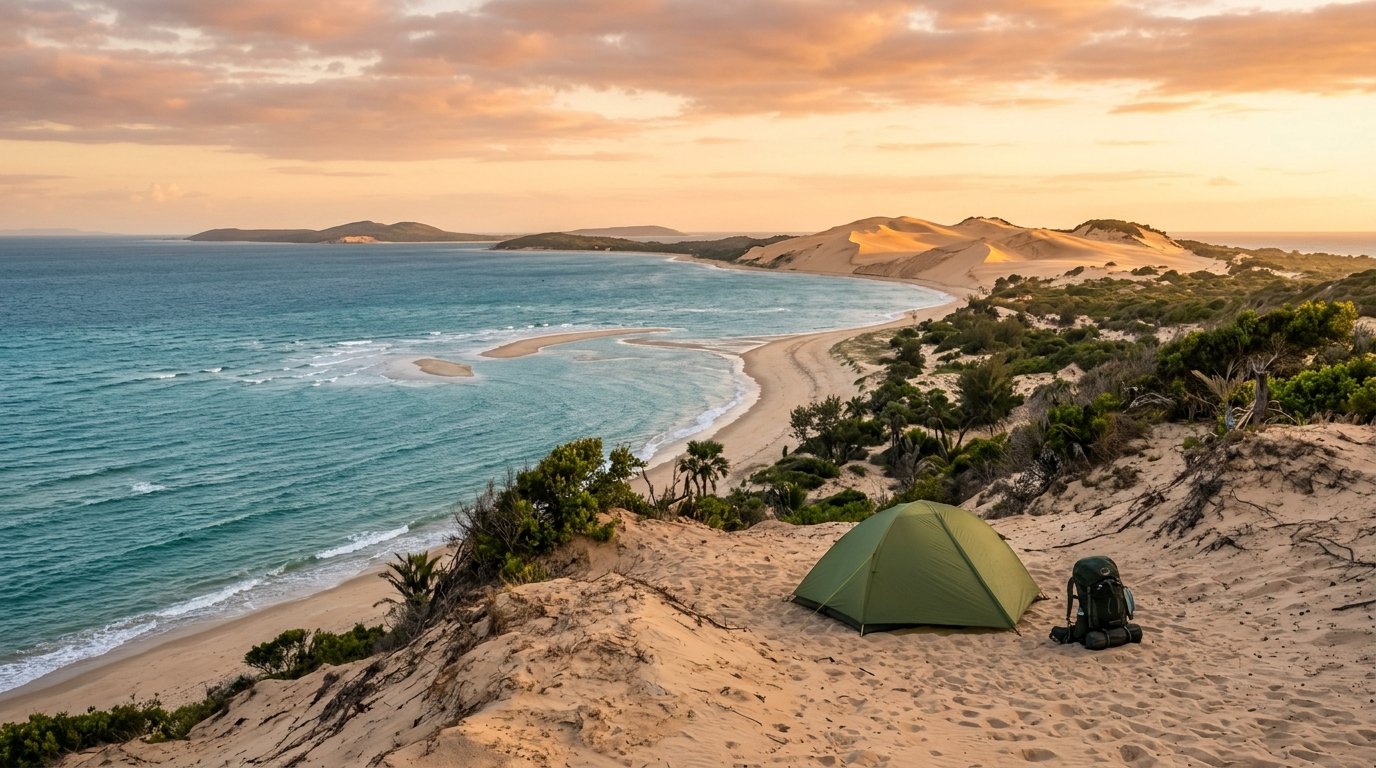
Wild camping is officially prohibited in Mozambique. While the country is a spectacular destination for 4×4 overland travel and coastal camping, all overnight stays must take place within designated campsites, on private land with explicit owner permission, or inside official national park camping zones. Sleeping on public beaches or pulling over on the roadside to camp is illegal, heavily discouraged for safety reasons, and can result in significant fines for tourists.
2. 🌲 Wild & Dispersed Camping Rules
- Legality for tourists: Free or dispersed camping on public land, including Mozambique’s famous beaches and coastal dunes, is strictly prohibited by law. Setting up camp outside of recognized facilities can result in fines ranging from €100 to €500.
- Duration and distance rules: Because wild camping is illegal on public land, there are no official dispersed camping limits. If you must stop in a remote area, it is mandatory to ask for permission to camp on private or community land. You must negotiate the terms directly with the local village chief or landowner.
- Enforcement: The ban on wild camping is actively enforced. Law enforcement and military personnel conduct routine patrols of coastal tourist areas to ensure compliance, and highway police checkpoints are frequent throughout the country.
3. 🏞️ National Park & Protected Area Rules
- Permits and fees: National parks (such as Maputo National Park, Limpopo National Park, and Gorongosa) require the payment of daily conservation fees and vehicle entry permits at the gate.
- Designated sites and booking: Camping inside protected areas is strictly restricted to designated campsites. Advance booking is highly recommended. Rules vary by park: for example, Gorongosa does not currently allow self-drive safaris, while Limpopo and Maputo National Parks permit self-driving 4×4 camping as long as you stay exclusively on marked tracks.
- Seasonal and safety closures: Park gates have strict opening and closing times, and driving inside parks after sunset is forbidden for your safety and the protection of wildlife. Additionally, many remote 4×4 dirt tracks become completely impassable and effectively closed during the rainy season (roughly November to April).
4. 🚐 Van Life & Overnight Vehicle Sleeping
- Roadside and car park sleeping: Sleeping overnight in your vehicle in public car parks, at rest stops, or by the side of the road is illegal and highly unsafe. Night driving in Mozambique is universally advised against due to roaming livestock, unlit broken-down vehicles, and the risk of severe accidents or opportunistic crime.
- Parking vs. Camping: Mozambique law does not offer the same lenient “parking vs. camping” distinctions found in Europe. Pulling a campervan or 4×4 onto a beach or a public coastal clearing to sleep overnight is treated as illegal wild camping, even if you do not set up chairs or an awning outside.
- Designated overnight areas: There are no free European-style public rest areas for motorhomes. Overlanders and van-lifers must use the extensive network of affordable, privately owned beach campsites and eco-lodges along the main EN1 highway.
5. 🔥 Campfires & Practical Restrictions
- Campfire regulations: Open fires are generally banned on beaches and in wild public spaces. Inside national parks and private campsites, fires are strictly limited to designated fire rings or braai (barbecue) pits. Gathering firewood inside national parks is strictly prohibited to protect the ecosystem; you must bring your own sustainably sourced wood or charcoal.
- No-camp zones: Tourists must strictly avoid camping near military installations, government buildings, and border zones outside of official transit gates. Coastal dunes and coral shores are heavily protected marine reserves where unauthorized camping or off-road beach driving is an arrestable offense.
6. 🔗 Official Sources & Links
For the most accurate and up-to-date information, always verify regulations directly with Mozambique’s conservation authorities and specific park administrations before your trip:
- Limpopo National Park Official Website – For official park rules, visitor codes of conduct, and 4×4 camping information.
- Gorongosa National Park – For up-to-date daily conservation fees, guided safari rules, and visitor regulations.
Disclaimer: Land-use laws, conservation fees, and camping regulations in Mozambique are subject to change. Always consult official government sources, park authorities, or a registered local travel provider immediately prior to your trip to ensure compliance with local laws and safety advisories.

Adrenaline junkie with a passion for exploring off-the-beaten-path destinations and finding unique ways to stay active. Expect stunning scenery, challenging workouts, awesome travel tips and a whole lot of fun. Let’s get sweaty and explore the world together!