
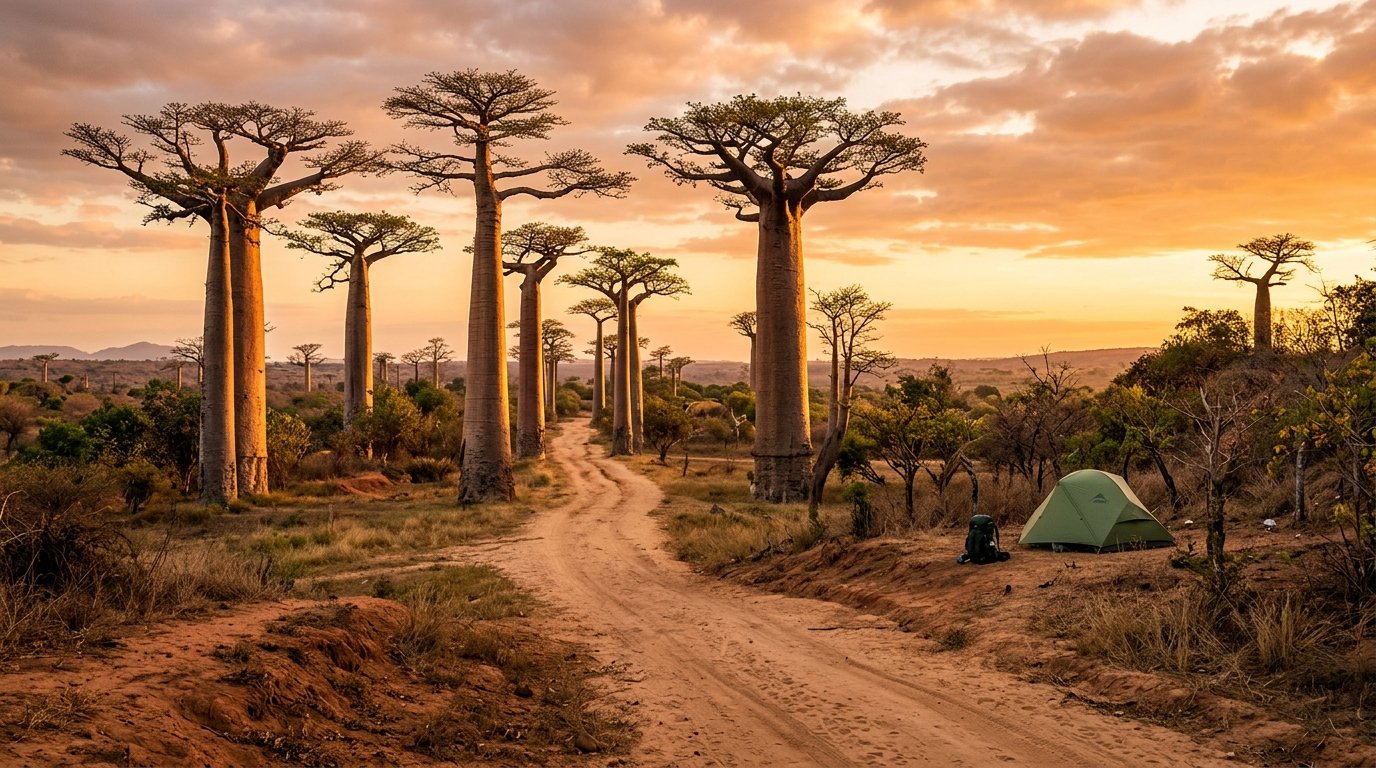
1. 🏕️ The Short Answer
While wild camping in Madagascar is not explicitly illegal at a national level, it is highly impractical, discouraged for security reasons, and heavily constrained by complex local land ownership customs. For foreign tourists, camping and overland travel are effectively restricted to organized campsites, secure lodge grounds, or inside national parks while accompanied by a mandatory local guide.
2. 🌲 Wild & Dispersed Camping Rules
- Legality on Public Land: True “dispersed” camping on random public land is not a recognized or safe concept in Madagascar. Almost all land either belongs to a private owner, the government, or falls under the strict customary jurisdiction of a local village.
- Rules and Permissions: There are no standard duration limits or distance rules because tourists cannot simply pull off the road and camp. If you absolutely must camp outside an official site, you must seek out the local village chief (Chef de Fokontany) to ask for permission. Failing to do so risks violating local taboos (fady), which govern sacred lands, ancestral tombs, and water sources.
- Enforcement: Formal enforcement by police or rangers is rare outside of protected areas, but local communities will quickly notice unauthorized campers. Setting up without permission is considered highly disrespectful and can attract unwanted attention or create security vulnerabilities.
3. 🏞️ National Park & Protected Area Rules
- Permits and Guides: Madagascar National Parks (MNP) requires all foreign visitors to purchase a daily entrance permit at the park gate. More importantly, it is strictly illegal to enter or camp in a national park without hiring an official, certified local guide.
- Designated Sites Only: You cannot camp wherever you want. Camping is strictly restricted to designated clearings or rustic campsites within the parks. Furthermore, most national parks are entirely car-free; you must leave your vehicle at the entrance gate and hike to your campsite with your guide and hired porters.
- Seasonal Closures: While advanced booking for campsites isn’t usually required, extreme weather dictates access. Many parks, hiking trails, and dirt access roads become impassable or are officially closed during the peak cyclone and rainy season (January to March).
4. 🚐 Van Life & Overnight Vehicle Sleeping
- Roadside Sleeping: Sleeping in a vehicle overnight on the side of the road, at public rest stops, or in unlit village squares is highly dangerous and strongly discouraged. Highway banditry (often associated with organized cattle rustlers known as dahalo) is a known security risk in remote areas, particularly after dark.
- Parking vs. Camping: Malagasy law does not differentiate between “parking” and “camping” in a recreational sense, because the infrastructure for Western-style van life simply does not exist. “Stealth camping” is neither safe nor culturally accepted.
- Designated Overnight Areas: There is no network of public rest areas or “aires.” Tourists traveling in 4×4 vehicles with rooftop tents—which is the standard for overland travel in Madagascar—should plan to pay a small fee to sleep in guarded hotel parking lots, private lodge grounds, or official community-run campsites.
5. 🔥 Campfires & Practical Restrictions
- Campfire Bans: Open fires are strictly prohibited in national parks and strongly frowned upon everywhere else. Madagascar is battling a severe deforestation and bushfire crisis driven by illegal slash-and-burn agriculture (tavy). Tourists must absolutely avoid making open fires; always use a self-contained portable gas camping stove.
- Key No-Camp Zones: Tourists must never camp in or near Integral Nature Reserves (Strict Nature Reserves classified as IUCN Category I, which are completely closed to the public), military installations, mining zones, and any local areas marked as fady (sacred/taboo).
6. 🔗 Official Sources & Links
Because Madagascar’s infrastructure and safety situations can change rapidly, always verify park access, fees, and safety advisories before your trip:
- Madagascar National Parks (MNP) Official Website – For current park rules, entry fees, and official conservation guidelines.
- Madagascar National Tourism Board – For broader travel advisories and approved accommodation resources.
Disclaimer: Land-use laws, national park fees, and security conditions in Madagascar can change frequently. Travelers should always consult official local authorities, their rental car provider, and their home government’s travel advisories before embarking on a camping or overland trip.

Adrenaline junkie with a passion for exploring off-the-beaten-path destinations and finding unique ways to stay active. Expect stunning scenery, challenging workouts, awesome travel tips and a whole lot of fun. Let’s get sweaty and explore the world together!