
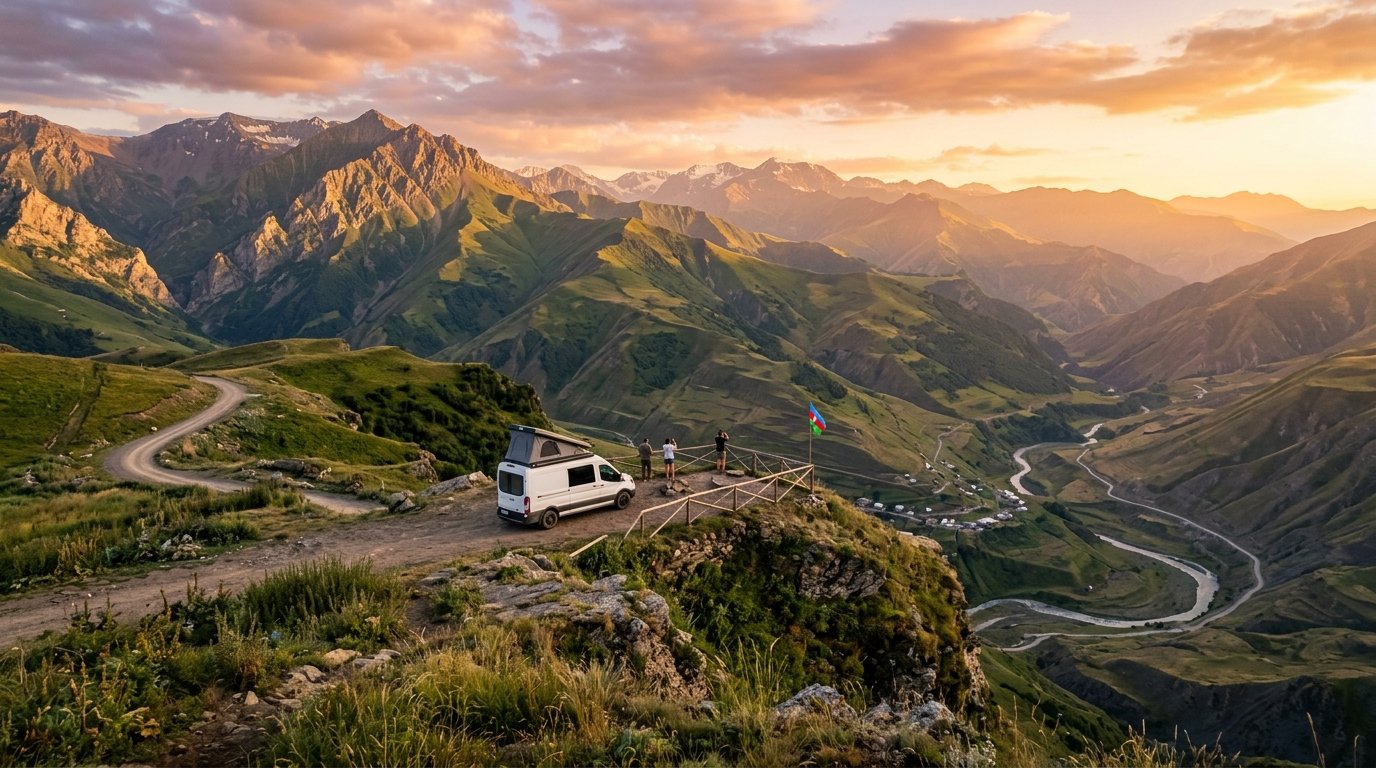
1. 🏕️ The Short Answer
Wild and dispersed camping is generally legal, warmly tolerated, and highly popular for foreign tourists across most of Azerbaijan. With the exception of a few restricted national parks and sensitive border or military zones, pitching a tent or parking a campervan in the wild is treated as a perfectly normal and acceptable way to explore the country’s beautiful landscapes.
2. 🌲 Wild & Dispersed Camping Rules
- Legality outside official sites: Yes, wild camping is legal and widely accepted on public lands, particularly in the Greater and Lesser Caucasus mountains. You are free to pitch a tent in most forests, valleys, and meadows.
- Duration and distance rules: There are no strict, codified laws dictating how many days you can stay in one spot or how far you must be from a road or water source. Standard Leave No Trace principles apply. If you wish to camp near a village or farm, it is customary to ask the landowner for permission. Locals are famously hospitable and will almost always say yes (and likely invite you in for tea).
- Enforcement: Out in the backcountry, enforcement by police or rangers is practically non-existent. As long as you respect the environment and avoid private property, you will not be bothered by local authorities.
3. 🏞️ National Park & Protected Area Rules
- Separate permit systems: Yes, camping inside official National Parks operates under different rules than general wild camping. You must register at the park gate and pay a small entrance fee, which can often be purchased online via the Ministry of Ecology and Natural Resources.
- Designated sites: In some protected areas (like Shirvan, Ag Gol, and Absheron National Parks), wild camping is strictly forbidden, and visitors are expected to leave the park by closing time at night. In mountainous parks like Shahdag and Goygol, camping is allowed but is usually restricted to designated eco-camping zones to protect local flora and fauna.
- Seasonal closures: While summer is prime camping season (May to October), higher elevations in the Caucasus experience heavy snow and extreme cold from November to April. Some high-altitude park areas become inaccessible or officially close to campers during the harsh winter months.
4. 🚐 Van Life & Overnight Vehicle Sleeping
- Overnight vehicle sleeping: Sleeping in your van or vehicle is legal and widely tolerated in Azerbaijan. There is no specific legislation banning you from sleeping in a vehicle on public land or rural roadsides.
- Parking vs. Camping: In major cities like Baku, parking is heavily regulated by the government’s Azparking system. While overnight parking in city zones is often free between 22:00 and 07:00, actively “camping” (setting up chairs, tables, and awnings) on city streets is not tolerated. In rural areas, the distinction disappears, and you can comfortably park and sleep in nature.
- Designated overnight areas: Azerbaijan does not have a widespread network of European-style motorhome “aires.” However, many rural guesthouses, private farms, and local paid campsites will gladly allow you to park your van overnight, often giving you access to fresh water and Wi-Fi for a very low fee.
5. 🔥 Campfires & Practical Restrictions
- Campfires: Open campfires are generally permitted in wild camping areas, provided you use common sense. You should use existing fire rings where possible and ensure the fire is completely extinguished with water before leaving. Inside National Parks, fires are strictly regulated and only allowed in official, designated fire pits.
- No-camp zones: Tourists must avoid camping anywhere near international borders, particularly the northern borders with the Russian republics of Dagestan and Chechnya, as well as the western border with Armenia. These are sensitive military zones where you will be questioned or detained. Furthermore, independent wild camping is strictly prohibited in the Karabakh region; this area has severe risks regarding unexploded ordnance (UXOs) and landmines, and entry requires special government permits.
6. 🔗 Official Sources & Links
To verify the latest park entry fees, environmental laws, and tourist maps, refer to the following official resources:
- Ministry of Ecology and Natural Resources of the Republic of Azerbaijan (For national park information and e-tickets).
- Azerbaijan.Travel (The official state tourism board for camping routes and safety advice).
Disclaimer: Land-use laws, national park regulations, and border zone restrictions can change rapidly. The information provided in this guide is for educational purposes. Always verify current camping laws, fire bans, and border safety protocols with official local authorities or the Azerbaijan Tourism Board immediately prior to your trip.
Adrenaline junkie with a passion for exploring off-the-beaten-path destinations and finding unique ways to stay active. Expect stunning scenery, challenging workouts, awesome travel tips and a whole lot of fun. Let’s get sweaty and explore the world together!