
1. 🏕️ The Short Answer
In Grenada, wild and dispersed camping exists in a legal grey area; while not explicitly illegal on all public lands and beaches, it is highly unusual and not officially supported for foreign tourists. There is virtually no formalized camping or campervan infrastructure on the island, meaning those who wish to camp must rely on local permission, practice extreme discretion, and be entirely self-sufficient.
2. 🌲 Wild & Dispersed Camping Rules
- Legality on Public Land: There is no overarching national law that expressly forbids wild camping for tourists on uncultivated land or public beaches. However, most land in Grenada is either privately owned (often for agriculture) or protected by the government. You should always seek permission from landowners or local community leaders before pitching a tent.
- Duration and Distance Rules: Because wild camping is not a formalized tourist activity, there are no codified duration limits (e.g., maximum 1-2 nights) or strict distance rules from roads. Campers must use common sense “Leave No Trace” principles and stay well clear of private dwellings and agricultural plots.
- Enforcement: Active enforcement by police or park rangers regarding the simple act of camping is rare. However, locals or authorities may approach you out of curiosity or for safety reasons. A polite and respectful demeanor is usually enough to resolve any concerns.
3. 🏞️ National Park & Protected Area Rules
- Permit Systems: Grenada’s primary natural reserve is Grand Etang National Park. There is no automated online booking system for camping. If you wish to camp, you must coordinate directly with the Forestry and National Parks Department or inquire at the park’s visitor center to pay any applicable fees and obtain verbal or written permission.
- Designated Sites: True North American or European-style designated campgrounds do not exist in the parks. You will likely be directed to camp in specific clearings near the visitor center or trailheads. Advance notice is highly recommended.
- Seasonal Closures: Be heavily aware of the Atlantic hurricane season (June to November), which can bring severe weather that makes backcountry camping dangerous. Additionally, certain coastal reserves are closed seasonally to protect wildlife.
4. 🚐 Van Life & Overnight Vehicle Sleeping
- Legality: Local traffic laws do not clearly distinguish between “parking” and “camping,” nor do they explicitly ban sleeping in a legally parked vehicle overnight.
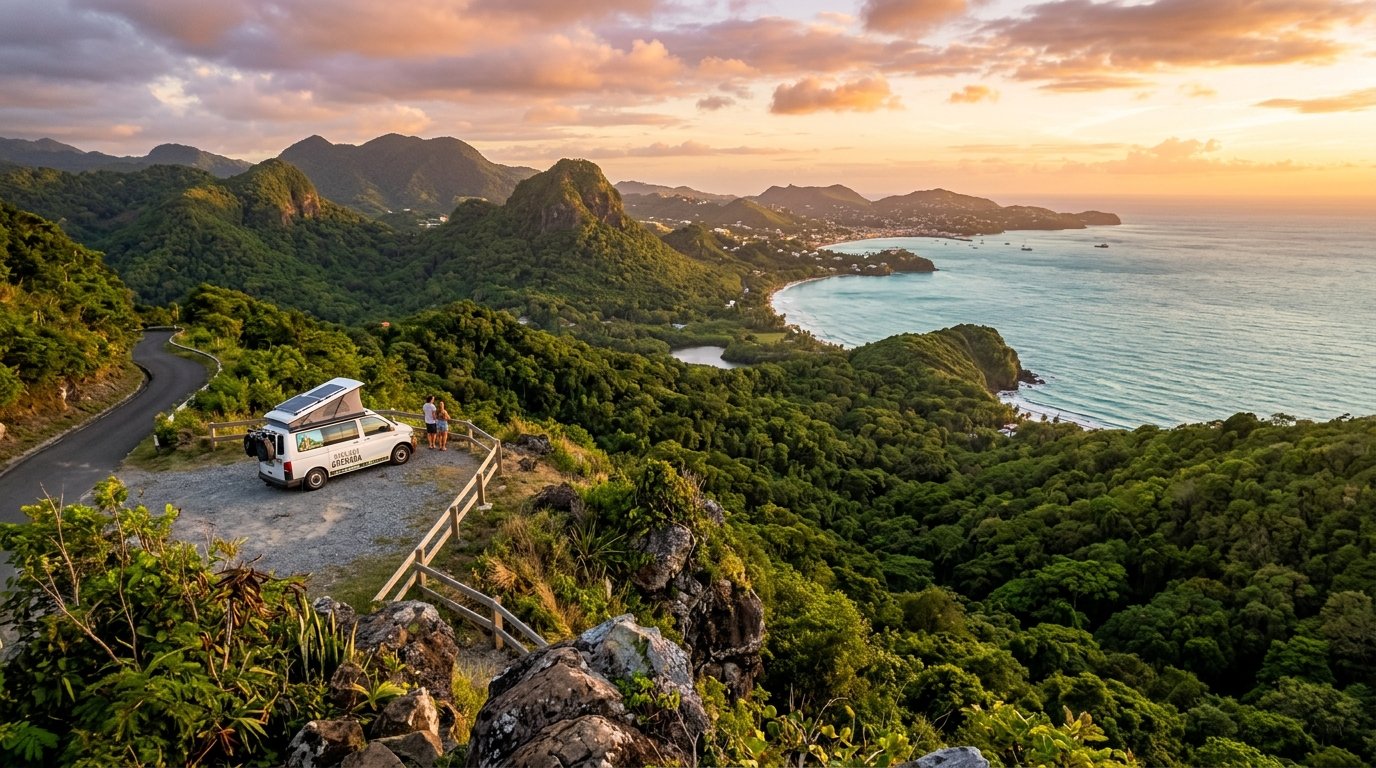
- Infrastructure: “Van life” culture is practically non-existent in Grenada. There are no designated overnight rest areas, campervan parks, or “aires”. Furthermore, rental agencies generally only offer standard cars or 4x4s, not sleeper vans.
- Safety Considerations: The U.S. State Department currently issues a Level 2 travel advisory for Grenada due to crime. Pulling over to sleep in a vehicle on a dark, narrow mountain road or at an isolated beach parking lot is highly unadvisable for tourists due to the risk of robbery or harassment.
5. 🔥 Campfires & Practical Restrictions
- Campfire Laws: Open fires are strictly regulated under Grenada’s Agricultural Fires Act. During the dry season (typically January to May), the government often issues strict “no-burn” orders. Setting an unauthorized fire during this time can result in heavy fines (EC$500) and up to three months of imprisonment. Outside of the dry season, small recreational beach fires are generally tolerated but require extreme caution.
- Turtle Nesting Zones: You must not camp or build fires on turtle nesting beaches. Levera Beach, a primary nesting site for endangered Leatherback turtles, is strictly closed at night (under SRO #15 of 2010 Fisheries Legislation) from roughly March to September. Unauthorized access will result in police intervention.
- Other No-Camp Zones: Do not camp in agricultural estates (such as nutmeg or cocoa plantations) without explicit permission, as crop theft is a serious local issue. Avoid pitching near military installations, telecommunications infrastructure on high peaks, and high-tide lines on beaches.
6. 🔗 Official Sources & Links
To verify the most up-to-date information, permit requirements, and seasonal fire bans before your trip, please consult the following trusted sources:
Disclaimer: Camping and land-use laws in Grenada can change frequently and are often subject to the discretion of local authorities. The information in this guide is for educational purposes only. Always verify current regulations, fire bans, and safety advisories with official local sources before your trip.

Adrenaline junkie with a passion for exploring off-the-beaten-path destinations and finding unique ways to stay active. Expect stunning scenery, challenging workouts, awesome travel tips and a whole lot of fun. Let’s get sweaty and explore the world together!