
1. 🏕️ The Short Answer
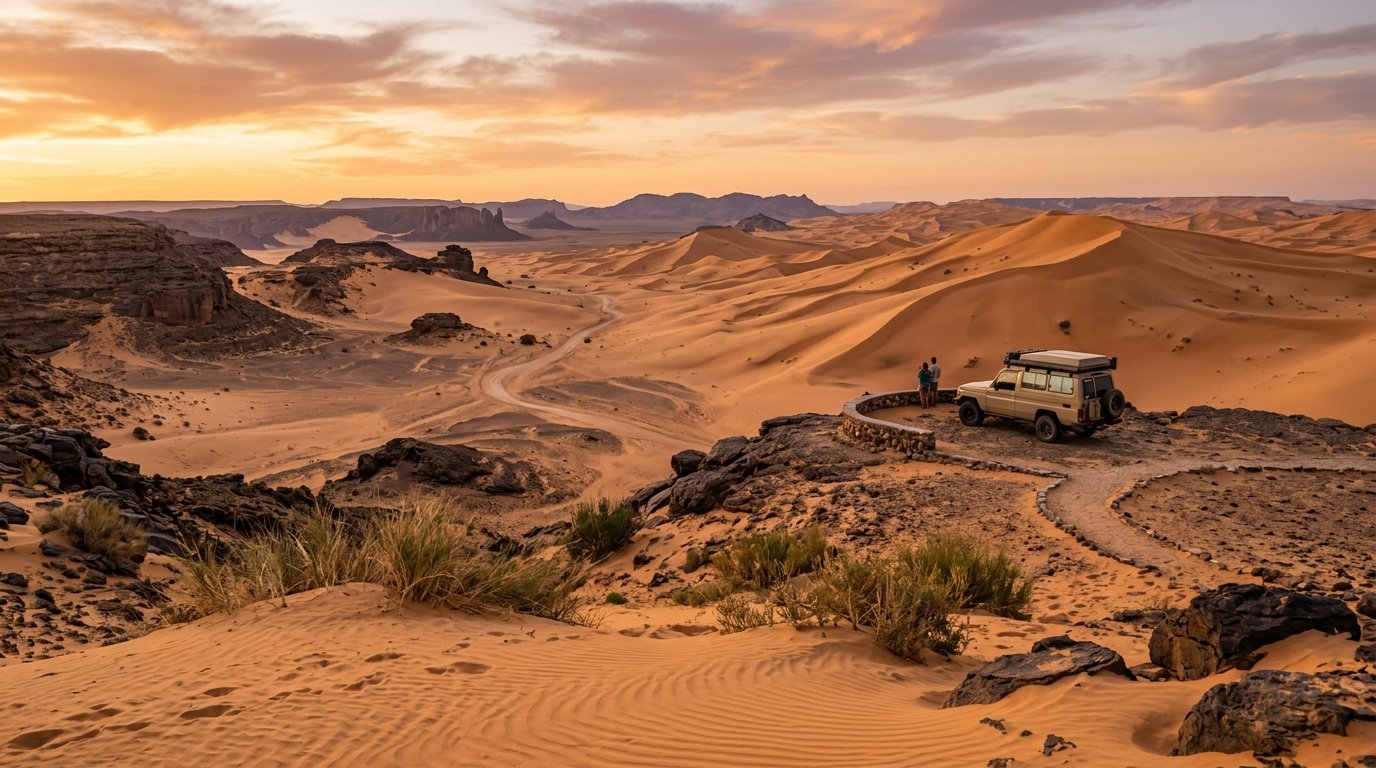
Wild and dispersed camping in Mauritania is widely tolerated, legally unregulated in the open desert, and a practical necessity for foreign overlanders. While you can pitch a tent or park a campervan almost anywhere in the vast Sahara, your choice of location will ultimately be dictated by military and police checkpoints, who strictly monitor tourist movements for security rather than environmental reasons.
2. 🌲 Wild & Dispersed Camping Rules
- Legality on Public Land: There is no overarching national law banning wild camping for tourists in the open desert. Sleeping outside official campsites is considered completely normal, culturally accepted, and is how many overland travelers experience the country.
- Duration and Distance Rules: There are no codified duration limits or distance rules regarding roads, water sources, or private property in the desert. However, as a matter of respect, you should avoid camping too close to nomadic settlements or village wells without explicitly asking the locals for permission first.
- Police Enforcement: You will not be fined by park rangers for wild camping. Instead, enforcement is handled by the Gendarmerie and military. They are concerned with your physical safety, not land-use violations. In many cases, police will actively insist that you park and camp directly next to their checkpoints or police stations for your own protection.
3. 🏞️ National Park & Protected Area Rules
- Permits & Fees: Mauritania’s premier protected area, the Parc National du Banc d’Arguin (a UNESCO World Heritage site), operates under strict conservation laws to protect marine and coastal environments. You must pay an entry fee or arrange a tour to access the park.
- Designated Sites & Restrictions: To protect millions of migratory wintering birds and the fragile coastal dune ecosystems, unregulated wild camping and driving off-piste on the beaches are highly restricted. Tourists are generally required to stay in designated eco-camps, guesthouses, or traditional khaïma (nomad tent) sites in fishing villages like Iwik.
- Seasonal Closures: While there are no formal fire season closures, travel and camping expeditions in Mauritania are effectively dictated by the climate. The standard safe travel window is November to March. Outside these months, extreme Saharan temperatures make desert wild camping incredibly dangerous, and most tour operators halt activities.
4. 🚐 Van Life & Overnight Vehicle Sleeping
- Overnight Sleeping Legality: Sleeping in a campervan, 4×4, or overland truck is completely legal. Mauritania is a major transit route for European overlanders heading to Senegal, and vehicle camping is the standard mode of travel.
- Parking vs. Camping: The law makes no meaningful distinction between parking and camping in the desert. However, in major urban centers like Nouakchott and Nouadhibou, you should not sleep in your vehicle on random streets or unlit beaches due to the risk of opportunistic crime, including theft and robberies at knifepoint.
- Designated Areas: Every major transit town (Nouadhibou, Nouakchott, Atar, Chinguetti) features secure, enclosed campsites often called auberges. For just a few euros a night, these act as walled parking lots where tourists can safely sleep in their vehicles and access basic amenities like running water, electricity, and simple showers.
5. 🔥 Campfires & Practical Restrictions
- Campfire Rules: Open campfires are allowed and are a core part of the local nomadic culture (especially for brewing Mauritanian tea). However, dead wood is incredibly scarce. Tourists are strongly advised to practice responsible camping by using existing fire pits and bringing their own charcoal, cooking fuel, or gas stoves rather than stripping the sparse acacia trees, which are vital resources for local shepherds.
- Key No-Camp Zones (CRITICAL SAFETY): Due to the severe risk of banditry and terrorism (including kidnapping) by extremist groups in the Sahel, the FCDO and other foreign offices strongly advise against travel to the eastern half of Mauritania and anywhere near the borders with Mali and Algeria. Furthermore, the northern border near Western Sahara contains unmarked, unexploded landmines. Stick strictly to the western coastal N2 highway or the heavily patrolled Adrar region.
- Checkpoints & Fiches: Whenever traveling and camping, you must carry dozens of fiches (pre-printed sheets containing your passport details, visa number, and vehicle registration) to hand over at the frequent military checkpoints.
6. 🔗 Official Sources & Links
For the most up-to-date travel warnings and park regulations, consult the following trusted sources:
- UK Foreign, Commonwealth & Development Office (FCDO) – Mauritania Travel Advice
- UNESCO: Banc d’Arguin National Park Information
Disclaimer: Land-use laws, park regulations, and national security zones change frequently in Mauritania. Always verify current regional safety, border conditions, and camping rules with your embassy, local authorities, or trusted local guides immediately prior to your trip.

Adrenaline junkie with a passion for exploring off-the-beaten-path destinations and finding unique ways to stay active. Expect stunning scenery, challenging workouts, awesome travel tips and a whole lot of fun. Let’s get sweaty and explore the world together!