
1. 🏕️ The Short Answer
Wild and dispersed camping is effectively illegal and heavily restricted for tourists in Barbados. You cannot legally pitch a tent on the beach, in public parks, or on the roadside. Overnight camping is strictly confined to a small handful of privately owned eco-farms and designated campsites.
2. 🌲 Wild & Dispersed Camping Rules
- Legality on Public Land: Pitching a tent on public land, including all public beaches, is strictly prohibited by the National Conservation Commission (NCC). Tents or canopies left overnight on beaches are considered abandoned and will be removed and disposed of by local authorities.
- Limits and Enforcement: There are no duration limits or distance rules for wild camping because the practice is simply not allowed. The NCC and local police actively enforce these rules to preserve fragile coastal ecosystems and maintain public safety.
- Safety Concerns: Outside of official regulations, wild camping is strongly discouraged by locals due to safety and crime risks on secluded beaches at night. Barbados does not have a traditional public camping culture.
3. 🏞️ National Park & Protected Area Rules
- Day-Use Only: Barbados does not have a sprawling national park system with backcountry camping permits. Protected public areas, such as Farley Hill National Park and the Folkestone Marine Park, are for day-use only.
- Private Campsites: To camp legally, tourists must book a site at a private eco-facility in advance. Notable options include PEG Farm and Nature Reserve, Coco Hill Forest, and Camping Barbados. These locations offer eco-camping, hammock rentals, and basic facilities like composting toilets and outdoor showers.
- Weather Considerations: While there are no official “fire season” closures, the Caribbean hurricane and rainy season runs from July to November. Private campsites and public nature reserves frequently close or restrict access during heavy tropical rains or severe weather warnings.
4. 🚐 Van Life & Overnight Vehicle Sleeping
- Not a Viable Option: The “van life” culture is virtually non-existent in Barbados. There are no campervan or RV rental companies on the island, and shipping a private vehicle there is highly impractical and expensive.
- Vehicle Sleeping Rules: Sleeping overnight in a rental car in public car parks, at beach access points, or on the roadside is not legally permitted or culturally tolerated. Barbados law does not provide designated safe-harbor laws for overnight vehicle sleeping.
- No Facilities: There are no designated overnight parking areas, “aires,” or RV rest stops anywhere on the island. Tourists must book traditional accommodation or a spot at a private tent campsite.
5. 🔥 Campfires & Practical Restrictions
- Campfire Bans: Open wood fires and campfires are strictly prohibited on all public beaches and in public parks. If you are day-tripping, only elevated gas stoves or charcoal grills are allowed, and these often require prior permission from the NCC. Designated campfire pits are only legally found on private campsites like PEG Farm.
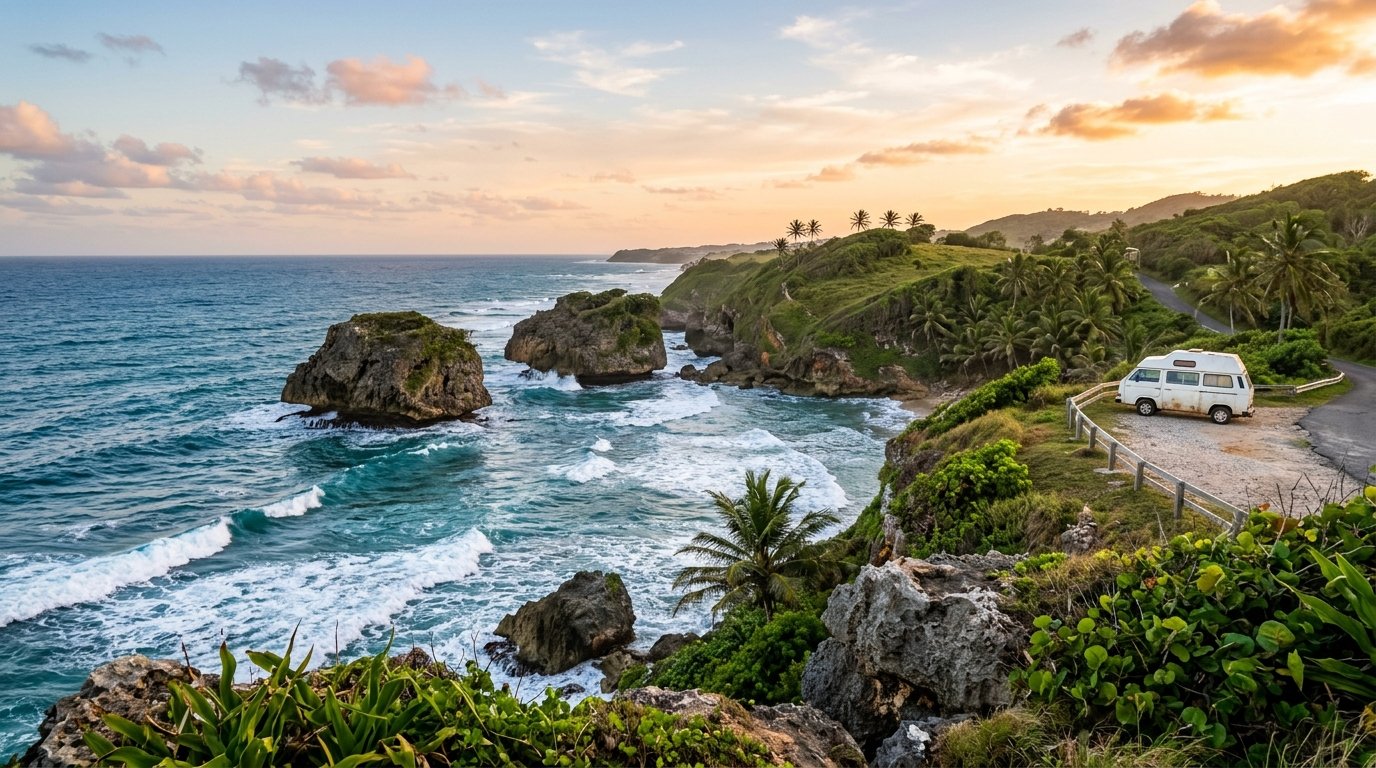
- No-Camp Zones: Tourists should avoid all public beaches after dark. Additionally, do not attempt to camp or swim near the rugged East Coast (e.g., Bathsheba, Bottom Bay); the Atlantic currents are highly dangerous, and the area is strictly monitored.
- Crucial Clothing Law: It is a strict federal offense for civilians, including tourists, to wear camouflage clothing of any kind in Barbados. Luggage, backpacks, and swimwear with camo prints are also prohibited and you can be heavily fined or forced to change by law enforcement.
6. 🔗 Official Sources & Links
For the most up-to-date information on park use, beach regulations, and environmental permits, consult the National Conservation Commission (NCC) of Barbados. For general travel advisories, approved accommodations, and safety guidelines, visit the official tourism board at Visit Barbados.
Disclaimer: Land-use laws, environmental regulations, and travel advisories change frequently. Always verify current camping rules and safety guidelines with official Barbadian authorities or your local embassy before your trip.

Adrenaline junkie with a passion for exploring off-the-beaten-path destinations and finding unique ways to stay active. Expect stunning scenery, challenging workouts, awesome travel tips and a whole lot of fun. Let’s get sweaty and explore the world together!