
1. 🏕️ The Short Answer
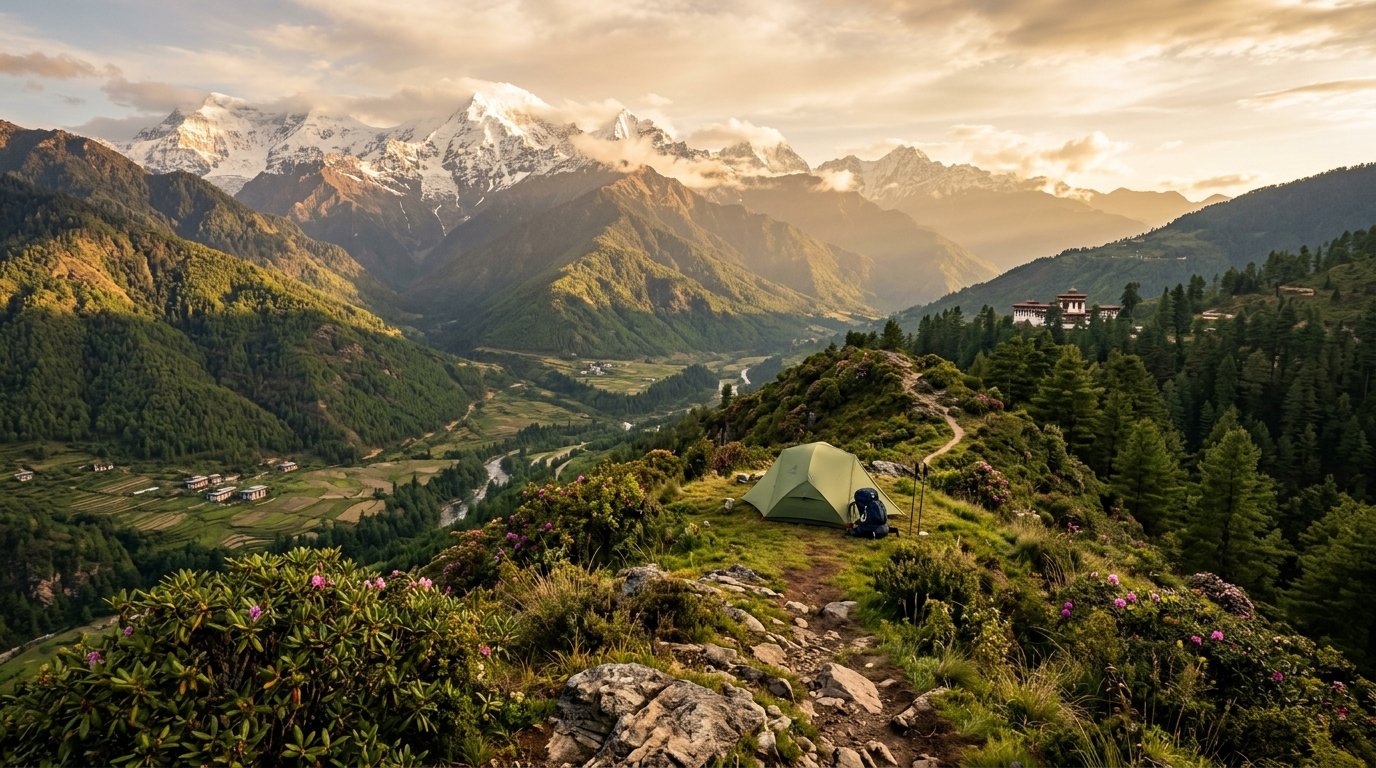
Independent wild camping and dispersed camping are strictly illegal for foreign tourists in Bhutan. Due to the country’s highly regulated “High Value, Low Impact” tourism policy, independent travel is not permitted. All foreign visitors must book their itinerary through a licensed Bhutanese tour operator, be accompanied by a certified guide, and pay a mandatory daily Sustainable Development Fee (SDF). If you wish to camp, it must be fully organized and supported by your tour agency at designated sites along approved trekking routes.
2. 🌲 Wild & Dispersed Camping Rules
- Is camping outside official campsites legal for tourists? No. Spontaneous, independent wild camping on public land is entirely prohibited. You cannot hike into the wilderness and pitch your own tent.
- Are there duration limits or distance rules? Your approved trekking permit and itinerary strictly dictate your overnight stops. You will stay at government-approved campsites along established trekking routes (such as the Druk Path, Jomolhari Trek, or Snowman Trek), with tents pitched by your designated camp staff.
- Is this actively enforced? Yes, very strictly. The Bhutanese permit system requires your authorized guide to be with you at all times, and there are checkpoints along trekking routes. Attempting to evade the mandatory guide requirement or camp independently will result in heavy fines, deportation, and penalties for the local operator.
3. 🏞️ National Park & Protected Area Rules
- Do national parks have a separate camping permit system? Yes. Entry into protected areas like Jigme Dorji National Park requires special route and trekking permits. However, as a tourist, you will not apply for these directly; your licensed tour operator handles all paperwork, route approvals, and environmental fees prior to your arrival.
- Is camping restricted to designated sites? Absolutely. To protect fragile alpine ecosystems and rare wildlife, trekking agencies must set up camp only in officially sanctioned eco-zones.
- Are there seasonal closures? Yes. High-altitude trekking and camping are highly seasonal. Routes are effectively closed or strongly advised against during the heavy summer monsoon season (June to August) and peak winter (January to February) due to deep snow, mudslides, and severe weather risks.
4. 🚐 Van Life & Overnight Vehicle Sleeping
- Is it legal to sleep overnight in a vehicle? No. Independent van life and vehicle sleeping do not exist for foreign tourists in Bhutan.
- Does local law distinguish between parking and camping? This distinction is irrelevant for tourists because self-driving a rental vehicle is strictly prohibited for international visitors. You are legally required to travel in a registered tourist vehicle driven by a licensed local chauffeur.
- Are there designated overnight areas? There are no campervan parks, RV aires, or tourist rest stops. Tourists must sleep in government-approved hotels, certified guesthouses, homestays, or the trekking tents provided by their tour operators.
5. 🔥 Campfires & Practical Restrictions
- Are open campfires generally allowed? Campfires are heavily restricted to prevent forest fires and to align with the country’s strict “leave no trace” environmental ethos. If a campfire is permitted at a designated trekking campsite, it will be built, supervised, and fully managed by your licensed guide and camp staff using approved fuel sources.
- Key no-camp zones: Because all travel is guided, your operator will ensure you do not trespass. However, it is vital to know that tourists are strictly prohibited from straying near border regions (especially the sensitive northern border with Tibet/China), military installations, and restricted sacred religious sites or monastic grounds.
6. 🔗 Official Sources & Links
To verify the latest visa procedures, current Sustainable Development Fee (SDF) rates, and to find a list of certified local tour operators, always consult the official government tourism portal:
Disclaimer: Travel laws, environmental regulations, and tourist fee structures change frequently. The information provided is for educational purposes. Always verify current rules, visa requirements, and camping regulations directly with the Bhutanese Department of Tourism and your licensed tour operator before booking your trip.

Adrenaline junkie with a passion for exploring off-the-beaten-path destinations and finding unique ways to stay active. Expect stunning scenery, challenging workouts, awesome travel tips and a whole lot of fun. Let’s get sweaty and explore the world together!