
1. 🏕️ The Short Answer
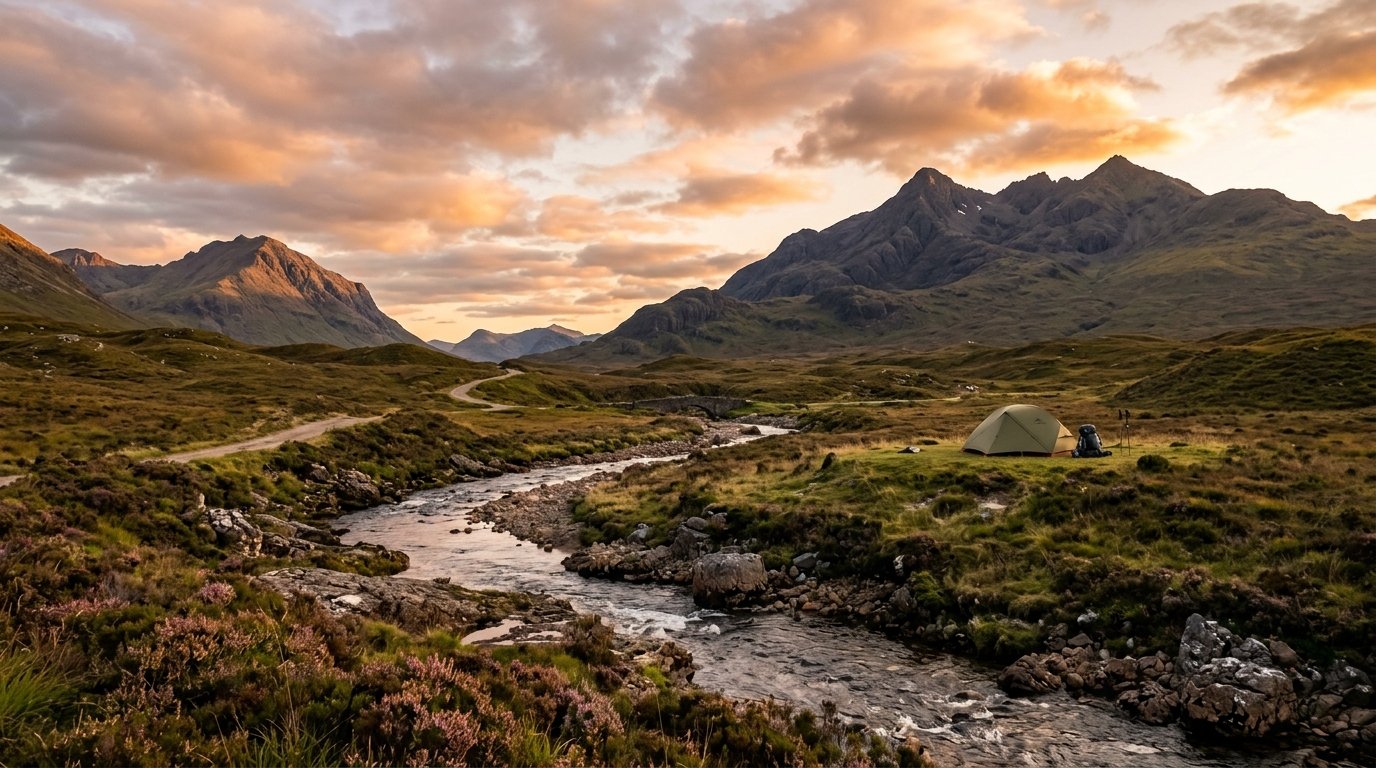
For foreign tourists, wild camping in the United Kingdom is a patchwork of strict restrictions and specific freedoms. In Scotland, wild tent camping is legal almost everywhere, but in England, Wales, and Northern Ireland, it is effectively illegal without explicit landowner permission, with the notable exception of specific zones in Dartmoor National Park.
2. 🌲 Wild & Dispersed Camping Rules
- Scotland: Thanks to the Land Reform (Scotland) Act 2003, you have a statutory right to wild camp on most unenclosed land. This applies to lightweight tent camping only (not vehicles). You must follow the Scottish Outdoor Access Code, leave no trace, and stay a maximum of 2-3 nights in one spot.
- England, Wales & Northern Ireland: Wild camping on public or private land is illegal without landowner permission. However, discrete, late-arrival/early-departure camping is sometimes quietly tolerated in remote upland areas (like the Lake District or Eryri/Snowdonia) if you are far from roads and leave no trace. This is not a legal right, and you must move if asked.
- The Dartmoor Exception: Following a 2025 UK Supreme Court ruling, Dartmoor National Park in England is the only place south of Scotland where you have a legal right to backpack camp. You must use a small tent, stay only 1-2 nights, and strictly stick to designated “Byelaw 16” mapped areas.
- Enforcement: In England and Wales, enforcement ranges from polite requests by farmers to move on, to strict enforcement by rangers. In Scotland, rangers actively patrol and enforce seasonal permit zones.
3. 🏞️ National Park & Protected Area Rules
- Loch Lomond & The Trossachs (Scotland): Between March and September, wild camping and overnight motorhome stays in specific “Camping Management Zones” (which cover about 4% of the park) are heavily restricted. You must purchase a low-cost permit in advance to camp or sleep in your vehicle in these zones.
- England & Wales National Parks: Parks like the Lake District, Peak District, and Snowdonia do not have wild camping permit systems because wild camping is simply not legally permitted. Tourists are expected to use official, privately-run campsites, which must be booked well in advance during summer months.
- Seasonal Restrictions: Be aware of ground-nesting bird breeding seasons (spring/early summer) and deer stalking seasons (late summer/autumn) in Scotland. Access to certain estates may be restricted for safety during these times.
4. 🚐 Van Life & Overnight Vehicle Sleeping
- No Automatic Right: The UK does not have a legal “right” to sleep in a vehicle. Scotland’s broad right to roam strictly applies to non-motorized access. In a campervan or motorhome, you technically need the landowner’s permission to park overnight anywhere in the UK.
- Parking vs. Camping: UK law heavily distinguishes between “parking” (sleeping inside a vehicle with no exterior footprint) and “camping” (putting down stabilizing jacks, awnings, leveling ramps, or chairs). However, local councils frequently use Traffic Regulation Orders (TROs) to ban overnight sleeping entirely in coastal, tourist, or national park car parks. Look out for strict “No Overnight Parking” signs, which are legally enforceable.
- Laybys and Rest Stops: Sleeping in highway laybys (pull-offs) is generally tolerated if you are resting to prevent tired driving, but it is not intended for multi-day recreational van life.
- Designated Areas: The UK does not have a widespread network of free European-style public “Aires.” Tourists should rely on official caravan parks or utilize programs like Brit Stops, which allows self-contained motorhomes to park for free overnight at participating pubs, farms, and vineyards.
5. 🔥 Campfires & Practical Restrictions
- Open Fires: Open campfires are generally illegal across the UK without explicit landowner permission. In Scotland, the access code advises extreme caution, and fires are strongly discouraged in forests, peaty soils, or dry conditions. Due to severe and increasing wildfire risks, tourists should always use a portable camping stove instead.
- No-Camp Zones: Avoid Ministry of Defence (MoD) lands and active military firing ranges, which are common in upland areas like Dartmoor, the Brecon Beacons, and parts of Scotland. Red warning flags dictate when access is strictly prohibited. Furthermore, never camp in enclosed farm fields, near livestock, near private dwellings, or close to historic monuments.
6. 🔗 Official Sources & Links
For the most current information, permits, and maps, consult these official resources:
- Scottish Outdoor Access Code – The official guidelines for responsible access and wild camping in Scotland.
- Loch Lomond & The Trossachs National Park – For mapping and purchasing Scottish camping management zone permits.
- Dartmoor National Park Camping – The official interactive map showing exactly where backpack camping is legally permitted in England.
Disclaimer: Land-use and camping laws in the United Kingdom are subject to ongoing legal challenges, localized council bylaws, and seasonal variations. The information provided here is for educational purposes. Always verify current restrictions with local authorities, park ranger stations, or official tourism boards immediately before your trip.

Adrenaline junkie with a passion for exploring off-the-beaten-path destinations and finding unique ways to stay active. Expect stunning scenery, challenging workouts, awesome travel tips and a whole lot of fun. Let’s get sweaty and explore the world together!