
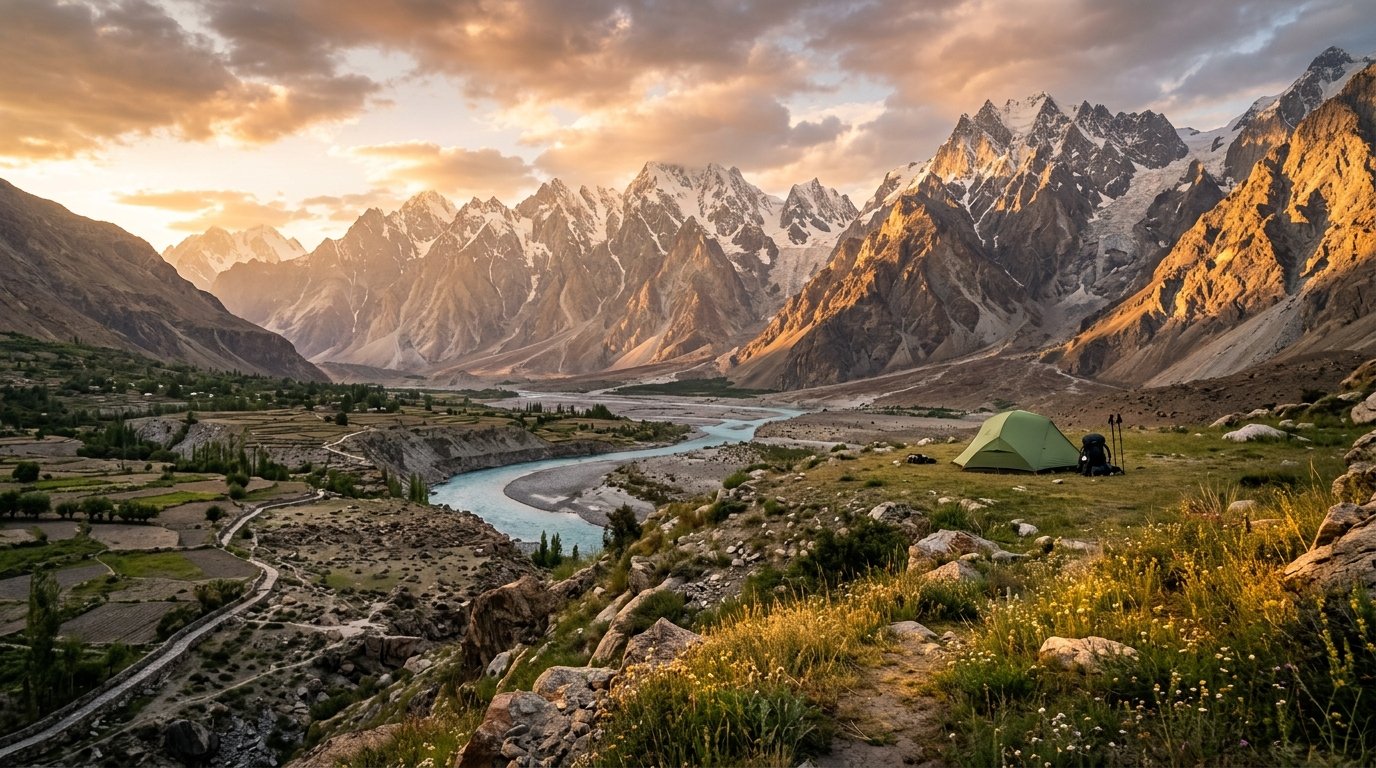
1. 🏕️ The Short Answer
For foreign tourists, wild and dispersed camping is generally legal and widely tolerated in Pakistan’s “Open Zones,” particularly in the stunning mountainous regions of Gilgit-Baltistan and Khyber Pakhtunkhwa. However, camping and trekking in “Restricted Zones”—which include high-altitude national parks, sensitive border regions, and military areas—strictly require official government permits, No Objection Certificates (NOCs), and a licensed local guide.
2. 🌲 Wild & Dispersed Camping Rules
- Legality on Public Land: In Open Zones (areas not designated as restricted or near borders), foreign tourists can freely pitch a tent on public land or in the mountains. The local culture is incredibly hospitable, and wild camping is a common practice for adventurers.
- Duration and Distance Rules: There are no strict federal limits on how long you can stay in a single dispersed spot, provided you do not obstruct roads, pollute water sources, or intrude on private property or agricultural land. Always maintain a respectful distance from rural villages unless invited by locals.
- Enforcement: In Open Zones, police and rangers rarely enforce camping restrictions, though local police or the Levies force may occasionally check on your safety to ensure you are okay. In Restricted Zones, enforcement is strict, and military checkpoints will stop you if you lack the proper paperwork.
3. 🏞️ National Park & Protected Area Rules
- Permit Systems: Pakistan divides its mountain and park regions into Open and Restricted Zones. Parks located in Restricted Zones (like the Central Karakoram National Park, which houses K2) require a formal Trekking Permit issued by the Gilgit-Baltistan Council, which must be applied for through a registered tour operator.
- Designated Sites and Booking: In highly trafficked areas like Saiful Muluk or Ayubia National Park, tourists are heavily encouraged or required to use designated, hosted campsites. In deep backcountry parks, you can camp anywhere along the trail, provided you have paid the mandatory environmental and waste management fees (often around $150-$200 for foreign expeditions).
- Seasonal Closures: Many high-altitude national parks naturally “close” between November and April due to heavy snowfall, avalanche risks, and impassable roads. There are no strict nationwide fire seasons, but local authorities may limit access during severe weather warnings.
4. 🚐 Van Life & Overnight Vehicle Sleeping
- Overnight Sleeping Legality: Van life and overlanding are completely legal in Pakistan. Foreign overlanders frequently sleep in their vehicles as they traverse the country. You can legally park and sleep overnight in most roadside areas, provided you are not causing a traffic obstruction.
- Parking vs. Camping: Pakistani law does not heavily distinguish between parking and vehicle camping outside of major urban centers. In cities like Islamabad or Lahore, you must park in authorized spaces, and setting up a full campsite (with awnings and chairs) in a public parking lot is frowned upon.
- Designated Areas: There is no formalized network of “aires” or RV parks in Pakistan. Overlanders typically rely on boondocking in rural areas, asking permission to park outside local guesthouses or police stations for security, or utilizing the parking lots of hosted campsites (which often provide basic toilet and water facilities for a small fee).
5. 🔥 Campfires & Practical Restrictions
- Campfires: Open campfires are generally permitted in wild camping areas. However, wood is exceedingly scarce in high-altitude alpine zones. Tourists are strongly advised to bring multi-fuel camping stoves and strictly practice Leave No Trace principles, as alpine ecosystems are fragile.
- Key No-Camp Zones: Foreigners must absolutely avoid camping near military installations, the Line of Control (LoC) with India, and the Pak-Afghan border. A 10 to 30-mile buffer zone around international borders is often highly restricted, and unauthorized camping here will lead to immediate questioning, detention, or deportation. Avoid camping near critical infrastructure like dams, major bridges, and airports.
6. 🔗 Official Sources & Links
To verify the latest permit requirements and restricted zone maps, foreign travelers should consult:
- Pakistan Tourism Development Corporation (PTDC)
- Ministry of Foreign Affairs, Pakistan (for visa and border zone advisories)
Disclaimer: Land-use laws, restricted zone boundaries, and permit fees in Pakistan can change rapidly due to security and environmental factors. Always verify current camping regulations with a registered Pakistani tour operator or official government sources before planning your trip.

Adrenaline junkie with a passion for exploring off-the-beaten-path destinations and finding unique ways to stay active. Expect stunning scenery, challenging workouts, awesome travel tips and a whole lot of fun. Let’s get sweaty and explore the world together!