
1. 🏕️ The Short Answer
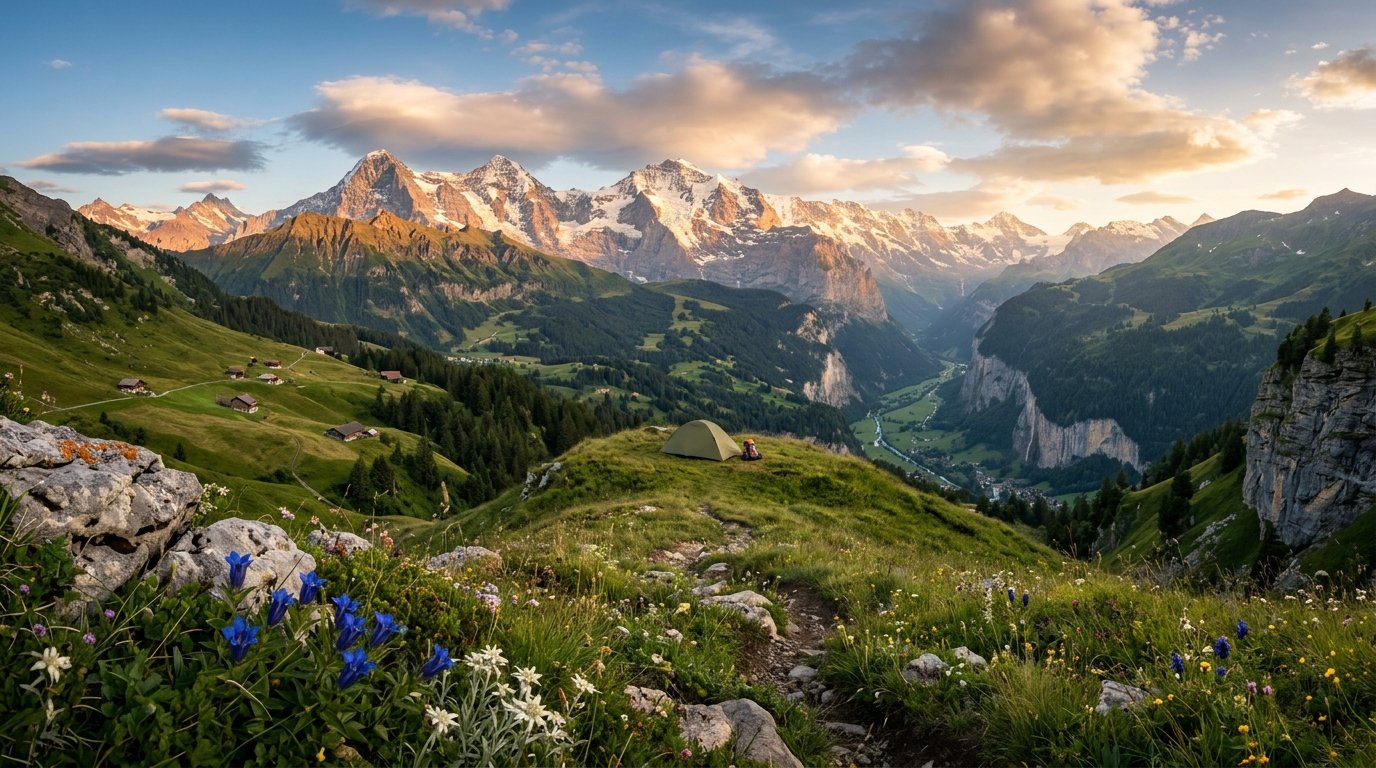
For foreign tourists, wild and dispersed camping in Switzerland is highly restricted and effectively illegal in valleys, forests, and easily accessible tourist areas. While there is no blanket federal ban, local laws strictly prohibit camping outside official sites, with the only notable exception being a tolerated “grey area” for hikers setting up a temporary, low-impact bivouac or small tent for a single night high above the tree line.
2. 🌲 Wild & Dispersed Camping Rules
- Legality on Public Land: There is no single federal law permitting wild camping; instead, rules are dictated by individual cantons and municipalities. For tourists, pitching a tent on public land near lakes, in forests, or in valleys is generally illegal. The Swiss Alpine Club (SAC) standard only tolerates wild camping if you are high in the mountains (above the tree line or in rocky alpine terrain) and far away from civilization.
- Duration and Distance Rules: Where tolerated (above the tree line), you may only stay for a maximum of one night in the same spot. You must stay well away from alpine huts (unless you have the warden’s explicit permission) and private property. Camping on private land or farmland lower in the valleys requires direct permission from the landowner or farmer.
- Enforcement: Enforcement is strict and actively carried out by local police, gamekeepers, and rangers. Illegal wild camping in valleys, tourist hotspots, or protected zones frequently results in immediate eviction and hefty fines.
3. 🏞️ National Park & Protected Area Rules
- No Permit System: Switzerland’s protected areas do not offer a backcountry camping permit system. Wild camping is strictly and entirely forbidden in these zones without exception.
- Strictly Designated Sites Only: In the Swiss National Park (Switzerland’s only official national park), camping is universally prohibited. You cannot camp, bivouac, or sleep in a vehicle anywhere within the park boundaries, including at trailheads or roadside parking lots. Tourists must book official campsites in surrounding towns like Zernez or Scuol in advance.
- Seasonal and Wildlife Restrictions: Camping is completely illegal year-round in federal hunting ban areas, wildlife sanctuaries (especially during winter and spring protection periods), and nature reserves (like fens and raised bogs). Visitors must check local maps to ensure they do not cross into these strictly protected zones.
4. 🚐 Van Life & Overnight Vehicle Sleeping
- Overnight Parking vs. Camping: Swiss law generally distinguishes between parking to rest and “camping.” While stopping at a highway rest area to sleep in your vehicle for a single night to “restore driving ability” is tolerated in some cantons, setting up camp (extending awnings, putting out chairs, or cooking outside) is strictly illegal outside official campsites.
- Municipal Bans: Many tourist-heavy municipalities (such as those in the Engadine, Ticino, and Bernese Oberland) explicitly ban overnight sleeping in vehicles in public car parks, at viewpoints, or by the roadside. Local police patrol these areas actively.
- Designated Areas: Due to the popularity of van life, several regions have created designated motorhome stopovers (Stellplätze or temporary pitches). Tourists traveling in campervans should utilize official campsites or these paid overnight parking zones to avoid legal trouble.
5. 🔥 Campfires & Practical Restrictions
- Campfire Rules: Open fires are generally allowed in Switzerland unless specifically signposted otherwise. However, tourists should strictly use pre-existing, designated fire pits (which are common across the country) rather than creating new ones.
- Seasonal Bans: Summer fire bans are extremely common due to drought conditions. Cantons frequently issue absolute fire bans in forests and outdoors. Always check current local cantonal fire hazard warnings before lighting a fire.
- Key No-Camp Zones: Beyond national parks and wildlife reserves, tourists must absolutely avoid setting up camp in restricted military zones, river floodplains (due to sudden, fatal water surges from hydroelectric dams), and active agricultural pastures (to avoid disturbing herds of cows and navigating electric fences).
6. 🔗 Official Sources & Links
Travelers should verify regulations and protected zones using the following official resources:
- Switzerland Tourism (MySwitzerland) – Official travel and accommodation guidelines.
- Swiss Alpine Club (SAC) – Detailed environmental rules for bivouacking and mountain camping.
- Swiss Federal Geoportal – Interactive map showing strictly protected wildlife and nature reserves where entry or camping is banned.
Disclaimer: Camping and land-use laws in Switzerland are heavily decentralized, subject to municipal changes, and vary frequently. Travelers must always verify local rules, check for seasonal bans, and consult official sources before their trip.
Adrenaline junkie with a passion for exploring off-the-beaten-path destinations and finding unique ways to stay active. Expect stunning scenery, challenging workouts, awesome travel tips and a whole lot of fun. Let’s get sweaty and explore the world together!