
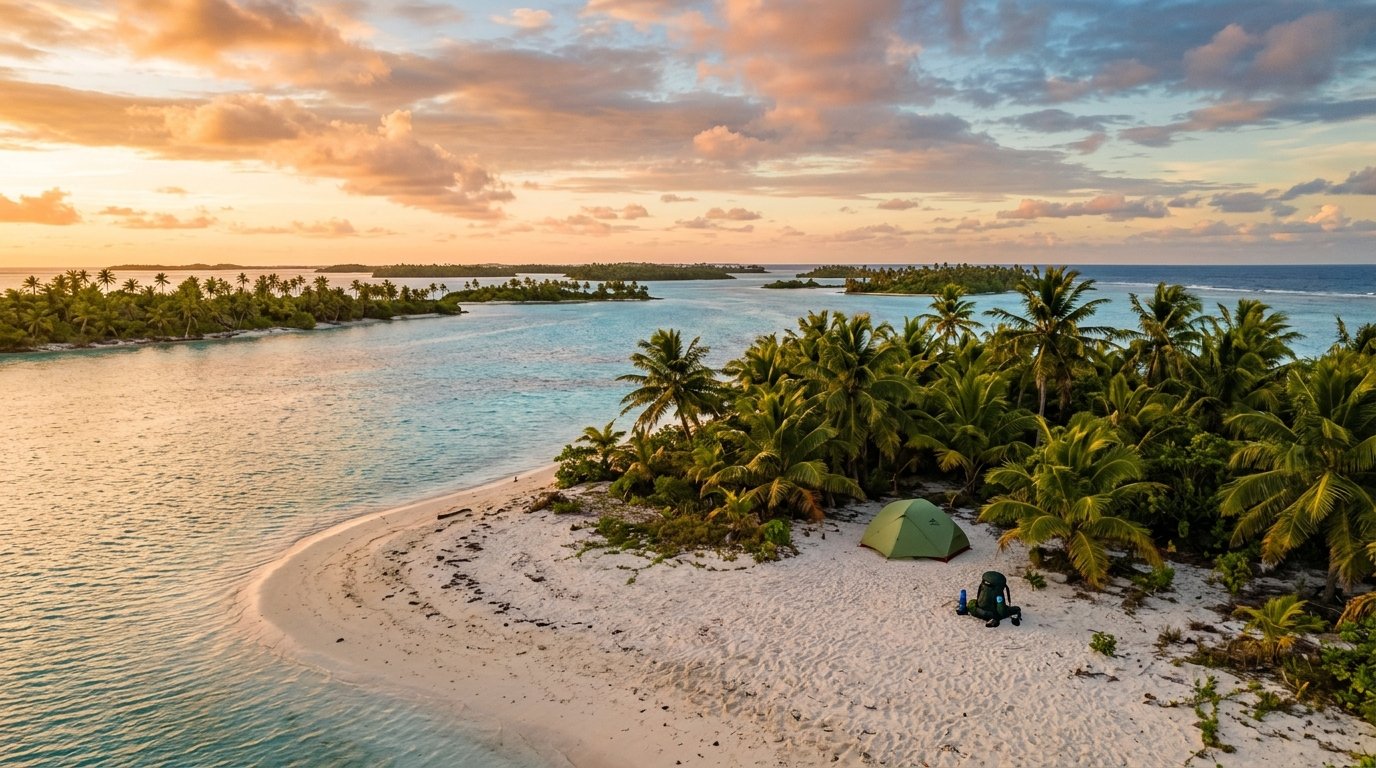
1. 🏕️ The Short Answer
Wild and dispersed camping is strictly prohibited and effectively illegal for tourists in the Marshall Islands. Because virtually 100% of the land is privately owned under a traditional customary system, there is no “public land” available for recreational camping. Travelers cannot simply pitch a tent on a beach or in the jungle without explicit, prior permission from the local landowner or chief.
2. 🌲 Wild & Dispersed Camping Rules
- Legality on Public Land: There is no state-owned public land in the Marshall Islands in the traditional Western sense. Land rights are tightly held by traditional classes (Iroij, Alap, and Dri Jerbal). Therefore, camping anywhere outside of commercial lodging is technically trespassing unless you have secured direct permission.
- Rules and Limits: If you are lucky enough to be invited or granted permission to camp by a local landowner on an outer atoll, the rules—including distance from water or duration of stay—are entirely up to them. You will often be expected to pay a customary community entry fee or offer a respectful gift.
- Enforcement: Because communities are tight-knit and land boundaries are fiercely protected, unauthorized camping is quickly noticed and actively shut down by locals. Do not attempt to stealth camp under any circumstances; it is considered deeply disrespectful to the culture.
3. 🏞️ National Park & Protected Area Rules
- Lack of Formal Parks: The Marshall Islands does not have a Western-style national park system with designated public campgrounds, park rangers, or a centralized camping permit system.
- Bikini and Enewetak Atolls: These former US nuclear test sites are strictly off-limits to independent travelers and land camping due to residual radiation. You can only visit via heavily regulated, expensive liveaboard dive expeditions.
- Conservation Atolls: Places like Jaluit Atoll are protected environmental areas, but they do not have designated campsites. Any overnight stays must be arranged through local guesthouses or by checking in with the local mayor’s office.
4. 🚐 Van Life & Overnight Vehicle Sleeping
- No RV Infrastructure: “Van life” is nonexistent in the Marshall Islands. There are no campervan rentals, no RV parks, and no designated overnight rest areas (aires).
- Vehicle Sleeping Legality: Sleeping overnight in a standard rental car by the roadsides or in public car parks is not permitted. Almost all land adjacent to the roads on the main atoll of Majuro is privately owned, meaning roadside parking often encroaches directly on someone’s property.
- Practical Limitations: Majuro only has one main 30-mile paved road, and Ebeye is incredibly dense and mostly pedestrian-oriented. The geography and lack of road networks simply do not support vehicle-based travel.
5. 🔥 Campfires & Practical Restrictions
- Campfires: Open fires are not governed by national camping permits but by the local landowner’s discretion. If permitted to camp by a local family, always ask before lighting a fire, and keep it below the high-tide line on the beach to avoid damaging property.
- Military Zones: Kwajalein Atoll is home to an active US Army Base (USAKA). It is strictly off-limits to tourists without an approved military sponsor. You cannot camp or even disembark the plane here freely.
- Unexploded Ordnance (UXO): Several outer islands still contain unexploded bombs and relics from World War II. Digging deep fire pits or wandering off marked paths on remote atolls without a local guide can be highly dangerous.
6. 🔗 Official Sources & Links
Because tourism infrastructure is minimal, you must coordinate any remote island visits or land access directly with the official tourism board or local municipal governments:
- Marshall Islands Office of Commerce, Investment & Tourism (OCIT) – The official tourism authority for the country.
- U.S. Embassy in the Marshall Islands – Useful for safety advisories, military base restrictions, and regional travel updates.
Disclaimer: Land-use laws, customary rules, and tourism regulations in the Marshall Islands are highly localized and subject to change. Always verify current restrictions with the official tourism board or local landowners before planning your trip.

Adrenaline junkie with a passion for exploring off-the-beaten-path destinations and finding unique ways to stay active. Expect stunning scenery, challenging workouts, awesome travel tips and a whole lot of fun. Let’s get sweaty and explore the world together!