HomeDestinationsSwimming Through Wadi Al Hoqain: A Complete Guide
286
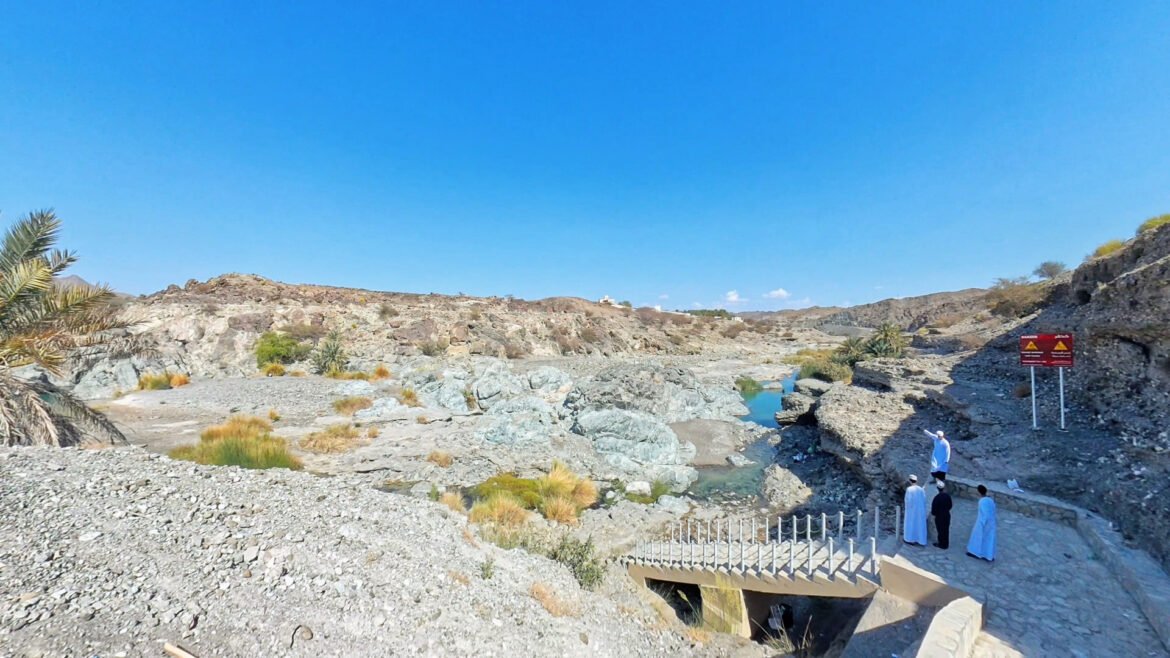
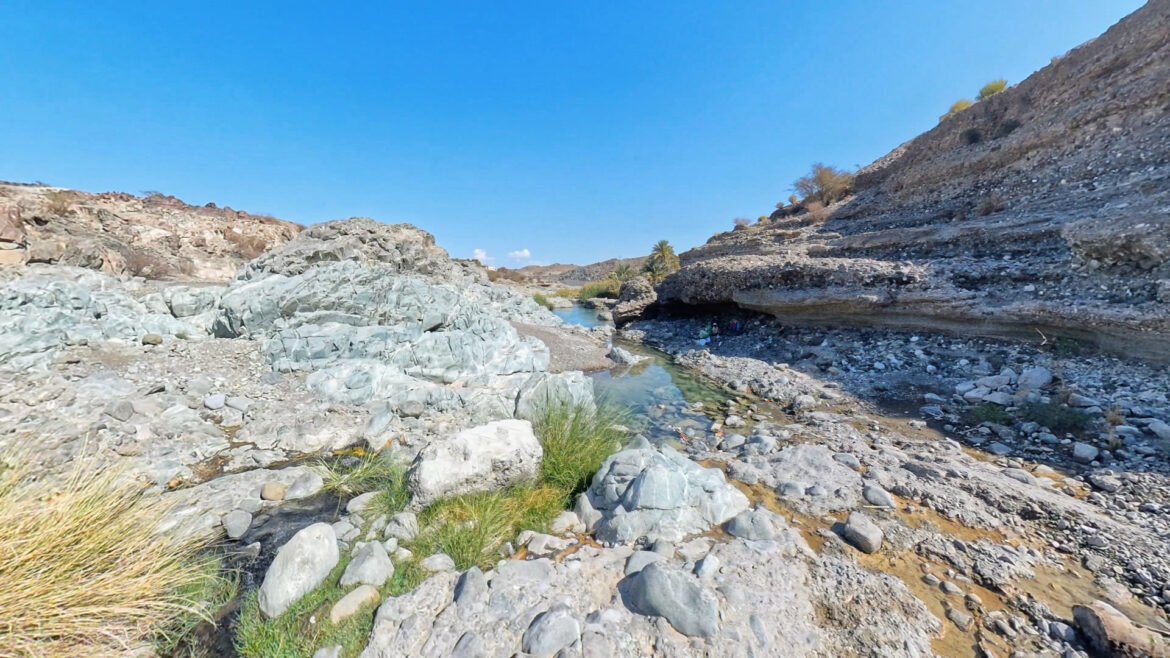
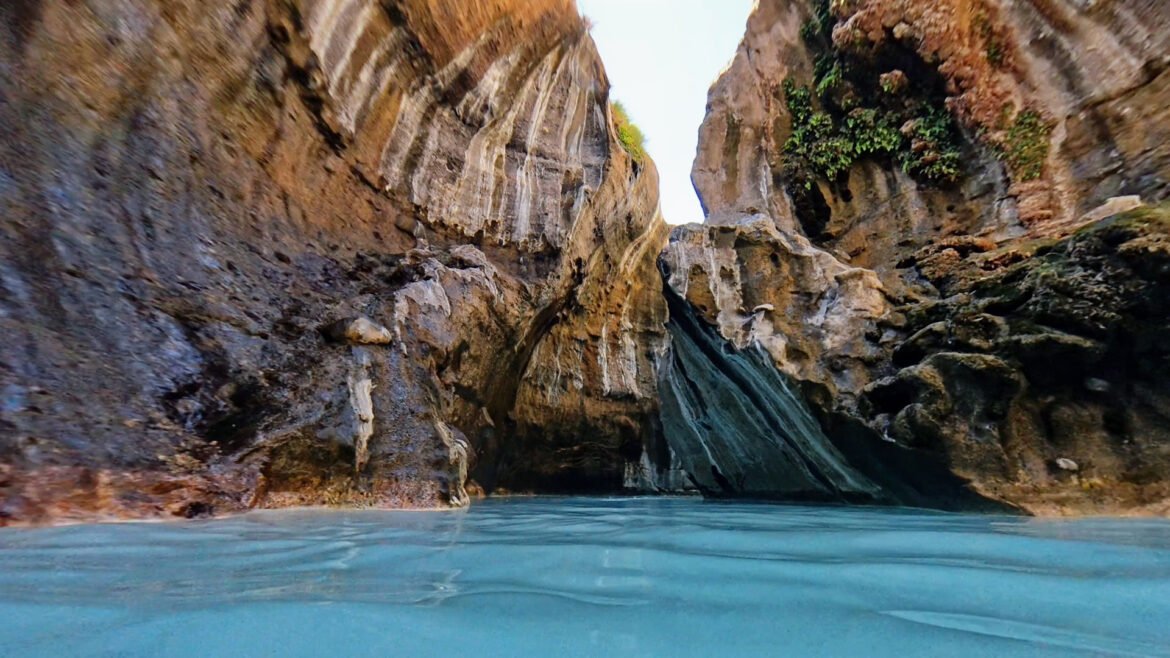
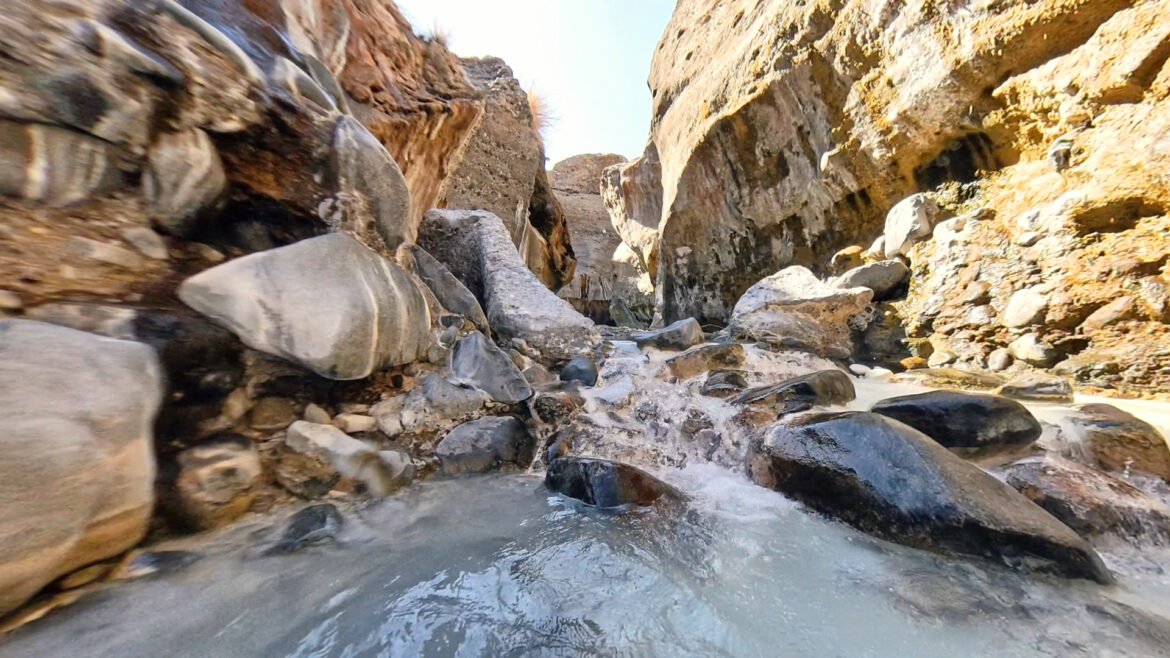
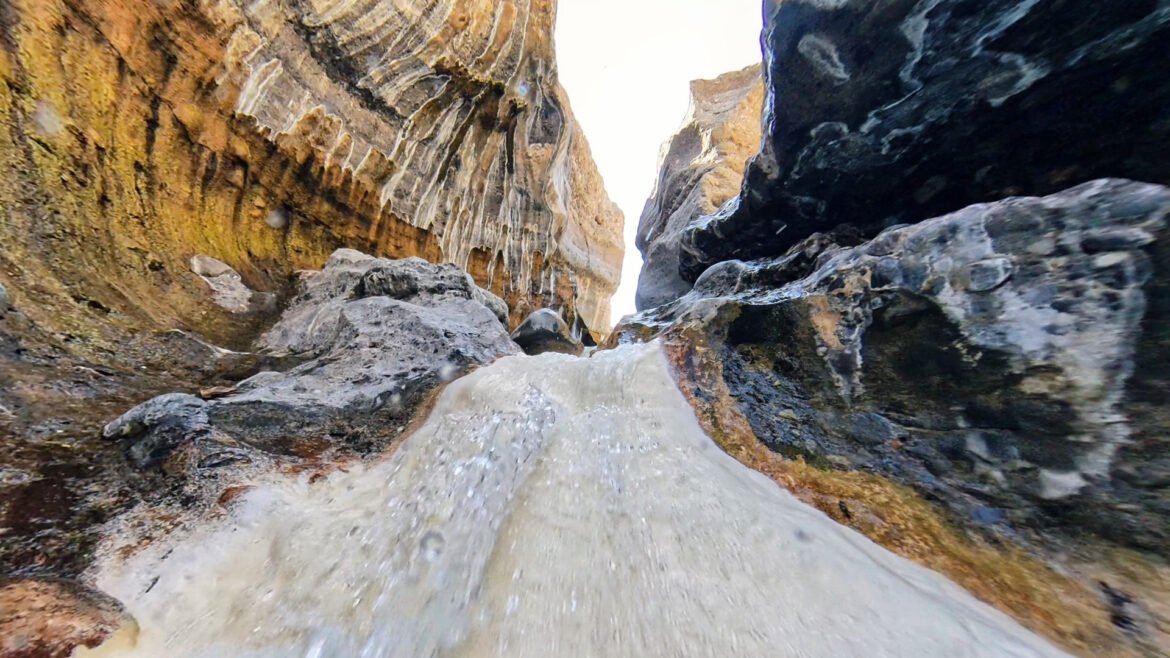
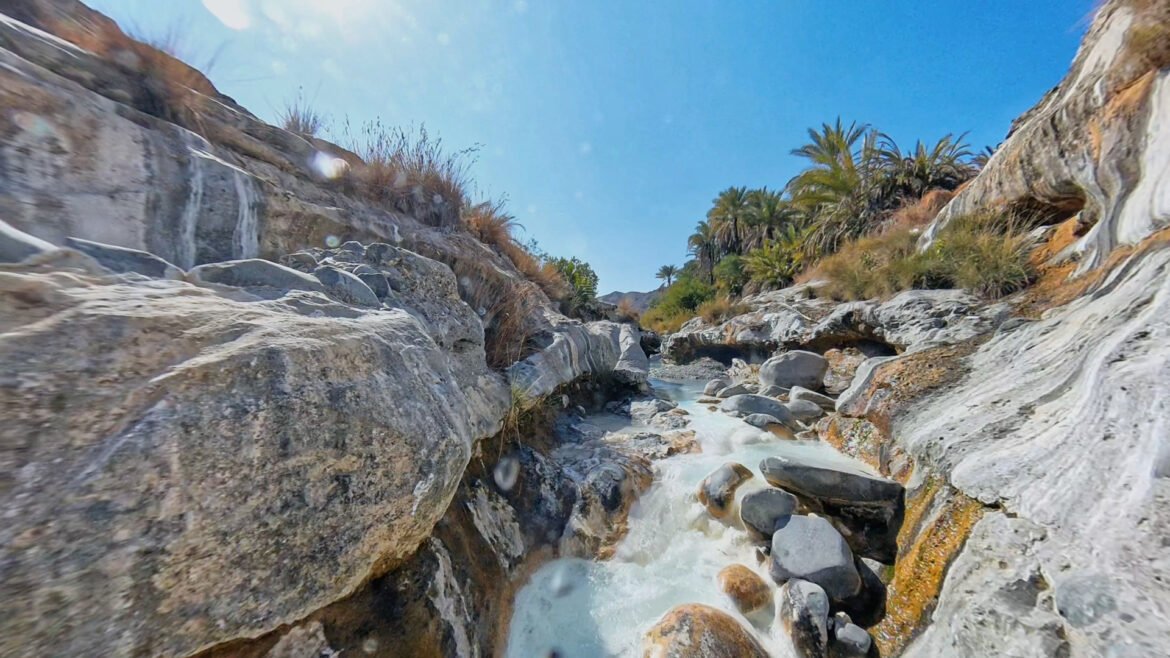
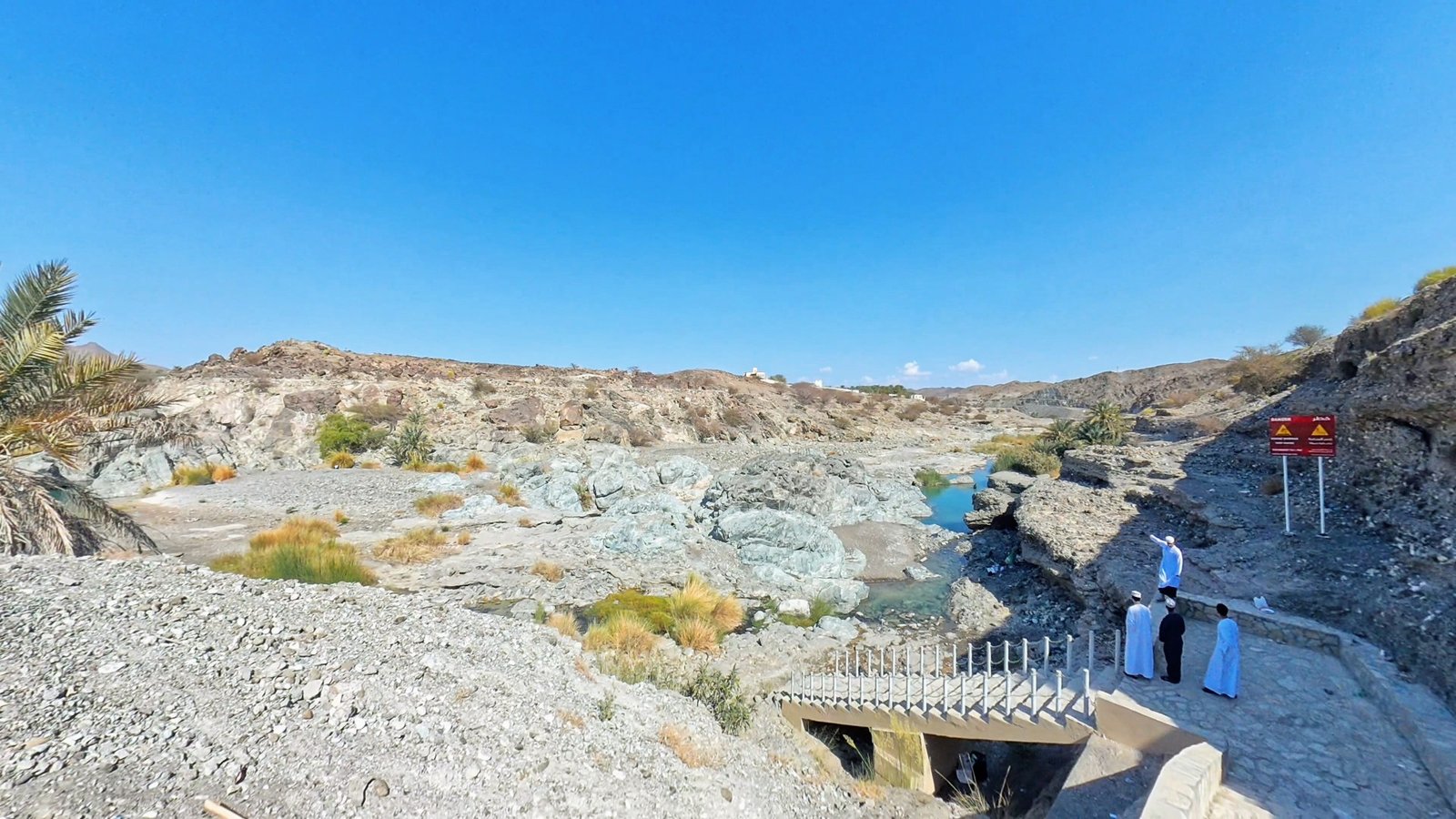
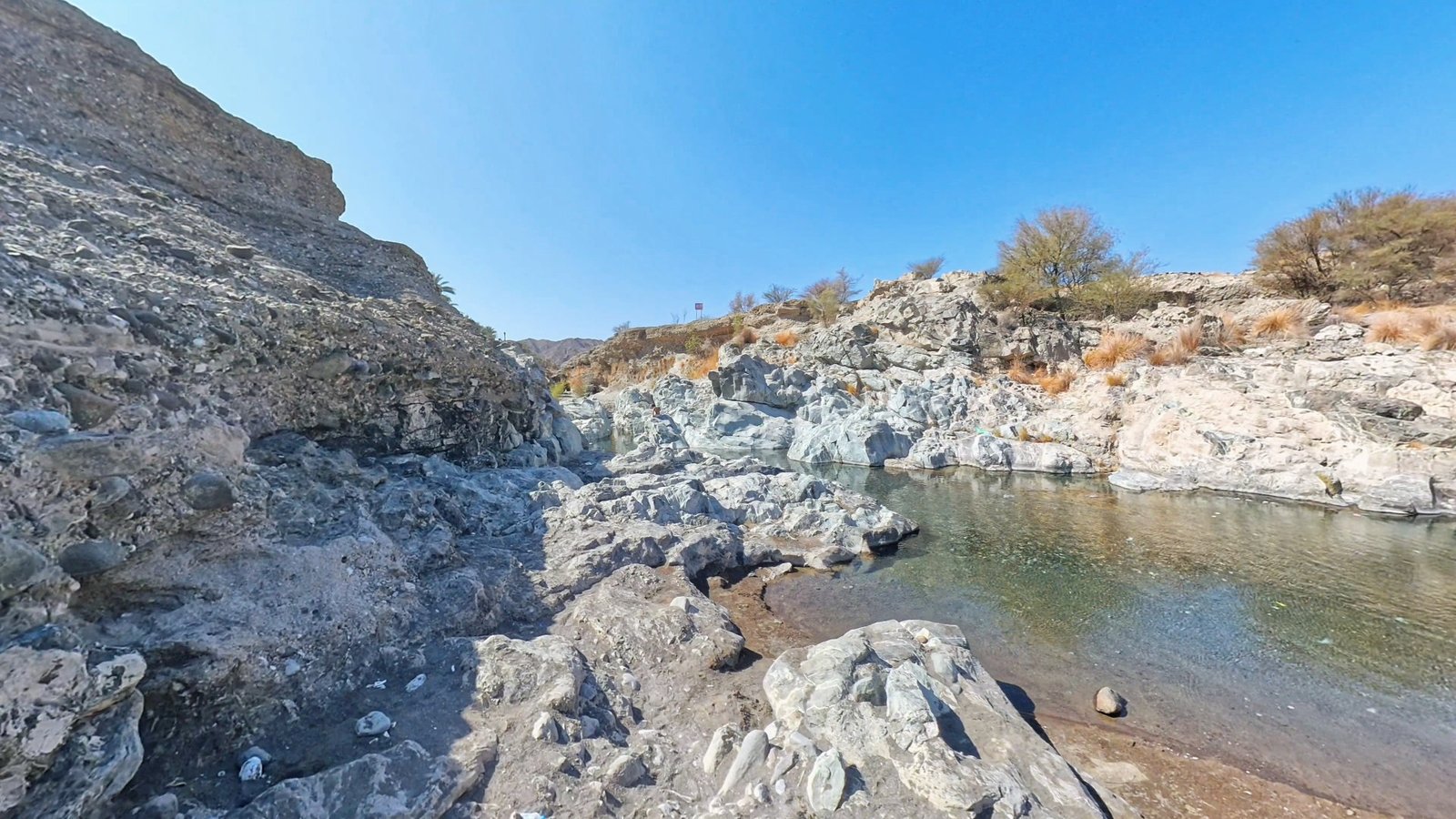
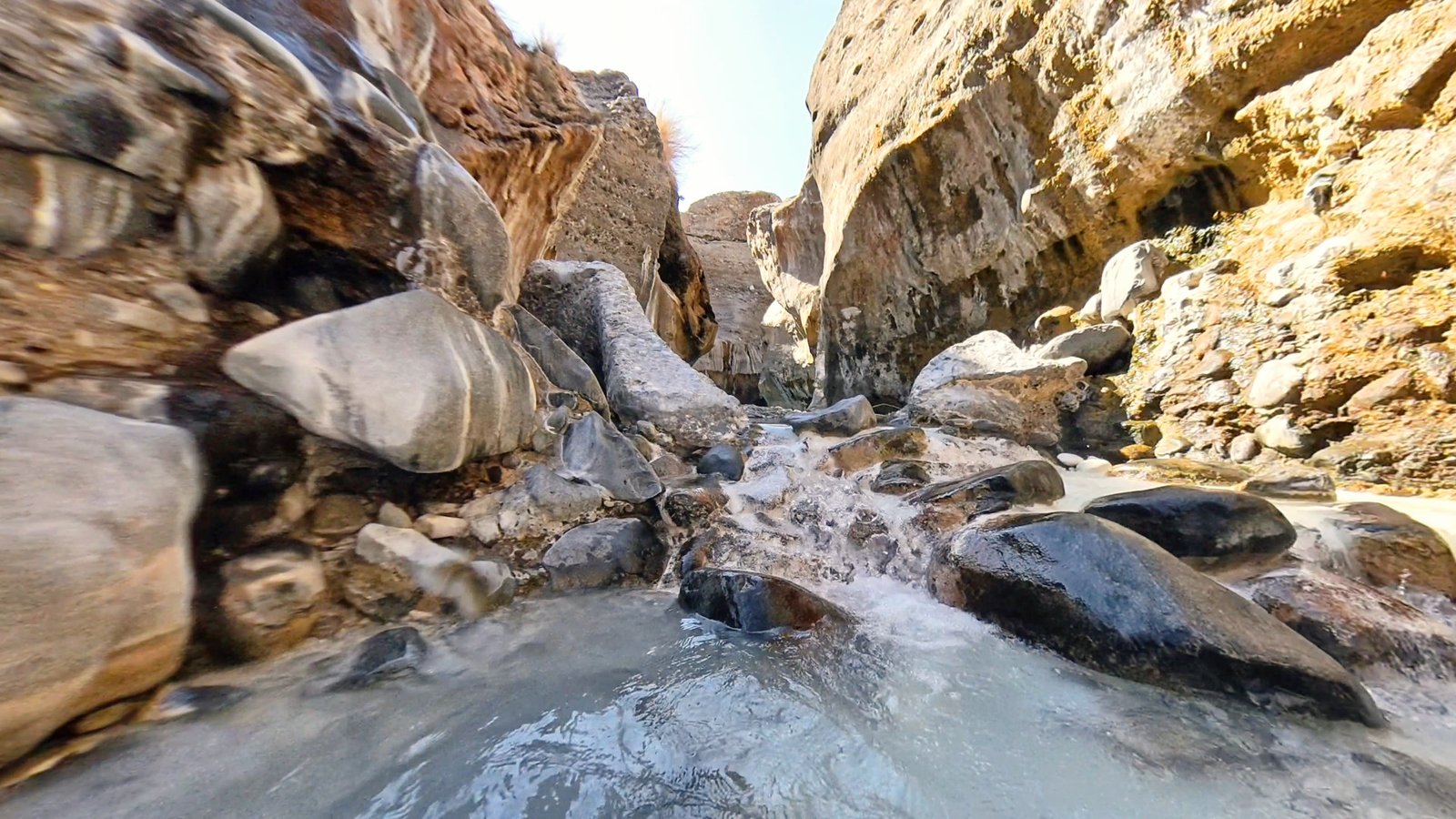
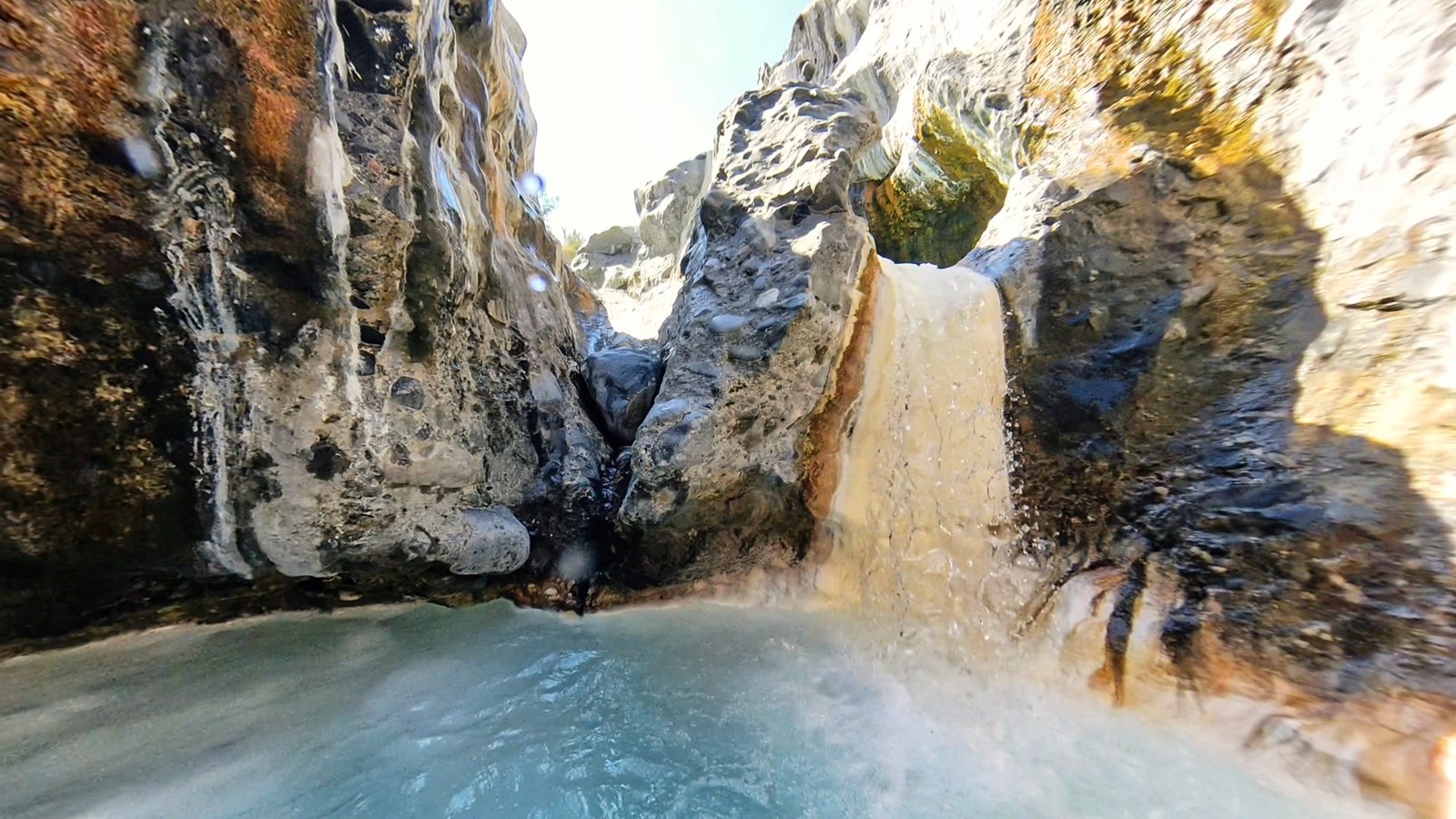
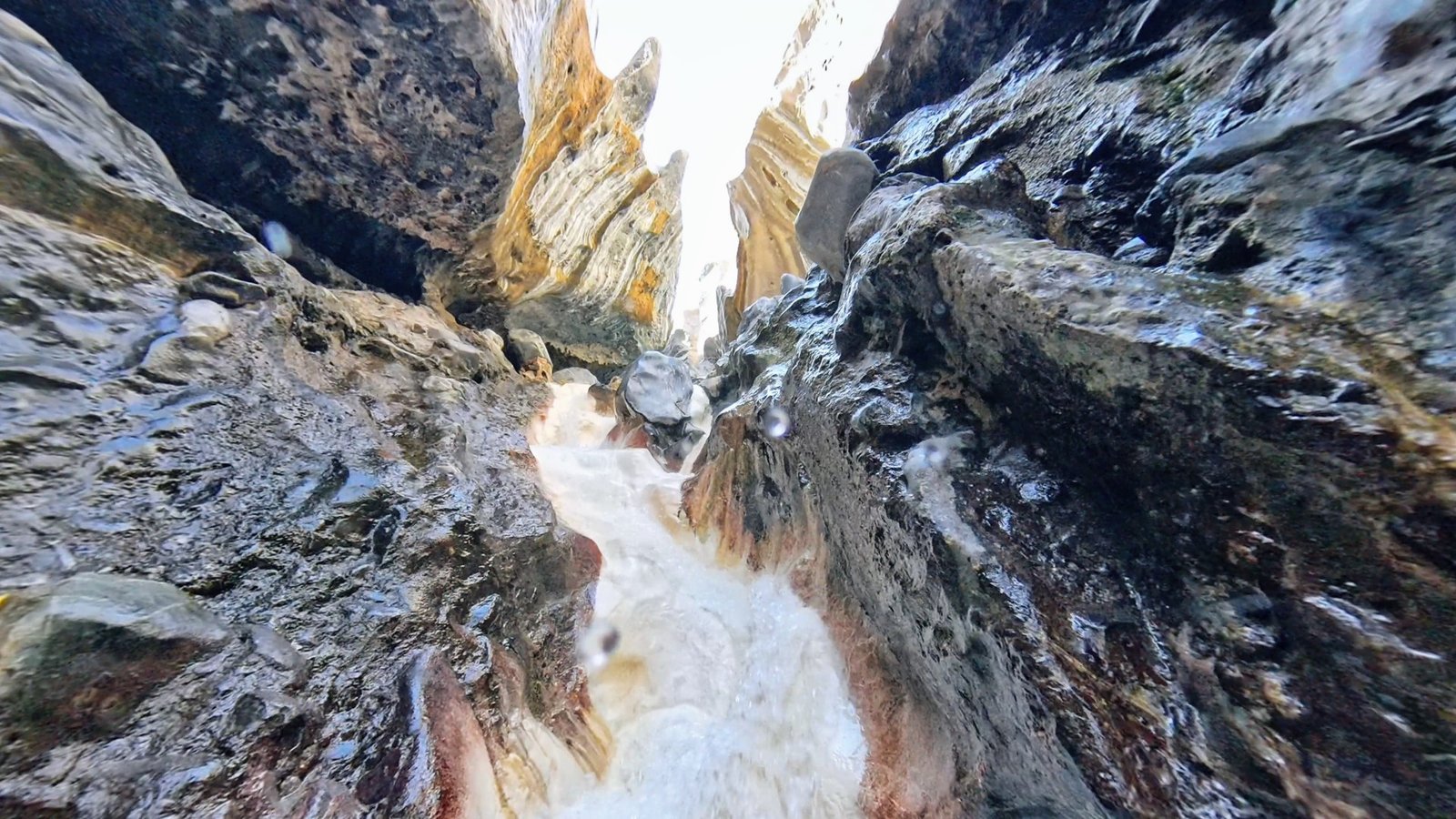
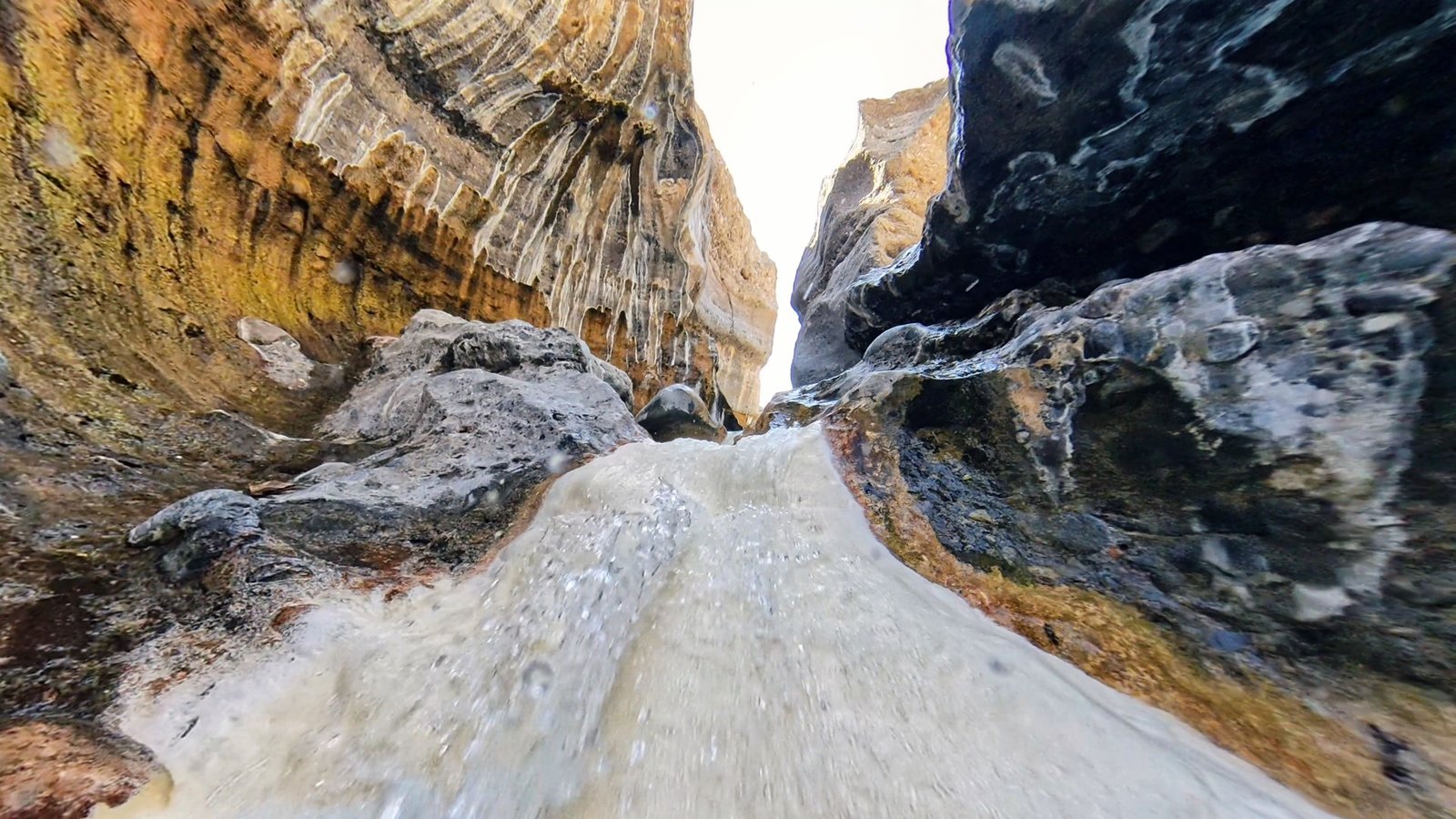
There is a wall blocking the way. Not a sign, not a gate — just a solid rock face with a small waterfall running through it. Most people who make the drive to Wadi Al Hoqain will stand in front of that wall, look around, and head back to their car thinking they have seen everything. I almost did the same. It took me a few minutes of searching before I spotted a small path climbing over the right side. The moment I crossed it, I understood why this place is one of Oman’s best kept secrets.
An Empty Canyon to Yourself
When I visited, there was not a single other person in sight past that entrance wall. No voices, no footsteps, nothing. Just canyon, water, and silence. Wadi Al Hoqain sits well outside the standard tourist loop that connects Wadi Shab and Wadi Bani Khalid, and that distance keeps the crowds away. On a weekday especially, there is a real chance you will have the entire place to yourself. For me, that solitude was one of the most memorable parts of the experience — though it also meant that if anything had gone wrong, I was entirely on my own.
How to Get There
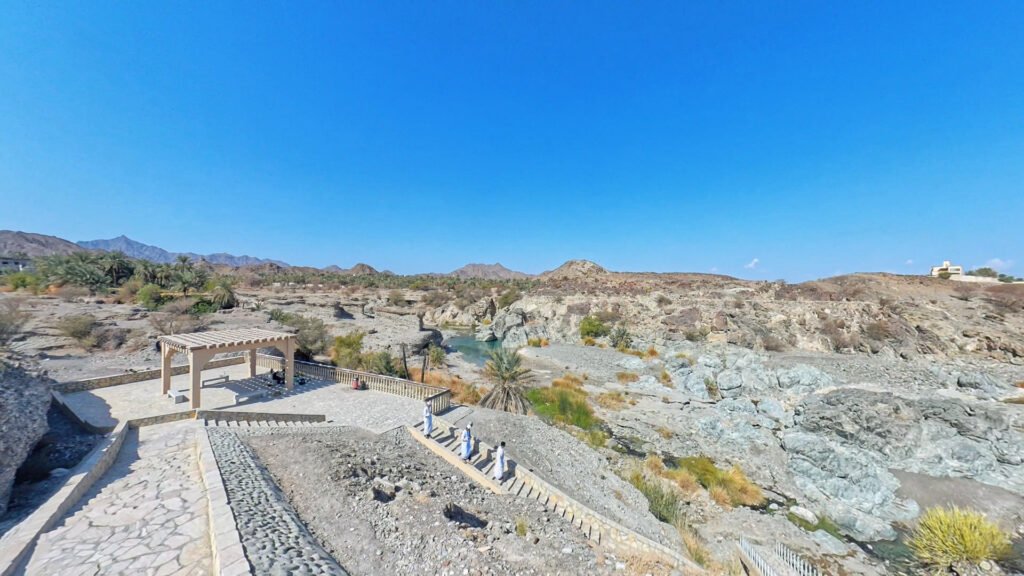
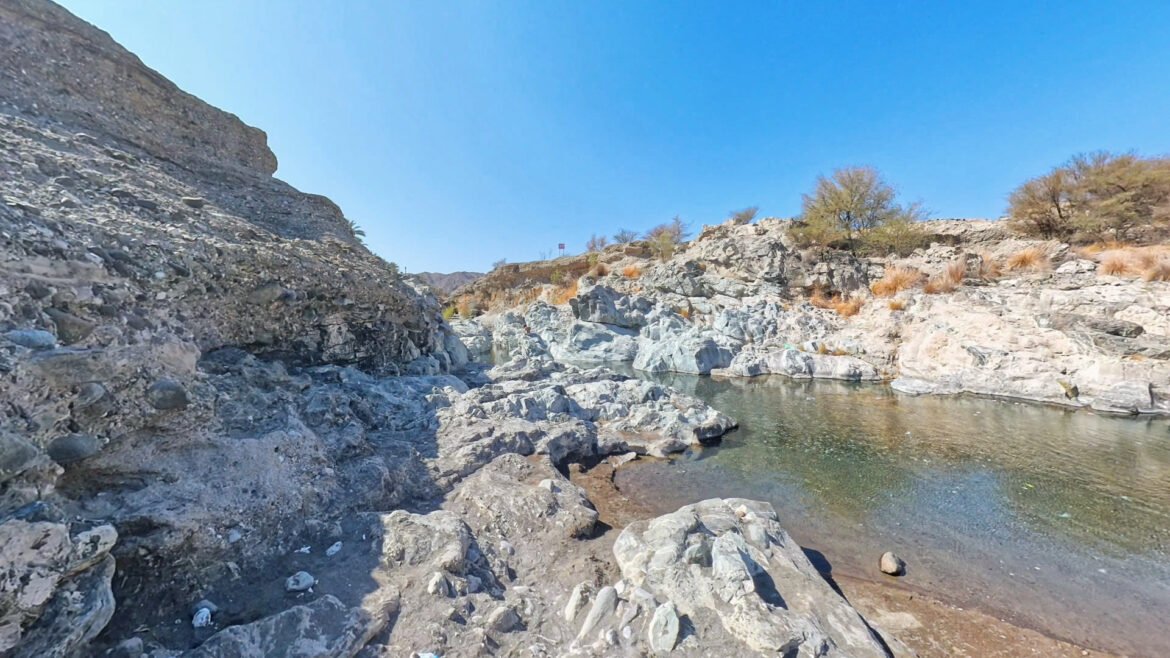
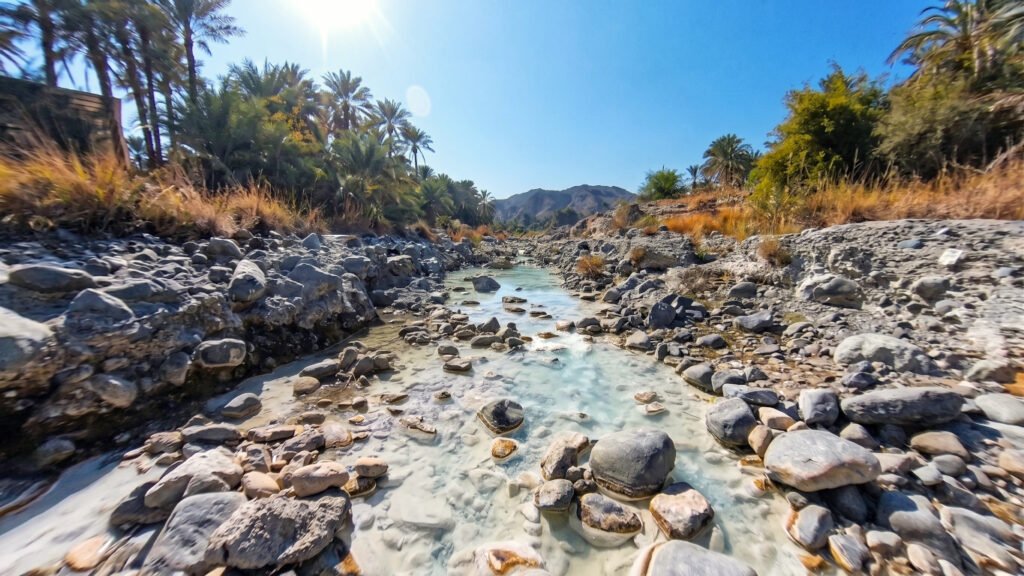
Wadi Al Hoqain is in the Al Batinah region, near Rustaq, about an hour and a half to two hours from Muscat. The roads are fully paved to the main entrance, so a regular car is fine. When you park, there is a small shop nearby — pick up any last-minute water or snacks here. Walk down the stairs from the car park, turn left, and wade through some shallow water that reaches about waist height. You will then hit that rock wall. Do not stop there. Look right, find the path, climb over, and keep going.
The Water: Where Everything Changes
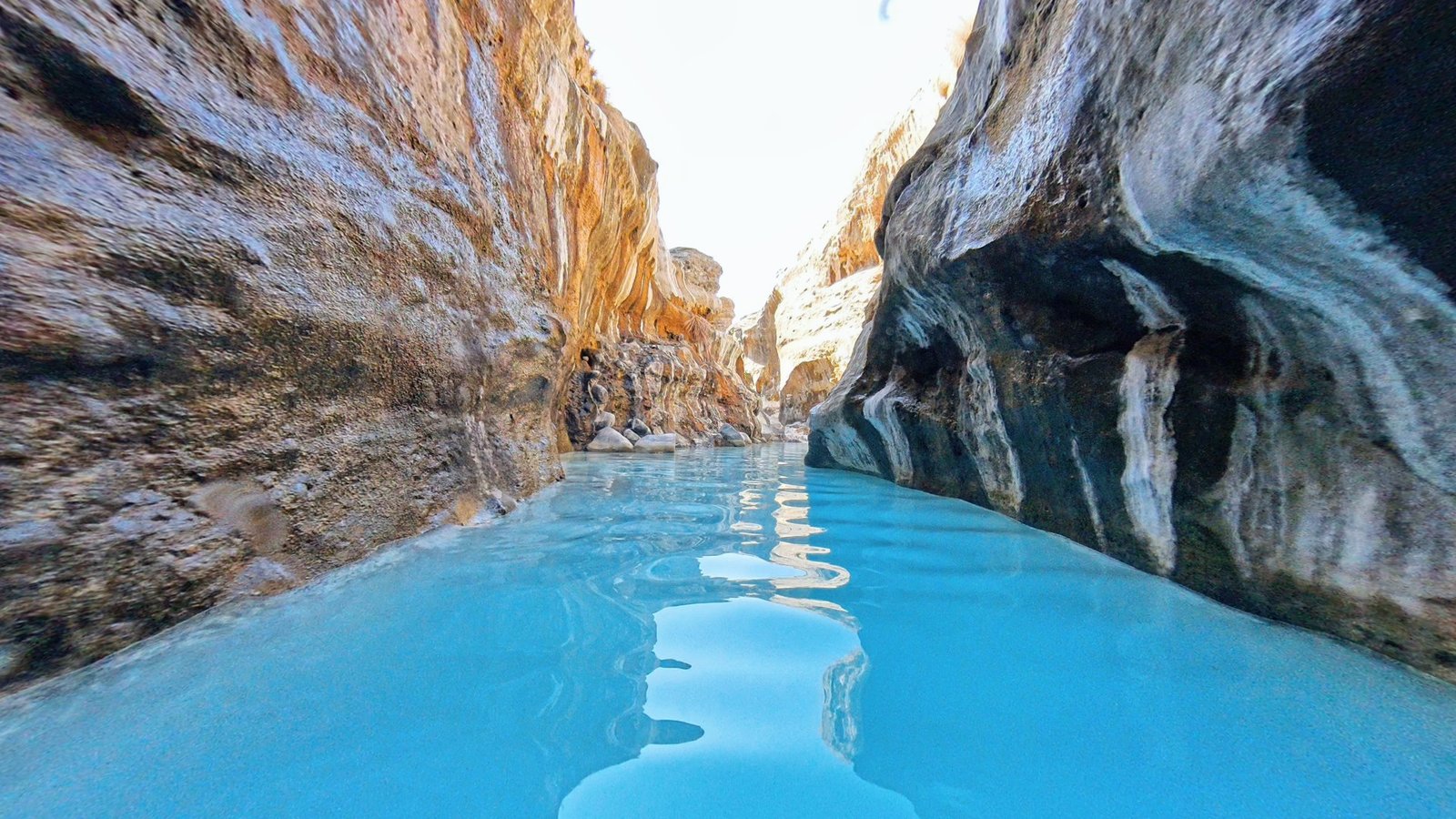
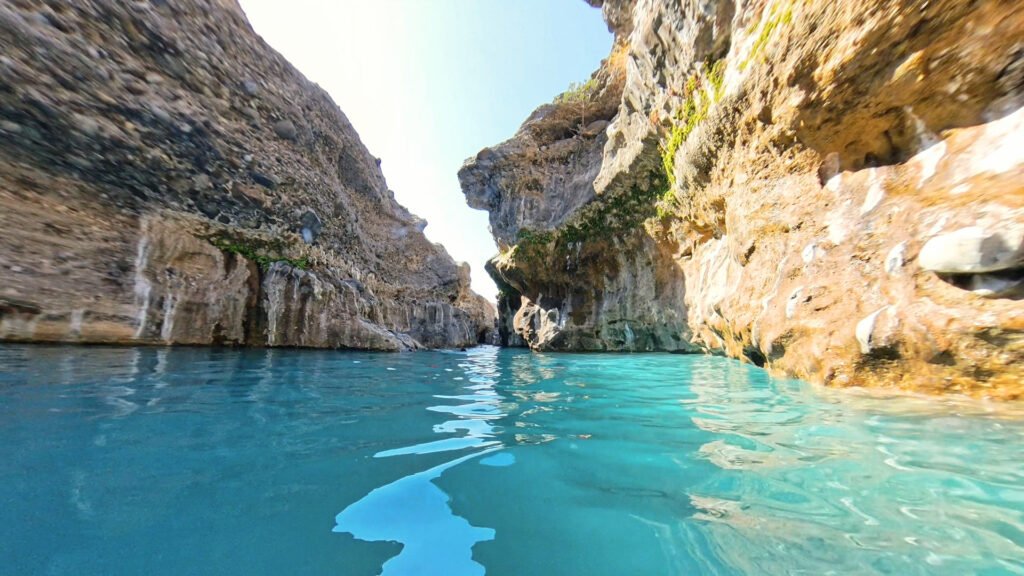
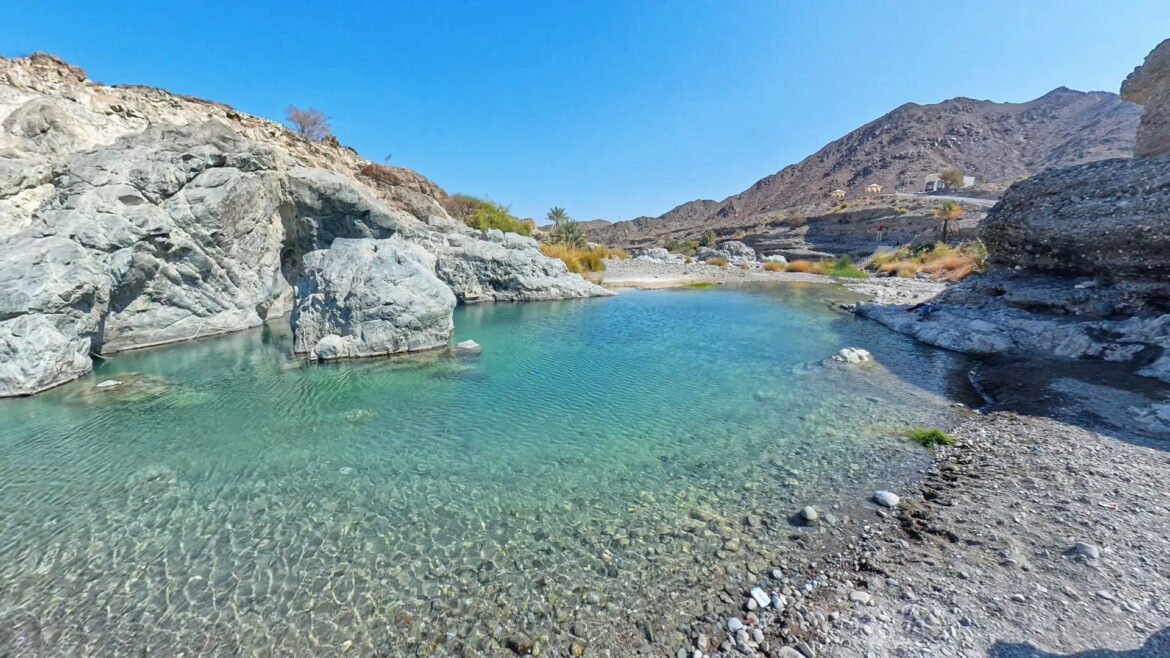
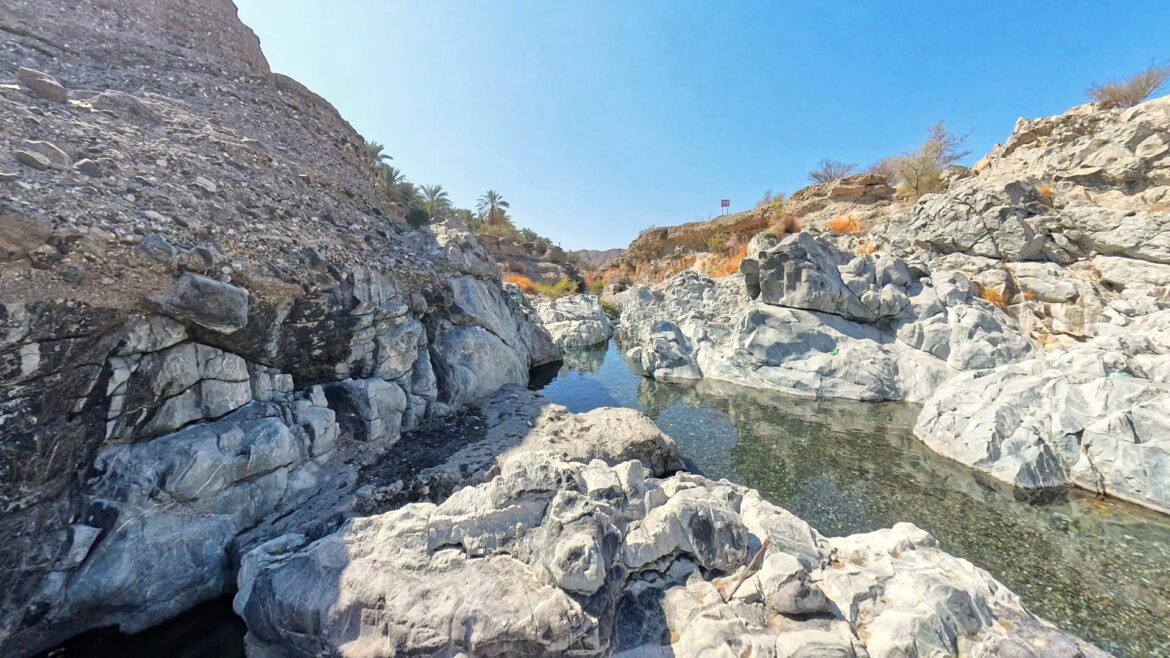
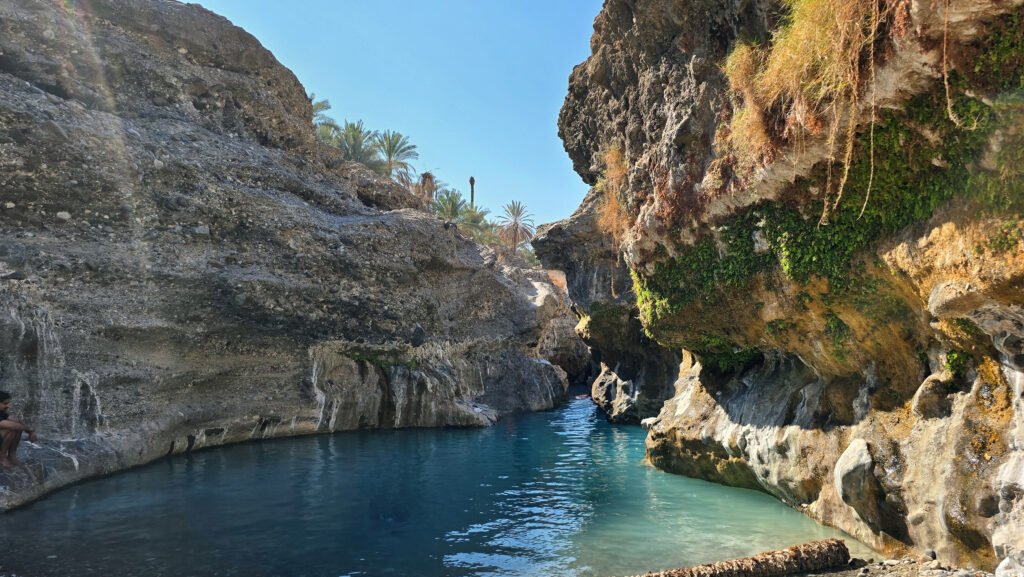
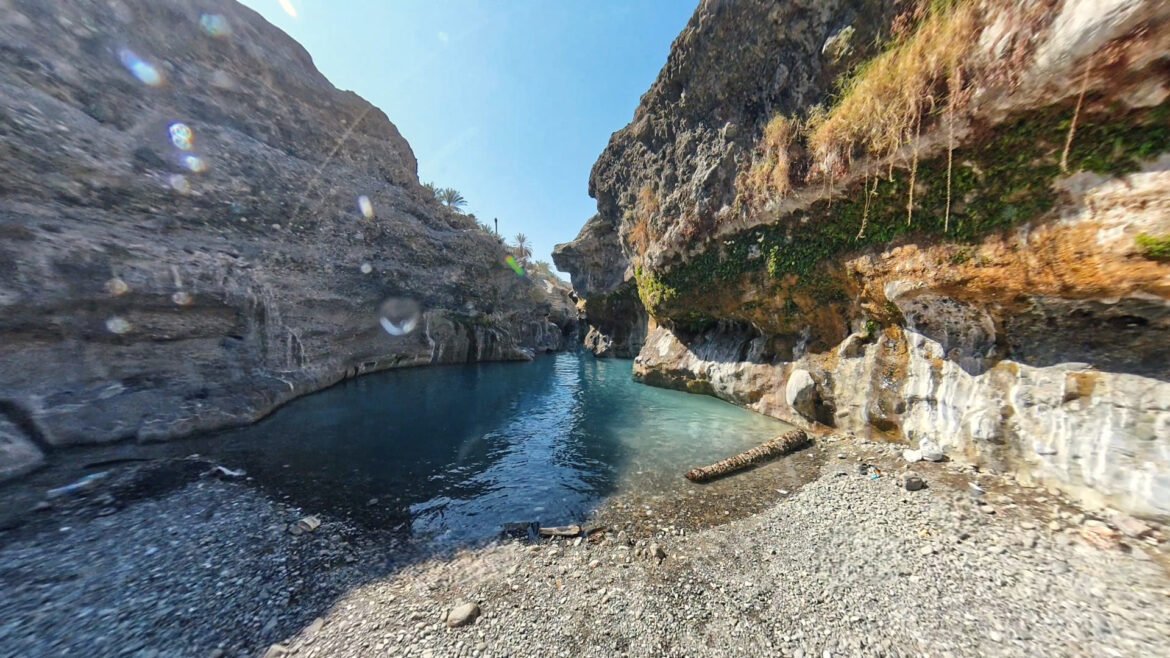
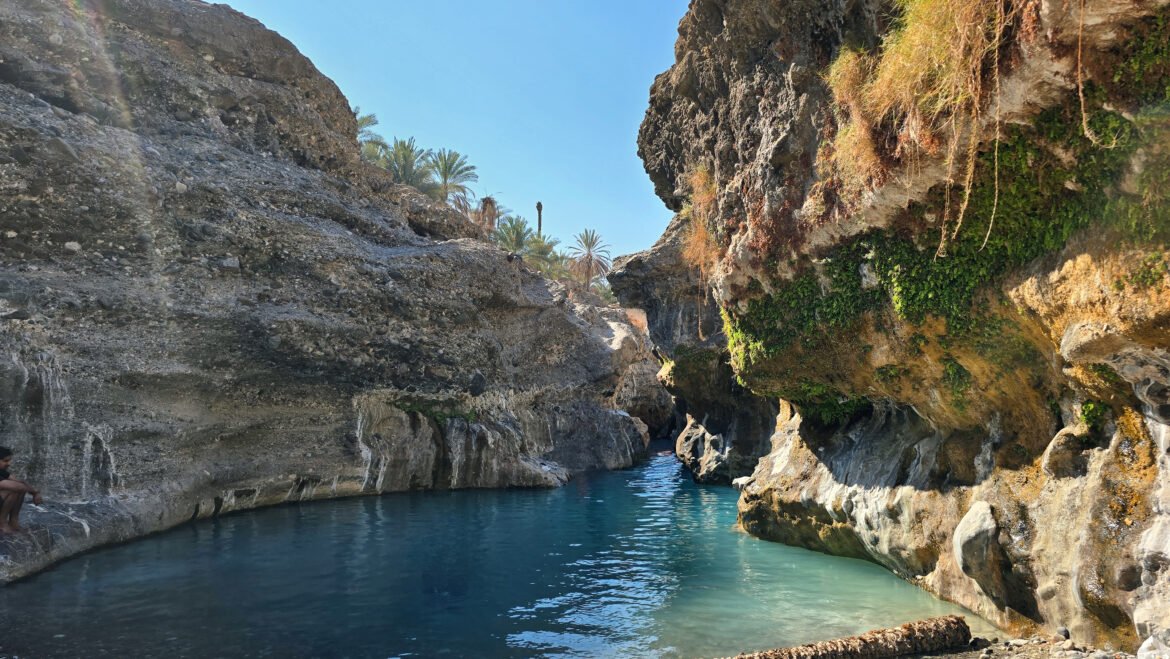
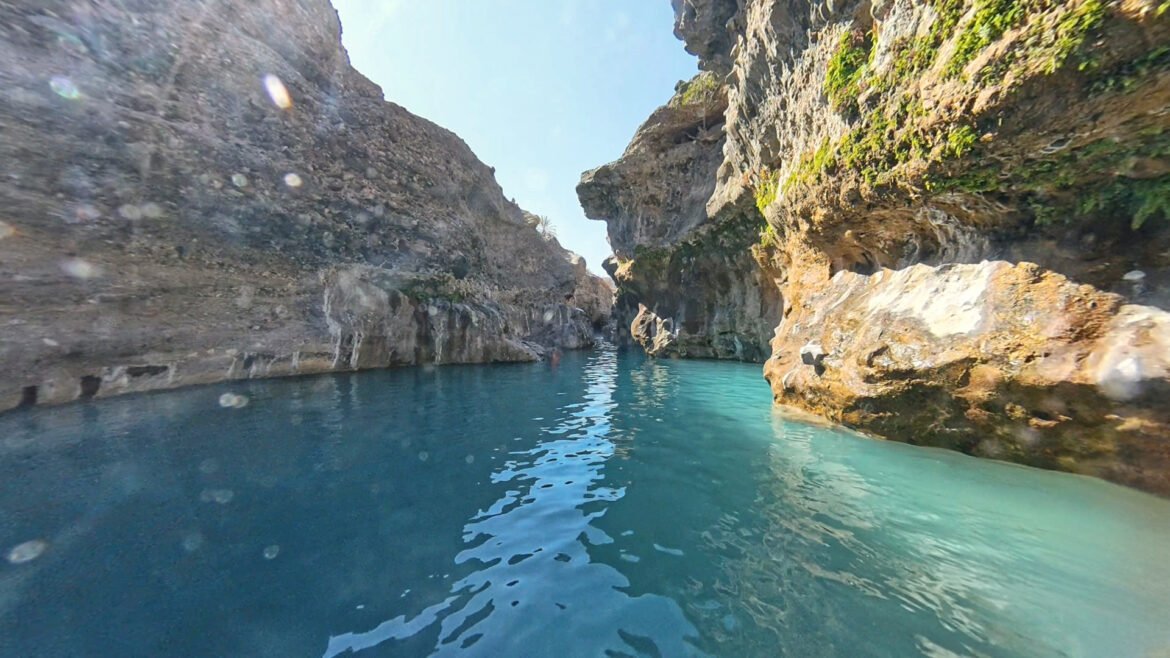
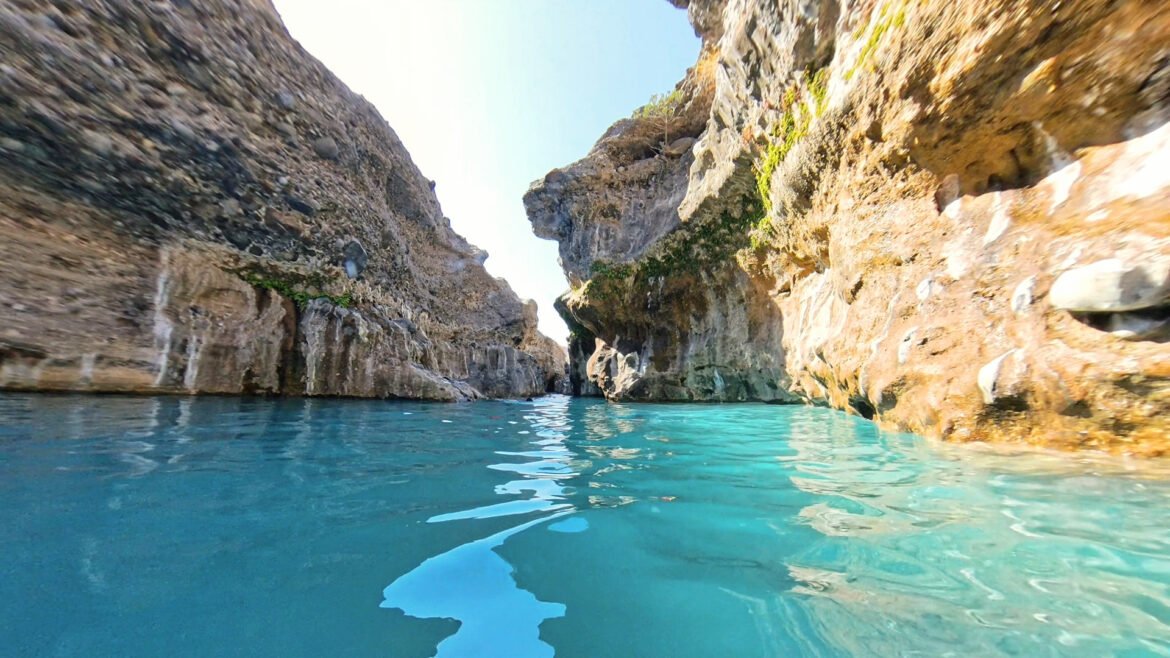
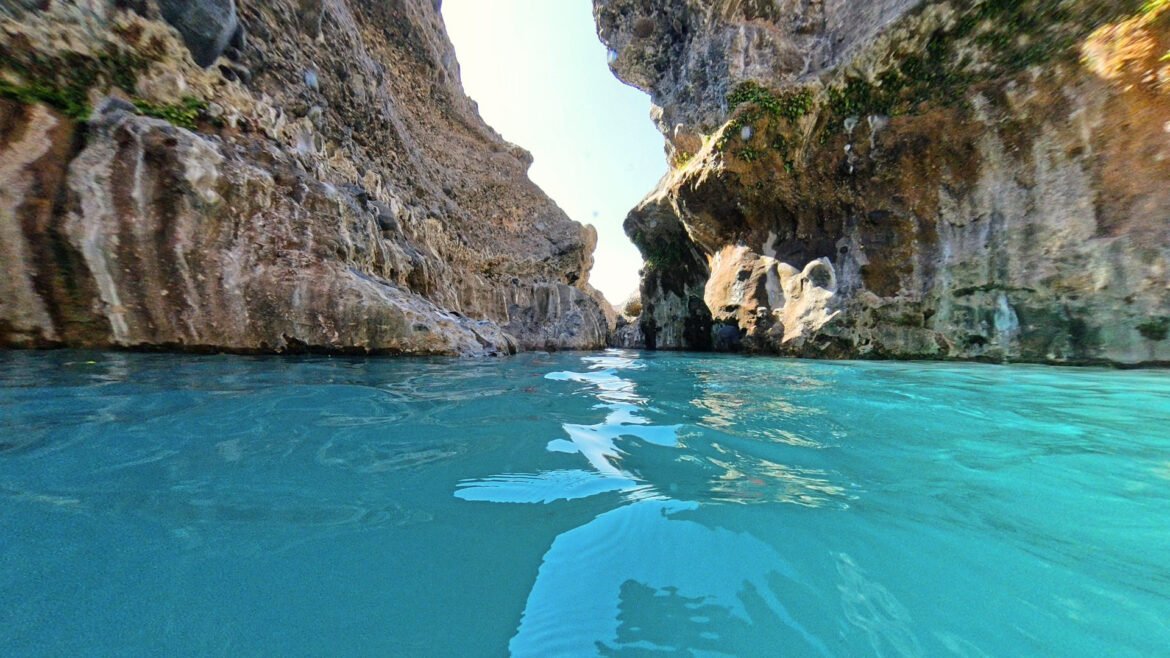
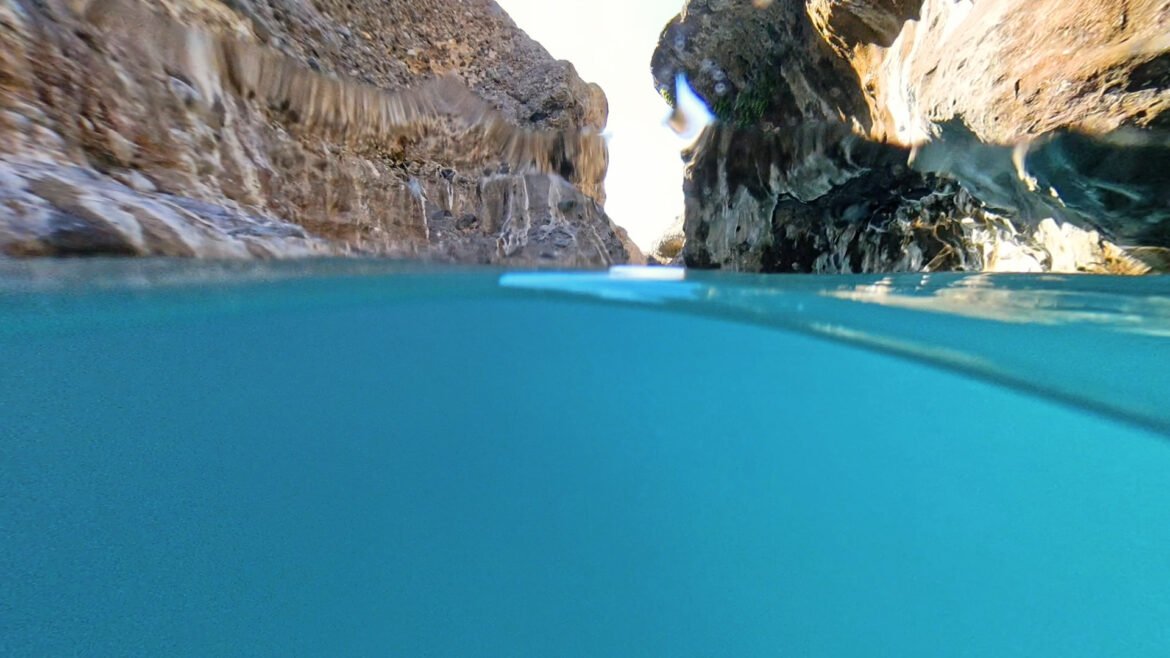
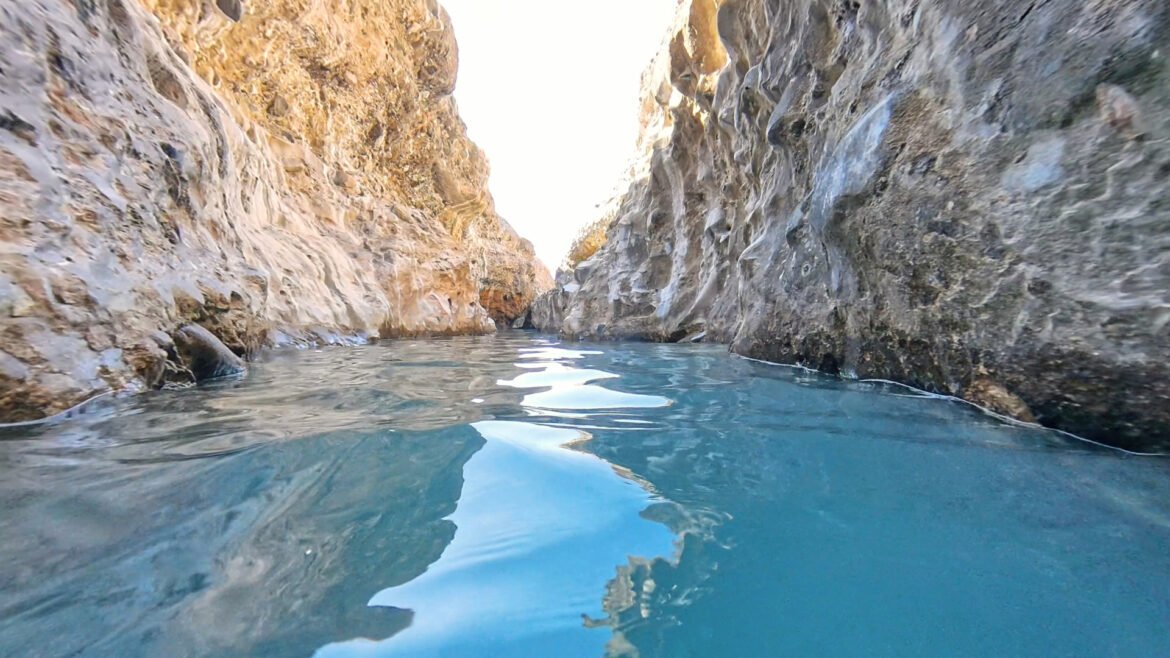
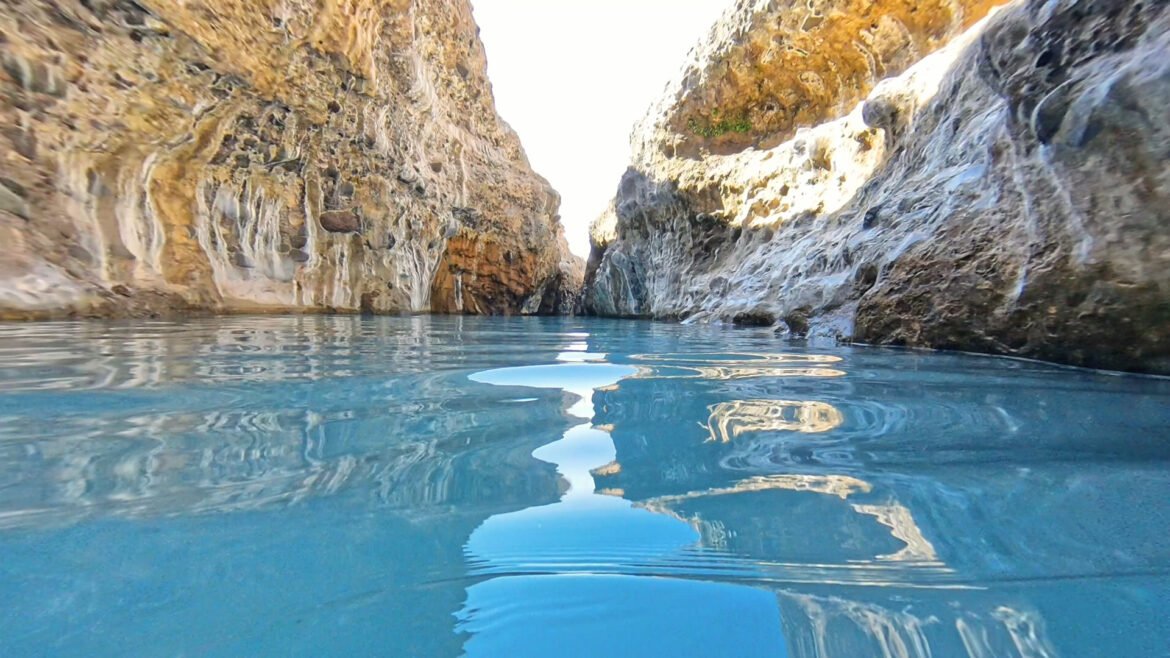
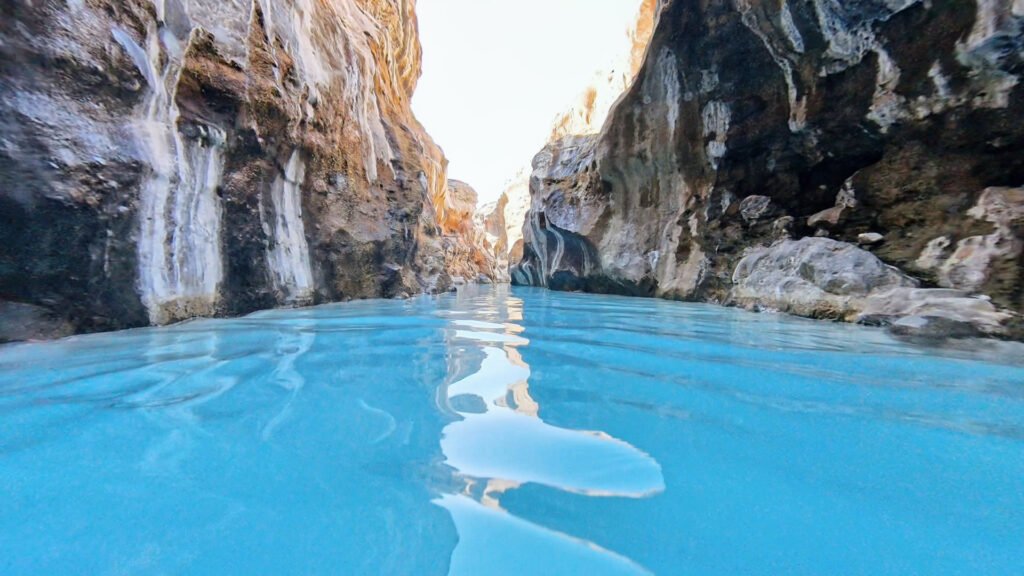
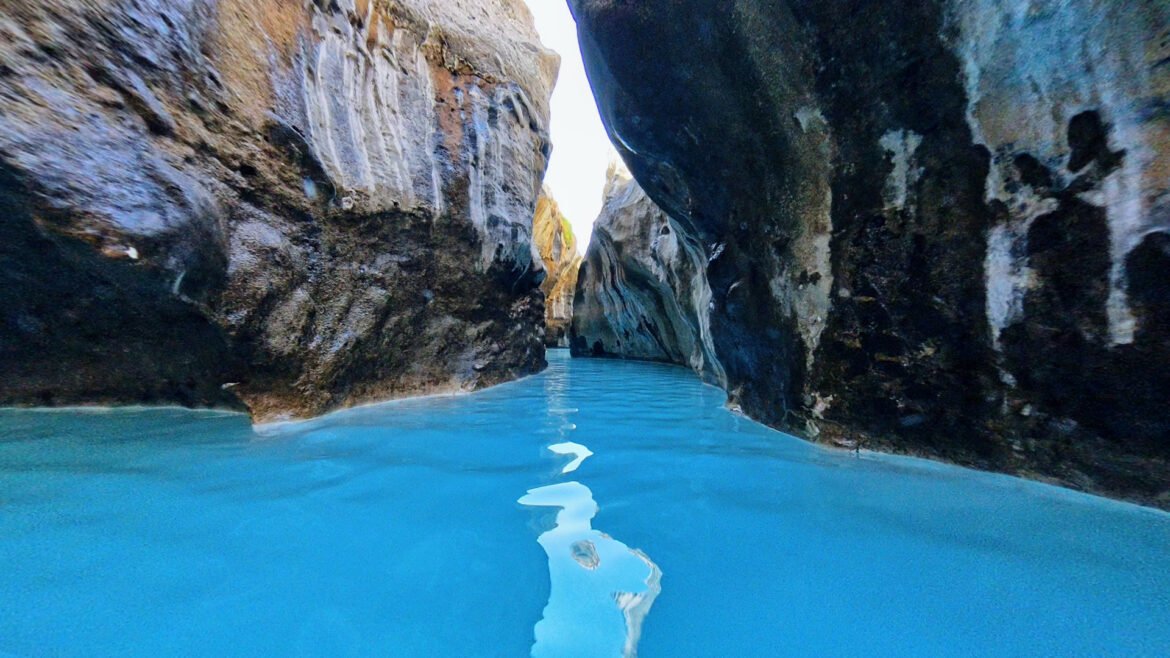
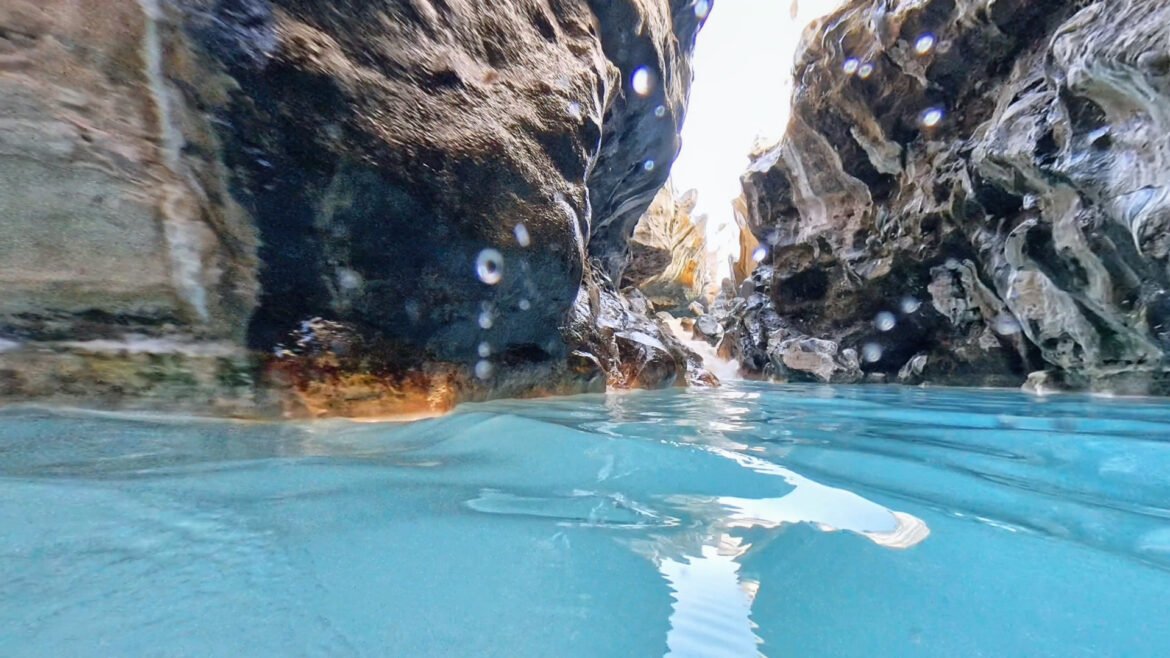
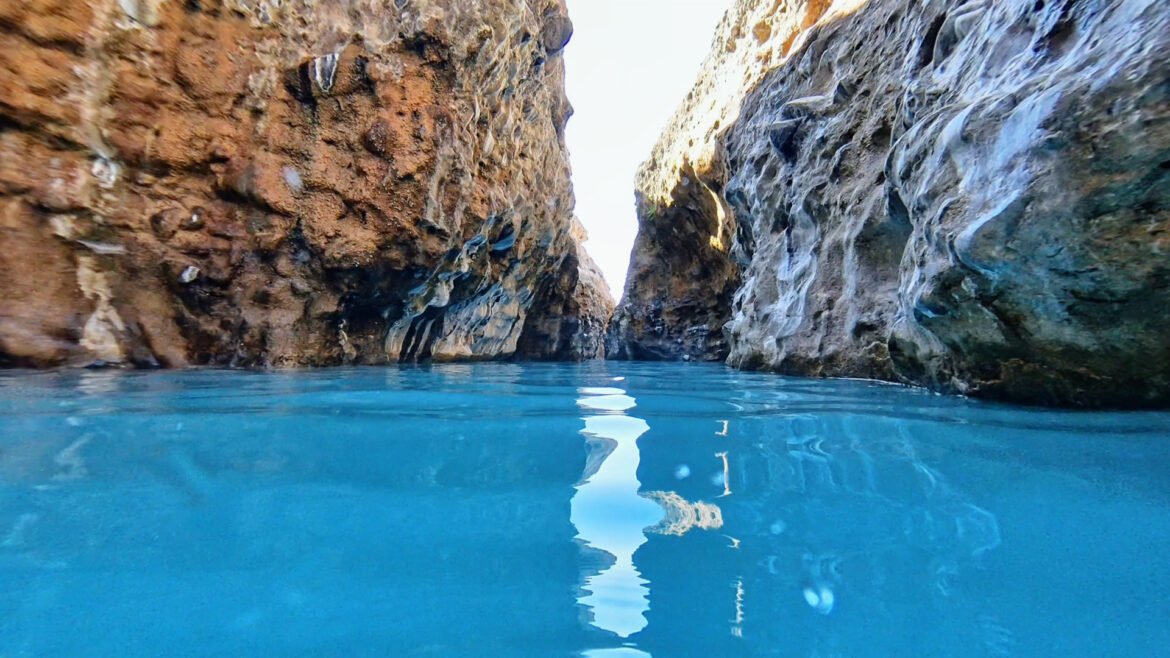
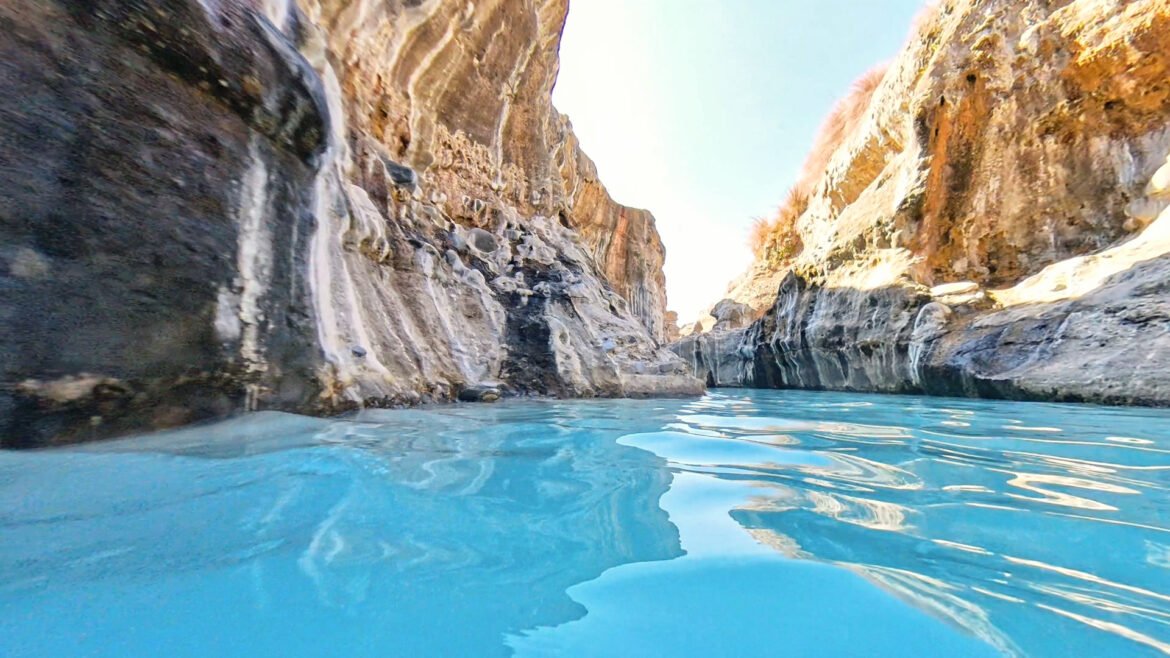
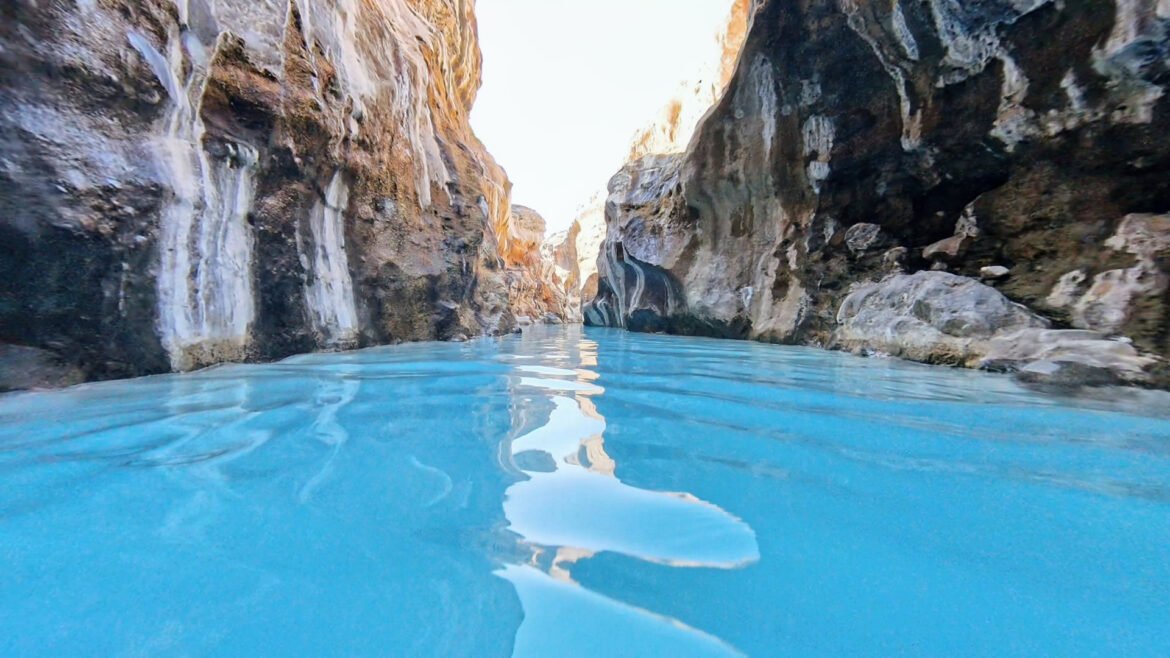
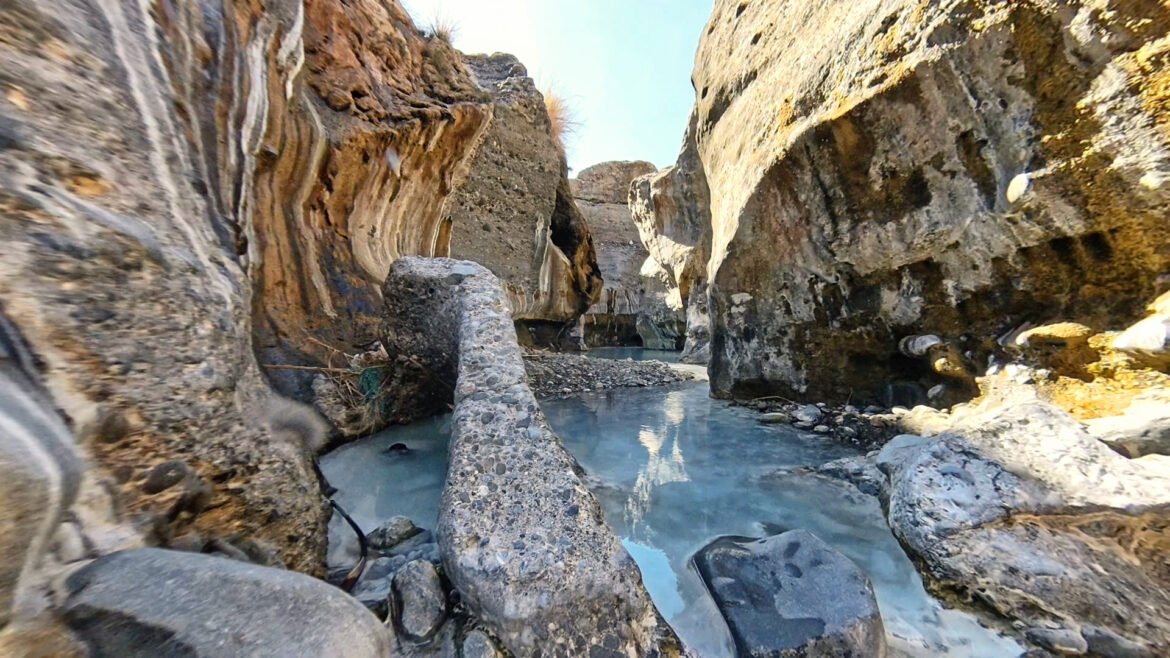
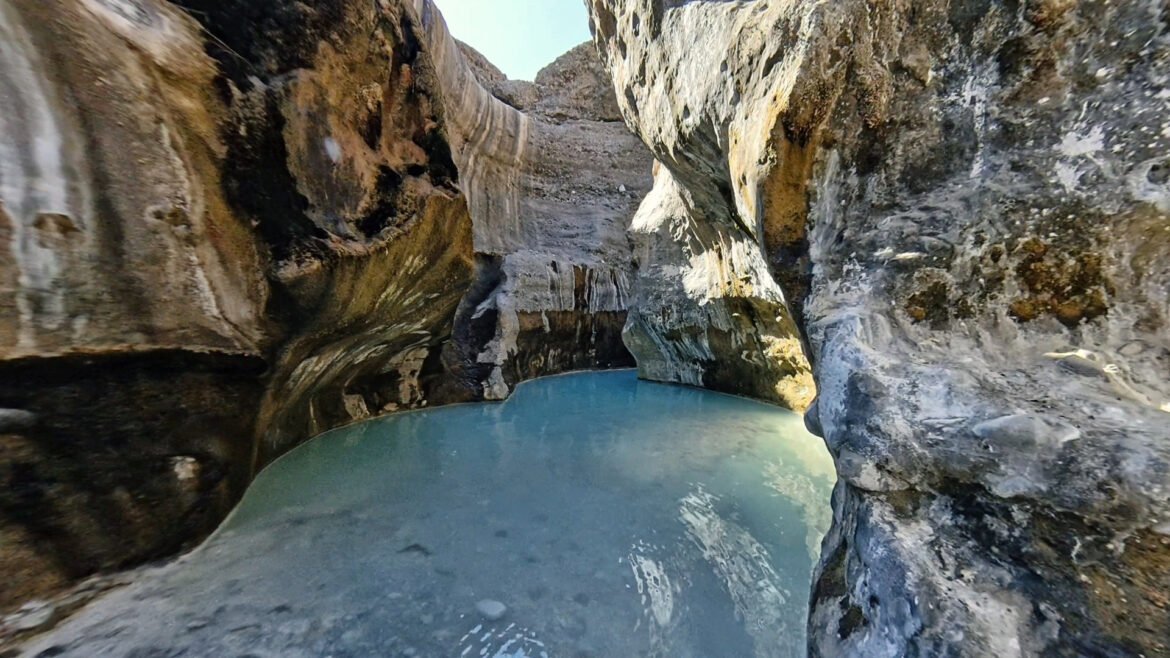
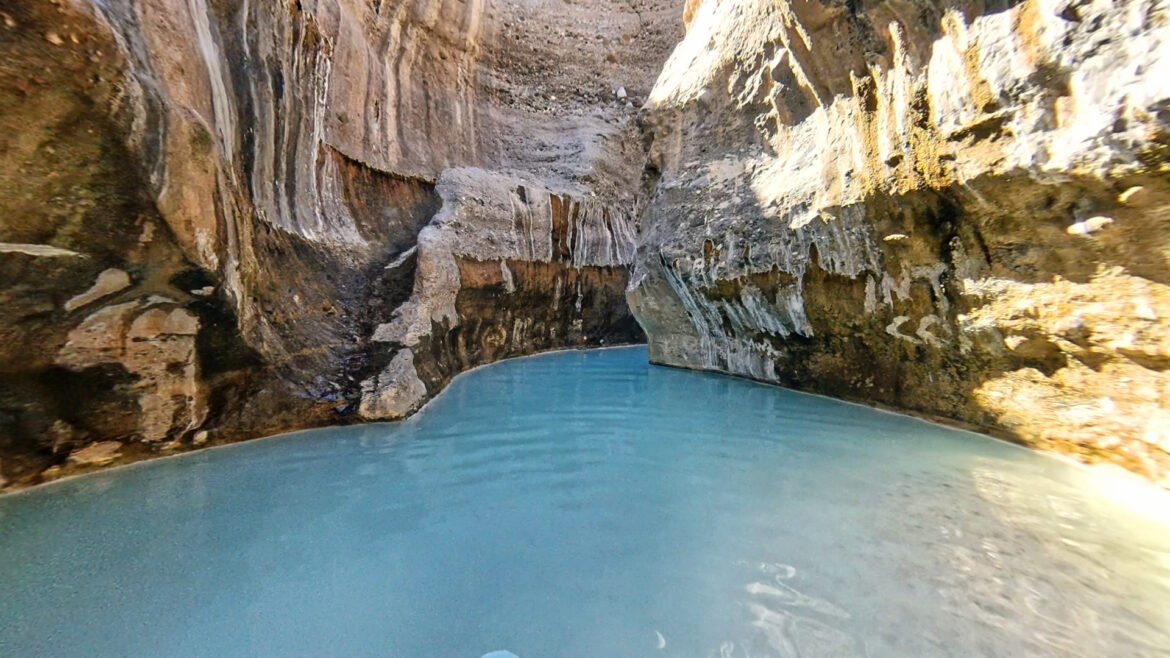
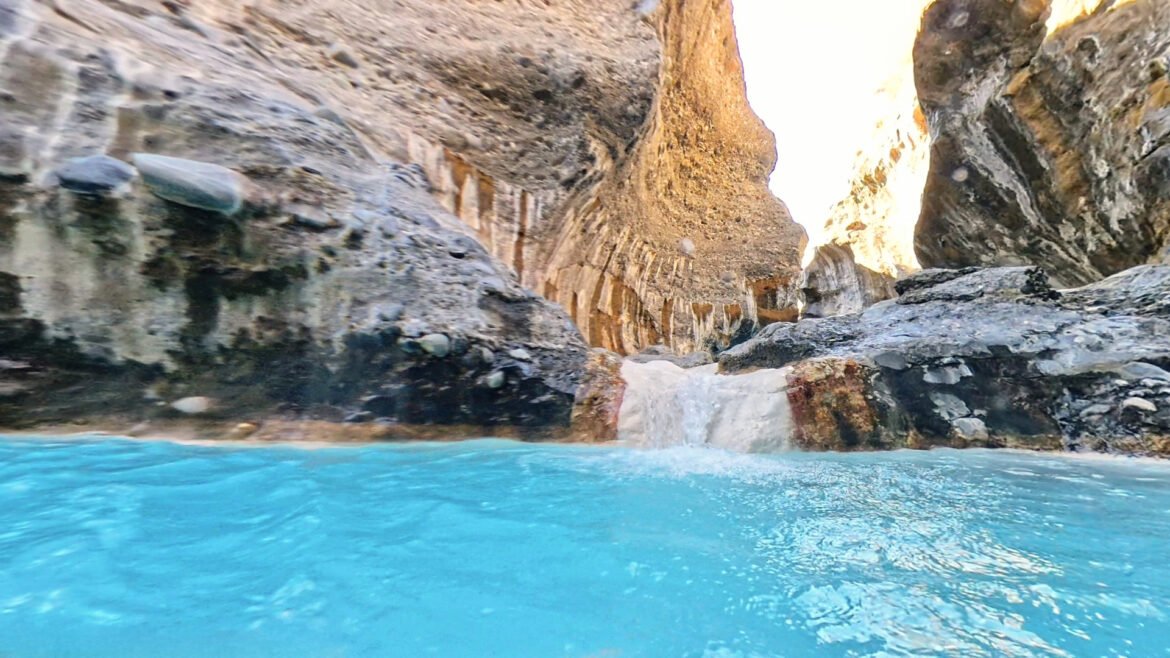
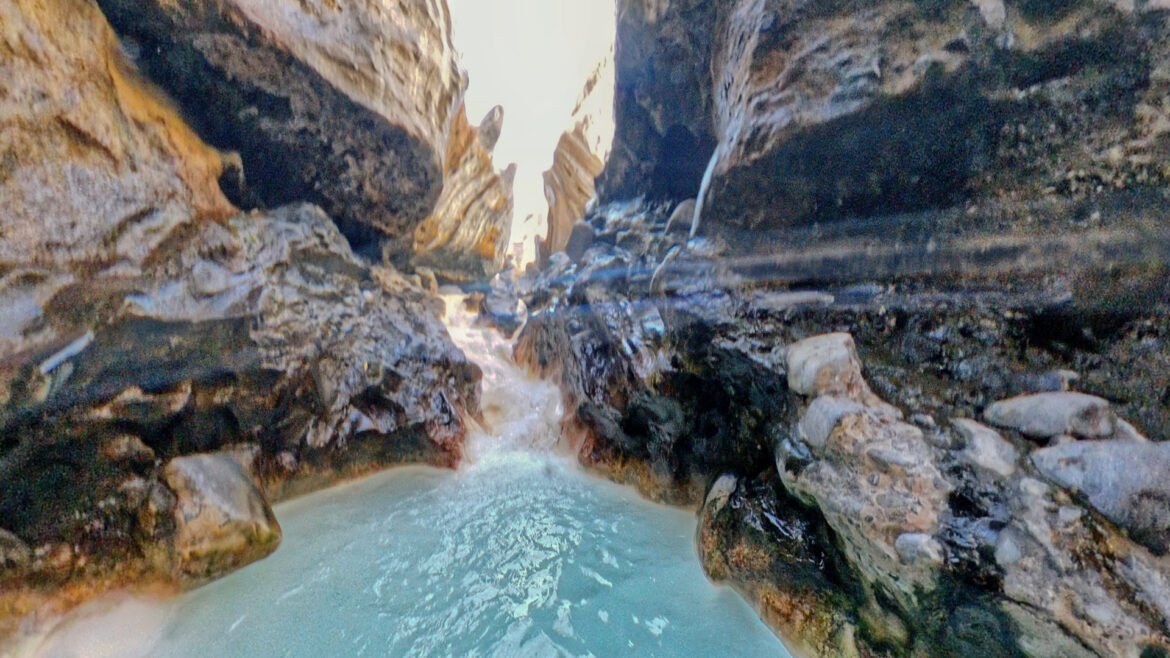
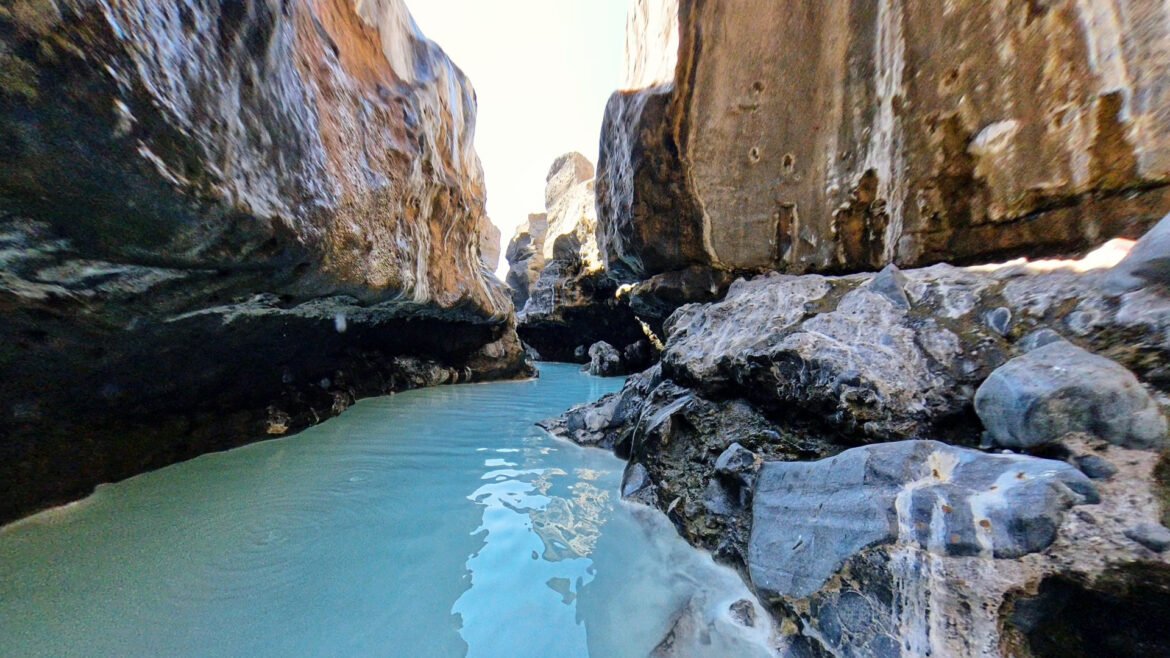
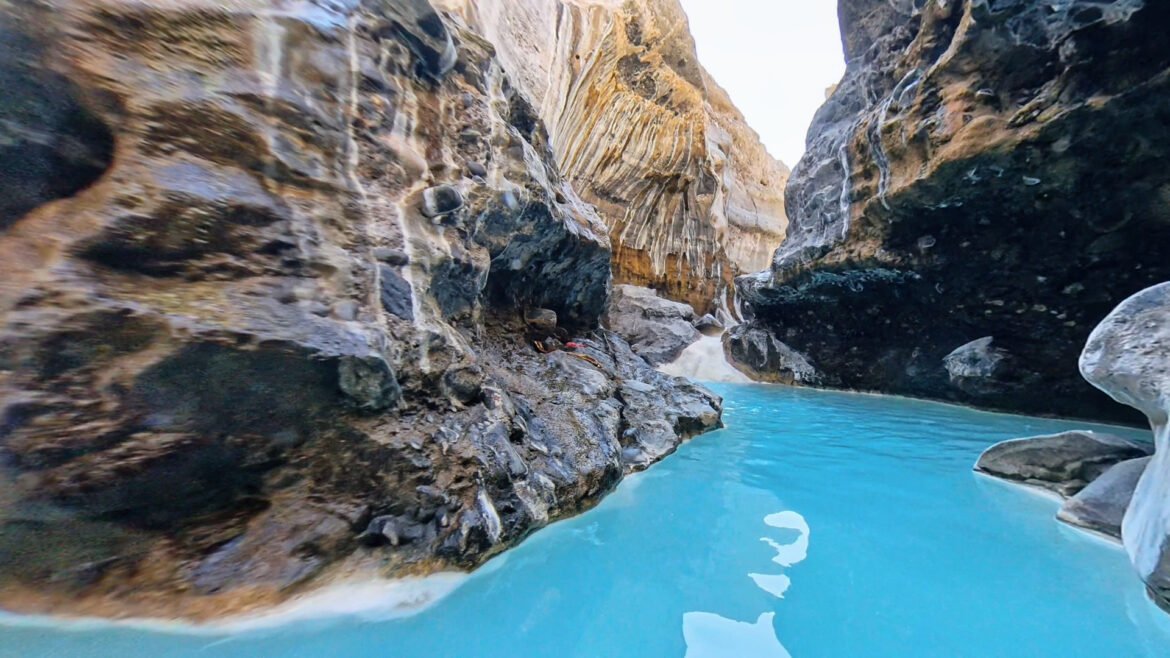
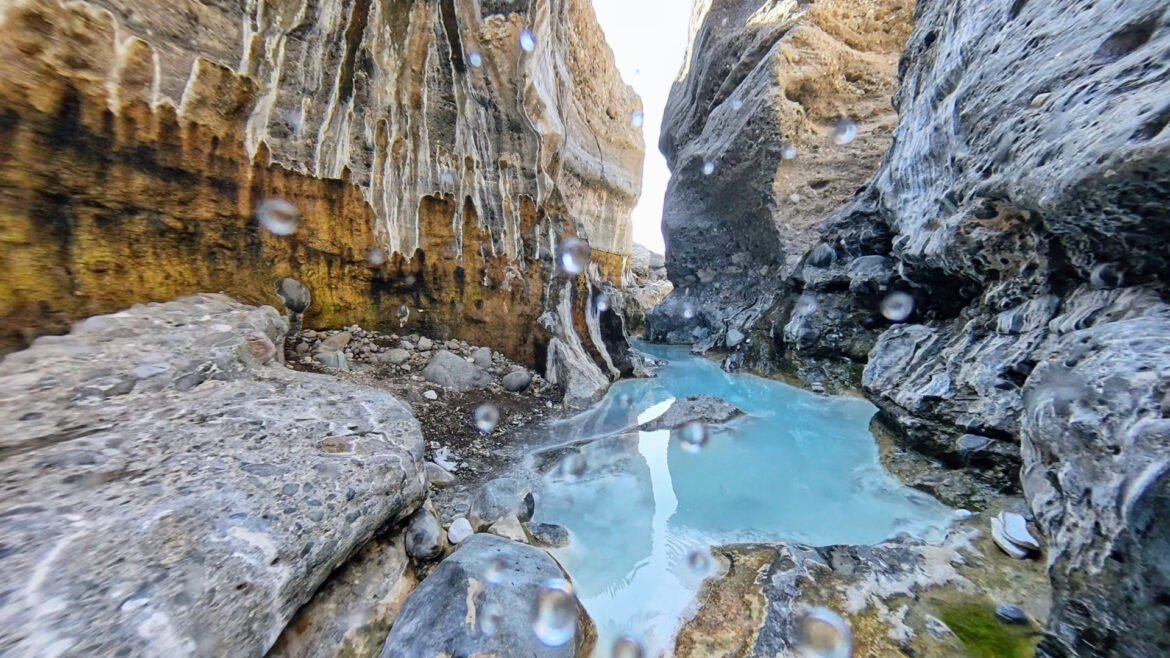
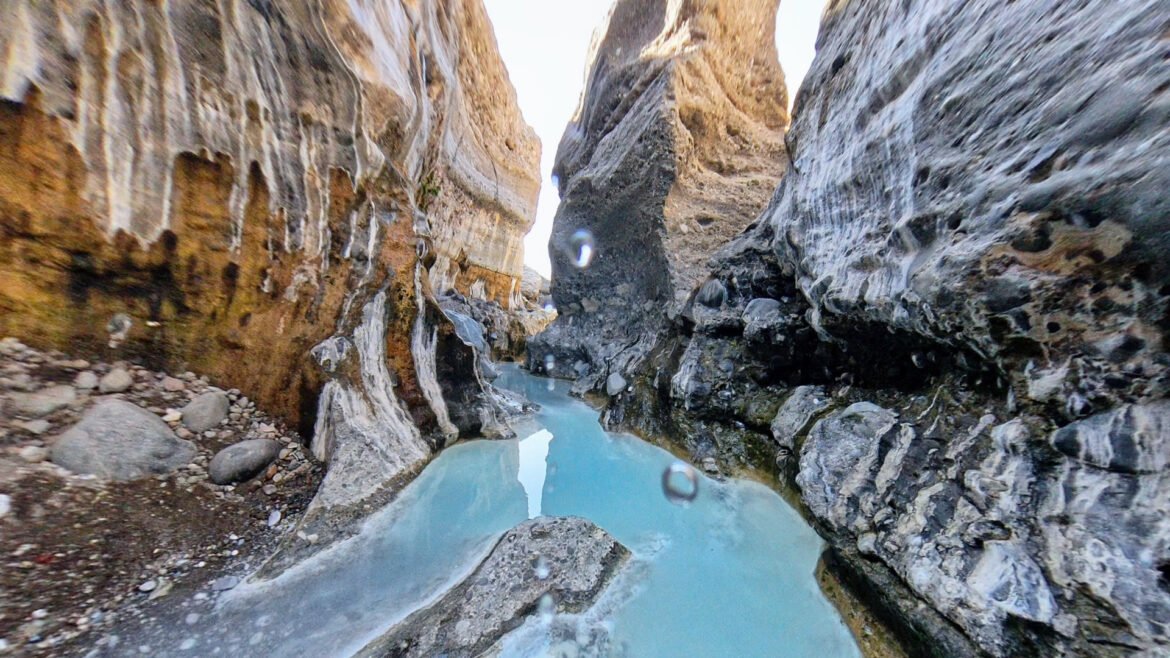
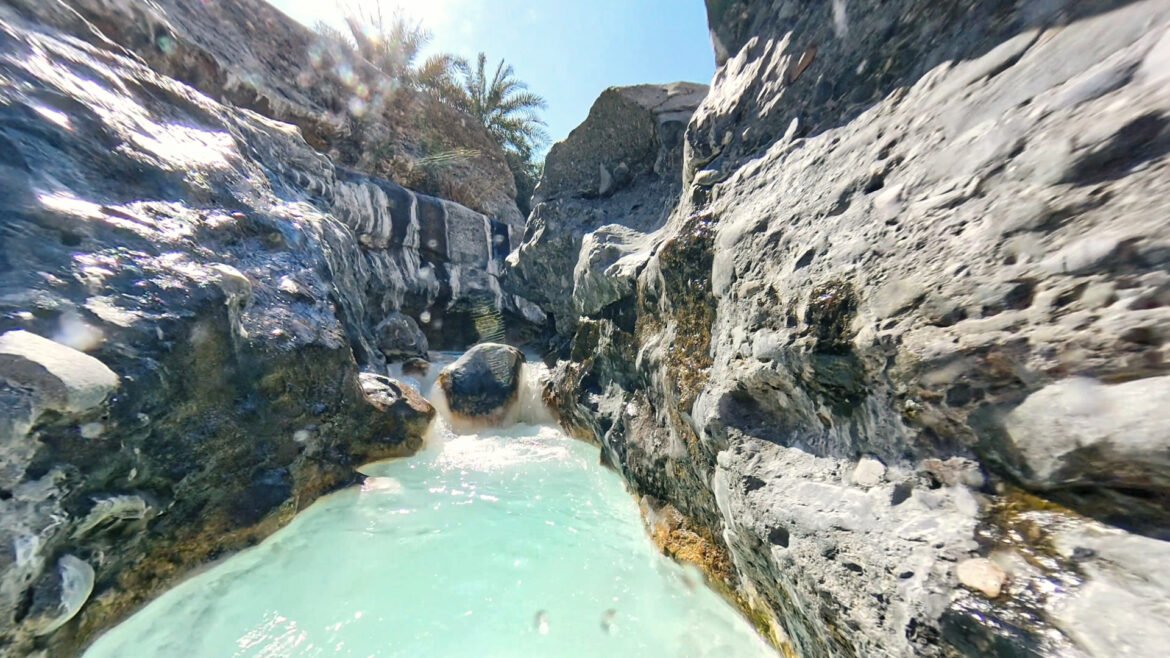
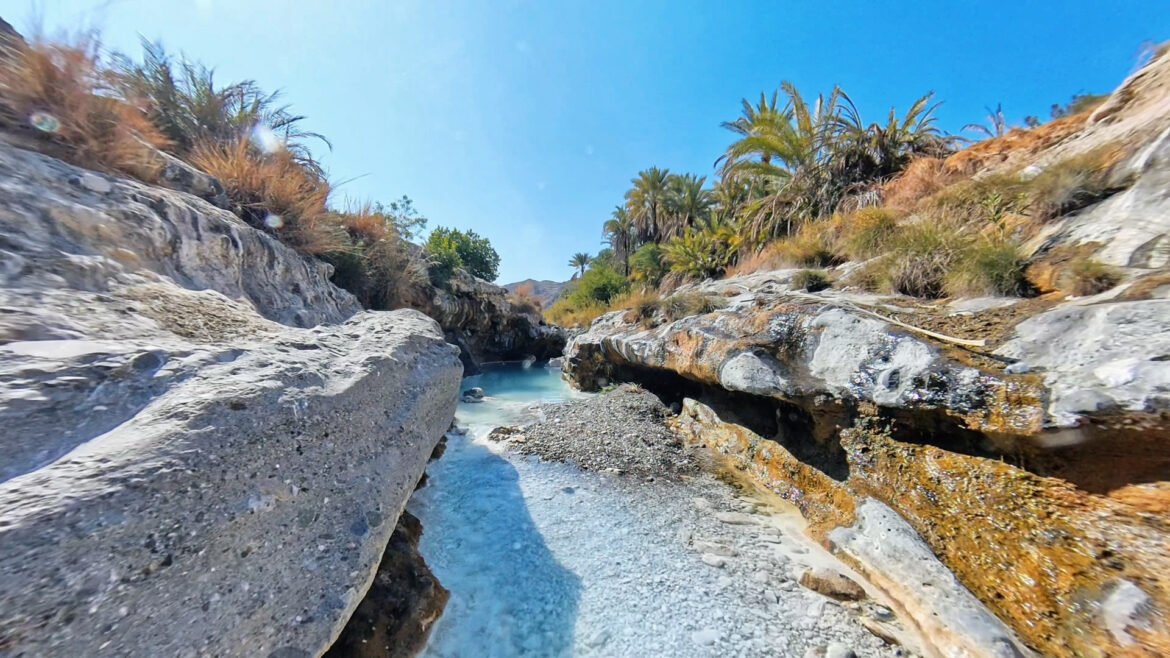
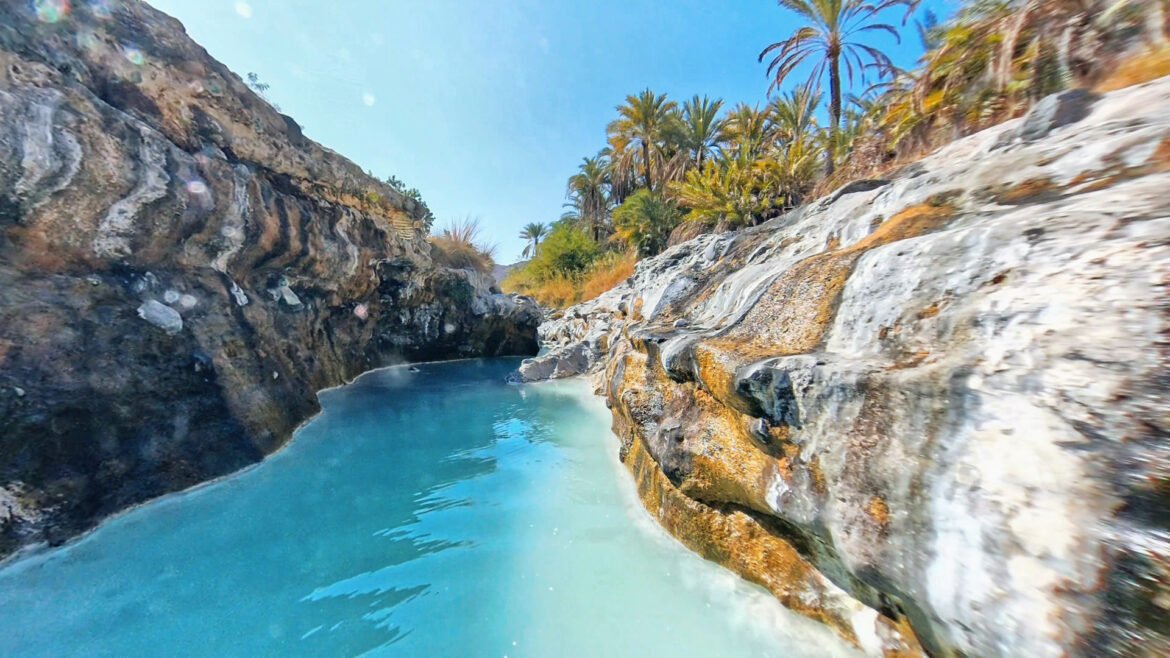
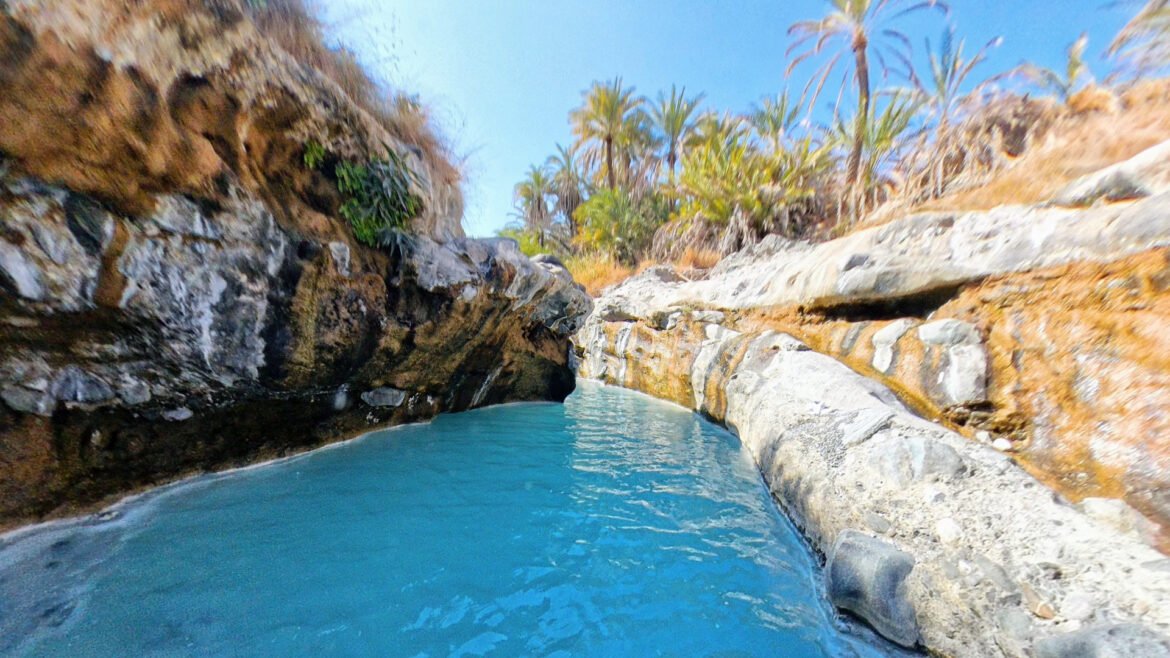
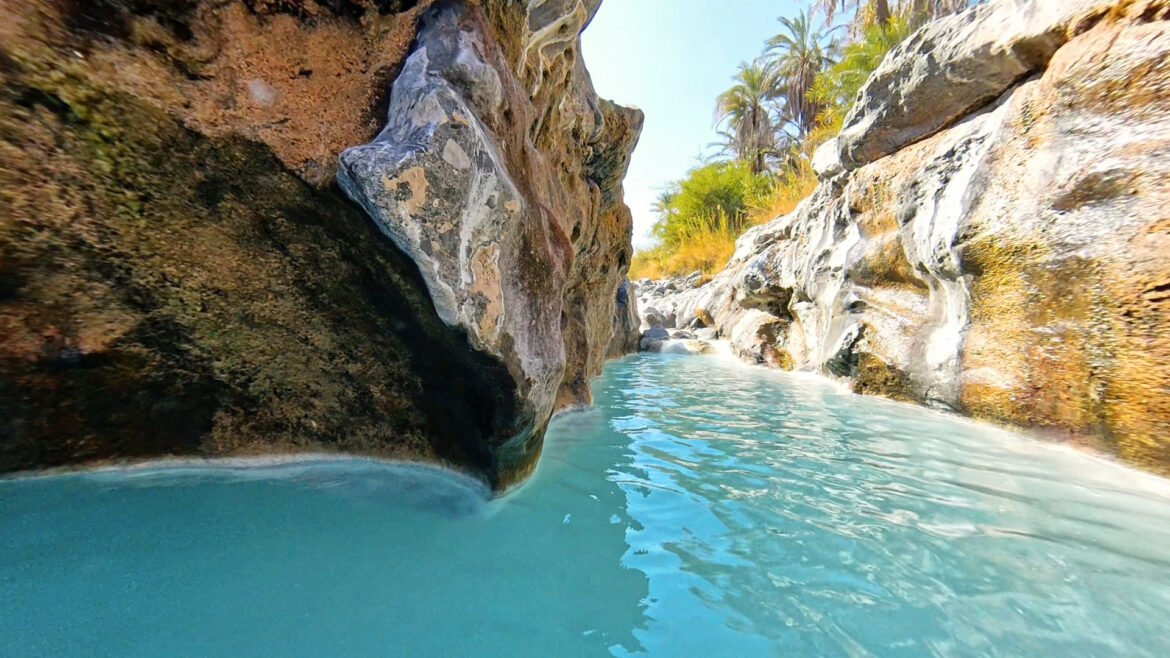
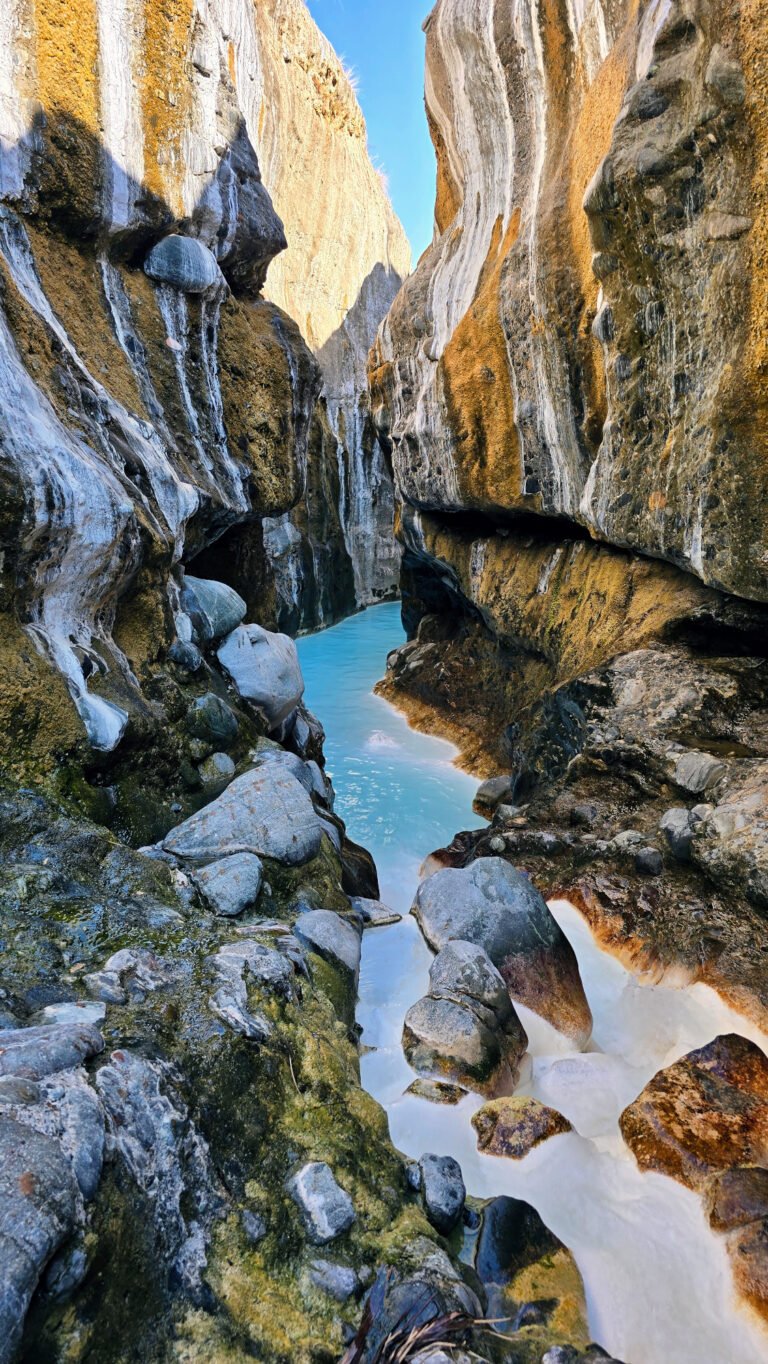
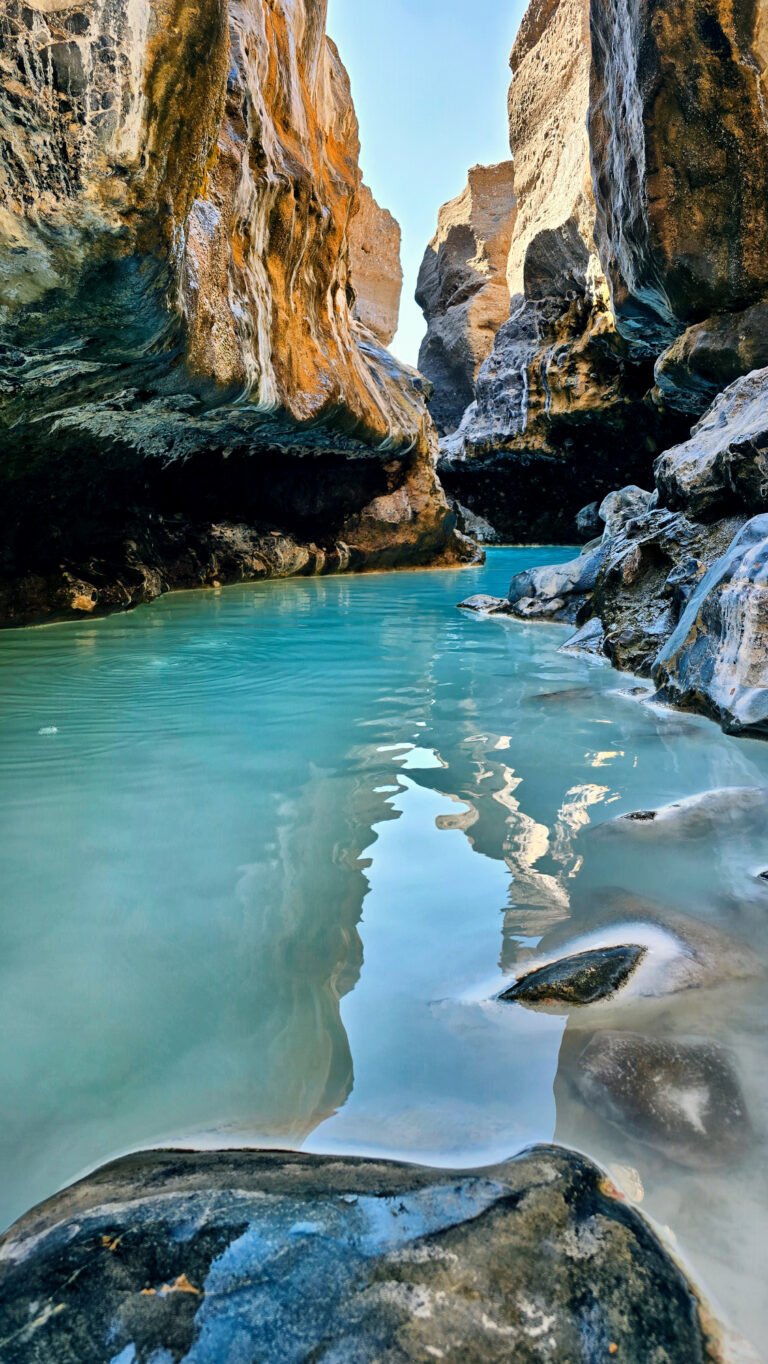
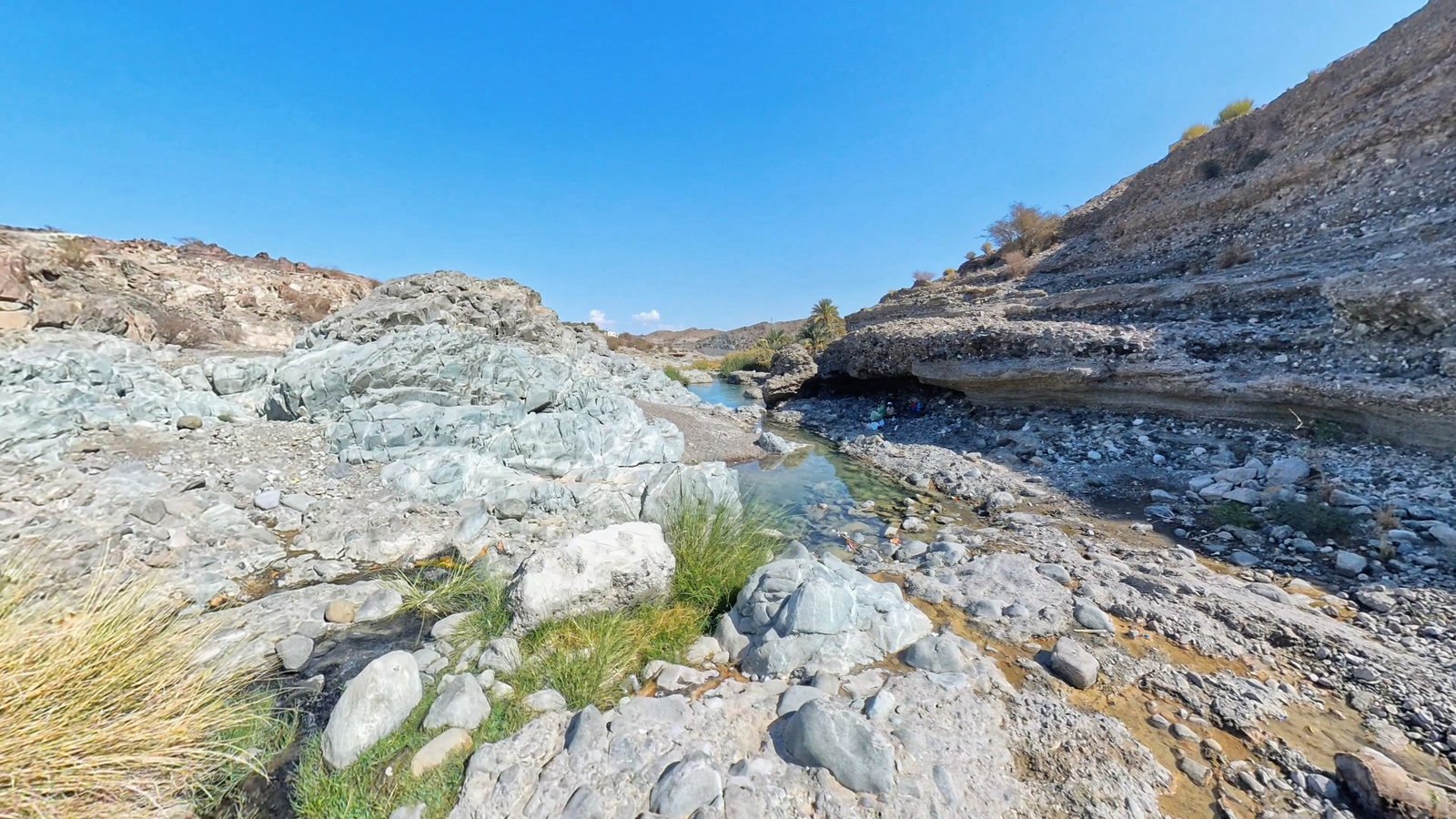
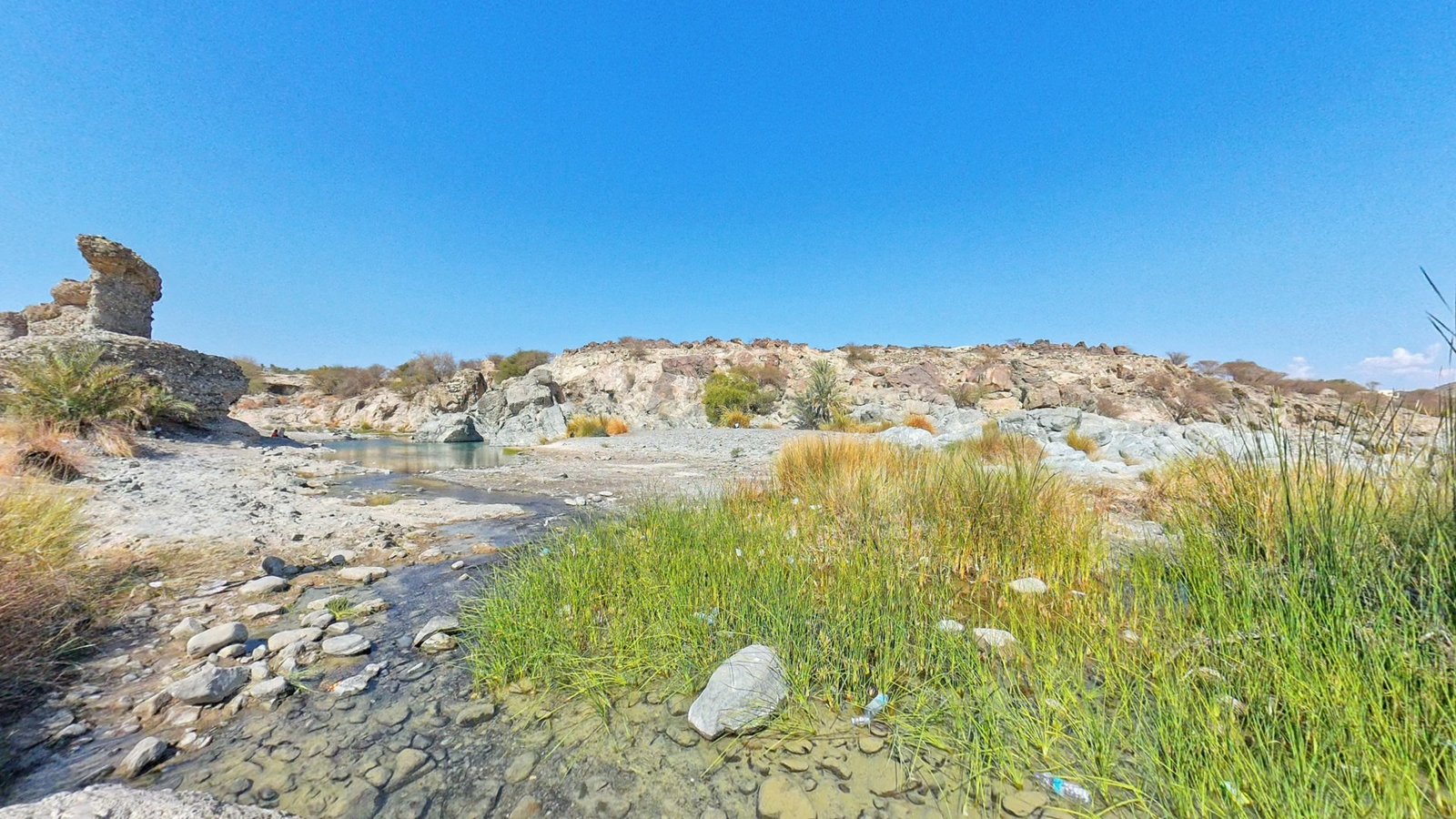
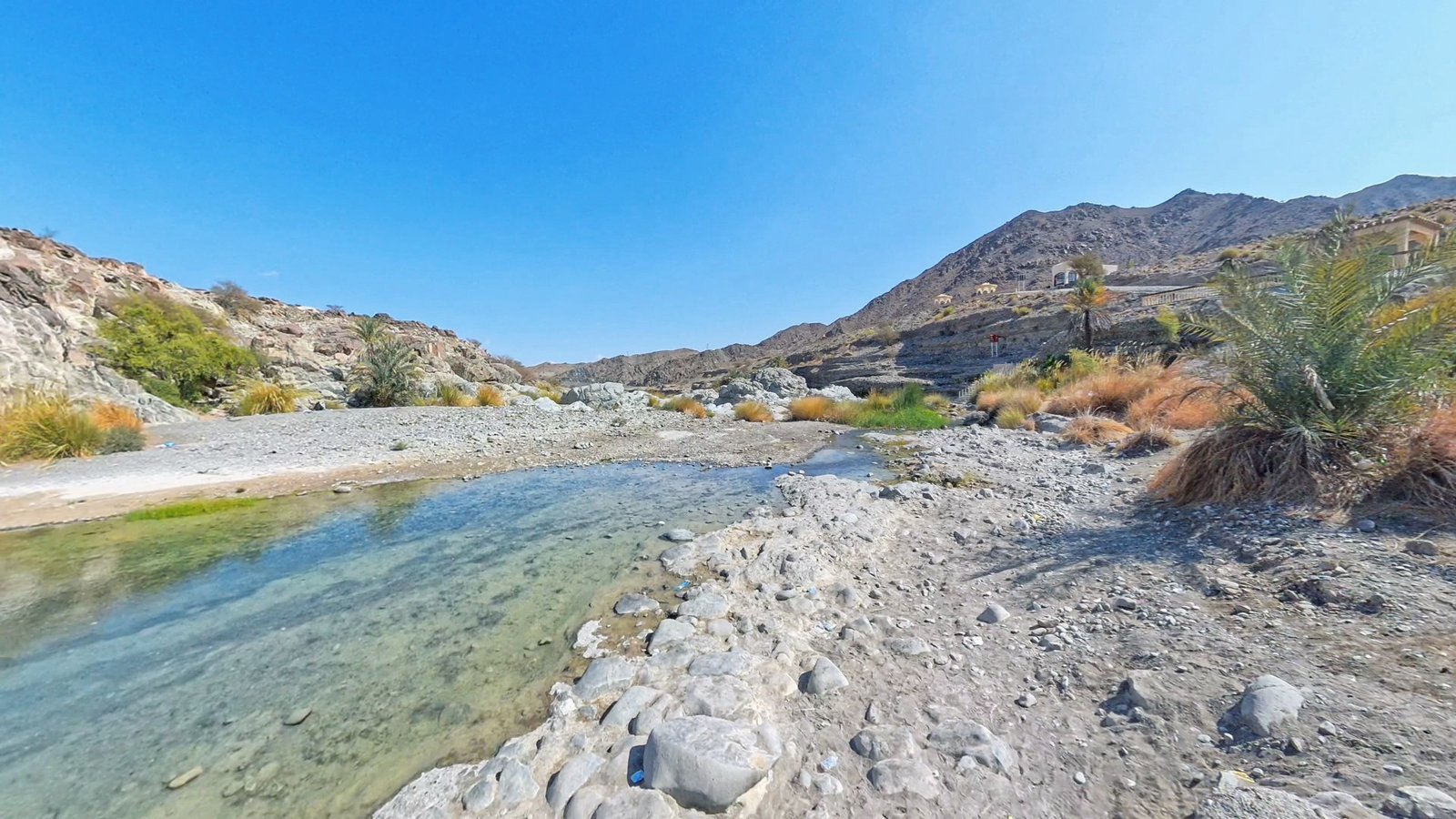
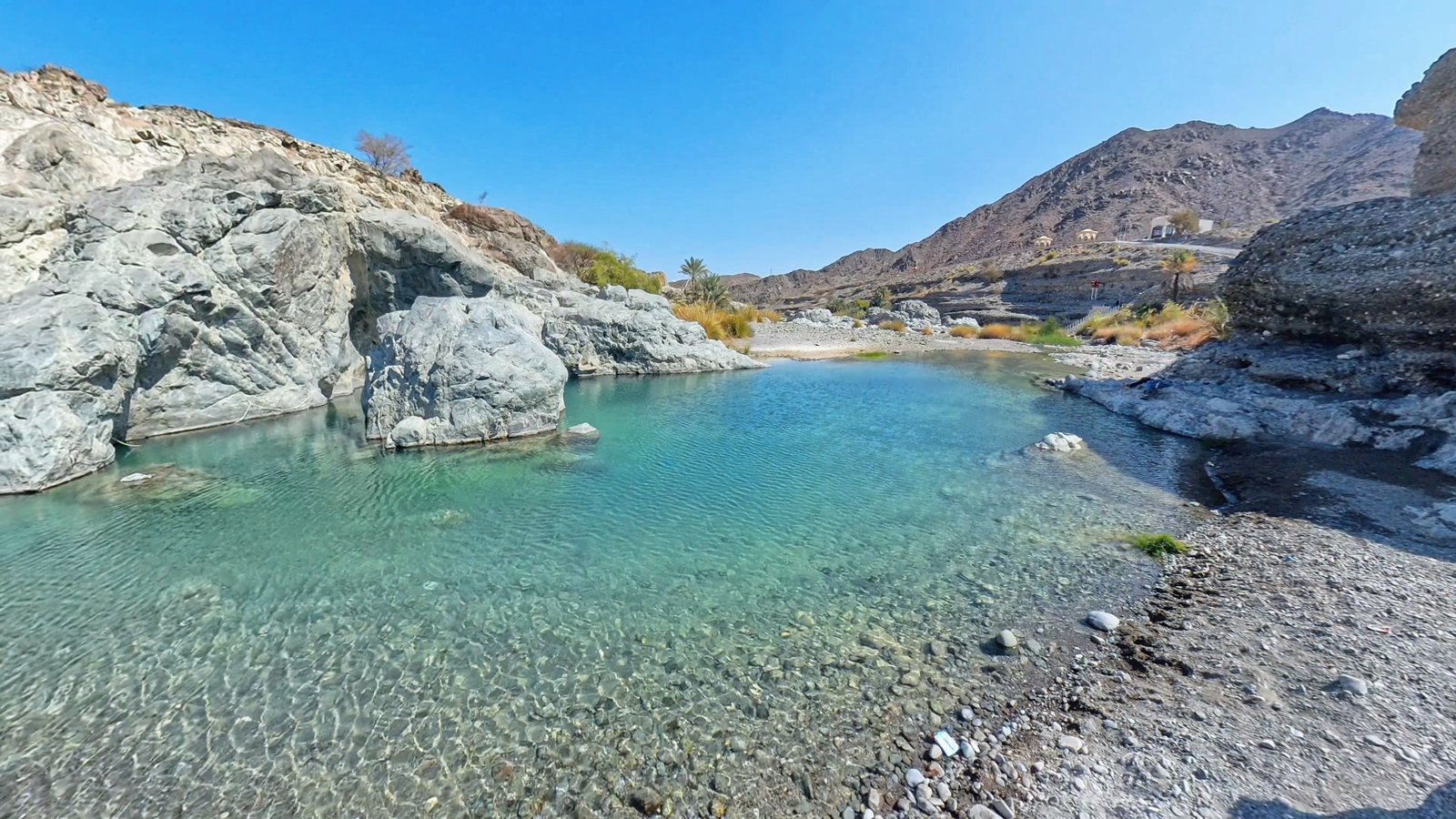
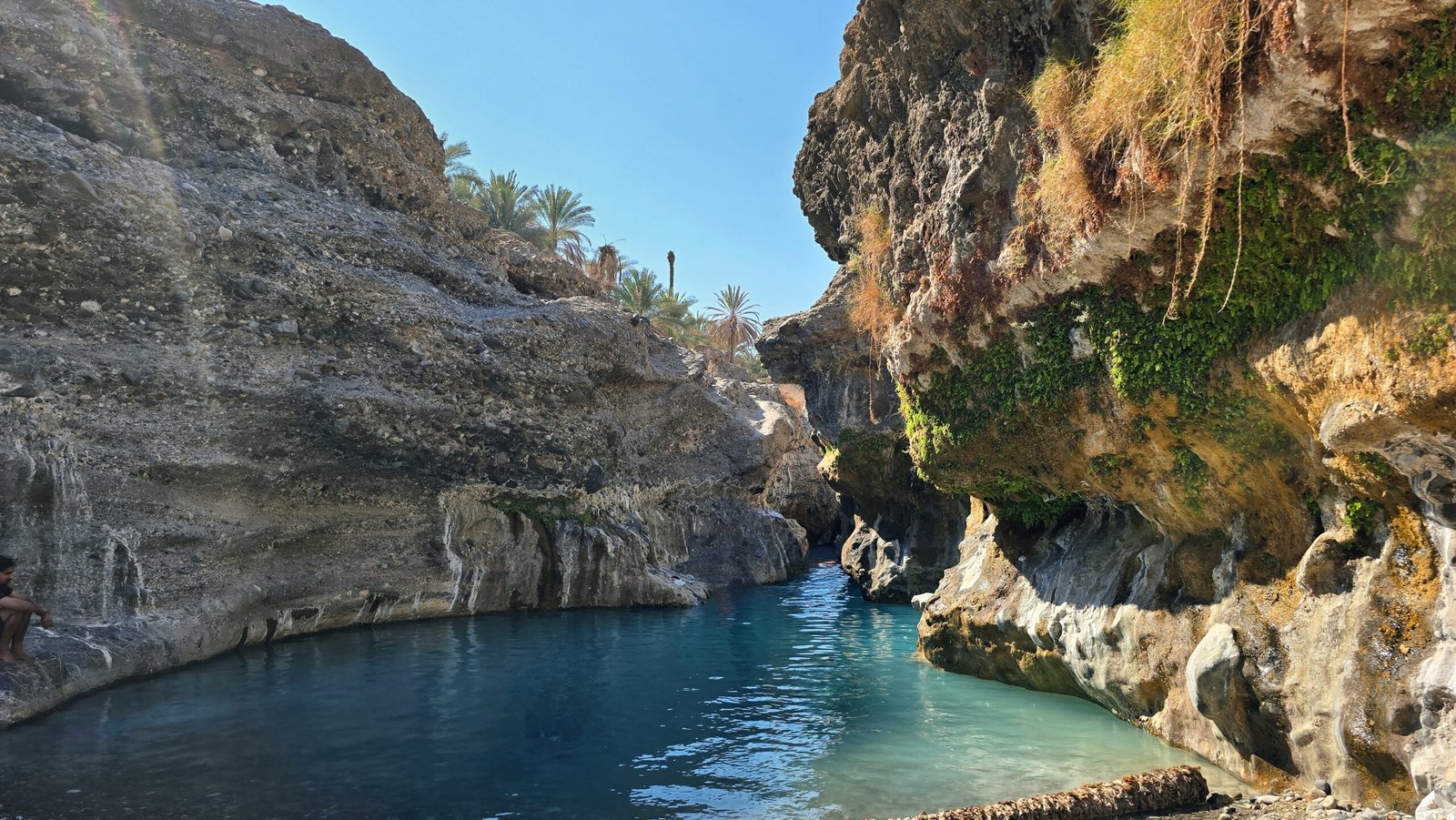
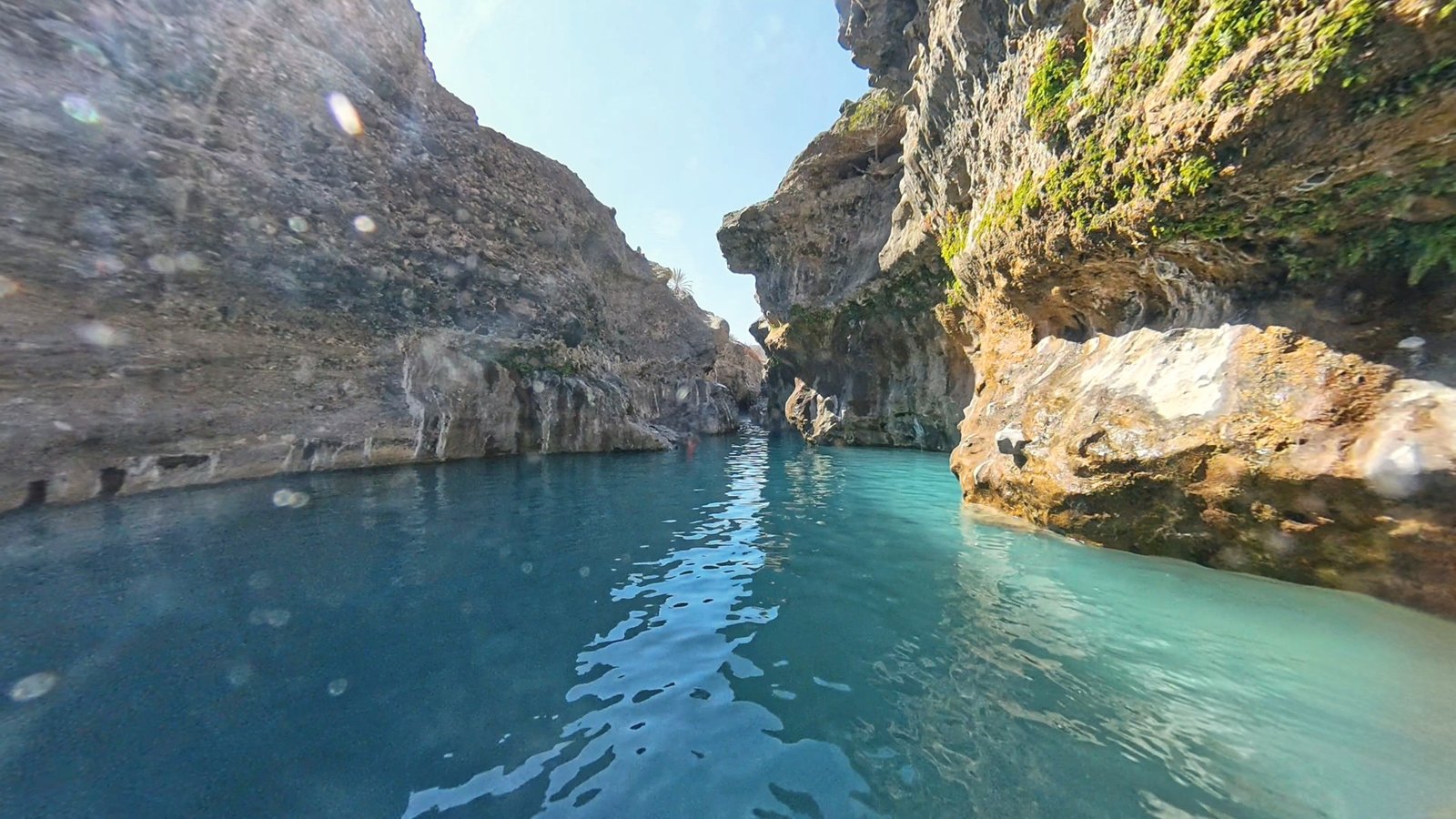
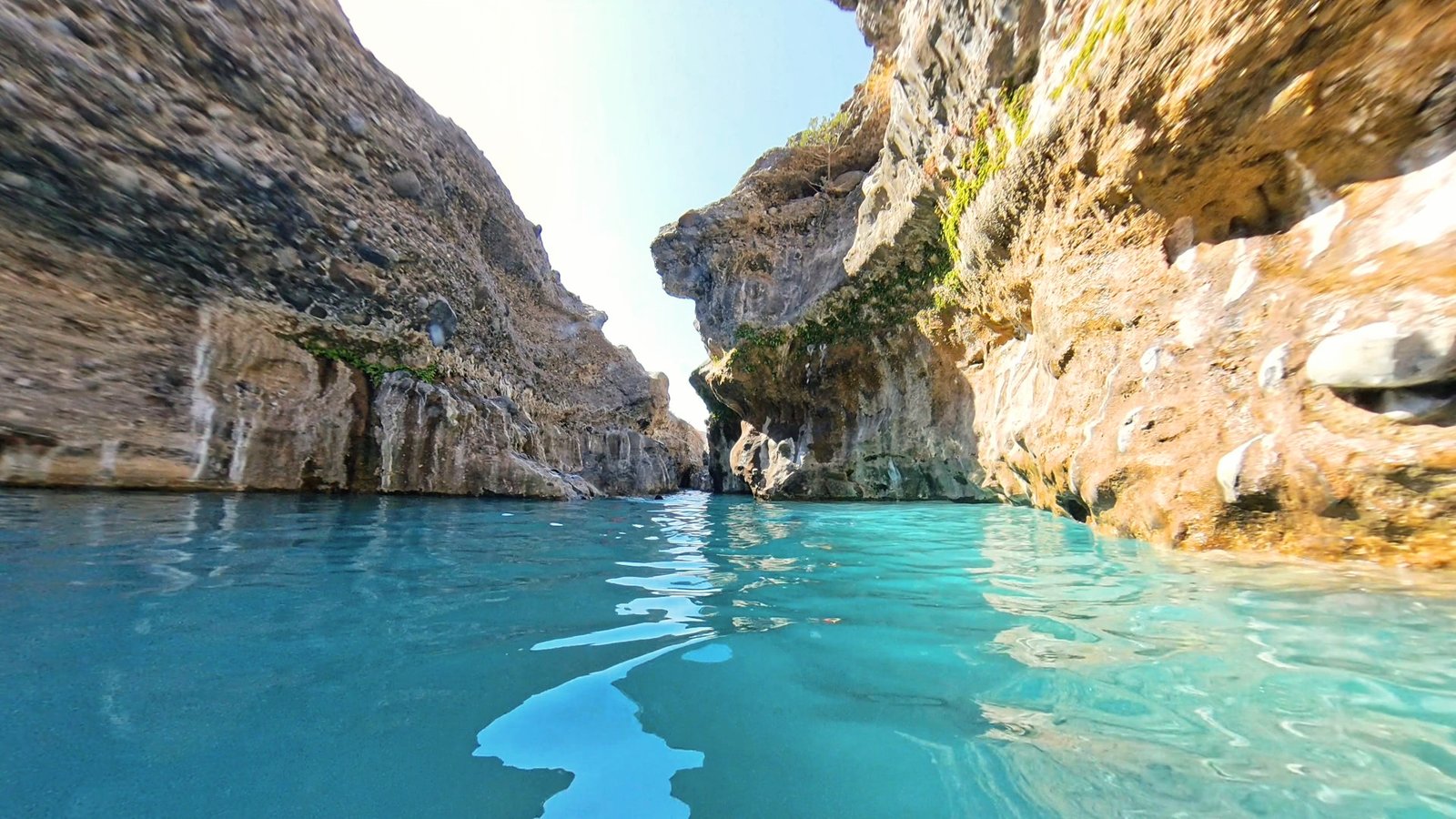
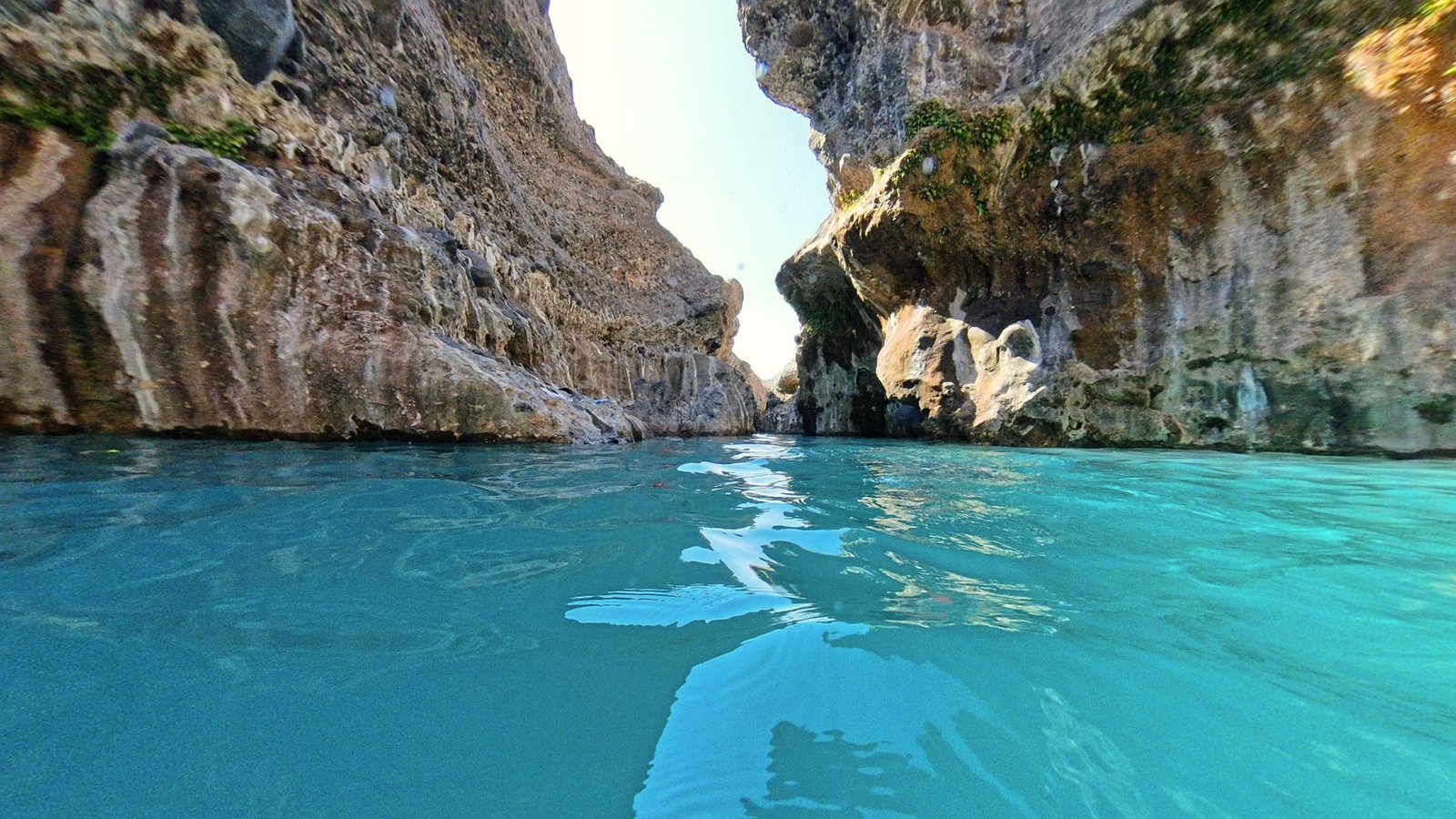
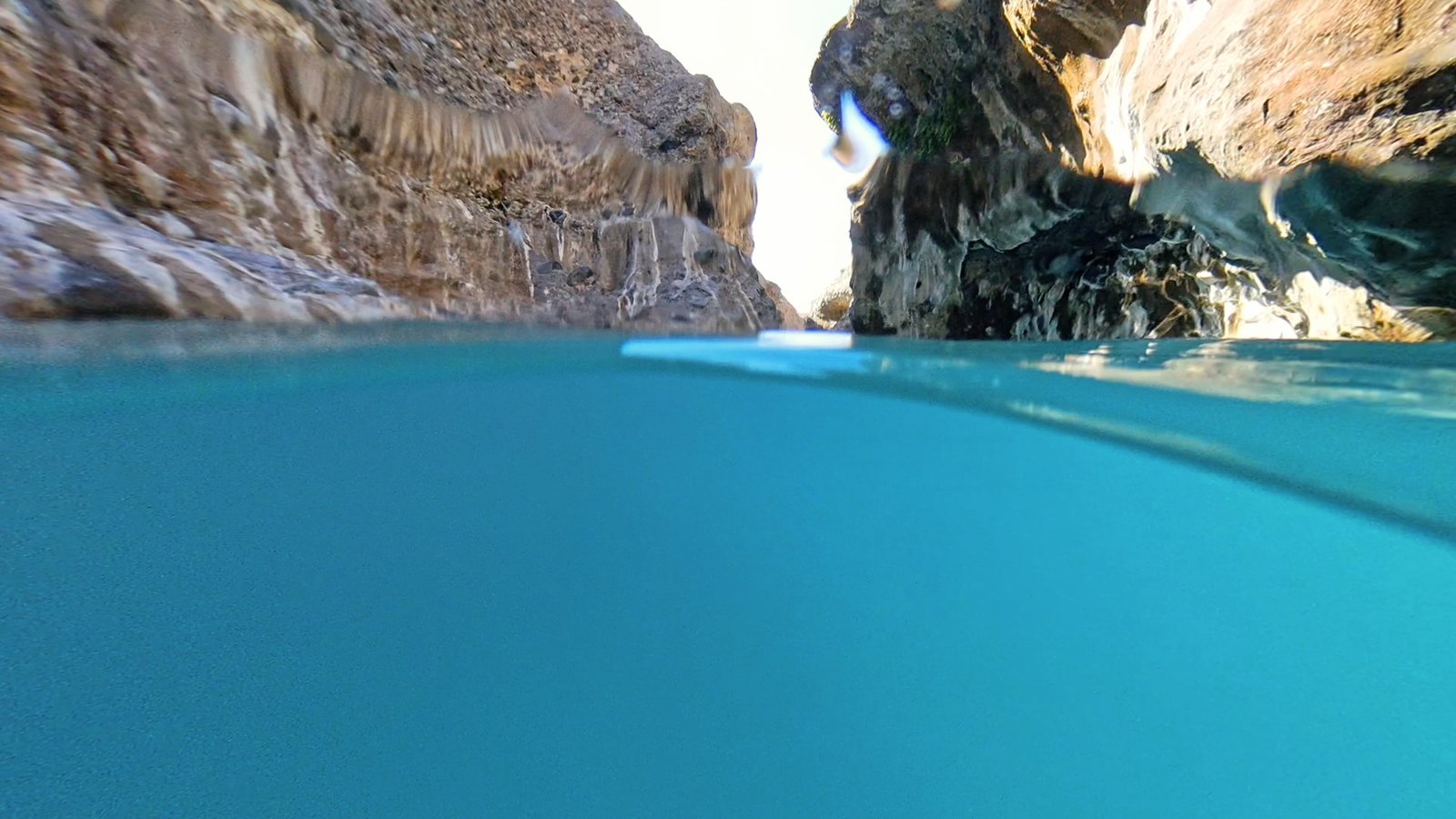
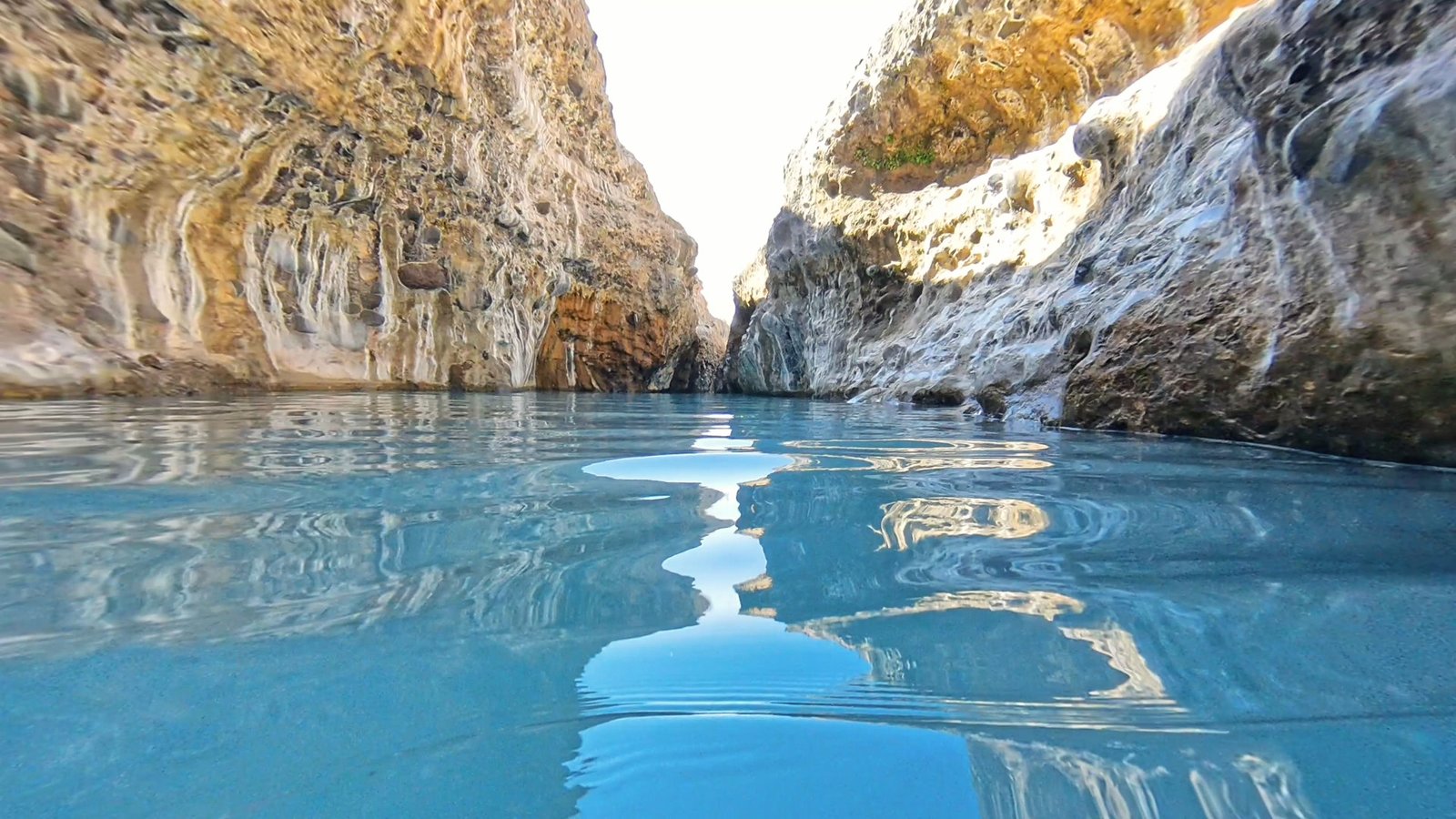
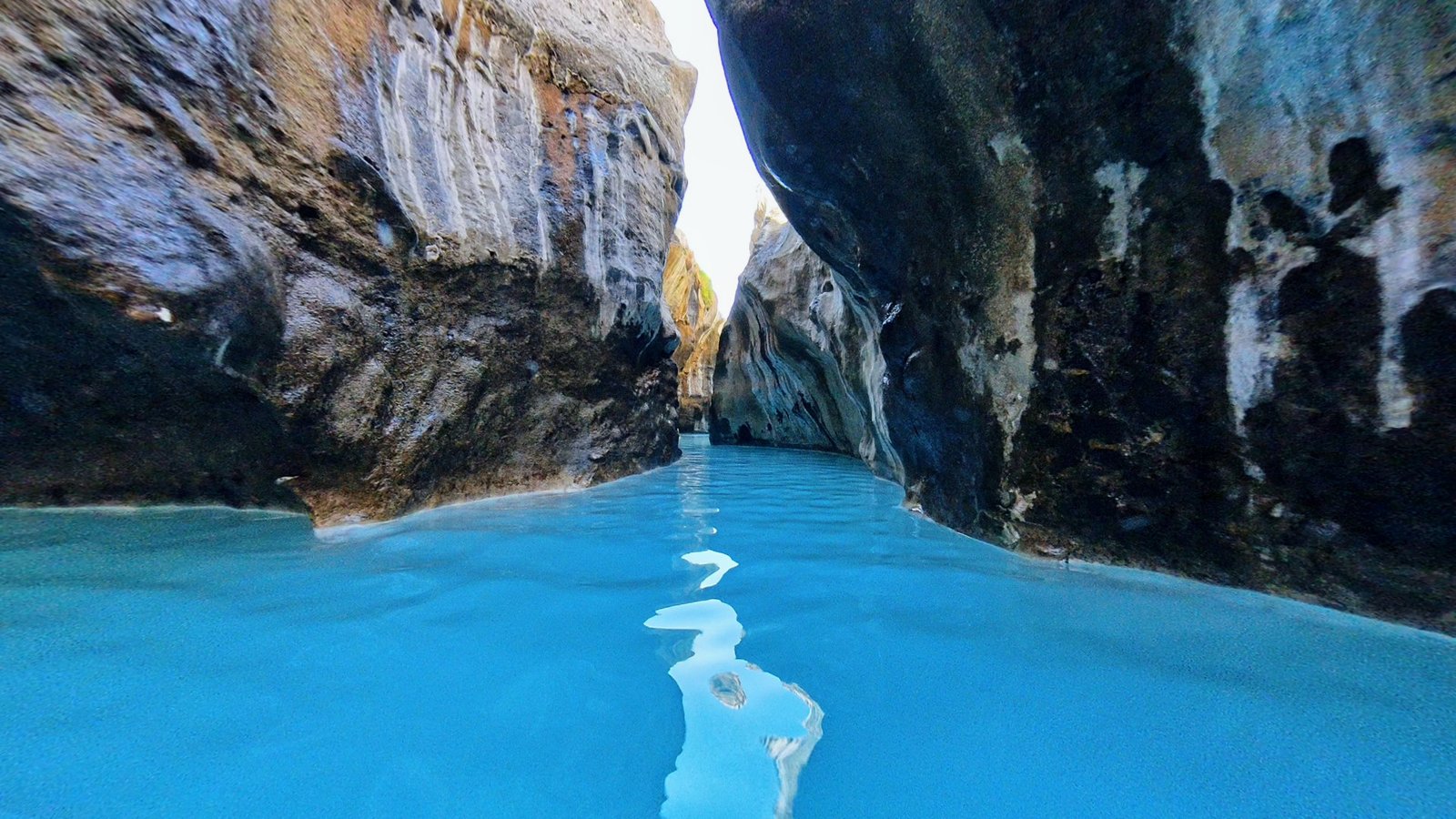
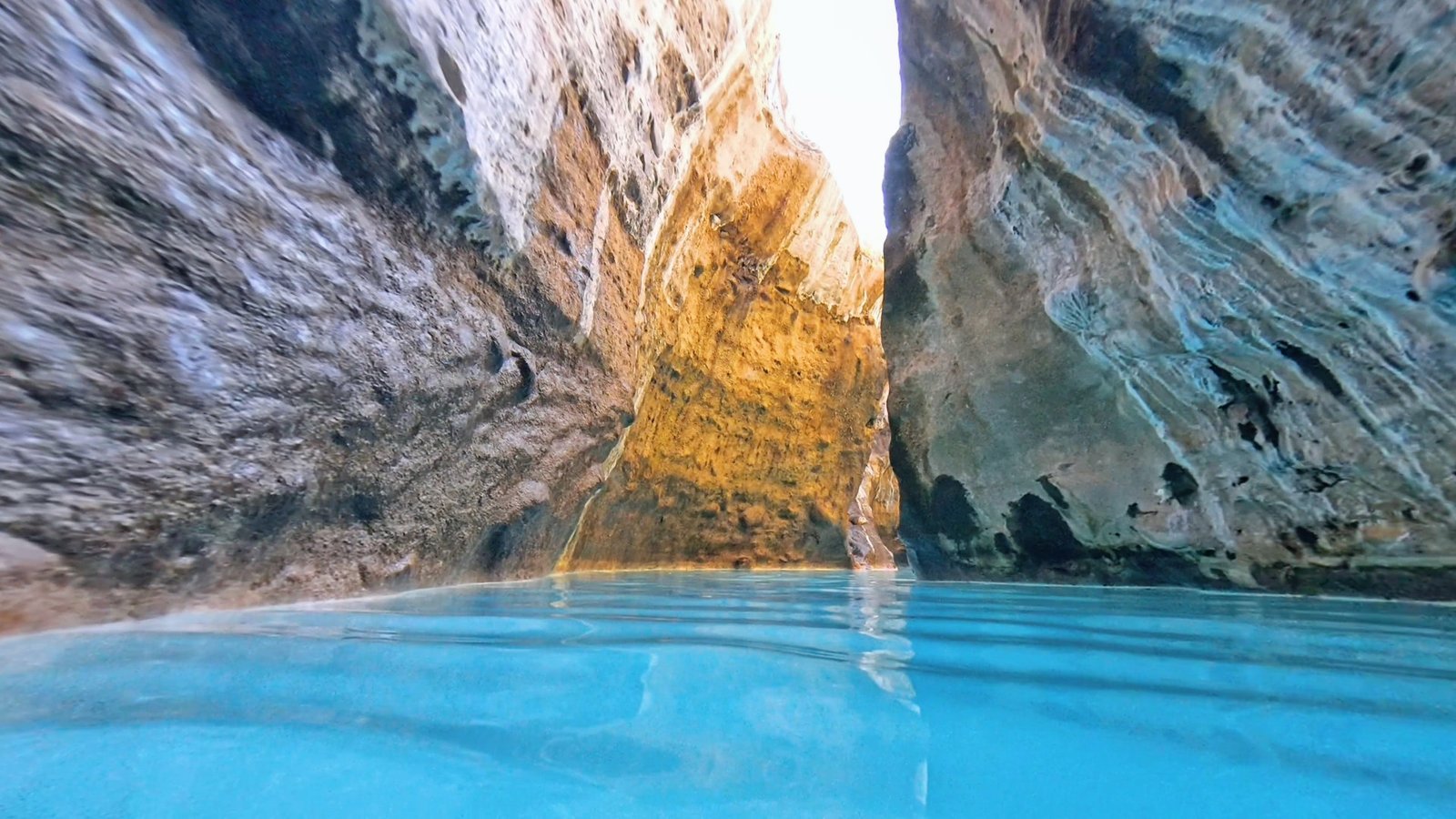
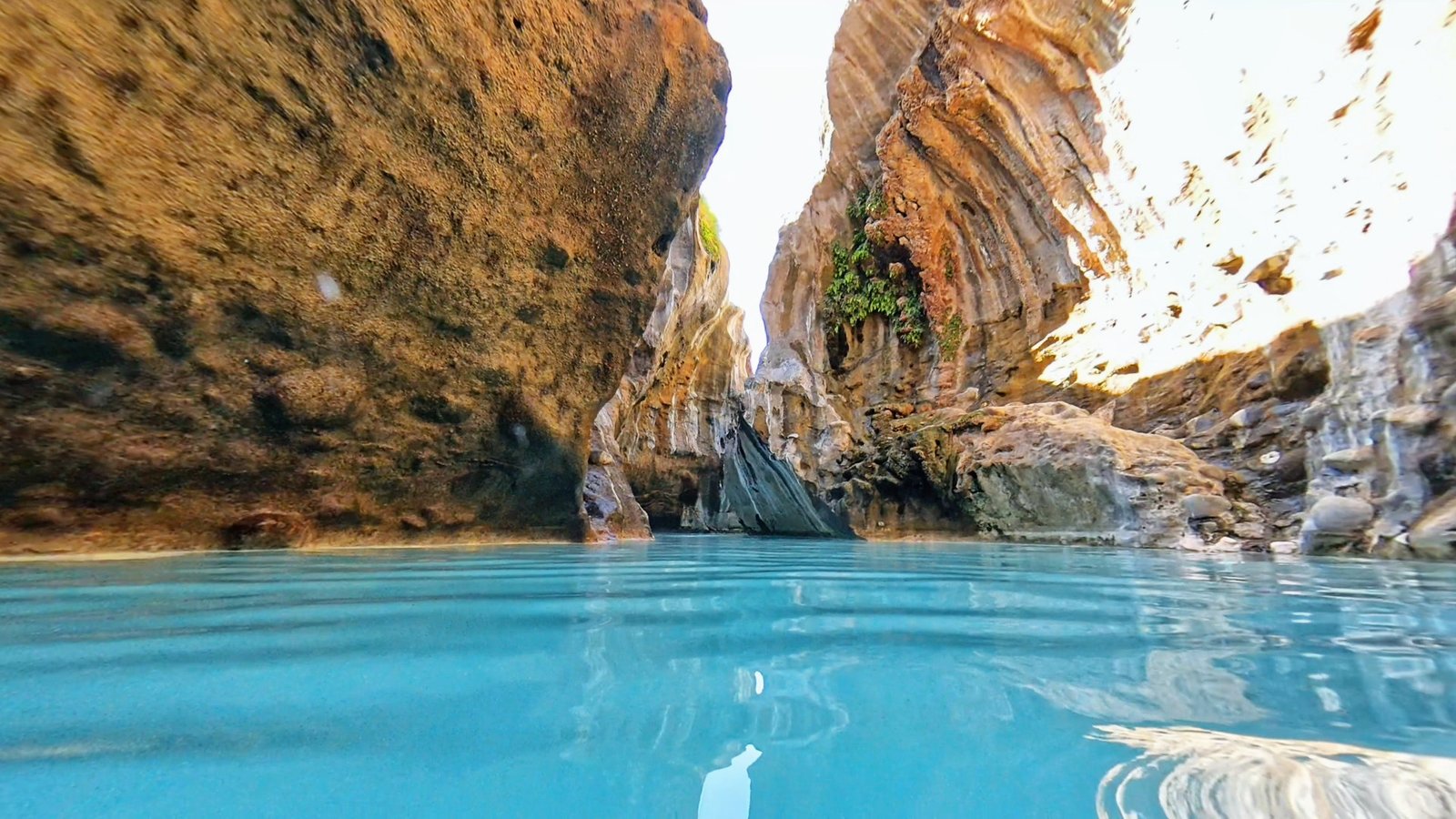
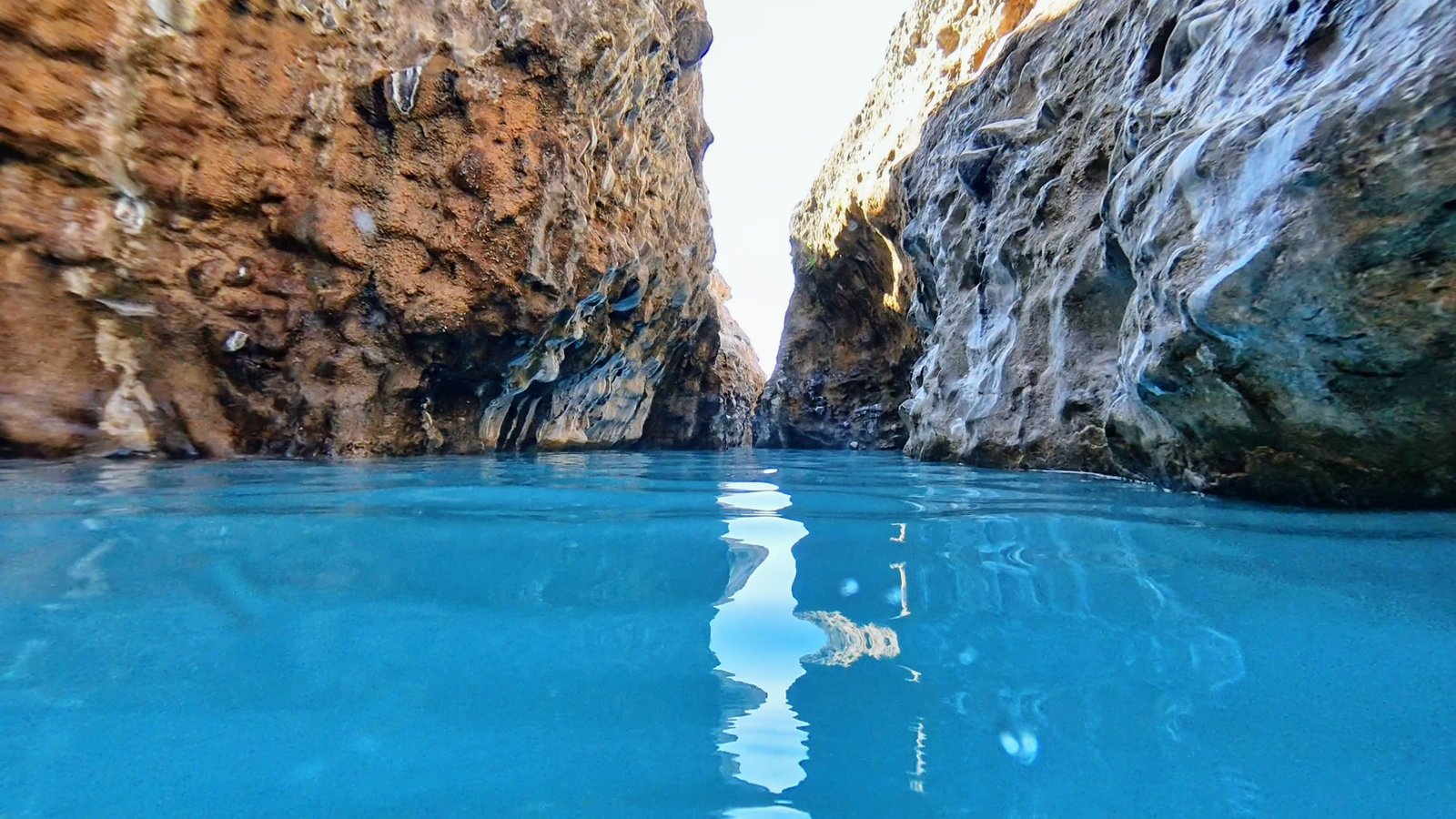
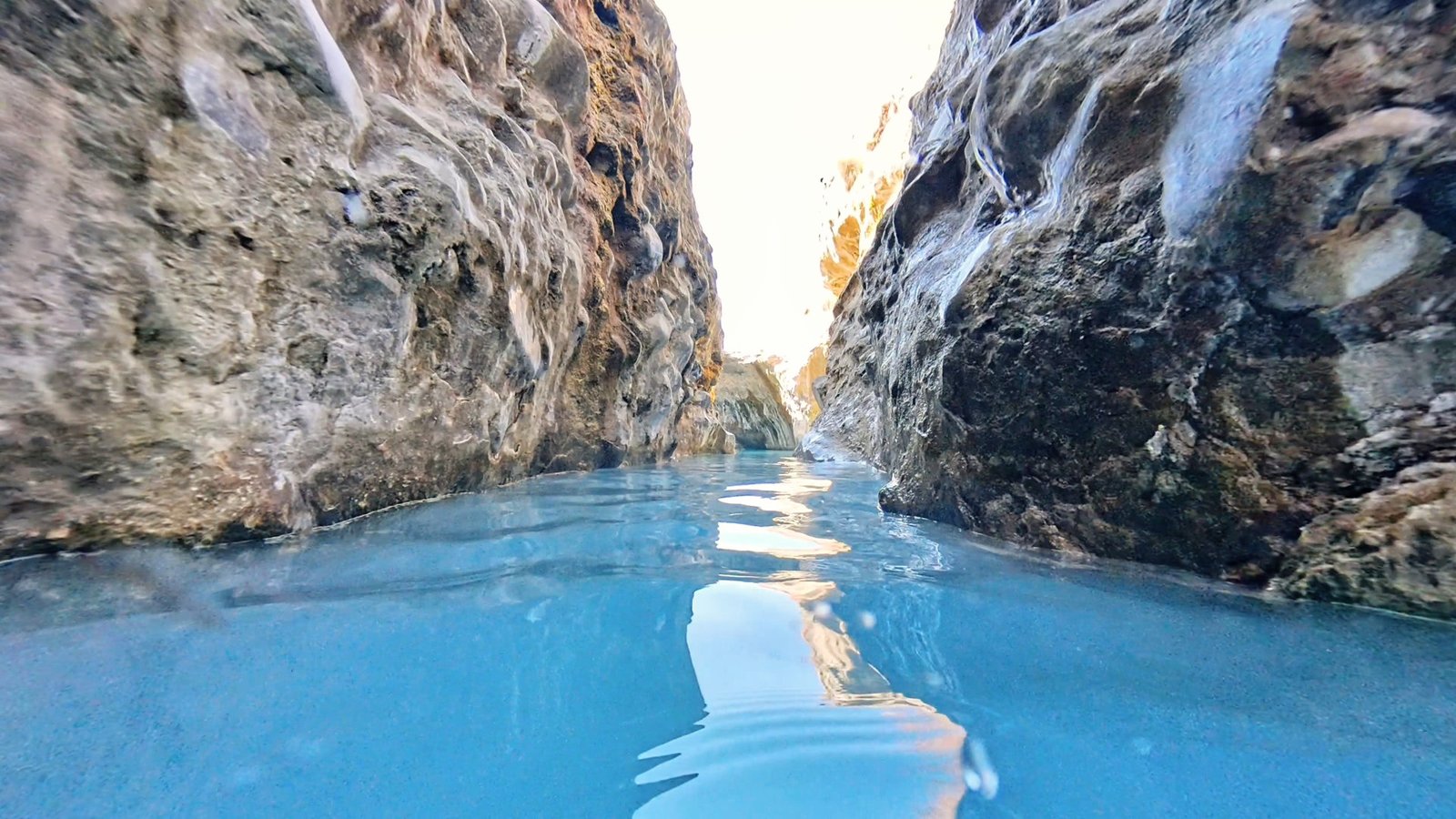
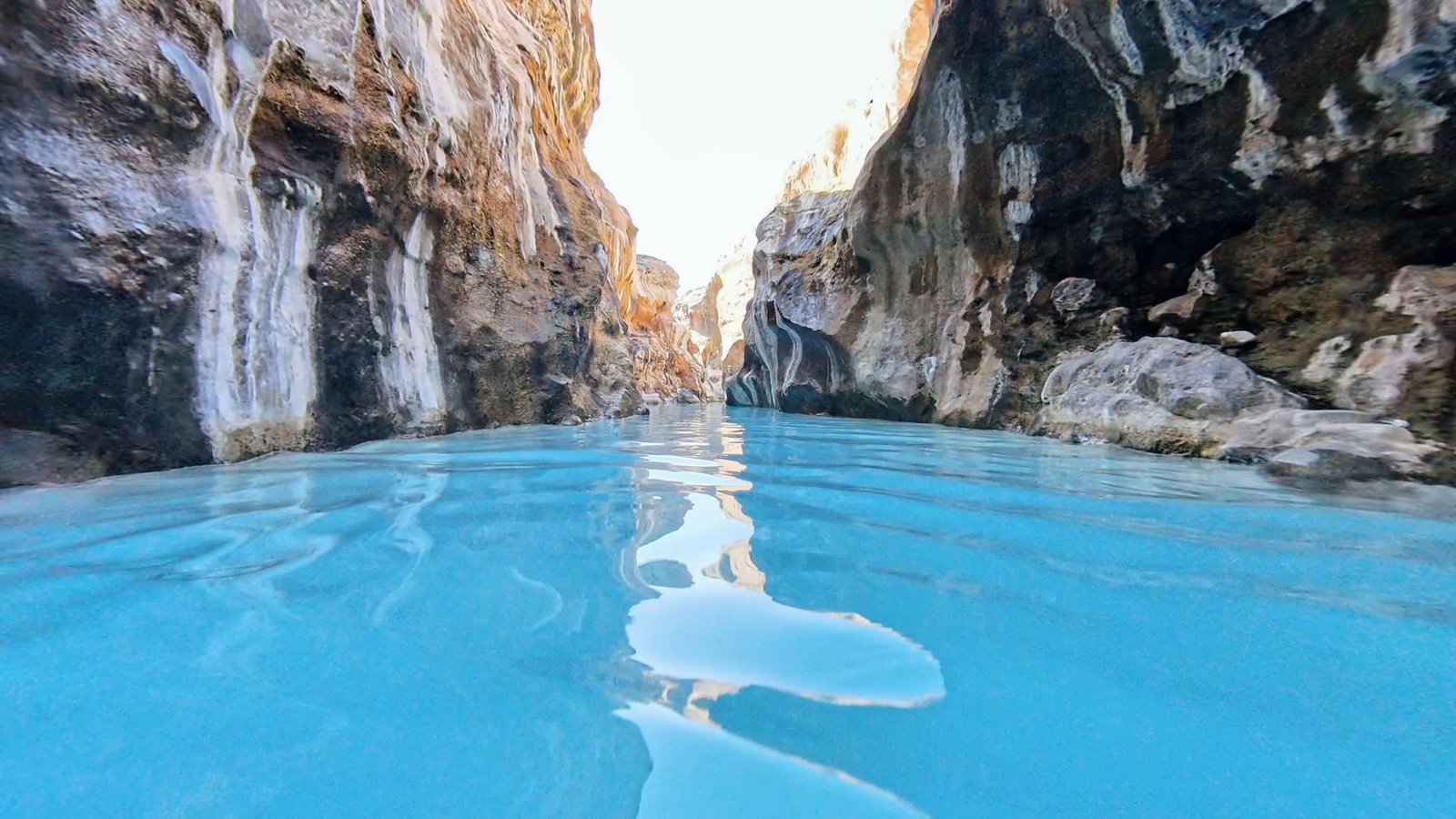
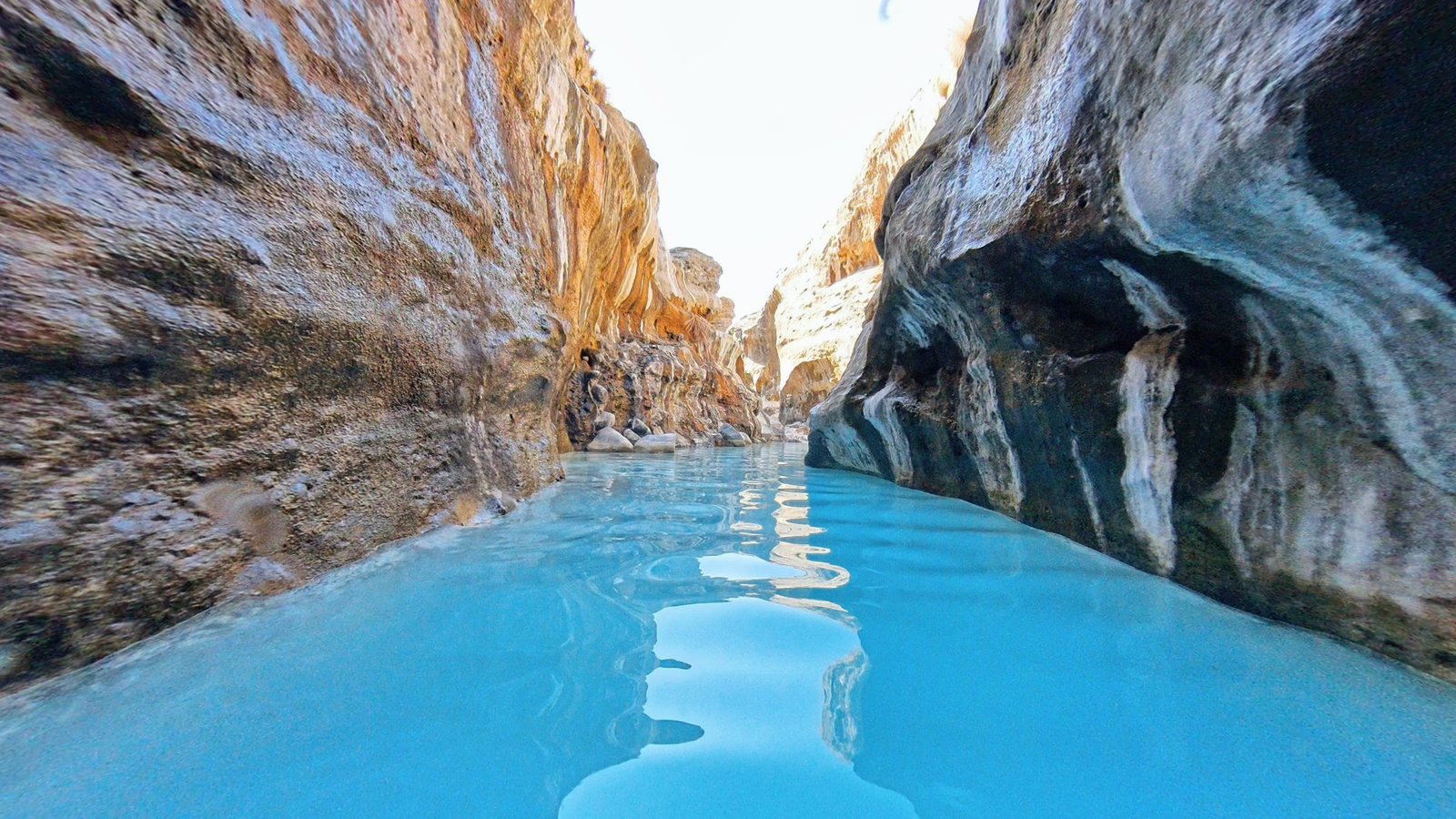
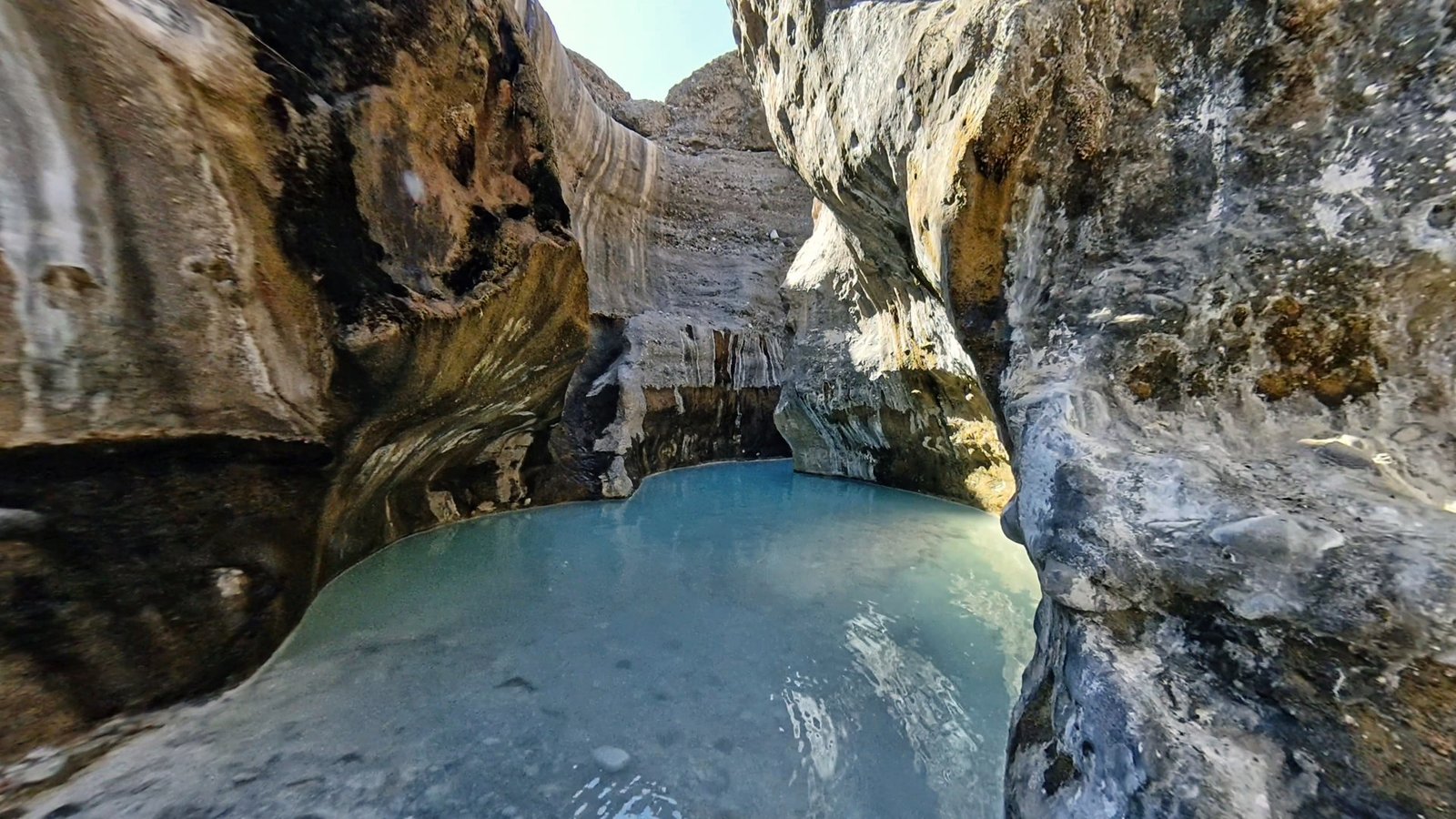
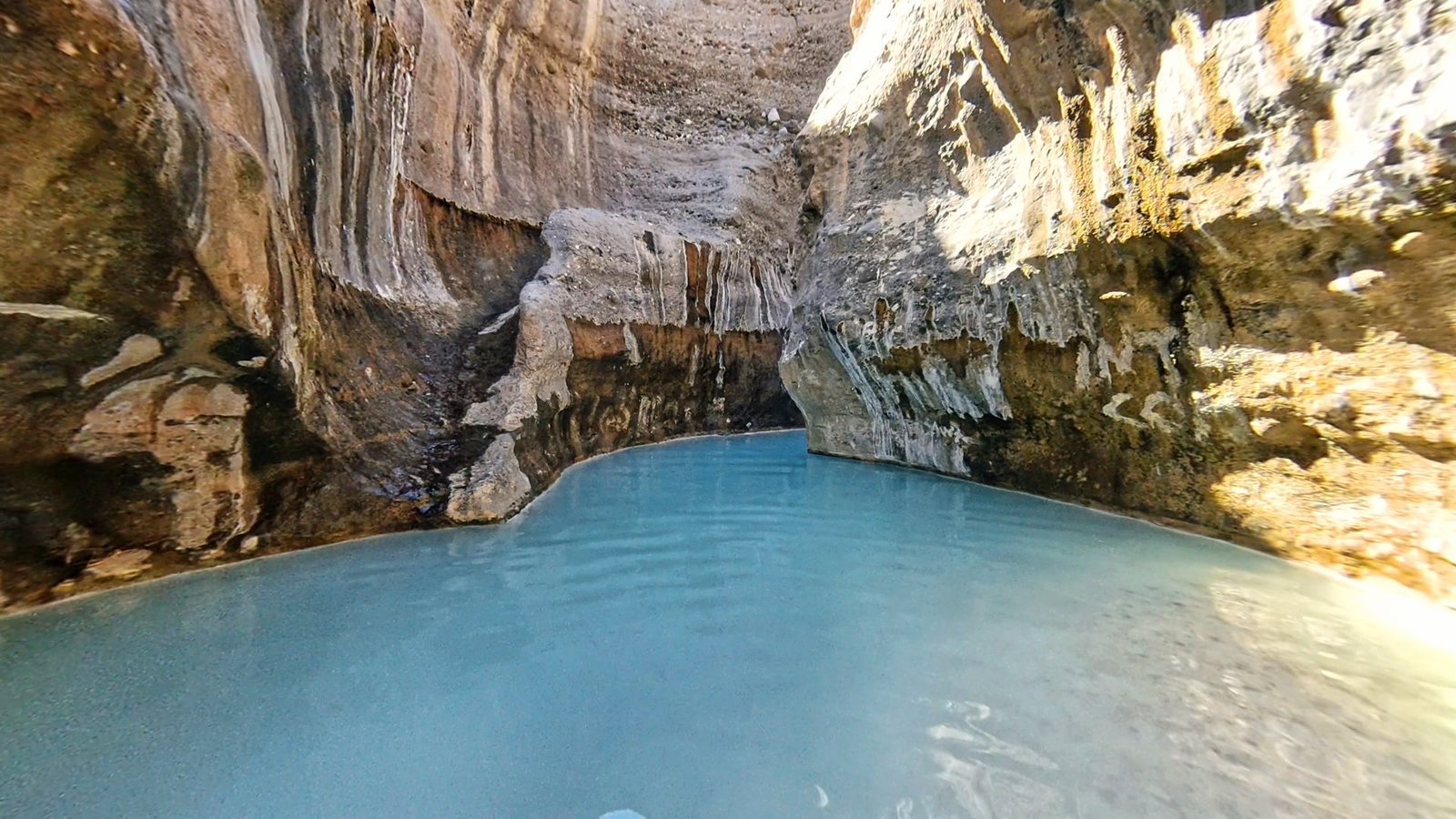
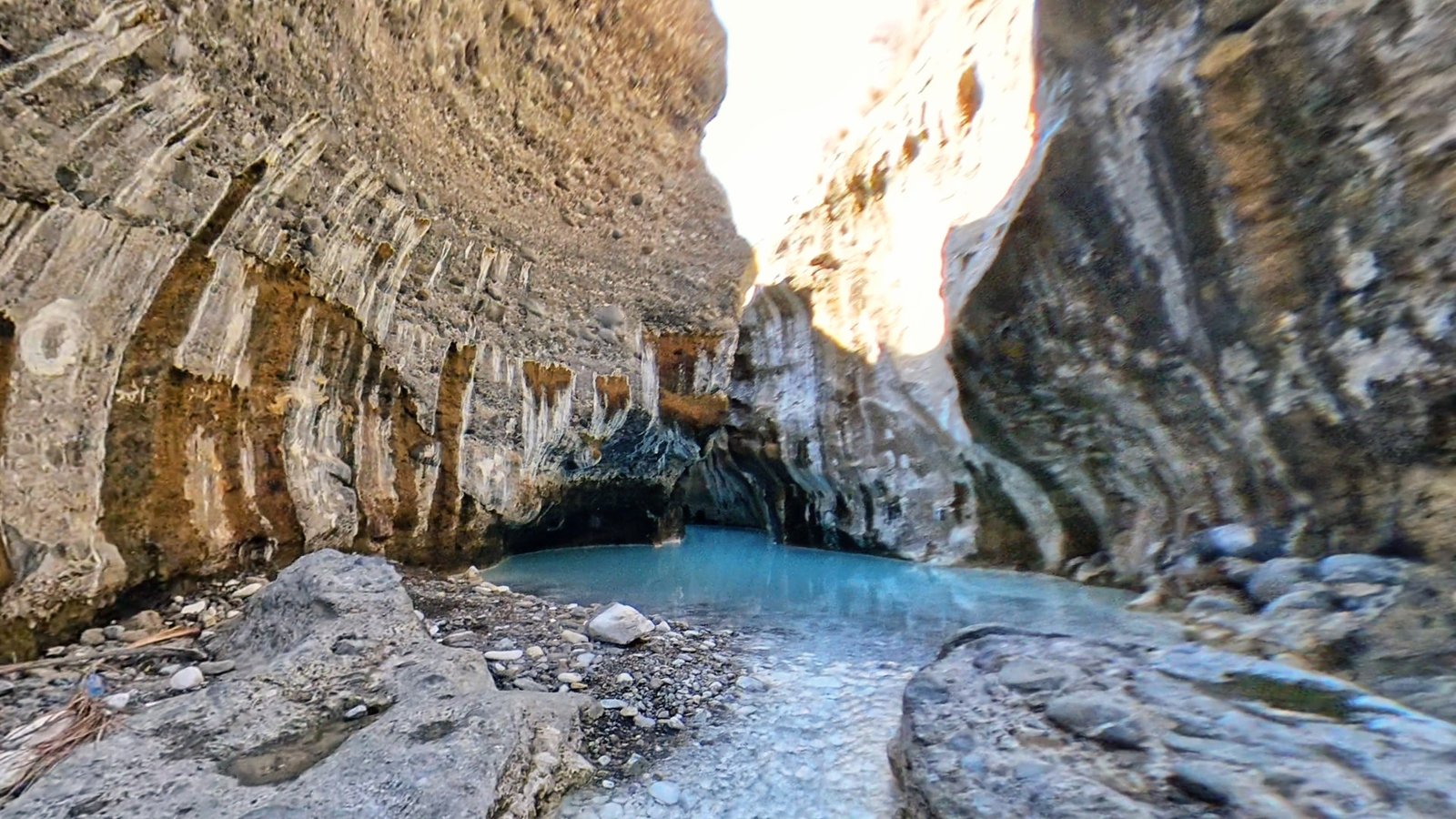
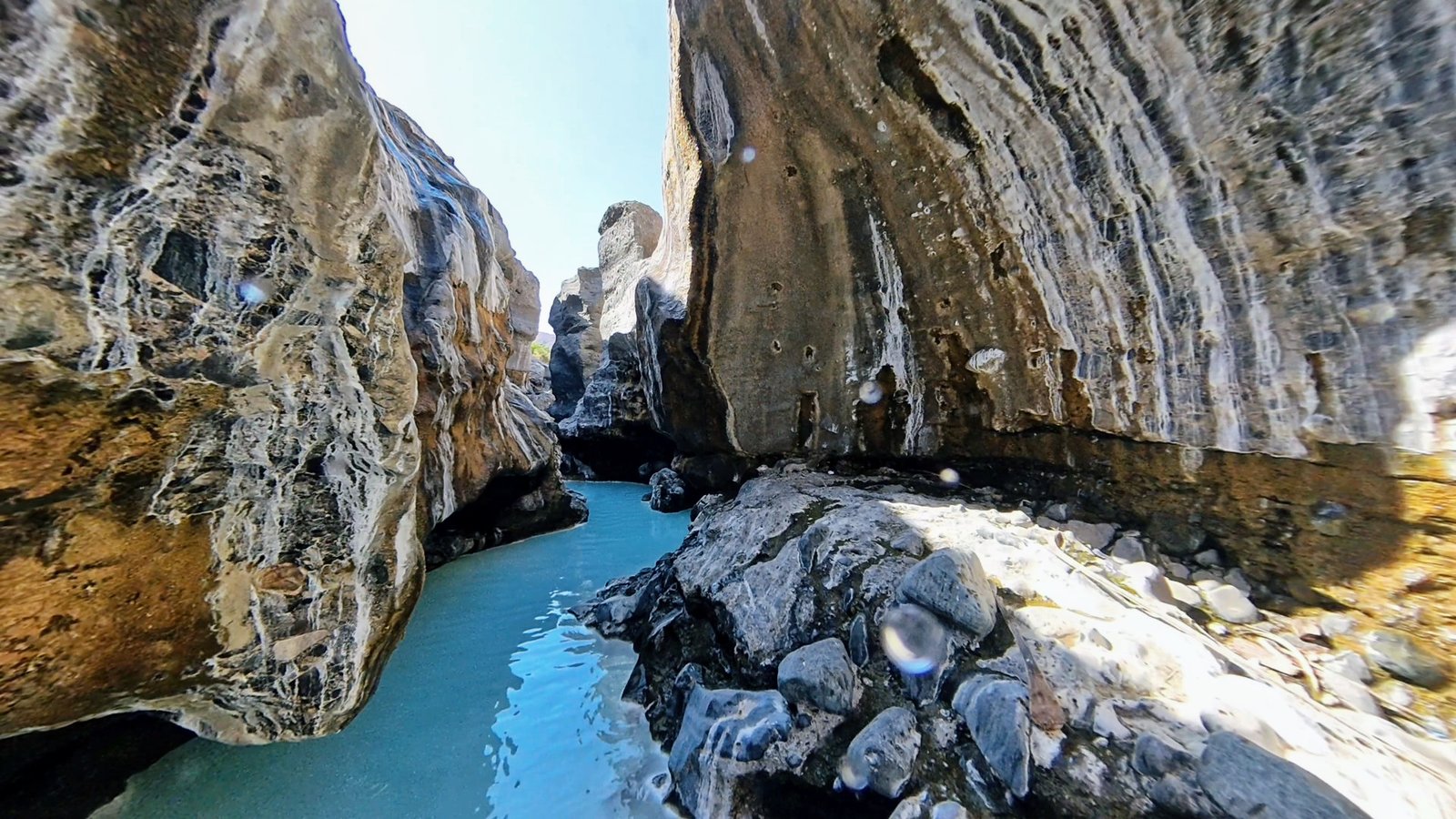
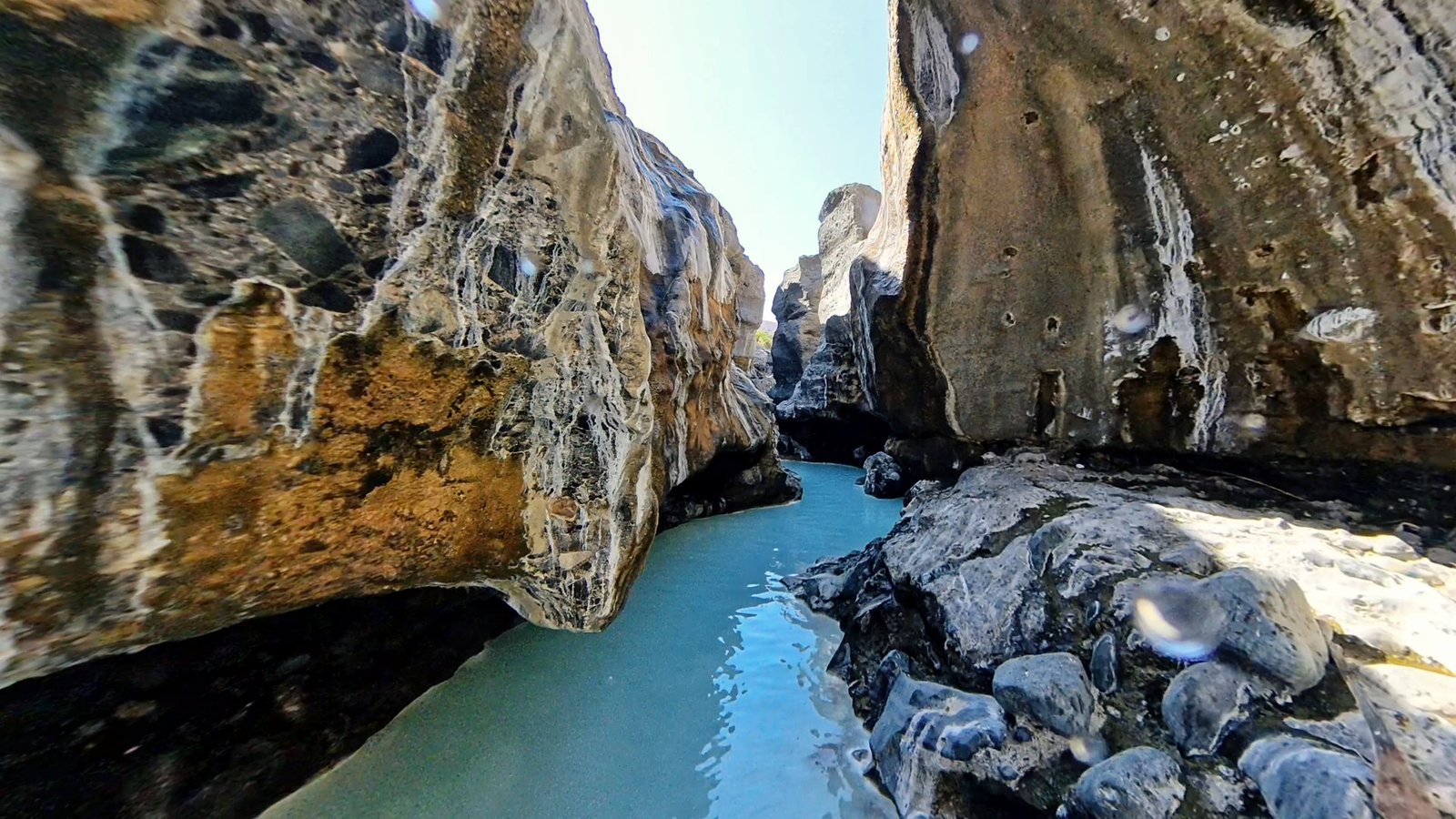
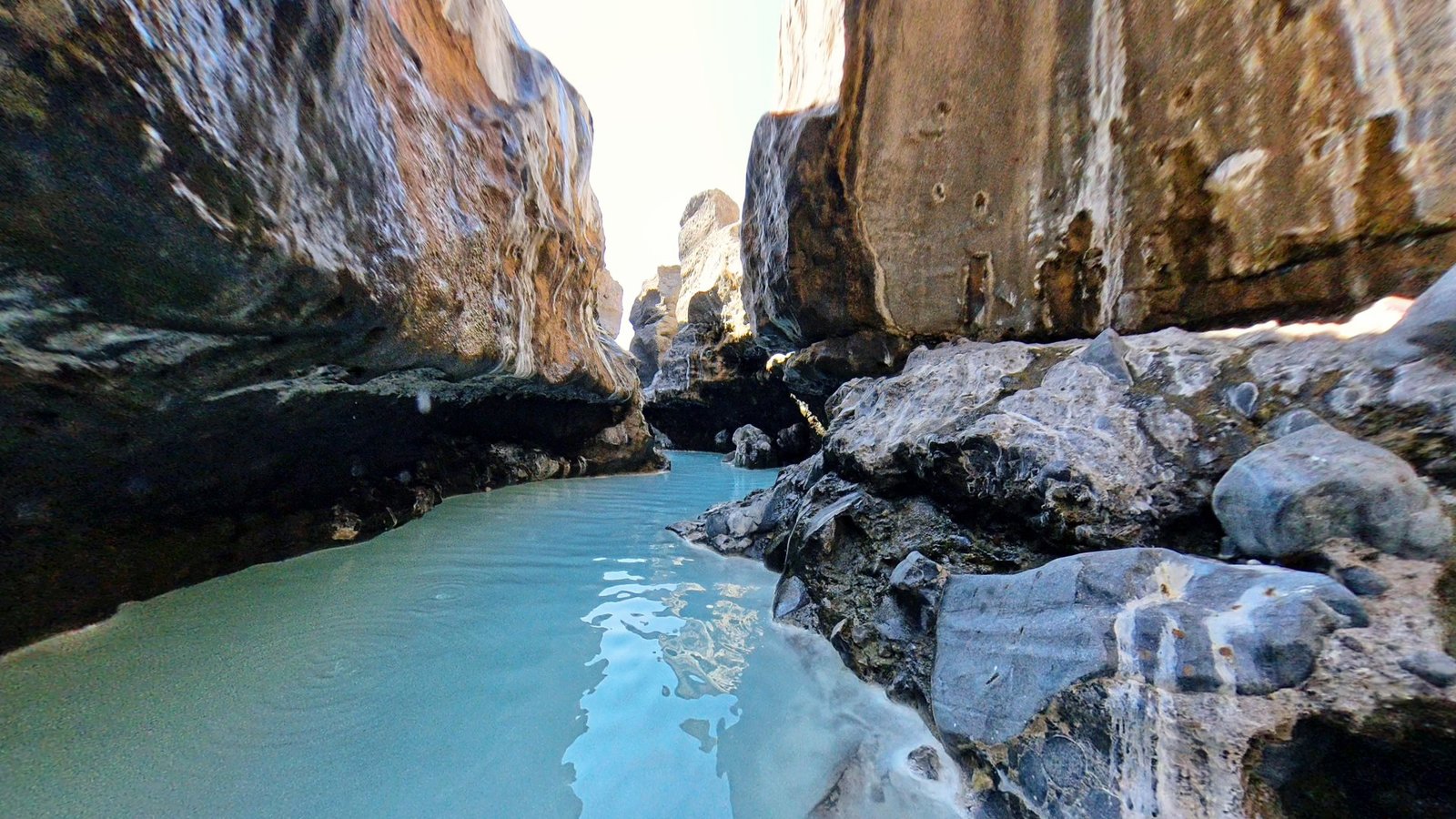
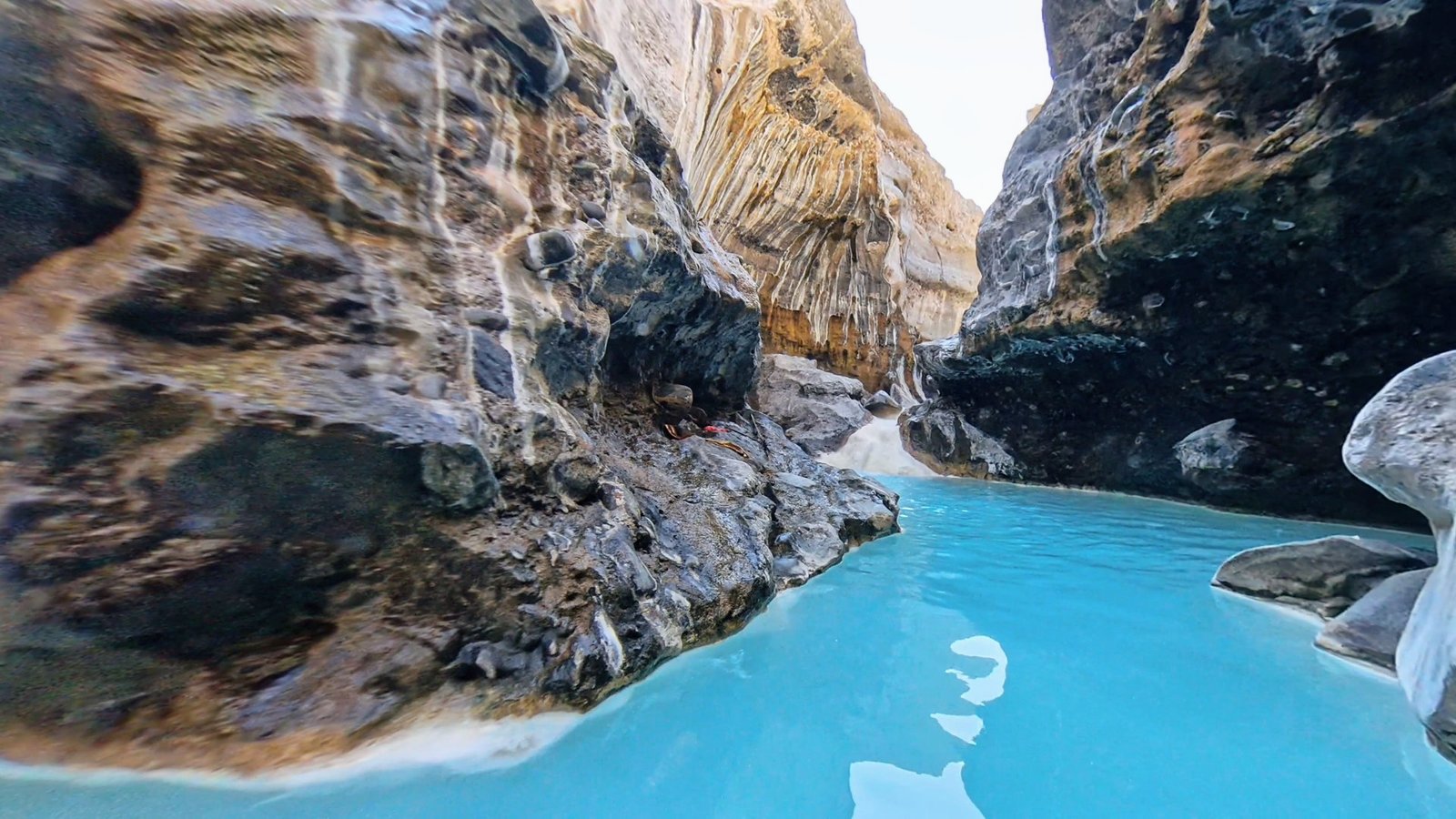
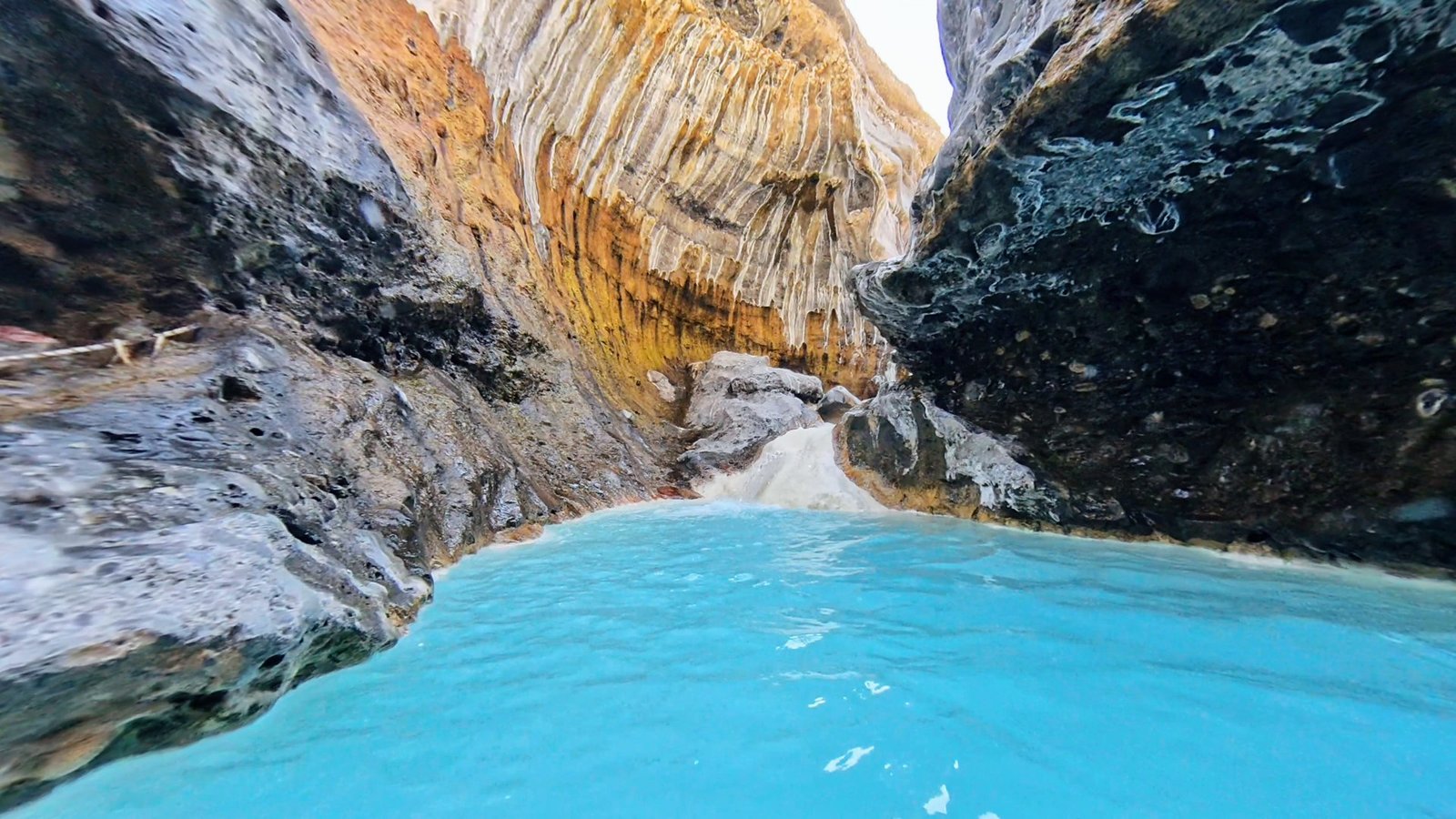
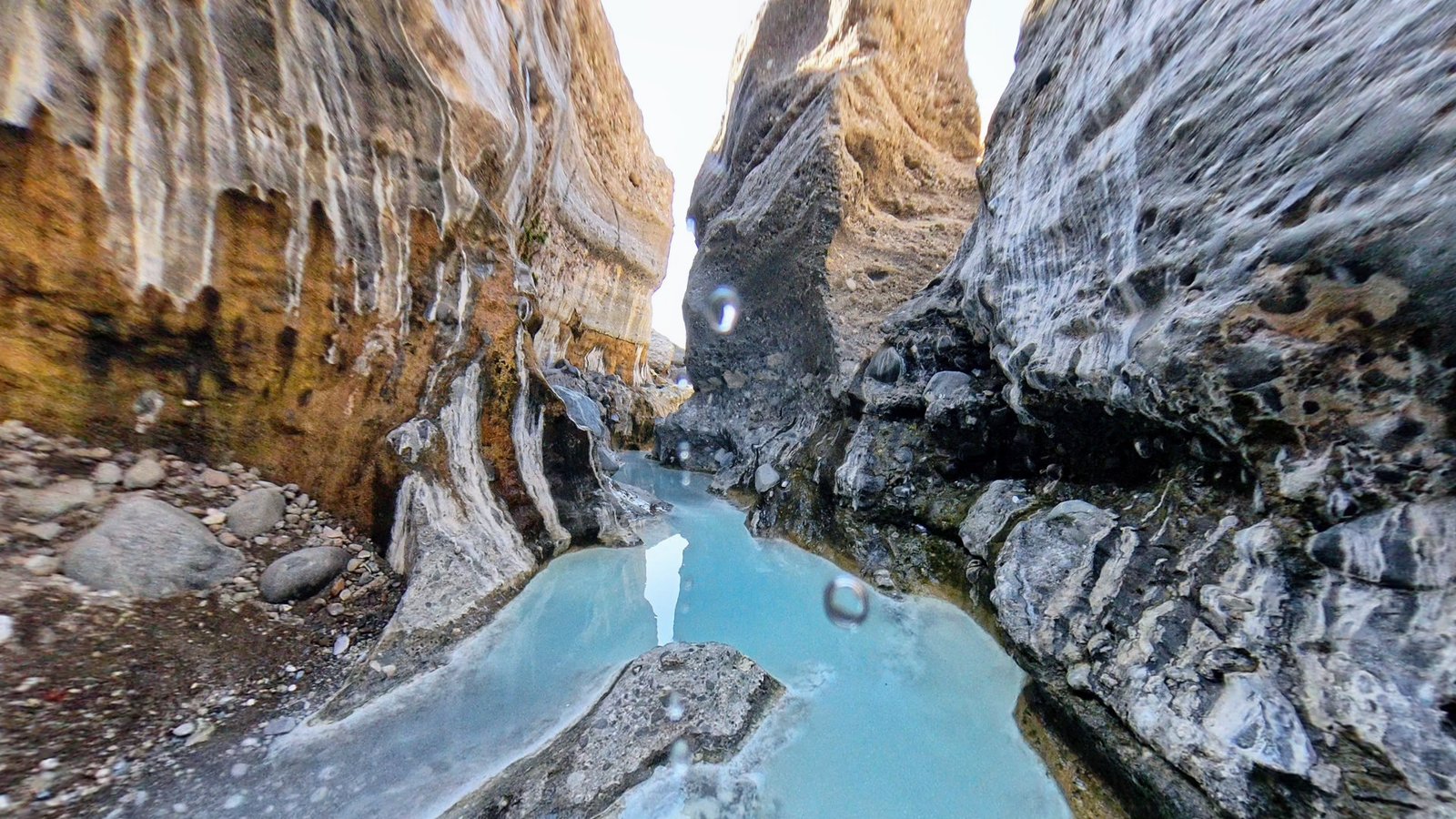
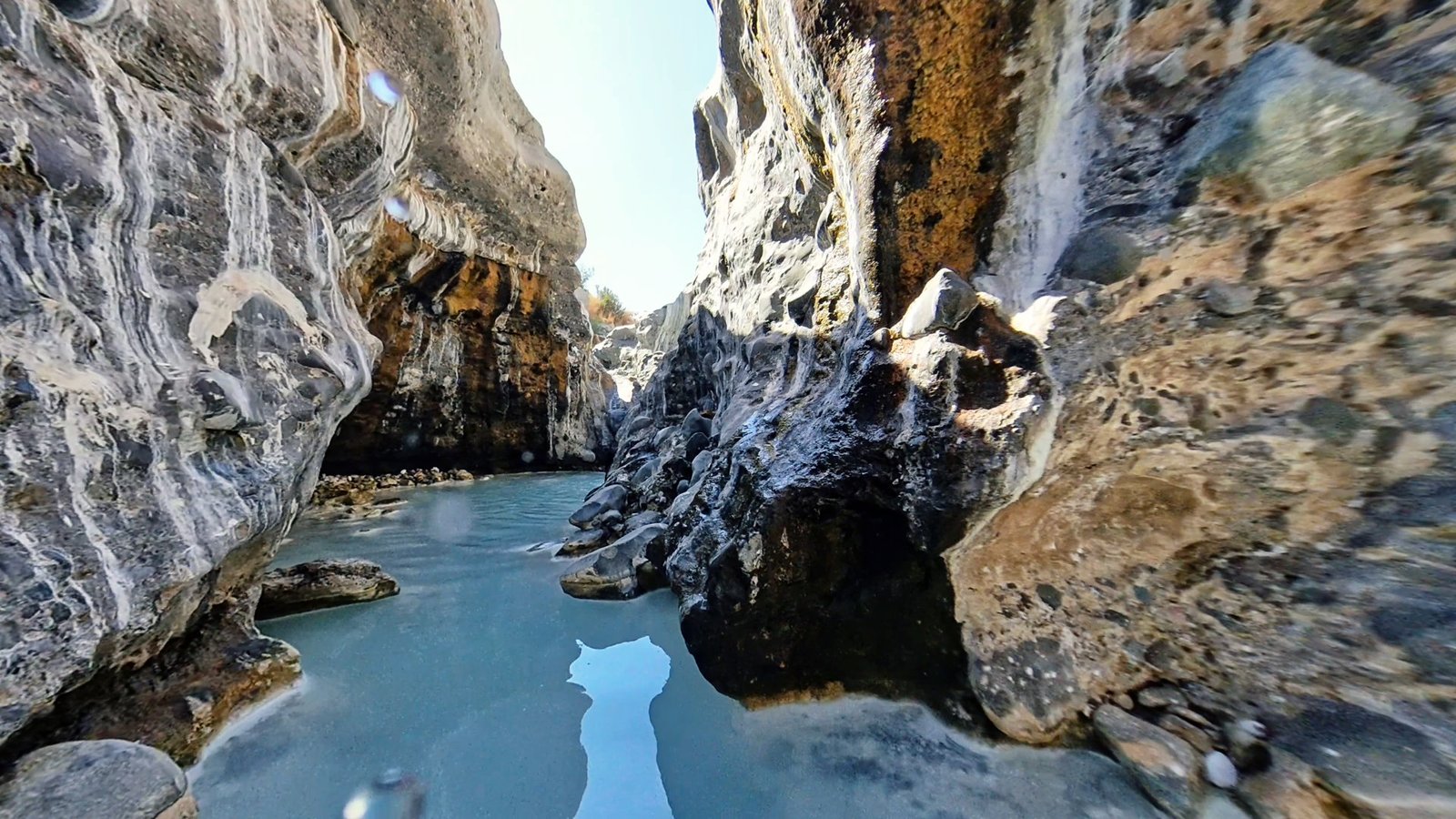
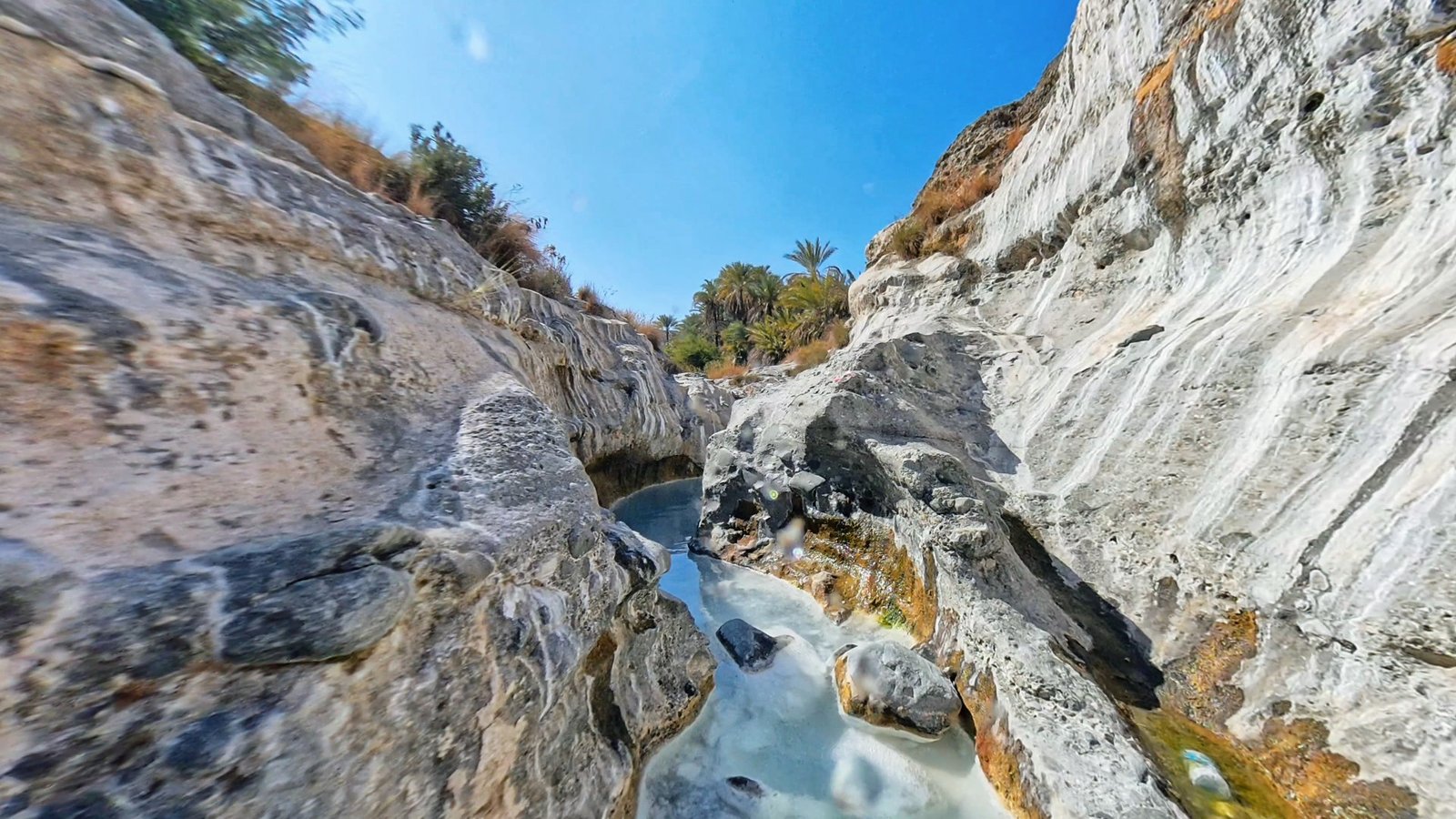
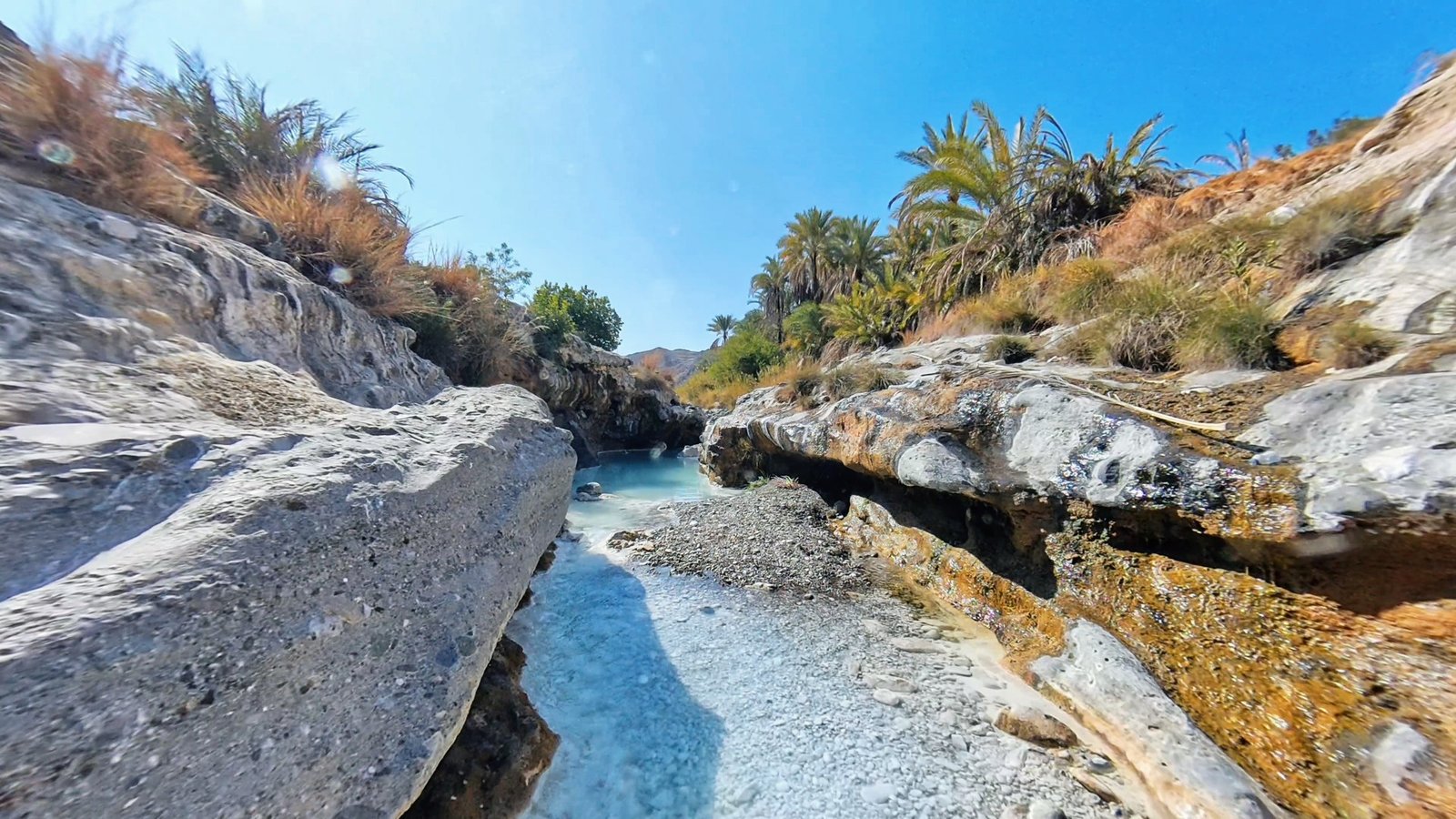
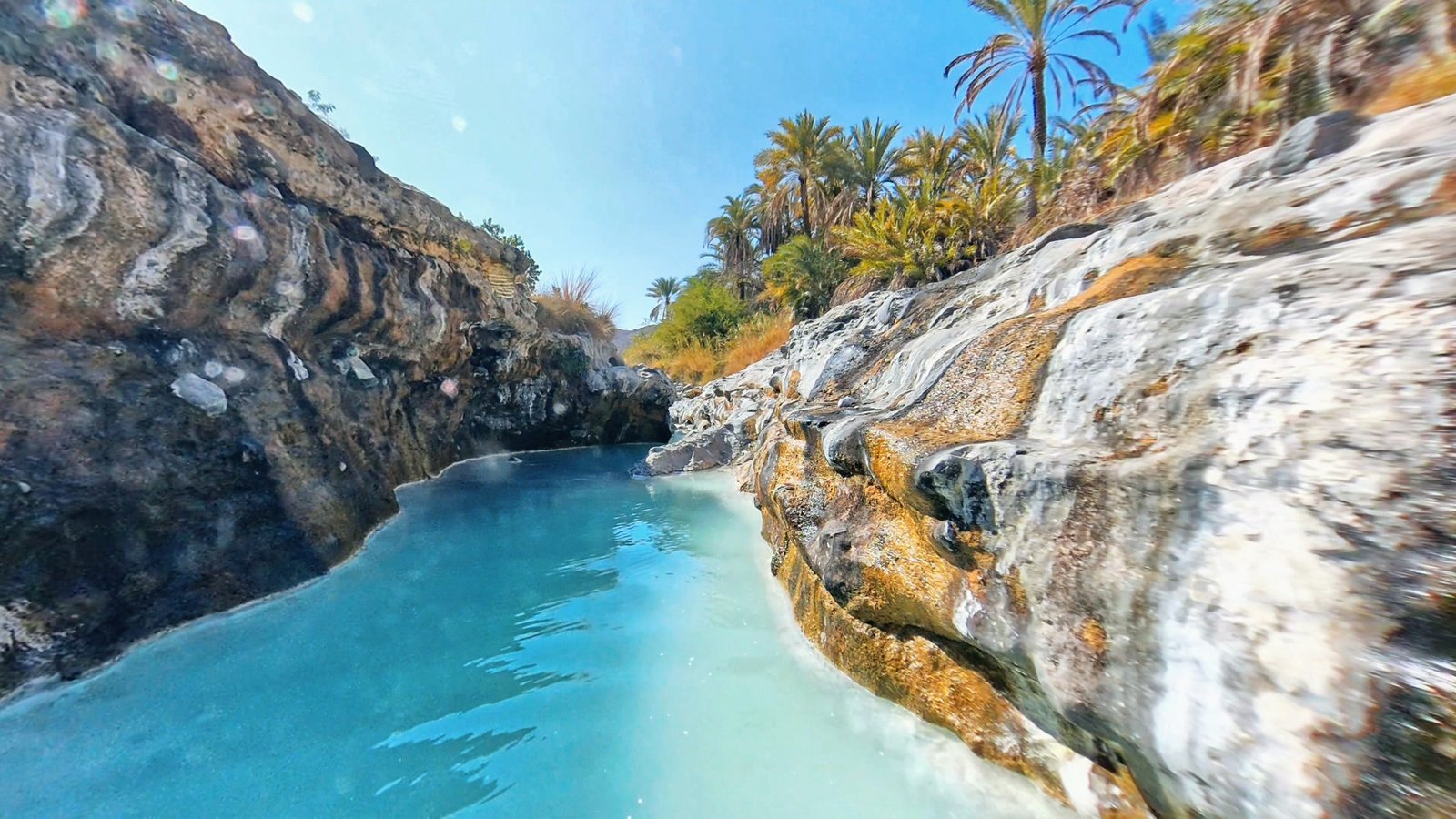
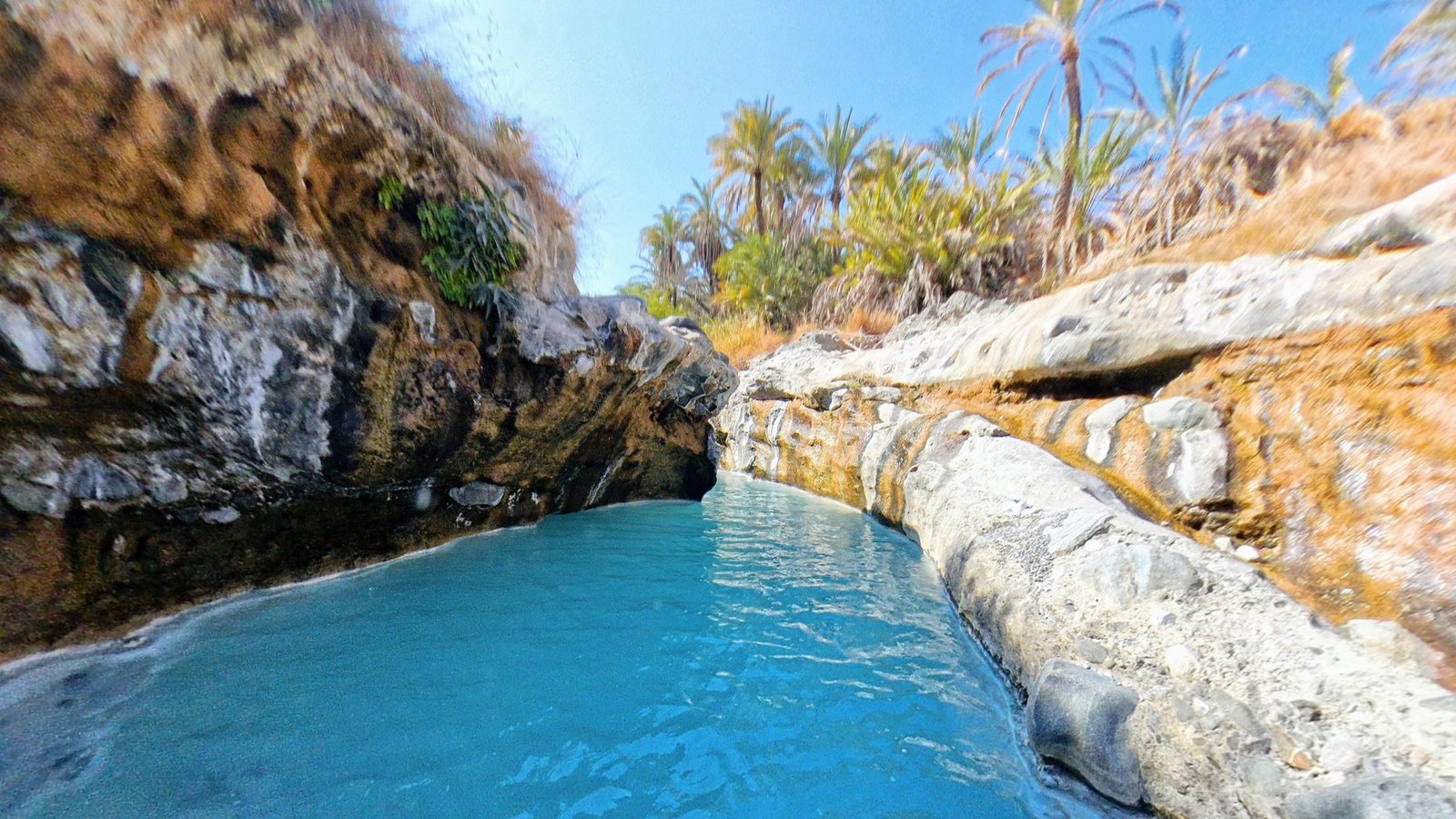
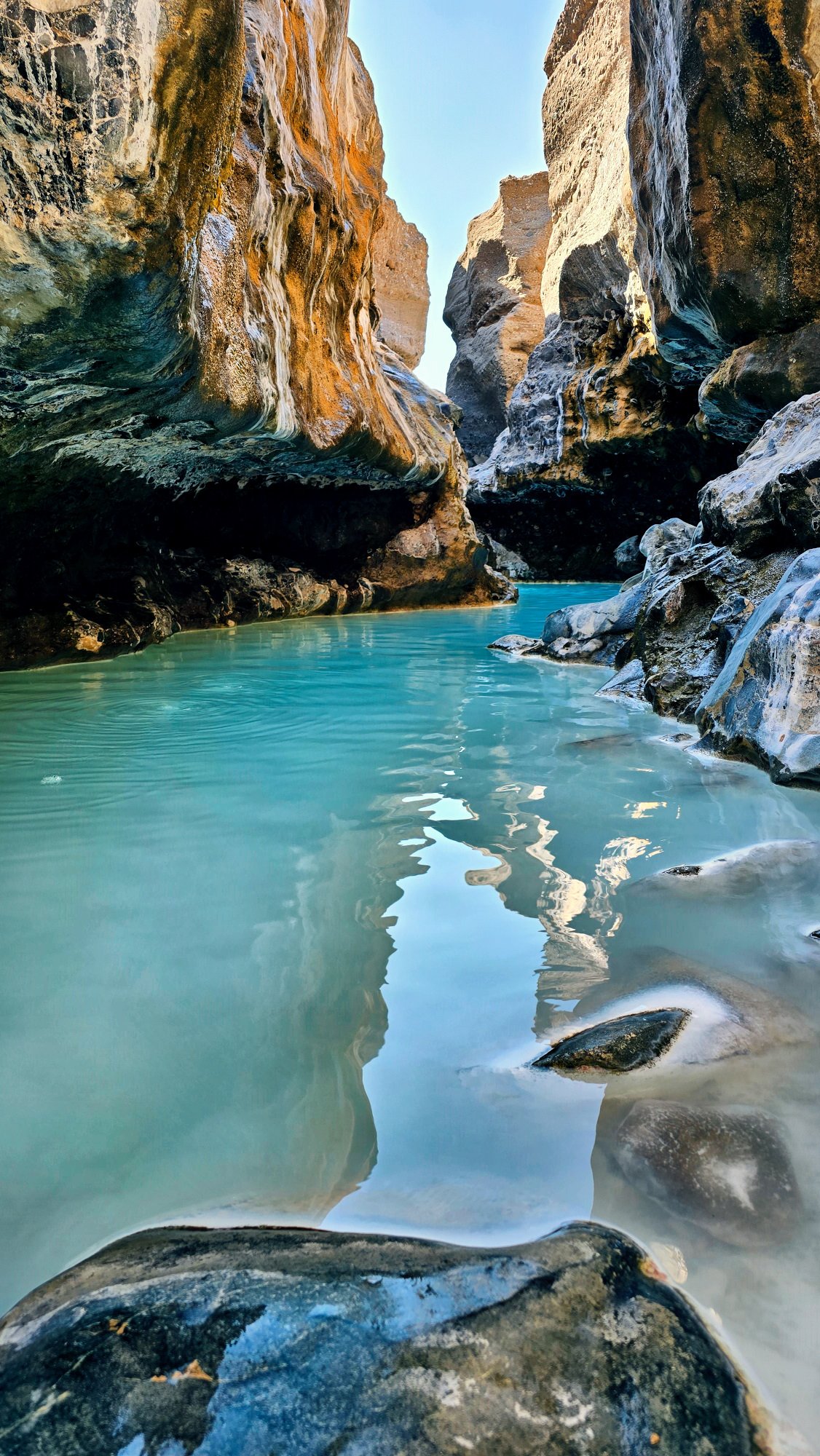
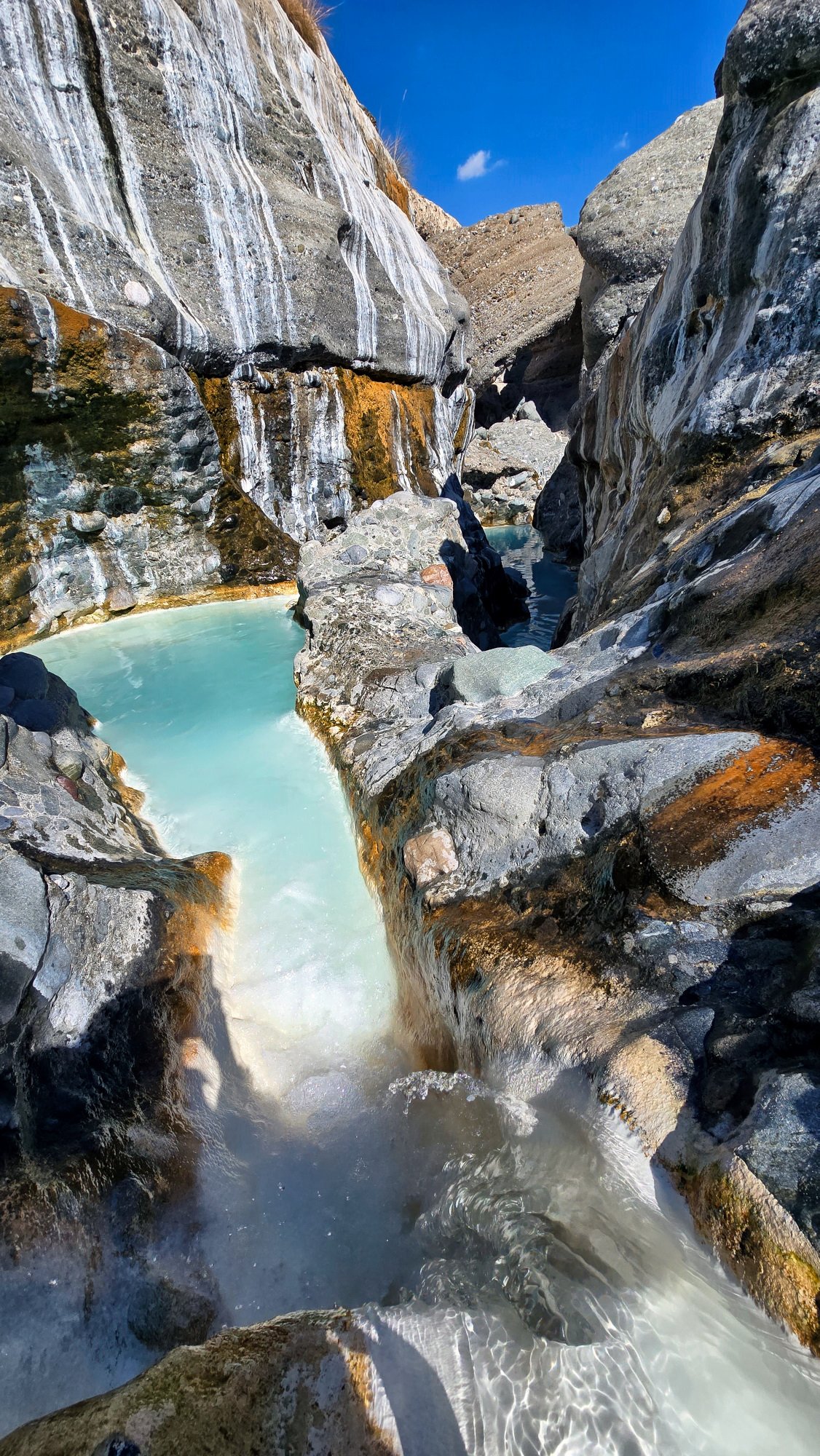
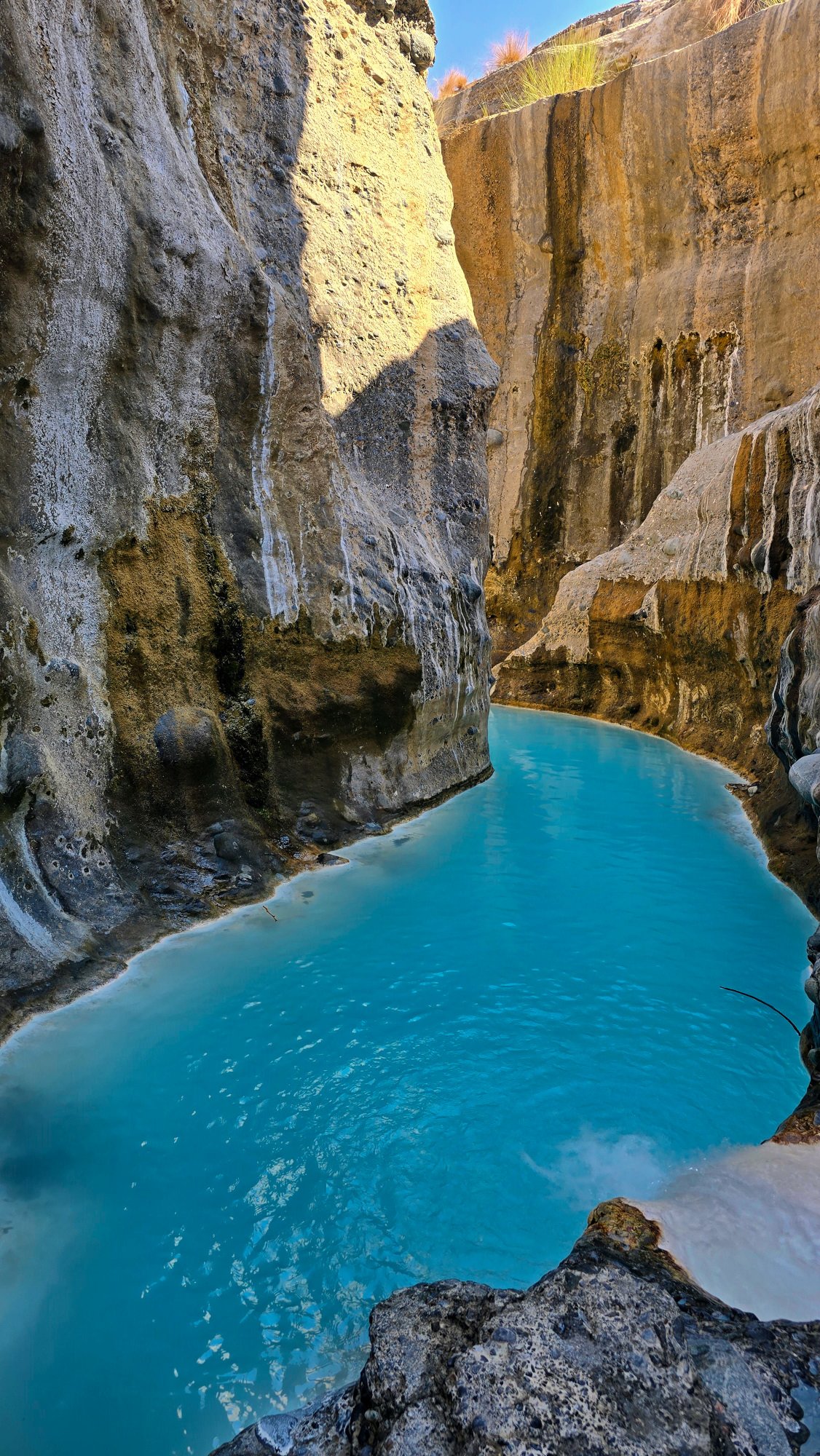
Walk about five minutes past the wall and you will reach the first large pool. Jump in and the water hits you — clear and cold, the kind of cold that makes you catch your breath. But keep swimming deeper into the canyon and something remarkable happens. Gradually, the water transforms. The color shifts to a milky, opaque blue that looks almost unreal, and the temperature rises until it becomes genuinely warm and soothing. I found myself stopping just to look at it. It does not look like natural water. It looks like something from a painting.
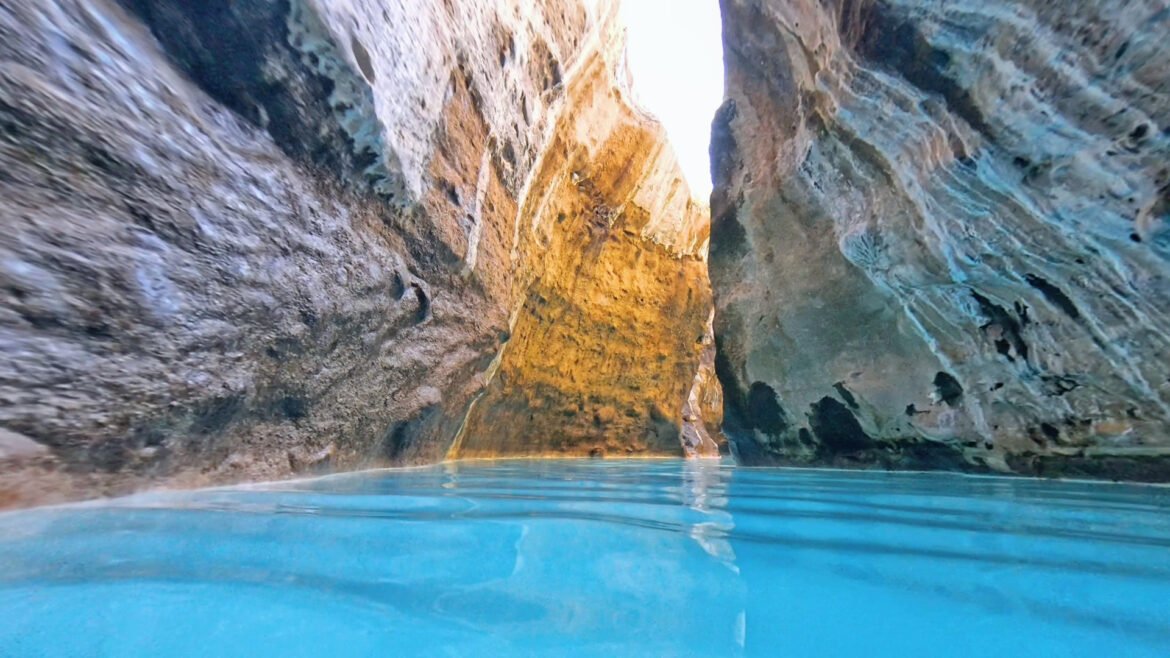
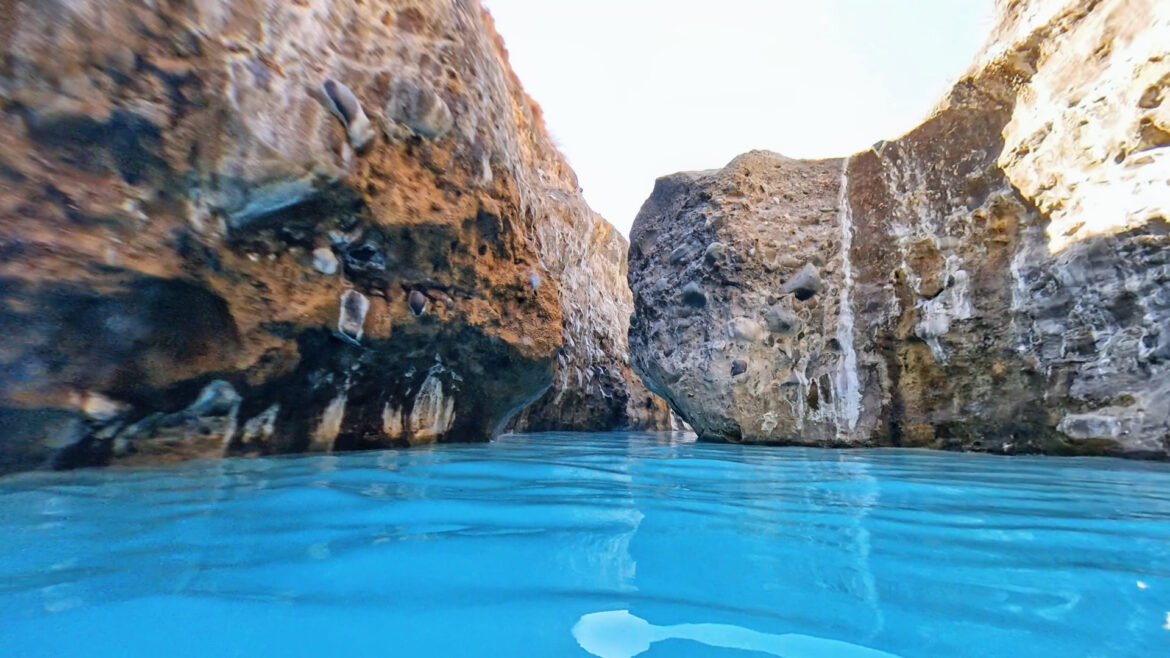
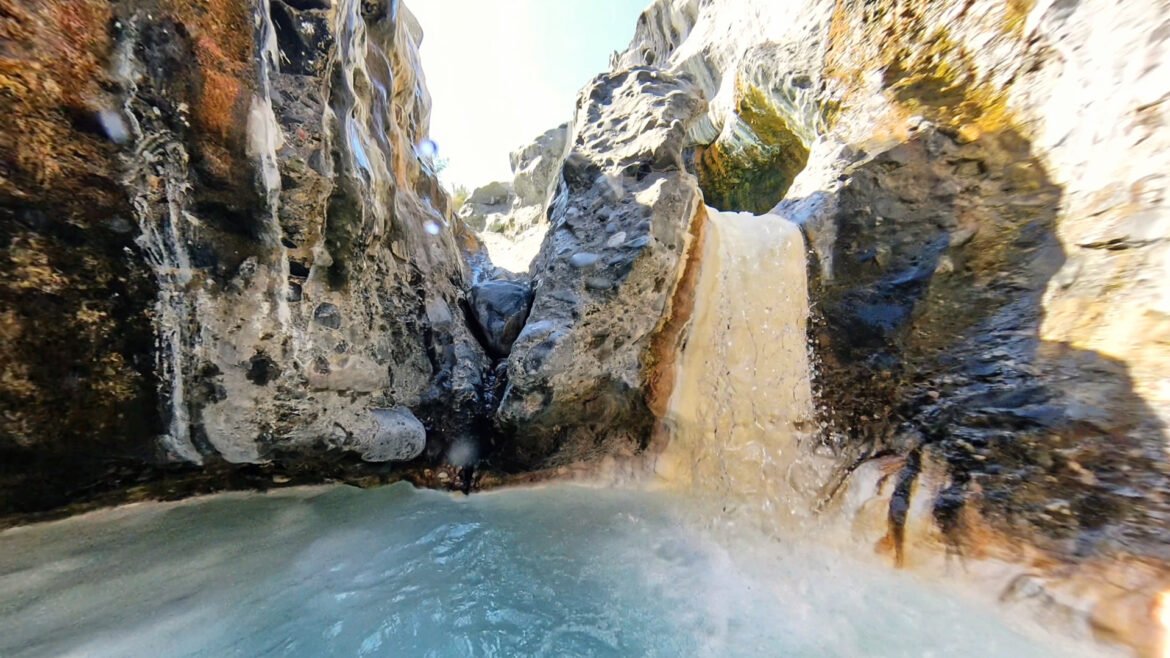
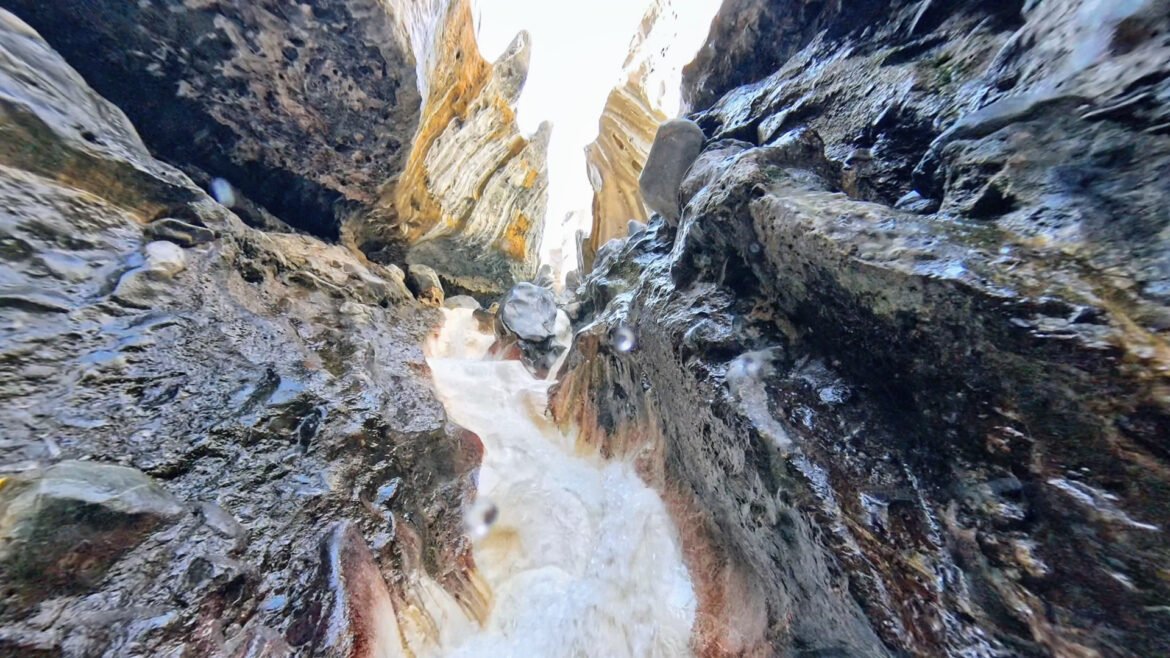
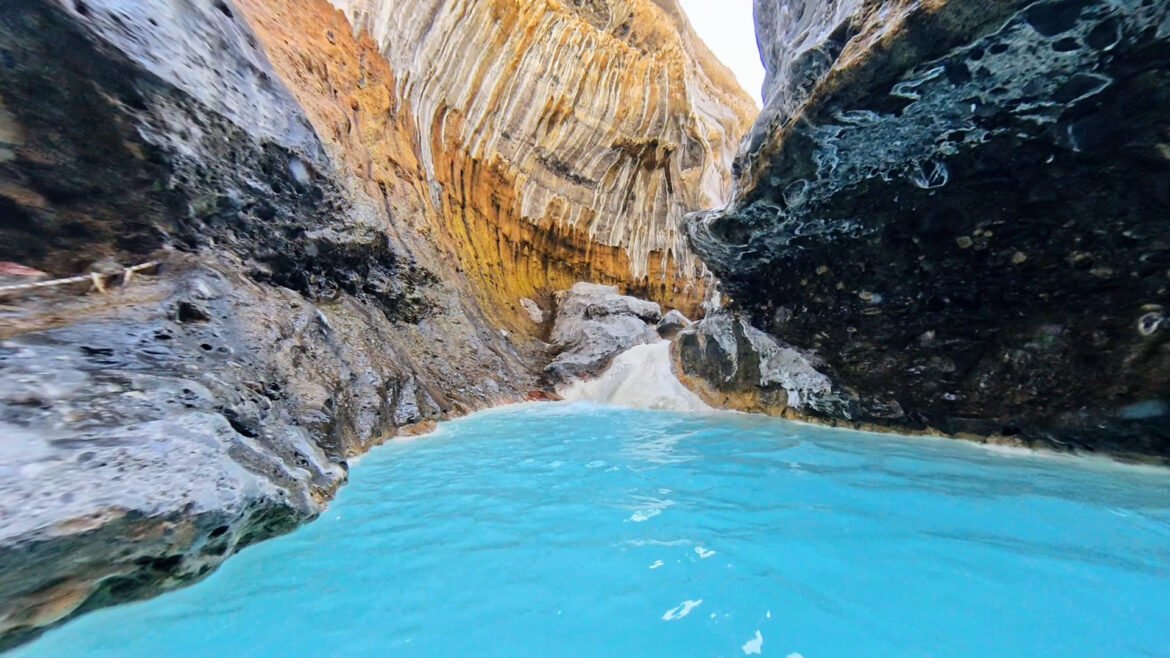
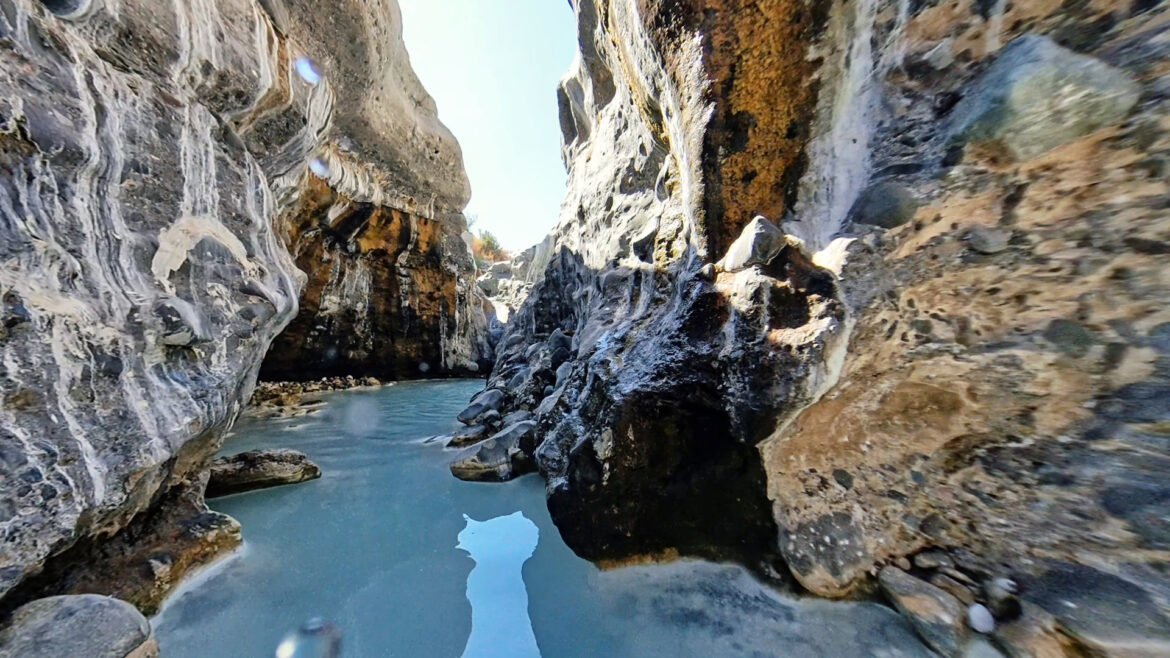
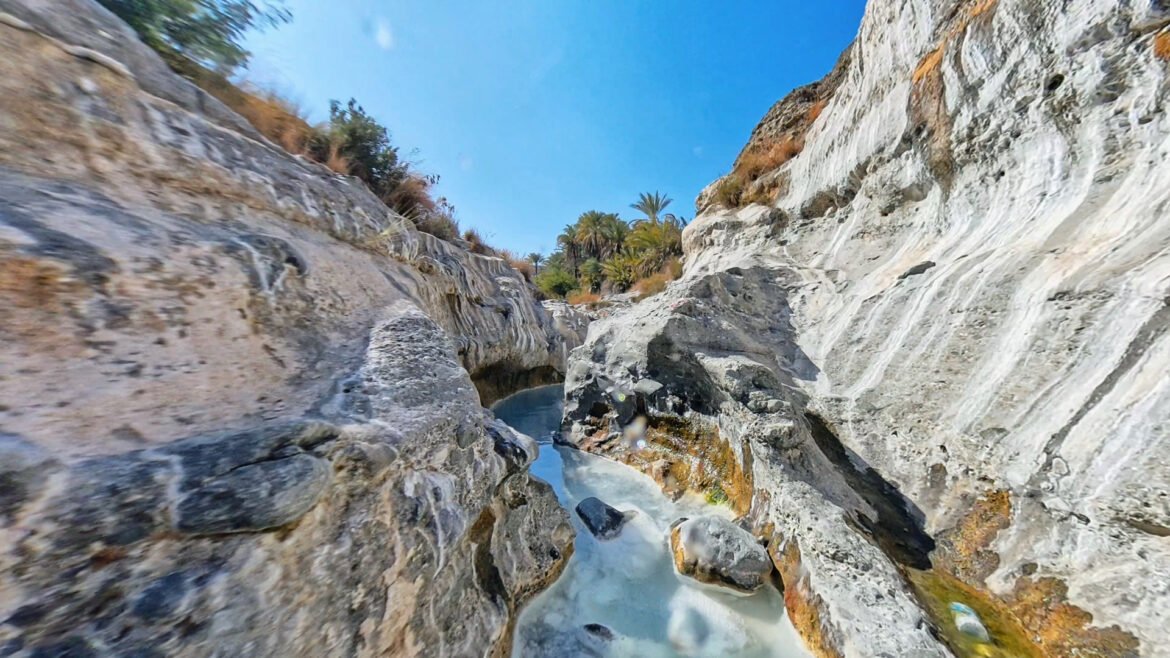
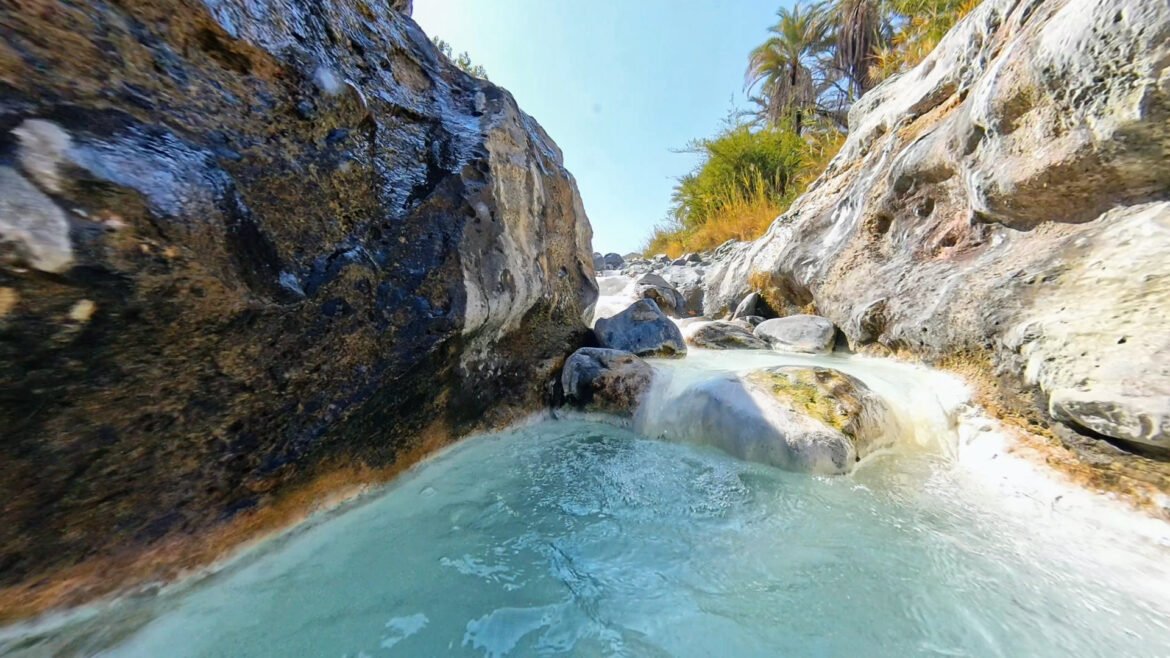
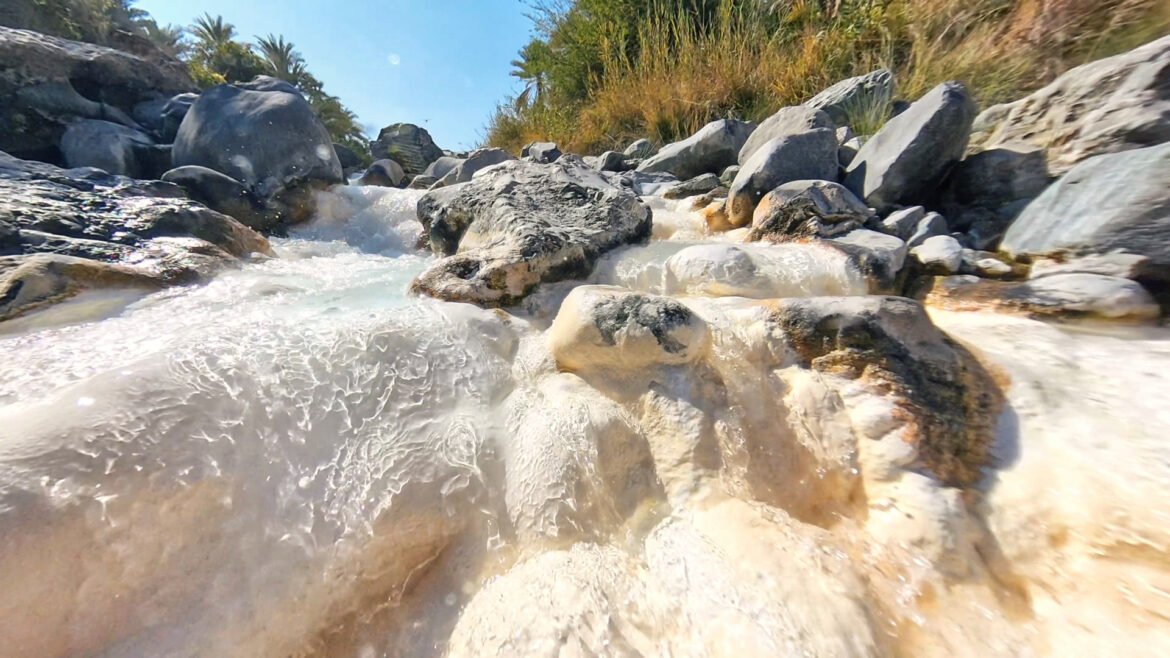
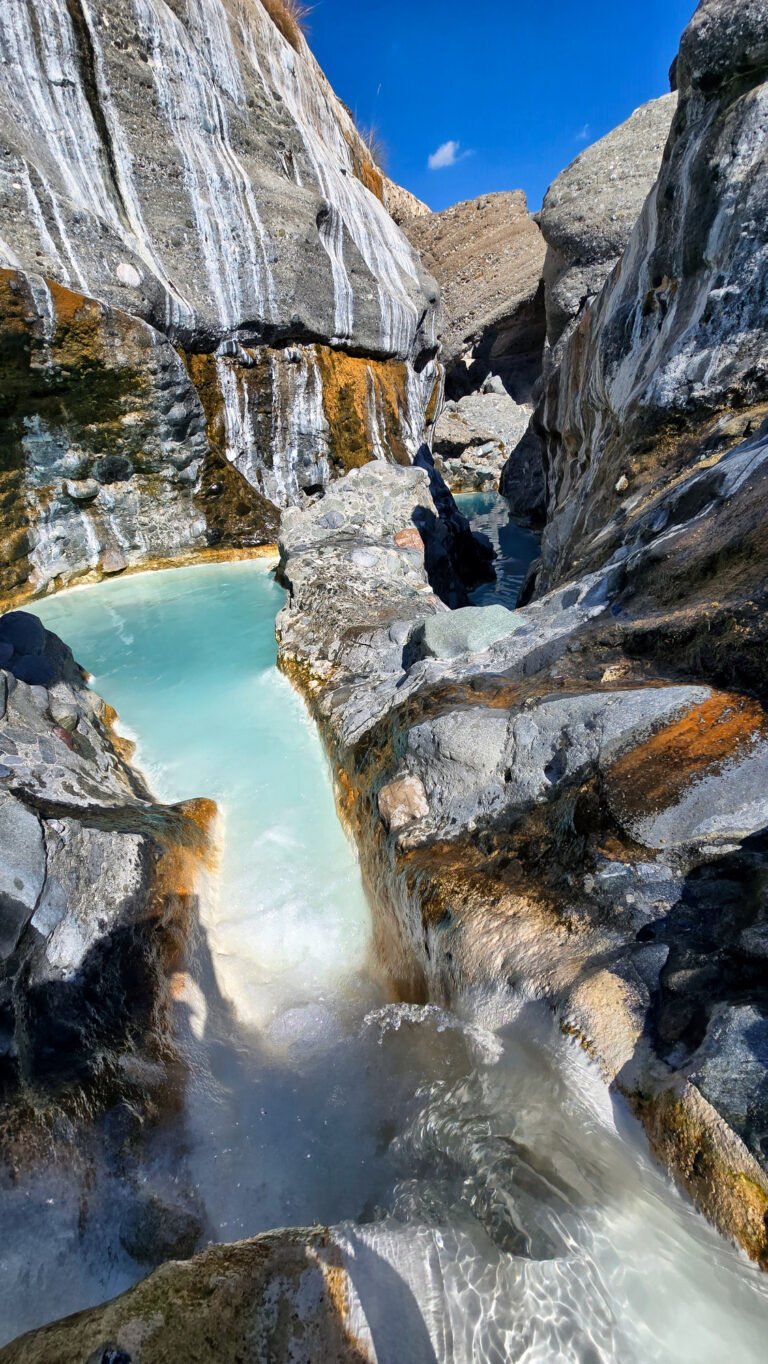
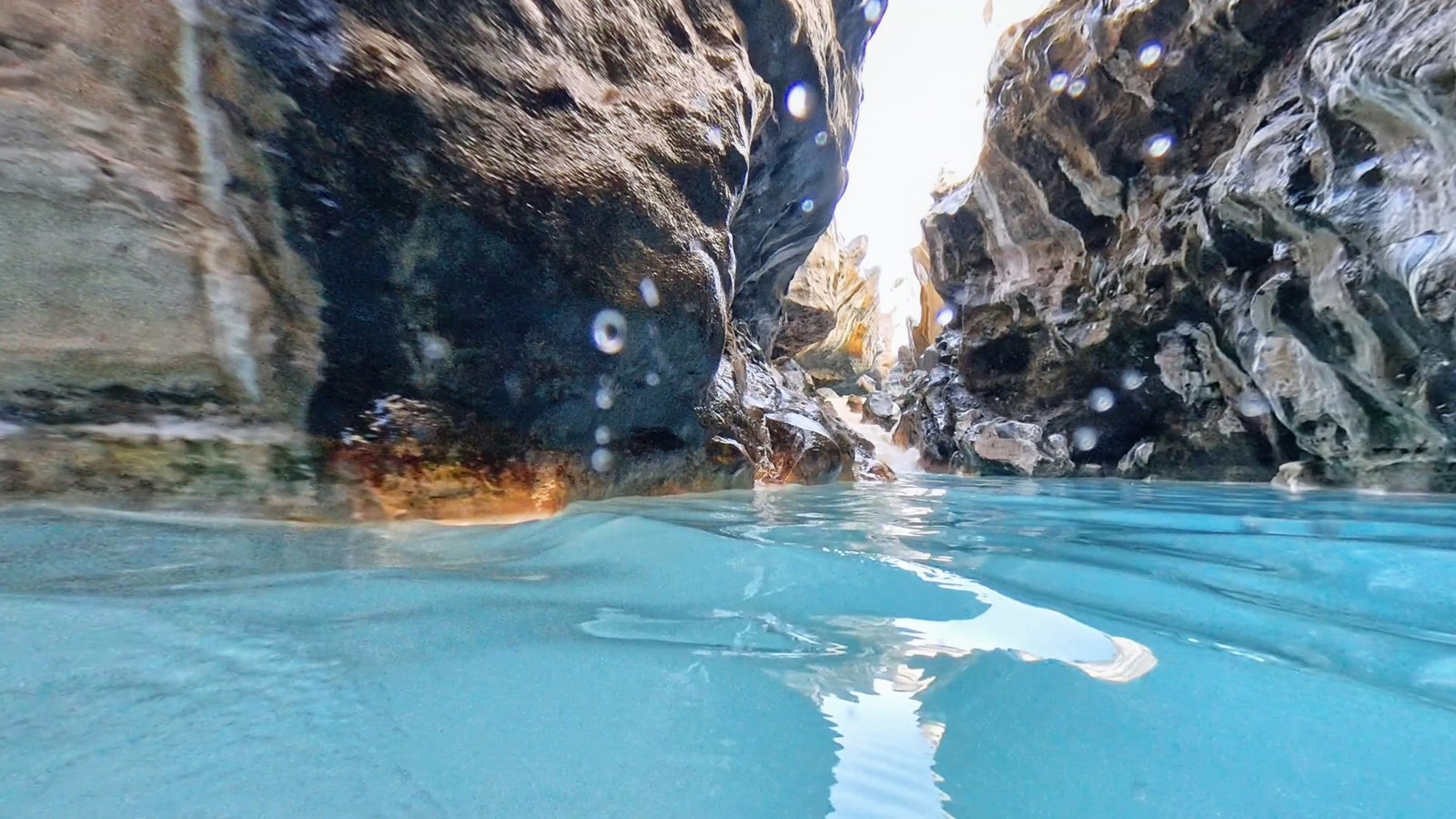
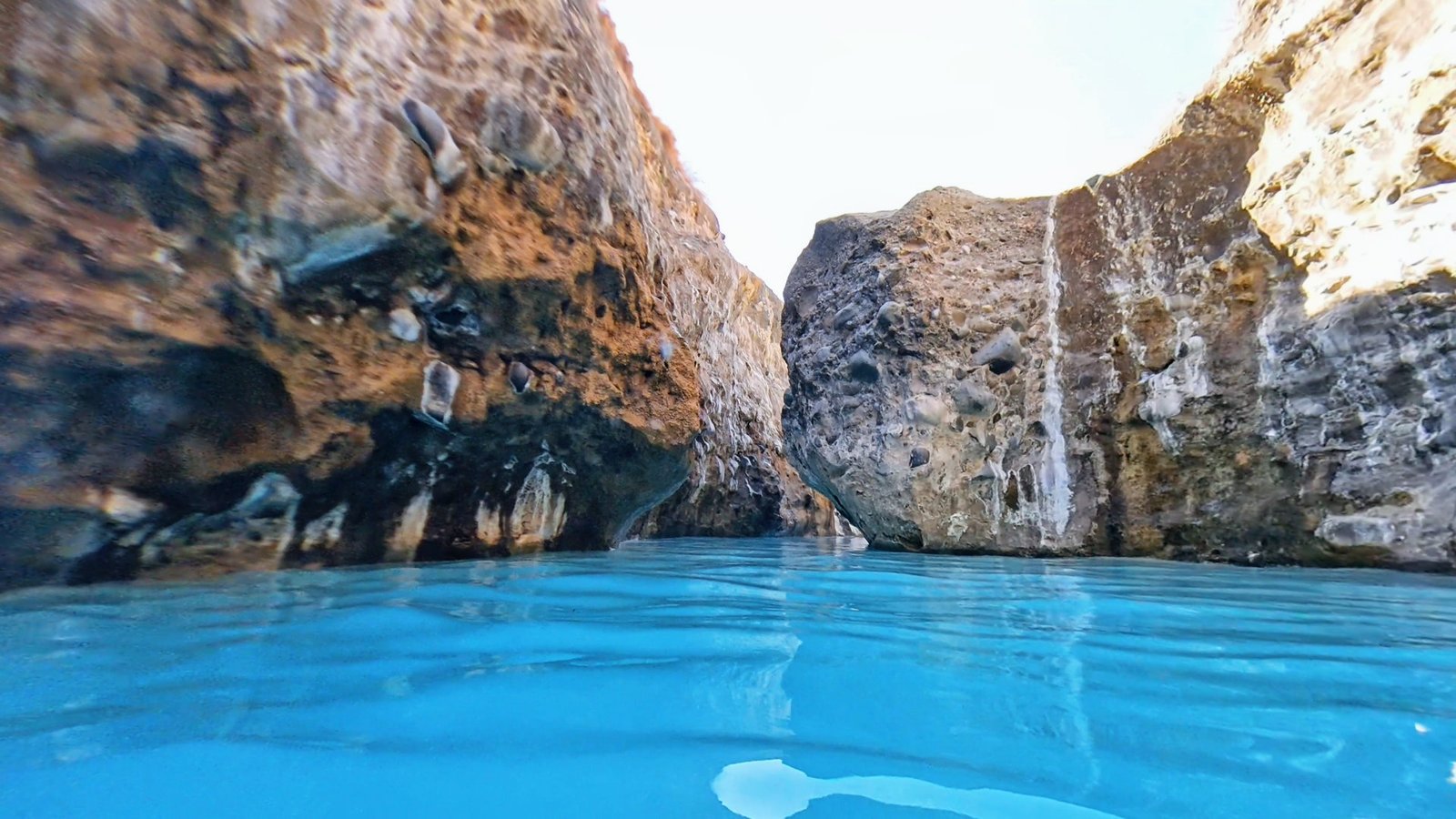
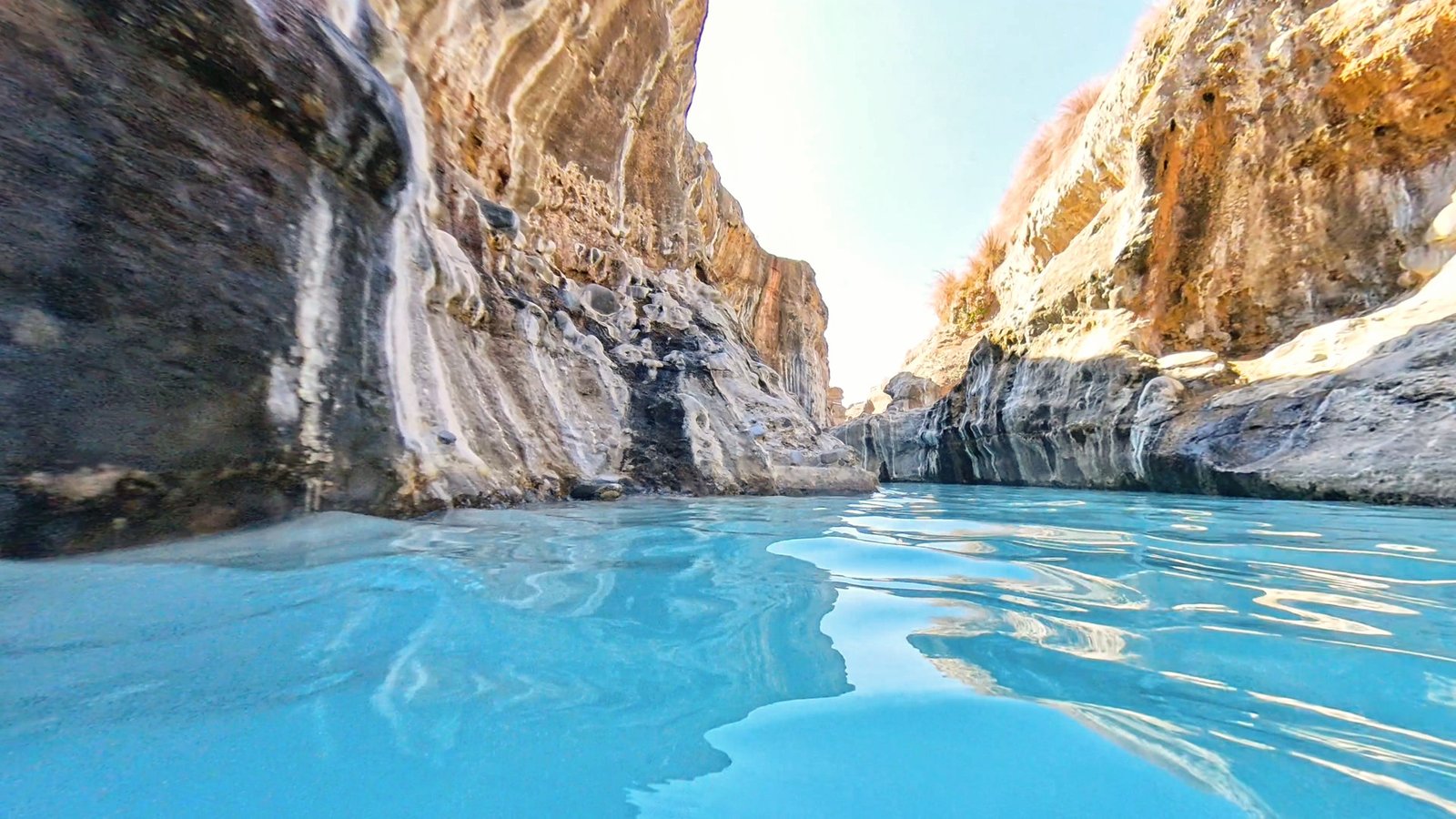
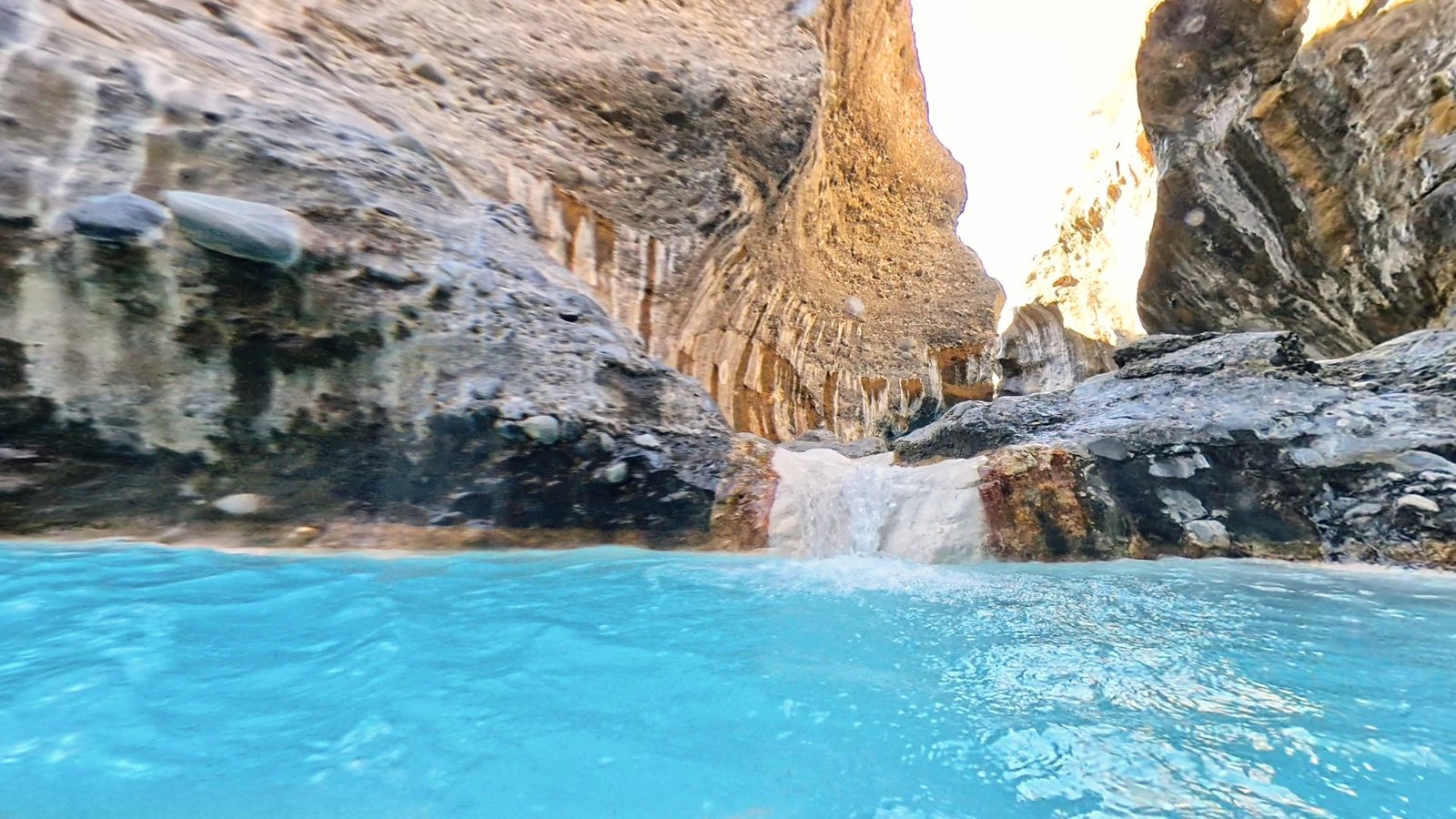
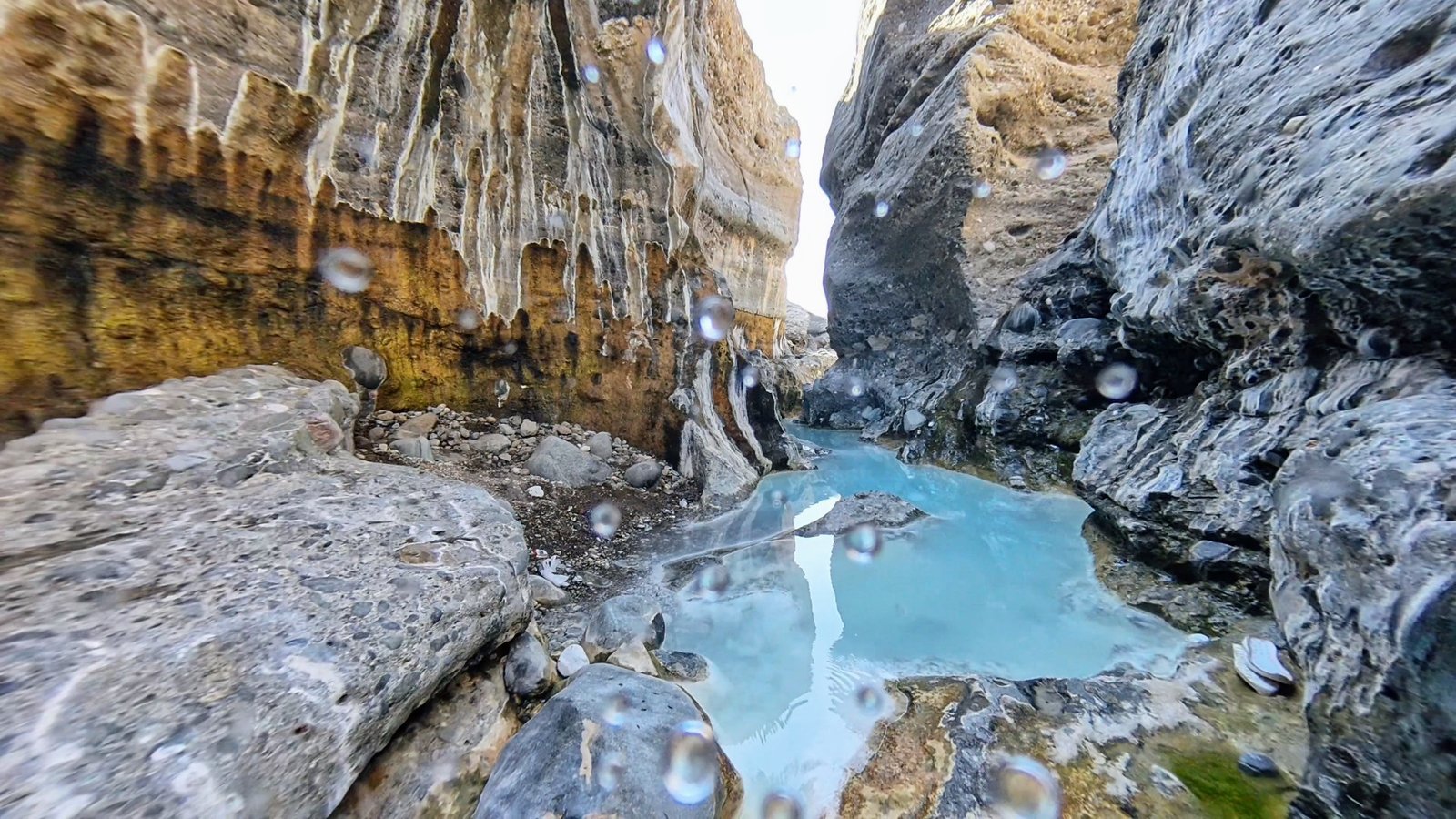
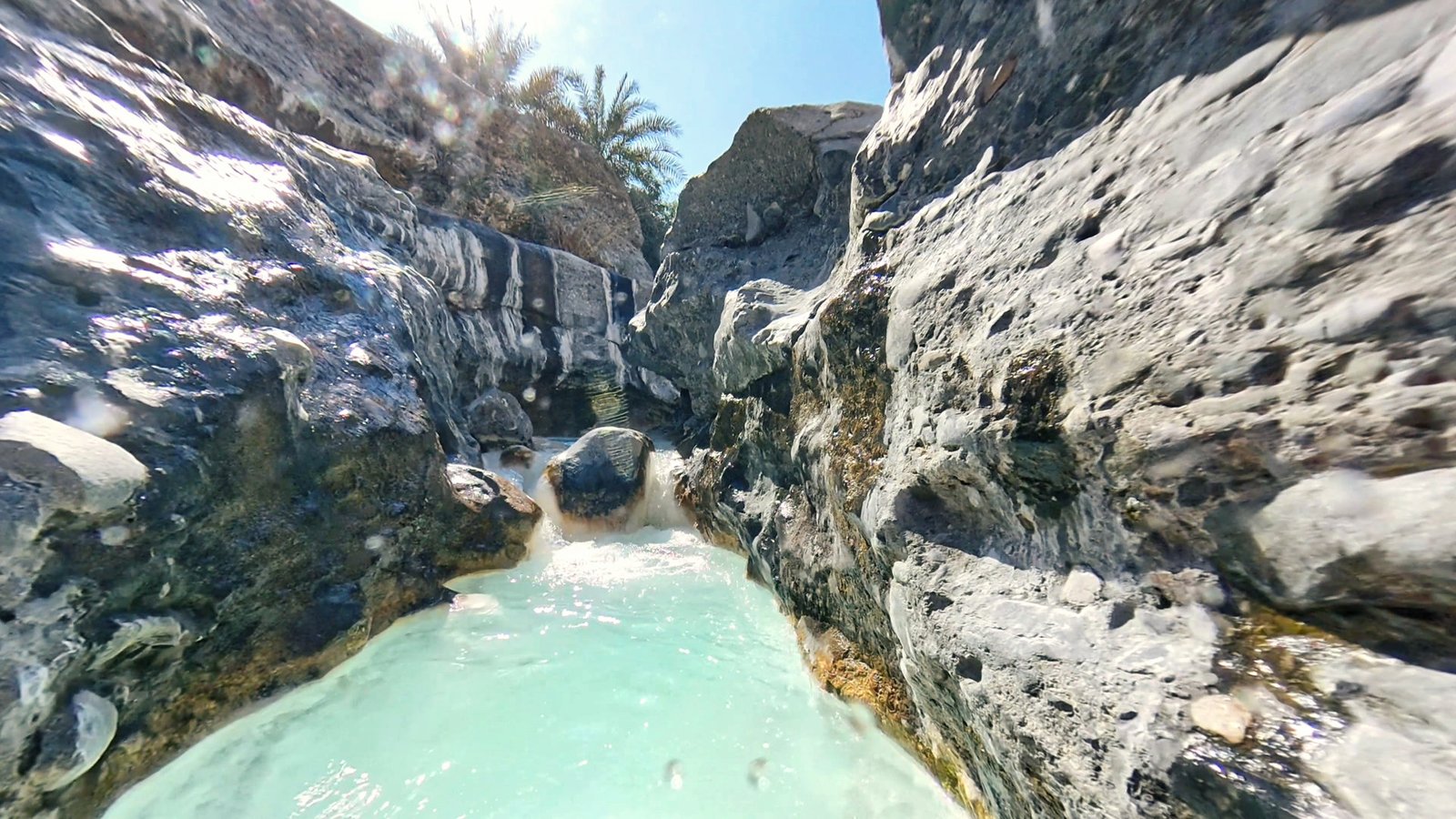
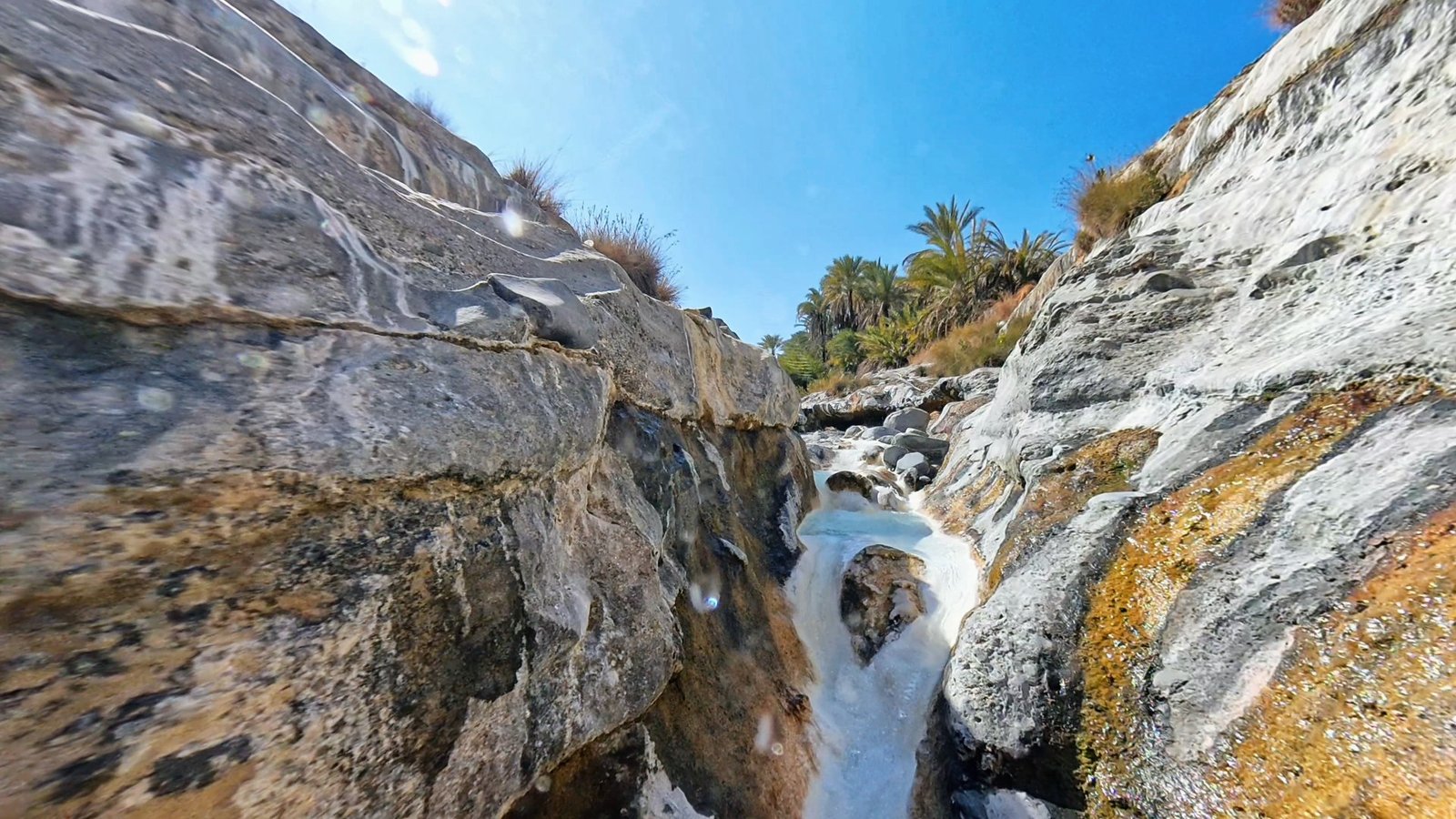
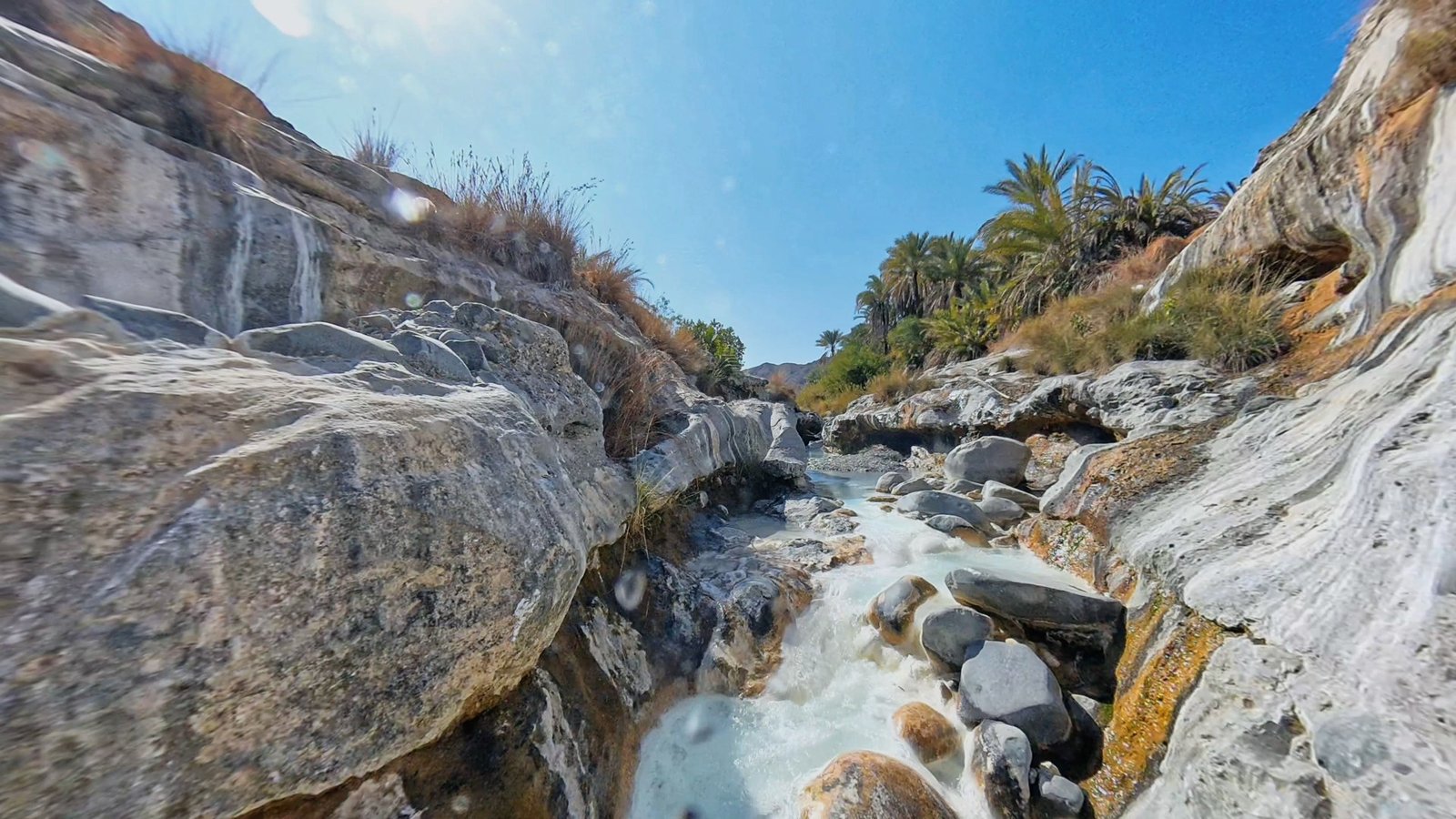
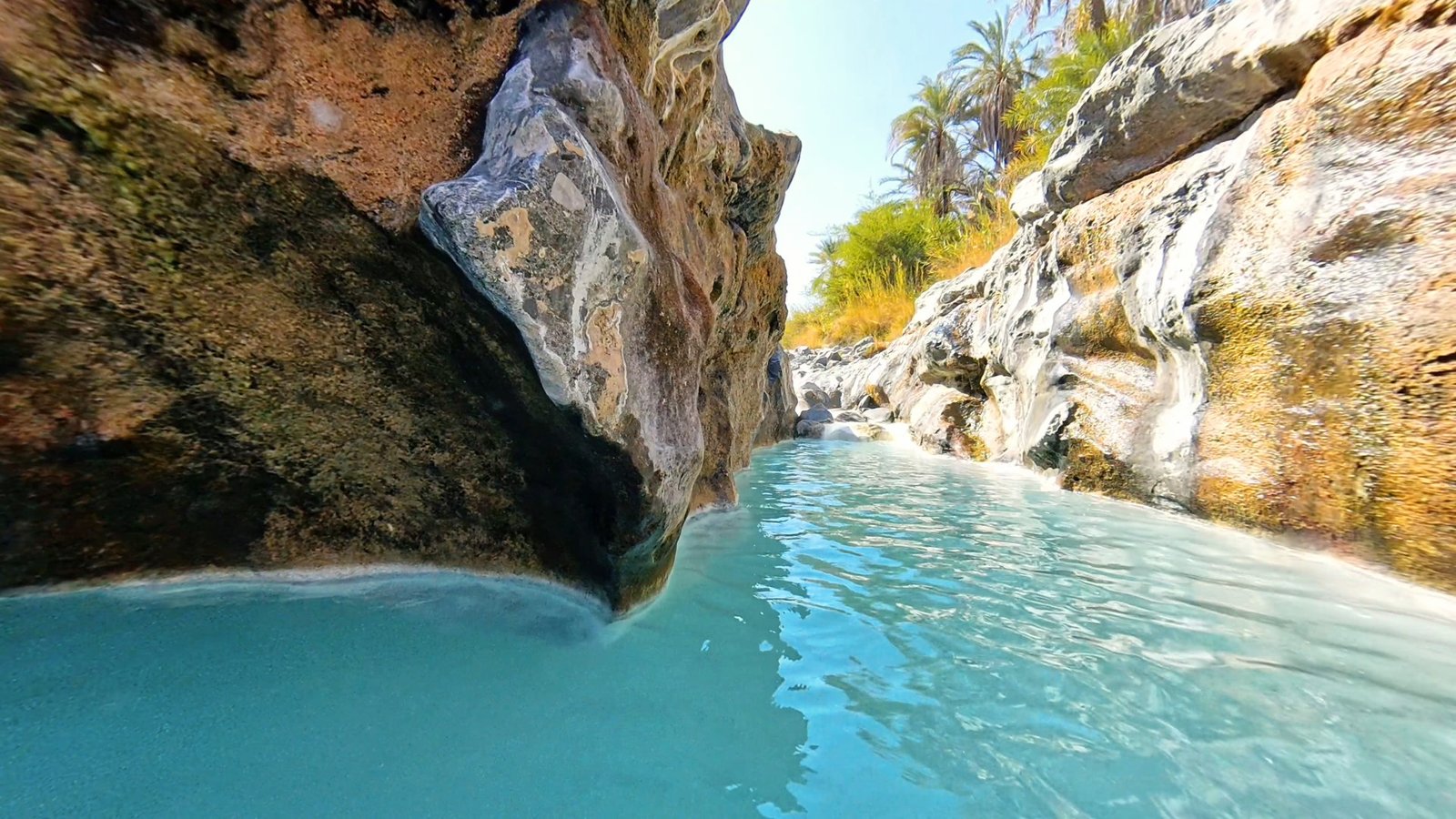
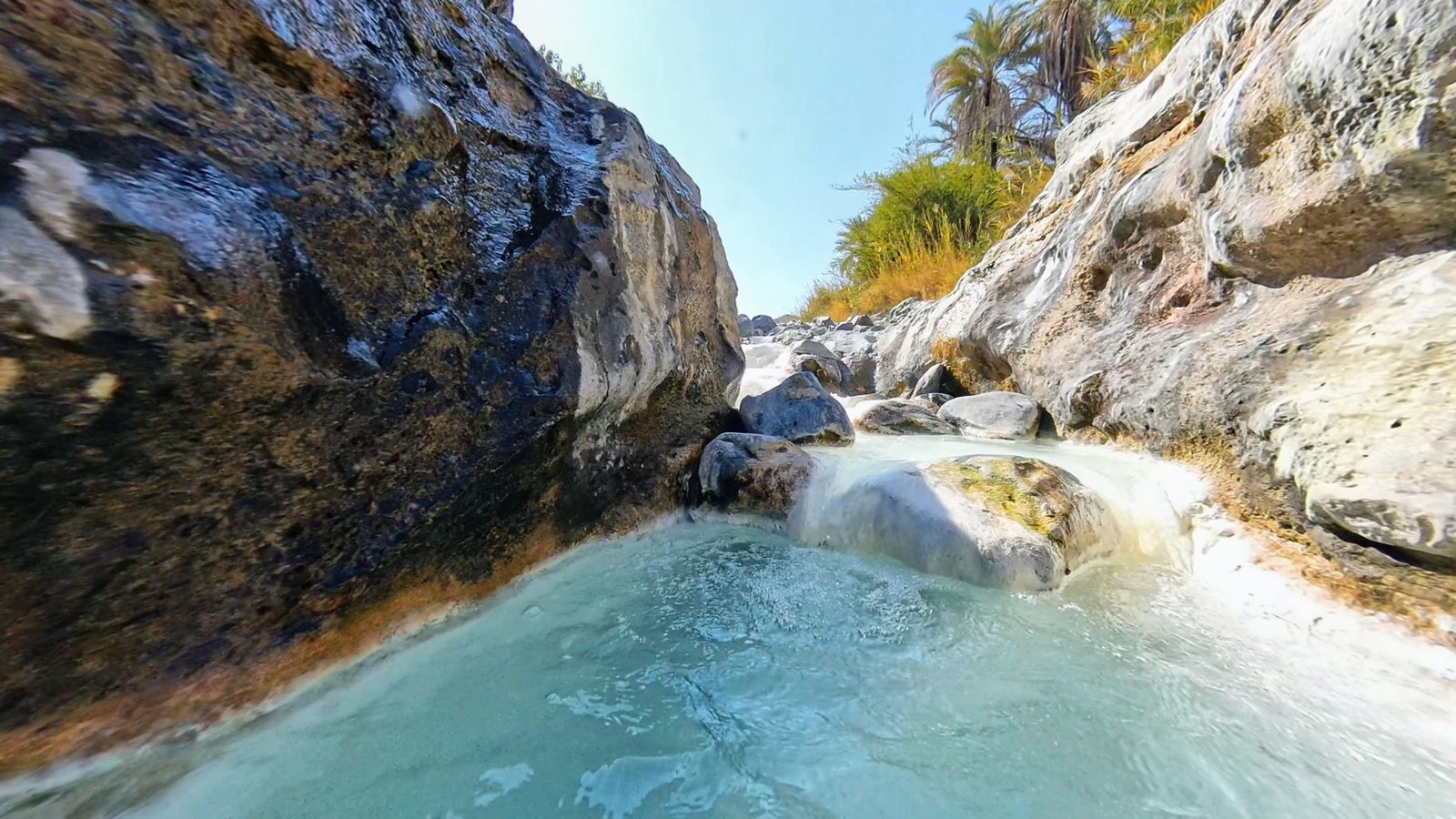
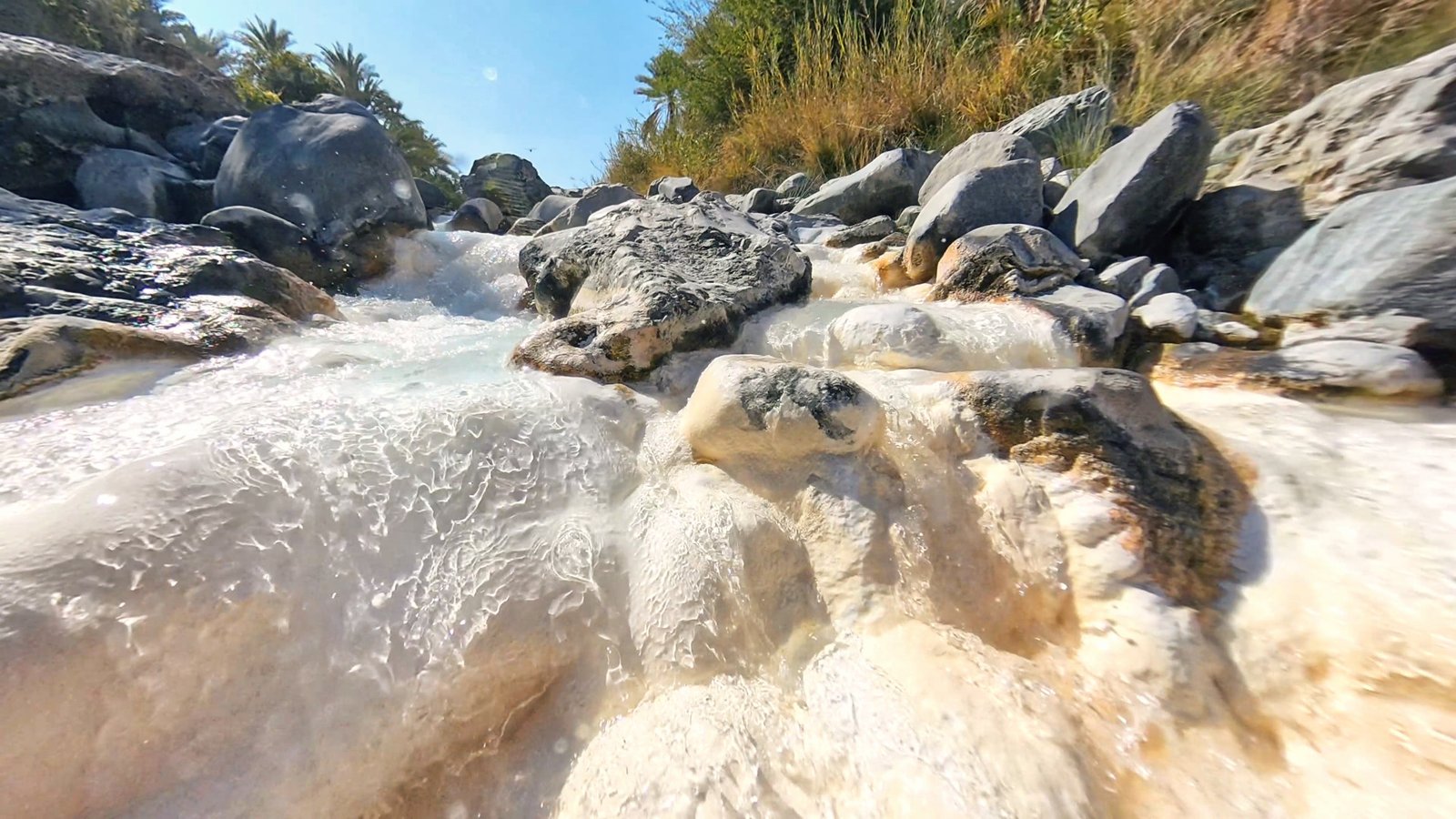
This happens because the wadi is fed by natural hot springs deep underground. The milky blue color and the thick white mineral crust coating the rocks and waterfalls come from high concentrations of sulfur and calcium carbonate dissolved in the water. As the warm water flows and evaporates over the rocks, it leaves those chalky white deposits behind. The science makes sense once you know it, but experiencing the change firsthand is still something else entirely.
The Main Swim: No Way Out
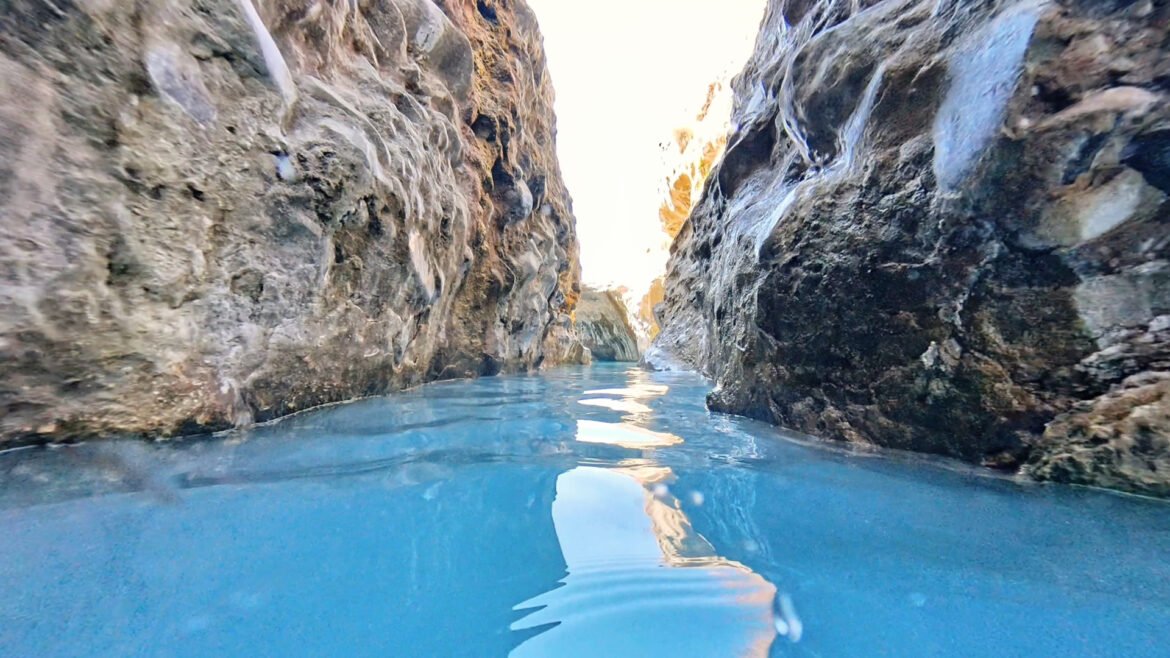
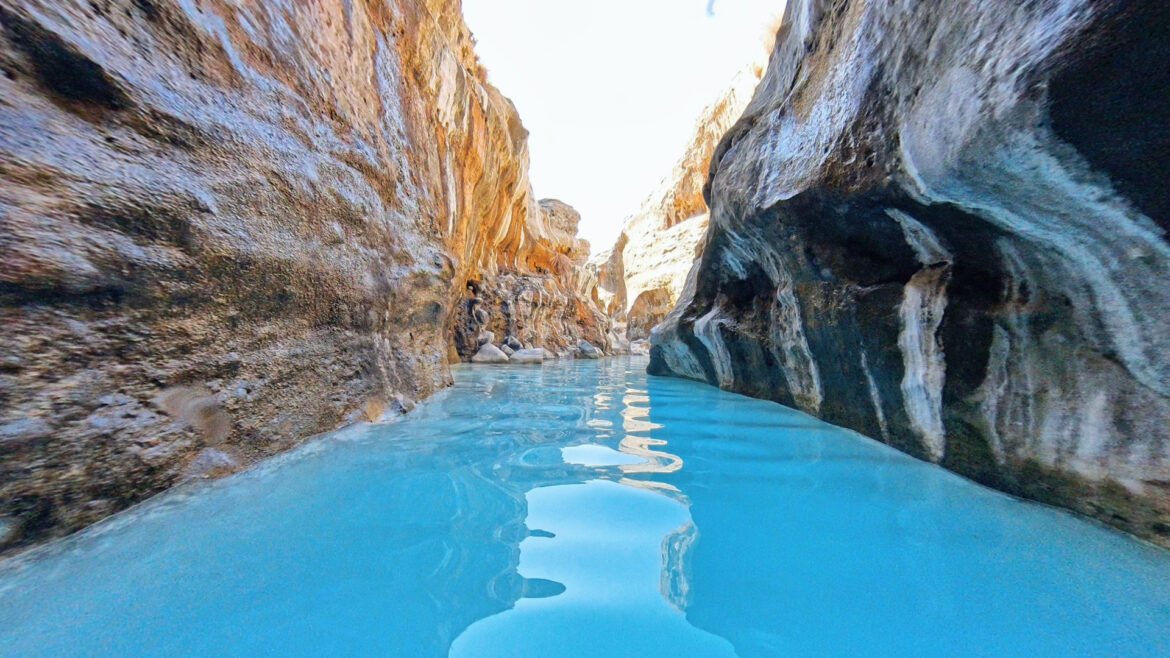
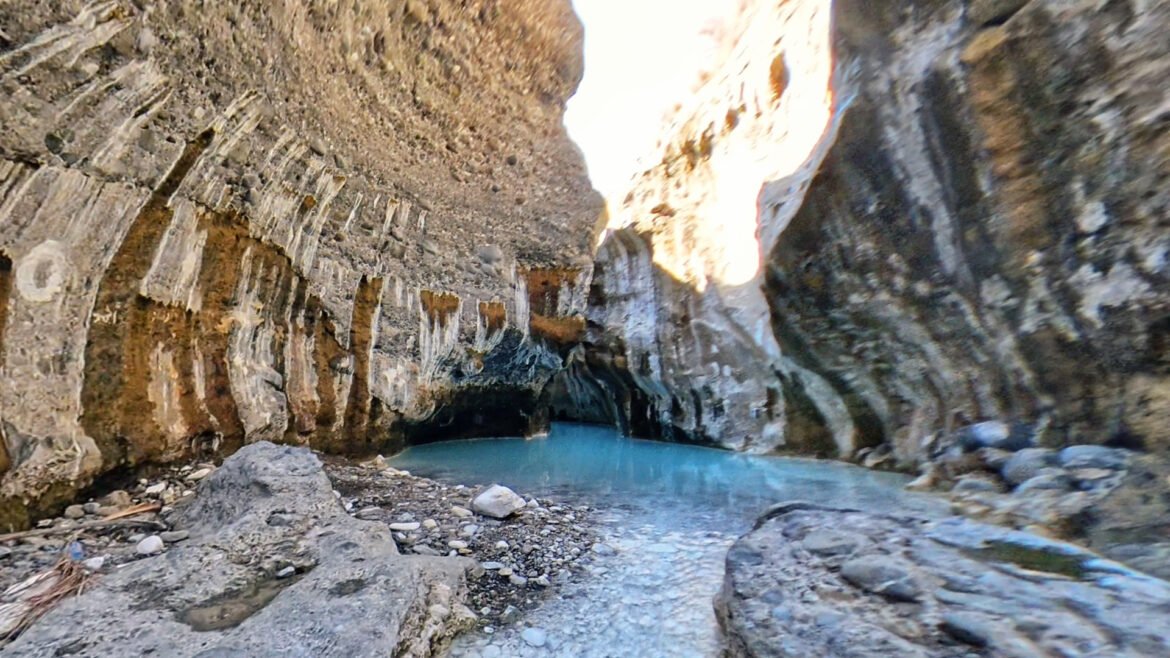
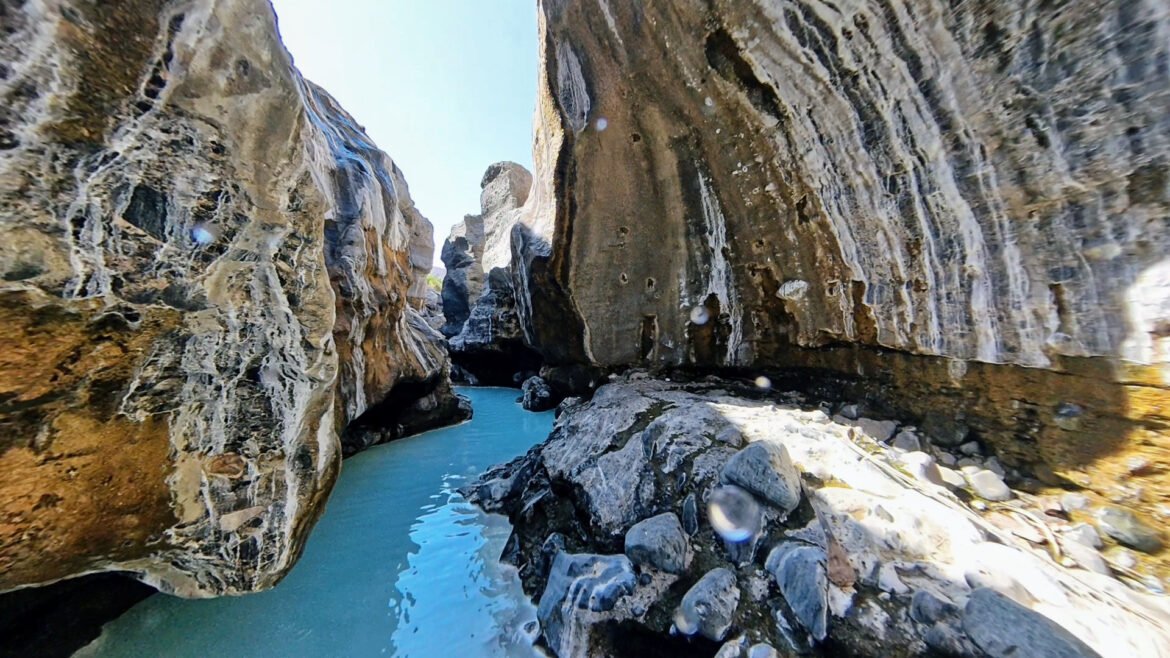
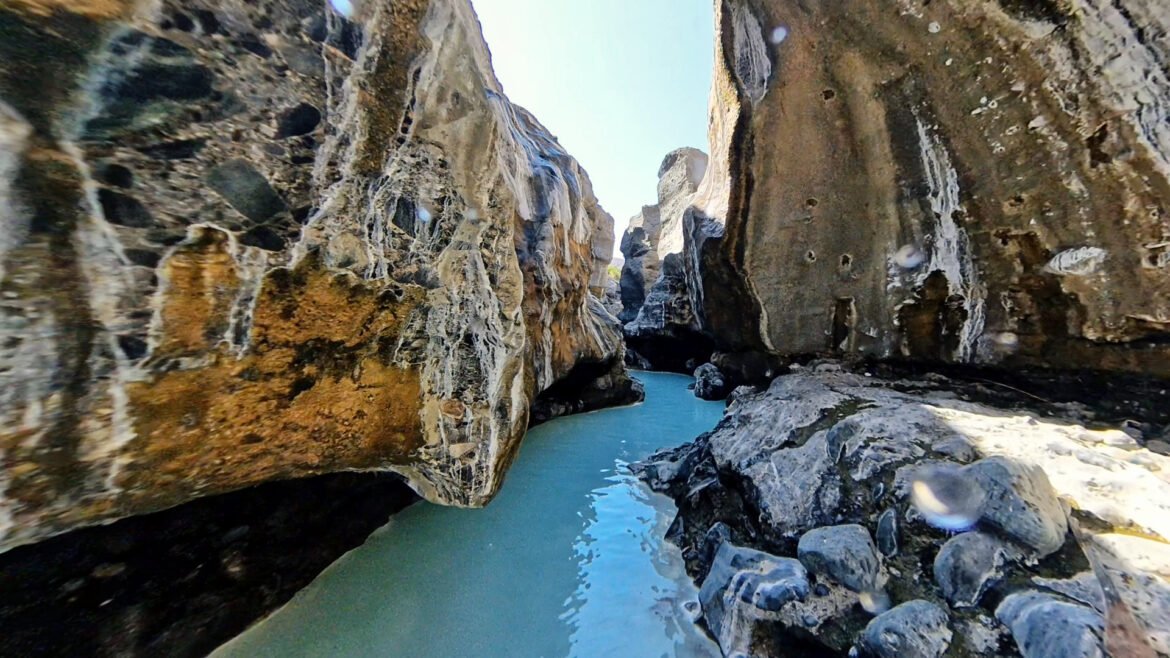
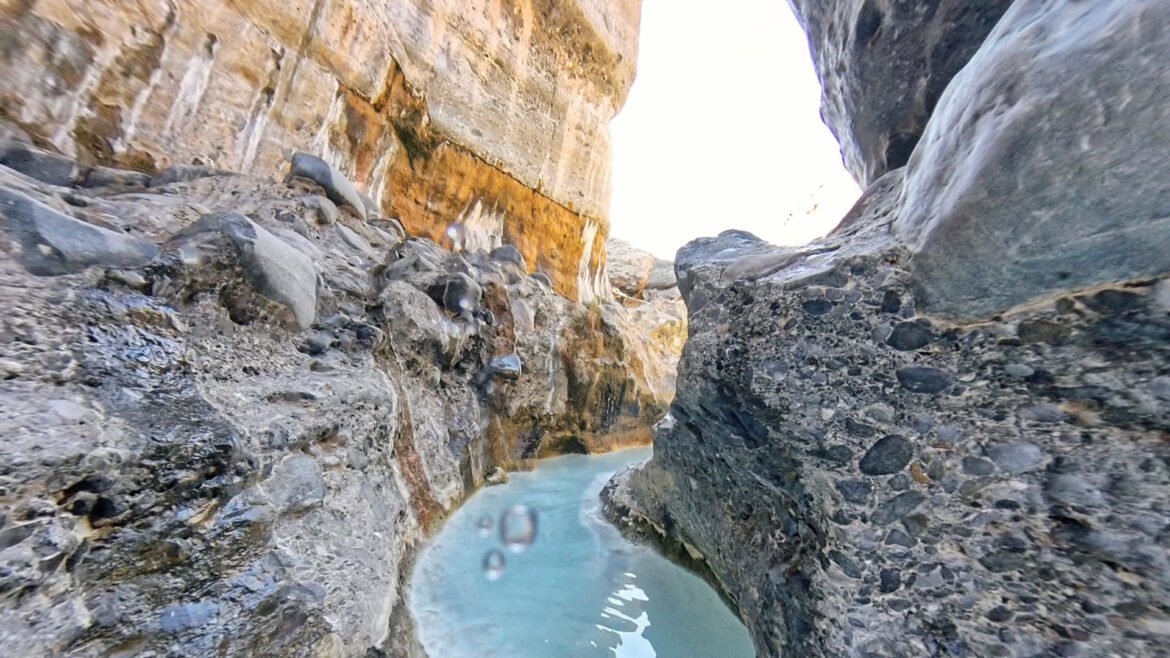
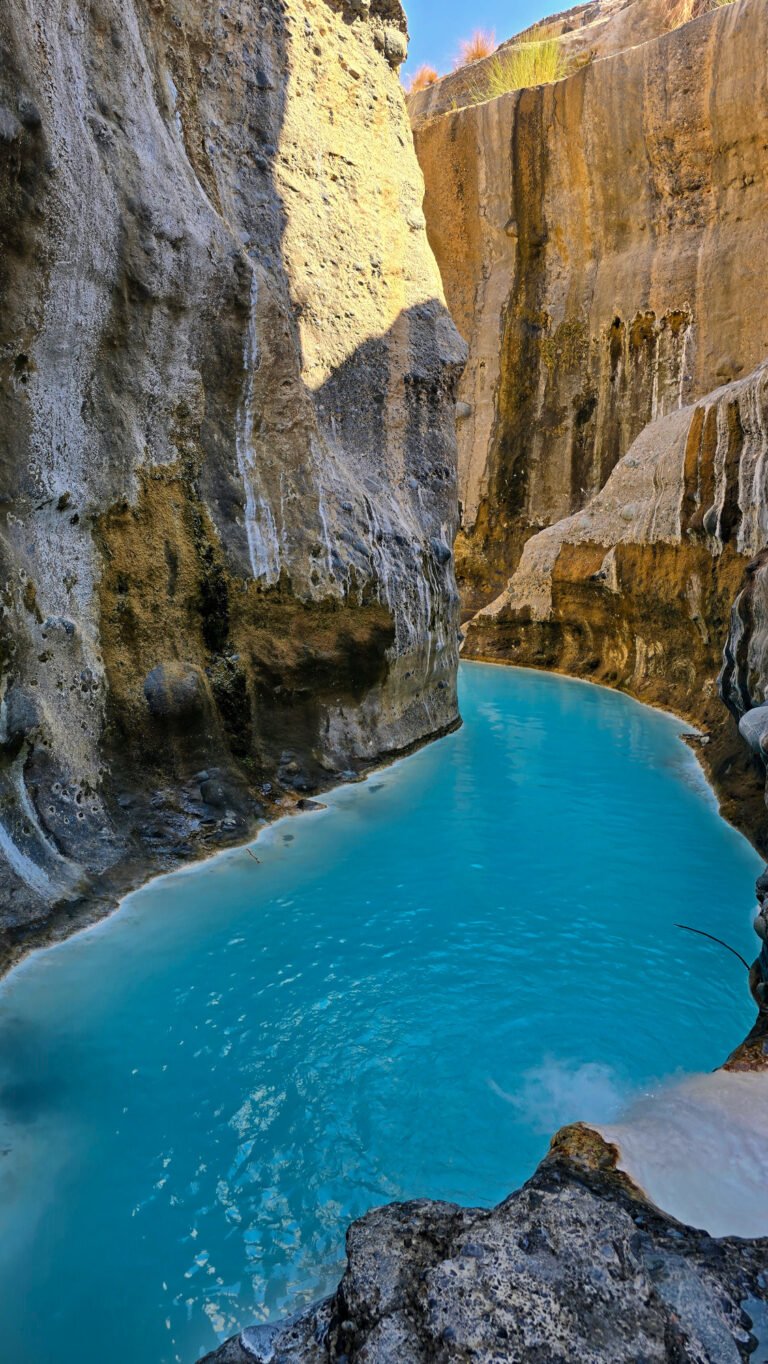
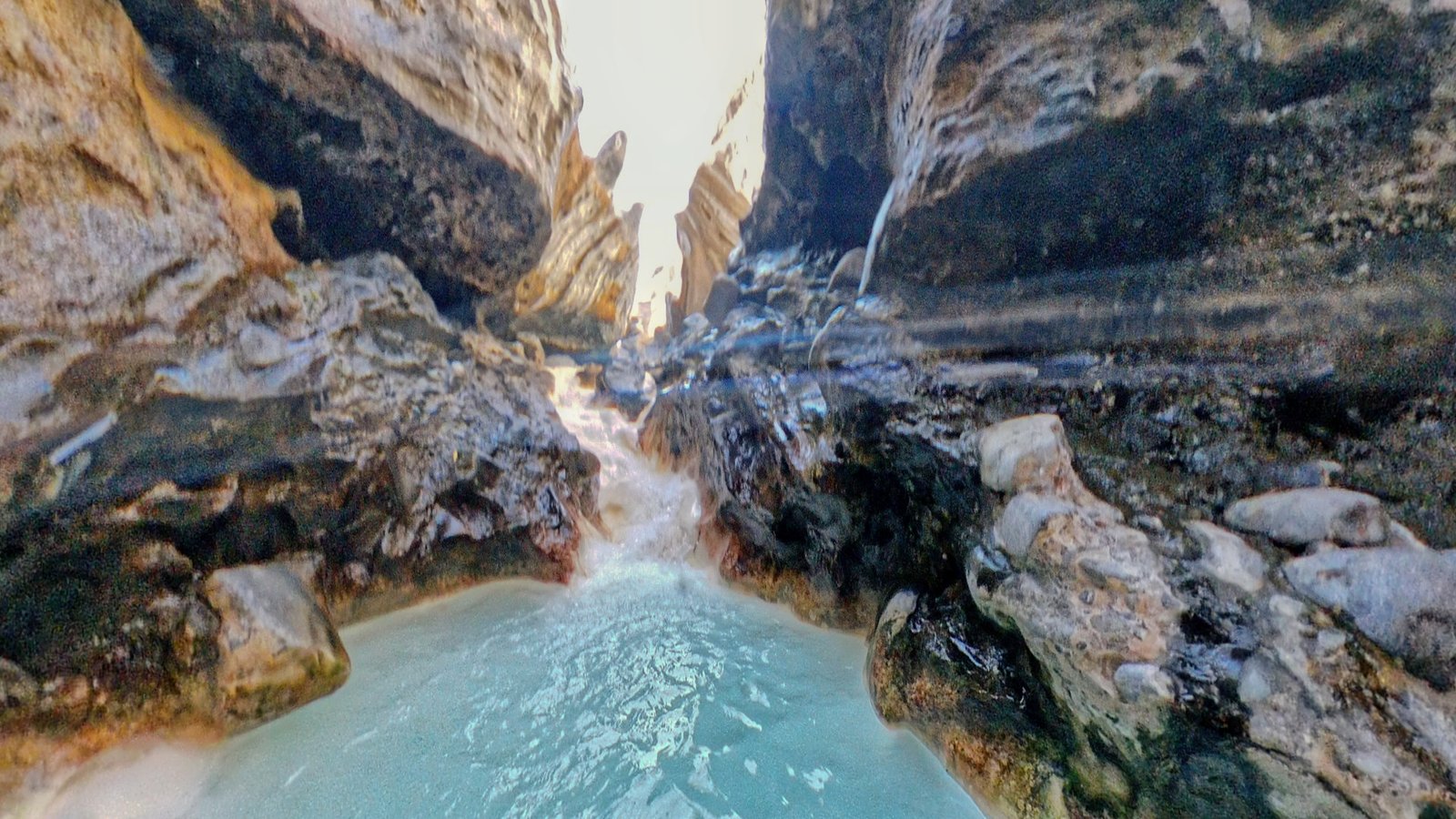
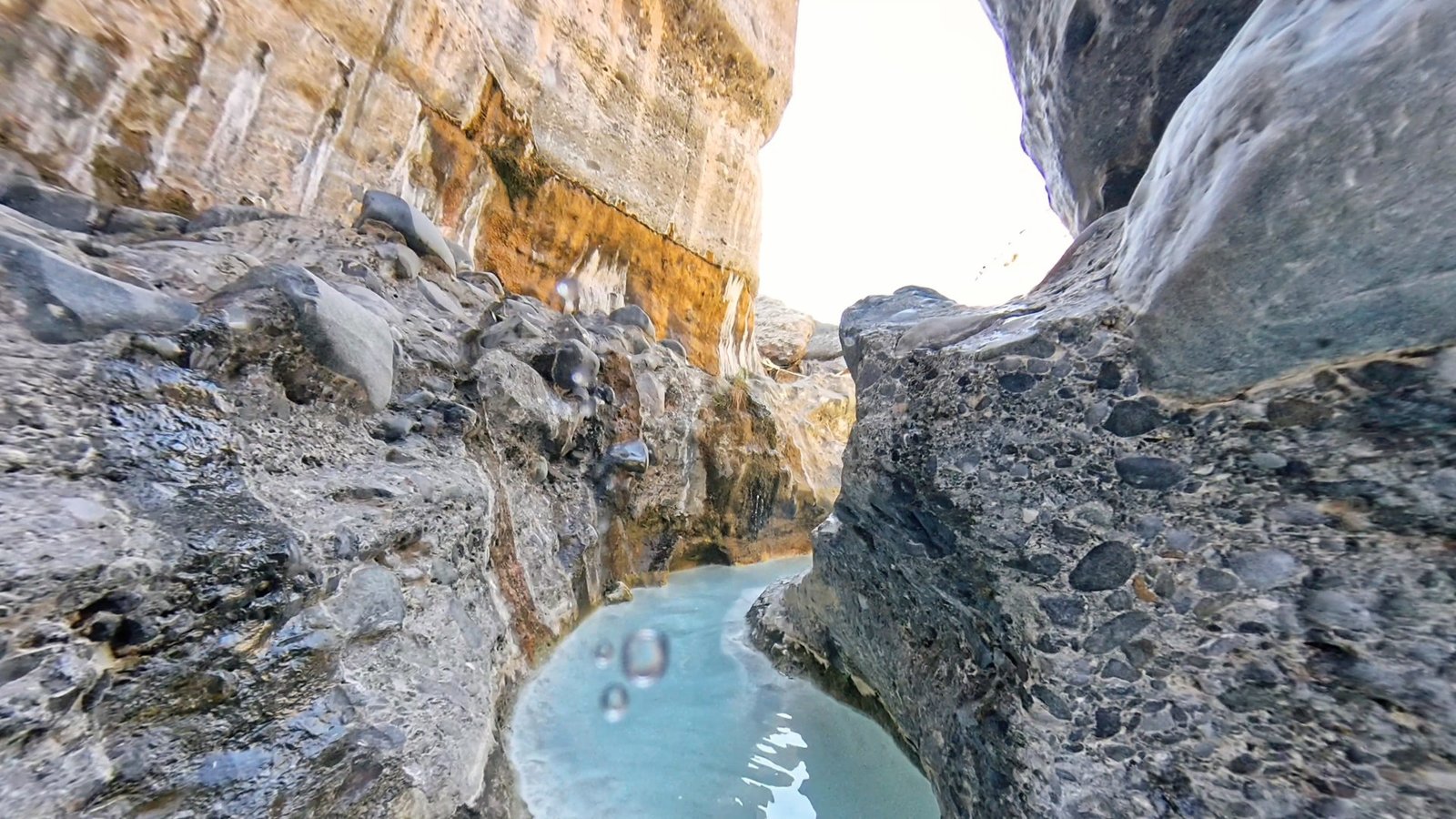
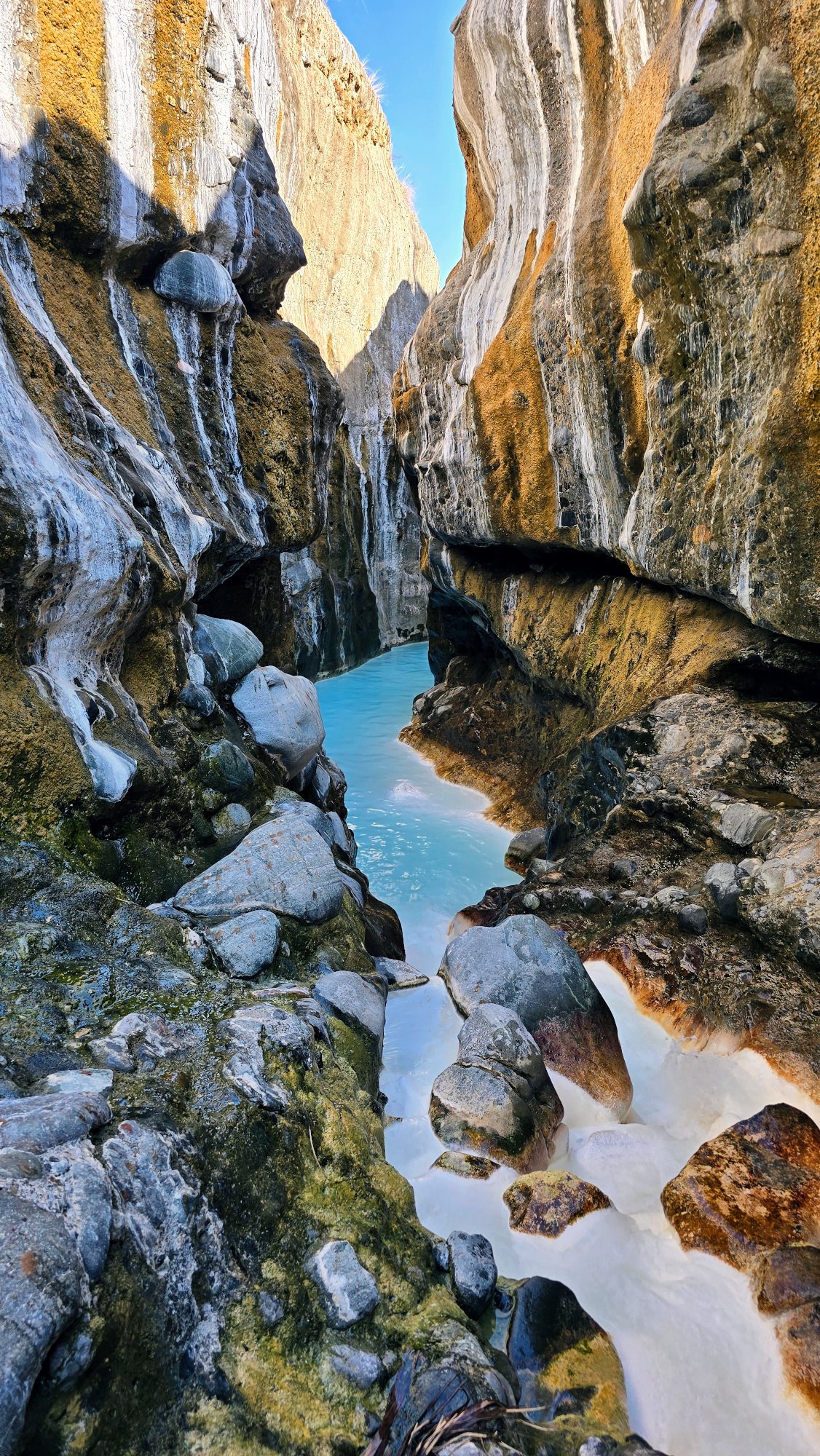
Once you enter the milky blue section, the canyon walls rise sharply on both sides — high, sheer, and completely unscalable. There is no climbing out. At that point, your only options are to keep moving forward or swim all the way back. I found that awareness clarifying. You commit, and then you focus.
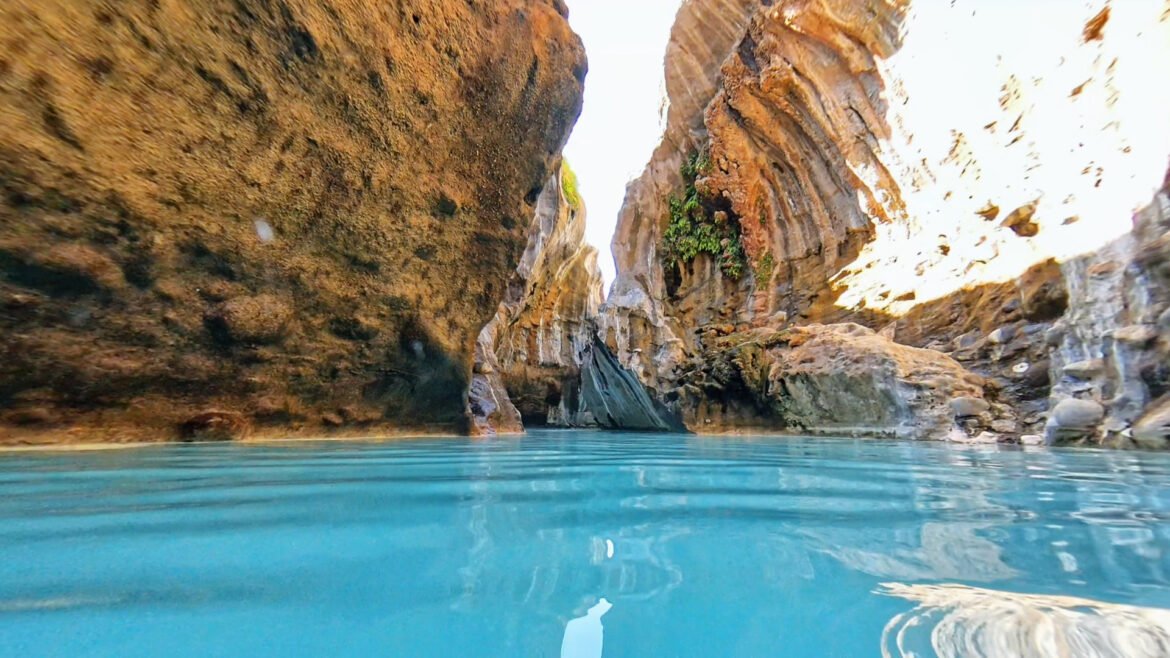
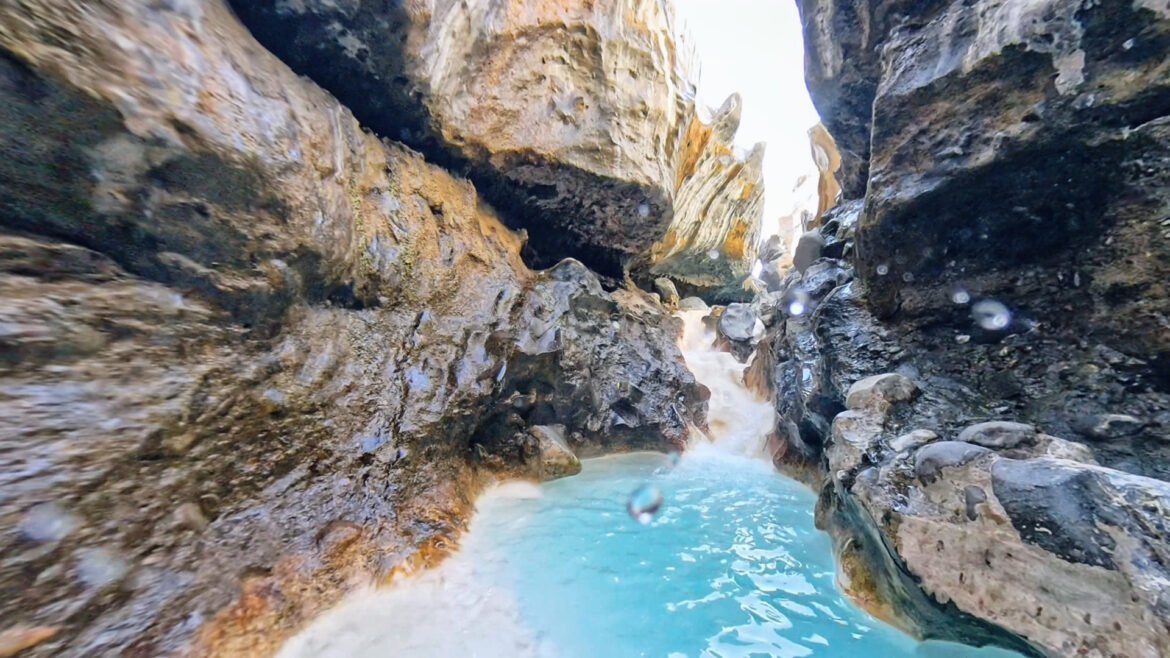
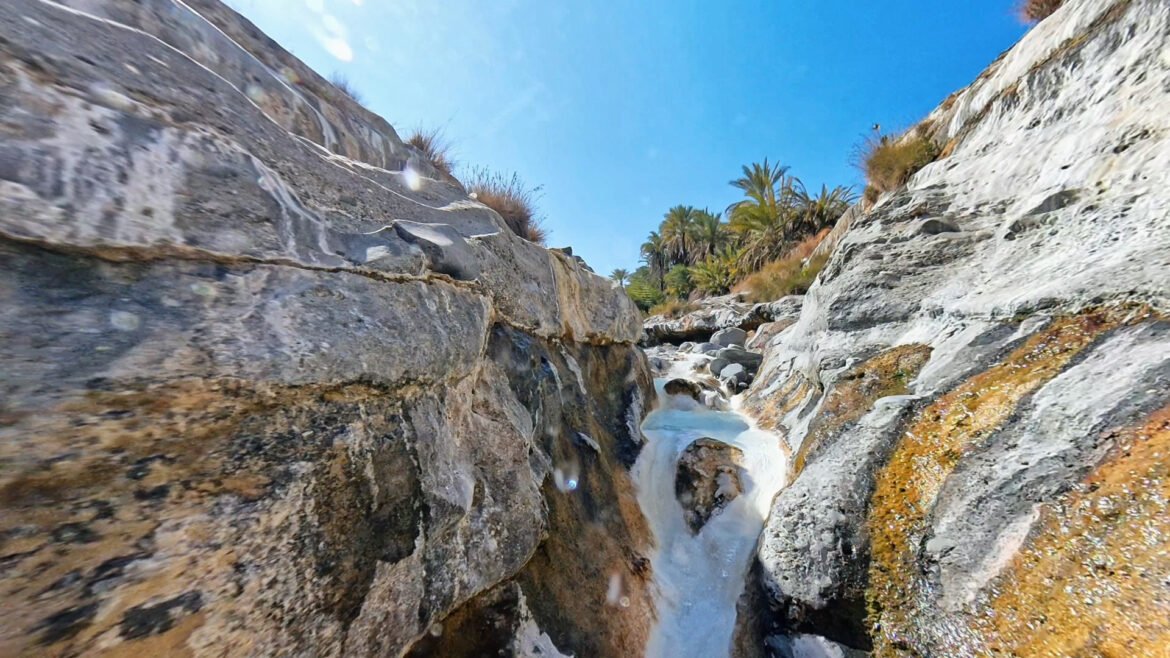
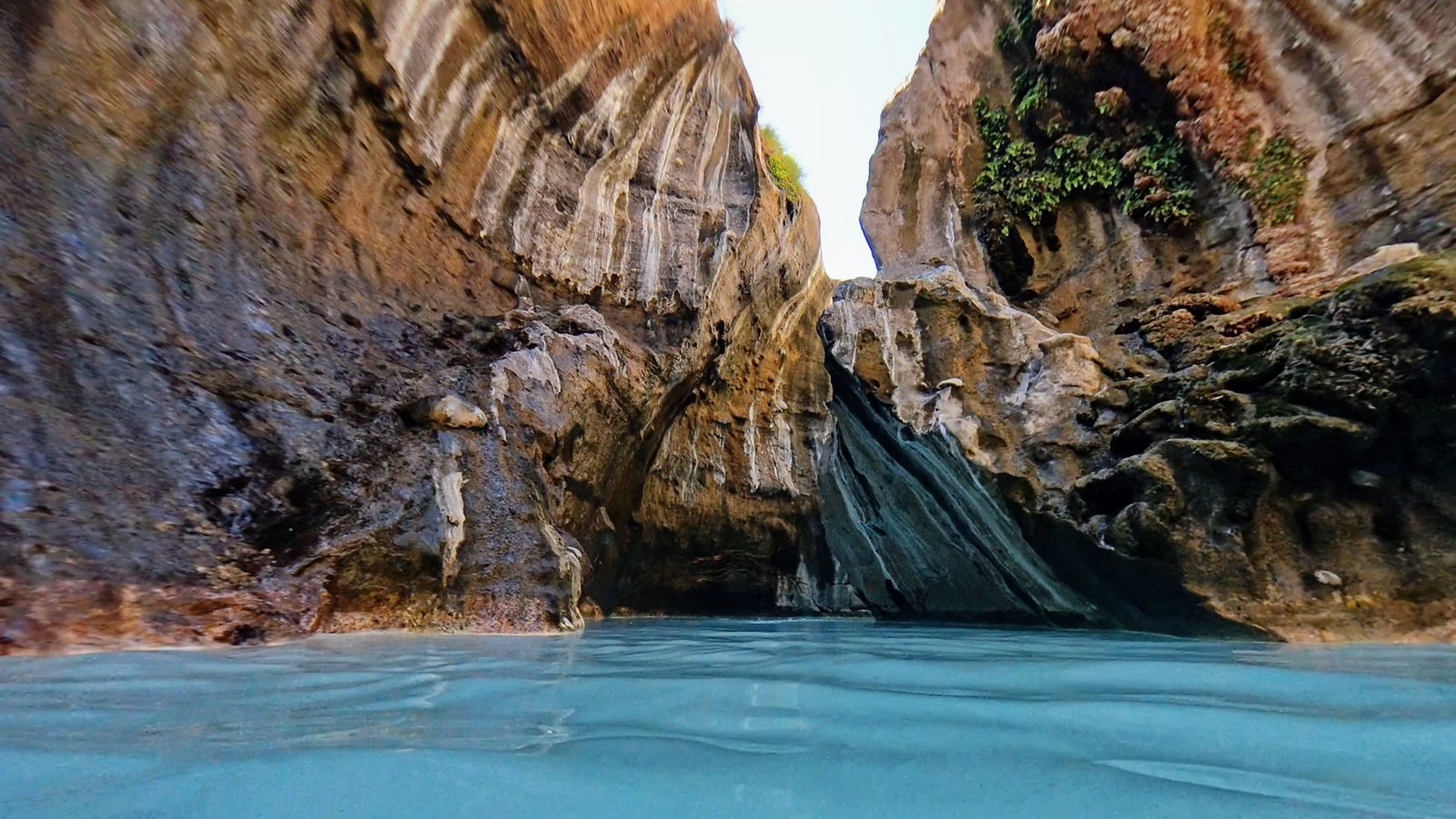
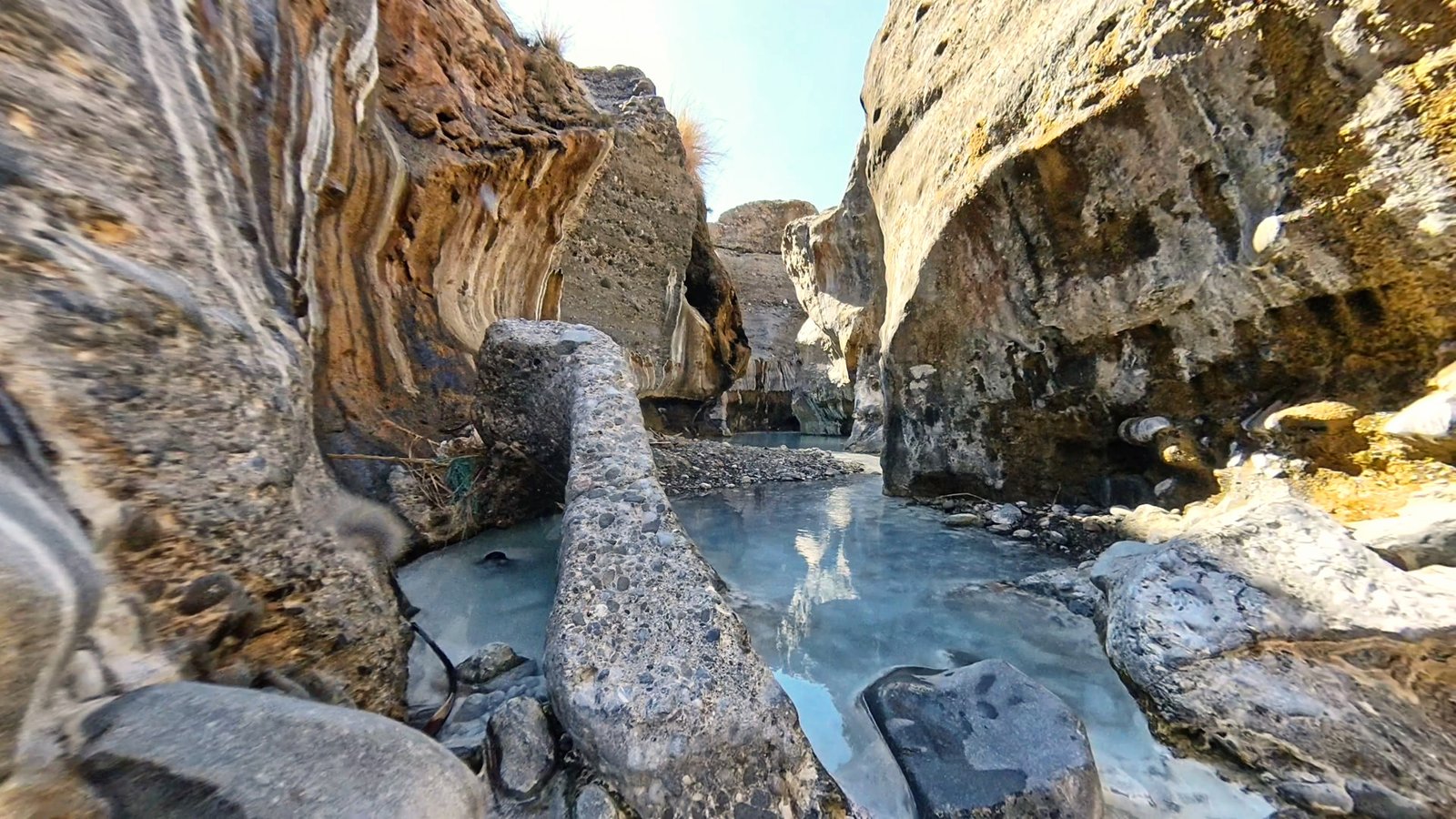
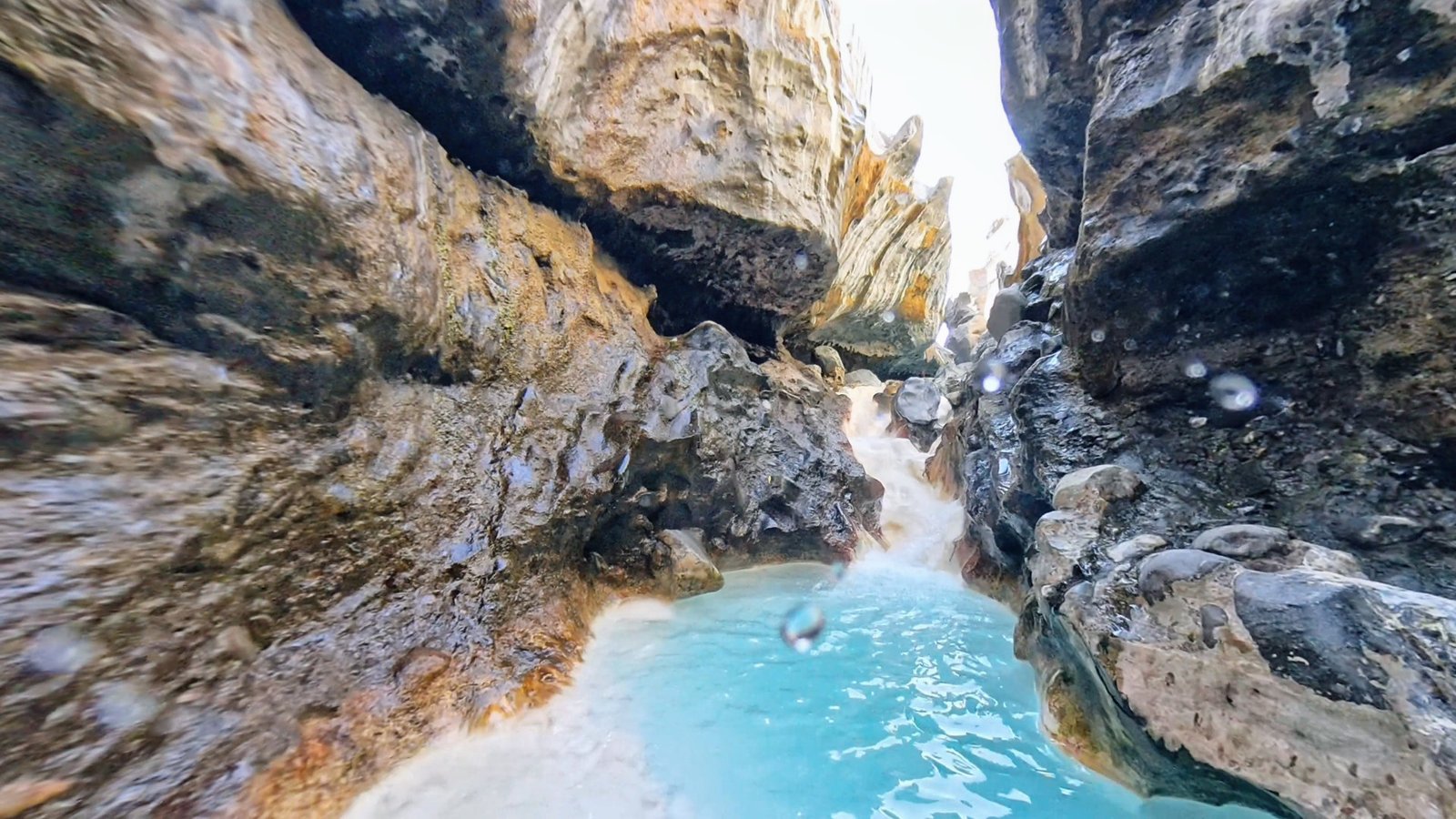
The route through is a series of long, deep pools broken up by small waterfalls and the occasional dry rocky patch. The waterfalls are where you need to pay attention. The mineral deposits make the surfaces extremely slippery, and there is not always something solid to grip. Take your time on these sections. The dry patches in between are worth pausing on — use them to rest your arms and legs before getting back in.
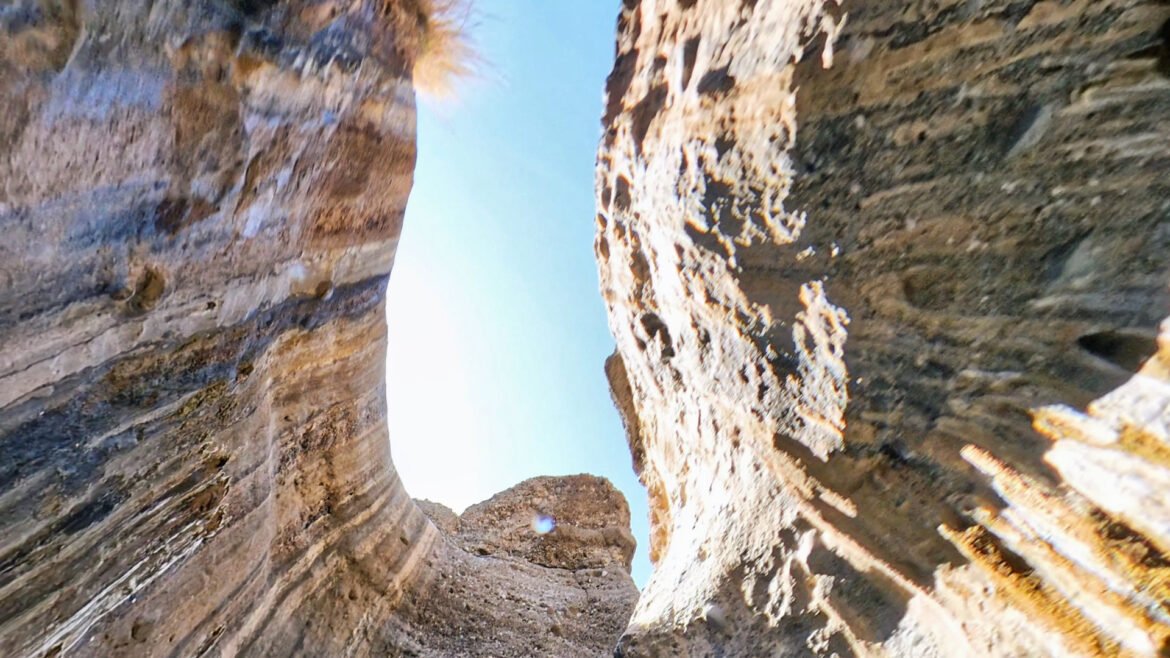
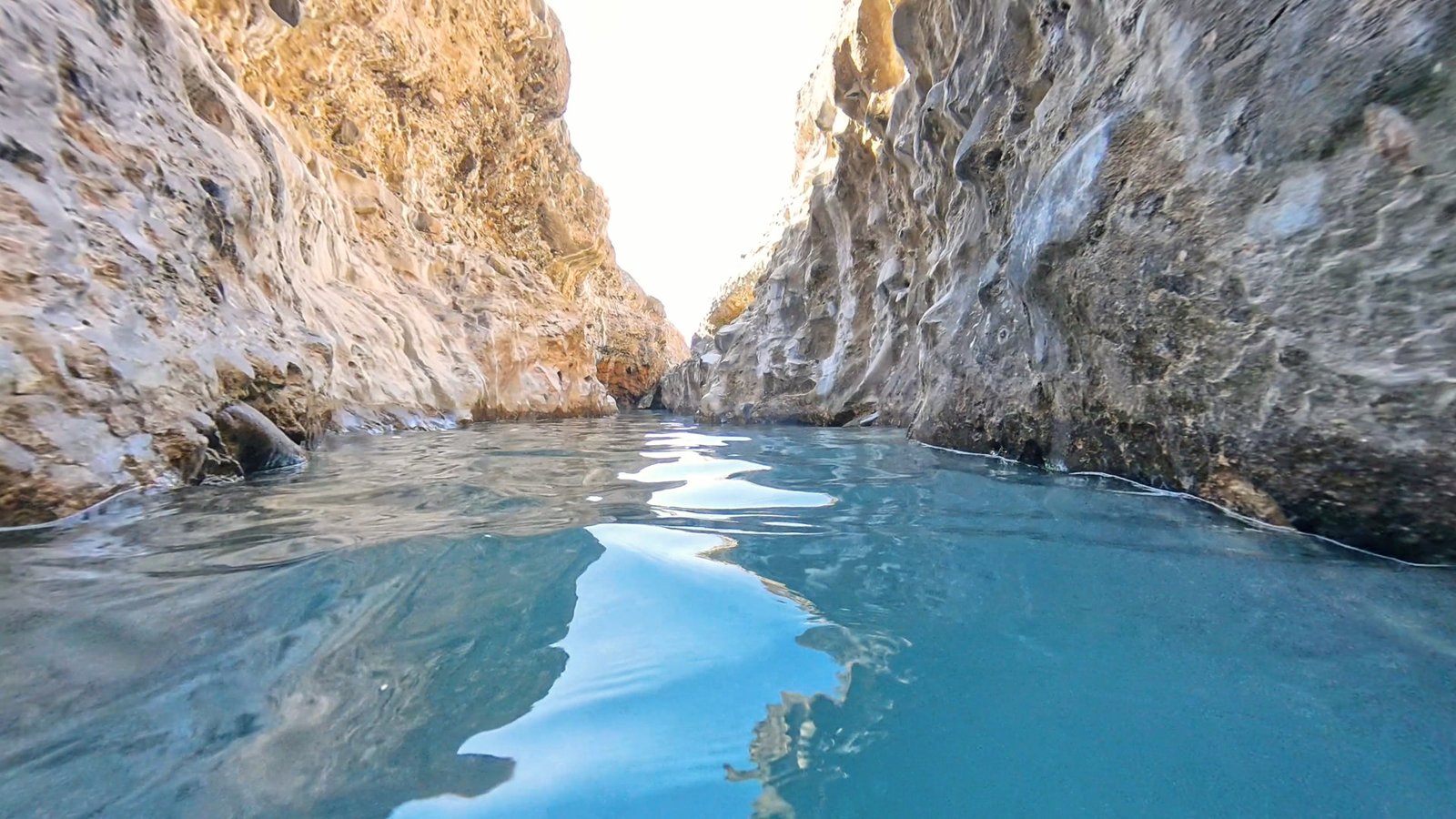
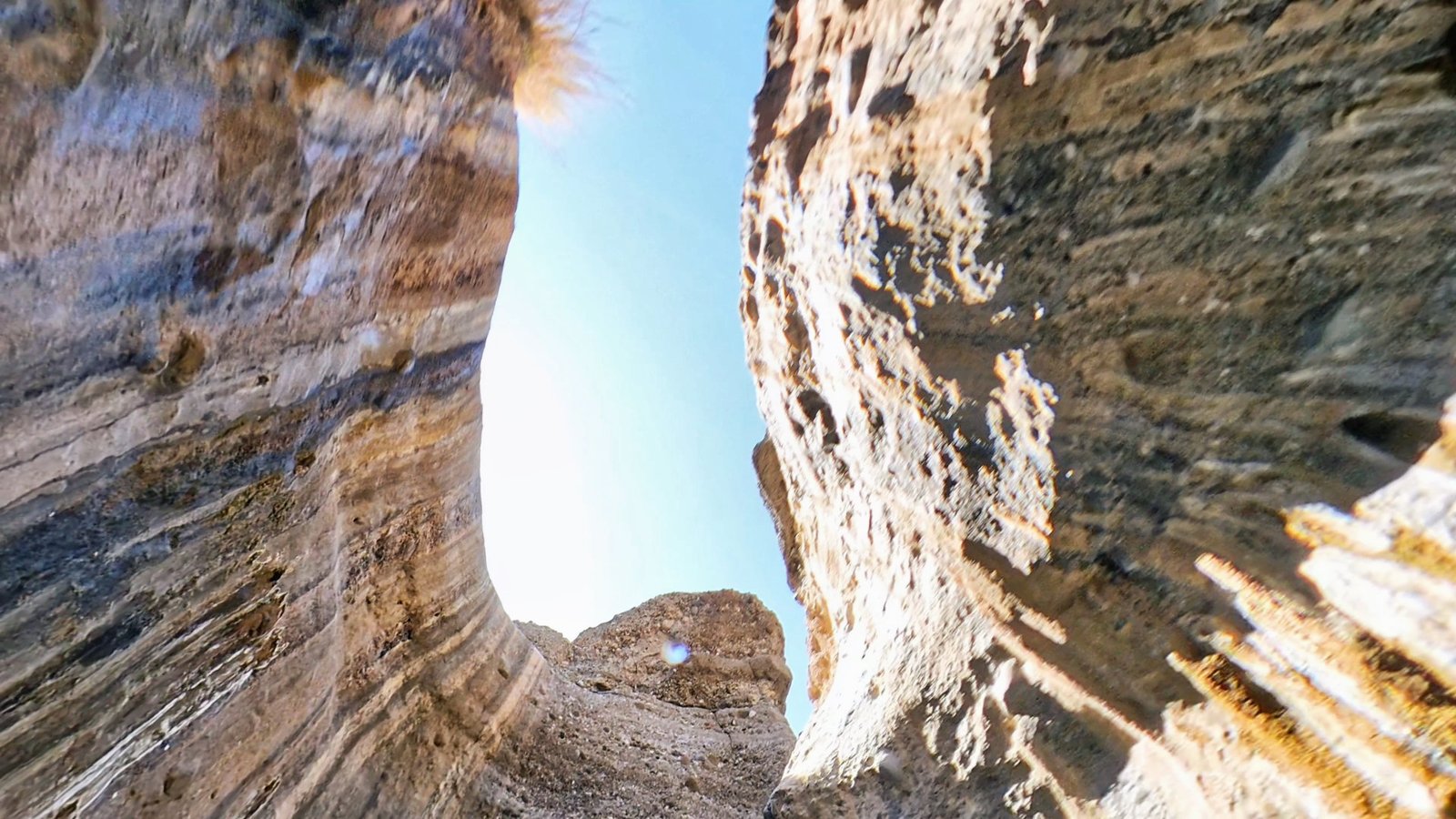
The walls above you are extraordinary. At points they close in and tower so high that only a narrow strip of sky is visible overhead. There were moments where I had no idea what was waiting around the next bend. That uncertainty, combined with the strange blue water and the complete silence, made the swim feel less like exercise and more like moving through somewhere that very few people ever see.
The Exit
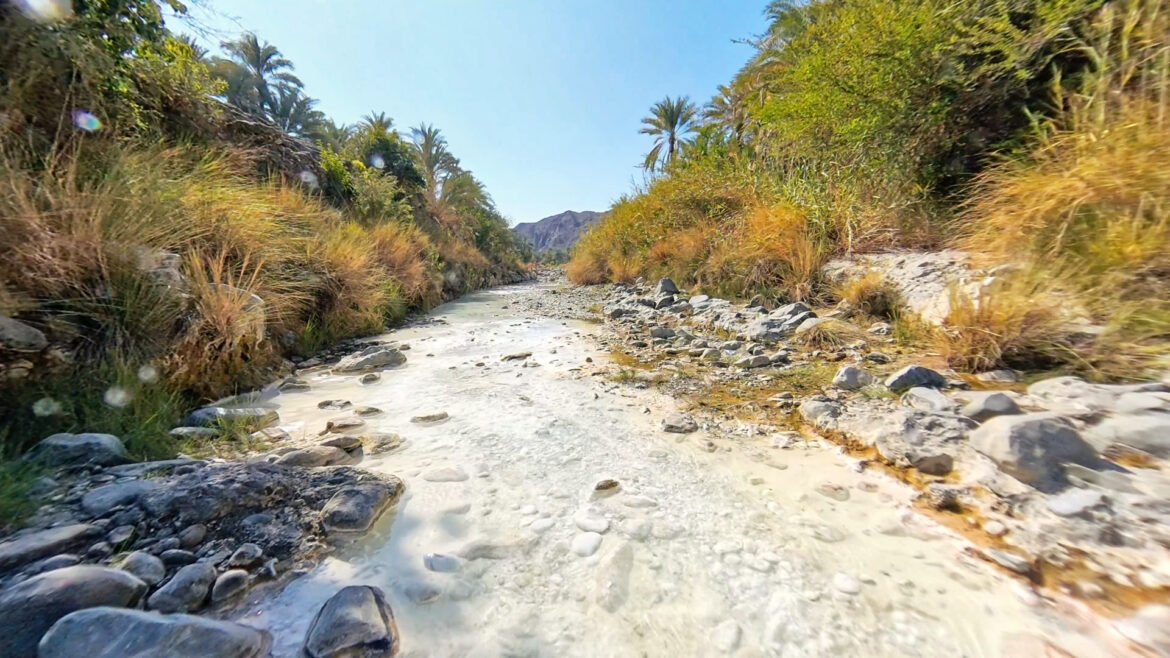
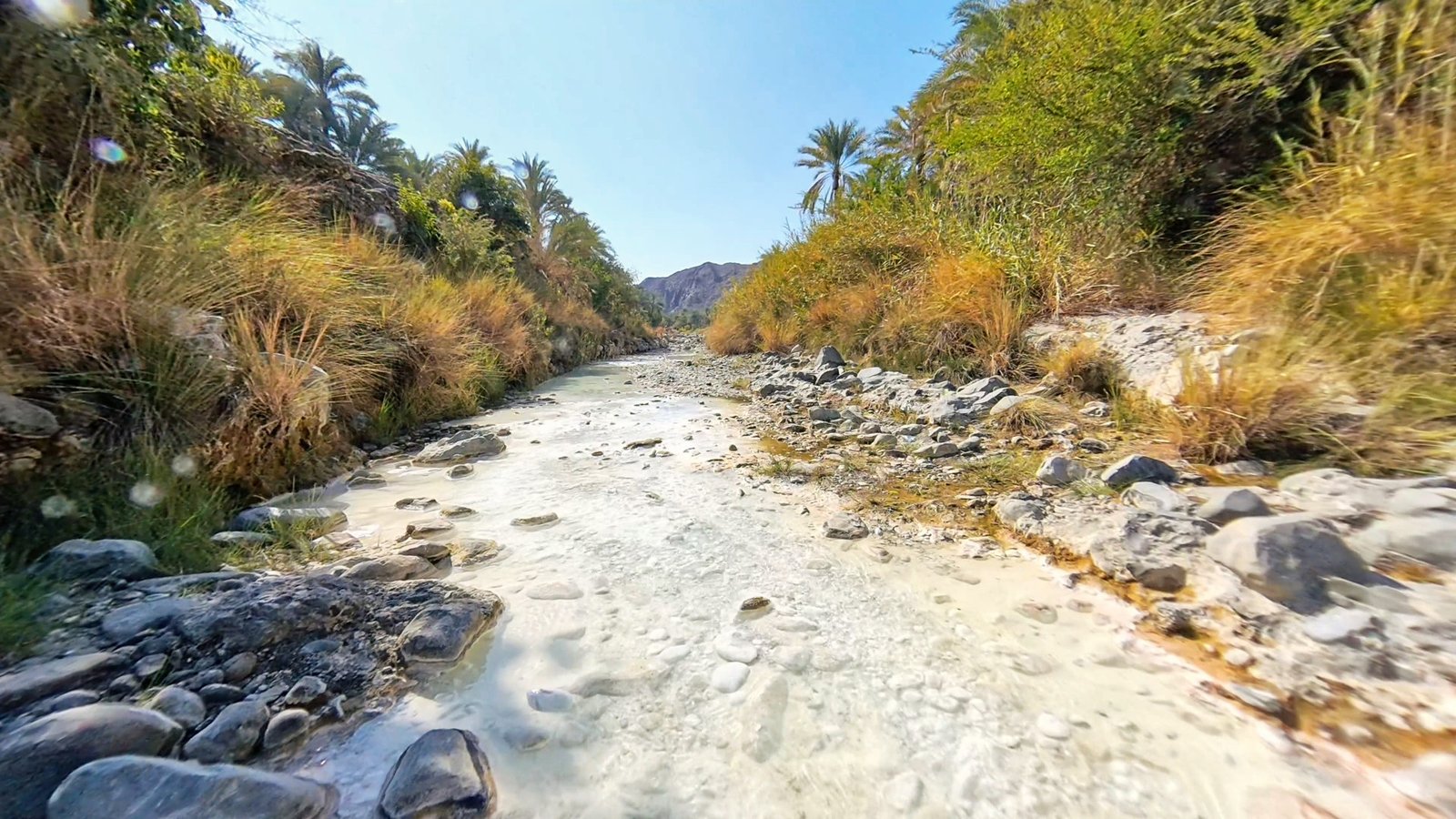
The swim through takes around an hour and a half. You will know you are nearly out when the canyon walls begin to drop and the wadi gradually opens into a wide, shallow river. A small village appears on the left.
From there you have two options: walk through the village to the main highway and follow the road back to the car park, or turn around and swim the whole canyon again in reverse. After an hour and a half of solo swimming and waterfall scrambling, I took the road.
How to Prepare
Don’t go alone: I did, and it worked out, but I would not recommend it. There is no phone signal deep in the canyon, no lifeguards, and no passing foot traffic to help if something goes wrong. Bring someone with you.
Wear a life jacket: You will be treading water in deep pools for a long stretch. Even strong swimmers will feel the fatigue. A life jacket removes that risk entirely and lets you enjoy the swim rather than manage your energy.
Bring a dry bag: Your phone and car keys cannot get wet. A good waterproof bag is non-negotiable. It is also worth packing a basic first-aid kit inside.
Wear water shoes: The mineral-coated rocks and waterfalls are slippery. Shoes with grip will save you from a bad fall.
Bring a waterproof camera: The color of the water, the canyon walls, the white mineral formations — this place photographs beautifully. You will want to document it.
Know your limits: Once you are in the high-walled section, there is no easy exit. Only attempt the full swim if you are genuinely comfortable in deep water for extended periods.
The wall at the entrance will turn most people away. That is almost certainly by design. But if you find the path and keep going, Wadi Al Hoqain will give you one of the more unusual and memorable swims you can do in Oman — or anywhere.
Adrenaline junkie with a passion for exploring off-the-beaten-path destinations and finding unique ways to stay active. Expect stunning scenery, challenging workouts, awesome travel tips and a whole lot of fun. Let’s get sweaty and explore the world together!
HomeDestinationsSwimming Through Wadi Al Hoqain: A Complete Guide
286
There is a wall blocking the way. Not a sign, not a gate — just a solid rock face with a small waterfall running through it. Most people who make the drive to Wadi Al Hoqain will stand in front of that wall, look around, and head back to their car thinking they have seen everything. I almost did the same. It took me a few minutes of searching before I spotted a small path climbing over the right side. The moment I crossed it, I understood why this place is one of Oman’s best kept secrets.
An Empty Canyon to Yourself
When I visited, there was not a single other person in sight past that entrance wall. No voices, no footsteps, nothing. Just canyon, water, and silence. Wadi Al Hoqain sits well outside the standard tourist loop that connects Wadi Shab and Wadi Bani Khalid, and that distance keeps the crowds away. On a weekday especially, there is a real chance you will have the entire place to yourself. For me, that solitude was one of the most memorable parts of the experience — though it also meant that if anything had gone wrong, I was entirely on my own.
How to Get There
Wadi Al Hoqain is in the Al Batinah region, near Rustaq, about an hour and a half to two hours from Muscat. The roads are fully paved to the main entrance, so a regular car is fine. When you park, there is a small shop nearby — pick up any last-minute water or snacks here. Walk down the stairs from the car park, turn left, and wade through some shallow water that reaches about waist height. You will then hit that rock wall. Do not stop there. Look right, find the path, climb over, and keep going.
The Water: Where Everything Changes
Walk about five minutes past the wall and you will reach the first large pool. Jump in and the water hits you — clear and cold, the kind of cold that makes you catch your breath. But keep swimming deeper into the canyon and something remarkable happens. Gradually, the water transforms. The color shifts to a milky, opaque blue that looks almost unreal, and the temperature rises until it becomes genuinely warm and soothing. I found myself stopping just to look at it. It does not look like natural water. It looks like something from a painting.
This happens because the wadi is fed by natural hot springs deep underground. The milky blue color and the thick white mineral crust coating the rocks and waterfalls come from high concentrations of sulfur and calcium carbonate dissolved in the water. As the warm water flows and evaporates over the rocks, it leaves those chalky white deposits behind. The science makes sense once you know it, but experiencing the change firsthand is still something else entirely.
The Main Swim: No Way Out
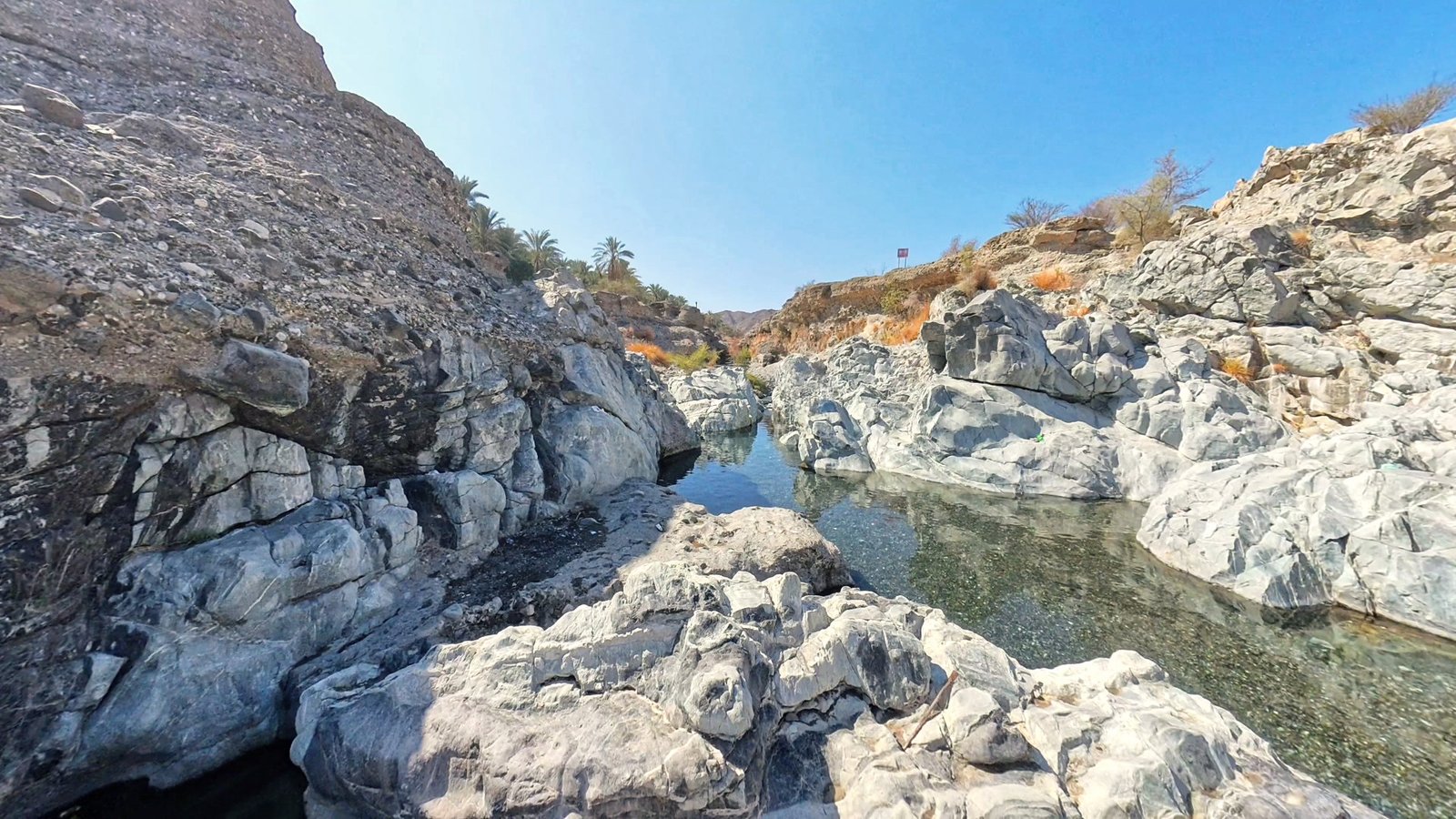
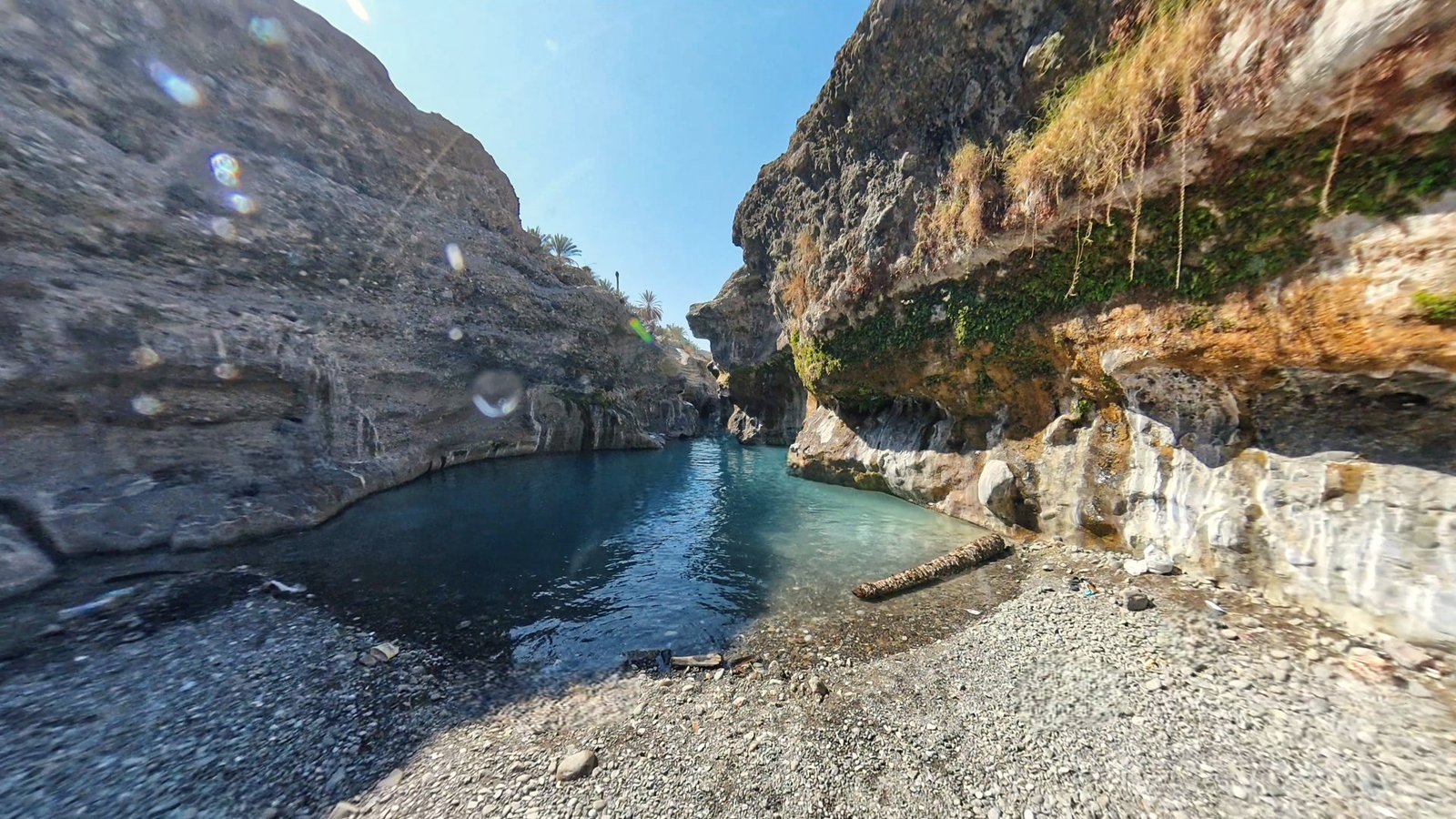
Once you enter the milky blue section, the canyon walls rise sharply on both sides — high, sheer, and completely unscalable. There is no climbing out. At that point, your only options are to keep moving forward or swim all the way back. I found that awareness clarifying. You commit, and then you focus.
The route through is a series of long, deep pools broken up by small waterfalls and the occasional dry rocky patch. The waterfalls are where you need to pay attention. The mineral deposits make the surfaces extremely slippery, and there is not always something solid to grip. Take your time on these sections. The dry patches in between are worth pausing on — use them to rest your arms and legs before getting back in.
The walls above you are extraordinary. At points they close in and tower so high that only a narrow strip of sky is visible overhead. There were moments where I had no idea what was waiting around the next bend. That uncertainty, combined with the strange blue water and the complete silence, made the swim feel less like exercise and more like moving through somewhere that very few people ever see.
The Exit
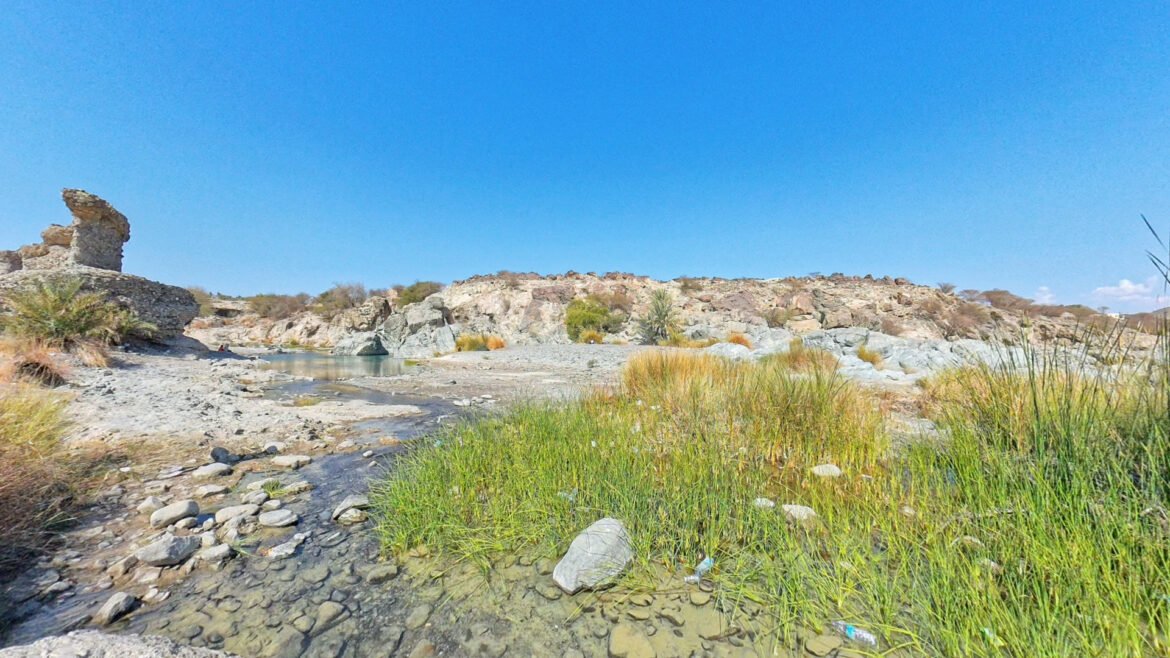
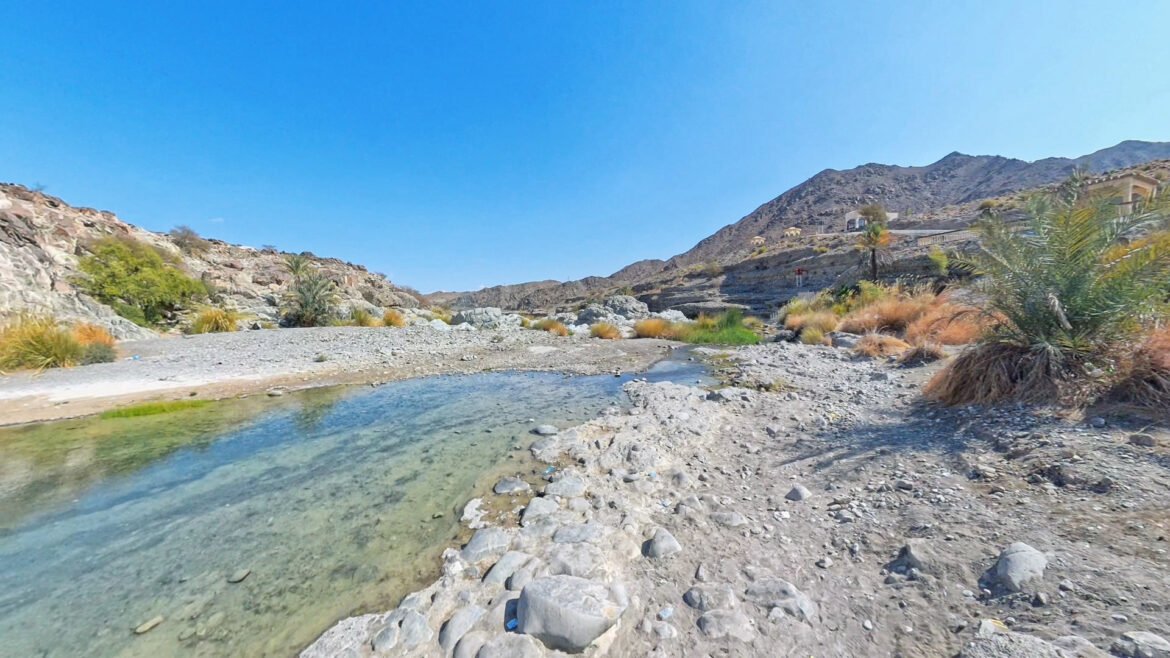
The swim through takes around an hour and a half. You will know you are nearly out when the canyon walls begin to drop and the wadi gradually opens into a wide, shallow river. A small village appears on the left.
From there you have two options: walk through the village to the main highway and follow the road back to the car park, or turn around and swim the whole canyon again in reverse. After an hour and a half of solo swimming and waterfall scrambling, I took the road.
How to Prepare
Don’t go alone: I did, and it worked out, but I would not recommend it. There is no phone signal deep in the canyon, no lifeguards, and no passing foot traffic to help if something goes wrong. Bring someone with you.
Wear a life jacket: You will be treading water in deep pools for a long stretch. Even strong swimmers will feel the fatigue. A life jacket removes that risk entirely and lets you enjoy the swim rather than manage your energy.
Bring a dry bag: Your phone and car keys cannot get wet. A good waterproof bag is non-negotiable. It is also worth packing a basic first-aid kit inside.
Wear water shoes: The mineral-coated rocks and waterfalls are slippery. Shoes with grip will save you from a bad fall.
Bring a waterproof camera: The color of the water, the canyon walls, the white mineral formations — this place photographs beautifully. You will want to document it.
Know your limits: Once you are in the high-walled section, there is no easy exit. Only attempt the full swim if you are genuinely comfortable in deep water for extended periods.
The wall at the entrance will turn most people away. That is almost certainly by design. But if you find the path and keep going, Wadi Al Hoqain will give you one of the more unusual and memorable swims you can do in Oman — or anywhere.
Adrenaline junkie with a passion for exploring off-the-beaten-path destinations and finding unique ways to stay active. Expect stunning scenery, challenging workouts, awesome travel tips and a whole lot of fun. Let’s get sweaty and explore the world together!