
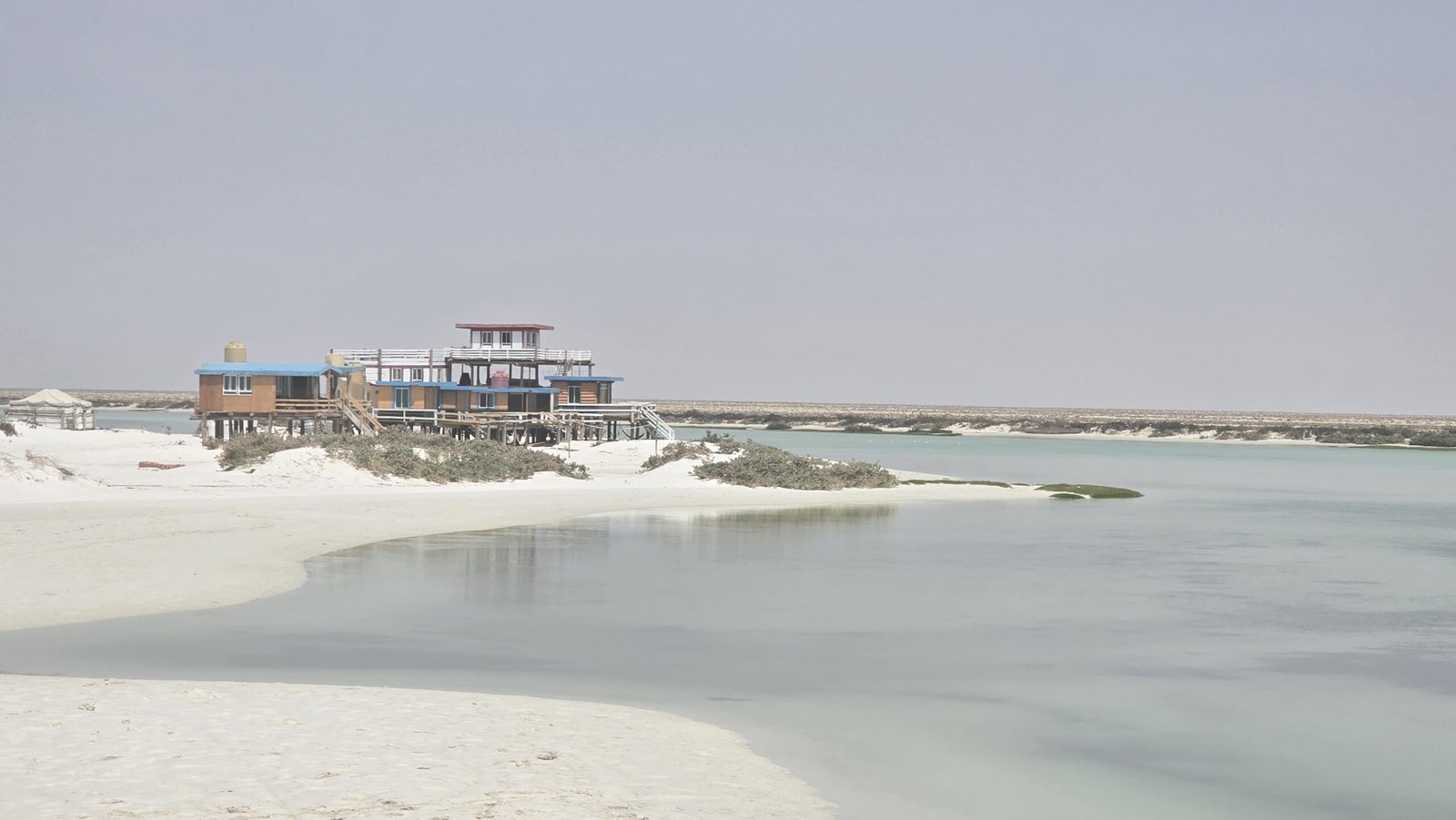
There are places that stop you mid-sentence when you try to describe them. Barr Al Hikman is one of those places. I’ve travelled across a lot of the Middle East — desert camps, mountain trails, coastal hideaways — but nothing quite prepared me for what I found on this remote peninsula on Oman’s southeastern coast. People call it the “Maldives of Oman,” and while that comparison does its job, it somehow still undersells what this place actually is. The Maldives has infinity pools and overwater bungalows. Barr Al Hikman has 2,900 square kilometres of raw, tide-shaped wilderness, bioluminescent waves glowing electric blue at midnight, and flamingos wading through lagoons at sunrise. It’s a different kind of extraordinary.
I spent two nights there in March, staying at Dream Camp — one of the newest additions to the peninsula — and by the time I drove back across the salt flats, I was already thinking about when I could return.
What Is Barr Al Hikman?
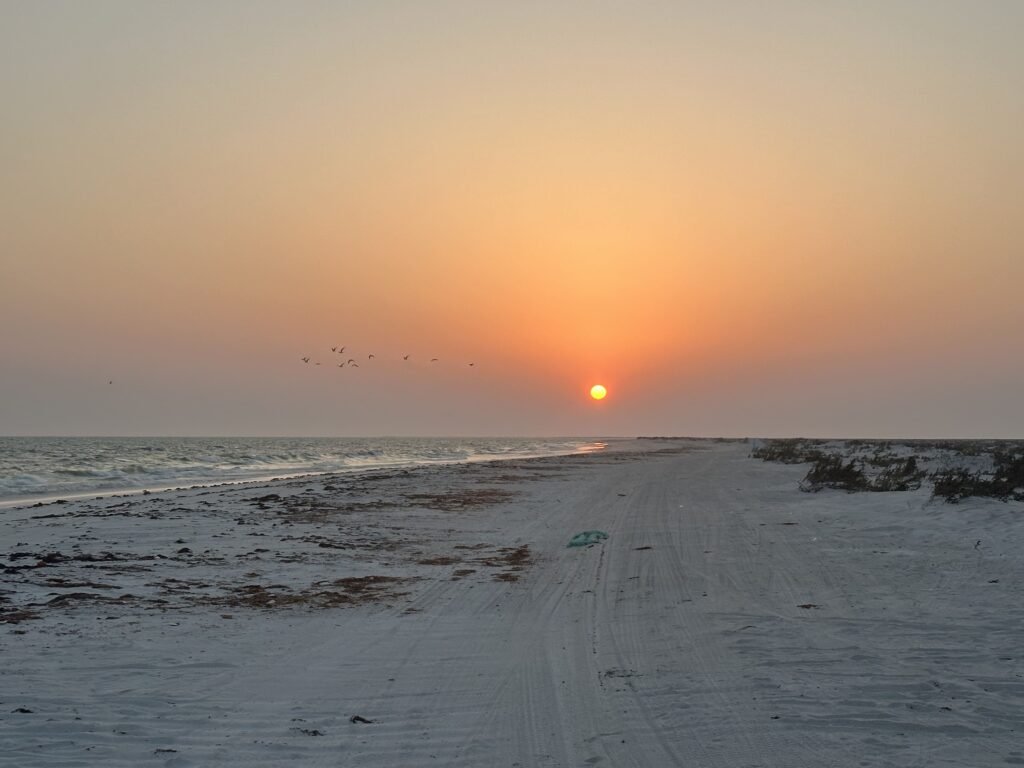
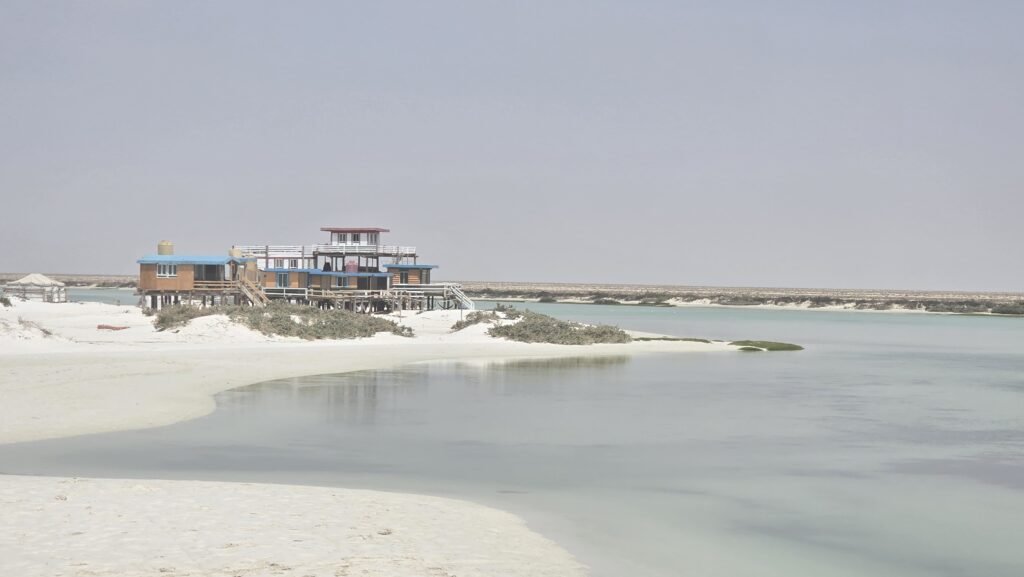
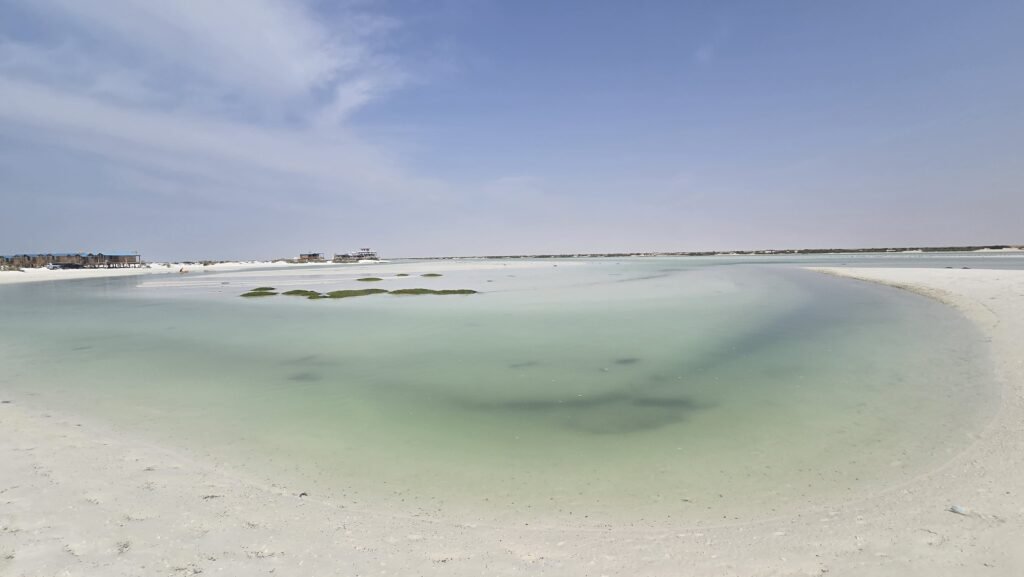
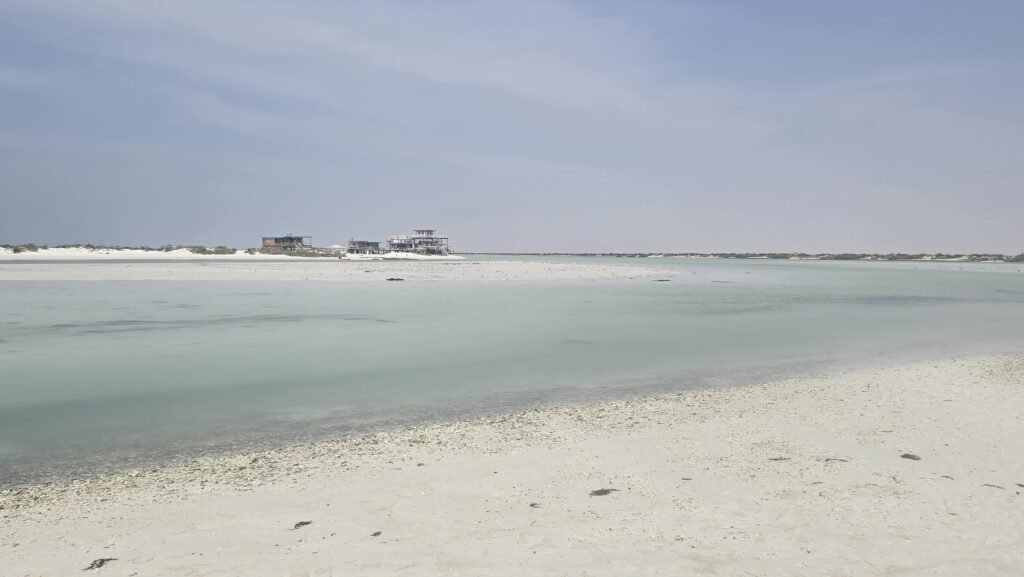
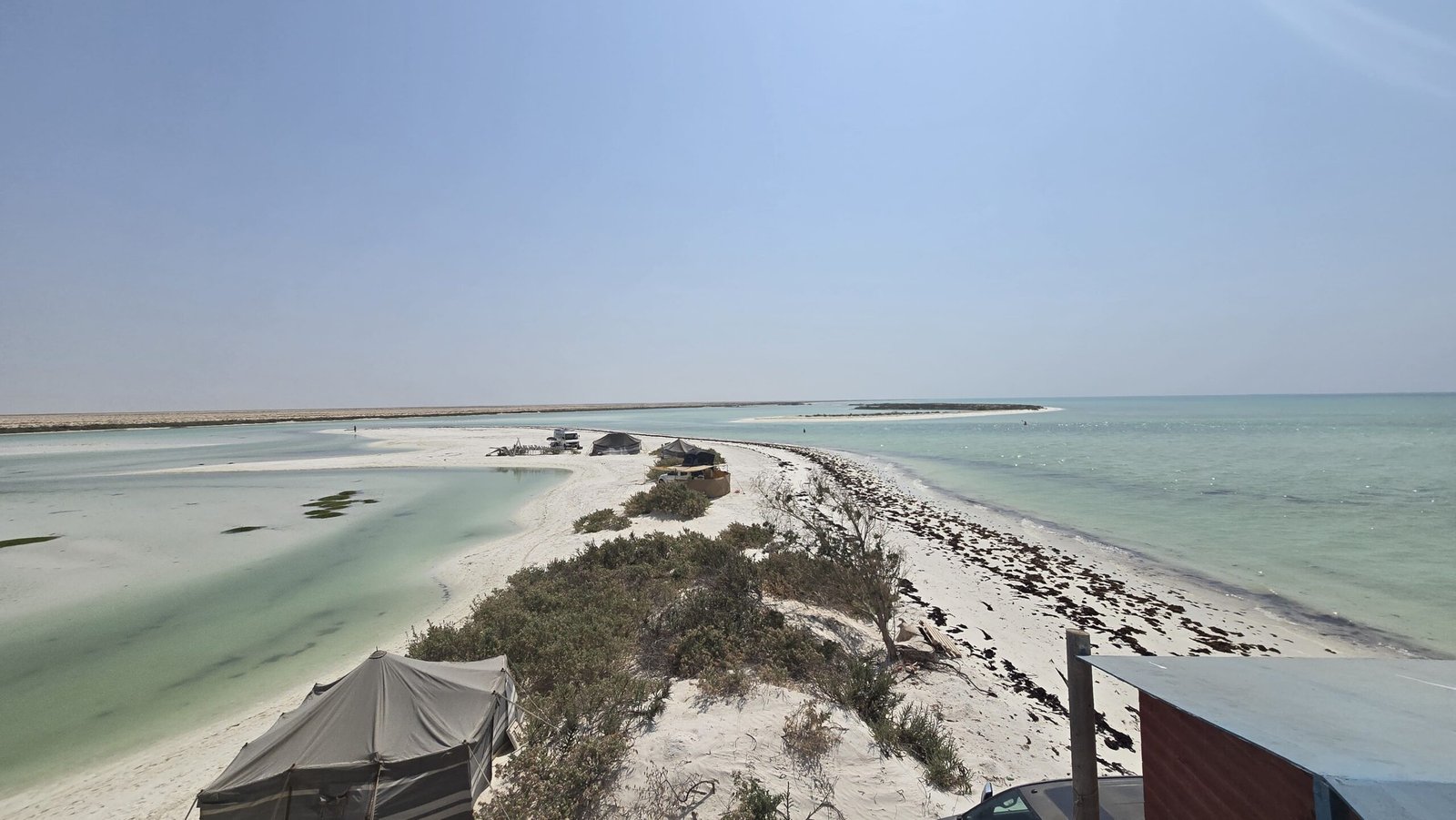
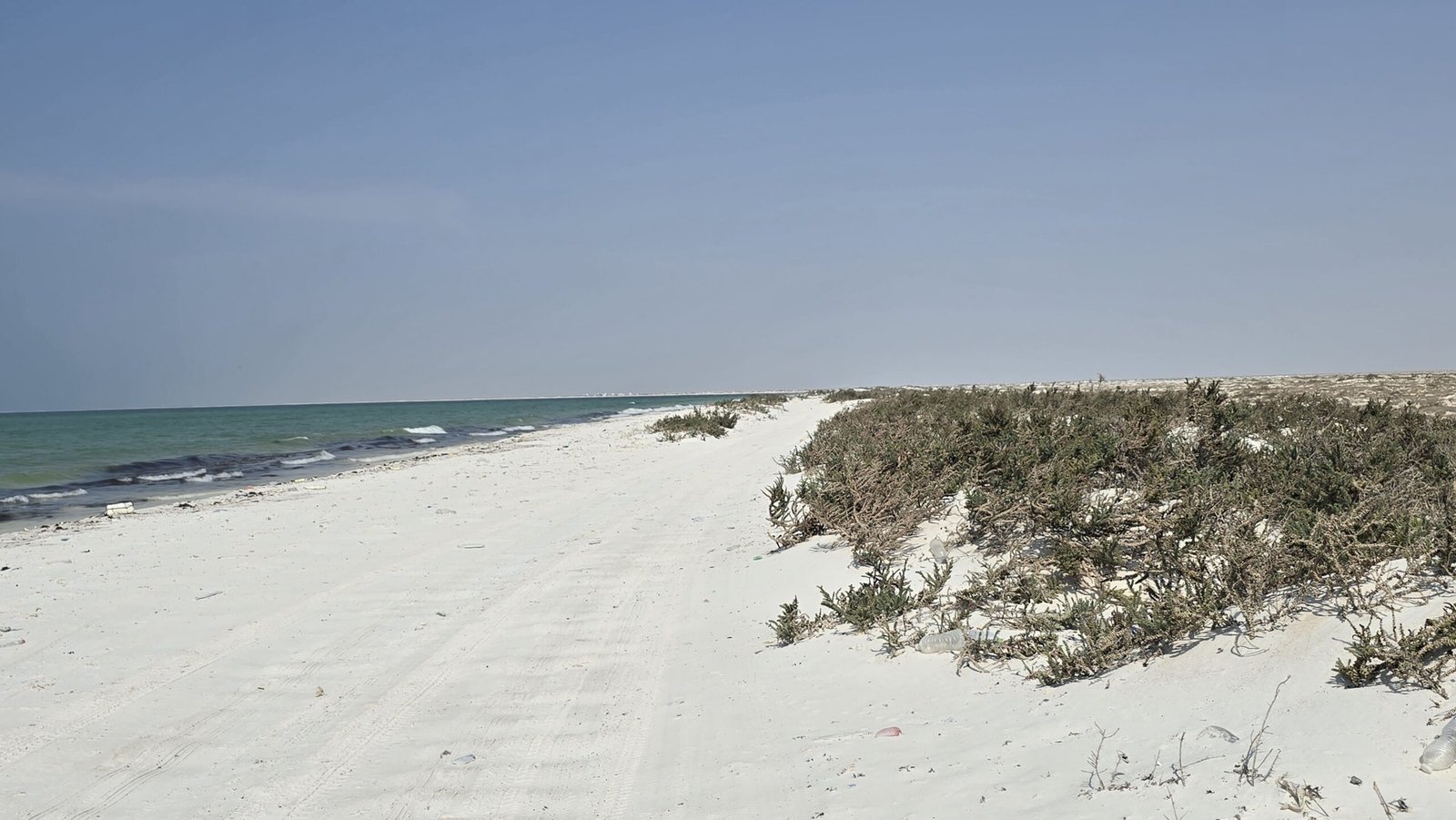
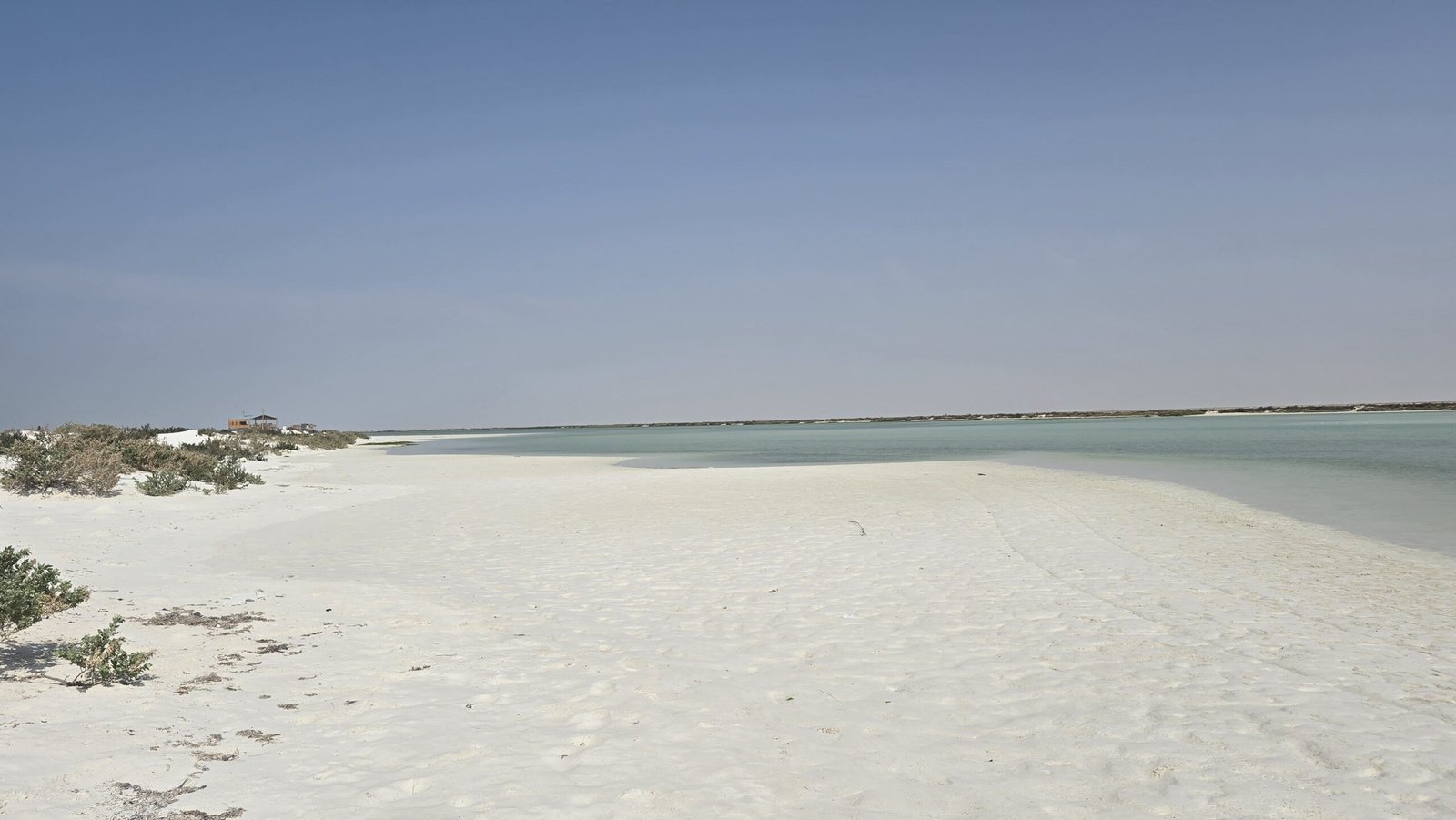
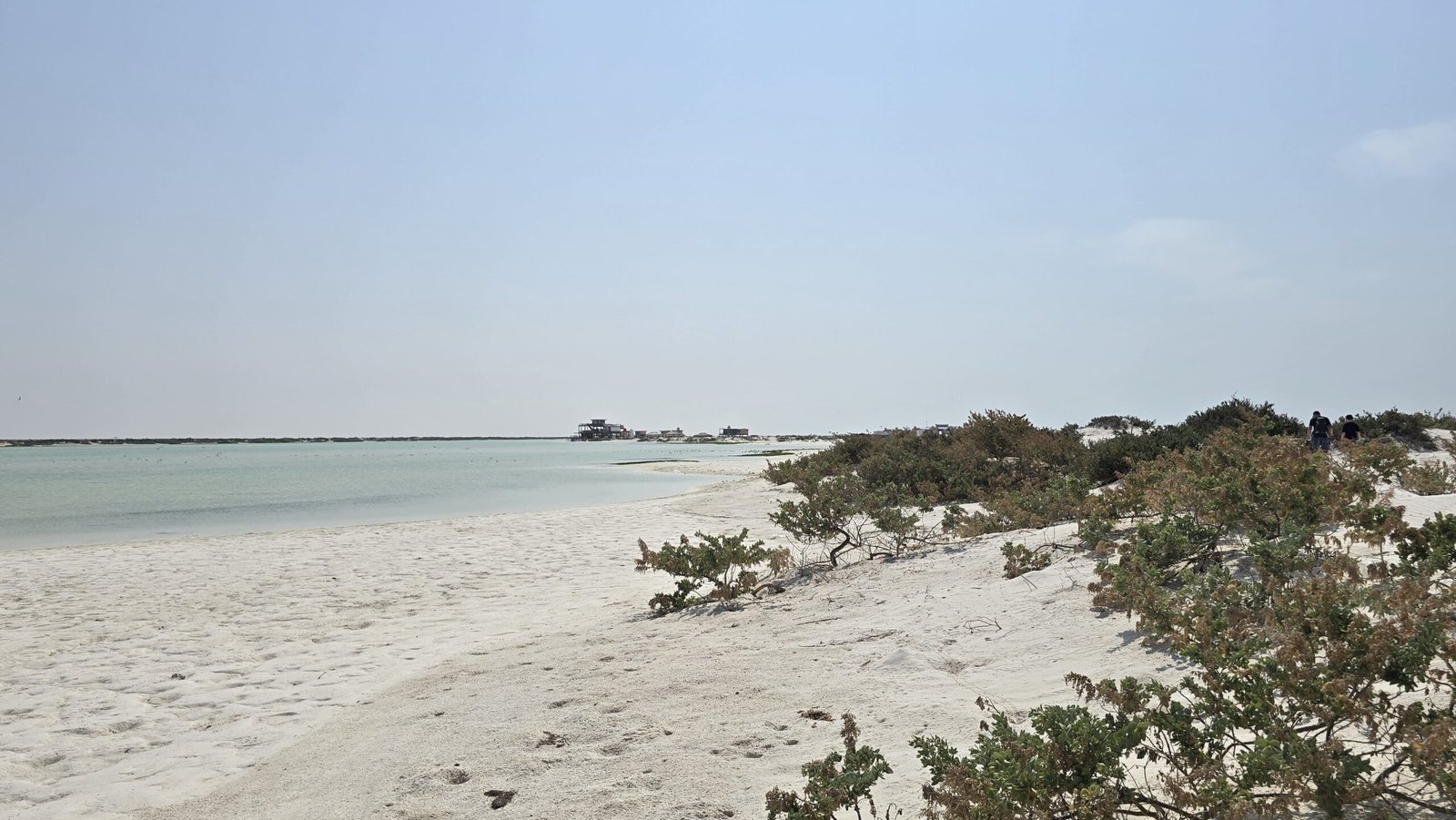
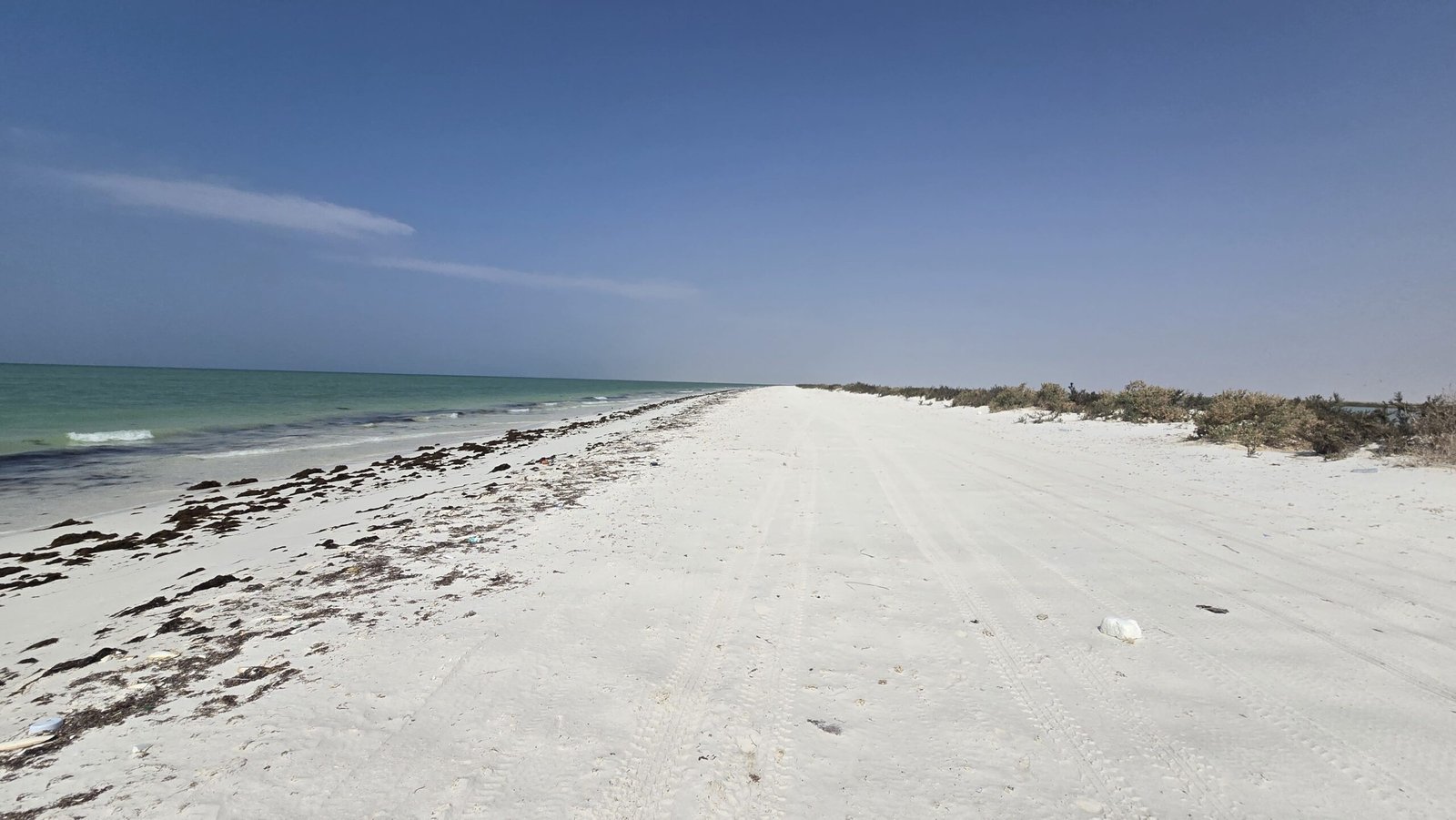
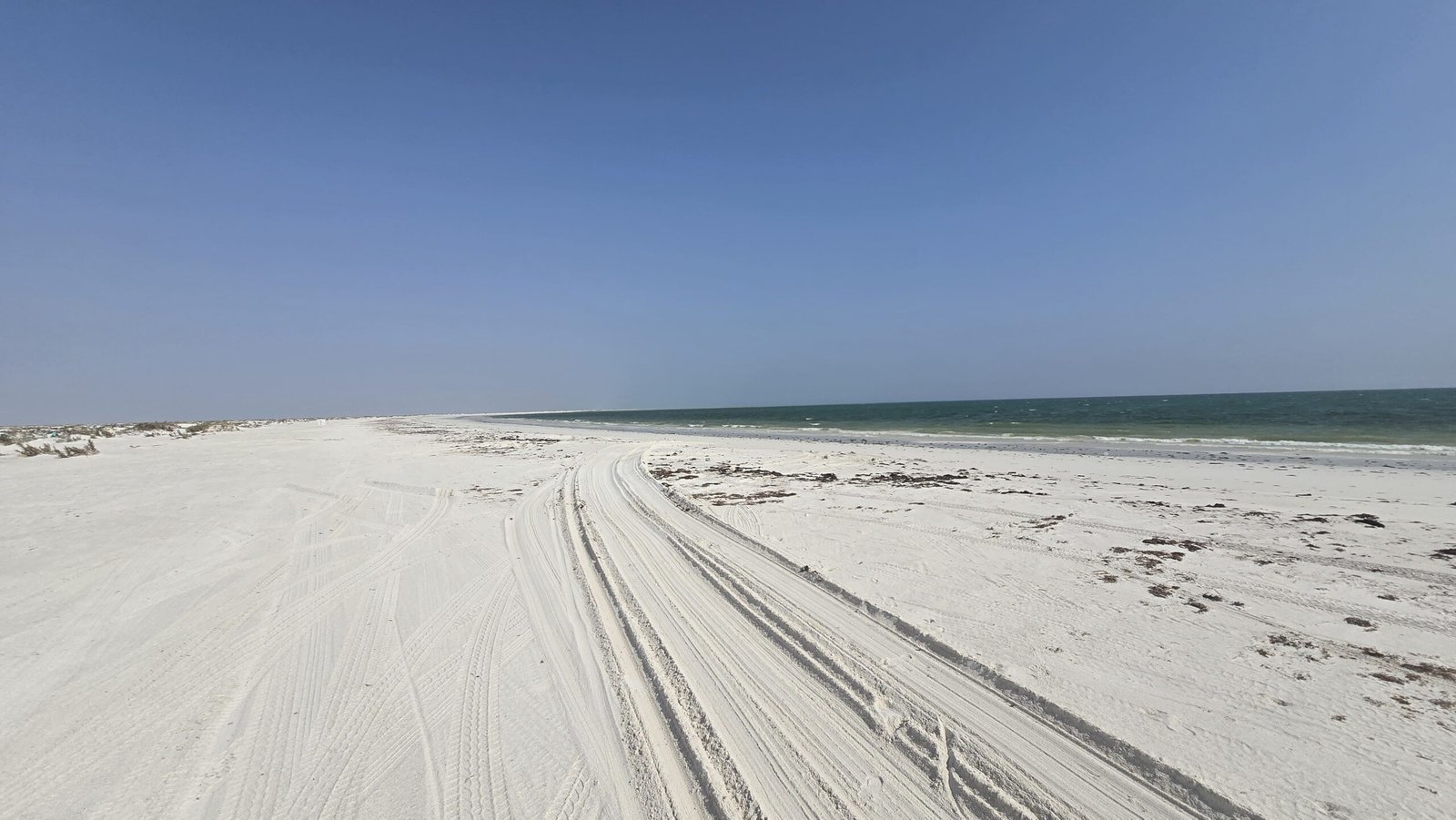
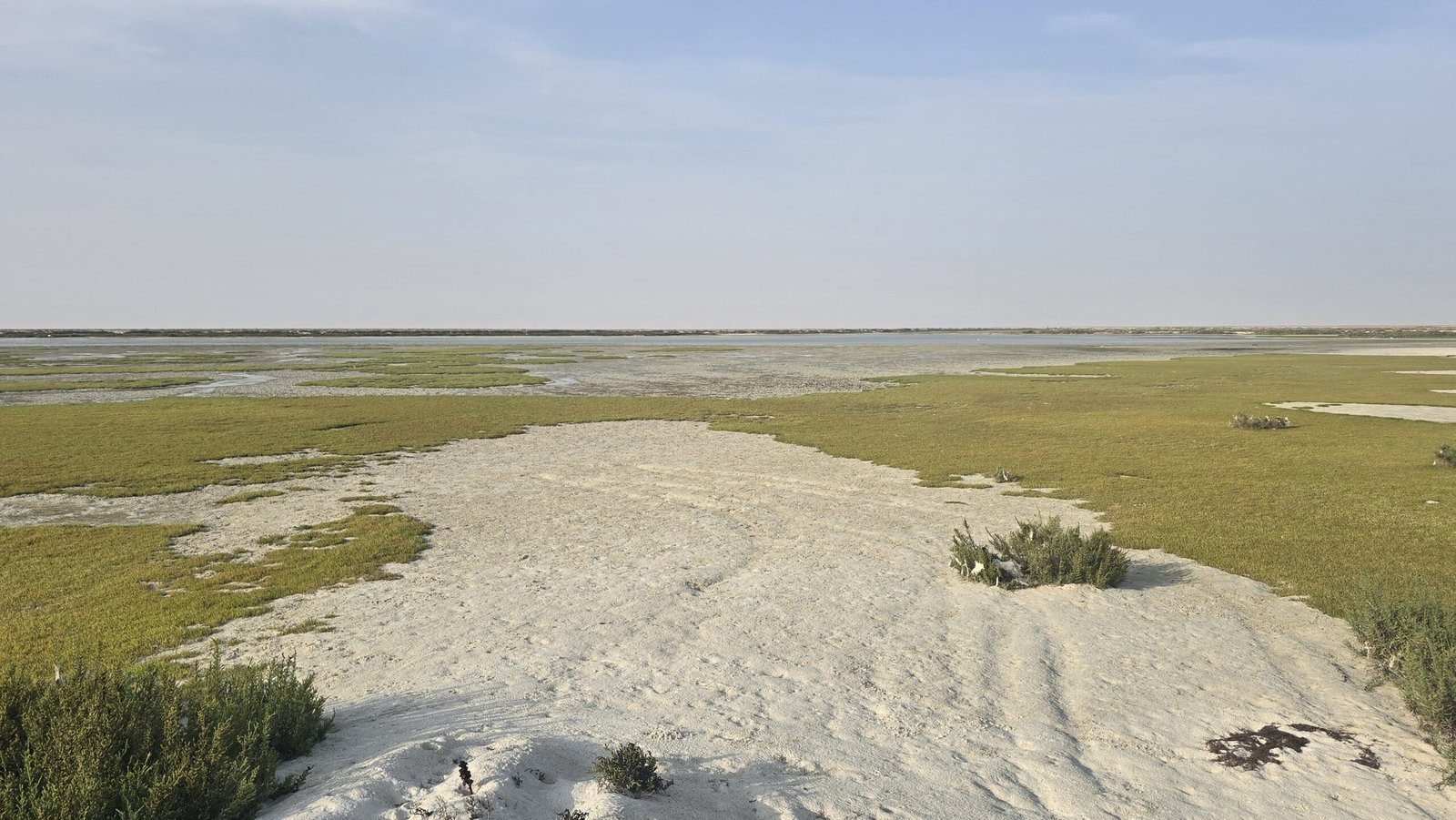
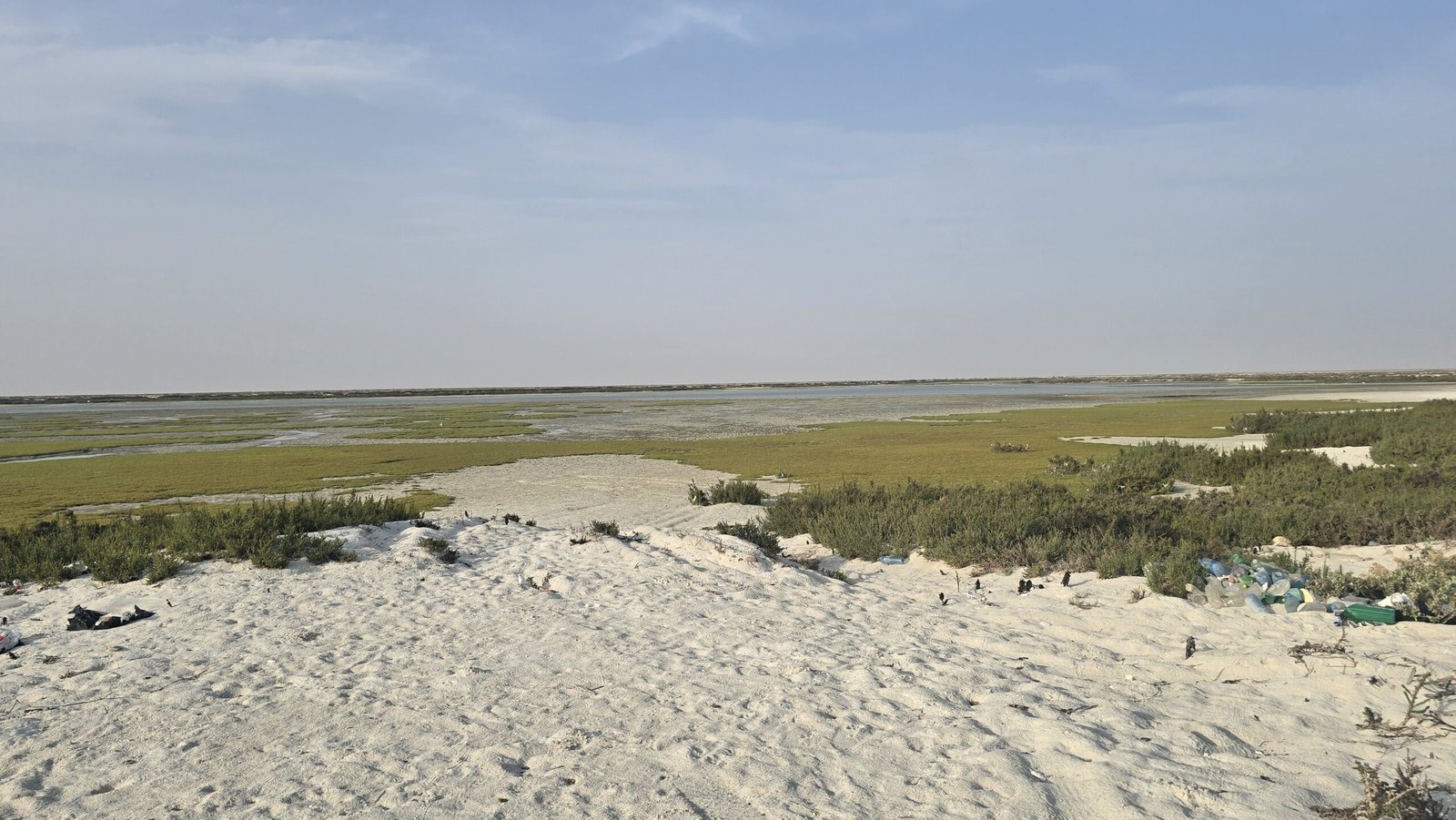
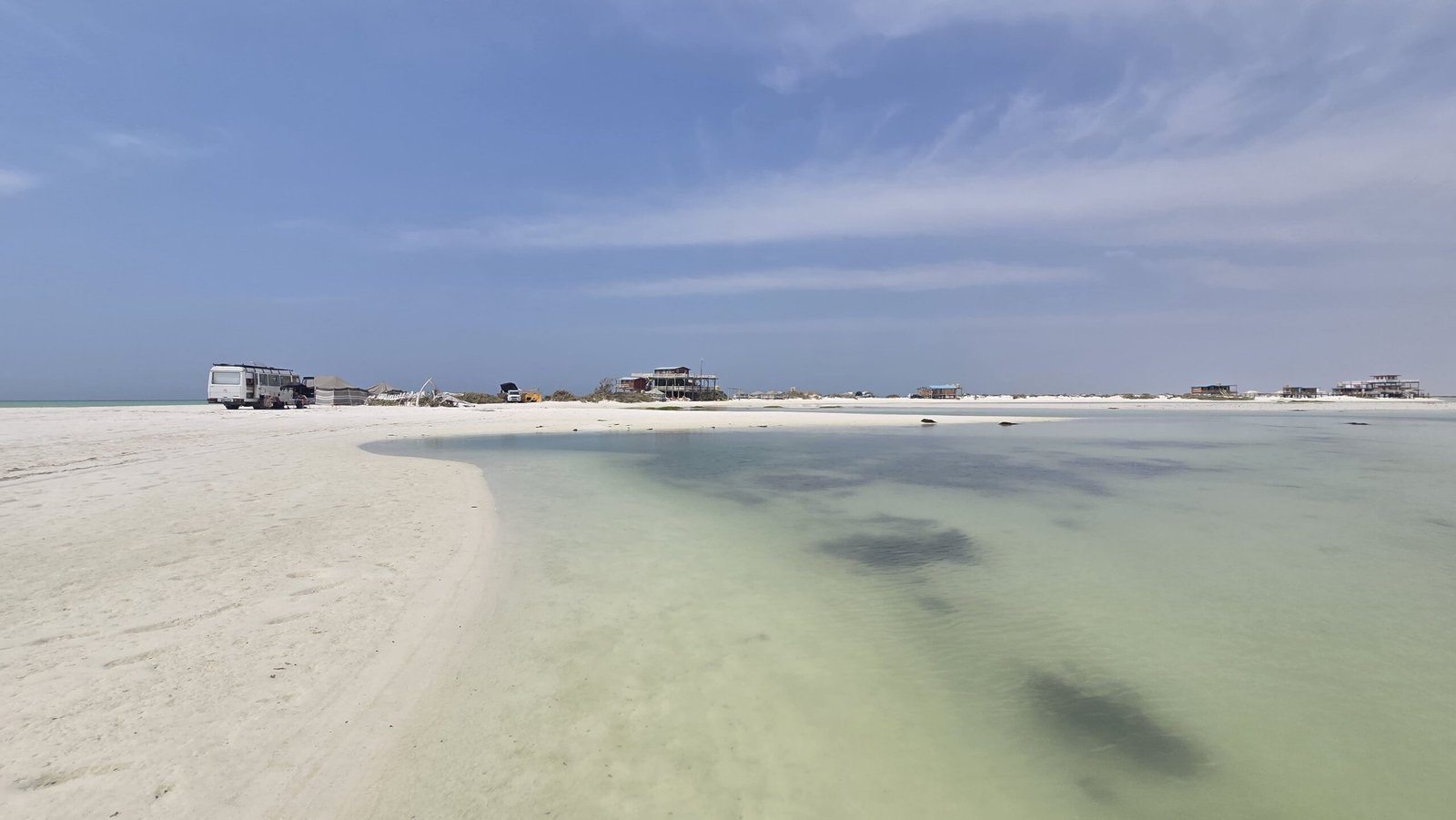
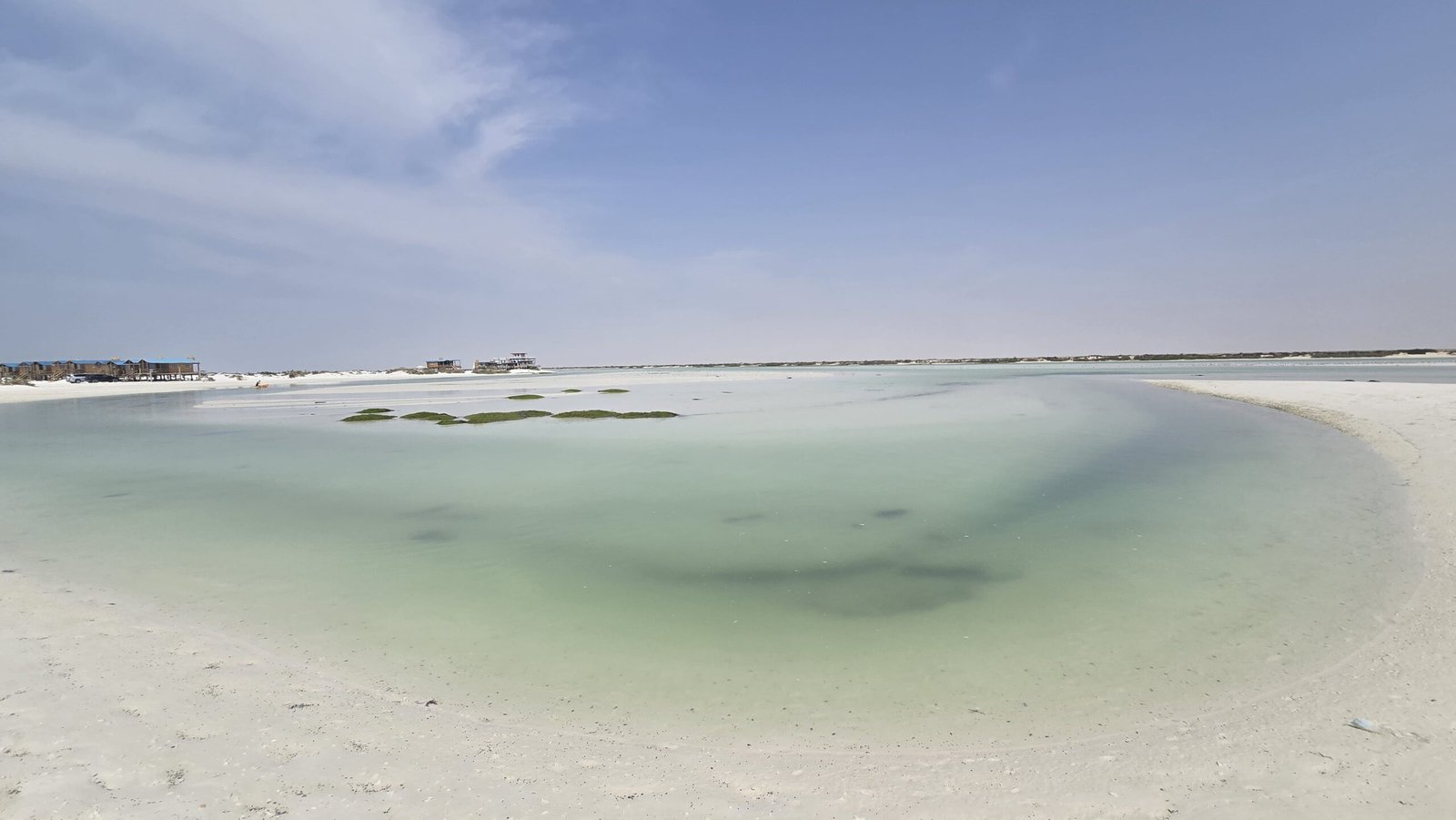
Barr Al Hikman is a massive tidal peninsula in the Al Wusta Governorate of Oman, projecting roughly 30 kilometres into the Arabian Sea. It holds the record as the Middle East’s longest natural sandbar and Oman’s largest tidal plain. The landscape is defined by three things that don’t usually coexist: blindingly white sand beaches, duck-egg blue turquoise lagoons, and vast salt flats — known locally as sabkha — that stretch to the horizon like a scene from another planet.
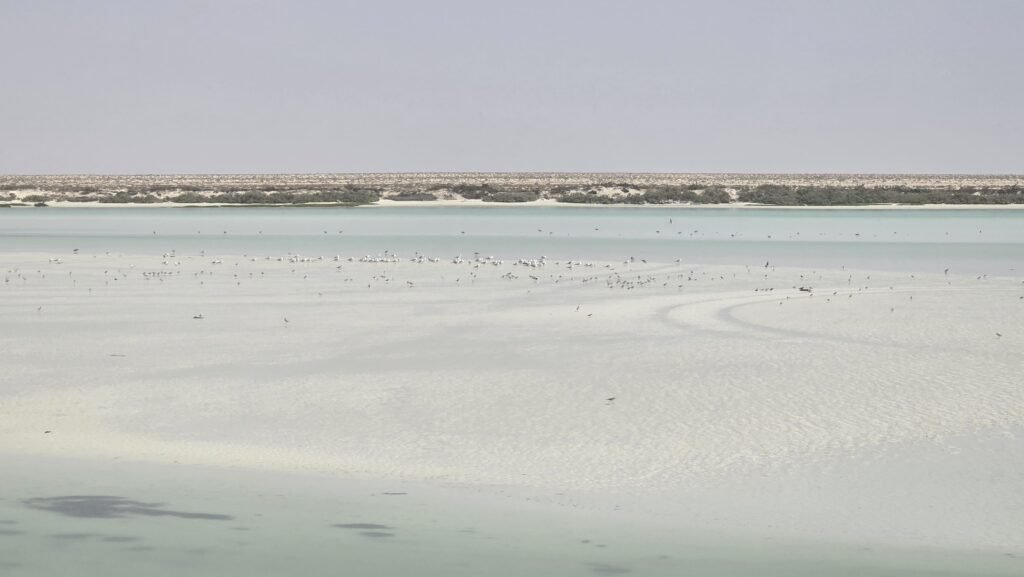
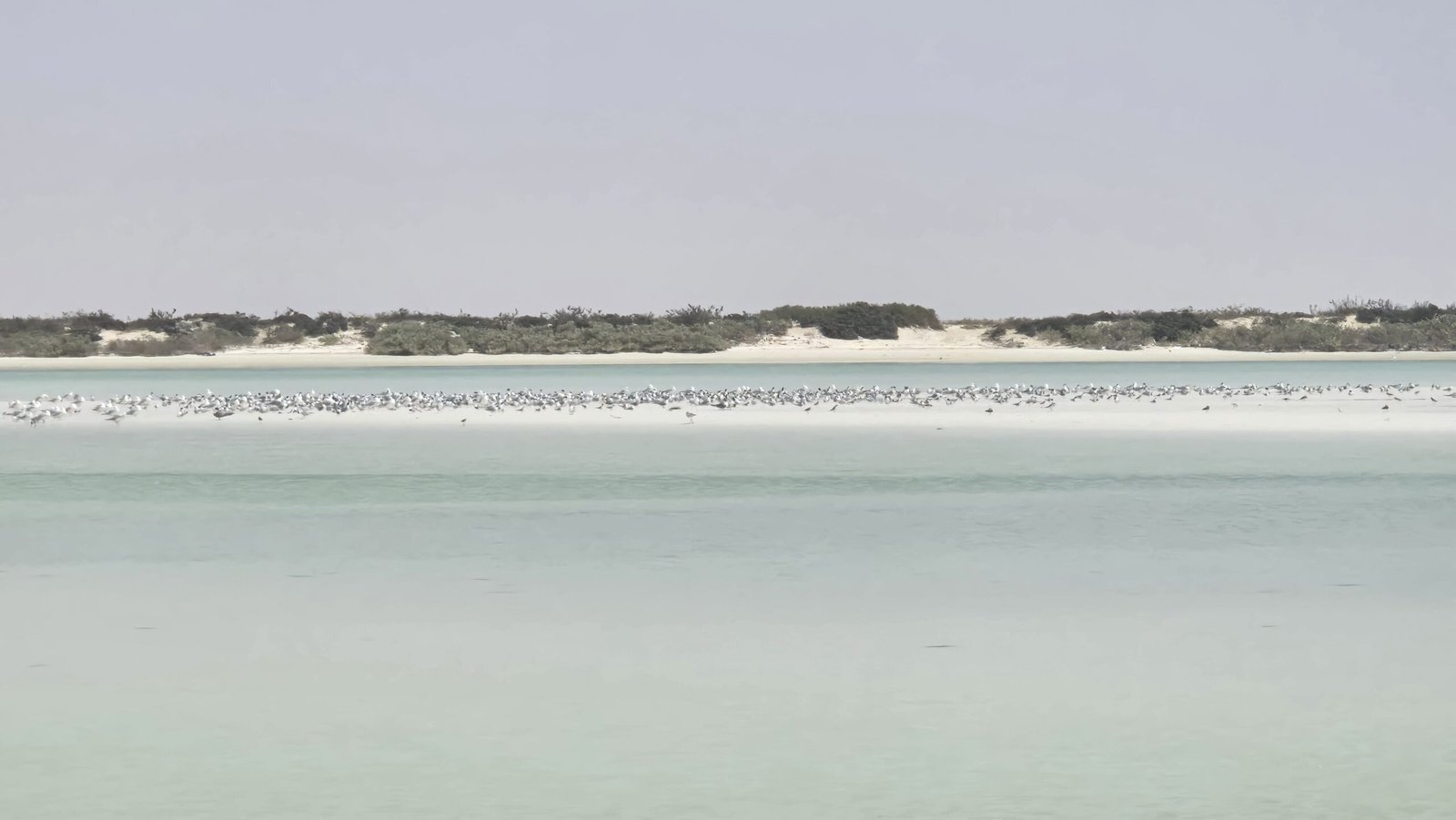
In October 2023 the area received its Ramsar designation, formally recognised as a Wetland of International Importance covering over 714,000 hectares. It’s one of the most critical migratory bird staging grounds in the Eastern Hemisphere, with up to a million individual birds passing through annually on the Central Asian Flyway — some having flown over 5,000 kilometres from Siberian breeding grounds. Add in nesting sea turtles, offshore coral reefs, and the occasional sighting of Arabian Sea humpback whales beyond the horizon, and you start to understand what makes this place genuinely special.
And yet almost no one has heard of it.
Getting There: The Truth About the Salt Flats
Let me address the thing that puts most people off, because almost everything you read online about getting to Barr Al Hikman makes it sound like a death-defying expedition requiring military-grade vehicles and an expert guide or you’ll sink without trace.
That’s not entirely wrong — but it’s also not the whole picture.
The salt flats can be treacherous. A dry crust over saturated mud beneath means that if you hit a wet patch wrong, you will sink to your axles and you won’t be driving out on your own. Night crossings are genuinely dangerous — zero depth perception, zero ambient light, and you simply cannot tell solid ground from slush. These warnings are real and worth taking seriously.
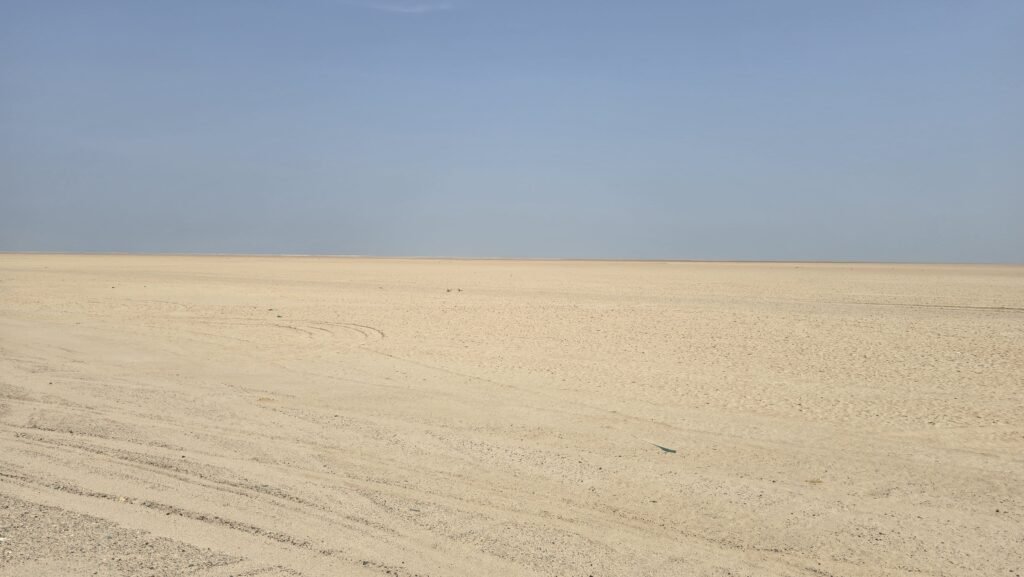
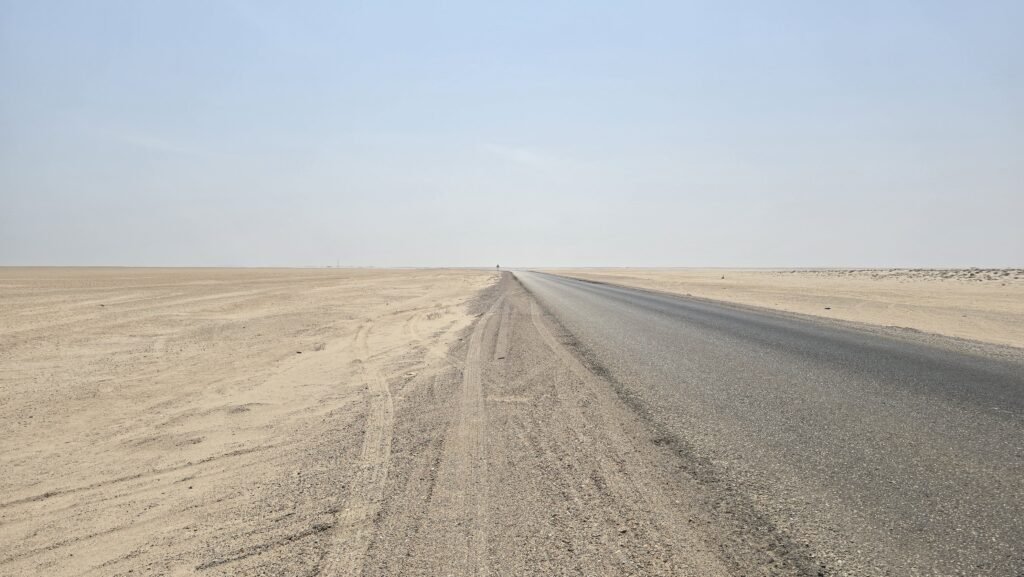
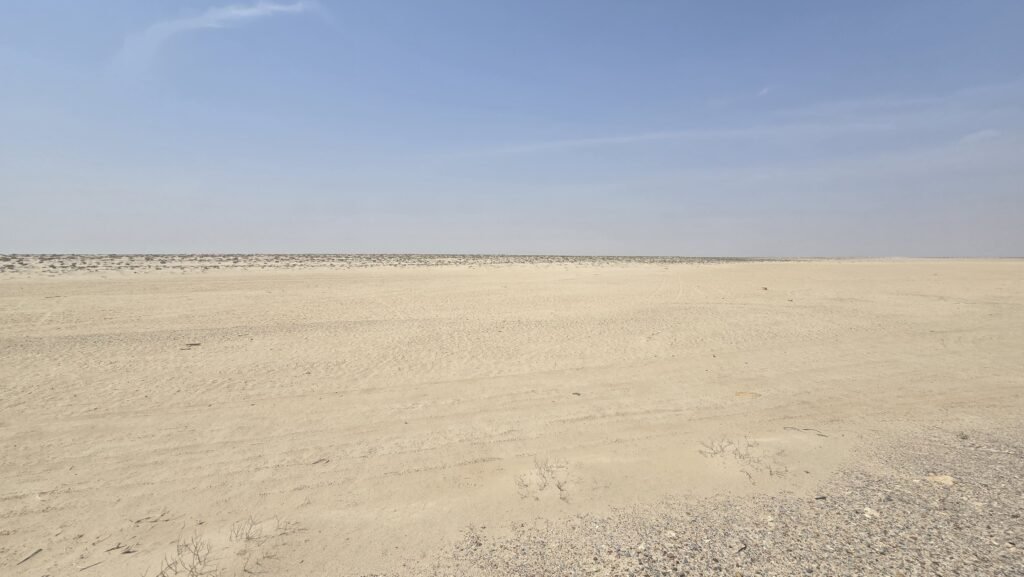
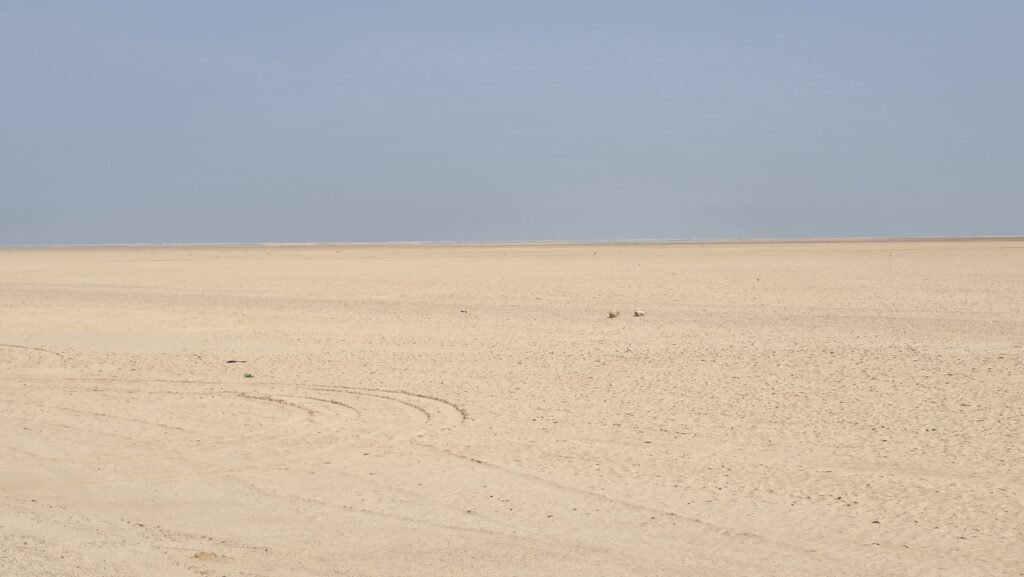
But here’s what the internet doesn’t tell you: there are multiple routes across the sabkha, and not all of them are equal. Some are genuinely technical. Others are perfectly manageable for any competent 4×4 driver in the right conditions. I was told — and experienced this firsthand — that some guides deliberately take clients through the harder terrain to justify their fee. That’s not me throwing shade at guides; good local guides are invaluable and know the tides better than any app. But it does mean the narrative that you absolutely cannot do this without professional help every single time is a bit overblown.
I booked a guide for the round trip. On the way in, having a local lead vehicle was reassuring and instructive — watching how they read the terrain and chose the line taught me a lot. On the way back, I made the decision to drive without the guide. Following the GPS route on the GaiaGPS app https://www.gaiagps.com/public/NtJ4iogJjV8nC83S0Arv5mkI — which has a proven track record uploaded by people who’ve done this dozens of times.
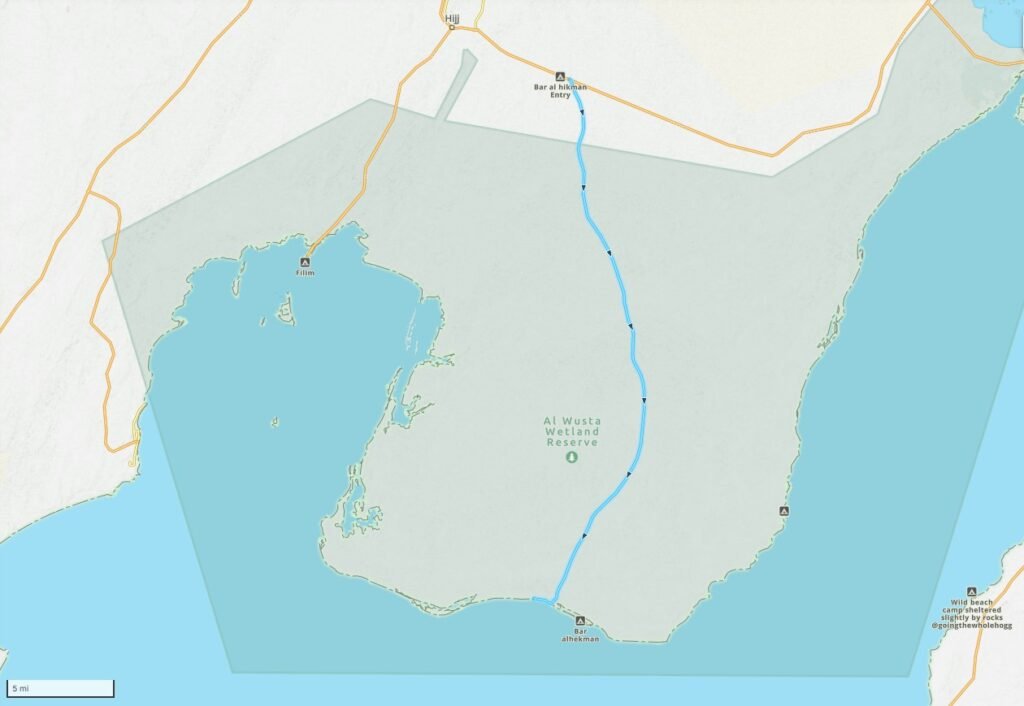
I drove back without a single moment of real anxiety. The landscape looks intimidating because it’s so featureless and vast, but on the right track, in dry conditions, in a proper 4×4 with decent tyres, it’s very doable.
The essentials for getting there:
- A proper 4×4 is non-negotiable. Not a soft-roader. A real 4×4 with low-range — Land Cruiser, Defender, Patrol, Prado, that category.
- Download the GaiaGPS route before you go. There is zero cell signal on the peninsula and you need offline navigation.
- Go in daylight, always. Never attempt the crossing at night, no matter how confident you are.
- Check tides. The flat topography means a small tidal shift covers enormous horizontal distances. Time your crossing for low tide where possible.
- For first-timers, a guide for the inbound trip is a smart call — you’ll learn the terrain, understand the route, and feel much more confident on the way out.
The town of Mahout is your last stop before the wild — fuel up completely, load your water, grab any last supplies, and make sure you’ve got everything you need. There is absolutely nothing on the other side.
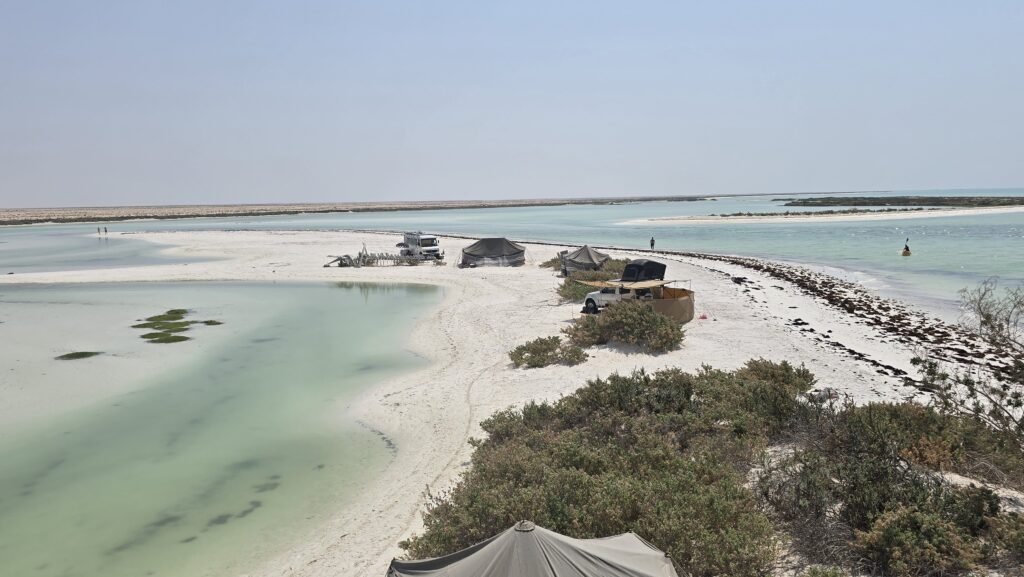
The accommodation scene on the peninsula is small, deliberately low-impact, and genuinely unique. There are no hotels. No paved roads. No resort infrastructure. What you get instead are a handful of camps that have found their own identity out here in the middle of nowhere — and that’s exactly what makes staying feel like a privilege rather than just a booking.
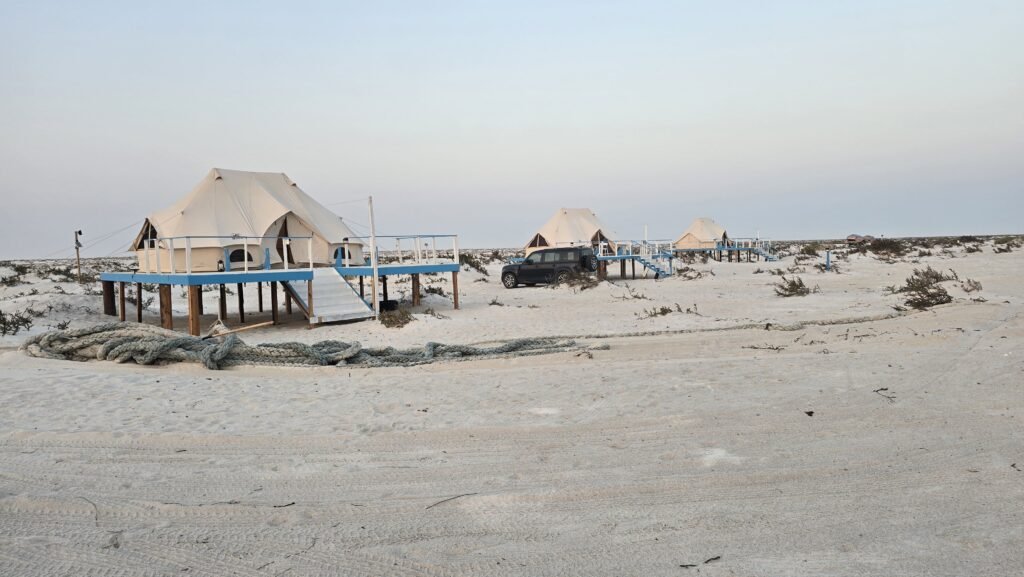
Dream Camp (where I stayed)
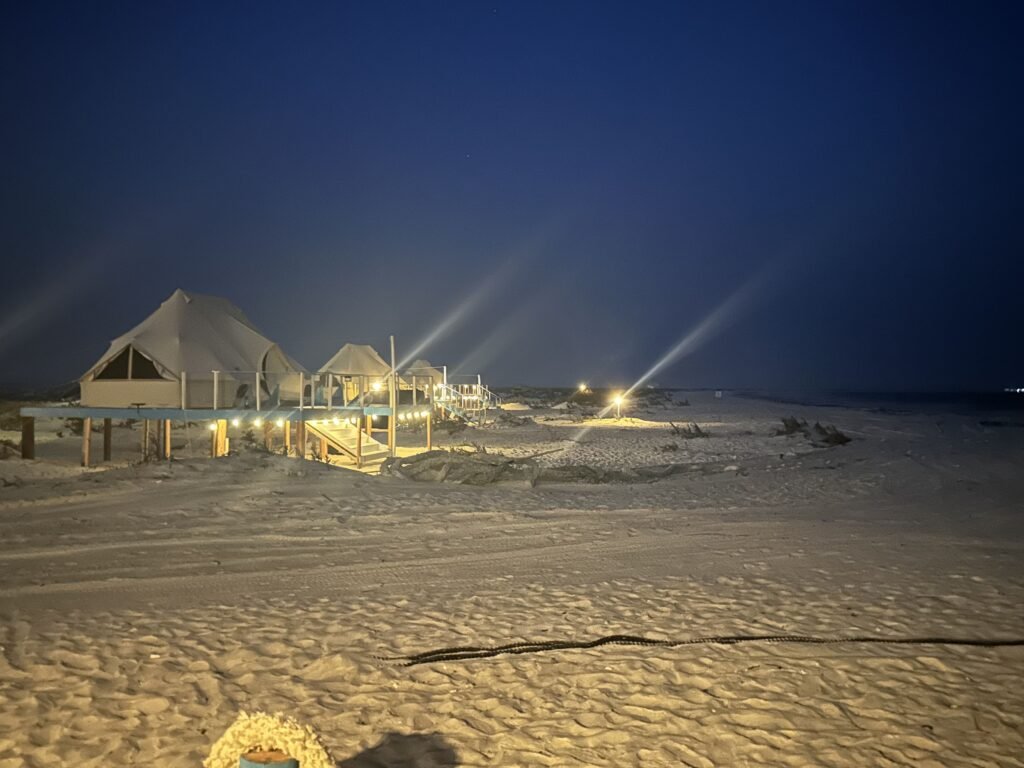
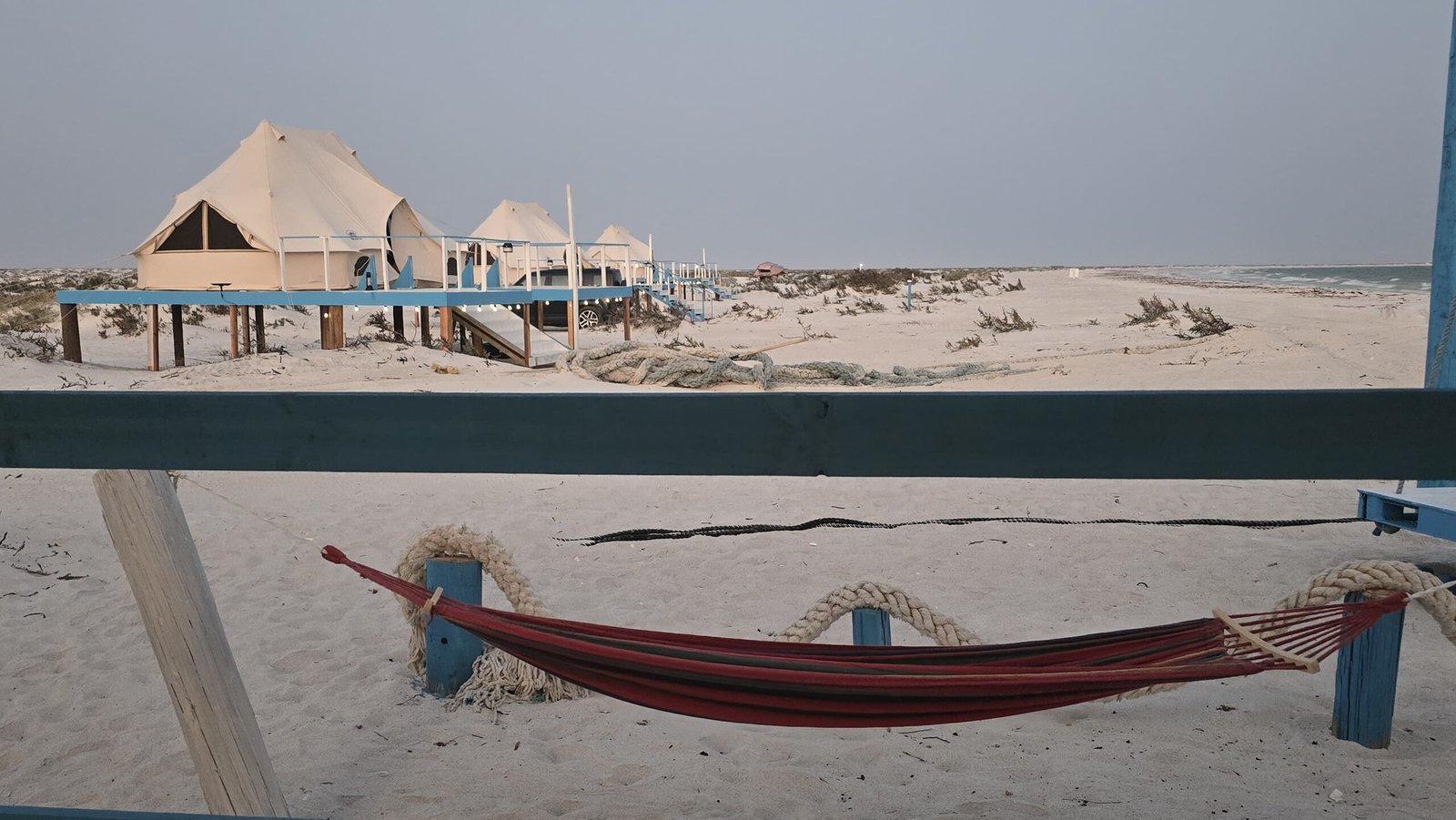
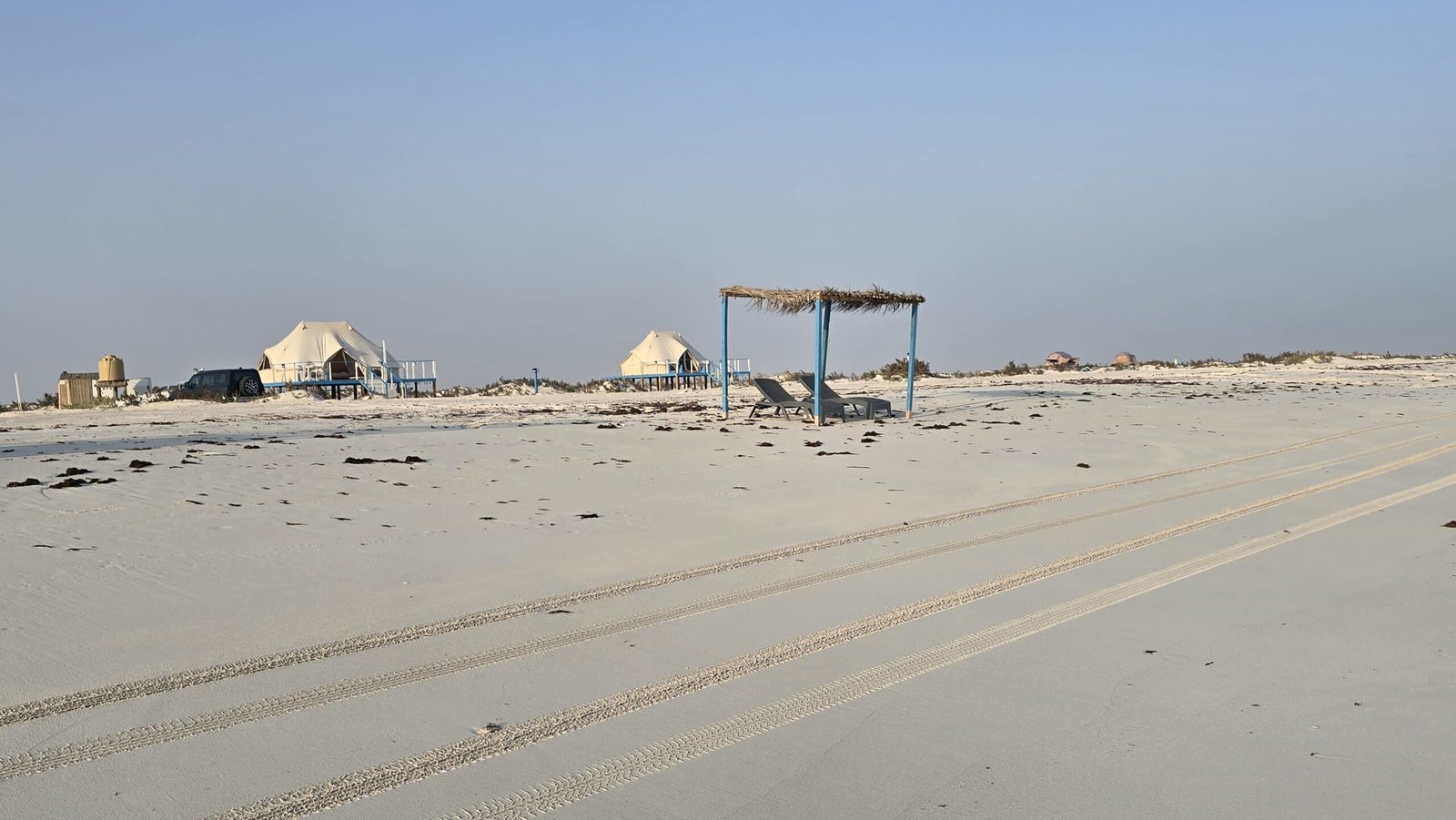
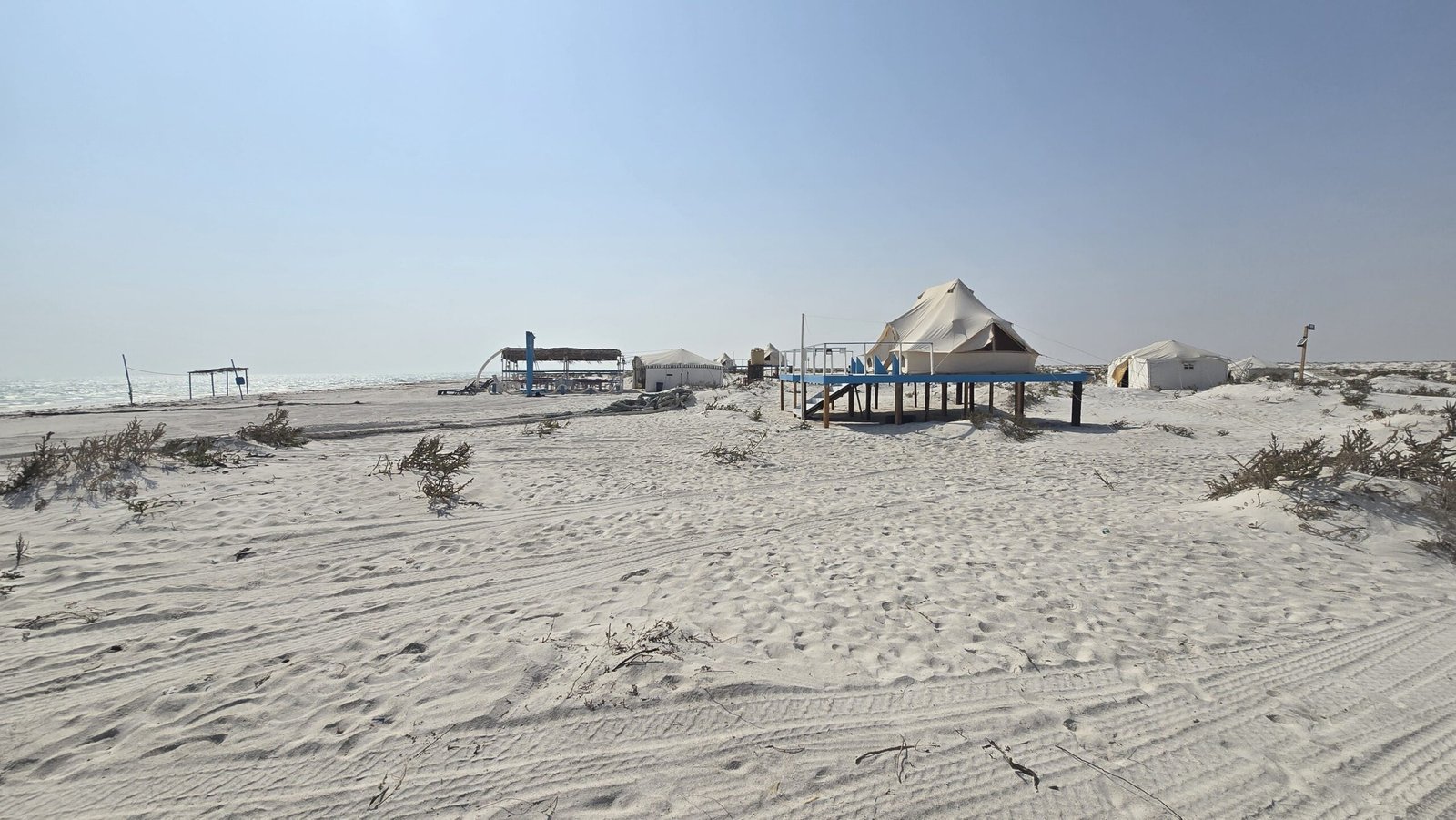
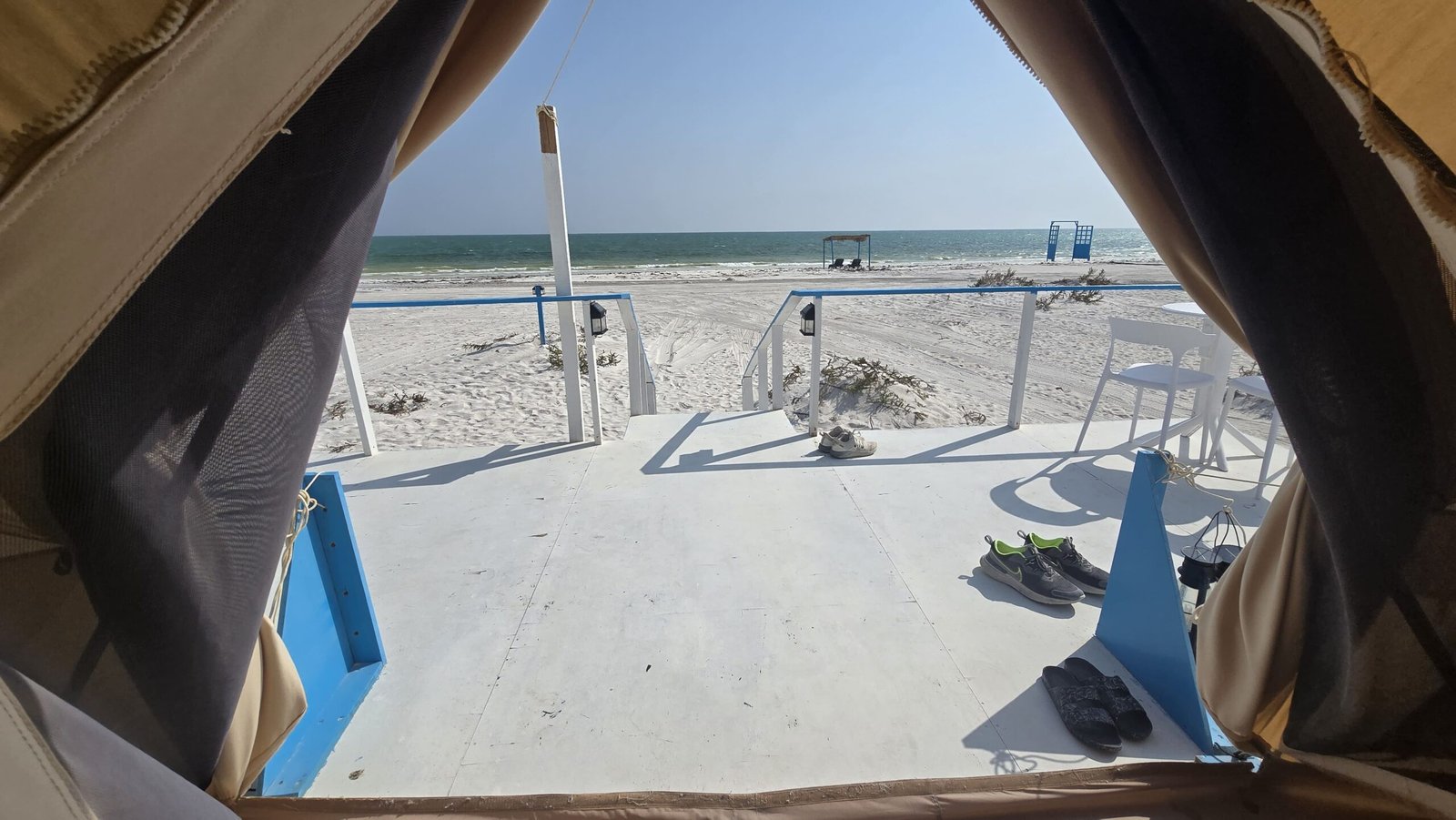
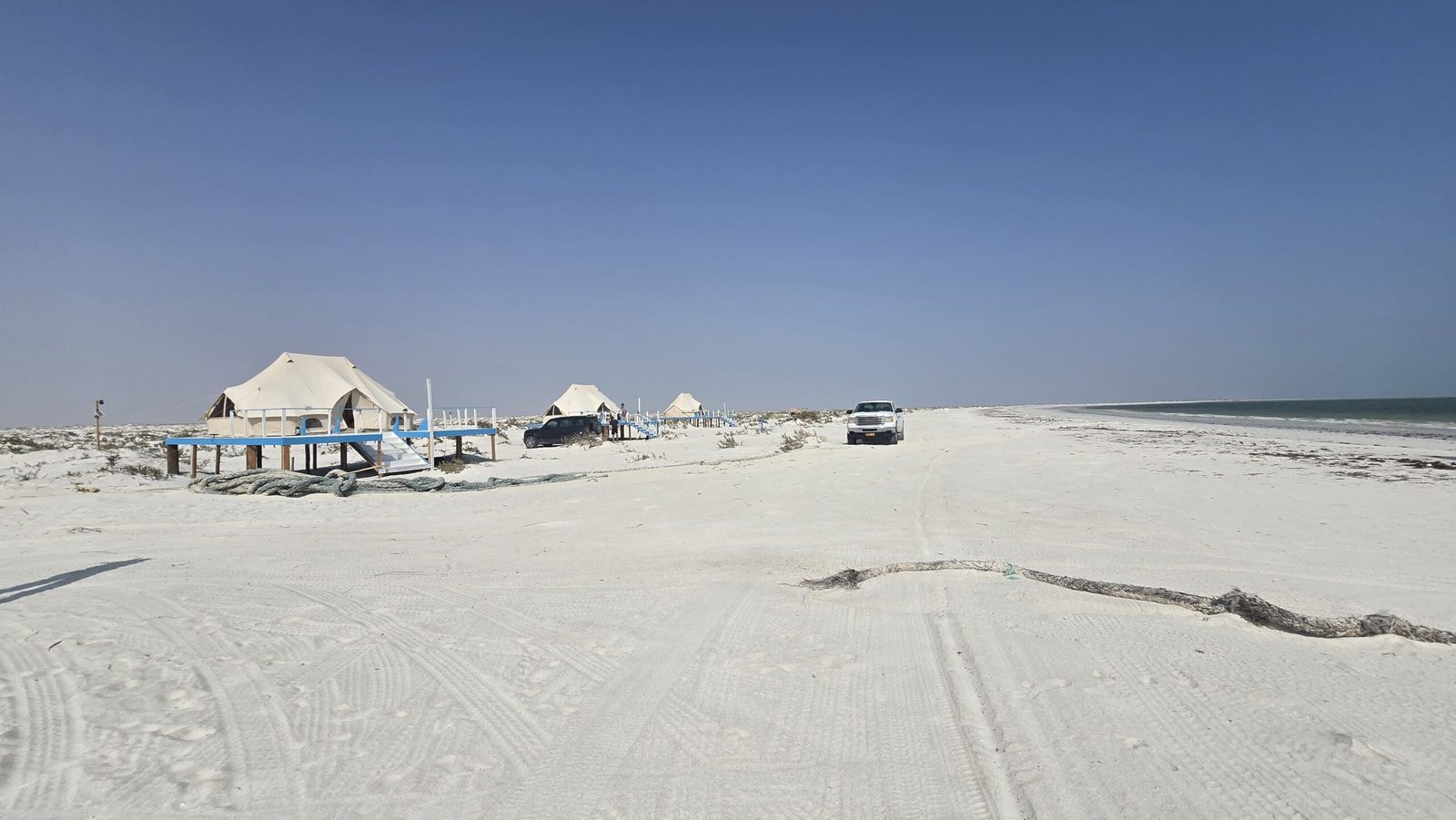
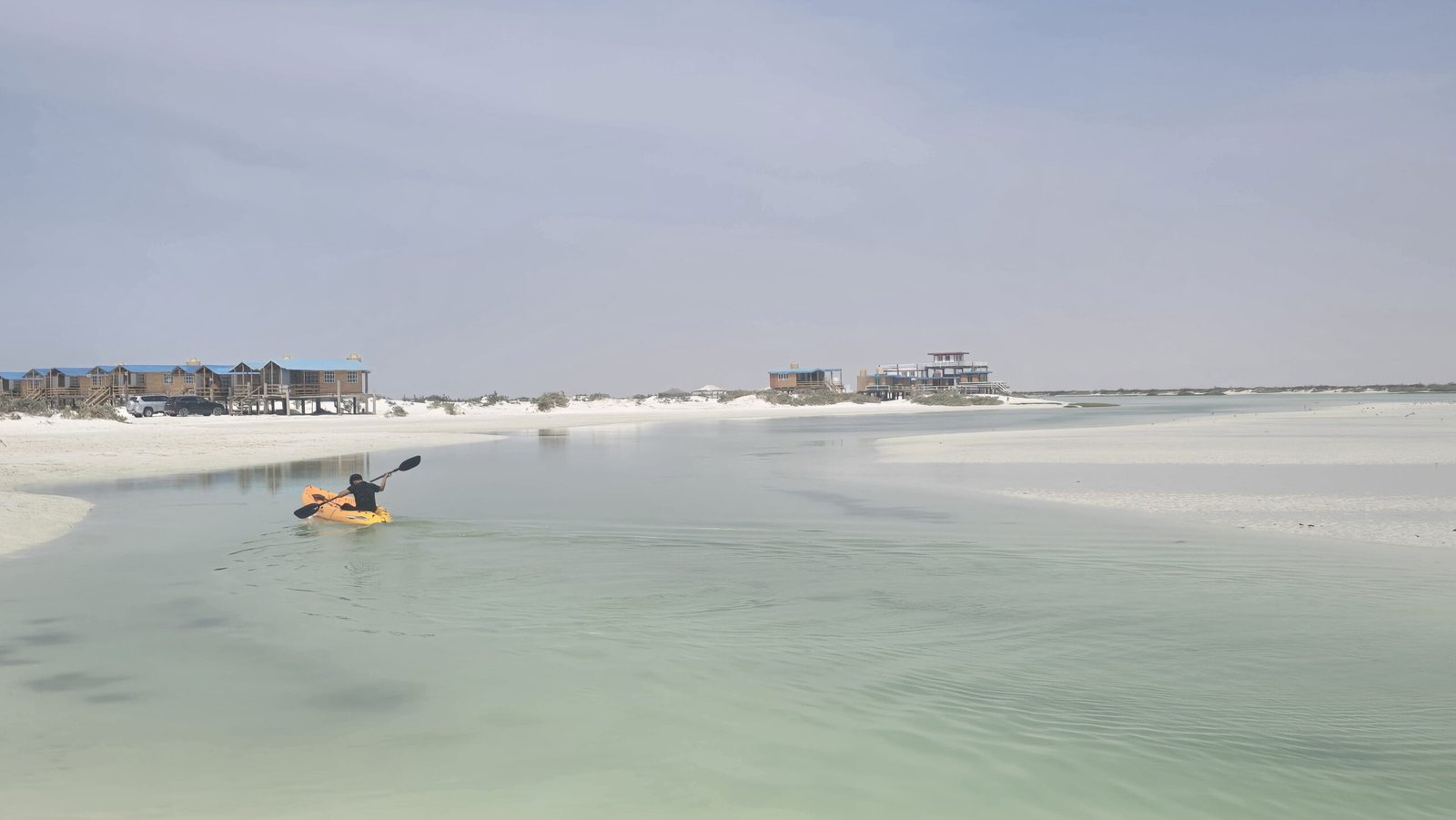
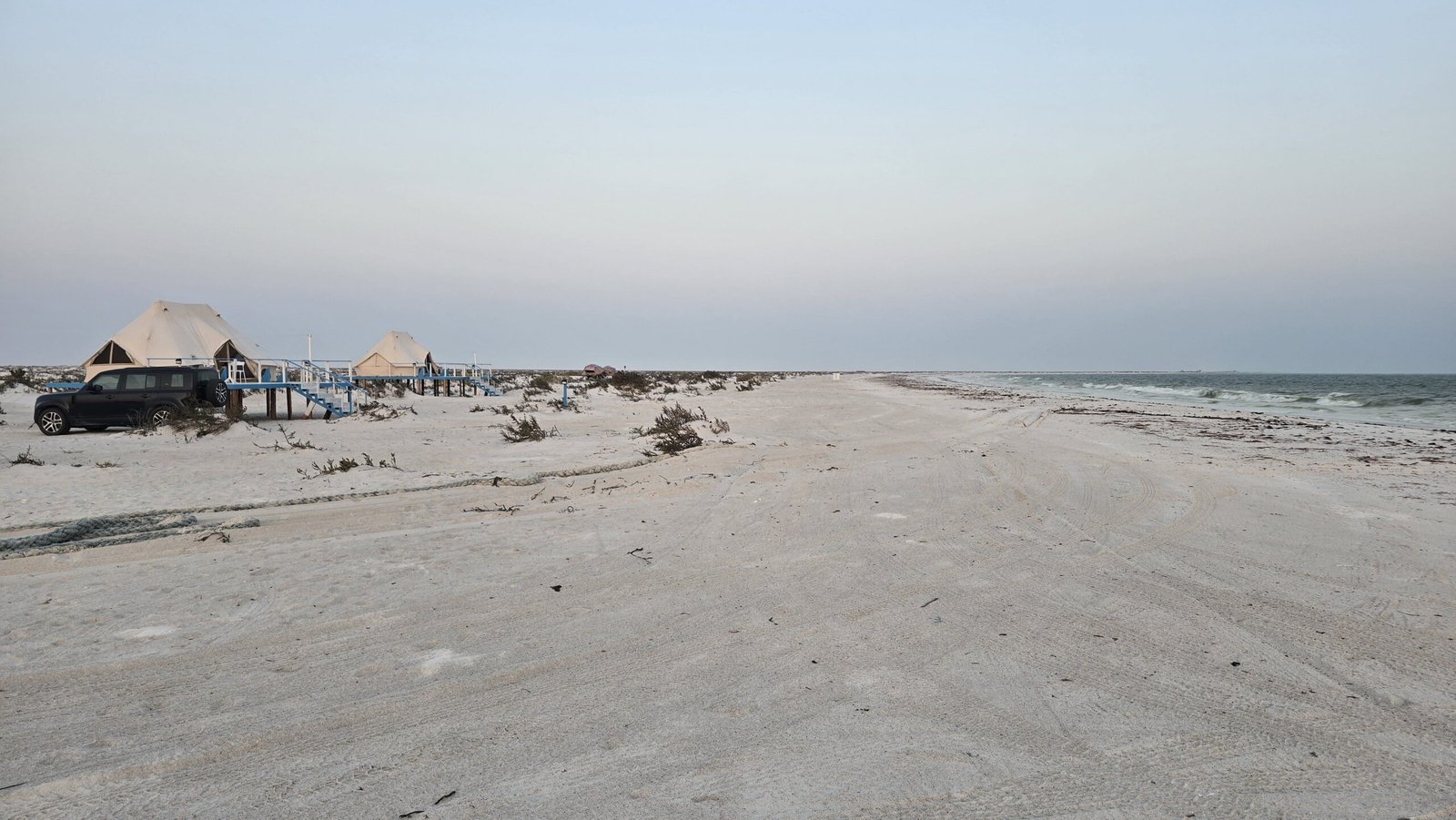
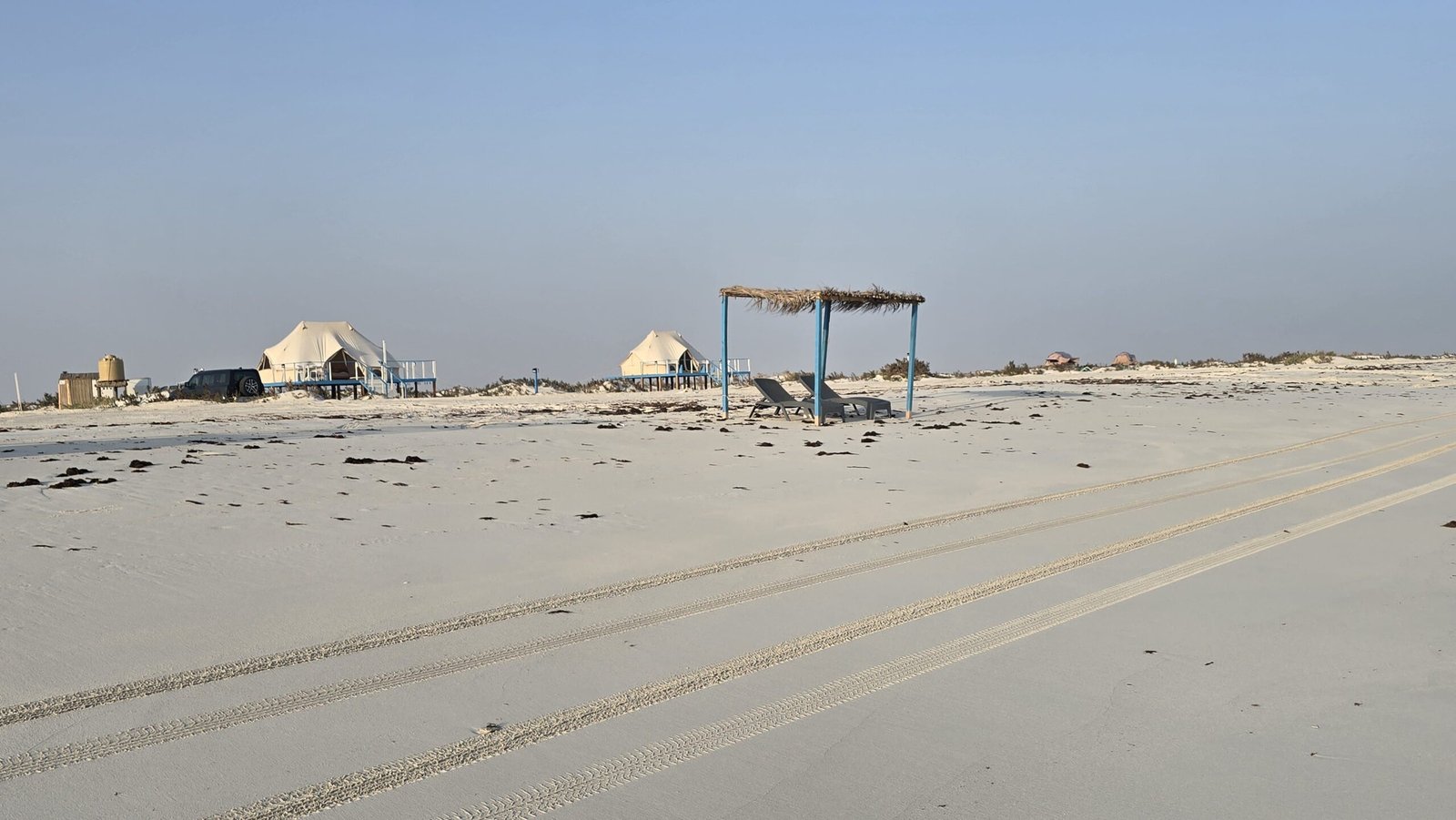
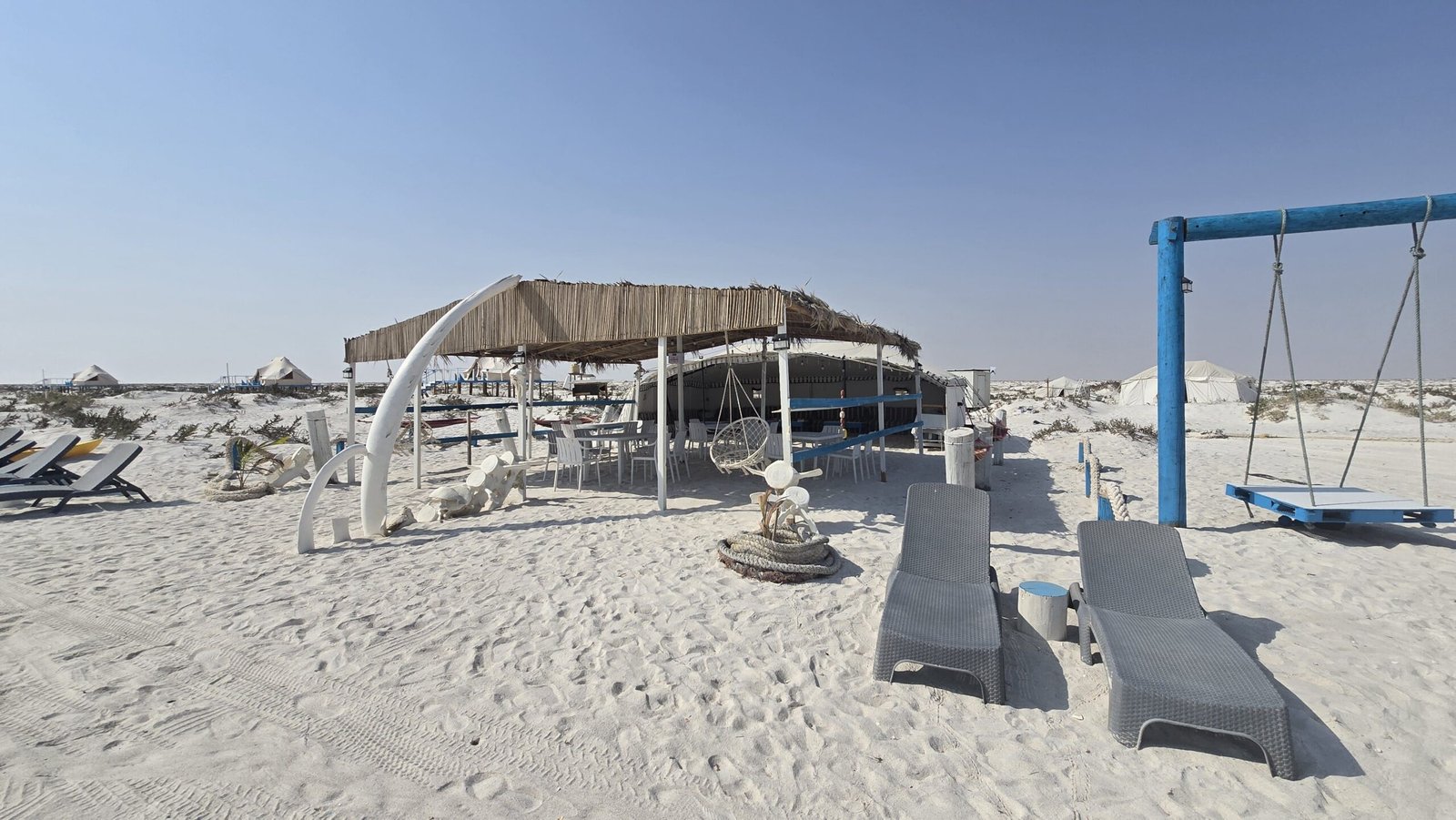
Dream Camp is the newest addition to the peninsula and it shows — in the best possible way. The tents are elevated on blue-painted wooden platforms above the white sand, with proper beds inside canvas glamping tents that fit up to four guests. The elevated design isn’t just aesthetic; it’s practical, keeping the tents clear of the tidal movement that shapes this coastline daily.
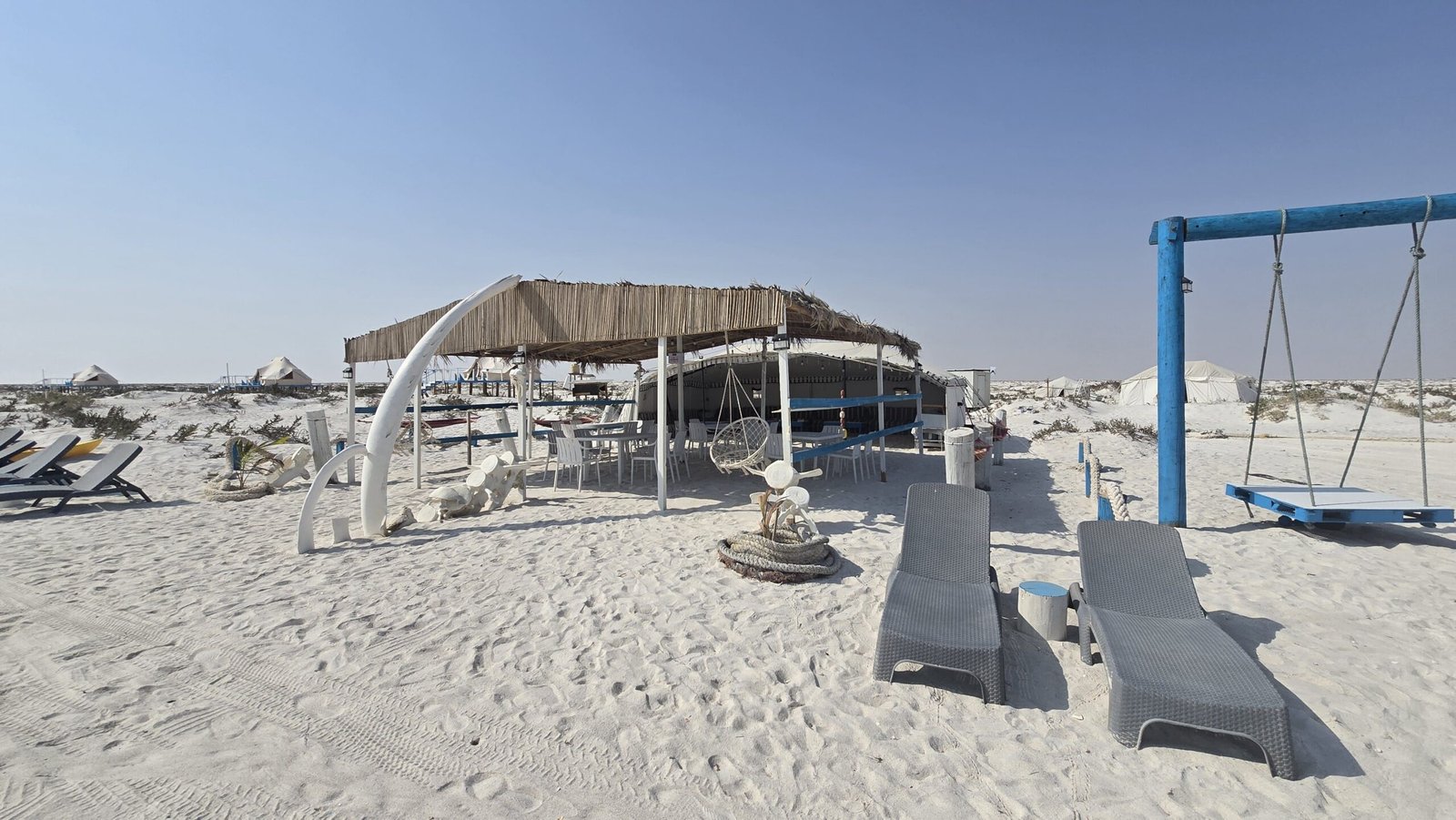
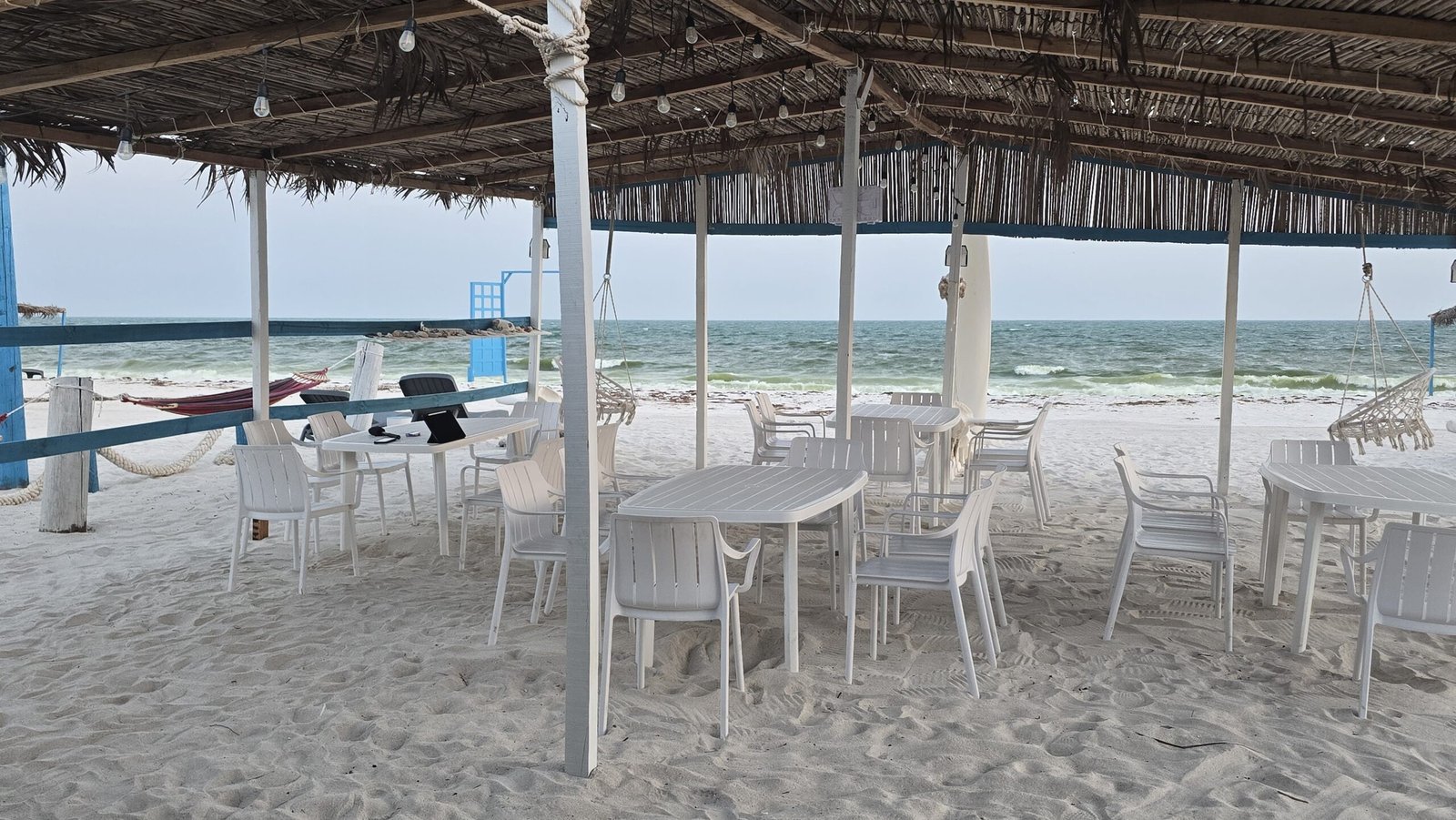
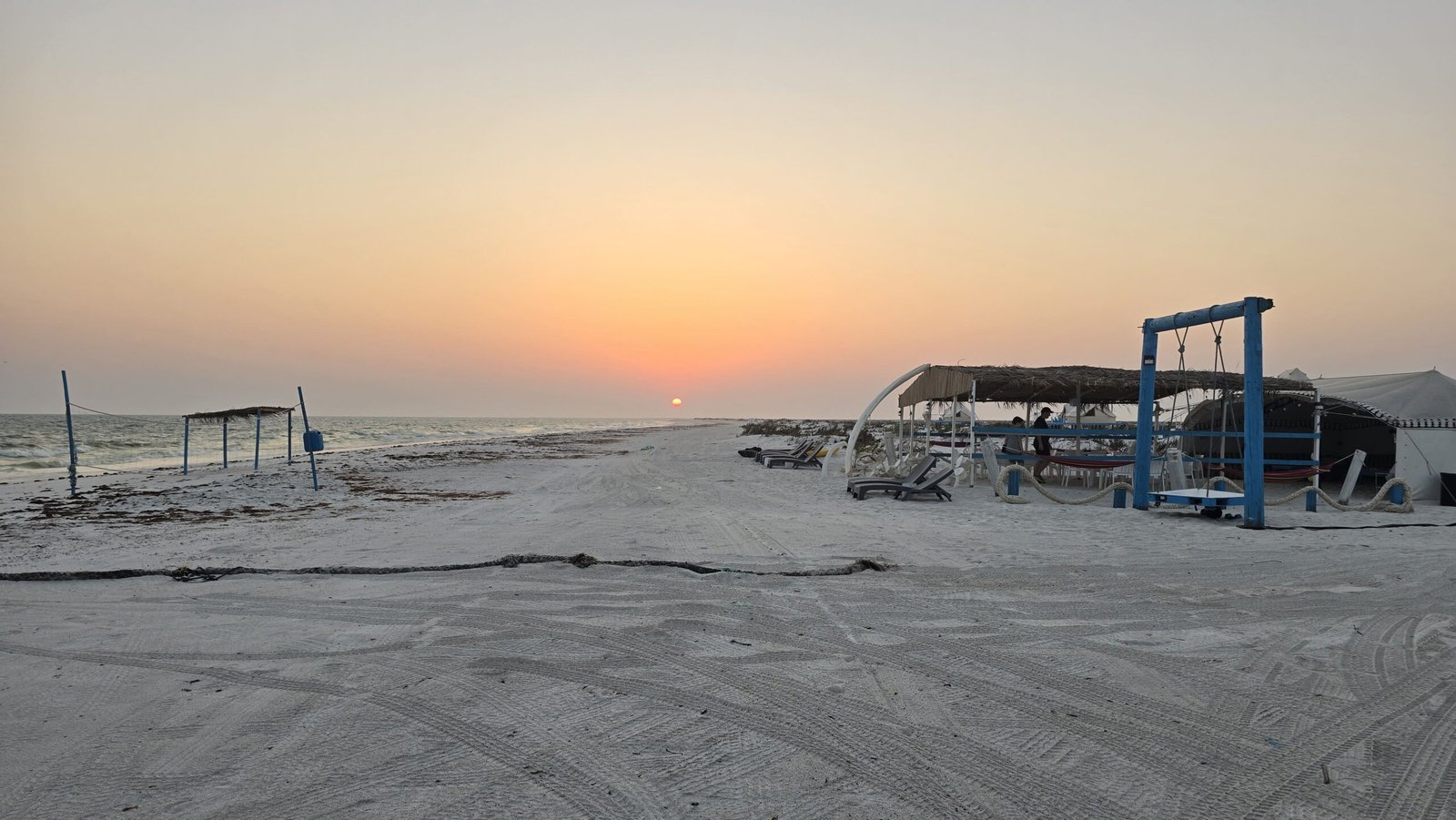
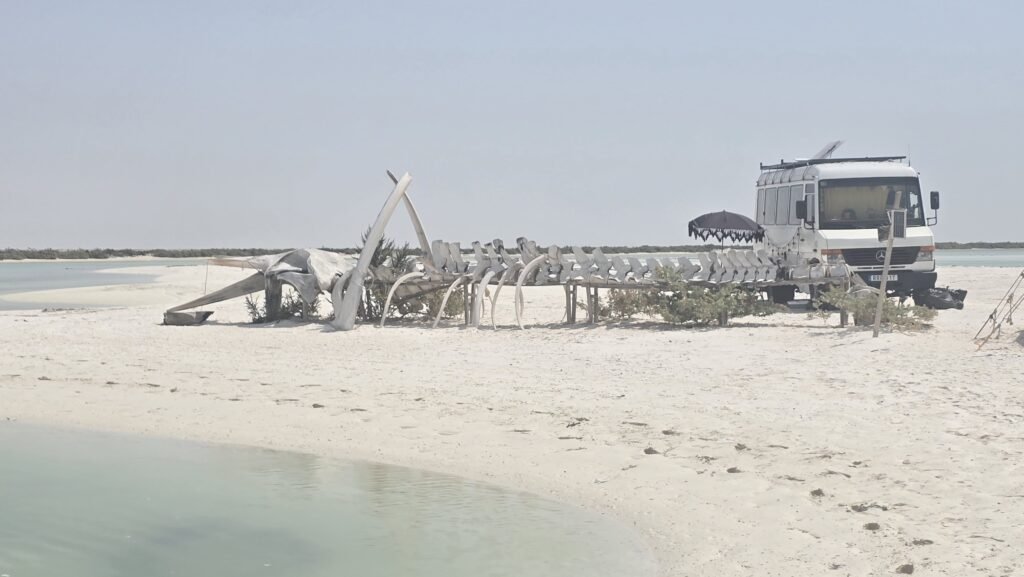
What struck me most was the food. Every meal was cooked fresh on a BBQ — proper, flavourful Omani cooking, not the kind of bland camp fare you might brace yourself for when you’re this far from civilisation. The staff were genuinely warm, the kind of hospitality that doesn’t feel like a performance. The communal thatched dining area — decorated with whale bones and rope features found on the beach — gave the whole place a character that clearly came from people who actually love where they are.
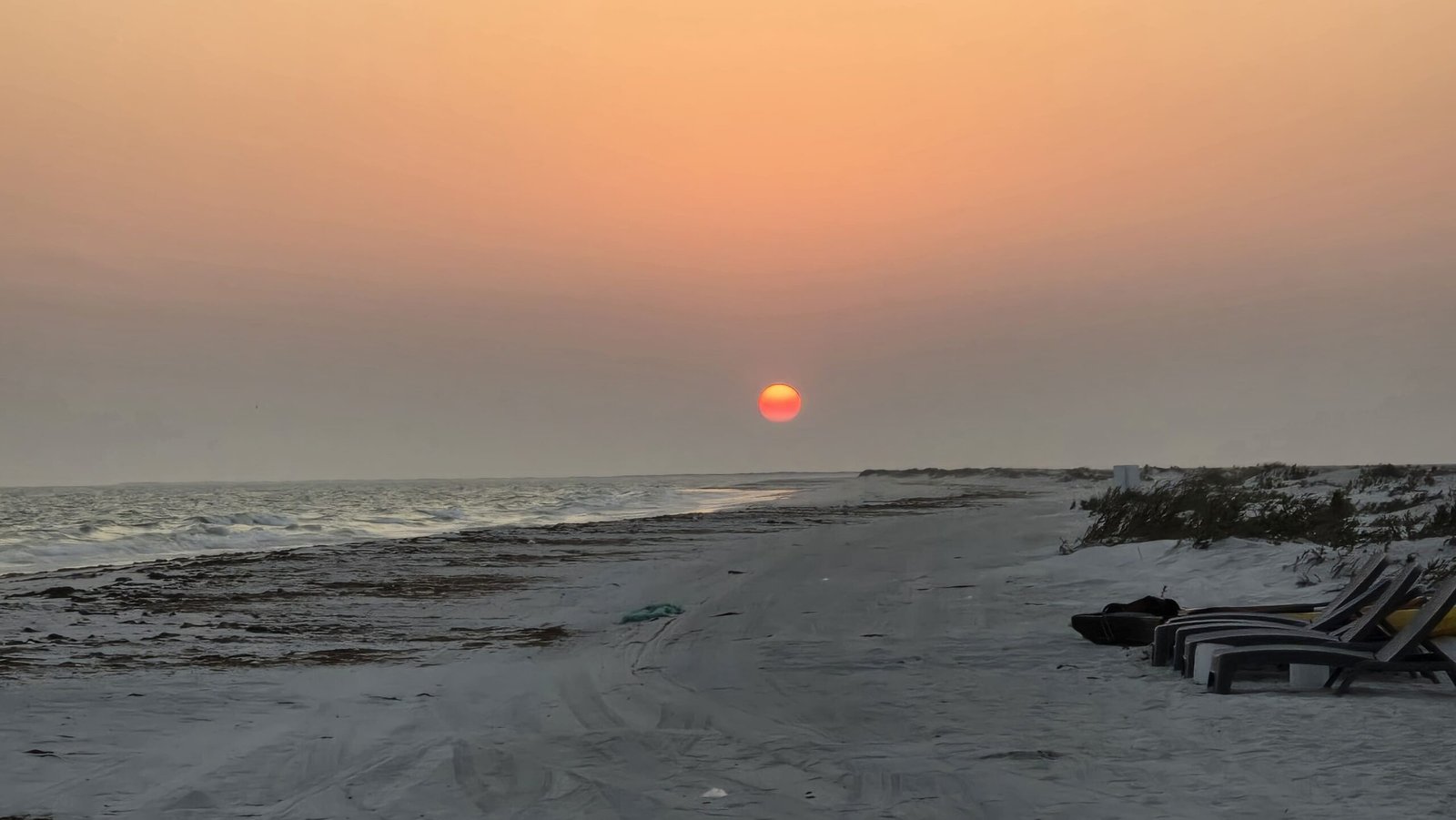
The camp sits on the ocean side of the peninsula with the lagoon a short walk behind you, so you wake up to two completely different bodies of water depending on which direction you face.
Whales Head Camp
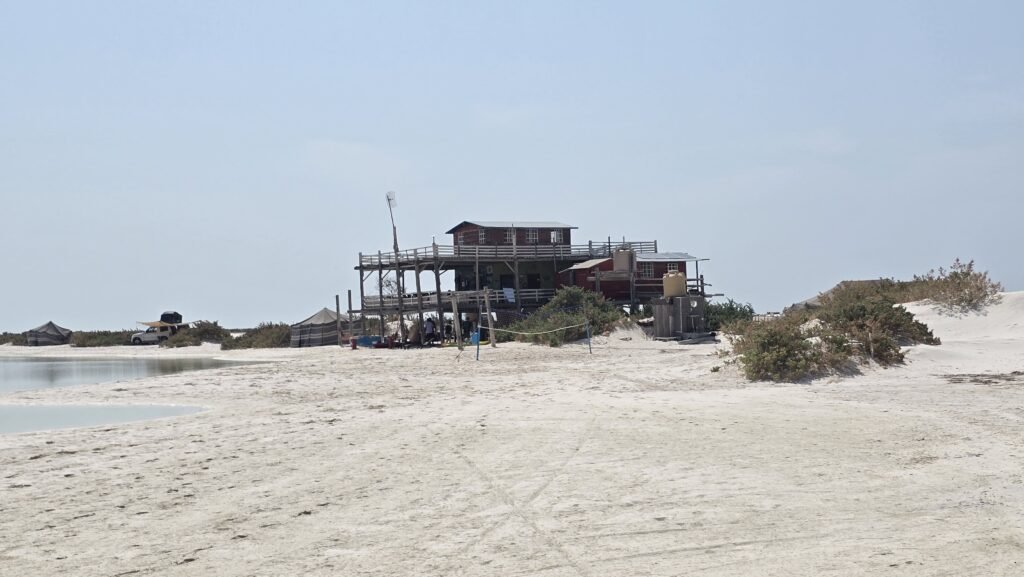
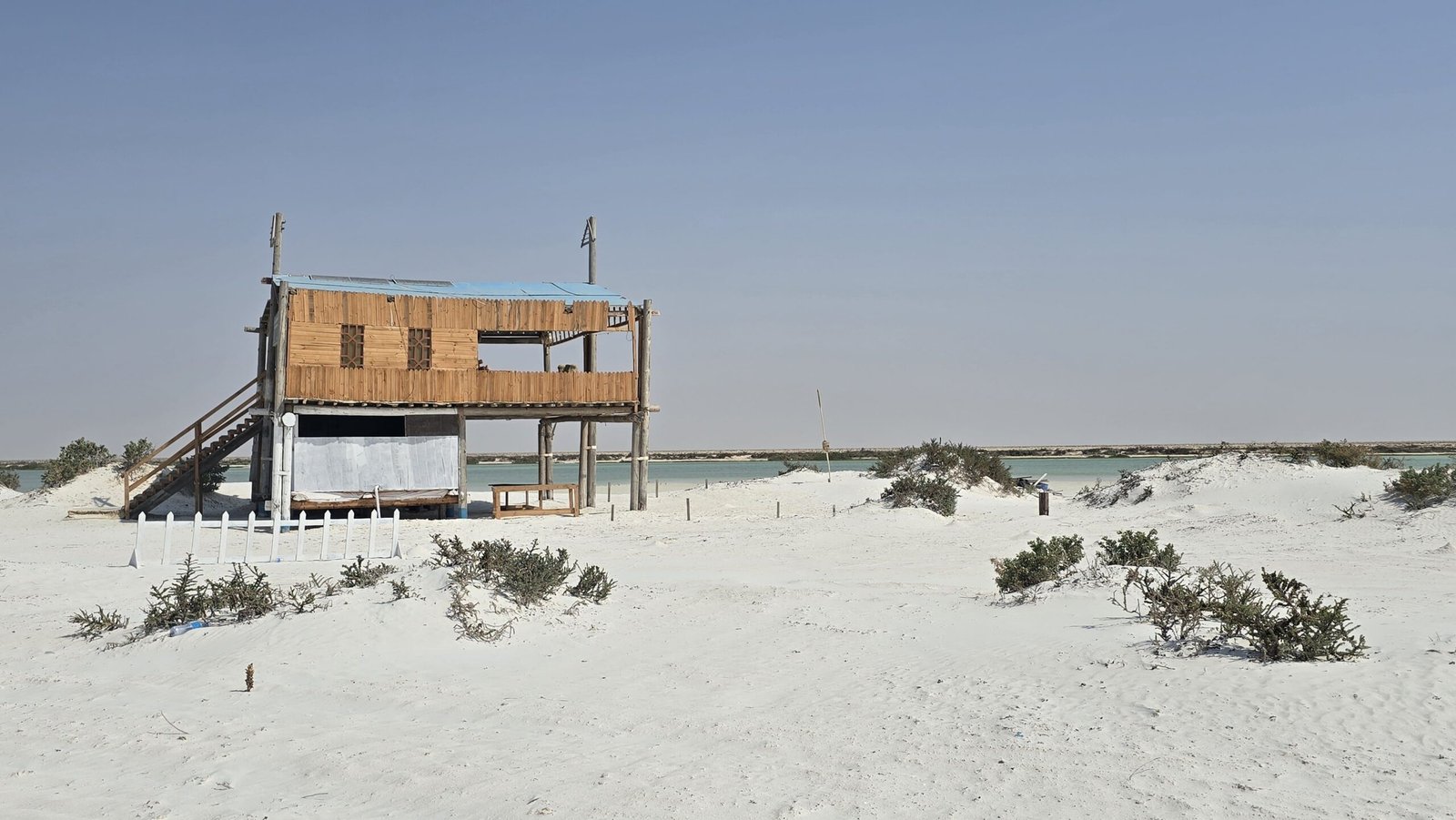
The original and most well-known camp on the peninsula. Built around a permanent two-storey wooden main structure that sits above the historical high-tide line, Whales Head is more rustic than Dream Camp — rougher around the edges — but it has a spirit to it that is hard to manufacture. The owner, Salim, and his crew run the place with real character. This is where the community of Barr Al Hikman lives; the kind of place where guests from different camps end up spending evenings together around a fire, sharing stories from the road.
Ocean Camp
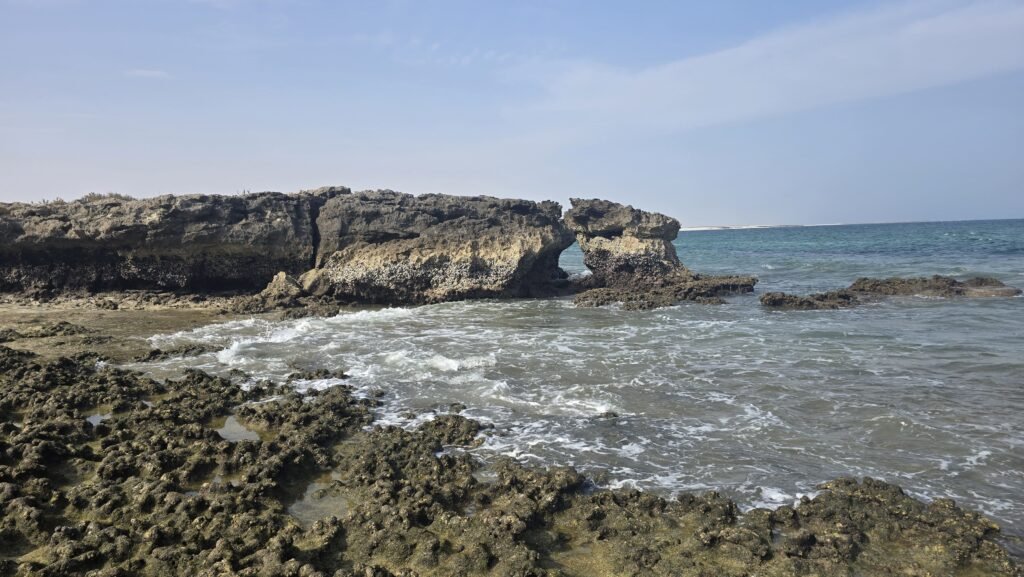
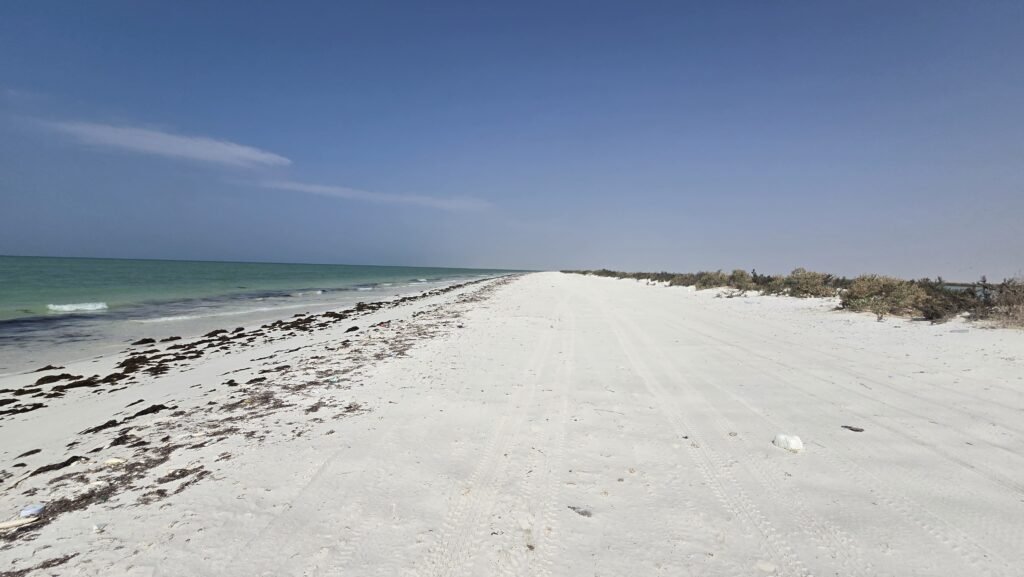
Located further along the coast — set apart from the main cluster of camps — Ocean Camp describes itself as an exclusive eco-retreat, and the positioning backs that up. Just four canvas tents, off-grid solar lighting, European-style shared bathrooms, and a kitchen focused on locally sourced Omani cooking. It operates on a half-board model and runs a dedicated 4×4 transfer from Mahout for guests who want that handled. Crucially for the active traveller, Ocean Camp is the base for offshore snorkelling excursions. I made the drive out to Ocean Camp during my stay, and the stretch of pristine beach you drive along to get there — white sand, turquoise water, completely empty — is one of the best drives I’ve done anywhere.
Wild Camping
If you’ve got the gear, wild camping anywhere on the peninsula is still an option and remains one of the most elemental experiences available. Zero light pollution means the Milky Way overhead on a clear night is genuinely one of the most dramatic skies I’ve ever seen. Bring everything — shade structures, water, food, a portable toilet solution — because there is nothing out here.
Things to Do: More Than You’d Expect
For somewhere with no infrastructure and no signal, Barr Al Hikman keeps you busy in ways that actually matter.
Wildlife
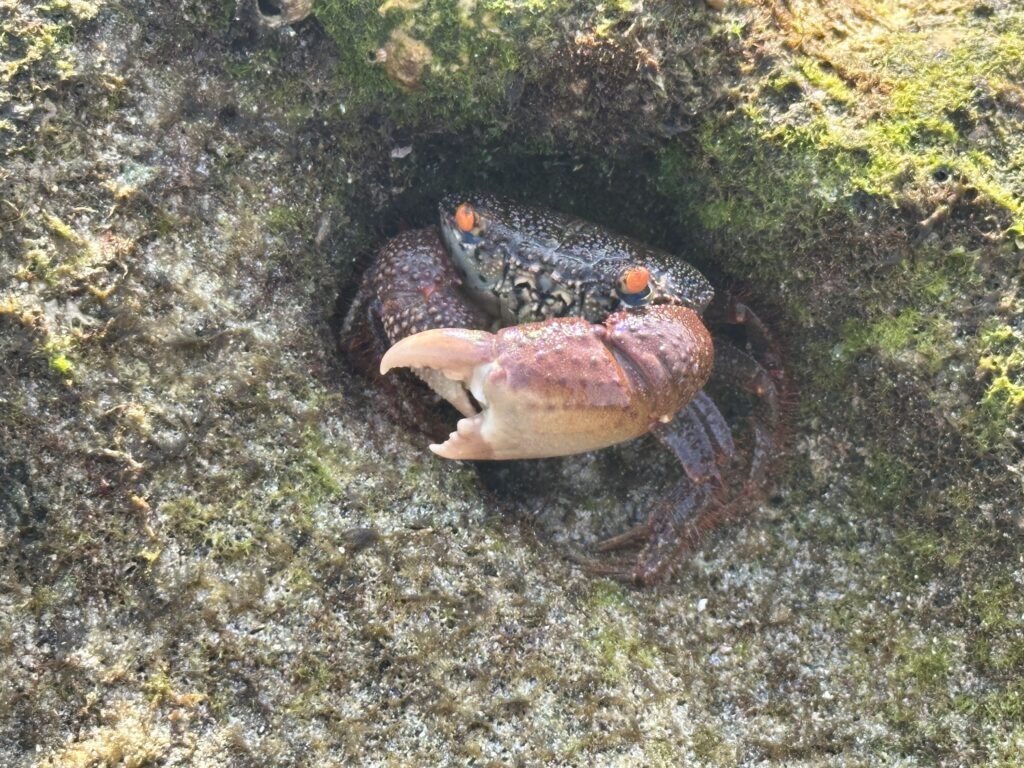
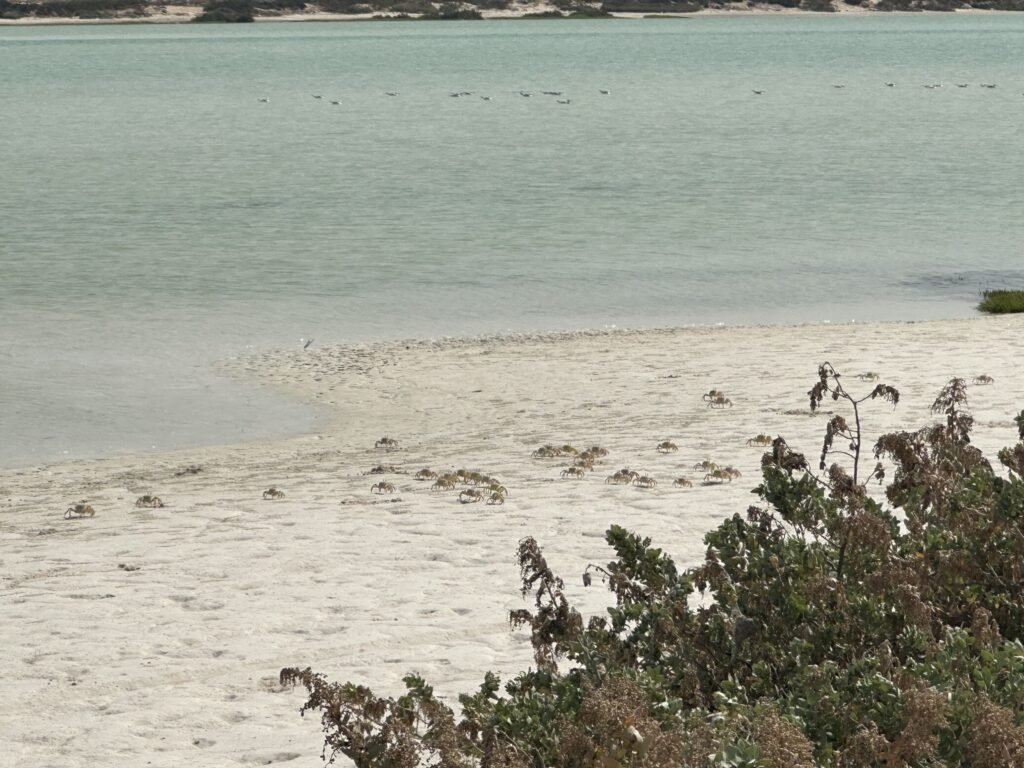
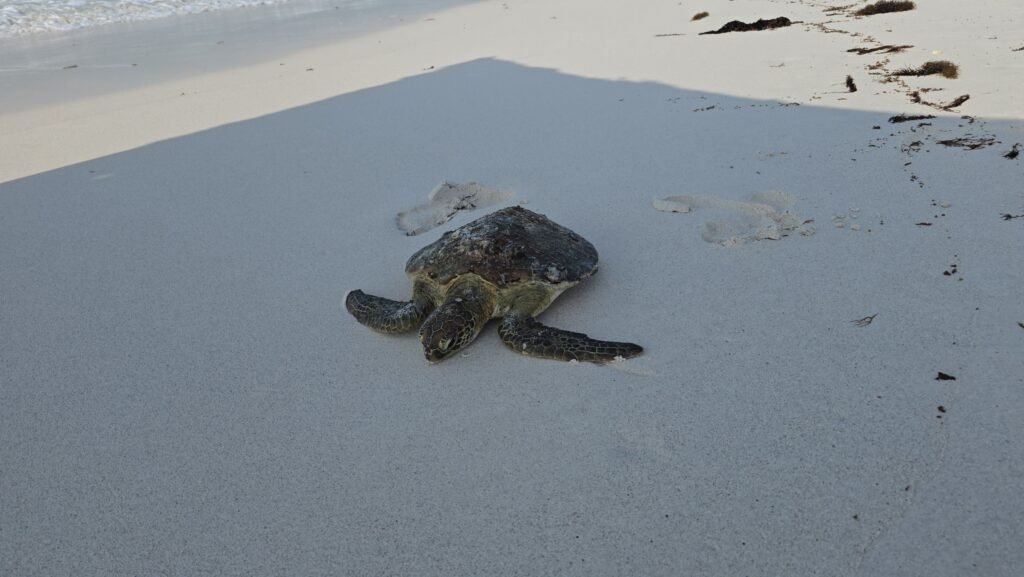
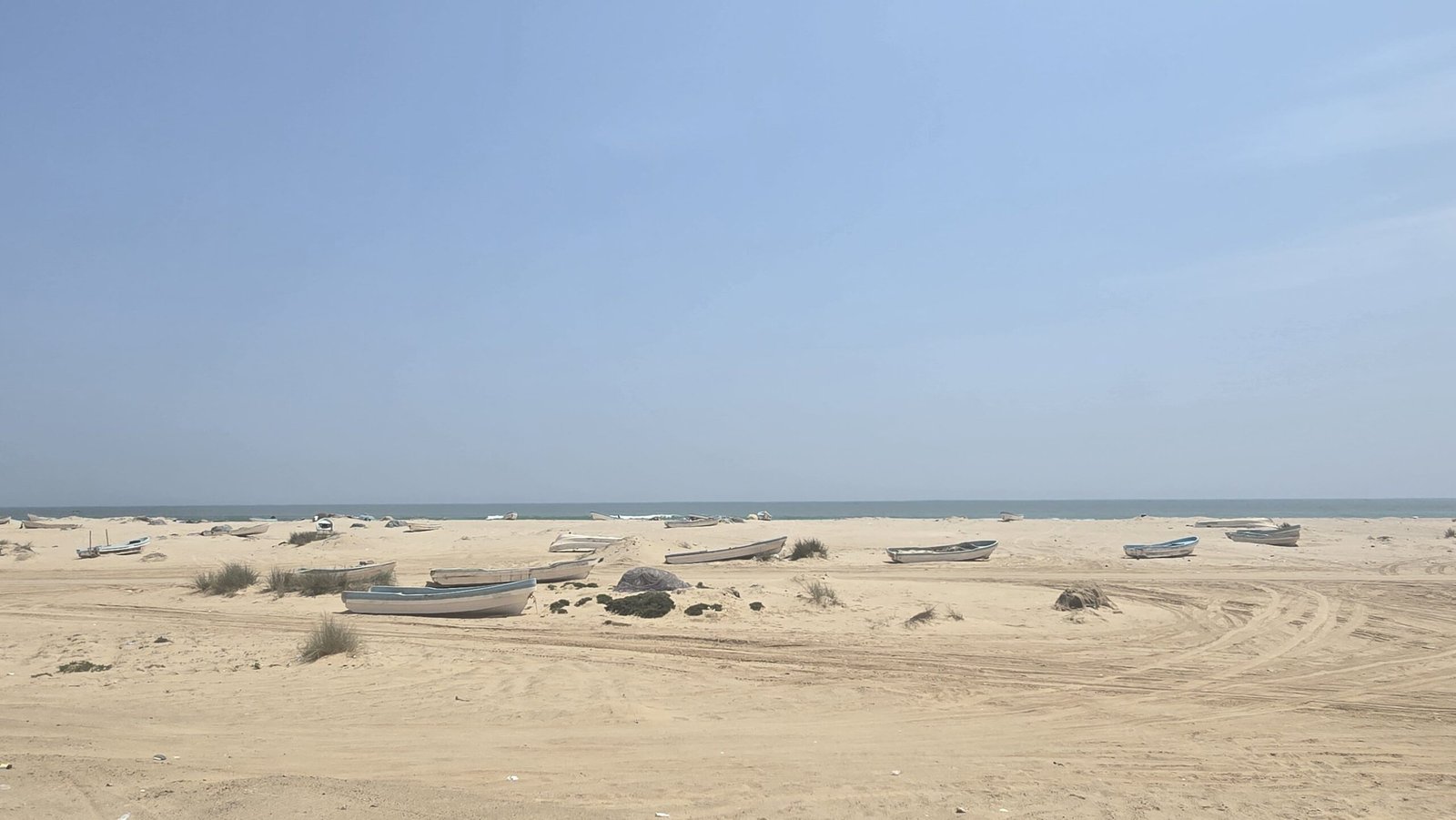
The wildlife encounters here aren’t curated. They happen naturally, which makes them hit differently. Within the first hour of arriving I’d seen ghost crabs scuttling across the tidal flat, a turtle cruising the shallow lagoon water near the camp, and large flocks of seabirds working the waterline. Just a short drive along the coast, flamingos were wading in the shallows — whole flocks of them, unhurried, completely uninterested in the 4×4 watching from the beach. The peninsula officially supports 23 bird species whose local populations exceed the 1% global threshold for their migratory flyway. What that means in practice is that between October and March, the bird activity is genuinely staggering in scale.
Bioluminescence
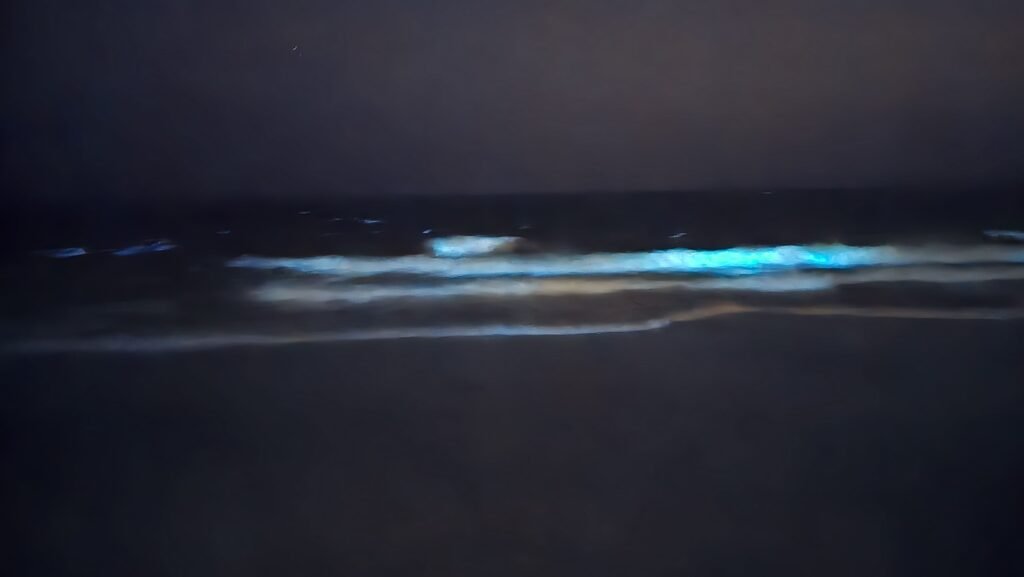
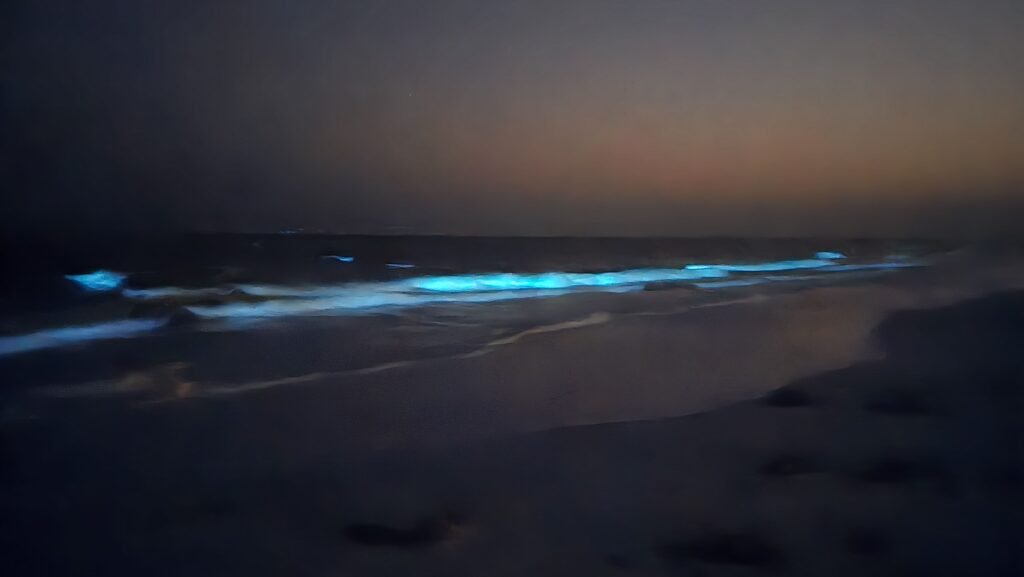
This was the single most unexpected thing I experienced. On the first night, I walked down to the ocean side of the camp after dark — no particular plan, just restless — and the waves were glowing. Not a subtle shimmer. Electric, vivid, neon blue light pulsing with every wave that broke on the sand. Bioluminescent phytoplankton, disturbed by the movement of the water, lighting up the Arabian Sea like something out of a nature documentary. I stood there for a long time. I had my camera on a long exposure setting and still couldn’t quite capture what it looked like with the naked eye. If you go to Barr Al Hikman and this is happening — and it does happen seasonally — consider yourself extraordinarily lucky.
Snorkelling at Ocean Camp
The drive to Ocean Camp alone is worth it — but the snorkelling excursion offshore is the main event. The reef system out there is largely unmapped and sees very little traffic. Turtles are common. The water clarity is excellent in the winter months when the surface is calm. If you’re a swimmer or diver making this trip, building a visit to Ocean Camp into your itinerary is a must.
The Community of Camps
Something I didn’t expect: the camps know each other. The small community of people who run these places — and the guests staying across them — has an organic social culture that’s emerged from the shared experience of being this far off-grid together. On my second evening I ended up at Whales Head Camp for dinner with a group I’d met at Dream Camp. The next morning a group from Ocean Camp came over for coffee. There’s something genuinely refreshing about that — the kind of impromptu human connection that screens and schedules have largely squeezed out of modern travel.
The Beach Drive
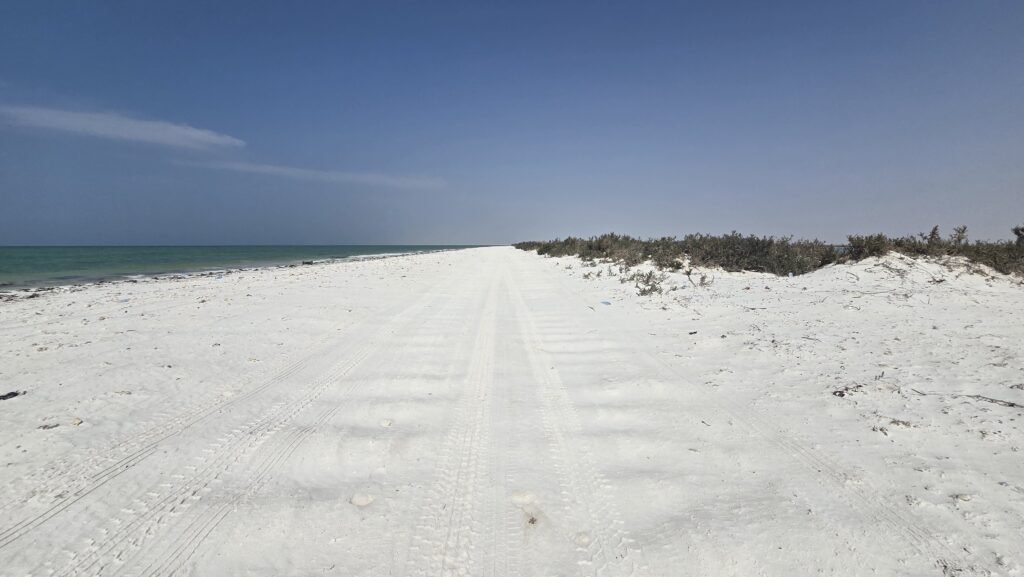
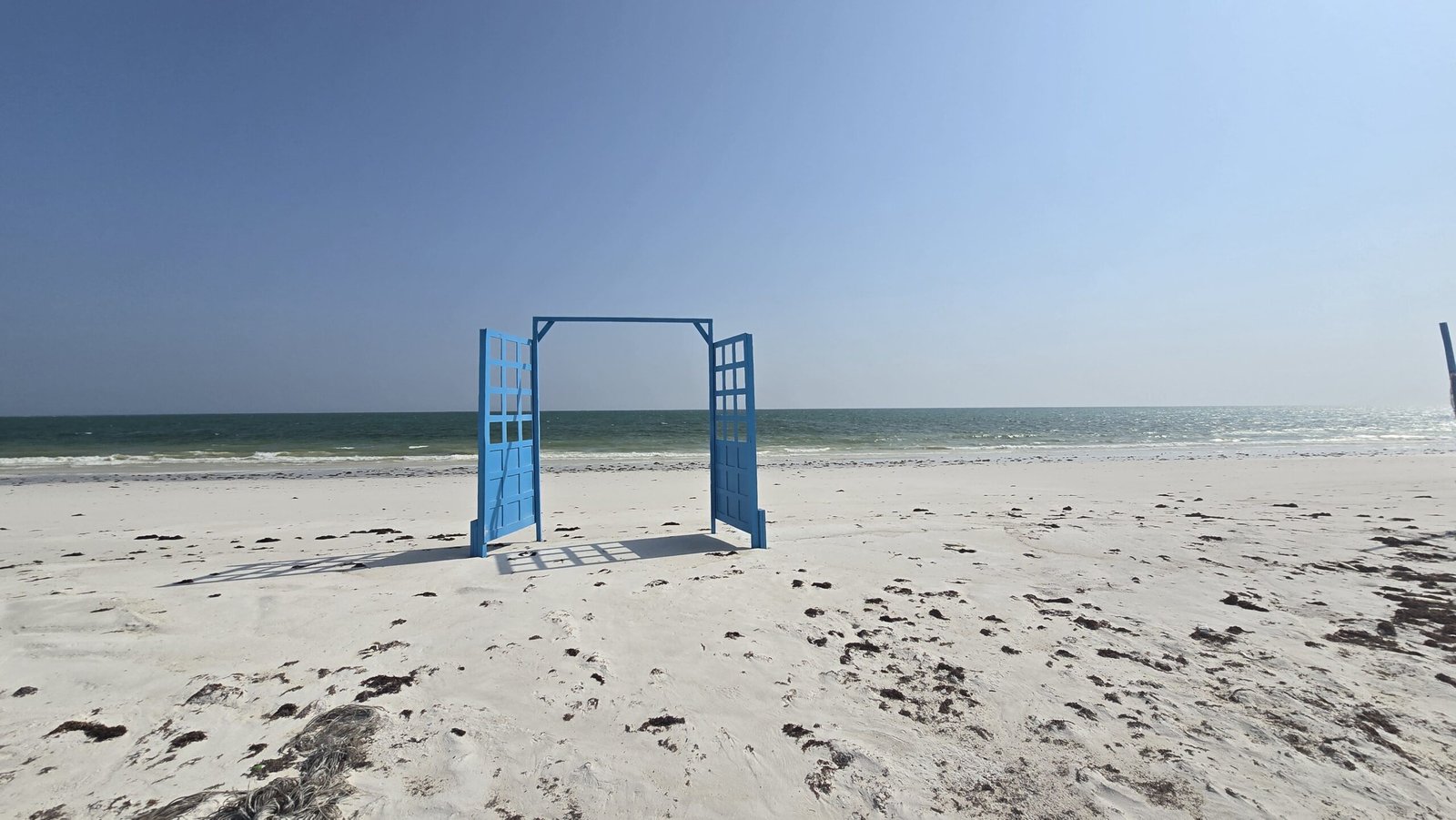
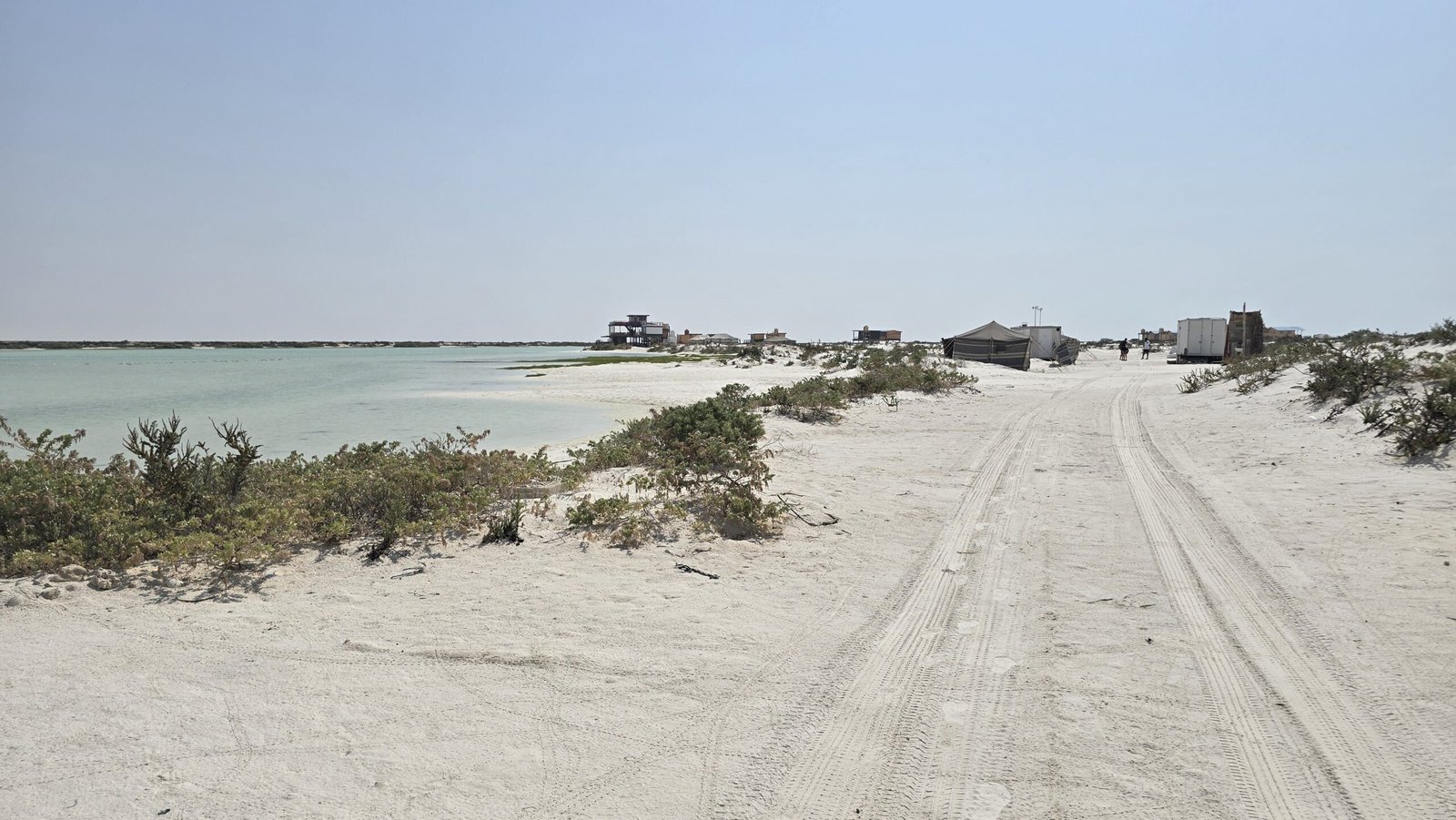
One of the highlights of the whole trip was simply driving along the beach. Long, firm, white sand stretching in both directions, the water to your right, total emptiness ahead. No barriers, no signs, no other traffic. It sounds like a simple thing but it’s one of those experiences that reminds you why adventure travel exists.
The Peace
I want to talk about this seriously, because for a fitness and adventure travel audience, it’s easy to frame everything as activity. But one of the most powerful things about Barr Al Hikman is the absence. No Wi-Fi. No cell signal. No road noise. No notifications. The only sounds are the ocean, the birds, and the occasional creak of the tent canvas in the breeze. For anyone who spends their days at the intersection of work, screens, and constant connectivity — which is most of us — this kind of enforced stillness is not inconvenient. It’s a gift.
I slept better out there than I had in months.
Is It Good for Families?
Yes — genuinely. The water around the camps is shallow, calm, and warm. There’s no current to worry about in the lagoon. The tidal flats at low tide become enormous, safe paddling grounds. The wildlife is extraordinary for kids — crabs, birds, turtles — all wild and present without having to book a safari or sit in a vehicle for hours. Dream Camp in particular, with its proper beds and elevated tents, removes a lot of the hardship that full expedition camping brings. The biggest consideration for families is the journey itself — make sure you’re confident in the vehicle and have done your preparation before setting off.
Things to Know Before You Go
A 4×4 is a hard requirement. Not negotiable. A soft-roader will get you stuck and there’s no breakdown service within 60 kilometres.
Download GaiaGPS and the offline route before you leave cell coverage. Seriously. Do this in Mahout if you forget.
Shared facilities. All camps operate shared bathrooms and shower facilities. They’re clean and functional, but if private en-suite is important to you, this isn’t the trip. Worth knowing in advance so it doesn’t catch you off guard.
Food choices are limited. The food is excellent — fresh, local, BBQ-cooked at Dream Camp, traditional Omani meals at Whales Head — but choice is limited. If you have serious dietary restrictions, allergies, or specific requirements, communicate them to the camp well before you arrive. There is no alternative restaurant to fall back on.
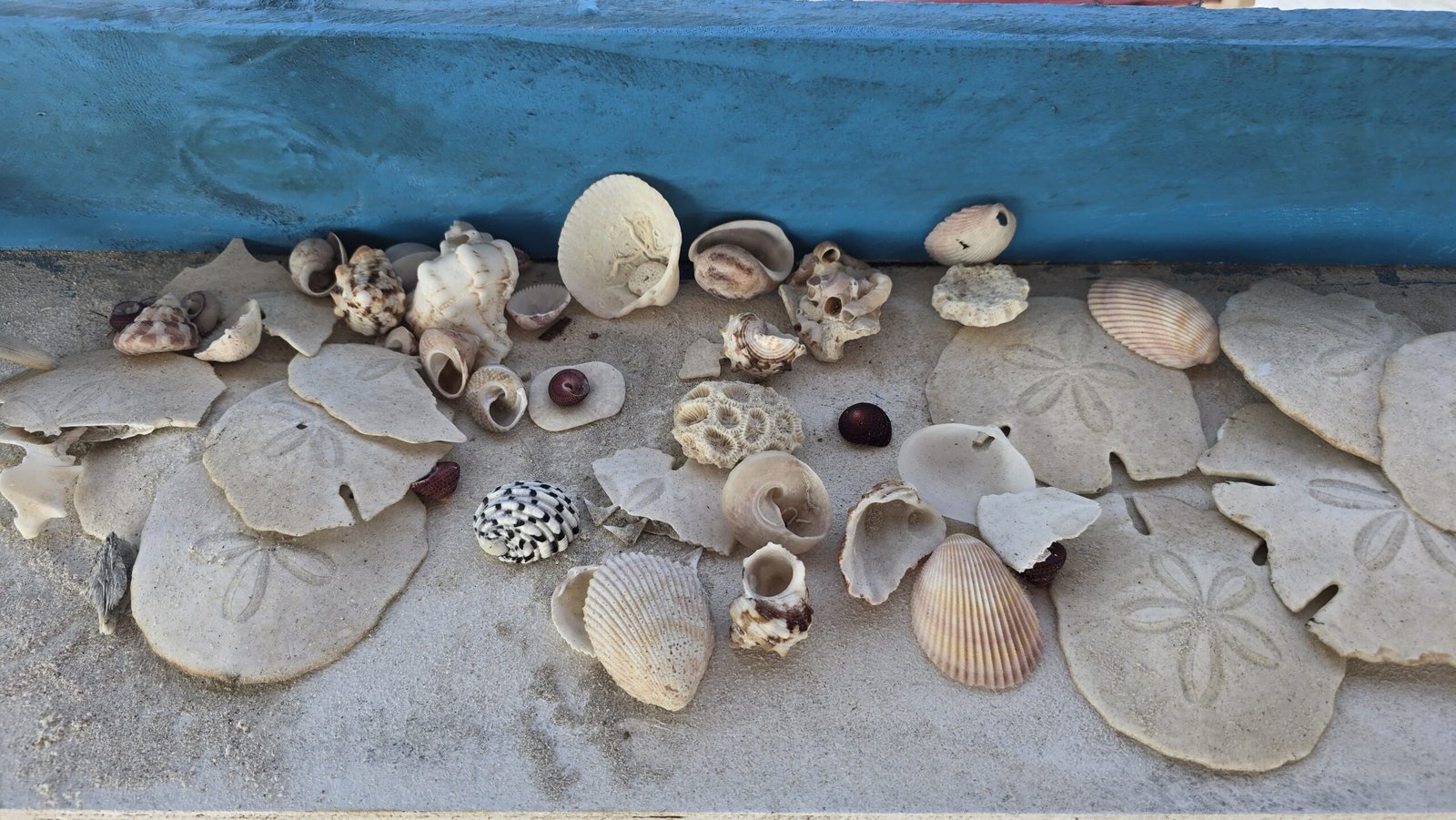
Bring beach shoes. The shoreline looks pristine but is peppered with sharp coral fragments and shells underfoot. Aqua shoes or neoprene booties are essential if you’re walking the tidal flats or entering the water.
No shade exists naturally. The peninsula is completely flat and vegetation-free near the camps. If you’re wild camping, bring your own shade structure. Even at the camps, sunscreen, a hat, and sunglasses aren’t optional — the glare off white sand and water is intense.
Fuel up in Mahout. This is the last fuel stop. Fill the tank completely.
The best time to visit for wildlife and comfortable temperatures is October through March. Summer (May–September) brings the Khareef monsoon winds — cooler temperatures but wind gusts up to 45 knots, which transforms the place into an international kitesurfing destination but makes wildlife watching and swimming harder.
Final Thought
There’s a particular kind of travel that feels increasingly rare — places where modernity hasn’t fully arrived, where the experience is defined entirely by the natural environment and the people you share it with. Barr Al Hikman is one of those places. Its recent Ramsar designation signals that the world is starting to pay attention, and with camps like Dream Camp offering a genuinely comfortable entry point, the barrier to visiting has never been lower.
But go while it still feels like a secret. Go while the beach is still empty and the bioluminescent waves are something you stumble onto in the dark, alone, with no one to Instagram it to.
Some experiences are better that way.

Adrenaline junkie with a passion for exploring off-the-beaten-path destinations and finding unique ways to stay active. Expect stunning scenery, challenging workouts, awesome travel tips and a whole lot of fun. Let’s get sweaty and explore the world together!