
1. 🏕️ The Short Answer
For foreign tourists visiting Spain, wild or dispersed tent camping is generally illegal and strictly penalized across the country. However, van life and sleeping in your vehicle is perfectly legal if you adhere to a strict set of national traffic rules distinguishing “parking” from “camping.” Rules are highly decentralized and vary by region, but travelers should assume free camping is banned on beaches, near the coast, and in national parks unless utilizing designated municipal areas or high-altitude mountain bivouac exemptions.
2. 🌲 Wild & Dispersed Camping Rules
- Is camping outside official campsites legal for tourists on public land? No. While Spain does not have a single national law banning wild camping, the 17 autonomous regions and local municipalities independently regulate it, and almost all of them prohibit pitching a tent on public land outside of designated campsites.
- Are there duration limits or distance rules? Yes. Under Spain’s strict coastal laws (Ley de Costas), camping anywhere near the beach or coastal public domain is expressly forbidden. You are also not allowed to wild camp within a certain radius of official, commercial campsites to prevent unfair competition.
- Is this actively enforced? Yes, very actively. The Guardia Civil (national police) and local environmental rangers frequently patrol coastlines, tourist hotspots, and nature reserves. Enforcement is strict, and fines are hefty—often calculated per square meter of occupied space per day, starting around €40 and easily exceeding €1,000 for egregious violations like dumping waste.
3. 🏞️ National Park & Protected Area Rules
- Do national parks have a separate camping permit system? Yes, Spain’s National Parks (such as Doñana, Teide, and Sierra Nevada) manage their own strict regulations. True wild camping is universally banned, but some parks offer designated free or low-cost camping zones that require advance permits or bookings from the local park office.
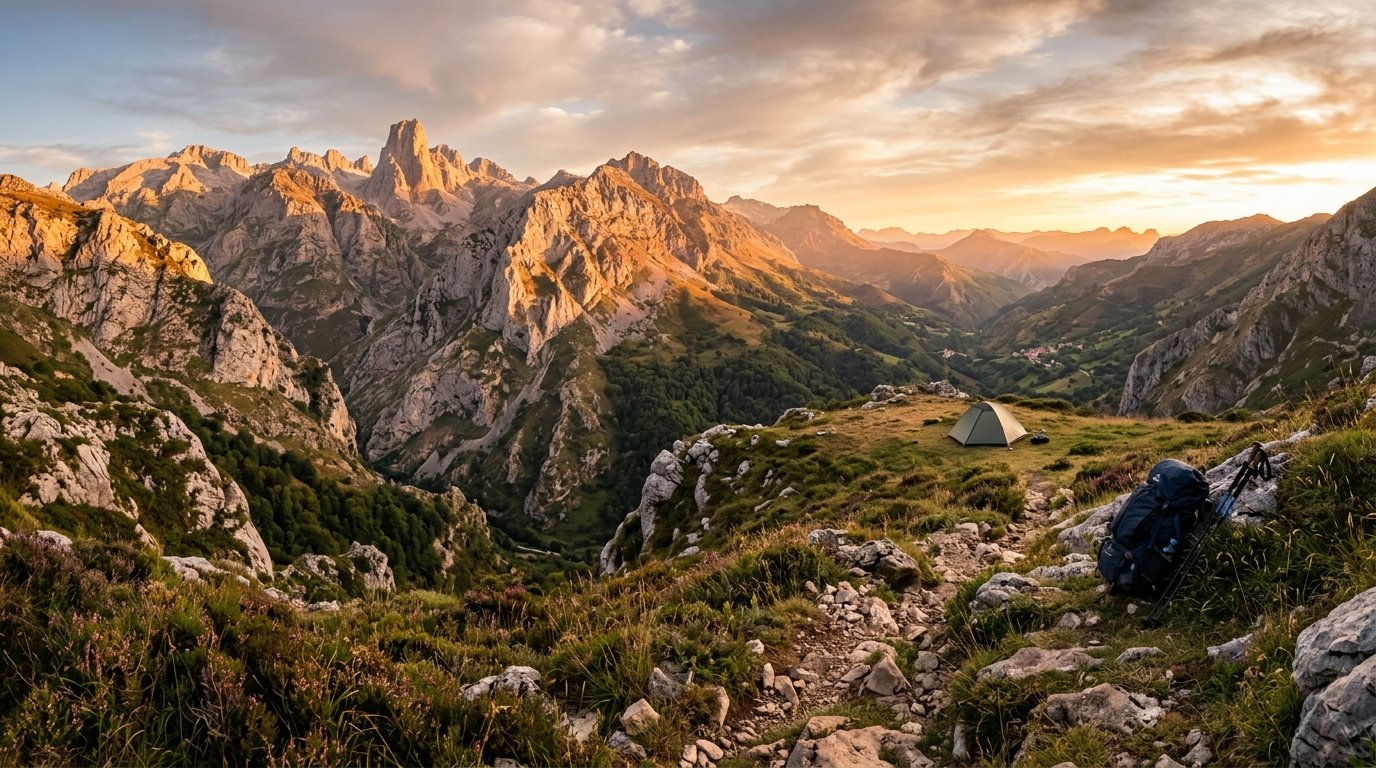
- Is camping restricted to designated sites? Generally, yes. However, there is a legal exception for bivouacking in certain high-mountain national parks (like Picos de Europa or Ordesa y Monte Perdido). Bivouacking means pitching a small tent strictly from one hour before sunset to one hour after sunrise. This is usually only permitted above specific altitudes (e.g., above 1,600m or 2,100m depending on the park zone) and strictly for hikers in transit.
- Are there seasonal closures? Absolutely. During the summer months, trails and designated rural camping areas may be closed entirely due to extreme wildfire risks. Some protected zones are also cordoned off during the spring wildlife breeding seasons.
4. 🚐 Van Life & Overnight Vehicle Sleeping
- Is it legal to sleep overnight in a vehicle? Yes. Under the Spanish Directorate-General for Traffic (DGT) regulations (recently updated in Instruction PROT 2026/04), you are legally allowed to sleep inside your vehicle overnight in public parking spaces, provided the vehicle is legally parked and obeying local signs.
- Does local law distinguish between “parking” and “camping”? This is the most critical rule for van lifers in Spain. You are parked (legal) if your vehicle only touches the ground with its tires, nothing extends beyond the vehicle’s perimeter, and no fluids are discharged. You are camping (illegal) the moment you use leveling chocks, open an awning, set up tables or chairs outside, open outward-swinging windows, or dump wastewater. Pop-up roofs are generally accepted as long as they don’t extend past the vehicle’s footprint.
- Are there designated overnight areas? Yes. Spain has an excellent network of Áreas de Autocaravanas (motorhome aires). Many are provided by local municipalities for free or a small fee, offering legal overnight parking (usually limited to 48 or 72 hours) and safe waste disposal stations.
5. 🔥 Campfires & Practical Restrictions
- Are open campfires generally allowed? No. Open fires are strictly banned in almost all natural areas due to the extreme danger of summer wildfires. A blanket ban is typically enforced from June 1st to October 15th, and many regions and national parks prohibit fires, including charcoal BBQs, year-round. Always use a self-contained gas camping stove, and only use it inside your van or in explicitly authorized picnic zones.
- Key no-camp zones: Tourists must entirely avoid the immediate coastline and beaches (due to the Coastal Law), private agricultural lands (fincas), and military zones. Setting up camp in dried riverbeds (ramblas) is also highly dangerous and forbidden due to the risk of flash floods.
6. 🔗 Official Sources & Links
To verify the most current regulations, book national park refuges, or check local fire bans, travelers should consult:
- Spain’s Official Tourism Portal (Spain.info)
- Ministry for the Ecological Transition (MITECO) – National Parks Network
Disclaimer: Land-use laws, environmental regulations, and local municipal ordinances in Spain change frequently. The information in this guide is for educational purposes. Travelers should always verify current rules, fire bans, and parking signage with official local sources or tourist information offices before their trip.

Adrenaline junkie with a passion for exploring off-the-beaten-path destinations and finding unique ways to stay active. Expect stunning scenery, challenging workouts, awesome travel tips and a whole lot of fun. Let’s get sweaty and explore the world together!