
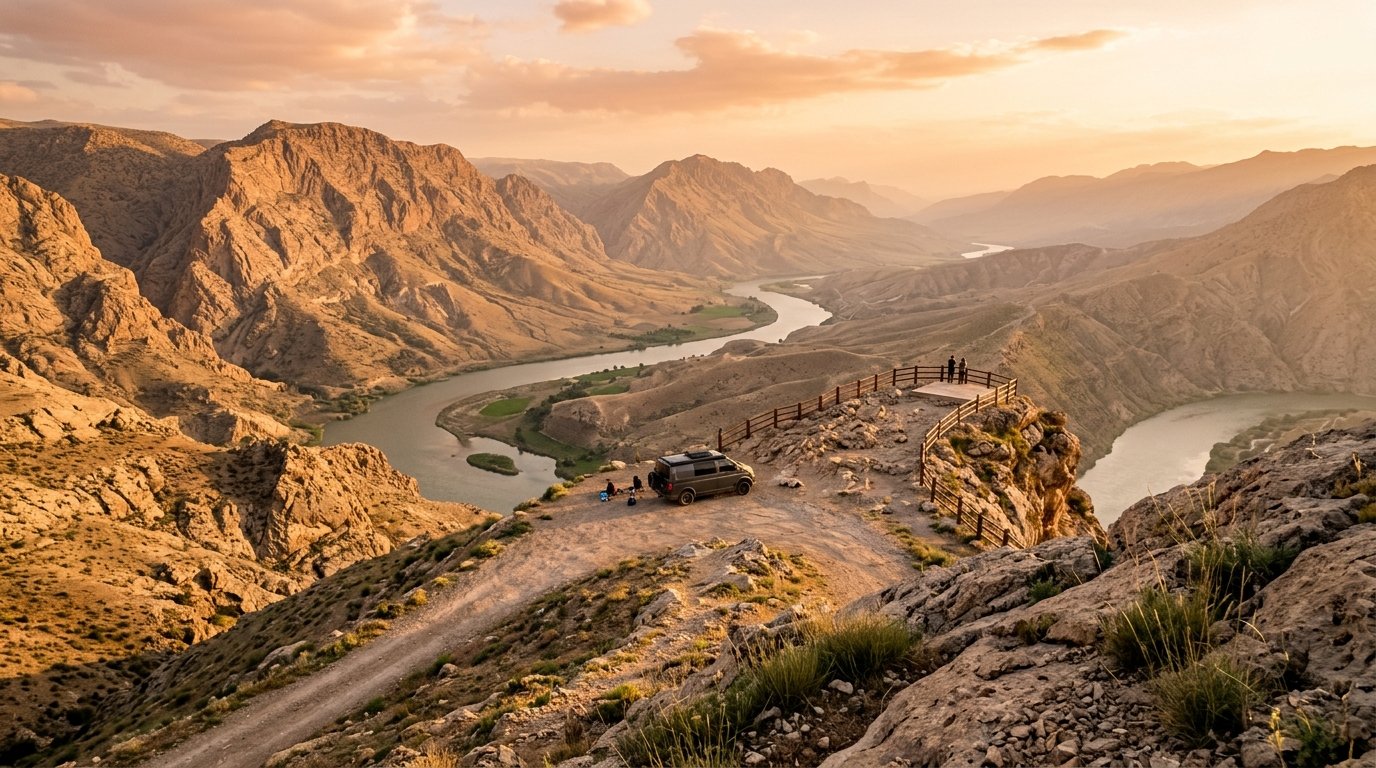
1. 🏕️ The Short Answer
For foreign tourists, wild camping in Federal Iraq is strongly advised against and effectively prohibited due to severe security risks, unexploded ordnance, and heavy military presence. However, in the autonomous Kurdistan Region of Iraq (KRI) in the north, wild camping is generally legal, culturally accepted, and highly popular among adventurous backpackers and overlanders.
2. 🌲 Wild & Dispersed Camping Rules
- Federal Iraq: Tourists should not attempt to camp outside of official, secure accommodations. Leaving main roads to camp on public land will invite intense scrutiny from police and military forces, and poses an immense safety risk due to landmines and regional instability.
- Iraqi Kurdistan: Wild camping is legal and commonplace on public mountain lands. There are no strict duration limits or distance rules dictated by law, provided you respect local communities and avoid private agricultural land.
- Enforcement: In Kurdistan, enforcement of outdoor recreation laws is incredibly relaxed. You are more likely to be invited into a local’s home for tea than fined. However, heavily armed Peshmerga (Kurdish military) operate numerous checkpoints. If they spot your tent, they may approach to check your passport and ensure your safety rather than force you to move.
3. 🏞️ National Park & Protected Area Rules
- Permits & Infrastructure: Iraq’s protected areas—most notably Halgurd-Sakran National Park in Kurdistan—are stunning but lack formal tourism infrastructure. There is currently no official camping permit system, no visitor center, and no advance booking required.
- Designated Sites: You are essentially free to pitch a tent anywhere, but this comes with a massive caveat: landmines. You must strictly adhere to established trails, shepherd paths, or areas explicitly confirmed as safe by local guides.
- Seasonal Closures: While there are no formal seasonal bans enforced by rangers (who are largely absent), extreme winter weather, deep snowpacks, and avalanches effectively close mountainous regions to camping from late autumn to early spring.
4. 🚐 Van Life & Overnight Vehicle Sleeping
- Overnight Sleeping: In Kurdistan, sleeping in a campervan or 4×4 at rural pull-outs, scenic viewpoints, or roadside areas is generally acceptable. Conversely, attempting to sleep in a vehicle in Federal Iraq will almost certainly result in police or military interrogation due to high security alerts.
- Parking vs. Camping: Local traffic law does not make a western-style distinction between “parking” and “camping.” If your vehicle is stopped overnight, authorities are primarily concerned with your identity and security status rather than local zoning ordinances.
- Designated Areas: There is no established network of “aires” or RV parks in Iraq. Overlanders typically rely on crowdsourced apps (like iOverlander) to find safe, informal pull-offs, or they ask permission to park on the edge of rural villages, where locals are famously accommodating to foreign travelers.
5. 🔥 Campfires & Practical Restrictions
- Campfires: Open fires are generally allowed and are a massive part of local Kurdish picnic culture. However, tourists should be extremely cautious when gathering firewood off-trail due to the risk of stepping on legacy landmines.
- Key No-Camp Zones:
- Border Regions: Never camp near the Turkish or Iranian borders (such as the Qandil Mountains). These areas are heavily militarized and frequently subject to sudden cross-border military strikes and anti-insurgent drone operations.
- Landmine Zones: Iraq is one of the most heavily mined countries on earth. Never walk or camp near areas marked with red posts, skull-and-crossbones signs, or painted rocks.
- Military & Infrastructure: Do not park or camp near military bases, checkpoints, oil refineries, or dams. Loitering or taking photos near these sensitive sites can lead to immediate arrest for suspected espionage.
6. 🔗 Official Sources & Links
For the most accurate and up-to-date tourism information, visit the Kurdistan General Board of Tourism or the independent Visit Kurdistan Travel Guide. For those traveling to Federal Iraq, visa and entry information can be found via the Iraqi Ministry of Interior e-Visa portal.
Disclaimer: Land-use laws, visa regulations, and the geopolitical security situation in Iraq change frequently. The information in this guide is for educational purposes. Always consult your home country’s official travel advisories (e.g., US State Department, UK FCDO) and verify current local conditions with official sources or trusted local guides before undertaking a camping trip to Iraq.
Adrenaline junkie with a passion for exploring off-the-beaten-path destinations and finding unique ways to stay active. Expect stunning scenery, challenging workouts, awesome travel tips and a whole lot of fun. Let’s get sweaty and explore the world together!