
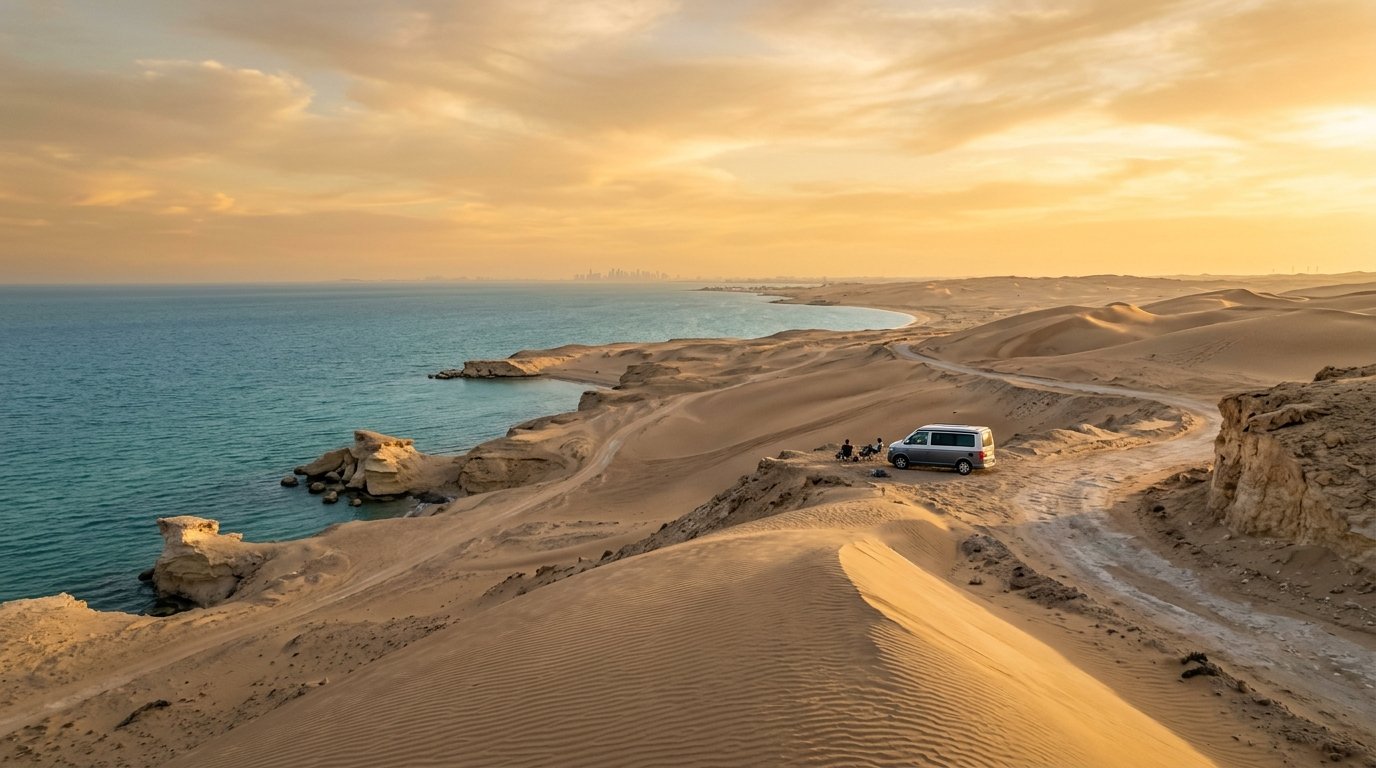
1. 🏕️ The Short Answer
Wild and dispersed camping in Qatar is generally legal, culturally embraced, and highly accessible for foreign tourists who wish to pitch a tent in the desert or on public beaches for a night or two. However, while short-term recreational camping is free and unrestricted for tourists, the country’s official semi-permanent “Winter Camping Season” requires expensive permits that are strictly reserved for Qatari citizens.
2. 🌲 Wild & Dispersed Camping Rules
- Legality for tourists: Pitching a tent for a short stay (1 to 2 nights) on public beaches, dunes, or open desert land is legal and does not require a permit. Popular and tolerated spots include the Zekreet Peninsula, Sealine Beach, and the Al Thakira Mangroves.
- Duration and distance rules: There are no strict statutory distance rules from roads for short-term wild campers, but you must use common sense. Avoid camping near private estates, military bases, or critical oil and gas infrastructure. You must not block vehicle tracks or pitch your tent directly on fragile desert vegetation.
- Enforcement: Enforcement by the Ministry of Environment and Climate Change (MECC) focuses heavily on environmental damage rather than the act of camping itself. Leaving trash behind, driving over vegetation, or disrupting wildlife will result in hefty fines. Otherwise, authorities are very tolerant of respectful campers.
3. 🏞️ National Park & Protected Area Rules
- The Winter Camping Season: Qatar operates a heavily regulated “Winter Camping Season” (typically October to April) managed by the MECC. During this time, specific land and coastal zones are allocated to citizens for large, semi-permanent camps. Tourists cannot apply for these permits, but you are still free to independently pitch a standard tent for a weekend outside of these reserved citizen plots.
- Khor Al Adaid (Inland Sea): This UNESCO-recognized nature reserve is the crown jewel of Qatari camping. You do not need a permit for a quick overnight stay, but access requires a highly capable 4×4 vehicle and desert driving experience. Always stay on marked off-road tracks to protect the dune ecosystems.
- Seasonal restrictions: While there are no formal legal bans on summer camping, the extreme heat (May to September) makes it practically impossible and highly dangerous. Camping in Qatar is effectively a winter-only activity.
4. 🚐 Van Life & Overnight Vehicle Sleeping
- Sleeping in vehicles: Sleeping overnight in a standard car in urban Doha parking lots or on city streets is not explicitly illegal, but it is heavily frowned upon. If spotted, you are likely to be woken up by police or local security conducting welfare or security checks.
- Parking vs. Camping: Traditional European-style “Van Life” (living in a campervan) is virtually non-existent in Qatar. Instead, the local culture revolves around 4×4 overlanding. Sleeping inside or on top of a 4×4 (using a rooftop tent) out in the desert or at remote beaches is perfectly acceptable and widely practiced.
- Designated facilities: There are no official RV parks, “aires,” or designated overnight rest stops with water and electricity hookups for tourists. You must be fully self-sufficient (off-grid) when vehicle camping.
5. 🔥 Campfires & Practical Restrictions
- Campfire regulations: Open campfires are allowed but must never be lit directly on the sand or ground. The MECC strictly requires all campers to use a raised fire pit, metal barbecue box, or grill. Leaving ash mixed in the sand or burning wood near roots and vegetation is a serious environmental offense that carries heavy fines.
- No-camp zones: Tourists must strictly avoid camping near the Saudi border (outside of the tourist-friendly Inland Sea routes), military installations, restricted oil and gas fields in the west and north, and environmentally fenced-off flora/fauna rehabilitation areas.
- Dress and behavior: Remember that Qatar is a conservative Islamic country. Even in remote camping areas, modest swimwear and clothing are expected. Furthermore, alcohol is strictly prohibited in public, which includes drinking out in the desert or on public beaches.
6. 🔗 Official Sources & Links
For official tourism advice, recommended camping spots, and guided desert safaris, visit Visit Qatar.
To verify current environmental laws, restricted natural zones, or campfire regulations, check the official website of the Ministry of Environment and Climate Change (MECC).
Disclaimer: Camping and land-use laws can change frequently. The information provided in this guide is for educational purposes. Always verify current regulations, environmental rules, and weather conditions with official Qatari authorities before embarking on your trip.

Adrenaline junkie with a passion for exploring off-the-beaten-path destinations and finding unique ways to stay active. Expect stunning scenery, challenging workouts, awesome travel tips and a whole lot of fun. Let’s get sweaty and explore the world together!