
1. 🏕️ The Short Answer
Wild camping in Poland is generally prohibited on public land, but there is one major exception: the official “Zanocuj w lesie” (Sleep in the Forest) program, which allows tourists to legally wild camp in designated state forests. For van lifers, sleeping inside a legally parked vehicle is widely tolerated and legal as long as you do not set up an external camp.
2. 🌲 Wild & Dispersed Camping Rules
- The “Zanocuj w lesie” Program: Since 2021, the Polish State Forests have opened over 400 designated forest districts (covering over 600,000 hectares) for legal wild camping. Foreign tourists are welcome to use these zones.
- Duration and Group Limits: You can camp in the same spot for a maximum of 2 consecutive nights, and your group size cannot exceed 9 people. If you wish to stay longer or have a larger group, you must notify the local forest district by email and receive written confirmation prior to your stay.
- Shelter Types: You are permitted to use standard lightweight shelters such as tents, hammocks, or bivouac sacks. Always follow “Leave No Trace” principles and pack out all of your trash.
- Enforcement: Outside of these specifically designated forest zones, wild camping in nature or on private farmland is technically illegal and can result in fines up to €120. While enforcement in remote areas can sometimes be relaxed for respectful hikers, you should never set up on private property without explicit permission from the landowner.
3. 🏞️ National Park & Protected Area Rules
- Strictly Prohibited: Wild camping is strictly illegal in all of Poland’s 23 National Parks (such as Tatra, Białowieża, and Bieszczady) as well as all local nature reserves. There is no backcountry permit system for dispersed camping in these protected areas.
- Designated Sites Only: If you are hiking multi-day trails that cross National Parks, you must plan your route to stay at designated mountain huts (schroniska) or official campsites located near the park boundaries. These huts often require advance booking, especially during the busy summer season.
- Trail Restrictions: In National Parks, hikers are legally required to stay on marked trails at all times to protect sensitive flora and fauna, and to avoid dangerous areas. Keep in mind that seasonal closures may occur due to avalanche risks in winter, wildlife breeding seasons, or high fire danger in summer.
4. 🚐 Van Life & Overnight Vehicle Sleeping
- Sleeping in Vehicles: Sleeping overnight in your campervan or car in public parking lots, city spaces, and rest stops is completely legal in Poland, provided you are legally parked and not on private land.
- Parking vs. Camping: Polish and broader European law distinguishes clearly between “parking” and “camping”. To avoid fines, your vehicle must simply be parked. This means absolutely no camping behavior outside the vehicle: do not extend awnings, set out tables and chairs, cook outside, or use leveling wedges.
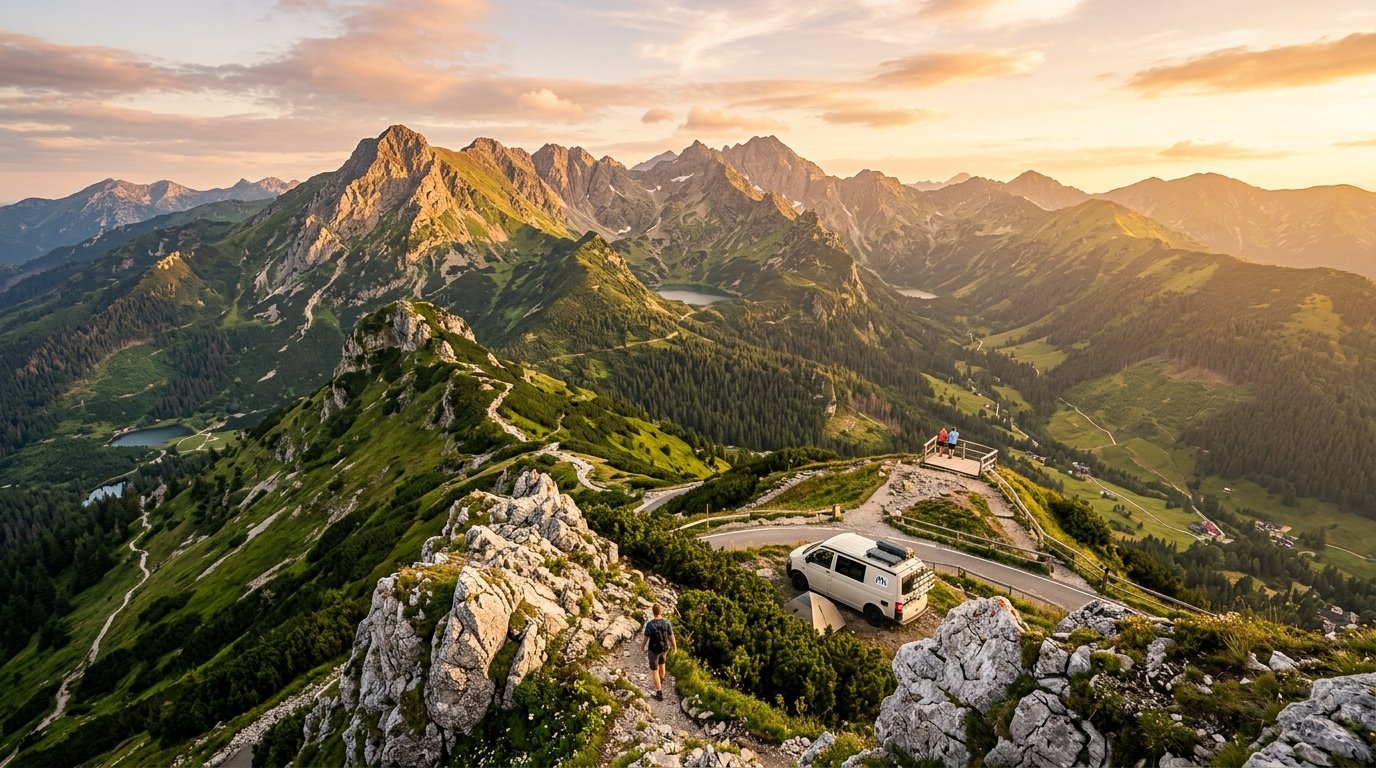
- Forest Parking: You are strictly forbidden from driving your vehicle on unpaved forest roads. However, you are permitted to park and sleep inside your van at official, designated forest car parks.
- Where to Park: Peer-to-peer apps like Park4Night are highly effective and widely used in Poland. Many local municipalities also offer cheap or free motorhome stopovers (camper parks), which provide safe overnight parking and basic waste disposal amenities.
5. 🔥 Campfires & Practical Restrictions
- Strict Campfire Rules: Open fires are strictly forbidden in all Polish forests, including the “Zanocuj w lesie” wild camping zones. You may only light a fire if you are using a specifically marked, official campfire pit built by the forest service.
- Gas Stoves: Even portable gas cooking stoves are generally prohibited in forests due to fire hazards. Rare exceptions exist in certain “Zanocuj w lesie” zones where the specific forest district has explicitly cleared the area for gas stove use. Always check local forest district rules online before cooking.
- No-Camp Zones: Do not camp on coastal beaches, private agricultural land, military zones, or within 500 meters of sensitive infrastructure. Additionally, wild camping is heavily restricted in the border zones near Belarus, Russia (Kaliningrad), and Ukraine due to heightened military and border security.
6. 🔗 Official Sources & Links
Always verify rules and check for active fire bans or trail closures before your trip using the official resources below:
- Lasy Państwowe (State Forests) – “Zanocuj w lesie” Program: The official government portal explaining the rules and offering an interactive map (Bank Danych o Lasach) of legal wild camping zones.
- Polish Tourism Organisation: The national tourism board for official travel advisories, national park visitor information, and accommodation guides.
Disclaimer: Land-use laws, forest fire regulations, and local camping ordinances change frequently. Travelers should always verify up-to-date guidelines with official Polish authorities, local tourist boards, or forest district offices before their trip.
Adrenaline junkie with a passion for exploring off-the-beaten-path destinations and finding unique ways to stay active. Expect stunning scenery, challenging workouts, awesome travel tips and a whole lot of fun. Let’s get sweaty and explore the world together!