
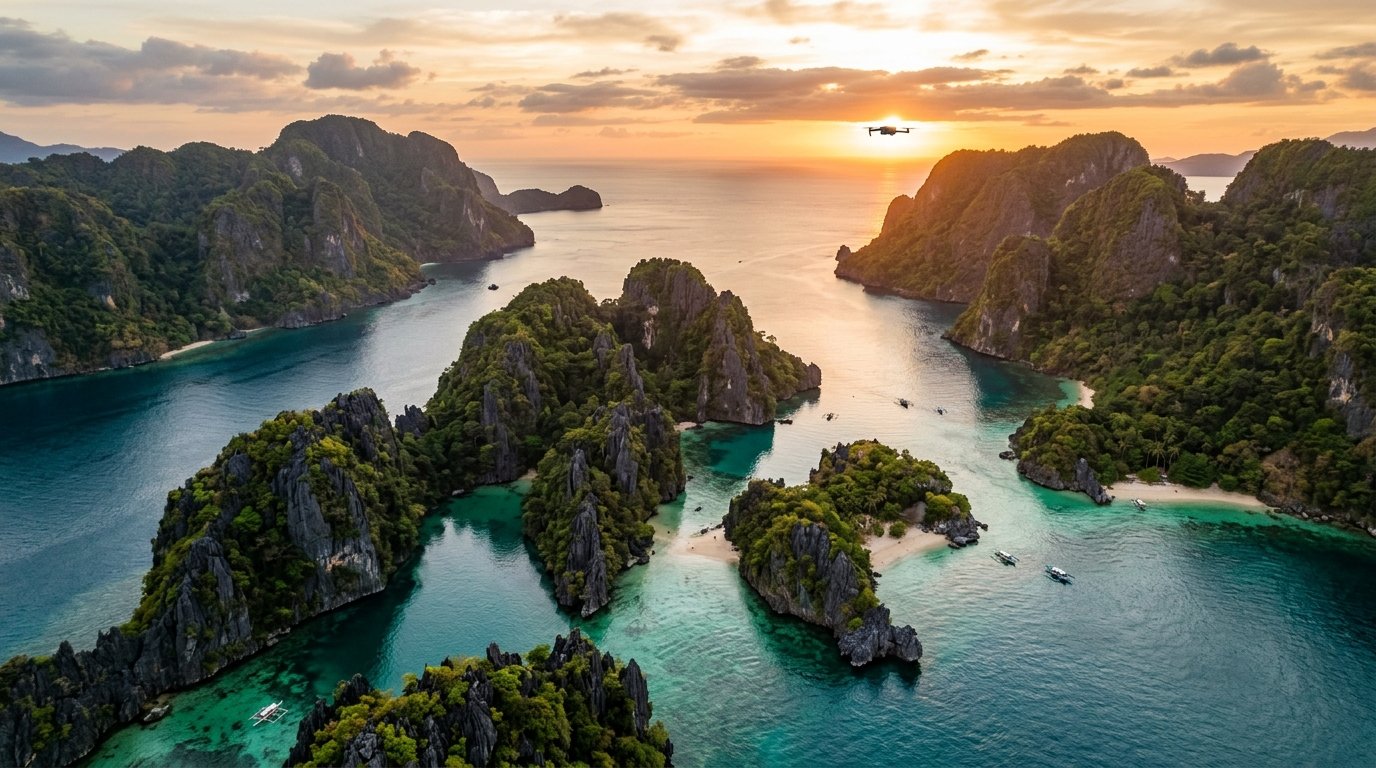
1. 🚦 The Short Answer
Recreational drone flying is generally allowed for tourists in the Philippines by following basic safety rules. As long as your drone weighs under 7 kg (15 lbs) and is flown strictly for personal, non-commercial use, you do not need to register it with the national aviation authority.
2. 🛃 Customs & Importation Rules
- Bringing it in: Foreign tourists can legally bring recreational drones into the Philippines through airport customs without needing a special import permit.
- Declarations: There are no specific national drone declaration forms required upon arrival for standard hobbyist models (such as the DJI Mini, Mavic, or Air series).
- Border risks: Your drone will not be confiscated at the border for lacking prior paperwork, provided it is clearly for personal use. Just be sure to pack your lithium polymer (LiPo) drone batteries in your carry-on luggage to comply with standard international airline fire safety rules.
3. 📝 Registration & Permit Process for Tourists
- National Registration: Under the Philippine Civil Aviation Regulations (PCAR), foreign tourists do not need to register recreational drones weighing under 7 kg (15 lbs).
- Commercial or Heavy Drones: If your drone weighs 7 kg or more, or if you plan to monetize your footage, you are legally required to obtain an Unmanned Aircraft System Operator Certificate and a Remote Pilot License from the local aviation authority before flying.
- Local Tourist Permits: While national registration is skipped for hobbyists, many popular tourist destinations (such as Boracay, El Nido, Coron, and Intramuros) enforce their own strict local ordinances. You may need to obtain a Local Government Unit (LGU) permit or pay a small environmental fee on-site before taking off in these specific regions.
4. 🚫 Key Flight Rules & Restrictions
- Standard Limits: You must fly only during daylight hours, keep the drone within your unaided Visual Line of Sight (VLOS) at all times, and never exceed a maximum altitude of 400 feet (122 meters) above ground level.
- Distance from People: You must keep your drone at least 30 meters (98 feet) away from people who are not involved in operating the drone. Flying over crowded areas, schools, or markets is strictly prohibited.
- Weight Restrictions: Drones under 7 kg are exempt from formal certification for hobbyists. Sub-250g drones (like the DJI Mini series) fall into this category but must still follow all standard airspace and safety rules.
- No-Fly Zones: It is strictly illegal to fly within 10 kilometers (6.2 miles) of any airport. Flying over emergencies, military installations, and designated national parks is also restricted without a special exemption.
5. 🔗 Official Sources & Links
To verify the latest updates or inquire about commercial permits, visit the official Civil Aviation Authority of the Philippines (CAAP) website.
Disclaimer: Aviation laws and local municipal ordinances change frequently. Always double-check current regulations with official Philippine authorities and local tourist offices immediately before your trip to ensure compliance.
Adrenaline junkie with a passion for exploring off-the-beaten-path destinations and finding unique ways to stay active. Expect stunning scenery, challenging workouts, awesome travel tips and a whole lot of fun. Let’s get sweaty and explore the world together!