
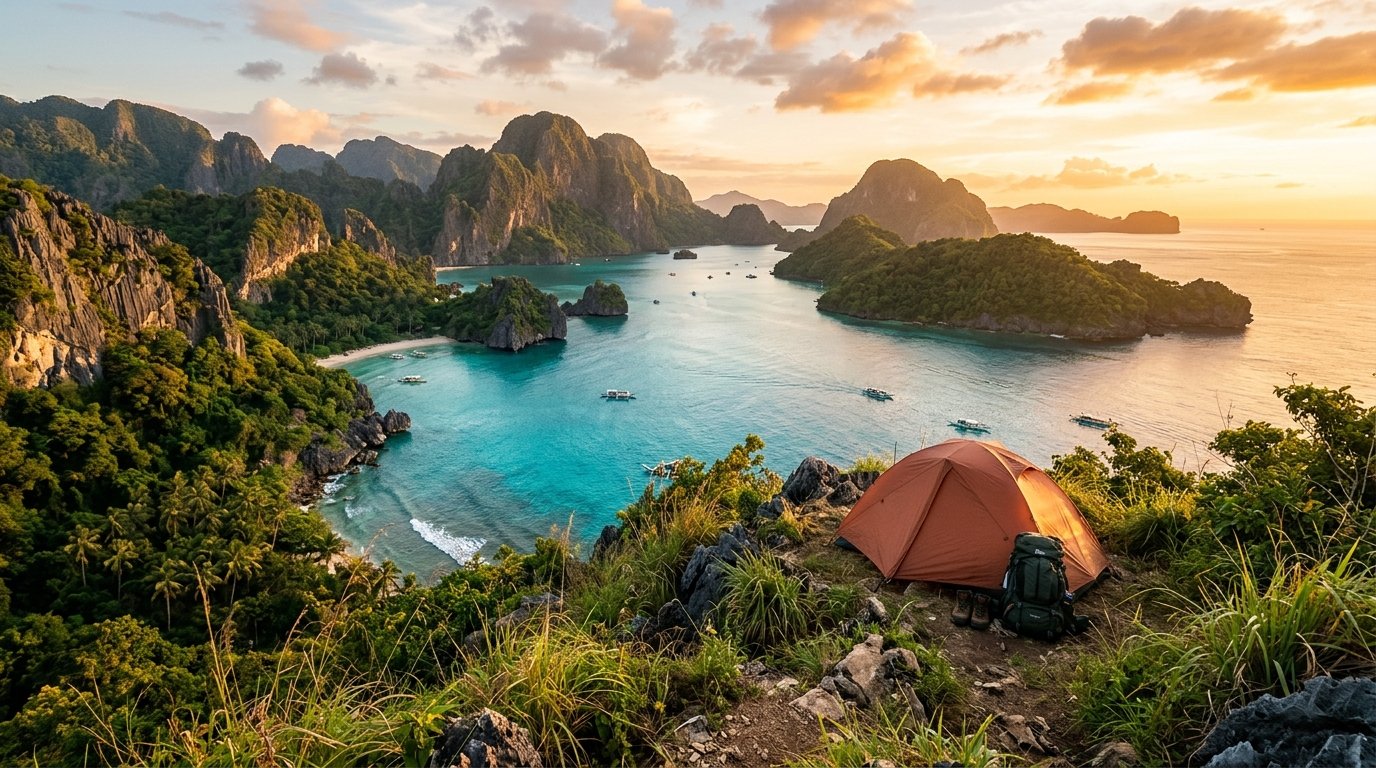
1. 🏕️ The Short Answer
For foreign tourists, wild and dispersed camping in the Philippines exists in a highly restricted legal and cultural grey area. Spontaneous wild camping is practically prohibited because almost all land is either strictly protected by the government, privately owned, or governed by local village councils (barangays). Travelers must always secure explicit local permission, hire required guides, or use designated private and national park campsites.
2. 🌲 Wild & Dispersed Camping Rules
- Legality on Public Land: There is no legally protected “right to roam” or dispersed wild camping in the Philippines. Pitching a tent on an arbitrary beach, forest, or mountainside without permission is generally not allowed. You must always seek prior consent from the private landowner or the local barangay (village) hall.
- Duration and Distance Rules: Because dispersed camping is not officially recognized on a national level, there are no set distance rules from roads or water. Any overnight stay is entirely at the discretion of the local landowner or the barangay captain.
- Enforcement: Enforcement is very active, though usually handled in a friendly manner. Local village watchmen (barangay tanods) patrol their jurisdictions regularly. If they find you camping without permission, they will likely ask you to pack up and relocate to the barangay hall or local police station grounds for your own safety, security, and proper registration.
3. 🏞️ National Park & Protected Area Rules
- Permit Systems: Protected areas are managed by the Department of Environment and Natural Resources (DENR) and local Protected Area Management Boards (PAMB). You cannot simply walk in and camp; you must secure a permit, pay environmental fees, and usually attend a mandatory orientation.
- Designated Sites and Guides: Camping is strictly limited to officially designated campsites. Furthermore, almost all national parks and major mountains (like Mt. Pulag or Mt. Apo) legally require foreign tourists to hire a local, registered guide. Advance booking is heavily enforced to control carrying capacity.
- Seasonal Closures: Parks frequently close without much advance notice due to severe weather (typhoons and heavy monsoon rains causing flash floods), dry season fire hazards, or dedicated environmental rehabilitation periods (e.g., weekend camping bans or month-long mountain closures to let the local ecosystem recover).
4. 🚐 Van Life & Overnight Vehicle Sleeping
- Roadside Sleeping: Sleeping overnight in a vehicle on public roadsides, highways, or random city streets is heavily discouraged due to safety concerns and is often prohibited by local municipal ordinances.
- Parking vs. Camping: Local traffic laws distinguish between parking and habitation. While you can park in public spots during the day, remaining inside the vehicle overnight is usually considered loitering or illegal habitation by local barangays.
- Designated Overnight Areas: The Philippines lacks a developed infrastructure for van life, meaning there is no network of public rest areas or RV parks. Nomads and tourists usually have to pay to park overnight at private beach resorts, secure 24-hour gas stations, or ask permission to park outside a barangay hall. Note: The extreme tropical heat and humidity make sleeping in a vehicle without powerful air conditioning practically impossible and potentially dangerous for most foreign tourists.
5. 🔥 Campfires & Practical Restrictions
- Campfire Regulations: Open campfires are strictly banned in all national parks, forests, and protected areas to prevent wildfires; campers must use portable camping stoves. Some private beach campsites allow bonfires, but only in designated fire rings and they are subject to strict total fire bans during the dry season.
- No-Camp Zones: Tourists must absolutely avoid dispersed camping in regions with active international travel advisories (such as parts of Mindanao and the Sulu Archipelago) due to serious risks of insurgency and kidnapping. Additionally, always avoid military reservations, unguided deep jungle interiors, and coastal border zones.
6. 🔗 Official Sources & Links
To verify the latest environmental rules, park closures, and travel advisories, consult these official sources:
- Philippines Department of Tourism (DOT) – Official Travel Website
- Department of Environment and Natural Resources (DENR)
Disclaimer: Land-use laws, environmental regulations, and local ordinances in the Philippines change frequently and vary heavily by municipality. Always verify current rules with official local sources, registered tour guides, or the local barangay hall before beginning your trip.

Adrenaline junkie with a passion for exploring off-the-beaten-path destinations and finding unique ways to stay active. Expect stunning scenery, challenging workouts, awesome travel tips and a whole lot of fun. Let’s get sweaty and explore the world together!